
Exam resits – getting back on the horse

resit

Failing an exam is not something people plan for but it happens. In fact, I have blogged about it many times because at some point almost all students will have to deal with it. The overriding message is that you should learn from your mistakes and move forward. There are two parts to this, firstly learn from your mistakes, after all you don’t want to make the same ones again, secondly pick yourself up and put together a plan that will take you towards your goal of passing.

Failures, repeated failures, are finger posts on the road to achievement. One fails forward toward success. C. S. Lewis

In the exam world after failure comes the resit, another exam on the same subject sat at some point in the future. But what are the stages in between, how best should you study for an exam that you have already sat and might have only narrowly failed.

Emotional reaction

Imagine the email has arrived and you have failed, as with other challenging situations there are any number of different emotions you might experience. These will depend to some extent on your judgement as to how well the exam itself went. If you didn’t make any huge mistakes, were not fazed by many of the questions and completed them all, you were in with a chance. As a result, you might be shocked, angry, disappointed, frustrated and then you will begin to think about the implications, sitting the exam again, how much time it will take, the costs, having to tell people etc. If on the other hand you thought the exam had gone badly, the result simply confirms you were right. That said the email has taken away that small hope you might have been wrong or in some way fluked it, after all exams have gone badly before and you passed them, so why not again.

Either way, eventually you will end up in the same situation and need the best approach to sit the exam again.

The best approach

  • Mindset

A mindset is little more than a series of assumptions and beliefs that lead to an opinion. What’s important here is to recognise that they are only assumptions. Carol Dwecks work around Fixed and Growth mindsets provide us with evidence as to the importance of having the right mindset and how best to think about it. Dweck argues that students who believe their abilities are carved in stone, intelligence fixed and failure not just a setback but proof of your ability, will find it very difficult to move forward. Alternatively, those with a growth mindset believe they can improve, that intelligence is not fixed, (brain plasticity) and that failure is something to learn from will be in a far better position to learn from their mistakes and try again.

The difference between average people and achieving people is their perception of and response to failure. John C. Maxwell

Failing an exam is a fact, why you failed and what caused that are often assumptions. The secret here is to revisit your assumptions, what you think they mean and change the negative mindset to a positive one. It is very easy to think you are fooling yourself, this is not about putting a positive spin on a set of poor results, if you didn’t do enough work telling yourself it will be better next time will achieve little. The positive mindset here is to recognise that working harder will give you a better chance of passing which of course it will.

Another reframe is to take the advice of the famous behaviourist B.F Skinner, a failure is not always a mistake, it may simply be the best one can do under the circumstances.

  • Learning from your mistakes

Rather than making emotional assumptions as to why you failed far better to spend that energy figuring out what exactly caused the failure. Was it for example lack of work, be honest, was there one area or topic that you simply had no idea what to do, did you run out of time?

Examiners reports and where possible script reviews can be very helpful. One word of caution, script reviews are not remarking exercises. They are there to provide personal feedback on your exam performance. Also, in professional examinations they can be expensive, are not always returned promptly and can sometimes offer little more than what is said in the examiner’s report.

If a script review is not available you could sit the exam again but this time in the comfort of your own home. The purpose here is to provide some insight as to what went wrong, it’s better if you can get your answer marked by a third party, this doesn’t have to be an expert e.g. teacher but it will help. Don’t worry that you will know the answers, think about this in the same way that the police reconstruct a crime, its to give you insight. Not knowing what you did wrong makes it very difficult to do something differently next time.

  • Studying

Firstly, remember you have done this all before, you have a base knowledge of this subject, you’re not starting from scratch. This means you will already have materials, revision notes and a bank of past questions. If you don’t then the good news is you now know exactly what to do!

Past papers – analyse what came up in your exam and add the findings to your existing analysis of past papers. With objective tests or where getting past papers is not possible try and think was there anything different in terms of style, complexity etc.

Revision notes – Although you will have an existing set of notes, it’s a good idea to start with a clean sheet of paper and rewrite them. By all means use your existing notes as a template or guide but re-reading your old revision notes is not particularly effective. You might also want to consider an alternative note taking style for example mind maps.

New question bank – as with revision notes you will also have a book of past questions, get a clean copy e.g. one with no workings or writing in the margin. This is a mindset trick; a clean copy will make each question feel new. Also consider buying or borrowing a completely different set of questions.

Timetable – having a timetable was important last time, its essential for a resit because you are more likely to have limited time available so need to maximise what you do have.

All that remains is for me to wish you the best of luck with the resit and take note of what Zig Ziglar said – failure is an event, not a person.

The learning brain

Brain 5

There are a number of books that not only taught me something but helped shape the way I think and opened up a whole new world. One such book was Mapping the Mind by Rita Carter, not as you might imagine a book about mind mapping but the Brain. Rita Carter is a science journalist rather than a neuroscientist and understands that it’s not about what she knows but what she can explain.

Having a better understanding of how the brain works will help do far more than improve your grades in a biology exam, you will develop insight as to why something works not only that it does. As a result, you can be confident you are using the most effective brain friendly learning techniques.

The infrastructure Brain 2
Rita Carter provides us with an excellent description of the brain, that it is as big as a coconut, the shape of a walnut, the colour of uncooked liver and consistency of firm jelly.

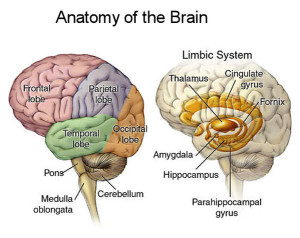
Imagine a cross section of the brain, taken from the side, alternatively look at the diagram opposite.

The cerebrum or cortex is the largest part of the human brain and is associated with higher brain function such as thought and action. It is divided into four sections.

  • Frontal lobe – associated with reasoning, planning, some speech, movement, emotions, and problem solving
  • Parietal Lobe – associated with movement, orientation, recognition, perception of stimuli
  • Occipital Lobe – associated with visual processing
  • Temporal Lobe – associated with perception and recognition of auditory stimuli, memory, and speech

The cerebellum coordinates movements such as posture, balance, and speech. Next to this is the brain stem, which includes the medulla and pons. These are the older parts of the brain and evolved over 500 million years ago. In fact, if you touch the back of your head and bring your hand forward over the top towards your nose, this effectively maps the ages in which the brain developed.

The Limbic system is largely associated with emotions but contains the hippocampus which is essential for long term memory and learning.

Synaptic gap – Cells that fire together wire together (Hebbian theory)
Although learning is complex, a large amount takes place in the limbic system because this is where the hippocampus sits. Here our memories are catalogued to be filed away in long-term storage across other parts of the cerebral cortex.

What comes next is important because it’s here within the hippocampus where neurons connect across what is called the synaptic gap that learning arguably begins. Synaptic transmission is the process whereby a neuron sends an electrical message, the result of a stimulus across the synaptic gap to another neuron that is waiting to receive it. The neuron’s never touch, the gap is filled by chemicals referred to as neurotransmitters examples of which include dopamine and serotonin. These are often referred to as the body’s chemical messengers.

Learning is making new connections, remembering is keeping them

When the stimulus is repeated the relationship between the neurons becomes stronger and so a memory is formed and learning has taken place. The whole process is called long term potentiation (LTP).

How does this help?
All a bit technical perhaps but very important as it explains so much. It is the reason that repetition is so valuable, for example, if you are reading something and it’s not going in, you need to fire those neurons again but perhaps using different stimulus. Try saying it out loud or drawing a picture alongside the text.

Don’t forget the blog I wrote in January 2018 that explained brain plasticity and how the brain changes as those new neural connections are made, a process called Neurogenesis.

The neurotransmitters, those chemicals released to fill the synaptic gap are also important as each one is different. For example, in addition to making you feel good, it’s likely that when you feel anxious your brain is releasing high levels of serotonin.

Although it’s fair to say there is still much we don’t understand about the brain, I  hope the blog has helped remove some of the mystery of learning, it’s not a magical process but a scientific one.

learn more

Dedicated to my dog Jack – our family dog and best friend

Mind Mapping – Tony Buzan, Learning leader

MM-How-to-MindMap-imindmap-1024x647

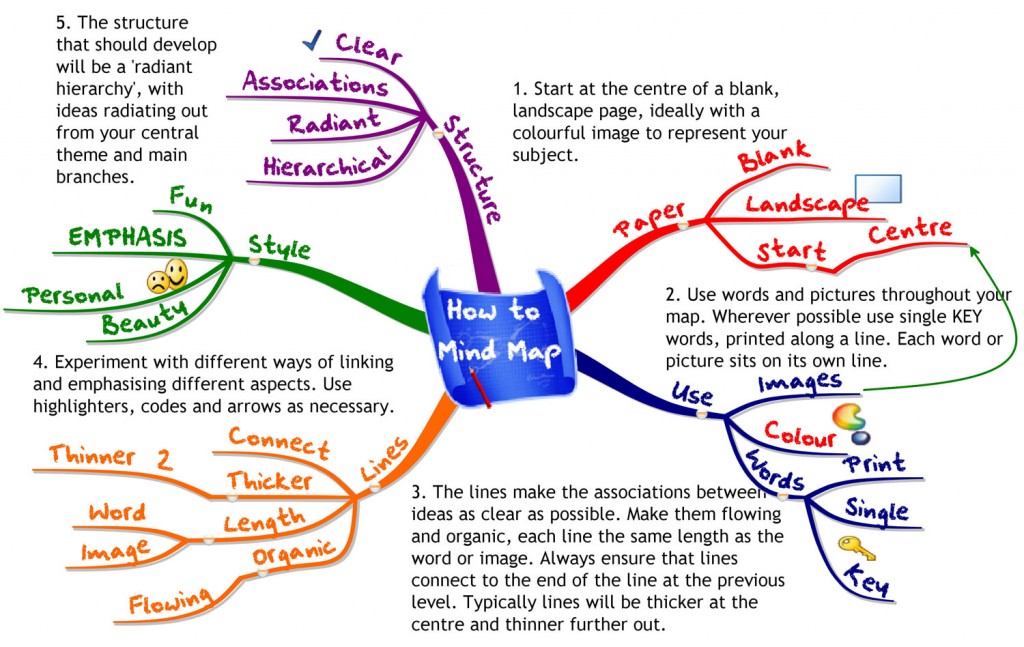
It was with some sadness that I read of the death of Tony Buzan last week. It’s possible you have never heard of him and yet will be familiar with the technique he discovered to help students learn, Mind Mapping. He was born in the UK in 1942 studied Psychology, English, Mathematics and Science at the University of British Columbia.  In addition to his lifelong association with Mind Mapping he worked for Mensa, set up the World Memory Championships in 1991 with Raymond Keene, and found time to write over 140 books. Two of which sit on my bookshelf, both furthered my knowledge and fuelled my interest in learning, memory and how the brain works. These are Use your Head and The Mind Map book.

Curiosity  

When Tony Buzan was at Junior school his curiosity was sparked by a boy who had an excellent knowledge of nature, in particular birds but repeatedly failed tests that were set in school. This led him to question what intelligence was. And although I hadn’t read this at the time it was something I had also been interested in. Society had/has somehow lost sight of the fact that people are different, falling into the trap of praising and promoting those that were “clever” and pitying those that were not. It seemed far more sensible to break intelligence down into a series of biological/neurological qualities, and in 1983, when Howard Gardner published his book on Multiple Intelligence Theory this made perfect sense to me and provided evidence that Buzan was on to something.

Mind Mapping – does it work?

According to Tony Buzan, “Mind Mapping is a two-dimensional note-taking technique with which a Mind Map is made using all the relevant knowledge about a specific subject.”

I have written about how to Mind Map before, so please follow the links if you want to find out more – Mind Mapping unplugged – The De Vinci code – Mind Mapping to pass exams.

Remarkably there is little evidence to prove that Mind Mapping works, academics have focused instead on Concept Mapping, a hierarchical diagram that links conceptual knowledge, but the principles that underpin Mind Mapping are consistent with much of what we know is effective in learning.

This quote from Tony Buzan offers a deeper insight into why it works.

“I used to take formal notes in lines of blue, and underline the key words in red, and I realised I needed only the key words and the idea. Then to bring in connections, I drew arrows and put in images and codes. It was a picture outside my head of what was inside my head – ‘Mind Map’ is the language my brain spoke.”

In this narrative there are three important principles identified. Firstly, use only key words, this process of reduction is hugely valuable in learning. When the brain has to select one or two words it engages in a process of reflection and review, reading and re-reading asking which one word should I pick, and why. Secondly connections, it is well accepted that the brain finds storing unrelated chunks of information difficult, a Mind Map requires the student to link information and in so doing forces a connection. And lastly, arguably one of the most powerful, the use of images. The brain appears to have a limitless capacity to store pictures, the brighter, more colourful and stranger the better.

In summary, it’s not that Mind Mapping was invented by Tony Buzan and before we knew little about the best techniques to aid learning, what he did was pull together much of what we now know to be effective using as inspiration the drawings of the Leonardo de Vinci and created a tool that requires the student to know little of the theory behind how it works but by preparing one engages them in a series of very effective techniques that will help them learn.

Critics

It would be wrong to suggest that everything Tony Buzan said or did was correct, he has been responsible for promoting what many now recognise as pop psychology that has since been proved to be incorrect. For example

“Did you know that you use less than 1% of your brain? The good news is that Mind Mapping can help you to access the other 99%.”

However, he also said

“Learning how to learn is life’s most important skill.”

And in this world rich with information, AI and robotics, this may be the only thing that will keep us ahead of the game.

Listen to Tony Buzan talking about Mind Maps

RIP Tony Buzan learning leader.


Sleep, studying and Circadian rhythms

Circadiam - sleepThe brain is truly astonishing, if you disagree with that statement it’s just possible you have never heard of circadian rhythms.
Your circadian rhythm is best thought of as a body clock, a 24-hour cycle that tells you when to sleep, get up in the morning and eat. In biological terms the clock is called the suprachiasmatic nucleus or SCN for short. The SCN is a tiny part of the hypothalamus which is situated directly above the pituitary gland in the centre of the brain.


Your body has a clock
Do you wake in the morning naturally or is it the result of a stark shrill from your alarm? If its naturally then this is your internal clock at work. Interestingly it can be pre programmed, you will have done this many time, waking before your alarm goes off for example. We are not talking about 10 minutes before, so accurate is your body clock you can wake 1 minute or even seconds before it is due to go off. Jet lag is an example of what happens when you disrupt the internal clock, your entire body struggles to adapt, affecting your ability to concentrate, eat, rest and sleep.
Interestingly Circadian rhymes exist in all living organisms, including plants. The external stimulus is natural light. However even without light the 24-hour cycle will continue, this has been evidenced by research with people who are totally blind. Although their circadian rhythms are often said to “free run” and extend slightly longer than 24 hours, they continue independent of light.

Why is this important for studying?
One of the reasons for going into so much detail is to illustrate how complex we are as human beings and that what may seem a relatively small change in your behaviour e.g. studying late into the night, can have a significant impact on your ability to function, in this context concentrate and remember.
Pulling an all-nighter to prepare for an exam is a badge of honour that many students will wear with pride. It is perceived as a measure of how committed and mentally tough you are. And on one level the effort and difficulty of the task should be rewarded, but given that examinations are a test of cognitive ability anything that reduces your chances of doing well should be avoided. If Hussain Bolt ran the 100 meters in a record time, having been out on the town the night before, waking up with a hangover and only having two hours sleep he would be a hero. But if he lost, he would be a fool. Why would someone who had invested so much of their time put that at risk?
In simple terms you need to help your brain perform to the best of its abilities.

Circadian rhythms and memory
A little more technical detail to illustrate a simple point, if you don’t follow your natural sleep patterns your ability to memorise and retain information will be affected. Retention appears to hinge on the amount of a neurochemical called GABA which inhibits brain activity. And it is the Circadian clock that moderates the amount of GABA produced. In fact, in an experiment using hamsters where the circadian clock was effectively disabled the hamsters were unable to remember anything.

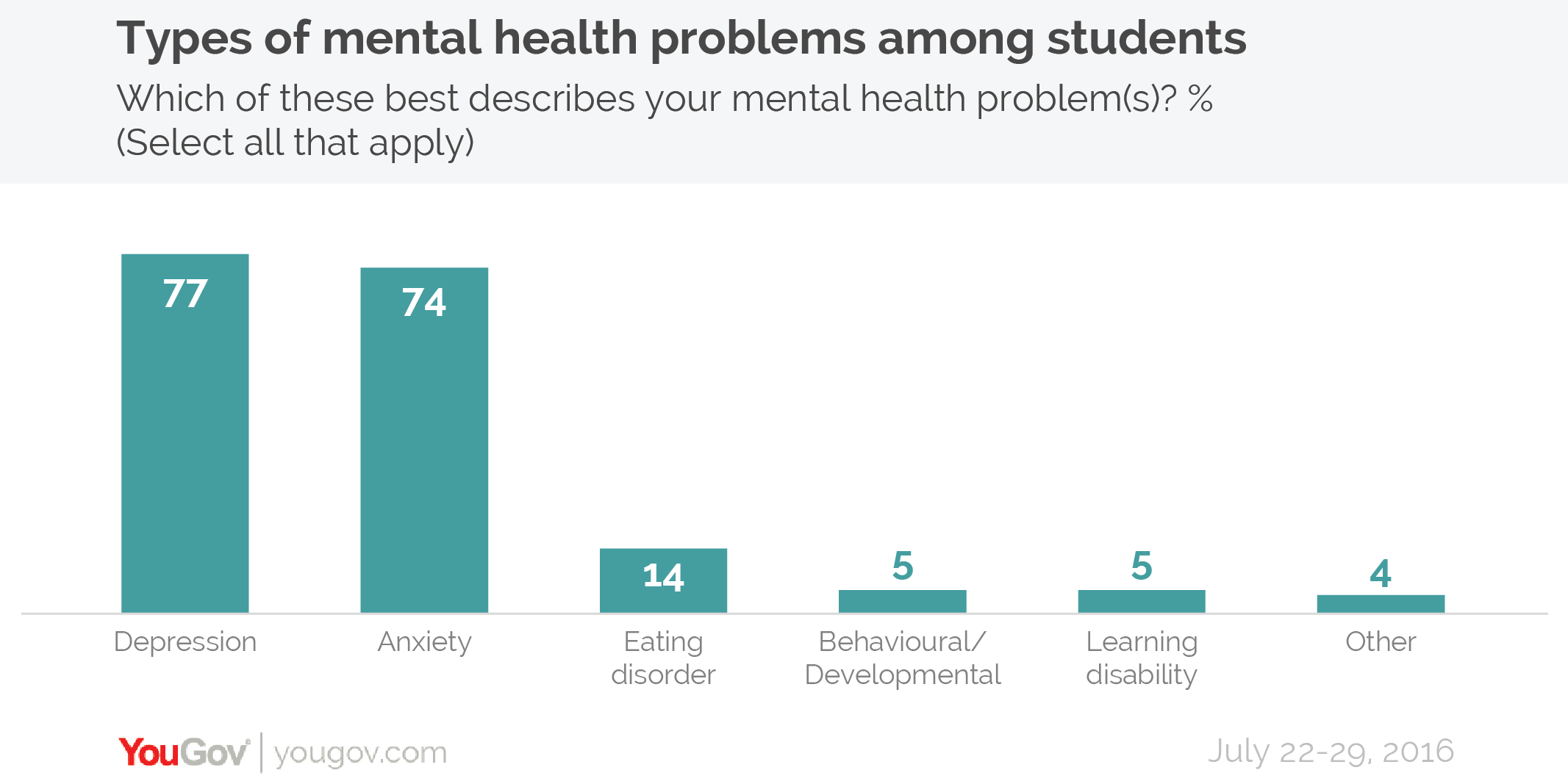
Mental health types-01There is a far more sinister side to the disruption in your circadian rhythm, ongoing research has identified a direct link with mental health disorders such as depression. This is of particular interest given the rise in reported levels of depression amongst students. One area that is being investigated is screen time be that mobile phones or computers. The artificial blue light emitted from these devices could well be confusing your circadian clock.

Why we sleep is still uncertain but it is believed that deep sleep helps the brain consolidate all the experiences from the day, including what its learned. When you shut down your computer, it may say “do not turn off during this update” – that sounds like  good advice.

And if you would like to find out more

Circadian Rhythm and Your Brain’s Clock

How Your Circadian Rhythm Tunes Your Health

Storytelling – The cave

telling stories

There is a lot written today about the power of storytelling and how it can help persuade, influence and of course educate. Stories come in many shapes and sizes, sometimes they are true, but might be embellished, sometimes they are not true but include powerful messages hidden in the form of metaphor or allegory.

The simplest definition of a story is that “one thing happens in consequence of another,” and it can engage, motivate and inspire. But cognitively the brain is working very hard forming connections, asking questions, creating images and helping offer up opinion.

“If you want your children to be smart, tell them stories. If you want them to be brilliant, tell them more stories.” Albert Einstein.

Below is an allegory, arguably one of the most important in the whole of western philosophy, but its message for educators and students is sometimes lost. It’s called Plato’s cave, read it carefully, thinking about what it might mean.

Plato’s cave
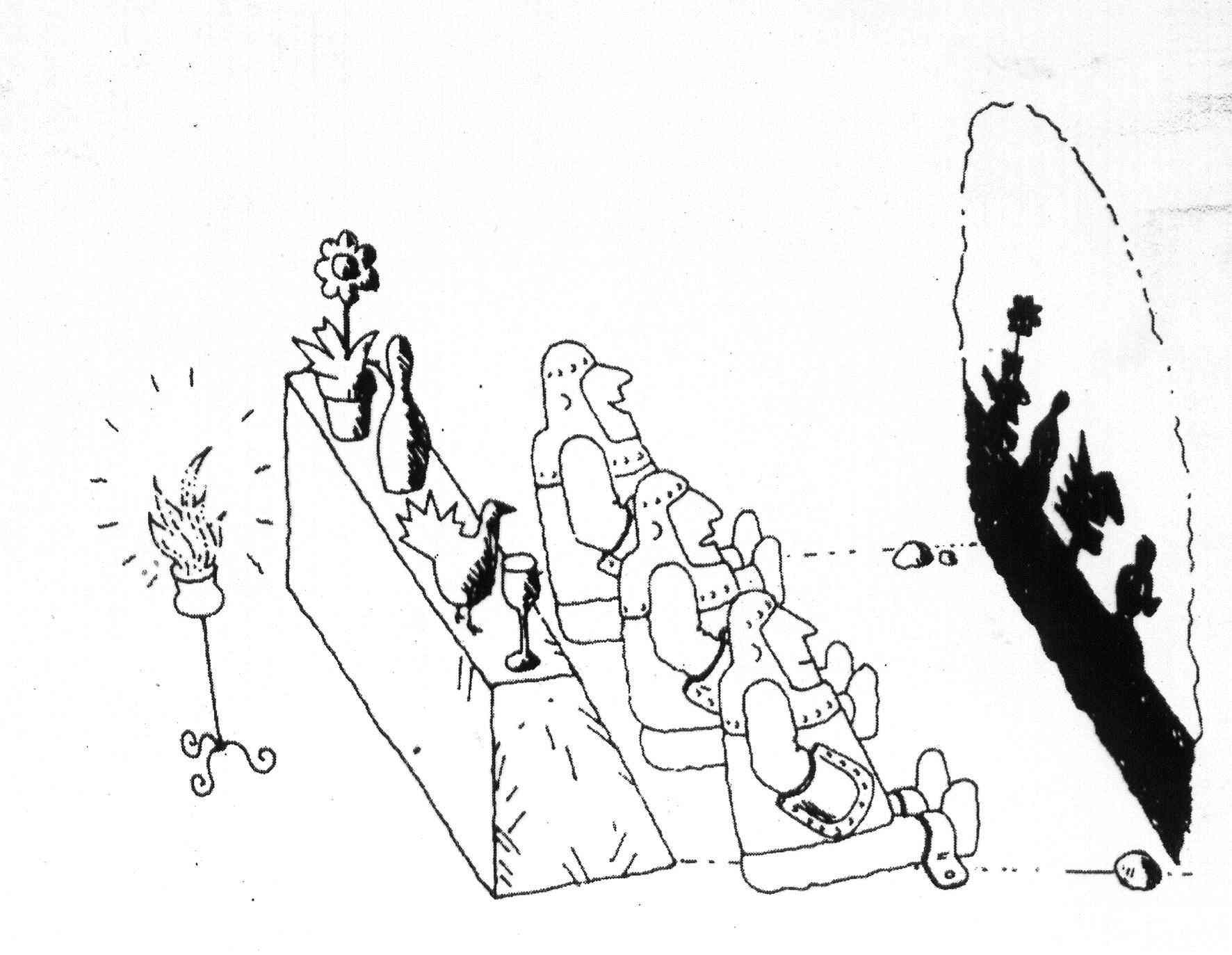
Plato caveAlthough Plato is the author, it is Socrates who is the narrator talking to Plato’s elder brother Glaucon.
The story told is of a group of people who from birth have been chained up in a cave with their heads fixed in one direction so they can only look forward. They face a cave wall on which they can see moving images, shadows that they believe to be reality. Socrates’s explains that when the prisoners, because that is what they are, talk to each other they discuss the shadows as if they were real. But they are an illusion, created by shadows of objects and figures played out in front of a fire, manipulated by the puppeteers.

Socrates goes on to say that one of the prisoners breaks free of his chains and is forced to turn around and look at the fire, the light hurts the prisoner’s eyes but as they adjust, he can see the fire and the puppets he had believed to be real. He doesn’t want to go any further fearing what it might bring but once more is forced to go towards the mouth of the cave and into the blazing sunlight.

At first, he can only look at the reflections because as with the firelight the sun is too bright but as his eyes adjust once more, he finally looks at the sun, only then “is he able to reason about it” and think what it could mean. His thoughts are interrupted by the sorrow he feels for his fellow prisoners who have not seen what he has, have not learned the truth. So, he goes back into the cave to tell them everything. But when the prisoners look at him, they see a man stumbling, strained, no longer able to see in the dark cave. But worse when he begins to explain they think him dangerous because what he tells them is so different to what they know.

The prisoners do not want to be free, the effort is too great, the pain and apparent disability sufficient to stop them trying. They are content in their own world of ignorance and will fight anyone who wants to change that.

But what does that mean?
The answer of which should be, well what do you think it means? But sometimes you just don’t have time for that answer so here is one interpretation, it’s worth pointing out there are many.

  • The puppeteers are those in power or authority. They prefer it if people don’t ask questions, remain content and are not causing trouble.
  • The fire is knowledge and wisdom.
  • The prisoners are society.
  • The escaped prisoner is the student. The student who through education escapes and finds answers.
  • The person that frees the student and drags him towards the light is the teacher.

If we put this all together, it gives us an insight into learning that has remained unchanged since Plato wrote the Republic in which this story sits in 514a–520a.

Learning is not easy, it can be difficult and hard work. Some people are happy to remain as they are, ignorant, after all it’s not pleasant having your beliefs challenged and finding out that what you thought was true in fact isn’t. Teachers can help take you towards knowledge and learning but you need to want it for yourself, and once you have knowledge you can’t go back to what you were before, education will have changed you forever.

To find out more about the power of stories watch this video – The rules to telling a story by the Filmmaker Andrew Stanton (“Toy Story,” “WALL-E”)

Plato’s cave at the movies

The Matrix and Plato’s Cave – Neo meets Morpheus and explains he is a slave

The Truman Show – Truman shows bravery by going towards the light


Making complex simple – the measure of a great teacher.

solve-the-equationRichard Feynman who featured in last months blog was known as the great explainer. This skill was possible because of two key qualities, the first, an intense curiosity and desire to understand the subject incredibly well and secondly, he could make what was complex seem simple. These are of course not mutually exclusive, deep understanding is the foundation on which simplicity is built.

There was a time when getting access to knowledge was a barrier to learning. After all, how could you learn if you didn’t have the books from which to do it? But we no longer have this problem, knowledge is abundant, it is literally at the end of your fingertips.

The world’s knowledge is just waiting for you to ask the right question. But how can you tell if what your reading is shallow and without thought or deep and profound?

Jardins principle
In 1997 I read an article in the Financial Times written by Rob Eastaway, an English author whose books on everyday maths include Why Do Buses Come in Threes? and The Hidden Maths of Sport. For some reason the concept he outlined always stayed with me, sufficient that I wanted to track it down, which I have managed to do.

Jardin’s Principle as explained by Rob Eastaway. If you are trying to understand any subject or system, your level of understanding will pass through three stages. To start with, the way that you see and describe a system (subject) will be simplistic i.e. over-simplified, then it will become complicated but ultimately it will become simple again. He goes on to add that there are three other words that fit in with this idea, Obvious, Sophisticated and Profound.

Make everything as simple as possible, but not simpler – Albert Einstein

Simple – Complex – Profound
As with all ideas there is more to it, below are what Rob refers to as the 5 caveats. I have added in my own thoughts and observations to some of them.

1. It is hard to differentiate between what is ‘simple and profound’ and what is ‘simplistic and obvious’. This is one of the main problems with a process of reduction, for example if you ask, what is the meaning of life you might be given the answer 42. The problem is in knowing if this is just two numbers written down, snatched out of the air or the correct answer, the result of hundreds of thousands of calculations undertaken over 200 years by the most sophisticated computer in the world?

2. Those at the ‘sophisticated/complicated’ level believe that there is no higher level than theirs – in other words you have to be sophisticated to understand fully. This is a clever observation on human nature, it suggests that some people believe you cannot fully appreciate a concept or idea unless you look at it through the lens of complexity. They effectively give up looking for a simpler perspective, because they don’t know one even exists.

3. You are probably wrong about the level of Jardin that you are at. An example perhaps of fish not seeing water.

4. In order to reach the profound level of understanding you usually pass through the other two levels first. This is my favourite because it shows that the route to simplicity is not easy and requires time and effort. You have to revisit your understanding many times before your brain springs into action with the blindingly obvious.

5. Unless you have a profound understanding of a subject, you will either over-complicate or over-simplify it. Perfect…..

Simple can be harder than complex: You have to work hard to get your thinking clean to make it simple. But it’s worth it in the end because once you get there, you can move mountains. – Steve Jobs

Great teaching  – Taking something that is complicated and making it appear simple is in many ways the essence of great teaching. Breaking down a subject into easily understood bite sized chunks of information or capturing the whole concept in one single leap by use of a metaphor or simple story is genius. But the process of getting to these pearls of wisdom involves wading through the mire of complexity in some instances for many years before the obvious reveals itself.

What I didn’t know at the time was that Rob had actually made this theory up, he didn’t want to put his own name to it so chose the French word for garden in homage to the Peter Sellers film, Being There, about a simple gardener who becomes US President.

Rob you ask, will it ever stick, maybe you should call it Eastaways folly instead.

The simple Mr Feynman

Feynman

Richard Phillips Feynman was co-awarded the Nobel prize for Physics in 1965 for successfully resolving problems related to the theory of quantum electrodynamics.  No, I’m not sure what that means either. If that was not enough he also helped build the atom bomb, being part of the Manhattan project, and following the Challenger explosion on January 28, 1986 he was the person largely credited with figuring out why it happened.

In fact, Richard Feynman is widely considered to be one of the greatest and most influential theoretical physicists in history. His physics lectures have become world famous. Here is one on the Law of Gravitation.

“I’m smart enough to know that I’m dumb.”

Richard Feynman

He was intensely curious and believed that unless you could explain a concept or idea in simple terms you really didn’t understand it. In this clip Feynman was asked by his father to explain where a photon comes from – listen for his metaphor.

The Feynman technique

Richard Feynman was worried that a lot of people thought they knew something when in fact they only had a superficial grasp of the subject matter.

“You can know the name of that bird in all the languages of the world, but when you’re finished, you’ll know absolutely nothing whatever about the bird. You’ll only know about humans in different places, and what they call the bird… I learned very early the difference between knowing the name of something and knowing something.”

Richard P. Feynman

Such was his concern that he created a process to help take an individual’s knowledge to a far deeper and more fundamental level, it’s called the Feynman Technique.

Step 1: Take a sheet of paper and write the name of the concept, topic or subject you would like to learn.

Step 2: Explain the concept in your own words as if you were teaching someone else – see also Protege effect.  Imagine your pupil is a small child, this will help focus your mind on plain, simple language. Don’t limit your explanation to definitions or overviews, challenge yourself, and include lots of examples, which as mentioned in earlier blogs is a great way of making sure you have understood it.

Step 3: Review your explanation and identify the gaps. These might be areas where you simply didn’t have the necessary knowledge or your explanation was weak. Once you have done this go back to your notes or textbook, re-learn the subject matter and add what you have learned to your sheet of paper, then repeat step 2.

“The first person you should be careful not to fool is yourself. Because you are the easiest person to fool”.”

 Richard Feynman

Step 4: Review again and remove technical or overly complex terms, think, “how can I say this more simply?” Also put your notes into an order that flows easily, this might involve rewriting large sections and even starting again with a clean piece of paper, but thats all part of the process. One final tip, as with step 2, it often helps to read out loud.

And that’s it!

I am not saying that if you follow this technique you will win a Nobel prize or be able to play the bongos, another skill that Feynman was famous for, but it will certainly deepen your understanding of the subject, and that’s not a bad start is it!

Richard Feynman: “The Great Explainer” click for an interesting  10-minute summary of his career in science.

Engaged

There are a number of terms that crop up continually in learning, motivation, attention, inspiration, concentration, curiosity etc. But one that is becoming increasingly important especially for those students studying online, is engagement.

Many of the above terms are closely related and often used in the same sentence, but by taking some of them we can make an attempt at defining engagement – the degree of attention, curiosity, interest and passion demonstrated when learning.

Types of engagement

However when you look into any subject in detail it’s never as easy as you first thought. Fredricks, Blumenfeld and Paris identified three types or as they called them dimensions of engagement:

1. Behavioural engagement e.g. attendance, involvement and absence of disruptive or negative behaviour.

2. Emotional engagement e.g. interest, enjoyment, or a sense of belonging.

3. Cognitive engagement e.g. invested in learning, seek to go beyond the requirements and relish a challenge. A cognitively engaged student can become unaware of time and will be capable of taking the subject matter outside its context, form new connections and begin asking questions in order to ensure they have fully understood.

In simple terms an engaged student is physically, emotionally and mentally present.

Why is it important?

There is a large body of evidence that shows correlation between high levels of engagement and a number of desirable learning based outcomes, for example improved critical thinking, cognitive development, skills transfer, self-esteem, deeper understanding and better *exam results. It’s also worth adding that an engaged student is more likely to complete the course.

If you are not engaged, then what are you doing?

Engagement clearly helps students learn more effectively but it is also closely linked to motivation. In fact the expression motivated and engaged are sometimes used as if they were the same, but there is a subtle difference. I have written about motivation many times and unlike engagement tends to be more long term, possibly internal and certainly goal orientated. You can of course be engaged but not motivated, for example engaged in an activity, perhaps concentrating and interested but it’s not a topic or subject that you feel is important and have no long term need or desire to find out more. Engagement is the response to an external and immediate satisfaction, entertainment, curiosity, or recognition.

How to engage – for the teacher

As with motivation, it’s better to be engaged than not, so before we answer the question, what can teachers do to engage their students, it’s worth noting the role of the student, if you sit with your arms folded thinking of something else, you won’t engage.

  • Make it relevant – outline before you start why this topic is important for your audience. How is this online session going to help the students achieve their objectives, try to be specific.
  • Use real world examples – related to the above, a real world example can help the student appreciate the importance of what they are learning, i.e. if it’s used in the real world it must work. This may result in the student asking questions internally as to how it might work in their organisation or concluding that it will not.
  • Positive reinforcement – praise may sometimes feel artificial and of course should not be given all of the time, but recognising the difficulty of a task and congratulating everyone for doing well is both motivational and engaging.
  • Build rapport – use student names to help personalise the process. Break down barriers by saying what you personally find difficult, and perhaps why. If you can empathise with the student it helps build rapport, which makes it more likely they will listen and follow your advise.
  • Inspire – not everyone will think of themselves as inspirational but in some ways it takes very little, a simple story that means something to you can do the trick. Simon Sinek suggests that inspirational leaders know their WHY, they know why the are doing something. Ask what’s your why, and it’s not just because it’s your job, it’s because it’s your passion and fits with your personal beliefs.
  • Inclusive activities – plan for a number of activities that will encourage the group to engage with each other, the subject matter and you. These can be as simple as asking questions, setting quizzes, polls, or more involved, such as break out groups. Importantly the activities should not be easy, they need to be challenging, bored students are not engaged.
  • Manage and facilitate, don’t tell, ask – try to get the students thinking, ask them why, do you all agree, is there an alternative answer? It’s also a good idea to encourage students to think and believe in themselves, to become independent and autonomous learners.

And one last tip, make it short and don’t go on too long or labour a point, there is a danger your students will disengage!

Which is probably my queue to bring this to an end and wish you all a Merry Xmas.

*improved grades (Astin 1977, 1993; Indiana University Center for Postsecondary Research 2002; Pike, Schroeder & Berry 1997; Tross, Hpersistencearper Osher & Kneidinger 2000)

Cramming works, but only until tomorrow

Cramming

I have written about cramming before or to be precise it was in the title of a previous blog but the main focus was on the benefits of attempting exam questions. As a result, I feel I should say far more about what many students reluctantly admit is their most commonly used study method.

Cramming is the process of leaving everything until the last minute and then studying intensely in a relatively short period of time. Students know they shouldn’t do it and yet the “cramming badge of honour” is often worn with pride. It is accompanied by the boast, “anyway I work better under pressure”.

Better under pressure

Yerkes and Dodson (Yerkes-Dodson Law) famously put rats in a maze and administered electric shocks as they attempted to choose between a black and white door. They noticed that mild shocks improved the rats’ performance until a certain point, after which it greatly decreased. A chart of the shock strength versus performance takes the shape of an inverted U. And although there has been some criticism as to the exact findings, the concept that people perform better under pressure is true but only to a point, and of course judging when that point is reached is personal and arguably impossible.

The conclusion therefore has to be that creating a stressful situation by leaving everything until the last minute is not a particularly sensible strategy. An exam environment brings its own high level of stress without you having to manufacture your own.

Back to cramming

In June and July, I identified 6 scientifically proven learning strategies, and it is here that we can find the answer to the question, does cramming work?

Spaced practice is the process of studying over time compared with studying the same content but intensely at the end, normally prior to a test. The results as to which one is best is conclusive, spacing your learning is far better because you will not only improve what is called retrieval strength but also storage strength. The implications being that you will you be able to recall what you have learned quickly and the information will be stored waiting for when you might need it in the future.

However, studying at the end, effectively cramming also works, it has to, students have been using this method of revising since the very first exam. But, and there is a but, it only helps with retrieval strength, that is you will only be able to retrieve the information for a short period of time, perhaps as little as a day. Should you want to recall what you learned at some point in the future it won’t be there. The reason, a short burst constantly topped up will keep the information in short term memory but due to the lack of time the brain is unable to consolidate what you have learned, effectively taking it into long term memory. There is some evidence to support the view that this consolidation takes place when you are a sleep, something else that students who cram often don’t get, but that is a sufficiently large enough topic it would need a future blog.

Conclusions

Cramming does work for short term chunks of information for example formulas, key words that remind you of knowledge stored in long term memory, formats, illustrations etc. Simple memory techniques such as acronyms and acrostics are great and should be used, they are part of the tool kit of a professional student. But they are in addition to a more structured and spaced out way of learning, not an alternative.

Here are a few more resources.

This past blog gives specific advice – Twas the night before ………..the exam – but what to do?

Video (5m) – How to: Cram the night before a test and PASS – This is worth watching 472, 000 others have.

Video (2.5m) – How to Cram for a Test.


The Protege effect – Learning by Teaching

Protege

The Protege effect states that the best way to learn is to teach someone else. Students develop a better understanding and retain knowledge longer than those who study in more traditional ways. The Roman philosopher Seneca put it even more simply ‘While we teach, we learn’.

The method, also called learning by teaching was originally developed by Jean-Pol Martin in the 1980s. Click to watch a short video.


There are many theories written about learning and education but the ones that are always most powerful for me are those that you can evidence in some way from your own experiences or from the experiences of others whose opinion you value. And I would be very surprised if any of my teaching colleagues would disagree with the basic concept that no matter how much you think you know about a subject or topic, the very process of teaching always offers up new thoughts and insights, deepening your understanding.

The teacher might be the student

The argument hinges on the relationship between a teacher and learner. Traditionally the teacher is the expert who provides knowledge, the learner the one who receives it, but the teacher need not be the person who stands at the front of class, the teacher can be the student and the student the teacher.

This role reversal is not as odd as it at first might seem, a good teacher will always listen to the answer a student gives in order to evaluate their own performance. And if you think of it like that, who is teaching who?

But how does it work? Imagine you were asked to teach a subject to others in your peer group. Knowing you were going to have to explain a topic will increase your level of engagement with the learning materials. In addition, reflection will be far deeper as you continually ask, does this makes sense to me? This process of preparing, “prepping” is one of the reasons teaching improves learning but there are others. For example, the construction of the learning itself will require imagination and creativity, how exactly will I teach this subject?  It may be a simple verbal explanation, conversational even, or perhaps something more formal, requiring slides or additional illustrations. Once again you will be forced to reflect, possibly writing down some of your ideas and again asking questions, how long will it take, am I making myself clear, what questions could I be asked? Its at this stage that you may even find your understanding lacking, requiring you to go back over what you previously thought you knew.

There is research (Bargh and Schul 1980) to prove that preparing to teach in the belief that you will have to do so improves learning, however there is one final stage, the teaching itself.  In 1993 Coleman, Brown and Rivkin investigated the impact of actually teaching, eliminating the effects resulting from the interaction with students, their conclusions, that there was a significant improvement in performance of those that taught compared to the those who prepared but didn’t in the end teach.

In summary, although thinking you have to teach and going through the process to do so improves learning, following through with the actual teaching is even better.

Protege in practice

Bettys Brain (Vanderbilt University) – Bettys brain is a computer based, Teachable Agent that students can teach and in so doing learn. The students develop a visual map (A concept map) of their own knowledge, forcing them to organise their thoughts. There are resources available within the programme to help them develop a deeper undertesting of the subject. They then teach what they learned to Betty, who like any other student will face a test at the end. If she does not do well in the test it is a reflection of the quality of the teacher or perhaps more precisely their understanding of the subject.

Click here for more details

Lessons for students – This is not a plea for students to pair up and teach each other, as good an idea as this might be. It is a hope that by explaining why teaching helps you learn, it gives an insight into how we all learn. For example, it highlights that reflection, i.e. thinking back on what you know is so important, it shows that high levels of concentration are required, the result of knowing you will have to explain concepts and ideas to others, and it offers up some evidence as to why talking out loud as you do when presenting, consolidates learning.

A few other takeaways, why not imagine you have to teach the subject you are learning and study with a “teaching mindset”. Preparing notes as if you are going to teach, crafting ideas as to how you might explain it to others. Get involved in group discussions, try to answer other student questions as they might answer yours.

Oh, and don’t always assume that the person in front of you fully grasps what they are saying, they are still learning as well.


Boring is interesting

One of the reasons a subject might be difficult to learn is because its just very boring…….but is any subject really boring?

boredom11

Why do we get bored?

Firstly, we should define what boredom is, surprisingly for something that many people have experienced and therefore feel they know, definitions are a little vague, for example, from the dictionary we have, “the feeling of being bored by something tedious”, which is not particularly helpful. If we dig a little deeper we find “the aversive experience of wanting but being unable to engage in satisfying activity” or put another way, what you are currently doing is not sufficiently stimulating such that your mind will wander looking for a more satisfying alternative task.

The brain is in effect searching for dopamine, the neurotransmitter that helps control your reward and pleasure centres. The implication being that the task you are currently involved with is not delivering enough dopamine for you to continue with it. There is some evidence to show that people with low levels of dopamine production may get bored easily, continually looking for new and more stimulating activities. This so called “trait boredom” has been linked to dropping out of school, higher levels of anxiety, gambling and alcohol/drug abuse.

Boredom is an emotion often brought on by routine, monotonous and repetitive work that has little perceived value.

The opposite of boredom is engagement

On the basis that being bored is not a particularly good emotion when it comes to learning we should look to change it by becoming more engaged. One small but important point before we move on, being bored is not completely without its uses, watch this TED lecture – How boredom can lead to your most brilliant ideas, presented by Manoush Zomorodi. In this Manoush argues that because the brain is searching for stimulation when bored, it can lead to increased creativity and great ideas.

An interesting way of thinking of engagement is that it’s what you see when someone is motivated.  This is important if you want to pass an exam because there is evidence (Wang & Eccles, 2012a) to show that students who are engaged are more likely to do well in examinations and aspire to higher education.

But what to do?

  • Recognise that you are feeling bored. This is the first step because if you don’t know your bored its easy to build up a deep dislike for the subject, and when you do that the answer becomes easy. It’s not my fault, it’s the subject that’s boring.
  • Your subject needs to be meaningful. Students often say, “I will never use what I have to learn.” This is of course an opinion; the truth is you simply don’t know. I can still remember thinking I would never need to understand the Capital Asset Pricing Model (a formula used in Financial Management to calculate shareholder returns) little did I know one day I would actually teach it.
  • Be curious, keep thinking, “that’s interesting”. Nothing is really boring it’s only the way you are looking at it. Curiosity is a state of mind that fortunately has is no cure.

The cure for boredom is curiosity. There is no cure for curiosity.    Ellen Parr

  • Make it fun or turn the activity into a game.  There is no doubt that during your studies there will be a need to rote learn information and because this is a repetitive task it can be boring. But if you break up what you have to learn into bite size chunks and turn it into a game with rewards e.g. if I learn these 4 definitions by 6.00 I can finish for the day, you will be amazed how much easier it can become.
  • Find people who are engaged and ask them to explain what they see, why do they find it interesting. This might be necessary if your teacher or lecturer fails to bring the subject to life, fails to engage you in the subject. Interest and engagement are contagious, unfortunately so is boredom.
  • Its too easy – its too hard. Your boredom might come from the fact that what your learning is basic, if so ask for more advanced work, I know that sounds counter intuitive but you will benefit in the long run. And if its too hard, speak to your teacher, they will be able to help. This is an example of taking control, often boredom strikes when you feel there is nothing you can do, sitting waiting for a train that has been delayed. By taking some form of control e.g. checking alternative routes home, the boredom will pass.

And if you want to find out more

Why Do We Get Bored? 

On the Function of Boredom

The Unengaged Mind: Defining Boredom in Terms of Attention

The science of Learning – Top six proven study techniques (Part two )

Welcome to part two, exploring the facts and what really works in learning.
Elaboration

Eliot Hirshman defined elaboration as “a conscious, intentional process that associates to-be-remembered information with other information in memory. In other words adding something new to what you already know e.g. elaborating. There are a number of variations as to how this concept might be used but one is called elaborative interrogation, and involves students questioning the materials they are studying. This might be students asking “how and why” questions in groups and answering them either from their course materials or ideally memory. This technique can also be used by a student studying alone, outside of the classroom, a kind of loud self enquiry.

Although the science on exactly how effective some of these ideas are is not conclusive, I would argue that many teachers I have met learn a great deal by saying something out loud to a class, in some instances many times, and then asking themselves challenging questions, e.g. “if it works in this situation why won’t it work now”? The truth is it is often the student who asks the challenging question!

Concrete examples

Concrete examples make something easier to understand and remember, largely because the brain can both recognise and recall concrete words more readily than abstract ones. In addition it has been demonstrated that information that is more concrete and imageable enhances the learning of associations, even with abstract content.

What you have just read to a certain extent is a group of abstract words, easier for example, easier than what? But if we added that it was easier than eating an apple? Although the experience of eating an apple may vary, everyone knows what an apple looks, smells and tastes like.

A concrete term refers to objects or events we can see or hear or feel or taste or smell.

By using concrete examples it makes it much easier to concisely convey information, that can be remembered and visualised. It is a good example of Dual coding.

Dual coding

Few people would disagree with the idea that pictures are more memorable than words, this is referred to as the picture superiority effect. Dual coding supports this by suggesting that text when accompanied by complementary visual information enhances learning. It is important to be clear, dual coding is the use of both text and visuals, replacing a word with a picture is not the same.

In addition there is some evidence to suggest that by adding a movement such as drawing something rather than showing the static image can enhance the process even more.

One final point that I have written about many times before, duel coding should not be confused with learning styles. This is not suggesting that some people will “get” dual coding” because it fits with their learning styles, it works for everyone.

Well that’s it six of the top learning techniques that you can use with confidence and are proven to work.

See you next month, I am just off to enjoy a concrete experience, Clam Chowder on Pier 39.

The science of Learning – Top six proven study techniques (Part one)

Brain in jar

One of the most difficult questions to answer is – “How do you know”? This is because it challenges both the logic behind your thinking and the quality of information on which you based your statement or opinion. Is it possible you have taken reliable information and put it together in the wrong way or is the evidence supporting your argument questionable?

Saying something with confidence will lead people to believe that what you are saying is true but without real evidence it is still only an opinion.

The so called scientific method which introduced us to the idea of gathering evidence cannot be attributed to one individual, the high-profile contributors include Aristotle, Ibn al-Haytham, Descartes and Newton. It was clearly an organic process that Newton eloquently described as standing upon the shoulder of giants.

Regardless of the originator, the scientific method has changed the way we think and shaped much of the modern world, from discoveries in medicine, putting a man on the moon and the creation of the internet. But……Not Learning.

Learning science

Although still a relatively new field there are a group of individuals who include cognitive and computer scientists, linguists and educational phycologists who collectively call themselves Learning Scientists. By gathering evidence in the form of data about how students learn they have been able to draw conclusions that are “evidence based”. What can be proven and what cannot. For both students and teachers their findings should be essential reading.

One important point, this does not in any way detract from what a good teacher does, no more than offering advice to doctors on the evidence supporting the success of a new drug.

The top 6 evidence-based study techniques

1. Spaced practice (distributed)

Spaced practice is the exact opposite of cramming, you are effectively taking the same amount of time to study, just doing it over a longer period of time. The evidence shows that if you revisit what you have studied over time it boosts what is called your retrieval and storage strength but if you study in a short period of time, your retrieval strength improves but your storage strength reduces. One implication is that cramming can work but only if you want to retain information for a short period of time, to pass an exam for example. As such it is understandable why students do this, because they have proved in the past it was successful.  If, however you need that information for the next level of study, you may need to learn it all over again!

“The effect is simple: the same amount of repeated studying of the same information spaced out over time will lead to greater retention of that information in the long run, compared with repeated studying of the same information for the same amount of time in one study session.”

Watch this video, it’s an excellent summary.

2. Interleaving

Interleaving is simply studying different subjects or topics as opposed to studying one topic very thoroughly before moving to the next, this latter process is called blocking. However as with spaced practice students might find it harder (see desirable difficulty) because interleaving involves retrieval practice and is more difficult than blocked practice, but the knowledge is retained for far longer. One proven technique is for students to alternate between attempting a problem and viewing a worked example. This is much better than attempting to answer one question after another. Its simply about switching activity.

But be careful, interleaving is best done within a subject, don’t move from Chemistry to Art for example. Unfortunately we don’t have any evidence as to what the optimum time period should be, so that might have to come down to trial and error. If however its too short a time there is a danger you will effectively be multitasking, and as I have mentioned in a previous blog, that simply doesn’t work.

This video by brain hack is excellent

“Interleaving occurs when different ideas or problem types are tackled in a sequence, as opposed to the more common method of attempting multiple versions of the same problem in a given study session, known as blocking.”

3. Retrieval practice

This may come as no surprise to many students and certainly not to anyone who reads this blog, its true testing actually improves memory. The process of reflecting back and having to retrieve a memory of something previously learned is very powerful.  There is also an added benefit, if you are told there is going to be a test, the increased test expectancy leads to better-quality encoding of the new information.

One concern is that while there is little doubt that retrieval practice works, there is some research to show that pressure, perhaps the result of test anxiety during retrieval can undermine some of the learning benefit.

“However, we know from a century of research that retrieving knowledge actually strengthens it.”

Part two, next month

I hope this insight into evidence based learning has been useful, next month I will cover Elaboration, Concrete examples and Dual coding.

And if you would like to find out more here is a link to the article that quotes much of the research to support these techniques.

Learning, Self-control and Marshmallows

pink-&-white-marshmallow

In the late 1960s and early 1970s research led by psychologist Walter Mischel, then a professor at Stanford University led to one of the most valuable insights into human behaviour and learning.  It showed that children who demonstrated self-control or if you prefer self-discipline went on to gain higher marks in school, had better social and cognitive skills, a greater sense of self awareness and coped with stress far more easily in later life.

In the actual experiment a child was offered a choice between having one marshmallow, pretzels and cookies worked just as well, immediately or two marshmallows if they waited for a short period, approximately 15 minutes. The child was alone as the tester left the room, they returned later to reward those who had not eaten the marshmallow as promised. Those that still had the marshmallow sat in front of them had demonstrated self control.

It became known as the marshmallow experiment and was the inspiration for further research, in particular why was it that some were able to resist but others couldn’t, were some people born with higher levels of willpower and the ability to exert self-control or could it be learned?

Mischel continued his research and published a book in 2014, The Marshmallow Test: Understanding Self-control and How To Master It, which offers some interesting insight into the nature nurture question.

Delayed Gratification

Later research in particular work by Laura Michaelson et al, in 2013 suggested that delaying gratification may also require trust (social trust) in the individuals offering the future rewards. Michaelson identified that if the children didn’t think they would get a second marshmallow, they would most likely eat the first one. In effect if you don’t believe the person is trustworthy, then even those with “will power” will give in.

This has a significant implication in so much that the ability to delay cannot be hard wired, it is environmental, influenced to some extent by what you believe. There has also been the suggestion that it is logical to eat the first marshmallow, especially if you have grown up in an environment where resource is scarce.

This leads us to the conclusion that there are two potentially important factors at play, firstly self-control and secondly established beliefs.

The ability to discipline yourself to delay gratification in the short term in order to enjoy greater rewards in the long term, is the indispensable prerequisite for success. Brian Tracy

Implications for Learning

Fundamentally delayed gratification is about the belief that short-term pain or at least a little discomfort today will lead to rewards in the future. And that is an important component of learning, yes of course learning should be interesting and enjoyable but there will come a point when it is not. This is especially true when taking examinations, even if you enjoy the subject, sitting a test or exam that you might fail can be stressful and for most is far from a pleasant experience. Learning also requires that you make sacrifices in terms of what you give up, for example not meeting with friends, studying on bank holidays, and generally missing out.

The good news is that as Walter Mischel and others discovered you can improve your self-control by using a few simple techniques.

  • Remove the distraction – if the marshmallow had been taken out of sight, the temptation to eat it would be left to your imagination. The student’s marshmallow is most likely to be a mobile phone, so how about you remove it, not for ever of course that would be unreasonable, just for a couple of hours. An alternative is to distract yourself, rather than thinking about what your giving up, do something else, watch a video on the topic, produce a mind map etc.
  • Have a routine – develop a routine or habit for example, always study for two hours after you get home.
  • Reframe – if you thought that the marshmallow was bitter, the temptation to eat it would go away. It is possible to reframe the distraction as a negative, for example  that mobile phone ringing is someone I really don’t want to speak to….
  • Reward yourself – when you have studied for 2 hours, give yourself a reward, anything you like, a new car might be over the top, but you deserve something.
  • Set goals – perhaps obvious, but if you have a goal not to eat the marshmallow for 15 minutes, then 1 hour, eventually you will be able to resist for days.

The world in which we live seems to be changing, as organisations attempt to satisfy the continual demands of those with a “want it now” mentality.  Having what you want, when you want may seem ideal but those that have enjoyed instant gratification have not always found it a good place to be.

Listen to the man himself talk about delayed gratification and the marshmallow experiment, it’s just 4 minutes.  –  Walter Mischel.


Case study – Omelettes and Cognitivism

1774_making_summer_sausage_omelette

If you have actually got as far as reading this first paragraph, there must have been something in the title that caught your attention. Perhaps you were simply curious as to how these three words are connected, or maybe one of the words relates to something you are interested in?

Whatever the reason, you have begun to process information and so engage in cognition, put more simply, you have started to think.

Making an omelette

But first a question, take a moment and think about how you make an omelette? ……….Then in your own words, explain how you would do this? ………. As you might imagine this is not about the omelette but the process you went through in order to answer the question.

The process – There was clearly an element of memory and recall as you thought back to the time when you last made an omelette, you would also have needed to direct your attention to the event itself and use strong visualisation skills, to see yourself actually whisking the egg, adding the salt and pepper etc. However so sophisticated is the human mind you can actually create images of making an omelette based on your knowledge of scrambling an egg! The point being, you have the ability to visualise activities of which you have no or little experience. The mental processes outlined above go some way to explaining Cognitivism. Cognitivism in learning is the study of how information is received, directed, organised, stored and perceived in order to facilitate better learning. Cognitivist believe that mental processes should be studied in order to develop better theories as to how people learn.

Case study is higher level

As you progress up the exam ladder the style of examination question changes. It starts with relatively simple activities that require you to recall something already taught e.g. what is the capital of France? It then moves to questions that test understanding, e.g. explain why Paris is the capital of France? At higher levels you will ultimately come across, Application, Analyse and Evaluation, and it is these higher level skills that a case studies often requires you to master.

I have written about case studies before, firstly, Putting the context into case study and secondly Passing case studies by thinking in words. Here I want to explore how by understanding how people think  (Cognitivism) you can develop strategies to help you answer what seem to be impossible questions.

Application of knowledge

Imagine you have been given a case study that has a large amount of information about the company, the people and the financial position. You have been asked to offer advise as to how the company should improve its internal controls within the HR department. Even though you may not think you know the answer, the process outlined above will give a framework to follow.

  • Firstly, focus your attention on the key words – internal controls and HR deportment
  • Secondly, recall any information you have about internal controls and HR departments
  • Thirdly, deploy strong visualisation skills, seeing yourself in that company, bringing in as much detail as possible to give context, and then use common sense
  • Finally write out your answer – Say what you see, talk through how you would do it, mention some of the problems you might experience and outline the possible solutions

These are cognitive strategies developed from learning more as to how people think, why not give them a go?

And here is how to make an omelette from my favourite instructor, Delia – yet another practical tip, remember last month it was how to make toast.

Learning unleashed – Micro learning

dogholdingleash

As with many other types of learning, micro learning is difficult to define. At its simplest it can be thought of as small chunks of untethered content that can be consumed in about 5 minutes, 8 minutes tops. Although video is possibly the best example, watch this micro learning chunk on how to boil an egg  it can come in other mediums for example quizzes, flashcards, infographics etc.

Each chunk of micro learning should be capable of being consumed independently but can form part of a larger topic. For example, if you watch the video on how to boil an egg, that could be part of a series of micro lessons, including how to scramble an egg, how to poach an egg, you get the idea. The video might also be interactive and include questions at the end to check that you were paying attention. When fully formed, it’s a complete course, with its own learning objective, content, examples and an assessment. And that is its real value from the perspective of a student, they are getting a well designed chunk of learning available when it is most needed – its learning at the point of need.

Growing in popularity

Organisations are finding that micro learning is popular not just with the “attention short” millennials but all ages. One reason for this is it’s how we like to learn, being presented with information in relatively short bursts. Despite the often quoted falling attention spans being a justification for micro learning, apparently it was 12 seconds and is now only 8, there is little real evidence that this is true. The original research which was attributed to Microsoft is in fact from another organisation, and not easily confirmed.

But if we think of it less in biological terms and more behavioural, there is merit. It’s not so much that attention spans are changing its that we now live our lives at an ever-increasing pace, and so want information and learning to move just as fast. Micro learning also needs to be accessible, in practical terms this means it should work on a mobile device, most likely a smartphone. And because we always have our phone with us, it’s always available. This might be when you have some free time, on a train, travelling to and from work perhaps, or when faced with a problem that requires a skill you don’t have. For example, that boiled egg now needs to be placed on the best toast in the world, but how do you make the best toast? If only there was a short 3-minute video you could watch. But from a learning perspective micro learning has one other big advantage. When you are trying to understand something, you are at your most curious, and if that curiosity can be satisfied before the moment passes, learning will take place more easily.

Micro learning is informal, meaning it is not a structured A to B, B to C process led by a teacher, its student led, requiring the individual to pick the next step in the journey. This can of course be time consuming as the student wanders around, following their instincts as to what is important rather than taking direction from an expert. But if the student has a clear understanding of where they are going and a time constraint, its can be an excellent self managed learning experience.

Micro learning is distilled wisdom

As Mark Twain once so famously wrote “I didn’t have time to write a short letter, so I wrote a long one instead,” micro learning is not created by taking existing content and cutting it into smaller chunks. It requires you revisit exactly what it is that needs to be learned, remove everything that is not essential in helping you achieve that objective, then offer up that content in a short easily understood chunk. This will need the help of an individual with a high level of subject expertise and significant experience. It will also, as Mark Twain so succinctly identified take far longer than you might at first thought.

Here are some great examples of micro learning, they won’t take you very long to watch – after all, its micro learning.

  • This is a gamified micro course that trains people to make a Domino’s pizza – click.
  • A free, gamified language app that uses short lessons to help learn almost  any language – click.
  • And lastly, not all micro learning is in a video format – here is an infographic that summarise the key features of micro learning – click.
  • Oh and just in case – how to make toast! – click.

Plastic fantastic – how the brain grows

Stress BallA major new idea was presented to the world in 1991, to many it will mean very little but in terms of improving our understanding of the brain it was a milestone.

Functional magnetic resonance imaging (fMRI) had seen its roots in the earlier MRI, but instead of creating images of organs and tissues, fMRI looks at blood flow in the brain to detect areas of activity and so show how the brain works in real time.

The implications of this for learning are significant because for the first time we were able to identify which parts of the brain were reacting when different tasks were being performed. For example, we know that the cerebrum which is the largest part of the brain performs higher functions such as interpreting touch, vision, hearing, speech, emotions etc.

Brain plasticity

But it is the next discovery that is far more interesting from a learning perspective. For many years the common belief was that brain functionality (intelligence) was to a certain extent hard wired, largely genetic, with a fixed number of neurons. It probably didn’t help that the computer gave us a simile for how the brain worked which was misleading.

That all changed when it became possible to observe the brain and watch how it responded to what it saw and was asked to do. What this showed was that the brain has the ability to generate new cells, a process called Neurogenesis.

Click here to listen to neuroscientist Sandrine Thuret explain how humans can generate new brain cells i.e. Neurogenesis.

This may make sense for children given the basic brain functionality when a child is born, something must be happening to turn them into caring and thoughtful adults. In fact, by adolescence the brain has produced so many synapse, the connections between cells, they have to be cut back or pruned. Hence the term synaptic pruning.  What was perhaps more of a surprise was that growing new brain cells was not just something children could do, adults were able to do it as well.

The classic example is the evidence by Professor Eleanor Maguire from the Wellcome Trust Centre and colleague Dr Katherine Woollett who followed a group of 79 trainee taxi drivers and 31 controls (non-taxi drivers). Their research showed that London taxi drivers developed a greater volume of grey matter i.e.  cell development, three to four years after passing “the knowledge”  when compared to the control group.

Learning about learning

This may leave you thinking, all very interesting but what does it mean for me as a student?

In the same way that people can develop a growth mindset, bringing it within your control, you can do the same with your academic performance. Just because you don’t understand something or pick it up very quickly doesn’t mean that you won’t be able to. This is not to say that some people are not “brighter” than others, it is estimated that around 50%/60% of your intelligence is genetic, but that’s on the assumption your brain cannot change, and what this proves is it can.

And here is one last interesting observation, knowing how the brain works can actually help rewire it. There is evidence that students who know more about how they learn, (meta cognition) will naturally reflect on what they are doing when they are learning which in turn will help grow new cells, how good is that.

Artificial Intelligence in education (AIEd)

robot learning or solving problems

The original Blade Runner was released in 1982. It depicts a future in which synthetic humans known as replicants are bioengineered by a powerful Corporation to work on off-world colonies. The final scene stands out because of the “tears in rain” speech given by Roy, the dying replicant.

I’ve seen things you people wouldn’t believe. Attack ships on fire off the shoulder of Orion. I watched C-beams glitter in the dark near the Tannhäuser Gate. All those moments will be lost in time, like tears in rain. Time to die.

This was the moment in which the artificial human had begun to think for himself. But what makes this so relevant is that the film is predicting what life will be like in 2019. And with 2018 only a few days away, 2019 is no longer science fiction, and neither is Artificial Intelligence (AI).

Artificial Intelligence and machine learning

There is no one single agreed upon definition for AI, “machine learning” on the other hand is a field of computer science that enables computers to learn without being explicitly programmed. The way it does this is by analysing large amounts of data in order to make accurate predictions, for example regression analysis does something very similar when using data to produce a line of best fit.

The problem with the term artificial intelligence is the word intelligence, defining this is key. If intelligence is, the ability to learn, understand, and make judgments or have opinions based on reason, then you can see how difficult deciding if a computer has intelligence might be. So, for the time being think of it like this:

AI is the intelligence; machine learning is the enabler making the machine smarter i.e. it helps the computer behave as if it is making intelligent decisions.

AI in education

As with many industries AI is already having an impact in education but given the right amount of investment it could do much more, for example

Teaching – Freeing teachers from routine and time-consuming tasks like marking and basic content delivery. This will give them time to develop greater class engagement and address behavioural issues and higher-level skill development. These being far more valued by employers, as industries themselves become less reliant on knowledge but dependant on those who can apply it to solve real word problems. In some ways AI could be thought of as a technological teaching assistant. In addition the quality and quantity of feedback the teacher will have available to them will not only be greatly improved with AI but be far more detailed and personalised.

Learning – Personalised learning can become a reality by using AI to deliver a truly adaptive experience. AI will be able to present the student with a personalised pathway based on data gathered from their past activities and those of other students. It can scaffold the learning, allowing the students to make mistakes sufficient that they will gain a better understanding.  AI is also an incredibly patient teacher, helping the student learn from constant repetition, trial and error.

Assessment and feedback – The feedback can also become rich, personalised and most importantly timely. Offering commentary as to what the individual student should do to improve rather than the bland comments often left on scripts e.g. “see model answer” and “must try harder.” Although some teachers will almost certainly mark “better” than an AI driven system would be capable of, the consistency of marking for ALL students would be considerably improved.

Chatbots are a relatively new development that use AI.  In the Autumn of 2015 Professor Ashok Goel built an AI teaching assistant called Jill Watson using IBM’s Watson platform. Jill was developed specifically to handle the high number of forum posts, over 10,000 by students enrolled on an online course. The students were unable to tell the difference between Jill and a “real” teacher. Watch and listen to Professor Goel talk about how Jill Watson was built.

Pearson has produced an excellent report on AIEd – click to download.

Back on earth

AI still has some way to go, and as with many technologies although there is much talk, getting it into the mainstream takes time and most importantly money. Although investors will happily finance driverless cars, they are less likely to do the same to improve education.

The good news is that Los Angeles is still more like La La Land than the dystopian vision created by Ridely Scott, and although we have embraced many new technologies, we have avoided many of the pitfalls predicated by the sci-fi writers of the past, so far at least.

But we have to be careful watch this, it’s a robot developed by AI specialist David Hanson named “Sophia” and has made history by becoming the first ever robot to be granted a full Saudi Arabian citizenship, honestly…..


Concentration – the war in the brain

Concentrating

One of the most important skills in learning is the ability to concentrate. If you could focus your attention on a specific task for long periods of time you would be able to absorb more content, more quickly.

But concentrating is not easy. The reason is partly because we lack the ability to manage distraction. I have written before about focus, information overload and the problems with multi-tasking, but this is a large and fascinating subject.

The war in the brain

Improving concentration has a lot to do with attention, which in some ways is an invisible force, but as we have found before neuroscience can help us gain insight into the previously unknown. For example, most of us will have what is called a priority map, a map of the most visited places in our brain. Its value is that it can be used to identify how we prioritise incoming information and as such where we place our attention. It’s worth stating that attention a is a limited resource so how we use it is important.

Take this attention test and find out your level of attention.

The problem is that these maps change based on how “relevant” the information is, and relevancy itself is dependent on three systems that continually compete with each other. I know this is getting complicated but stick with it, concentrate!

The executive system – Sitting in the frontal lobe, this is the main system and orients attention according to our current goals. For example, I need to learn about double entry bookkeeping, so I will place my attention on page 4 and start reading.

The reward system – As you might imagine this is the system that offers us rewards. A reward can be as simple as the dopamine rush you get when checking your mobile phone, the problem is, you should be reading page 4! And its made worse by the fact that the brain’s attention naturally moves to flashing lights, which you often get when a text comes in.

The habit system – This system operates using fixed rules often built up over time by repetition, perhaps it’s the reason you keep looking at your phone just to check that you haven’t had a text even though you know you haven’t because you would have seen the flashing light….But most importantly the habit of checking, created by you has once again distracted your attention, when you should still be reading page 4!

Hence the term, war in the brain, these systems are in competition for your attention. The result is exhausting, you don’t finish reading page 4, and feel tired even though you have achieved very little.

How to improve concentration  

Some of the methods below will seem obvious and there is of course no magic bullet, however because there is a scientific reason as to why these might work I hope you will be more likely to give them a go.

  1. Reduce distraction –  if you have to make a huge amount of effort to check your mobile phone, the reward you get from checking it will diminish. The simple advice is don’t have your phone with you when studying or anything else that might occupy your thoughts. Also have a space to study that is quiet, with simple surroundings and nothing interesting that might be a distraction. Finally, although there is mixed evidence on playing music or listening to white noise in the background, it may be worth a try.
  2. Set goals – this is to support your executive system, write down your goal and don’t make them too ambitious.
  3. Relax and stay calm – it’s hard to concentrate when you are feeling high levels of anxiety. Methods to help with relaxation include, deep breathing, click this video its very helpful, and of course exercise which I have written about in the past, because of it being a natural antidote for stress.
  4. Avoid too much stimulation – novelty seeking behaviours for example playing video games can become imbedded in your reward system. They can make studying appear very dull and unrewarding especially if you have played a game immediately before getting down to study. Keep it for afterwards, by way of a reward perhaps.

And if you would like to find out more watch these:

What’s the use of lectures?

Robot lecturerThe title of this month’s blog is not mine but taken from what many would consider a classic book about what can realistically be achieved by someone stood at the front of a classroom or lecture theatre, simply talking. Written some 25 years ago but updated recently Donald A. Bligh’s book takes 346 pages to answer the question, what’s the use of lectures?

What makes this book interesting is the amount of research it brings to bear on a topic some consider an art form and so not easily measured or assessed.

With many in Higher education questioning what they get for their £9,250 per annum, and contact time being one way of measuring value, it’s as important a question as ever.

For clarity, we should define what we mean by lecturing, as ever Wikipedia can help –  A lecture (from the French meaning ‘reading’) is an oral presentation intended to deliver information or teach people about a particular subject.

What should happen in a lecture?

If you’re a student attending a lecture you would hope to learn something, however as many of my past blogs have discussed, learning is a complicated process and so we may need to break this question down a little further by asking, what should a lecture actually achieve?

A lecture should….

  • Transmit information
  • Promote thought,
  • Maybe change opinion or attitude
  • Inspire and motivate
  • Help you be able to do something i.e. develop a behavioural skill

Well here is the bad news, according to Mr Bligh, a lecture is only really good for one of the above, to transmit information. And it’s not even better than many other methods e.g. reading, it’s simply as effective, but no more.

Promoting thought, changing opinions

Lectures are relatively passive whereas a discussion requires that people listen, translate what is said into their own words, check if it makes sense with what is already understood, construct a sentence in response etc. In effect, a discussion is far more effective than a lecture in developing thought.

In addition, putting the student in a situation where they have to think is important, for example by giving them a problem or asking a question as is the case when you have to answer a past exam question for example. A discussion can also help change opinions, especially where you can hear other people’s views, often different to your own. It has a longer-term impact when the group comes to a consensus.

Inspiration and motivation

Bligh also argues that on the whole lectures are not an effective means of inspiring or motivating. He suggests that it should certainly be the objective of the lecturer to try, it’s just they rarely succeed. I find myself slightly disagreeing, lecturers can be inspirational, and yet maybe this is just my personal bias from having watched Sir Ken deliver his “do schools kill creativity“  or the last lecture delivered by Randy Paush.

But perhaps, these are just the exceptions that prove the rule.

Developing skills

And finally, if you want to help people become good at a particular behaviour, you don’t tell them how to do it, you get them to practice, over and over again, with good feedback.

The end of the lecture?

I don’t think this is the end of the lecture, these criticisms have been around for many years. But I can’t help thinking that with new technologies and online learning, lectures are going to have to get a whole lot better in the future.

And what will Universities point to as value for money then?