
There are a number of books that not only taught me something but helped shape the way I think and opened up a whole new world. One such book was Mapping the Mind by Rita Carter, not as you might imagine a book about mind mapping but the Brain. Rita Carter is a science journalist rather than a neuroscientist and understands that it’s not about what she knows but what she can explain.
Having a better understanding of how the brain works will help do far more than improve your grades in a biology exam, you will develop insight as to why something works not only that it does. As a result, you can be confident you are using the most effective brain friendly learning techniques.
The infrastructure 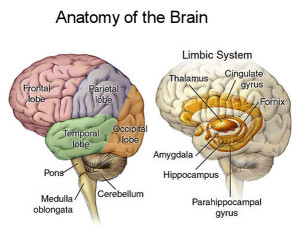
Rita Carter provides us with an excellent description of the brain, that it is as big as a coconut, the shape of a walnut, the colour of uncooked liver and consistency of firm jelly.
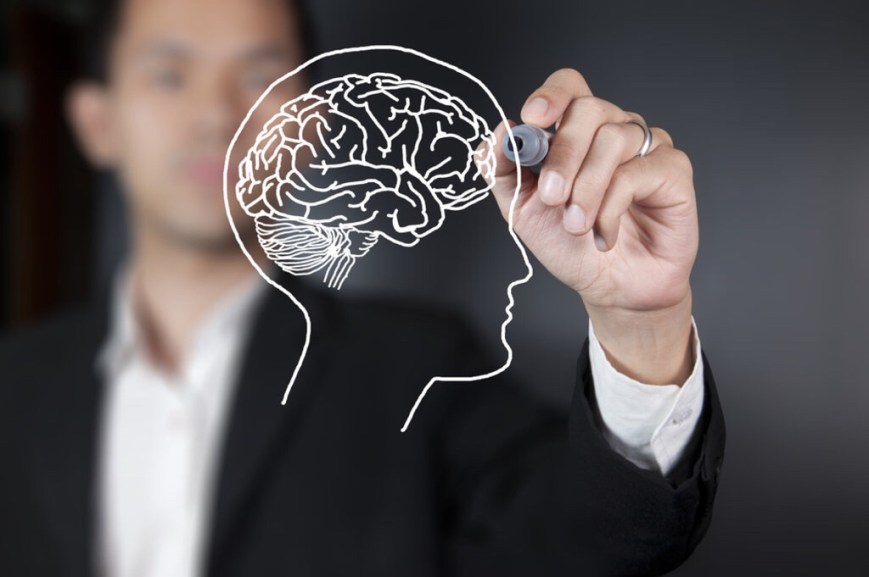
Imagine a cross section of the brain, taken from the side, alternatively look at the diagram opposite.
The cerebrum or cortex is the largest part of the human brain and is associated with higher brain function such as thought and action. It is divided into four sections.
- Frontal lobe – associated with reasoning, planning, some speech, movement, emotions, and problem solving
- Parietal Lobe – associated with movement, orientation, recognition, perception of stimuli
- Occipital Lobe – associated with visual processing
- Temporal Lobe – associated with perception and recognition of auditory stimuli, memory, and speech
The cerebellum coordinates movements such as posture, balance, and speech. Next to this is the brain stem, which includes the medulla and pons. These are the older parts of the brain and evolved over 500 million years ago. In fact, if you touch the back of your head and bring your hand forward over the top towards your nose, this effectively maps the ages in which the brain developed.
The Limbic system is largely associated with emotions but contains the hippocampus which is essential for long term memory and learning.
Synaptic gap – Cells that fire together wire together (Hebbian theory)
Although learning is complex, a large amount takes place in the limbic system because this is where the hippocampus sits. Here our memories are catalogued to be filed away in long-term storage across other parts of the cerebral cortex.
What comes next is important because it’s here within the hippocampus where neurons connect across what is called the synaptic gap that learning arguably begins. Synaptic transmission is the process whereby a neuron sends an electrical message, the result of a stimulus across the synaptic gap to another neuron that is waiting to receive it. The neuron’s never touch, the gap is filled by chemicals referred to as neurotransmitters examples of which include dopamine and serotonin. These are often referred to as the body’s chemical messengers.
Learning is making new connections, remembering is keeping them
When the stimulus is repeated the relationship between the neurons becomes stronger and so a memory is formed and learning has taken place. The whole process is called long term potentiation (LTP).
How does this help?
All a bit technical perhaps but very important as it explains so much. It is the reason that repetition is so valuable, for example, if you are reading something and it’s not going in, you need to fire those neurons again but perhaps using different stimulus. Try saying it out loud or drawing a picture alongside the text.
Don’t forget the blog I wrote in January 2018 that explained brain plasticity and how the brain changes as those new neural connections are made, a process called Neurogenesis.
The neurotransmitters, those chemicals released to fill the synaptic gap are also important as each one is different. For example, in addition to making you feel good, it’s likely that when you feel anxious your brain is releasing high levels of serotonin.
Although it’s fair to say there is still much we don’t understand about the brain, I hope the blog has helped remove some of the mystery of learning, it’s not a magical process but a scientific one.
learn more
- How to learn major parts of the brain quickly
- Long term potentiation and synaptic plasticity
- What Happens When You Remove the Hippocampus? The most examined brain in history
Dedicated to my dog Jack – our family dog and best friend
 The brain is truly astonishing, if you disagree with that statement it’s just possible you have never heard of circadian rhythms.
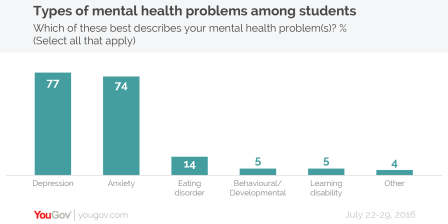 There is a far more sinister side to the disruption in your circadian rhythm, ongoing research has identified a direct link with mental health disorders such as depression. This is of particular interest given the rise in reported levels of depression amongst students. One area that is being investigated is screen time be that mobile phones or computers. The artificial blue light emitted from these devices could well be confusing your circadian clock.
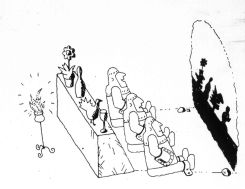 Although Plato is the author, it is Socrates who is the narrator talking to Plato’s elder brother Glaucon.
 Richard Feynman who featured in
 There are a number of terms that crop up continually in learning, motivation, attention, inspiration,


 Welcome to part two, exploring the facts and what really works in learning.




 A major new idea was presented to the world in 1991, to many it will mean very little but in terms of improving our understanding of the brain it was a milestone.
 The self-help and business section of any good bookshop will offer a wealth of advice as to how you can improve your confidence, the narrative will suggest that confidence will lead to success not only in your career but in life.
 Pedleysmiths Blog