
 This month’s blog is coming from Malaysia, I have been presenting at the ICAEW learning conference in KL. The only relevance of this, is that as with any lecture/presentation or lesson you have to put yourself in the shoes of your audience and ask, what do they want to get out of this, why are they giving up their valuable time and in many instances money to listen to what you have to say?
The difference in presenting to a group of people from another country is that you start to question the way they think and perhaps learn, is it the same or could you be making a big mistake by assuming it is.
Neurologically we are all the same
What gave me confidence was that I was talking about how you learn and examinations. And although there will certainly be many differences in culture, language, opinion, even what is considered funny, our brains are all made exactly the same, and as a result the process of learning is the same.
Malaysian jokes
Q: What is Malaysians’ favourite dish? – A: Astro
Q: What is the strongest chicken in the world? – A: Ayam Titanium
So everything I said about memorising content using spaced repetition, the importance of having bite sized chunks of information, the need to present an overview at the start of each session etc was met with nods of approval.
Students are different

However just because we have the same neurological components does not mean they are all used in the same way. And so it would have been a mistake for me to have presented trends observed in the UK as to the attitude of students towards learning as if they were the typical attitudes of all students, in particular Malaysian ones. The reason being, I have little knowledge of the Malaysian education system, parenting skills, culture etc, these are what help shape the beliefs, values and attitudes of students in Malaysia and in turn give every student their own unique learning style.
Learning styles are unique
The generalisation about Malaysian learning styles was that there was a tendency to rank passing exams as being the most important aspect of education. This had resulted in a number of issues, one being a lack of leadership skills. Who did they blame, well they blamed the teachers for being uninspiring and measuring students by the grades they had historically achieved rather than the grades they might achieve. The point here is not in any way a criticism of the Malaysian system, there are equally many problems in the UK but to highlight why learning has to be personalised. It of course goes even deeper than nationalistic trends, clearly not all Malaysian students are focused only on passing exams and some will make great leaders, everyone is unique.
But are the teachers to blame?
If you agree with the research produced by John Hattie from the University of Auckland, the answer is yes, the teachers are to blame. His research which was built up over 15 years suggest that an individual students inherent qualities account for 50% of their ability to achieve, but on the basis this cannot be changed it would be better to look at the next biggest attribute that can be influenced. Interestingly this had little to do with who you went to school with, the so called peer effect, your home life, the school you went to, and certainly not the technology used. It was all about the teacher or type of teacher you had. It is what teachers do, know and care about that makes the difference, 30% of the difference in fact.
I am sure that advocates of on-line will suggest that this is not about the teacher but the type of instruction, but at this stage of the debate that will only cloud the issue. This simply highlights the importance teaching or instruction as being the most important aspect of learning wherever you are in the world. Of course your peers, classrooms, technology all contribute but if you want to make investment in learning, spend it on developing the teachers.
My time in Malaysia comes to an end this evening but even if my presentation did not achieve all I had expected, and I hope it did, I feel I have learned a little more, as the Malay saying goes….. Everyday a thread, soon a cloth.
And if you would like to read more about John Hatties research, read the Click the link.
 “They say he has grit. I wanted a man with grit.” So says Mattie Ross in the 1969 film True Grit staring John Wayne. But what exactly does the young Mattie Ross actually mean, what is grit?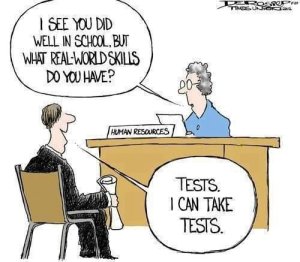
 university entrance exam is a major problem. The government has not been slow to react and for the first time anyone found cheating will face a possible seven year jail sentence. In Ruijin, east China’s Jiangxi Province, invigilators use instruments to scan students’ shoes before they entered the exam hall, while devices to block wireless signals are also used to reduce the opportunity to cheat.
 I have to admit in the last few months I have spent a fair bit of time looking into the facts behind the EU and checking on some of the statements made by both the remain and leave sides, attempting to discover truths or otherwise so that I could make a more informed decision. It proved difficult; much was opinion dressed up as fact by using numbers open to interpretation. Another technique used on the face of it to offer clarity, but in reality did just the opposite, was to state the “facts” forcefully, with conviction and repeat them often, giving the impression that what was being said was not only true but believed to be true.
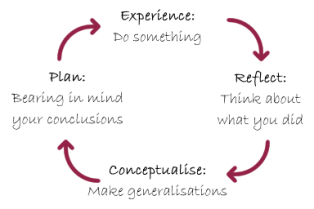 Step one in Kolb’s learning cycle is to have the experience. Step two, reflect, think back on what we have experienced. Step three, conceptualise, generate a hypothesis about the meaning of the experience, what is it we have learned, and step four, test that the hypothesis is supported by the experience, does it confirm that what we have learned is correct.






 The statistics are astonishing, as of January 2014, over 67 million people play League of Legends per month, 27 million per day, and over 7.5 million concurrently during peak hours. And if your good at it the prize money for winning the world championship might get you to question your chosen profession, it was $2.3m in 2014 and 2015. Playing an on-line game is part of daily life for many people.