
The single most important piece of advice for anyone sitting an exam is to practice questions, and where possible, past exam questions. It has been a consistent message for over 20 years, and although we have evidence to show its effectiveness it also has a common-sense logic. Would you for example go on a driving test having only read about driving in a book but never practiced in a car beforehand?
Although the process of practising questions provides insight not just about the exam but also how well you perform under timed conditions, there is another important and valuable lesson. What does comparing your answer to the model answer tell you about how well you understand the subject and what you need to do to get it right next time, effectively to close the gap?
Closing the gap
Checking if your answer is right or wrong is important for obvious reasons but there is a rich seam of learning to be found by looking at the detail in the answer and comparing it with yours. For numerical questions consider reworking the calculations, noting each iteration to help gain a better understanding of the answer. Although this will help should a similar question be asked again, that’s not the main objective. Focusing on one subject, one topic and a specific question helps direct your efforts to a problem that needs to be solved, and the brain loves to solve problems. It also adds context and purpose to what you have been learning.
Written answers are far more difficult to review as there is often a degree of interpretation. However, when you find a statement or section of narrative that is different to yours or perhaps didn’t appear in your answer, ask, why didn’t I put that? Was it that you knew what to say but didn’t think it relevant, was your answer similar but not as clearly expressed, has it exposed your level of knowledge or lack of it? It’s this process of reflection together with the guidance as to what you need to do to “close the gap” that makes doing it so worthwhile.
Different types of exam
There are different types of exam so in order to offer more specific advice, let’s look at two extremes.
Objective tests – these types of questions are the easiest to review because they are relatively short, but even if you passed don’t be satisfied, look at the questions you failed and learn from the answers. You may of course find your knowledge lacking, but going back to the textbook with a specific problem in mind is a very efficient way to learn. Also remember to add some comments to your notes as to what you have now learned, this will help you avoid making the same mistake again. And if you didn’t pass you obviously have even more work to do.
Case Study – looking at past questions for case studies is a very different learning experience. If the case study requires you to demonstrate application of knowledge, which is a common objective, reviewing the answer can provide excellent guidance as to how this can be done. Application is something many students find difficult, largely because their head is full of rules and not how those rules could be used in the context of a real-world problem.
In addition, you will get a feel for the required standard and how the right headings, phrases and structure can help give order to the random thoughts that will come to mind when in the exam. Equally don’t be afraid to effectively steal some of the set phrases or tricks of good writing, for example notice when making a series of points, firstly, secondly, thirdly can help the answer feel structured and yet not repetitive.
Reviewing past exam questions is learning from someone who has got the answer right, which sounds terribly logical when you think of it like that.

 The title of this month’s blog is not mine but taken from what many would consider a classic book about what can realistically be achieved by someone stood at the front of a classroom or lecture theatre, simply talking. Written some 25 years ago but updated recently Donald A. Bligh’s book takes 346 pages to answer the question,



 Intellectual humility as defined by the authors of a recent paper entitled,
 A point of view is a programme on radio 4 that allows certain well-read, highly educated individuals, usually with large vocabularies to express an opinion. It lasts 10 minutes and is often thought provoking, concluding with a rhetorical question that has no answer.


 Donald John Trump was born on June 14, 1946, in Queens, New York, the fourth of five children of Frederick C. and Mary MacLeod Trump. Frederick Trump was of German descent, a builder and real estate developer, who left an estimated $250-$300m. His Mother was from the Scottish Isle of Lewis. Trumps early years were spent at Kew-Forest School in Forest Hills, a fee-paying school in Queens. From there aged 13 he went to the New York Military Academy, leaving in 1964. Fordham University was his next stop but for only two years before moving to the Wharton School of Finance at the University of Pennsylvania, from which he graduated in 1968 with a degree in economics. After leaving Wharton Trump went onto to focus full time on the family businesses, he is now said to be worth $3.7bn.
 Hillary Rodham Clinton was born October 26, 1947, Chicago, Illinois. She was the eldest child of Hugh and Dorothy Rodham. Her father, a loyal Republican, owned a textile business which provided a “comfortable income”. Hillary’s mother who met Hugh Rodham whilst working as a company clerk/typist did not have a college education unlike her father. However Dorothy Rodham is said to have had a significant impact on Hillary and believed that gender should not be a barrier.
 Clinton, they married in 1975. She graduated with a JD in Law and had a paper published in the Harvard review, under the title “Children Under the Law”.
 A case study is a relatively high level form of assessment used to test a student’s ability to apply knowledge from a whole range of different subjects set against the backdrop of a real-world situation, a case study is a simulation.
 This month’s blog is coming from Malaysia, I have been presenting at the ICAEW learning conference in KL. The only relevance of this, is that as with any lecture/presentation or lesson you have to put yourself in the shoes of your audience and ask, what do they want to get out of this, why are they giving up their valuable time and in many instances money to listen to what you have to say?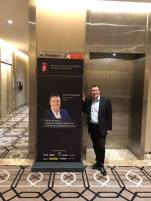
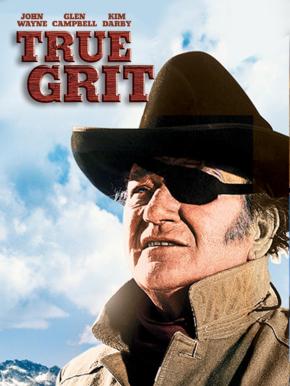 “They say he has grit. I wanted a man with grit.” So says Mattie Ross in the 1969 film True Grit staring John Wayne. But what exactly does the young Mattie Ross actually mean, what is grit?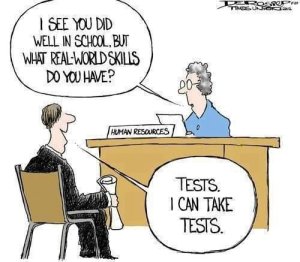
 university entrance exam is a major problem. The government has not been slow to react and for the first time anyone found cheating will face a possible seven year jail sentence. In Ruijin, east China’s Jiangxi Province, invigilators use instruments to scan students’ shoes before they entered the exam hall, while devices to block wireless signals are also used to reduce the opportunity to cheat.
 I have to admit in the last few months I have spent a fair bit of time looking into the facts behind the EU and checking on some of the statements made by both the remain and leave sides, attempting to discover truths or otherwise so that I could make a more informed decision. It proved difficult; much was opinion dressed up as fact by using numbers open to interpretation. Another technique used on the face of it to offer clarity, but in reality did just the opposite, was to state the “facts” forcefully, with conviction and repeat them often, giving the impression that what was being said was not only true but believed to be true.
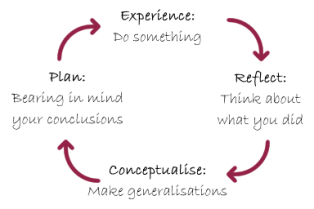 Step one in Kolb’s learning cycle is to have the experience. Step two, reflect, think back on what we have experienced. Step three, conceptualise, generate a hypothesis about the meaning of the experience, what is it we have learned, and step four, test that the hypothesis is supported by the experience, does it confirm that what we have learned is correct.

 Pedleysmiths Blog