
Willpower – A muscle not a trait

Many people talk about willpower as if it’s all or nothing, something you either have or don’t. But that’s not how it works. Willpower isn’t genetic, its better thought of as a skill that you improve and develop over time. While we all have a basic foundation, the strength of your willpower depends heavily on learned habits. The implication being that anyone can improve their willpower through practice, just as they would strengthen a *muscle.

What is willpower?
While psychologists define willpower as the ability to resist short-term temptations for a longer-term gain, it might more easily be thought of as “doing what you know you should, even when you don’t want to do it.” There are also many terms used in a similar context as willpower that can be confusing. To add some clarity, here are a couple of sentences that puts them all together.

To achieve a long-term goal, Motivation provides the reason to start. Determination is the short-term commitment required to stay on track, Willpower is the moment to moment self-control needed to avoid temptation, and Grit is the perseverance necessary in the long term.

The science
Interestingly we know a reasonable amount about willpower and what is happening in the brain. Neuroscience research shows us that there is something called the Anterior Cingulate Cortex (ACC) which is heavily involved in conflict monitoring, spotting when short term impulses clash with long-term goals and in regulating attention and effort. The implication is that when you resist temptation or push through discomfort, the ACC becomes more active, helping the prefrontal cortex enforce discipline over the brain’s reward systems. In this way, the ACC functions as a kind of “emotional referee,” guiding persistence and aligning behaviour with intention.

Imagine you’re on a diet and someone offers you a slice of chocolate cake. In that moment, your brain experiences a clash between the short‑term impulse to enjoy the cake and the long‑term goal of losing weight. The ACC will spot the conflict and tell your prefrontal cortex, which steps in to enforce discipline over the brain’s reward systems. By saying “no thanks” and resisting the temptation, that’s willpower in action.

What this tells us about willpower is that it is not a fixed trait but a dynamic process rooted in brain activity. The ACC demonstrates that willpower is about managing competing signals balancing the pull of short-term gratification against the push of long-term purpose. Studies suggest that repeated acts of self-control strengthen ACC pathways, making persistence easier over time. In short, the science shows that willpower is a trainable skill, shaped by the brain’s ability to detect conflict and sustain effort, rather than an innate quality we are born with.

Willpower is closely linked to self-control, providing the mental energy it needs to be effective.  And as identified by University of Pennsylvania psychologists Angela Duckworth, and Martin Seligman this makes a real difference. Their research explored self-control in eighth-graders over the course of the school year. They found students who ranked high on self-discipline had better grades, better school attendance, and higher test scores, and were more likely to be admitted to a competitive high school program. Self-discipline, the researchers found, was more important than IQ in predicting academic success.

How to strengthen your Willpower
The good news is that willpower can be strengthened over time. By practicing small, deliberate strategies, it’s possible to build the mental resilience needed to make better choices, sustain effort, and push through discomfort. The following steps outline practical ways to improve your willpower and make it easier to stay on track when challenges arise.

  • Start small and build gradually – Begin with minor challenges, such as not checking your phone every 10 minutes. Each small success builds confidence and stamina for bigger goals.
  • Practice delayed gratification – Train yourself to pause before giving in to impulses. Even short waits strengthen your ability to resist temptation.
  • Manage stress and energy – Stress drains willpower, so restore your mental reserves with mindfulness, deep breathing, or just plain old regular sleep.
  • Set clear, achievable goals – Define specific actions like “I’ll study for 45 minutes this evening” instead of vague ones like “I will study a lot this week.” Concrete goals reduce decision fatigue.
  • Build routines and habits – Automating good choices such as scheduled study time reduces the need for constant self‑control and frees willpower for bigger challenges.
  • Reward progress. Celebrate achievements along the way to reinforce motivation and keep momentum strong.

For learning, this has important implications. Success is not simply about intelligence or talent, but about the discipline to persist, to resist distraction, and to sustain focus when challenges arise. Each act of willpower, choosing to study instead of scrolling, pausing before giving in to temptation, setting clear goals etc, reinforces the neural pathways that make staying with your task easier next time.

In this way, learning itself becomes an exercise in willpower – a process of training the mind to align effort with purpose.

Worth a listen – How to Build Extreme Willpower, David Goggins & Dr. Andrew Huberman

*Muscle – Its worth saying that the muscle reference is an analogy, it works to a certain extent but is not perfect. Some think a better example might be a battery, it has finite energy, reduces over time and with use, but can be recharged. Also it doesn’t get bigger the circuits become more efficient.


Effective learning = Affective learning

When we think of learning, we often focus on acquiring knowledge and developing skills. But there’s a third, often overlooked dimension, the affective domain. These are our attitudes, motivation, values, and emotions. It’s easy to view them as somehow less important and yet they are what transform knowledge and skill into true expertise.

Imagine two students sitting in a maths class, both are taught about addition (knowledge). They are then asked to add several numbers together, which they do successfully (skill). But one of them believes they are not very good at maths and that the subject is boring. The other likes the subject and is looking forward to the next class. It’s not hard to figure out who will learn more, not because they were in some way smarter but because of the difference in their attitude, levels of motivation and beliefs.

I’m trying something different this month – a two minute video explainer of the blog, enjoy

How to play the violin
One way to understand how knowledge, skills and the emotional side of learning fit together is to consider how you might learn to play the violin.

First you need to be able to read music, this is the knowledge phase. It’s not easy of course, and in some ways may feel a little abstract and lacking in purpose. Next there is the physical skill of being able to play the violin. Reading music is a prerequisite but its practice and repetition that will help you improve. And lastly, you pick up the violin and play a piece of music, this is when the affective domain becomes important. How confident are you there will be no mistakes, do you feel sad when playing, what emotion are you trying to pass onto your audience. To deliver a great performance will require the combination of knowledge, skills, and emotions, interwoven so closely they cannot be separated.

The research – There is a large body of evidence supporting the impact of emotions, attitudes, and beliefs on learning. In 2014 Reinhard Pekrun published Emotions and Learning, in it he demonstrated that positive emotions like enjoyment and pride enhance learning by increasing motivation, engagement, and cognitive flexibility. In contrast, negative emotions such as boredom and anxiety can suppress learning.  Carol Dweck’s work on growth mindset (2006) further reinforces this idea. She showed that learners who believe effort leads to improvement are more likely to persist through challenges. These beliefs rooted in the affective domain shape how students respond to setbacks and how resilient they become in the face of difficulty.

Another Bloom’s taxonomy!
Many will have heard about Blooms taxonomy but what you might not know is that there are three of them. The first is Cognitive, the Bloom most of us have seen before (The pyramid), the second Psychomotor domain, that looks at physical skills, and lastly the Affective domain that defines behaviours that correspond to attitudes and values.

This affective domain has five levels:

  • Receiving – The willingness to attend or listen, giving your attention  
  • Responding – Actively participating, effectively engaging
  • Valuing – Attaching worth to an idea, making it personal, forming the belief
  • Organisation – Integrating the values into your belief system, embedding the belief
  • Characterisation – The learning becomes part of your identity

Why it works – Bloom sets out the hierarchy of development but the reasons our brains respond and change are, firstly emotion directs attention and strengthen memory. Our brains evolved to prioritise emotionally charged information. Secondly, positive feelings boost motivation. When learners feel valued and capable, dopamine release reinforces effort and persistence. And lastly supportive environments reduce cognitive overload, freeing up working memory for reasoning and problem-solving

What does this all mean?
Understanding that there is a third aspect of learning is important, if not educators will spend disproportionate amounts of time on knowledge and skills, which of course is often the case! When in fact they should be thinking about how to use affective techniques to deepen learning. For students it gives an insight into the human side of learning, you are not ChatGPT able to simply scan content and recall it whenever needed, you are a human being who needs to feel, connect, and value the material for it to stick. That emotional and motivational component is the fuel you need for long-term mastery. Simply knowing that can make a big difference.

Want to learn more – Listen to Nick Shackleton-Jones talking with John Helmer about affective learning, and a lot more.

The virtual educator has arrived!

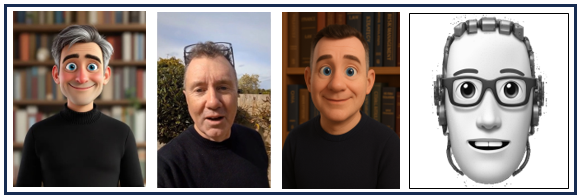
But which one is me?

Inspired by a recent LinkedIn post I made regarding what it might be like to have an avatar as a teacher, I thought I should check out the evidence in terms of the effectiveness of avatars to improve learning before I get too carried away with the technology itself.

What is an avatar?
An avatar is a digital or computer-generated representation of a person or character in a virtual environment. It can take various forms, for example a simple profile picture on social media or an audio avatar talking about a specific subject using a synthetic voice. However, with major advancements in generative AI, avatars are evolving beyond static images or basic voice interactions. We are increasingly seeing lifelike digital humans emerge, sophisticated AI-driven avatars capable of “understanding” what we say and generating intelligent responses, speaking with realistic voices and impressive synchronised lip movements. This transformation is redefining how humans engage with AI-powered virtual beings, blurring the lines between digital representation and authentic interaction.

As to what they look like, here are some examples:

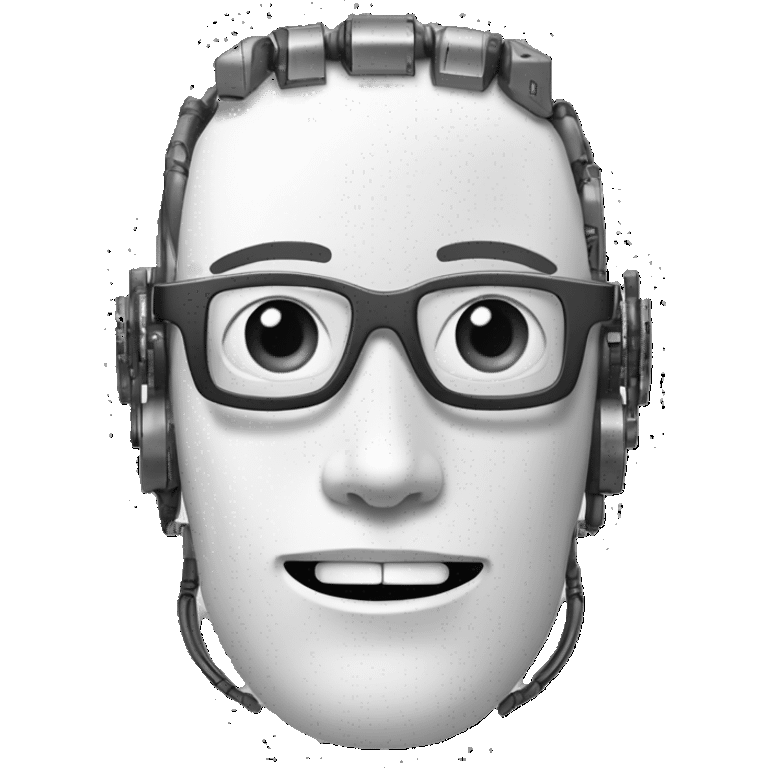
  • Firstly, an audio avatar that I have now built into my blog to provide a different perspective on what has been written. Here the avatar “chats” about the blog rather than simply reading it out loud. See above.
  • Secondly a Pixar style avatar. The goal here is to challenge the assumption that an avatar must resemble a real person to be effective.
  • And lastly, this is a more realistic avatar. Effectively an attempt to replicate me, in a slightly imperfect way. This is not about fooling the audience, although this is now possible, but to explore the idea that humans respond better to a more human like character.

The talking head – good or bad?
However there’s an elephant in the room when it comes to avatars, why do we need a talking head in the first place? Wouldn’t a simple voice-over, paired with well-structured content, be just as effective?

If you look at YouTube, almost everyone uses talking-head videos in different ways, surely if they weren’t effective, no one would have them, a kind of “wisdom of crowds.” But does their popularity actually prove their value, or are we just following a trend without questioning its impact?

Let’s have a look at the evidence:
After reviewing multiple studies, the findings are somewhat mixed. However, there’s enough insight to help us find an approach that works.

First, we have research from Christina Sondermann and Martin Merkt – Like it or learn from it: Effects of talking heads in educational videos. They conclude that the learning outcomes were worse for videos with talking heads, their concern was that it resulted in higher levels of cognitive load. But participants rated their perceived learning higher for videos with a talking head and gave better satisfaction ratings, selecting them more frequently. Secondly, another piece of research published five months later by Christina Sondermann and Martin Merkt, yes, the same people, What is the effect of talking heads in educational videos with different types of narrated slides. Here they found that “the inclusion of a talking head offers neither clear advantages nor disadvantages.” In effect using a talking head had no detrimental impact, which is slightly at odds with their previous conclusion.

A little confussing I agree, but stick with it….

Maybe we should move away from trying to prove the educational impact and consider the student’s perception of avatars. In this first report, student Perceptions of AI-Generated Avatars, the students said “there was little difference between having an AI presenter or a human delivering a lecture recording.” They also thought that the AI-generated avatar was an efficient vehicle for content delivery. However, they still wanted human connection in their learning and thought some parts of learning needed to be facilitated by teachers and that the avatar presentations “were ‘not … like a real class.” The second report, Impact of Using Virtual Avatars in Educational Videos on User Experience raised two really interesting points. Students found that high-quality video enhanced their learning, emotional experience, and overall engagement. Furthermore, when avatars displayed greater expressiveness, they felt more connected to the content, leading to improved comprehension and deeper involvement.

For those designing avatars, this means prioritising both technical quality and expressive alignment. Avatars should be visually clear, well animated, and their facial expressions should reinforce the message being conveyed.

What does this all mean?
Bringing everything together, we can conclude that avatars or talking heads are not distractions that lead to cognitive overload. Instead, students appreciate them, relate to them emotionally, in fact they see little difference between a recorded tutor and an avatar. Their expressiveness enhances engagement and might prove highly effective in helping student remember key points.

To balance differing perspectives, a practical approach might be to omit the talking head when explaining highly complex topics, (reducing cognative load) allowing students to focus solely on the material. However, keeping the avatar visible in most other situations, particularly for emphasising key concepts or prompting action to ensure maximum impact. Alternatively, why not let the student decide by offering them a choice to have the talking head or not.

How might avatars be used?
One important distinction in the use of avatars is whether they are autonomous or scripted. Autonomous avatars are powered by large language models, such as ChatGPT, allowing them to generate responses dynamically based on user interactions. In contrast, scripted avatars are entirely controlled by their creator, who directs what they say.

A scripted avatar could be particularly useful in educational settings where consistency, accuracy, and intentional messaging are crucial. Because its responses are predetermined, educators can ensure that the avatar aligns with specific learning goals, maintains an appropriate tone, and avoids misinformation.

This makes it ideal for scenarios such as:
– Delivering structured lessons with carefully crafted explanations.
– Providing standardised guidance, ensuring every student receives the same high-quality information.
– Reinforcing key concepts without deviation, which can be especially beneficial when high stake assessments are used, as is the case with professional exams.

However, if we power these avatars with Generative AI, the possibilities increase significantly:

  • More personalised learning. One of the most exciting prospects is the ability of avatars to offer personalised and contextualised instruction.
  • Help with effective study. Avatars could be used to remind students about a specific learning strategy or a deadline for completion of a piece of work. A friendly face, at the right time might be more effective than an email from your tutor or worse still an automated one.
  • Motivational and engaging. These avatars could also have a positive effect on motivation and feelings about learning. They could be designed to match an individual’s personality and interests, making them far more effective both in terms of higher levels of motivation and engagement.
  • Contextualised Learning. AI-based avatars can support teaching in practical, real-world scenarios, including problem solving and case-based learning. Traditionally, creating these types of environments required significant resources such as trained actors or expensive designed virtual worlds.

A few concerns – autonomous avatars
Of course, as with any new technology there are some concerns and challenges:

Autonomous avatars pose several risks, including their ability to make mistakes, the problem with avatars in particular is, they will be very convincing. We are already acutely aware that large language models can sometimes ‘hallucinate’ or simply make things up. Data protection is another concern, with risks ranging from deepfake misuse to avatars persuading users into sharing personal or confidential information, which could be exploited. Finally, value bias is a challenge, as AI trained avatars may unintentionally reflect biased perspectives that a professional educator would recognise and navigate more responsibly.

Conclusions
Avatars, whether simple or lifelike, are gaining traction in education. Research indicates that while talking heads don’t necessarily improve learning outcomes, they don’t harm them, and students perceive them positively. A key distinction lies between scripted avatars, offering consistent and accurate pre-determined content, ideal for structured lessons, and autonomous avatars powered by AI that open up a world of possibility in several areas including personalisation.

Avatars are a powerful and exciting new tool that offer capabilities that in many ways go beyond previous learning technologies, but their effectiveness very much depends on how they are designed and used. But hasn’t that always the case….

Finally – This is an excellent video that talks about some of the research I have referred to. It is of course presented by an avatar.  What Does Research Say about AI Avatars for Learning?

PS – which one is me – none of them, including the second one from the left.

Are attention spans getting shorter – Spoiler, No?

Now what was I saying
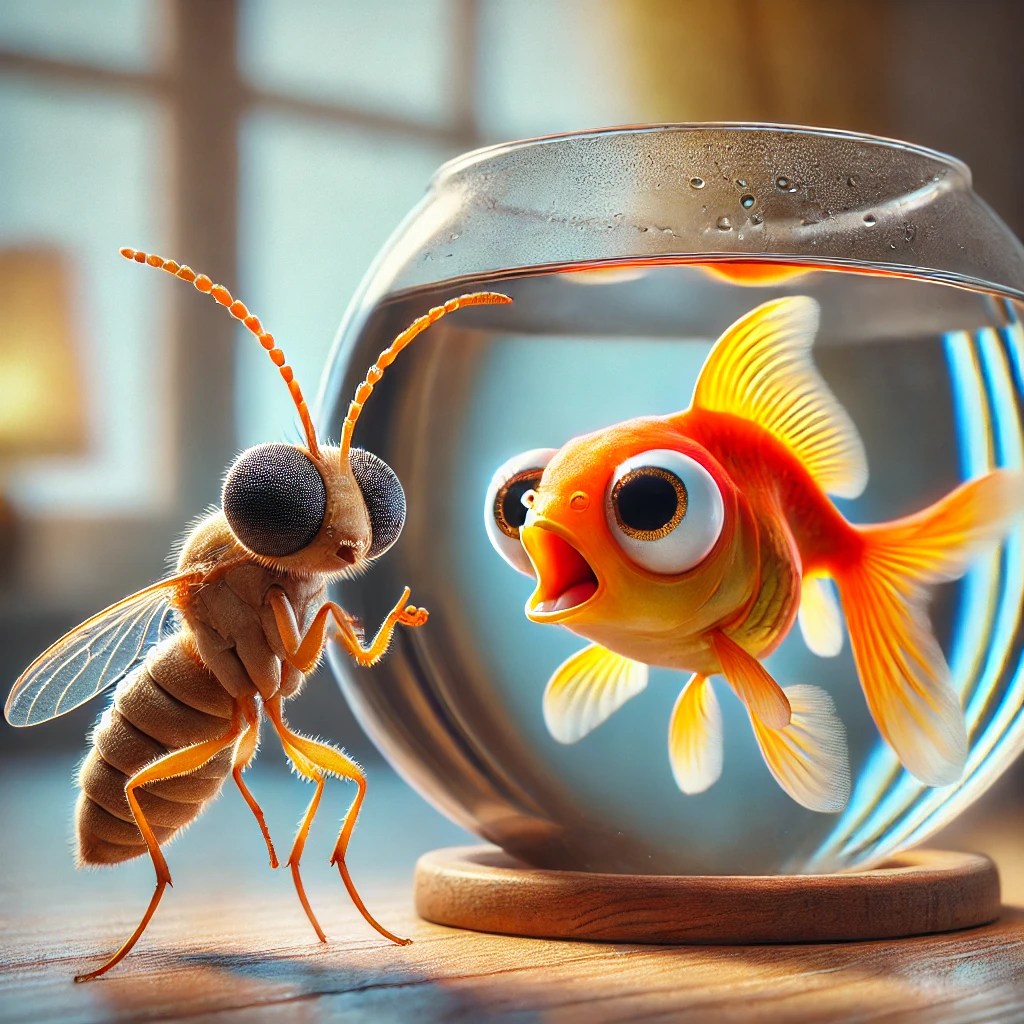
A goldfish can remember certain tasks and environments for weeks and even months – a Gnat however doesn’t have an attention span at all. *

There has been a significant amount of space in the press devoted to telling us that attention spans are getting shorter, largely the result of an increased use of digital technologies.

One headline read – “You Now Have a Shorter Attention Span Than a Goldfish

This story can be traced back to a 2015 Microsoft report which included the claim that the average human attention span had decreased from 12 seconds in 2000 to 8 seconds in 2013, shorter than the alleged 9 second attention span of a goldfish.

It has however since been debunked and is simply not true. It was based on vague, unsupported opinion and lacked the necessary evidence. Microsoft has since taken the report down from its website.

And yet the myth remains popular possibly because most days you will see people using their smart phones endlessly scrolling, looking for something to grab their attention in order to satisfy their “dopamine bump” addiction. They pause only momentarily to read or look at the image on the screen before continuing the search. Ask them what they are doing, and without looking up to acknowledge the question, they will answer “nothing”!

Many social media platforms are designed around the idea of short attention spans, furthering the belief that we have a new generation of learners who are different in some way to those that went before.

Attention spans
An attention span is typically defined as “the amount of time a person can maintain attention on a specific task or activity, without becoming distracted.” The key point here is that attention has a lot to do with the brains ability to resist interruption.

For this reason, its useful to think about it in two ways:

  • Sustained Attention (maintaining focus over time) is the ability to concentrate on a single task over a long period, such as when you are reading or studying. The average person can focus their attention for around 20 to 30 minutes, which is a lot more that 8 seconds! The Pomodoro technique that was developed by Francesco Cirillo in the late 1980’s works on this principle. With the aid of a timer, you are required to take a short break every 25 minutes.  As a result, you can then maintain focus for hours.
  • Selective Attention (choosing what to focus on) is the ability to focus on one thing while filtering out distractions, such as focusing on a single conversation in a noisy room.

These are of course interrelated with sustained attention relying on selective attention to be effective. It’s also important to note that attention is not fixed and is dependent on age, level of interest, fatigue, stress etc.

This study by Rosen, Lim, Carrier, and Cheever (2011) found that students averaged less than 6 minutes on a task before switching to another, most often because of a need to reply to a text or check social media. It concluded that allowing students short “technology breaks” could help reduce these distractions, and that teaching students’ metacognitive strategies would also be beneficial. They stated that the students were prone to distraction due to device notifications, not because they had reduced attention spans.

Attention Deficit Hyperactivity Disorder (ADHD)
ADHD is a neurodevelopmental condition that affects attention, impulse control, and activity levels. Symptoms include difficulty in maintaining focus, being impulsive and having high levels of energy. It is a recognised medical condition that results in a lower attention span. It is thought to be highly heritable, with levels in the region of 70 – 80%, but it’s not as common as you might think given its prominence in the press. In the UK, there are only believed to be around 3 – 4% of children and 2% of adults who suffer from it. One caveat, it is possible that there are a lot of people who remain undiagnosed.

The impact on learning
The main point here is that in terms of our cognitive ability attention spans have not really changed. What has, are the levels of distraction and cultural and environmentally accepted norms. Think about the rise of digital devices, instant messaging, and social media, people now have a vast number of ways in which they can distract themselves. In addition, the sheer amount of information available can be overwhelming, making it harder to focus on one task for long. Many of us also lead busy lives, forcing us to juggle multiple tasks and often failing to any of well.

For the learners – Don’t fall into the trap of thinking “it’s not your fault” your genetics have given you a short attention span. Your attention span is fine it’s the environment you find yourself in that is the problem – see last month’s blog on learning environments.

A few tips

  • Take regular breaks – as highlighted above taking short 5 to 15 minute breaks every 20 to 30 minuets, maybe even 45 minutes can improve your ability to focus.
  • Reduce distractions – eliminate or minimise distractions, this means not having your mobile phone in the room or at least turning off your notifications. You need to create a dedicated, distraction free workspace.

And for the educators – While adapting content for individuals to accommodate short attention spans can be useful, especially when trying to engage them. It’s important not to think about it as a new way of learning, it’s more of an environmental challenge. As a consequence it would be wrong to design all lessons with it at the forefront of your mind. Evidence from cognitive science suggests that learning should be challenging (desirably difficult), requiring sustained focus, active engagement, and mental effort. But perhaps worse of all, if we continue to produce content that caters only to short attention spans, there is a danger of inadvertently reinforcing the behaviour.

Fake NBC Goldfish news
Here is a video typical of what you can find on the internet that continues to support the 8 second myth – Is Your Attention Span Shorter Than a Goldfish’s?

And finally, In defence of Gnats
Gnats, like many insects, are primarily focused on tasks like finding food, mating, and avoiding predators. While their attention may shift quickly between these tasks, it’s not really fair to say they have a short attention span in the same way humans or goldfishes do.

If it wasn’t curiosity, what did kill the cat?

In 2006 Professor Dr. Ugur Şahin, an oncologist was working on a curiosity-driven research project to help find out if it might be possible to develop a vaccine to control and destroy cancerous tumours by activating the body’s own immune system. This approach was fundamentally different to the more common treatments of radiation and chemotherapy. Curiosity driven projects often have no clear goal but allow scientists to take risks and explore the art of the possible.

In 2008 Dr. Ugur Sahin and his wife Ozlem Tureci founded a small biotech company called BioNTech who you may never have heard of, if it wasn’t for COVID-19. Because together with Pfizer, BioNTech are the suppliers of the first Covid vaccine to be used in the UK. That early curiosity driven research in 2006 provided Sahin and Tureci with the answers to our 2020 problem.

Curiosity is the wick in the candle of learning – William Arthur Ward
Curiosity is the desire to know or learn something in the absence of extrinsic rewards. The point being, there is no reward other than the answer itself. It is a psychological trait and because of that, has a genetic component, some people are just born more curious. However, nurture has an equally important role to play, and although it’s argued you can’t teach curiosity you can encourage people to become more curious by using different techniques. See below.

Sophie von Stumm, a professor of Psychology in Education from the University of York believes that curiosity is so important in terms of academic performance that it should sit alongside intelligence and effort (conscientiousness) as a third pillar. Her research found that intelligence, effort and curiosity are key attributes of exceptional students.

Curiosity follows an inverted U-shape when shown in graphical form. Imagine a graph, along the horizontal axis we have knowledge and on the vertical, curiosity. When we first come across a new subject, we know very little and as such our curiosity rises as does the level of dopamine, but as we find out more and more our curiosity will reach a peak before ultimately falling.

“When you’re curious you find lots of interesting things to do.” Walt Disney

Curiosity types – it would be far too simplistic to think that there is only one type of curiosity. Mario Livio, an astrophysicist talks about a few of them in his book Why? What Makes Us Curious.

  • Epistemic curiosity is the one we have been talking about so far and relates to the type of curiosity that drives research and education. It’s generally a pleasurable state, the result of a release of dopamine that comes from mastery and the anticipation of reward.
  • Perceptual curiosity is primal and exists on a continuum between fear and satisfaction, it’s the curiosity we feel when something surprises us or when we get an answer that doesn’t quite fit with what we expected. The motivation is to seek out something novel although the curiosity will diminish with continued exposure.
  • Diversive curiosity is transient and superficial and is often experienced when swiping through your Twitter feed. Its effectively a means of jumping from topic to topic and normally fails to result in any form of meaningful insight or understanding.

You might think that as we grow older, we become less curious simply because we know more. However, although we may lose some elements of diversive curiosity or the ability to be surprised, research shows that epistemic curiosity remains roughly constant across all age groups

But why?
The roots to curiosity can be traced back to a form of neoteny, an evolutionary condition that means although we reach maturity, we retain juvenile characteristics. Effectively we are more childlike than other mammals, continuing to be curious and playful throughout our lives. You can often tell if people are curios by looking at their eyes, which will become more dilated. This indicates that noradrenaline, a neurotransmitter has been released in the brainstem’s locus coeruleus, the part of the brain most strongly linked to arousal, vigilance, and attention. In addition, noradrenaline is also integral to a number of higher cognitive functions ranging from motivation to working memory and therefore hugely valuable for learning.

This may well be a slightly complicated way of saying that if you are curious about something, you are more likely to pay attention, making it easier to remember and in so doing learn.

How to become more curious

“Millions saw the apple fall, but Newton asked why.” Bernard Baruch

Research into curiosity has confirmed some of what we might have already assumed to be correct, for example in a paper published in 2009, it concluded that people were more likely to recall answers to questions they were especially curious about. However it also showed that curiosity increased when answers were guessed incorrectly, suggesting that surprise was a factor in improved retention.

“I know you won’t believe me, but the highest form of human excellence is to question oneself and others.” Socrates

The concept that curiosity is based on an Information gap was first put forward by George Loewenstein in 1994 which leads to one of the most powerful tools we can use to improve curiosity, asking questions. The best question to ask is probably WHY, but don’t forget Kipling’s other 5 honest serving men, WHAT, WHEN, HOW, WHERE and WHO. Below are a few more ideas.

  • Ask Socratic questions. This involves asking open ended questions that provoke a meaningful exploration of the subject, this process sits at the heart of critical thinking.
  • Create environments that promote curiosity. Challenges that need solving require a curious mind. Case studies are also more of interest, providing several different routes to explore.
  • Guess the answer first. As mentioned above, if you guess first it increases the surprise factor. Loewenstein also argued that guessing with feedback stimulates curiosity because it highlights the gap between what you thought you knew and the correct answer.
  • Failure is feedback. Finding out why you got something wrong can be just as interesting as knowing that you are right, it certainly increases curiosity.
  • Start with the curious part of a subject. You may not be curious about the whole subject, but try to find the part you are interested in and start there.

And if you would like to find out more

What’s the answer, what did kill the cat?

it was IGNORANCE…………

Boring is interesting

One of the reasons a subject might be difficult to learn is because its just very boring…….but is any subject really boring?

boredom11

Why do we get bored?

Firstly, we should define what boredom is, surprisingly for something that many people have experienced and therefore feel they know, definitions are a little vague, for example, from the dictionary we have, “the feeling of being bored by something tedious”, which is not particularly helpful. If we dig a little deeper we find “the aversive experience of wanting but being unable to engage in satisfying activity” or put another way, what you are currently doing is not sufficiently stimulating such that your mind will wander looking for a more satisfying alternative task.

The brain is in effect searching for dopamine, the neurotransmitter that helps control your reward and pleasure centres. The implication being that the task you are currently involved with is not delivering enough dopamine for you to continue with it. There is some evidence to show that people with low levels of dopamine production may get bored easily, continually looking for new and more stimulating activities. This so called “trait boredom” has been linked to dropping out of school, higher levels of anxiety, gambling and alcohol/drug abuse.

Boredom is an emotion often brought on by routine, monotonous and repetitive work that has little perceived value.

The opposite of boredom is engagement

On the basis that being bored is not a particularly good emotion when it comes to learning we should look to change it by becoming more engaged. One small but important point before we move on, being bored is not completely without its uses, watch this TED lecture – How boredom can lead to your most brilliant ideas, presented by Manoush Zomorodi. In this Manoush argues that because the brain is searching for stimulation when bored, it can lead to increased creativity and great ideas.

An interesting way of thinking of engagement is that it’s what you see when someone is motivated.  This is important if you want to pass an exam because there is evidence (Wang & Eccles, 2012a) to show that students who are engaged are more likely to do well in examinations and aspire to higher education.

But what to do?

  • Recognise that you are feeling bored. This is the first step because if you don’t know your bored its easy to build up a deep dislike for the subject, and when you do that the answer becomes easy. It’s not my fault, it’s the subject that’s boring.
  • Your subject needs to be meaningful. Students often say, “I will never use what I have to learn.” This is of course an opinion; the truth is you simply don’t know. I can still remember thinking I would never need to understand the Capital Asset Pricing Model (a formula used in Financial Management to calculate shareholder returns) little did I know one day I would actually teach it.
  • Be curious, keep thinking, “that’s interesting”. Nothing is really boring it’s only the way you are looking at it. Curiosity is a state of mind that fortunately has is no cure.

The cure for boredom is curiosity. There is no cure for curiosity.    Ellen Parr

  • Make it fun or turn the activity into a game.  There is no doubt that during your studies there will be a need to rote learn information and because this is a repetitive task it can be boring. But if you break up what you have to learn into bite size chunks and turn it into a game with rewards e.g. if I learn these 4 definitions by 6.00 I can finish for the day, you will be amazed how much easier it can become.
  • Find people who are engaged and ask them to explain what they see, why do they find it interesting. This might be necessary if your teacher or lecturer fails to bring the subject to life, fails to engage you in the subject. Interest and engagement are contagious, unfortunately so is boredom.
  • Its too easy – its too hard. Your boredom might come from the fact that what your learning is basic, if so ask for more advanced work, I know that sounds counter intuitive but you will benefit in the long run. And if its too hard, speak to your teacher, they will be able to help. This is an example of taking control, often boredom strikes when you feel there is nothing you can do, sitting waiting for a train that has been delayed. By taking some form of control e.g. checking alternative routes home, the boredom will pass.

And if you want to find out more

Why Do We Get Bored? 

On the Function of Boredom

The Unengaged Mind: Defining Boredom in Terms of Attention

Learning, Self-control and Marshmallows

pink-&-white-marshmallow

In the late 1960s and early 1970s research led by psychologist Walter Mischel, then a professor at Stanford University led to one of the most valuable insights into human behaviour and learning.  It showed that children who demonstrated self-control or if you prefer self-discipline went on to gain higher marks in school, had better social and cognitive skills, a greater sense of self awareness and coped with stress far more easily in later life.

In the actual experiment a child was offered a choice between having one marshmallow, pretzels and cookies worked just as well, immediately or two marshmallows if they waited for a short period, approximately 15 minutes. The child was alone as the tester left the room, they returned later to reward those who had not eaten the marshmallow as promised. Those that still had the marshmallow sat in front of them had demonstrated self control.

It became known as the marshmallow experiment and was the inspiration for further research, in particular why was it that some were able to resist but others couldn’t, were some people born with higher levels of willpower and the ability to exert self-control or could it be learned?

Mischel continued his research and published a book in 2014, The Marshmallow Test: Understanding Self-control and How To Master It, which offers some interesting insight into the nature nurture question.

Delayed Gratification

Later research in particular work by Laura Michaelson et al, in 2013 suggested that delaying gratification may also require trust (social trust) in the individuals offering the future rewards. Michaelson identified that if the children didn’t think they would get a second marshmallow, they would most likely eat the first one. In effect if you don’t believe the person is trustworthy, then even those with “will power” will give in.

This has a significant implication in so much that the ability to delay cannot be hard wired, it is environmental, influenced to some extent by what you believe. There has also been the suggestion that it is logical to eat the first marshmallow, especially if you have grown up in an environment where resource is scarce.

This leads us to the conclusion that there are two potentially important factors at play, firstly self-control and secondly established beliefs.

The ability to discipline yourself to delay gratification in the short term in order to enjoy greater rewards in the long term, is the indispensable prerequisite for success. Brian Tracy

Implications for Learning

Fundamentally delayed gratification is about the belief that short-term pain or at least a little discomfort today will lead to rewards in the future. And that is an important component of learning, yes of course learning should be interesting and enjoyable but there will come a point when it is not. This is especially true when taking examinations, even if you enjoy the subject, sitting a test or exam that you might fail can be stressful and for most is far from a pleasant experience. Learning also requires that you make sacrifices in terms of what you give up, for example not meeting with friends, studying on bank holidays, and generally missing out.

The good news is that as Walter Mischel and others discovered you can improve your self-control by using a few simple techniques.

  • Remove the distraction – if the marshmallow had been taken out of sight, the temptation to eat it would be left to your imagination. The student’s marshmallow is most likely to be a mobile phone, so how about you remove it, not for ever of course that would be unreasonable, just for a couple of hours. An alternative is to distract yourself, rather than thinking about what your giving up, do something else, watch a video on the topic, produce a mind map etc.
  • Have a routine – develop a routine or habit for example, always study for two hours after you get home.
  • Reframe – if you thought that the marshmallow was bitter, the temptation to eat it would go away. It is possible to reframe the distraction as a negative, for example  that mobile phone ringing is someone I really don’t want to speak to….
  • Reward yourself – when you have studied for 2 hours, give yourself a reward, anything you like, a new car might be over the top, but you deserve something.
  • Set goals – perhaps obvious, but if you have a goal not to eat the marshmallow for 15 minutes, then 1 hour, eventually you will be able to resist for days.

The world in which we live seems to be changing, as organisations attempt to satisfy the continual demands of those with a “want it now” mentality.  Having what you want, when you want may seem ideal but those that have enjoyed instant gratification have not always found it a good place to be.

Listen to the man himself talk about delayed gratification and the marshmallow experiment, it’s just 4 minutes.  –  Walter Mischel.


Case study – Omelettes and Cognitivism

1774_making_summer_sausage_omelette

If you have actually got as far as reading this first paragraph, there must have been something in the title that caught your attention. Perhaps you were simply curious as to how these three words are connected, or maybe one of the words relates to something you are interested in?

Whatever the reason, you have begun to process information and so engage in cognition, put more simply, you have started to think.

Making an omelette

But first a question, take a moment and think about how you make an omelette? ……….Then in your own words, explain how you would do this? ………. As you might imagine this is not about the omelette but the process you went through in order to answer the question.

The process – There was clearly an element of memory and recall as you thought back to the time when you last made an omelette, you would also have needed to direct your attention to the event itself and use strong visualisation skills, to see yourself actually whisking the egg, adding the salt and pepper etc. However so sophisticated is the human mind you can actually create images of making an omelette based on your knowledge of scrambling an egg! The point being, you have the ability to visualise activities of which you have no or little experience. The mental processes outlined above go some way to explaining Cognitivism. Cognitivism in learning is the study of how information is received, directed, organised, stored and perceived in order to facilitate better learning. Cognitivist believe that mental processes should be studied in order to develop better theories as to how people learn.

Case study is higher level

As you progress up the exam ladder the style of examination question changes. It starts with relatively simple activities that require you to recall something already taught e.g. what is the capital of France? It then moves to questions that test understanding, e.g. explain why Paris is the capital of France? At higher levels you will ultimately come across, Application, Analyse and Evaluation, and it is these higher level skills that a case studies often requires you to master.

I have written about case studies before, firstly, Putting the context into case study and secondly Passing case studies by thinking in words. Here I want to explore how by understanding how people think  (Cognitivism) you can develop strategies to help you answer what seem to be impossible questions.

Application of knowledge

Imagine you have been given a case study that has a large amount of information about the company, the people and the financial position. You have been asked to offer advise as to how the company should improve its internal controls within the HR department. Even though you may not think you know the answer, the process outlined above will give a framework to follow.

  • Firstly, focus your attention on the key words – internal controls and HR deportment
  • Secondly, recall any information you have about internal controls and HR departments
  • Thirdly, deploy strong visualisation skills, seeing yourself in that company, bringing in as much detail as possible to give context, and then use common sense
  • Finally write out your answer – Say what you see, talk through how you would do it, mention some of the problems you might experience and outline the possible solutions

These are cognitive strategies developed from learning more as to how people think, why not give them a go?

And here is how to make an omelette from my favourite instructor, Delia – yet another practical tip, remember last month it was how to make toast.

Learning unleashed – Micro learning

dogholdingleash

As with many other types of learning, micro learning is difficult to define. At its simplest it can be thought of as small chunks of untethered content that can be consumed in about 5 minutes, 8 minutes tops. Although video is possibly the best example, watch this micro learning chunk on how to boil an egg  it can come in other mediums for example quizzes, flashcards, infographics etc.

Each chunk of micro learning should be capable of being consumed independently but can form part of a larger topic. For example, if you watch the video on how to boil an egg, that could be part of a series of micro lessons, including how to scramble an egg, how to poach an egg, you get the idea. The video might also be interactive and include questions at the end to check that you were paying attention. When fully formed, it’s a complete course, with its own learning objective, content, examples and an assessment. And that is its real value from the perspective of a student, they are getting a well designed chunk of learning available when it is most needed – its learning at the point of need.

Growing in popularity

Organisations are finding that micro learning is popular not just with the “attention short” millennials but all ages. One reason for this is it’s how we like to learn, being presented with information in relatively short bursts. Despite the often quoted falling attention spans being a justification for micro learning, apparently it was 12 seconds and is now only 8, there is little real evidence that this is true. The original research which was attributed to Microsoft is in fact from another organisation, and not easily confirmed.

But if we think of it less in biological terms and more behavioural, there is merit. It’s not so much that attention spans are changing its that we now live our lives at an ever-increasing pace, and so want information and learning to move just as fast. Micro learning also needs to be accessible, in practical terms this means it should work on a mobile device, most likely a smartphone. And because we always have our phone with us, it’s always available. This might be when you have some free time, on a train, travelling to and from work perhaps, or when faced with a problem that requires a skill you don’t have. For example, that boiled egg now needs to be placed on the best toast in the world, but how do you make the best toast? If only there was a short 3-minute video you could watch. But from a learning perspective micro learning has one other big advantage. When you are trying to understand something, you are at your most curious, and if that curiosity can be satisfied before the moment passes, learning will take place more easily.

Micro learning is informal, meaning it is not a structured A to B, B to C process led by a teacher, its student led, requiring the individual to pick the next step in the journey. This can of course be time consuming as the student wanders around, following their instincts as to what is important rather than taking direction from an expert. But if the student has a clear understanding of where they are going and a time constraint, its can be an excellent self managed learning experience.

Micro learning is distilled wisdom

As Mark Twain once so famously wrote “I didn’t have time to write a short letter, so I wrote a long one instead,” micro learning is not created by taking existing content and cutting it into smaller chunks. It requires you revisit exactly what it is that needs to be learned, remove everything that is not essential in helping you achieve that objective, then offer up that content in a short easily understood chunk. This will need the help of an individual with a high level of subject expertise and significant experience. It will also, as Mark Twain so succinctly identified take far longer than you might at first thought.

Here are some great examples of micro learning, they won’t take you very long to watch – after all, its micro learning.

  • This is a gamified micro course that trains people to make a Domino’s pizza – click.
  • A free, gamified language app that uses short lessons to help learn almost  any language – click.
  • And lastly, not all micro learning is in a video format – here is an infographic that summarise the key features of micro learning – click.
  • Oh and just in case – how to make toast! – click.

Concentration – the war in the brain

Concentrating

One of the most important skills in learning is the ability to concentrate. If you could focus your attention on a specific task for long periods of time you would be able to absorb more content, more quickly.

But concentrating is not easy. The reason is partly because we lack the ability to manage distraction. I have written before about focus, information overload and the problems with multi-tasking, but this is a large and fascinating subject.

The war in the brain

Improving concentration has a lot to do with attention, which in some ways is an invisible force, but as we have found before neuroscience can help us gain insight into the previously unknown. For example, most of us will have what is called a priority map, a map of the most visited places in our brain. Its value is that it can be used to identify how we prioritise incoming information and as such where we place our attention. It’s worth stating that attention a is a limited resource so how we use it is important.

Take this attention test and find out your level of attention.

The problem is that these maps change based on how “relevant” the information is, and relevancy itself is dependent on three systems that continually compete with each other. I know this is getting complicated but stick with it, concentrate!

The executive system – Sitting in the frontal lobe, this is the main system and orients attention according to our current goals. For example, I need to learn about double entry bookkeeping, so I will place my attention on page 4 and start reading.

The reward system – As you might imagine this is the system that offers us rewards. A reward can be as simple as the dopamine rush you get when checking your mobile phone, the problem is, you should be reading page 4! And its made worse by the fact that the brain’s attention naturally moves to flashing lights, which you often get when a text comes in.

The habit system – This system operates using fixed rules often built up over time by repetition, perhaps it’s the reason you keep looking at your phone just to check that you haven’t had a text even though you know you haven’t because you would have seen the flashing light….But most importantly the habit of checking, created by you has once again distracted your attention, when you should still be reading page 4!

Hence the term, war in the brain, these systems are in competition for your attention. The result is exhausting, you don’t finish reading page 4, and feel tired even though you have achieved very little.

How to improve concentration  

Some of the methods below will seem obvious and there is of course no magic bullet, however because there is a scientific reason as to why these might work I hope you will be more likely to give them a go.

  1. Reduce distraction –  if you have to make a huge amount of effort to check your mobile phone, the reward you get from checking it will diminish. The simple advice is don’t have your phone with you when studying or anything else that might occupy your thoughts. Also have a space to study that is quiet, with simple surroundings and nothing interesting that might be a distraction. Finally, although there is mixed evidence on playing music or listening to white noise in the background, it may be worth a try.
  2. Set goals – this is to support your executive system, write down your goal and don’t make them too ambitious.
  3. Relax and stay calm – it’s hard to concentrate when you are feeling high levels of anxiety. Methods to help with relaxation include, deep breathing, click this video its very helpful, and of course exercise which I have written about in the past, because of it being a natural antidote for stress.
  4. Avoid too much stimulation – novelty seeking behaviours for example playing video games can become imbedded in your reward system. They can make studying appear very dull and unrewarding especially if you have played a game immediately before getting down to study. Keep it for afterwards, by way of a reward perhaps.

And if you would like to find out more watch these:

Turn off the mobile – multi tasking doesn’t work

Information every whereThe background to Dr Daniel J Levitin latest book, “Thinking Straight” is that the information age is drowning us with an unprecedented deluge of data and we need to develop strategies to cope. Information overload and distraction are two problems we face when it comes to learning. How easy do you find it to concentrate when studying? Do you sit in a quiet room with no distractions and focus your attention on one task or is your mobile phone, PC or tablet sat close at hand waiting to deliver the worlds information in a second.

In the past books were precious due to their scarcity and knowledge hard to acquire the result of people’s inability to read. Following the invention of the printing press in 1450 books became more readily available but even then the amount of information any one individual was exposed to was very small. In addition the pace of life was slower, expectations as to what could be achieved balanced against the practicalities of what was humanly possible.

information_overloadBut look at the situation today, we live in an information rich society, all of it accessible at the press of a button. The problem now is not availability of knowledge (western world centric I know) but curation, synthesis and prioritisation. Yet how well is our brain programmed to cope with this new world?

Good job we can multi task

Levitin argues that multi tasking is inefficient, it’s a myth. The idea that one solution to this deluge of data is to do several things at the same time is simply wrong.  When you are doing two things at once, reading a book whilst monitoring your Twitter feed or face book account for example you are not in fact doing two things at once, you’re switching between neurones very quickly and this is giving the illusion of multi tasking. The downside of this process is it drains energy, neurones need glucose and the constant switching depletes it, resulting in poor concentration and an inability to learn as effectively. Multi tasking

I have written before (Attention Breach of duty as a student) on the importance of focusing your attention on one thing at a time and Levitin is supporting doing just that. However he does add something that I think is of interest. When you flit between two competing information sources the brain will reward you with a shot of dopamine, the pleasure drug. The result being you will enjoy the experience. This was valuable for Stone Age man because discovering a new food source at the same time as avoiding being eaten was helpful but in a modern world it is just problematic.

Externalise the information – organise, reduce and prioritise

What Levitin suggests is that you need to externalise, get the information out. In simple terms write it down, making lists is an example of externalising. He also states that you should write rather than type as this requires deeper processing.

So if you want to follow a more brain friendly approach to learning you should:

  • Break information down (A common message) into chunks and write out the key points. This will help you focus and process the information at a deeper level.
  • Find a place that is free from distraction, turn off all mobile devises. This is probably the most important message; your brain does not deal well with doing two things at once.
  • Make a list of what you have to do. Interestingly this is where technology can help. Google calendar can set up simple reminders so that you don’t have to keep distracting yourself by thinking about something you need to do later.

And if you’re interested click this link to read – Why the modern world is bad for your brain.

Ps Beth this ones for you!

Attention! – Breach of duty as a student

Beam of light

Once again the FT has provided me with some food for thought. An article entitled why e-mail must disappear from the boardroom, Monday 27th July 2009, suggested that main board Directors should give all their attention to the meeting and less to the email that has just arrived on their Blackberry or similar electronic device.

In fact it suggested that by not giving all their attention to the meeting they could be in breach of their fiduciary duty to shareholders.  How would you feel if the surgeon who was about to cut you open was concentrating on an email rather than on you?

It went on to quote some research from Rene Marois a neuroscientist and Director of the Human Information Processing Laboratory at Vanderbilt university that the brain has an inability to concentrate on two things at once. The researchers even have a name for it “inattention blindness”.

Now think about this in the context of learning, if you are in a classroom or any other learning environment for that matter and you move your attention from the classroom to another event, a text or email perhaps, then although you are in the room you have put your attention elsewhere.

Yes you can hear what is going on and yes if someone called your name you could respond all be it slowly, but would your ability to learn and recall the facts from the lecture be as good, somehow I think not.  This is not to say that periodically you should not let your concentration drift as you begin to think about coffee or what you want to do at the weekend, this is a perfectly natural and in some instances a necessary form of relaxation that can help with learning. This is about being engaged, giving The Event your full attention.

Think of your attention as a single beam of light, able to shine on only on one thing at a time, it illuminates and makes clear that one thing but when you move the light what you were looking at becomes dark or at best not as clear, something in your periphery.

And so to the point, when you have an opportunity to learn, attend a lecture or meeting, give it your full attention. You are not being efficient by doing two things at once you are in fact only ever doing one. So if you do have two things to do but only time to do one, look carefully at what they are and prioritise. And if the email is more important give it all your attention and only after you have dealt with it come to class or attend the meeting.

One other point, you do not become invisible when on your mobile, everyone can see that you have your shoulders slumped in the so called “Blackberry prayer”. Now you might think that this sends a very clear message as to how busy and important you are, in fact it does the complete opposite. People think that you are not in control, probably fire fighting, a poor delegator and a poor manager. And yes it’s bloody rude……