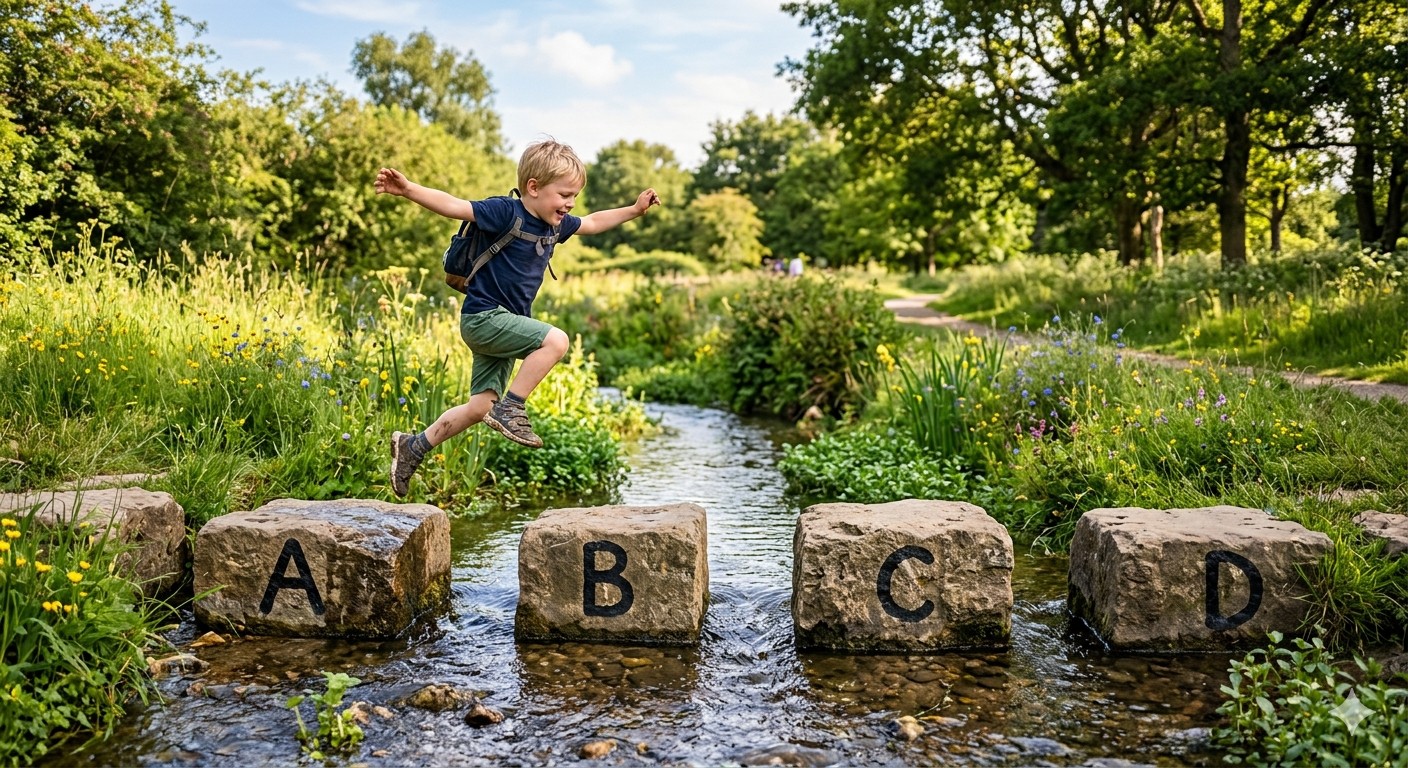

Firstly, let me say that I am a huge fan of Mastery Learning, after all, what’s not to like. In simple terms all that is required is for the student to fully understand a topic before moving onto the next. They must master ‘A’ before moving to ‘B’, and ‘B’ before ‘C’. To skip ahead would of course be mad. To those who have not thought too much about this before, you might assume this is how all learning works, until you reflect on your own schooling, where progression was based on age, and not understanding!
TL;DR – the short audio version
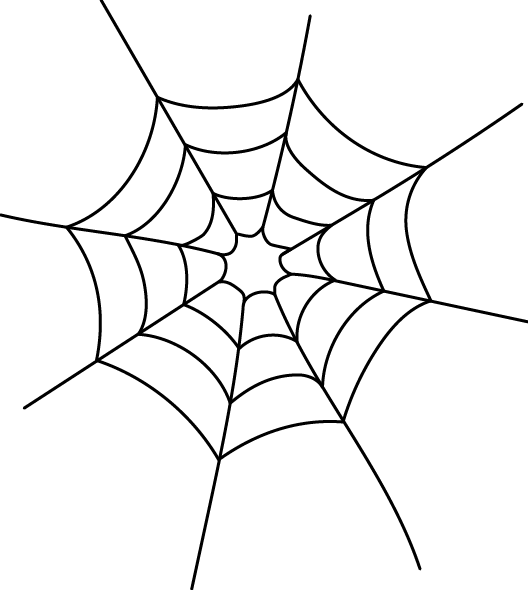
But it’s not the only way to learn. Much of what we learn is not linear, in fact knowledge might be better thought of as a web, that you can come at from many directions rather than a ladder.
Mastery learning
Developed by Benjamin Bloom of Blooms taxonomy fame, Mastery Learning was driven by the 2-sigma problem – students receiving one-to-one tutoring outperformed classroom peers by two standard deviations, effectively moving from a grade C to a grade A. By fixing the standard rather than the time, he believed most students could reach levels of achievement traditionally reserved for the few.
This depended on formative assessment and corrective instruction. Low stake tests are used to identify knowledge gaps with the student needing to score around 80% – 90% before they can move on. If not, they receive “alternative” instruction rather than repetition. This continuous feedback loop was Bloom’s way of bringing classroom learning closer to that which can be achieved by one-to-one tutoring. The word alternative is important here, the student does not simply go over the same material again, instead they are given a different explanation or re-taught with another method, for example pairing the student with those who have already reached mastery.
Sal Khan has adopted Mastery Learning in Khan Academy, here he makes a compelling case for its use with characteristic clarity – TED talk from 2018.
Jumping from A to C with no B
To help understand how we might pull off this magic trick, let’s look at the work of Lev Vygotsky, he developed the idea of the Zone of Proximal Development (ZPD). It makes a distinction between what a learner can do on their own, and what they can do with the right support. The gap between those two is not a barrier to cross, it’s where learning happens.
When a learner jumps to C with appropriate support, they do not completely ignore B they look back on it in the context of what they are about to learn in topic C. Because B now has a purpose, it tends to be learned and remembered more deeply than if it had been drilled in isolation.
The sequence flips: C with support → encounter B in context → C independently. The gap doesn’t have to be filled before you advance. It gets filled through advancing.
This approach is supported by Robert Bjork’s research on “desirable difficulties”, introducing challenge before a learner feels ready improves learning. Struggle is not always a sign something has gone wrong – it’s an opportunity for good learning.
Horses for courses
This is not an argument to use the A – C approach over Mastery, there are situations where they can both be beneficial. It depends on context, for example early maths and reading benefit from attention to sequence, here Mastery should be used, but where personal developmental and social skills are the objective, the A-C approach might work best. Secondary school learners benefit from a blend, of both as well as project-based challenges, which helps develop problem solving skills. Adult professionals should be trusted to identify and fill in their own gaps, however where large amounts of knowledge and skills are required in a short period of time, as is the case with many high-stakes professional exams, Mastery is preferred.
Conclusion
The problem with Mastery Learning as an overarching model is that it presents a highly believable story as to how knowledge is actually acquired. Real learning, the kind that sticks and transforms, has always been messy. It involves confusion, premature exposure, partial understanding, backtracking, and sudden reorganisation. It might mean you are thrown into C before you feel ready and finding, to your surprise, that you manage.

Mastery is often described in terms of building strong foundations to support your future learning that sits on top. But knowledge is not a foundation, that once in place remains solid and strong, you never fully master anything, there are always gaps that over time without use will decay. Learning is less of a solid foundation and more like a piece of cheese, full of holes, and if left unattended, will only acquires more.
It is not always necessary to wait until you feel completely ready, in fact, the truth is many students never do. There are times when you just need to jump in, struggle, backfill, and push forward. The good news, you will develop a stronger and more resilient understanding of the subject – messy and illogical it might be, but its also hugely effective.