
For example – how to get higher marks in written questions

MORE-EXAMPLES

It’s great to be knowledgeable, but to pass an exam knowing the answer is often not enough. Questions set by examiners seek to do far more than identify people who “know stuff,” they want the student to prove understanding and that they can use the knowledge, not simply reproduce it.

The knowing doing gap

There is sometimes a disconnect between what you know and what you can explain. Have you ever said to yourself, “I know what I want to say but can’t find the words” or “what more can I say, I feel like I am just repeating the same point”. This may be the result of a lack of understanding and simply requires more study (see Eureka I understand understanding) or it might be that you just need a better way to think about what you’re trying to do.

Analyse, Explain – clarify – Example e.g.e.g.e.g.

Imagine you’re faced with a question, it asks that you, provide a possible  explanation as to why we have seen a fall in stock market prices in recent weeks and what impact this might have on  economic growth in the UK . Often the first problem is knowing where to start, below are a few ideas that might help.

You will need a few headings to help give structure, these can often be found in the question, here for example we could use, Why stock markets might fall and Impact on the UK. Then under each heading think about analysing, explaining, clarifying and giving examples. These are not headings; they are to help expand on what you have been asked to do and give a perspective from which to think.

  1. First you analyse – If you analyse something you break it up into smaller parts so as to gain a better understanding. For example going back to the question, perhaps we should identify exactly by how much the stock market has fallen, over what period, what other events were happening at the same time, do we have any theories that could help or theoretical models we could apply etc. By examining what you have found, something new and obvious may become clear.
  1. Then you explain – an explanation is an attempt to make clear what you mean. One way of doing this is by making a series of statements. So for example, if you noticed that during the period in which we had the fall in the stock market, China’s economy also slowed and oil prices fell to unprecedented levels. This might lead you to make the statement – one of the reasons for the fall in stock market prices would appear to be the slowdown in the Chinese economy and the fall in demand for oil.

A subset of explanation is clarification. Definitions are a great way to clarify exactly what something means and in what context it is being used. Here for example we might want to include a definition of economic growth.

  1. And finally the example itself, possibly one of the very best ways of explaining and a very powerful technique to demonstrate understanding.

Example “Metaphor’s forgotten sibling”. John Lyons

It may be a reference to a real world example. In the question we have to address the impact on the growth in the UK economy. If you gave an example of the last time oil prices were so low and what happened as a result you will not only be demonstrating breadth of knowledge but also moving the debate forward, suggesting perhaps that the same will happen again?

Real world examples demonstrate the complexity and unpredictability of real issues, and as such, can stimulate critical thinking.

Students learn by connecting new knowledge with their own prior knowledge and real-world experiences. Piaget et al

An example may also be a construct, something that you talk through to illustrate a point. For example, let us imagine the impact of falling oil prices on an engineering company in the West Midlands. A reduction in oil prices would result in lower transportation costs that could be passed onto customers in the form of lower prices, in turn this should increase demand.

“Examples are indispensable to the acquisition of knowledge and they appertain to the domain of intuition”. Kant

Although this blog has covered an approach to structuring written answers, it is the use of examples that for me is the most important. And if it was not obvious enough, look how many times I used examples to explain what I was trying to say …….

So you want to be an astronaut – assessment for astronauts


Astronaut-Tim-Peake-Dials-Wrong-Phone-Number-from-Space

Your there by yourself. There’s no doctor, there’s no computer engineer – so you have to learn all of these skills. Tim Peake

What is the purpose of assessment?

In order to gain a better understanding of the assessment process for astronauts, let’s ask a more basic question first, what is an assessment and what does it prove?

At one level it is simply a measurement of performance benchmarked against a given outcome or standard. The results can, help a teacher identify progress so they can adapt the next lesson, or give assurance an individual is capable of performing a particular task. This is probably the most important type of assessment for astronauts.   Modern high stakes “examinations however play another role; they offer the student a transferable badge of honour that can help open doors to better career prospects and increased salary. If you doubt the importance of this last point, click this link to read about the level of corruption in India and the lengths people will go in order to obtain a certificate saying they have passed an exam.

Employability gap – so what’s the problem?

However examinations on their own do not provide a guarantee that the individual who passes will be able to do the job.  And it is here where the disconnect becomes clear. Often the method of assessment is not based on what the student will be doing in the work place, and even if it is, it is not set in the same context. Many believe this gap has become ever wider as more and more students come out of school/university lacking the skills required by the employer.

But should the exam/assessment be changed to narrow the gap or is it the role of the employer to provide the necessary “on the job” education in the work place? However the problem with the employer being given the responsibility, it implies that what you study doesn’t matter, only that you do. This just seems wasteful, wasteful of time, money and effort. Assessment must get closer to measuring the skills required for one simple reason, what gets measured gets achieved, a cliché for sure but a true one.

Assessment for astronauts

Costs – The costs involved in training astronauts is a bit unclear, NASA will pay Russia $70m for a seat on Russian space craft in 2017 that includes training, figures of around $25m are also cited, Tim Peaks training was quoted as £16m so very similar.

Basic requirements – Mission Specialist (non pilots – most are pilots with a military background) include the following:

  1. Bachelor’s degree from an accredited institution in engineering, biological science, physical science, or mathematics. The degree must be followed by at least three years of related, progressively responsible, professional experience.
  2. Ability to pass a NASA space physical, which is similar to a military or civilian flight physical.
  3. Height between 58.5 and 76 inches.

Training – Tim Peak’s education started in 2008 when he was selected by ESA (European space agency) from 8,413 applicants. Tests at this stage included, intelligence, spatial awareness and concentration. Then for the 10 selected another 18 months of intense training followed, this time on topics as wide ranging as space law, rocket propulsion, spaceflight engineering and the hardest for Tim, learning to speak Russian. He was also subject to one week’s caving in Sardinia, Italy, with five other astronauts to simulate what it would be like in space, this was to build teamwork, problem solving and cope with poor hygiene facilities. Then it was one year of advanced training, including working underwater to simulate the lack of gravity. In 2013 it was time to go into space for the first time, this was the last test before being selected and then finally in 2015 Tim was allowed to do the job for real. In all it had taken 6/7 years.

What have we learned?

Clearly you need some underpinning academic skills i.e. a degree but a relevant one. The training is provided by the state, the argument being that it is for the greater good of society so the costs should be met by the tax payer. An interesting point for those that believe this should be the case for all education. But most importantly the assessments were all built around making sure that when Tim got into the space he could do the job. Very few of the tests required a piece of paper and a desk, and many were simulations of what he would meet in the real world.

Given the advances in technology the time is now right to introduce more simulations into the exam room, not so we can all become astronauts but to help prepare the next generation for the work place.

And just imagine your badge of honour when going for that next job – “what exams have you passed” “oh a few, but did I mention I was an astronaut…..”


27 Million People per day can’t be wrong – Gamification

League of LegendsThe statistics are astonishing, as of January 2014, over 67 million people play League of Legends per month, 27 million per day, and over 7.5 million concurrently during peak hours. And if your good at it the prize money for winning the world championship might get you to question your chosen profession, it was $2.3m in 2014 and 2015. Playing an on-line game is part of daily life for many people.

This blog is “of course” not about League of Legends. In fact I have to admit I had never heard of it, just shows how far out of touch you can become with popular culture. It’s not even about the gaming industry which is said to be worth £3.9 bn to the UK economy, it’s about a growing and fascinating area of learning called gamification.

Gamification is the use of game mechanics (rules, design and tools) in a non game context to better engage and motivate learners to achieve a desired objective. There are two types, structured, where you are looking to propel a learner through content and reward them for the desired behaviours and content driven where the game is the content i.e. the learner is a character in the game and is required to undertake tasks that are in turn rewarded.

Gamification techniques – Game mechanics

Games are not of course all the same but they do have similar characteristics, these “techniques” can then be used in a non game context i.e. a learning context. The idea being that if they engage and motivate the gamer, they will do the same for the student.  Games need some form of measurement to assess performance and a reward to act as an incentive.  Below is a note of some of the measurements and rewards used in gaming but could be adapted for learning.

  • Points – Used to keep score
  • Badges – visual stamps that are awarded to users on certain achievements and are normally displayed in their header and profile page
  • Levels – shows ranking and progress
  • Leader boards – a high score that is displayed for all to see
  • Rewards – not a badge but something tangible e.g. money….

Personal gamification

You don’t need to spend millions developing a game to get the benefits from gamification, and its not all about beating others, here are a few tips.

  • Set up a points system – identify the activities that will help you achieve your goal e.g. spend 2 hours each evening studying, 10 points. Answer 2 questions each evening, 20 points. Attempt the mock exam, 40 points. Score 50%, 80 points etc. Keep a running total of your points in a place that you can see when you study
  • Levels – Only move onto the next chapter or session when you have the desired points
  • Leader board – Keep a note of your highest score from the other subjects
  • Rewards – The best part. Set up a series of rewards e.g. a night off, go for a run, have a glass of wine, bar of chocolate etc. Increase the rewards as gaining the points becomes more difficult. If you beat your leader board score, then your rewards can be even greater, maybe a day out shopping/at the football etc. Why not ask others to contribute to the reward, if I get to the top of my leader board how about you buy me dinner. You will be surprised how many people, friends and family will effectively sponsor you.Other brands are available....

And finally tell your friends what you have done, “just eating a massive bar of chocolate which was my reward for scoring 80 points on my study game.”

Of course you might get fat doing this, but don’t worry there is another game that can help – it’s called weight watchers…..

Technology can help

As ever technology can help, check out this app HabitRPG – Click 

The mystery of scaled scoring

A mystery is defined as something that is difficult to understand and or explain. This describes exactly the situation we have at the moment as many examining bodies move their assessment towards scaled scoring and away from the more traditional percentage pass mark.  Some argue that scaled scoring is clearer in that it allows direct comparison of one examination to another but from my experience in the short run at least clarity is not the term many would use.

The raw score

How did I get on?For most students the way to find out how well they are doing is to have a piece of work marked. If the total marks available are 50 and the student scores 35 then as a percentage they have obtained 70% of the available marks. This is called the raw score. Interestingly it tells you very little, for example is 70% good or bad? For a raw score to have any meaning it needs to be compared with a standard. This could be with another student or group of students, and is an example of what is called norm referencing, now this clearly has meaning as you can tell if you are performing better or worse than your peer group. But the most common way in which exam results have historically been published is as a pass/fail against a pass mark or as it is sometimes called a cut score. If the pass mark is 60% and the student has scored 70% then they have passed.

The scaled score

However raw scores are only fair if the exam sat is the same for every student. It would be unfair to give each student a different exam and set the same pass mark, unless of course you believed the exam was of an equal standard.  This has been the argument in the past, yet producing an exam of equal standard is almost impossible, and this is why scaled scores are being used more often.

To use scaled scoring you need a range of marks, for our purposes let us assume the range or scale goes from 0 to 150. We then have to set a common passing score, say 100, this is the score on the scale that the student needs to achieve to pass the exam or test, and it will never change. What happens next is what makes a scaled score so useful.

ExpertsA group of experts including the examiner review the exam that has just been sat, they will probably mark a number of scripts themselves and will have access to the results from all other students. Then taking into account the performance of all students and their knowledge of this particular exam they will set the pass mark for this paper. Let’s assume that the pass mark is 32, if a student is awarded a raw score of 32 on this particular paper it will be equated to a scaled score of 100. All other scores above and below 32 will also be given a scaled score equivalent.

So on some levels using a scaled score is no different to the examiner setting a different pass mark for each exam, acknowledging that the level of difficulty will never be the same for any one examination. The reason the scaling is used however is because it can be stated that the passing score for the exam is always 100, this means the standard stays the same even though the marks may change.

So there you have it, no longer a mystery….I hope?

For more information and guidance watch the video on Pearson’s web site. Click on this link and scroll down.


Confused about University, I am – Training V Education

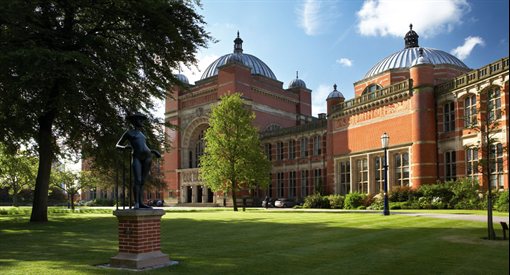
Birmingham Uni

Birmingham University

Last month students across the UK would have received those all important exam results informing them if they have been awarded the grades necessary to get into the university of their choice. It’s easy to get caught up in this process seeing it as the end goal rather than part of a journey, I speak with some degree of experience. But how will the lucky ones judge if the next three years will be worth it. What does a university education give you……surely it’s more than a ticket to the next stage in the game i.e. Go to university-get a good job.

Training or education

We may find some of the answers by taking a closer look at the distinction between education and training. I thought finding a definition of education would be easy, yet many referred to it as being something obtained from going to School, College or University and I was looking for a more insightful observation. The business dictionary of all places seemed to offer a little more along these lines – The wealth of knowledge acquired by an individual after studying particular subject matters or experiencing life lessons that provide an understanding of something.

Education makes a people easy to lead, but difficult to drive; easy to govern, but impossible to enslave”
Lord Henry Brougham

Training proved a little easier to pin down. Here a couple of definitions – The action of teaching a person or animal a particular skill or type of behaviour (Oxford dictionary) and The process of bringing a person to an agreed standard of proficiency by practice and instruction. (Collins)

Still not clear, this might help – “If your sixteen year old daughter told you that she was going to take a sex education course at college, you might be pleased. But if she said she was going to take part in some sex training you might have something to say?”

Training and employability

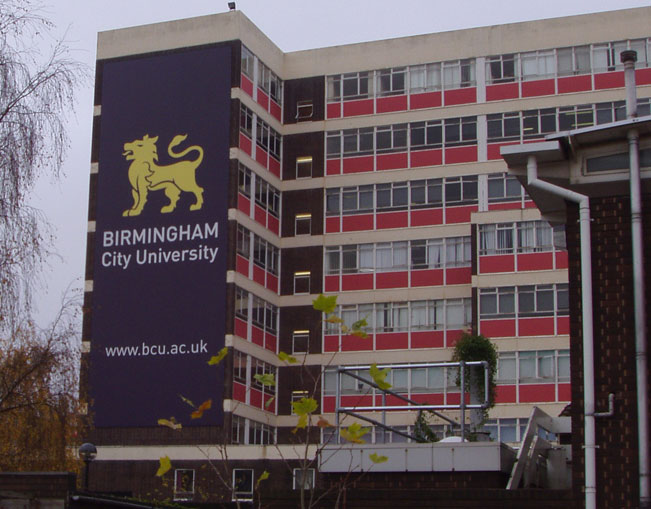
BCU formerly Birmingham Polytechnic

Training is relatively narrow and largely relates to developing skills and ending up with the ability to do something. This is most closely linked to employability. Employers don’t want students who know things, they want students who can do things. But is this what a university education should be about , is it the place that simply prepares students for work?

This was much easier to answer when Polytechnics existed. These were “educational” institutions that focused on STEM subjects and had close ties with industry. They however lacked degree awarding powers and invested little in research so were seen a poor relatives of the then university. But there was little doubt as to what their objectives were.

Confusion

This is not a plea to bring back Polytechnics, although it doesn’t seem such a bad idea does it? No its more about the confusion that exits’ as to what employers want, what students expect and who universities think they are. Are they educational establishments or training grounds for the next generation of employees?

Maybe they can be both but if identities are not made clear soon, those students who have worked so hard to get into the university of their choice may find themselves disappointed with what they end up with.

More quotes about education 

For the pragmatist – A man who has never gone to school may steal from a freight car; but if he has a university education, he may steal the whole rail road.Theodore Roosevelt

Its about learning how to think – The function of education is to teach one to think intensively and to think critically. Intelligence plus character – that is the goal of true education. Martin Luther King, Jr.

And you cant go wrong with MT – Education: the path from cocky ignorance to miserable uncertainty. Mark Twain

Staying the course – commitment

Mo-Farah-EthiopiaYesterday Brendan Foster described Mo Farah as the greatest sportsman Britain has ever had. You may of course disagree, it’s probably one of those conversations best left to have in the pub, I am sure there are many worthy contenders. Farah responded modestly by saying that because we have so many great sportsman simply being put in the “great” category was amazing. He nominated his greats, David Beckham, Sir Alex Fergusson and Sir Steve Redgrave.

Watch Mo win the 5,000 meter gold at the world athletics championship 2015.

I have to confess to knowing little about sport or in fact having much interest, but what has always impressed and inspired me is the level of commitment successful sportsmen and women have. I have written in the past about Sir Steve Redgrave who won gold medals in five consecutive Olympics. How do you do that, how do you get up every morning and work towards a goal that is four years away, every day for 25 years?

Mandy Monday – procrastination

Start MondayMandy is a weight watcher character who promises to start her diet on Monday, in the interest of gender equality I am sure there is a male equivalent let’s call him Marty. Of course Monday never comes and so although Mandy sort of commits to Monday she constantly puts it off, choosing to do “other things” in preference. Initially this seems like you are delaying the pain in favour of the pleasure but I am not sure delaying something that is in your best interest is pleasurable? Pleasure implies satisfaction and I don’t think you feel satisfaction, probably more like relief.

Exams – you need to commit

It can be like this with studying and exams. Very few students want to sit an exam, its hard work, stressful and you might fail. So if you were given a choice when to sit the exam when would it be, Monday?

In fact delaying an exam can feel perfectly logical and rational. This is how the internal conversation might sound. “I have to sit this exam and it’s not going to be easy, to pass you need to know everything. There is no point sitting the exam if I am not 100% ready, an athlete wouldn’t enter a race if they weren’t 100% fit, it’s like that for me. The best thing to do is sit the exam in another month, another month is all I need, then I will be ready.

The million dollar question is do you ever feel ready?

On demand exams – Set the date and stick to it

If the exam was once every four years my guess would be that most students would not put the exam off, can you imagine waiting another four years? But when an exam is on demand and its left to the individual when you have to take the exam, you never have to commit. At the back of your mind you know that you can always delay. This means you never made the commitment in the first place.

But how to commit – Take a calendar and pick the date you want to finish all of your exams, when you want to qualify, write it down. Then list out all the exams you have to pass to get there, set dates for these and write them down as well. Put them on a wall chart, electronic calendar, even post them on Facebook, they cannot change. These dates are no longer in your control; you have passed that to someone else and in so doing have made the commitment to yourself. Go on do it now!

And finally an antidote to exams

Not anti school, but pro education – If you have not seen any of these spoken word videos – watch this one. Why I hate school but love education, you will not be disappointed.

Ps if you like the no add video check out quite tube.

“You never fail until you stop trying.” – Toms story

The young Tom

The young Tom – inspiring us even then

I am not sure when I first met Tom but it was certainly early on in his studies. Tom was not your typical accountancy student, he was slightly older and perhaps more reflective, the two points may be related. Students studying for professional accountancy exams are probably around 25 and focused very much on looking forward, not back.

Tom started his exam journey in November 2009, his first 2 papers went well and he passed them first time. You need to pass 10 exams broken down over three levels if you want to become a member of the Chartered Institute of management accountants (CIMA).  Boosted by this Tom decided to sit the next 4 papers all at once, something he now thinks was a mistake, he passed just the one. By the end of 2011 however he had passed the other 3. That was 6 papers and two levels complete, Tom was back on track.

“Even though the ship may go down, the journey goes on.” – Margaret Mead

2012 was not a great year for Tom on a personal level which almost certainly had an impact on his performance in the exam room. As a result the whole of that year went by with only one exam success. Between 2012 and 2013 Tom sat one of the remaining papers three times and the other one six times, to quote Tom, that’s six, count them 1…..2….3…..4…..5…..6….. He finally passed that paper in November 2013.

It’s probably worth pausing at this point, how would you feel if you sat an exam twice and failed, let alone 6 times. At this stage your biggest enemy is your own mental attitude. You begin to question your ability, your intelligence and even your choice of career. On top of this is the boredom and stress of having to study the same exam over and over again, trying to do something different, fearing if you don’t you will get the same result. And of course as many of you will know when you are studying your life is on hold, making decisions about work, family/friends is difficult as you need to put your studies first.

In fact Tom did consider giving up, but there were two reasons he didn’t. One the support of his teacher, Maryla who remained positive throughout whilst working with Tom on what he needed to do to improve, and two Toms stubborn attitude, his determination and desire to get something good from all the hard work he had put in so far. To quote Tom, “all I kept thinking was I have lost so much because of this bloody course I have to get something positive from it.” When Tom finally passed that paper he felt excited, and as if he had slain a personal demon.

“Adversity causes some men to break; others to break records.” – William Ward

With only one paper to go Tom was still to face a number of challenges, and it was far from plain sailing.  Knowing a large amount of detail was essential for the earlier papers, now it was all about the big picture, prioritisation and time management.

He was told that gaining the qualification would open doors … So he imagined an open door, on the other side were green fields, money, cars, holidays, being the boss. This focus really helped motivate him to see it through. He passed his last exam on the 29th of May 2015.

It had taken Tom 6 years, in which he had sat in the exam room approximately 22 times. This is not the story of someone who always knew he would pass, destined for success nor of a naturally gifted student who simply needed the right motivation to bring out his talent. This is about what you can achieve if you are willing to make sacrifices, give everything you have and learn from failure.

Congratulations Tom you deserve your success.


A Nostradamus moment – Predicting learning in the future

Top-5-Nostradamus-Predictions-That-Came-TrueLast year along with a colleague I looked into some of the key trends that were shaping the world of Professional Education. The result was the production of a Learning Strategy completed in December 2014. The document highlighted some of what we thought might impact our organisation in the future. Taking the technologies, attitudes and resources of today and guessing how they might change is certainly brave, possibly foolish, but reading what others think is always interesting.

Tomorrow I will be visiting the Digital Education show in Earls Court; guest speakers include Sugata Mitra, Richard Gerver and Sir Ken Robinson. The topics up for debate are current, wide reaching and of course equally prophetic.  Add to this the publication of the 2015 Horizon higher education report and you get an irresistible mix of views on the future, some of which I have highlighted below.

The measurement of learning will increase

Good teachers have always tracked student performance. It may have been in their head, summarised at the end of term in the form of a report but measuring student performance is certainly not new. The difference is now the results are more public, displayed in league tables showing winners and losers. In addition we have data not just on one student but thousands and once you have data, big data in fact, you analyse it, learning analytics is born. This allows you to make recommendations for improvement and predictions based on the observed trends and patterns. Given that new technologies make the gathering of data relatively easy, measuring student performance and the methods by which they learn will only increase.

All classroom courses will become a blend

The genie is out of the bottle, learning in a classroom complimented by the use of instructionally sound online resources offers so many benefits. It enables a more personalised learning experience, makes effective use of student time outside the classroom and is often mobile resulting in greater convenience.  It is hard to see why you would ever have just classroom only courses again. Yet not all courses are a blend or to be precise although they have online resources they are little more than a classroom course with some online PDF’s or links that are not used due to poor quality, relevance or support from the teacher, so we still have some way to go.

Informal learning will emerge from the shadows

So wrong!

So wrong!

Informal learning or as it sometimes called student/curiosity led learning has always existed but is now more easily recognised. Teachers and educators are also beginning to invest time into using it more effectively.  Once again technology is playing an important role by making knowledge more accessible and facilitating greater collaboration via online forums and social networks.

Video is an incredibly successful example of social learning, it’s hard to imagine but YouTube didn’t exist before 2005, that’s only 10 years ago. It now has 1 billion users, 300 hours’ of video are uploaded every minute and is available in 61 languages. A very practical example of learning with video can be found by clicking the banana – trust me you won’t be disappointed.

And that’s just three

I could equally have mentioned:

  • More money will be spent on personalisation and adaptive technologies
  • Greater acceptance of BYOD – your own devise that you take from home to class to work
  • Wearable learning technologies – think how wearable sports devices have expanded recently
  • Internet of things (IoT) – a network of connected objects that link the physical world with the world of information through the web could provide a wealth of new ways of learning

How did I do?

A similar blog from 2011


Blended – taking responsibility for your own learning

Taking responsibilityBlended course programmes are here to stay. The idea that studying comprises of both time in the classroom with others and time learning on your own using online or even traditional learning materials is certainly not new. Of course the purist will argue that blended learning has to or exclusively use online materials rather than a text book – no matter.

This blog is not about blended learning, more the implications of what studying on blended programmes means i.e. you have to study on your own and as a result take responsibility for how you learn.

Instructor led – easier

In a traditional classroom the teacher (instructor) stands at the front of the classroom and leads the learning. They tell you what to learn, when to learn, even how to learn.  They also dictate the pace and mood of the delivery. There is of course nothing wrong with this and many students really value it, in fact it’s their preferred method of learning. Of course its far from perfect, not everyone learns at the same pace or in the same way, but let’s put that debate, or blog aside for another day.

With a blended programme the student has to leave the security of the classroom and enter the world of self managed learning (SML).

Student led (SML) -harder but more effective

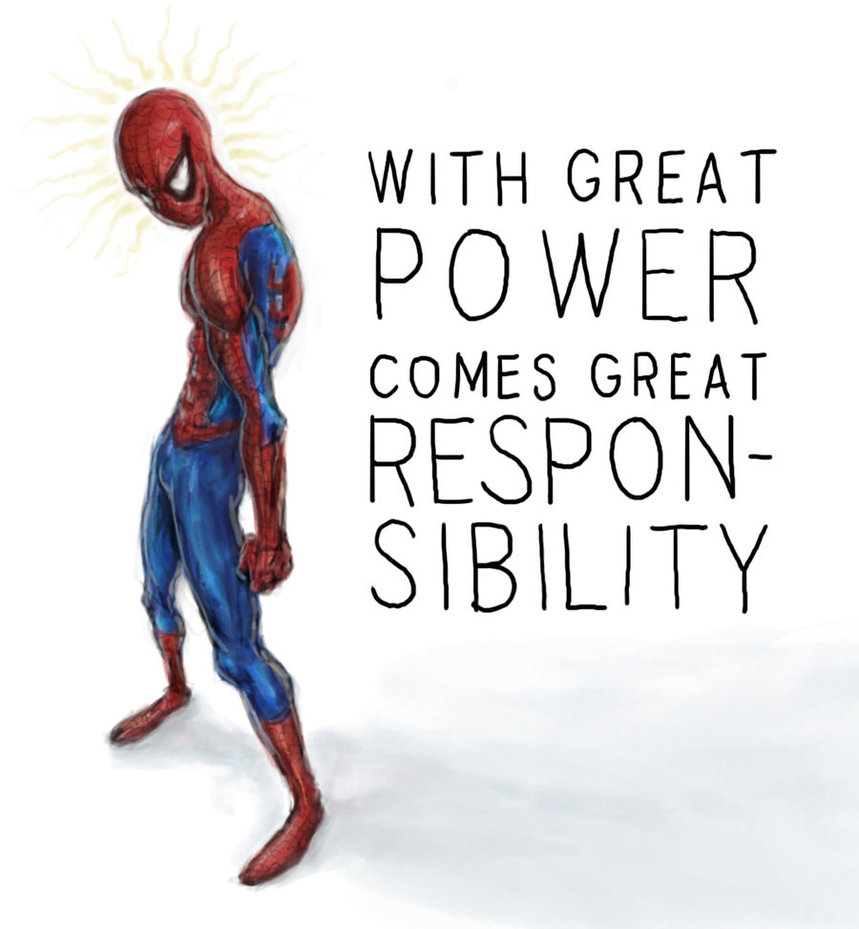
Self managed learning gives the student great power, they can study what they want, perhaps not the subject matter but certainly the order, when they want, how they want etc. However as Spiderman* once said, with great power comes great responsibility. You now have to take responsibility for the result. This means if something doesn’t make sense it’s not the teacher’s fault it’s yours!

Its perhaps even more basic than that, you are also responsible for how long you spend studying, you don’t have to do anything if you don’t want to. You can study on a Monday or Wednesday, or just the weekend. You can study for one hour or for 20 minutes. And there lies the problem, when it’s up to the individual a lot of people take the easy way out, the route of least resistance and put it off for another day.

However when you do take responsibility, the quality of the learning is significantly improved. Listening to the teacher is easy but not always that effective. The SMLearner has to set goals, monitor their performance and finally reflect, how well did they do compared with how well they thought they would? It is partly this process that makes the learning so good, but it will feel harder.

How to be a SML

These may all be worth covering in more detail in another blog but for now think of this as a check list.

  • Use a timetable – Google calendar is great for this. Put in all your key dates including exactly what you will do e.g. read chapters one to three – make notes – answer question 2,3 and 4.
  • Have a place to learn. This might seem obvious but you need somewhere that is quiet, plenty of space, good lighting, with little distraction. Perhaps most important is that you know that when you are in this room you feel ready to study.
  • Read carefully, I have written on this before. Underline key points as you go. Don’t just read, you have to think as well.
  • Make notes, even if you have pre- prepared ones. Once again I have written on the best way to do this. If you are following an e learning module make notes as you work through the online guidance.
  • Listen to your internal dialogue. When you are working alone just make sure that what you are saying to yourself is positive. Remember this is not about telling yourself everything will be fine, it’s about moving forward e.g. I just don’t understand this, what I need to do is read it again perhaps from another book.

Taking responsibility

Want to find out more about taking responsibility for learning – watch video 1video 2video 3. They are all less than three minutes long and well worth it.

PS *Of course Spiderman can’t really talk it was Stan Lee the writer of Spiderman, although Franklin D Roosevelt and others have also been quoted as saying this or something similar.


Election special – who has had the best education?

The direction in which education starts a man will determine his future in life

Plato

uk-politiciansInspired by the election and the personalities that have been thrust upon us during the run up to next Thursdays vote, I thought it might be interesting to look at the academic backgrounds of those that have ambition to be Prime Minster. It might even give you some help in choosing who to vote for.

The contenders

8761f28.jpgDavid Cameron – born 1966 – David William Donald Cameron was bought up in Peasemore, Berkshire his father was a stockbroker and mother a retired Justice of the Peace. He attended Heatherdown Preparatory School (12 O levels – 4 A’s, 5 B’s, a C and 2 below C) before moving to Eton, the school that can boast 19 past British Prime Ministers. After A levels (3 A grades) he went to Brasenose College, Oxford, from which he graduated in 1988 with a first in philosophy, politics and economics.


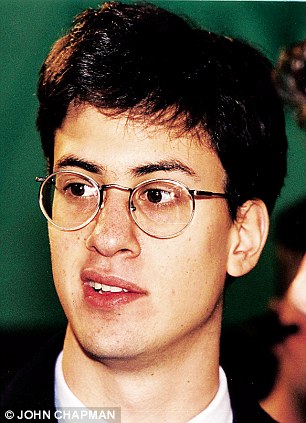
Ed MilibandEd Miliband – born 1969 – Edward Samuel Miliband went to Haverstock Comprehensive School (Labours Eton), North London. His father, a Polish Jew, was one of the leading Marxist theorists of his generation. His mother, Marion Kozak, is a long-standing human rights campaigner. After completing his A Levels (A,A,B,B) he read Philosophy, Politics and Economics at Corpus Christi College, Oxford, gaining a 2:1 and later Economics at the London School of Economics where he received his MSc.


The King makers

Nick CleggNick Clegg – born 1967 – Nicholas William Peter Clegg was raised in Buckinghamshire by his Dutch mother, a special needs teacher and his half Russian father, Nicholas P Clegg CBE, the chairman of united trust bank. Clegg was educated at two independent schools, Caldecott School in Farnham Royal in South Buckinghamshire, and later at Westminster School in Central London. He went on to study Social Anthropology at Cambridge (2:1) and continued post graduate studies at University of Minnesota through a scholarship where he wrote a thesis on the political philosophy of the Deep Green movement. He then went to the College of Europe in Bruges for his Masters.

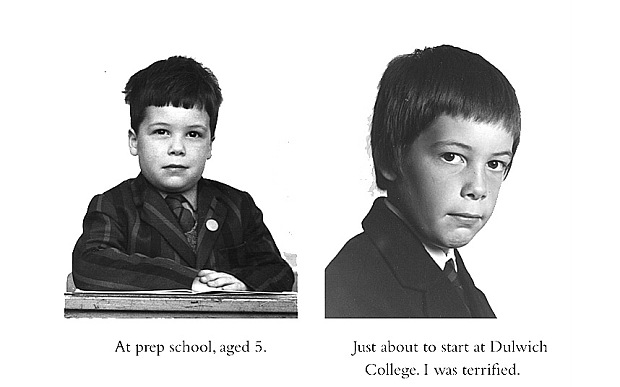
Nigel FarageNigel Farage – born 1964 – Nigel Paul Farage grew up in the Kent village of Downe. His father, Guy Justus Oscar Farage, was a stockbroker and heavy drinker left the family home when he was five. He was educated at Greenhayes School for Boys in West Wickham, then Eden park before joining  Dulwich College (The Dulwich experiment)  an independent public school in south London. After A levels he decided not to go to university, but to work in the City, trading commodities at the London Metal Exchange.

Nicola SturgeonNicola Sturgeon – born 1970 – Nicola Ferguson Sturgeon is the eldest of three daughters born to Robert Sturgeon, an electrician, and Joan Kerr Sturgeon a dental nurse. She grew up in Prestwick and Dreghorn and attended Dreghorn Primary School and then Greenwood Academy. She later studied at the University of Glasgow, where she read Law and graduated with a Bachelor of Laws (Hons) and a Diploma in Legal Practice.


And the winner is………

By most people’s standards all our candidates had a very good education, progressed academically and enjoyed school life. In addition, with the exception of Nigel Farage whose father left when he was 5, all have had full parental support.

Some statistics-In 1981 around the time David Cameron was taking his O levels only 25% of students got 5+ GCSE O levels, and around 10% went on to gain 3 A level passes. In 2014 (admittedly many years later – but it will give us an idea) Oxford received 17,000 applications for 3,200 places, that’s a 5% chance of being accepted.  So Cameron, Miliband and Clegg all stand out. Farage and Sturgeon are clearly well educated but do not have such a strong academic background.

Not a political statement but

Overall for me the person who has had the “best” education is Nick Clegg. David Cameron and to a lesser extent Ed Miliband have had a rather insular academic journey. But Clegg went to Cambridge, then travelled to the US and Europe to study, which must have broadened his views, exposing him to the opinions and cultures of other students, many with different backgrounds . And in second place I would probably go for Nigel Farage, yes I did say Nigel Farage, not the man you understand, but as a good A level student he went into the world of work, the university of life argument.

PS – The former Conservative Prime Minister John Major famously left his comprehensive school, Rutlish, in London with three O-Levels: history, English language and English literature.


Playing the game – Tips for answering objective tests

Amazon

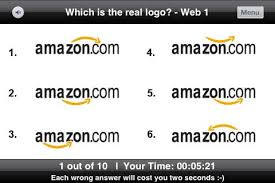
Which is the real logo?

Objective tests (OT’s) are becoming increasingly popular.

There are many reasons for this; educationally one of the big advantages is because, they are objective i.e. the mark is accurate, it’s either right or wrong.

It may come as a surprise to some students but when people mark there will be a slight (we hope) difference, its called marker bias.

The more cynical might argue that the examining body introduces them to simply save money. Whatever the justification students will find OT’s being used more frequently, at all levels and so need to be prepared.

But OT’s must be easier?

Answering a question like…. which one of the following best explains how a car engine works a-b-c-d, must be easier than writing/typing an answer explaining how a car engine works – right?

Well perhaps not, what if all of the answers are plausible? Think of the mental process you go through trying to distinguish between them, digging deep into your understating, looking for a word in the question that might give a clue, might help you narrow down your options. And even if you do narrow them down to let us say, 50:50, there are no method marks, it’s either right or wrong; it’s 50% of a full mark or 50% of no mark. The student answering the written question is unlikely to get no marks at all even on a question they don’t really understand.

Personally I think OT questions are more difficult from a student’s perspective but very useful for examining bodies as part of the assessment process. But they should only be part of that assessment process; other types of assessment should also be used.

Playing the OT game – Tips

But what can be done, how can you improve your chances of passing OT’s?

Well there are the simple things like, make sure you read the question carefully. This is much easier if it is a paper based test where you can underline exactly what you have been asked to do. I have written in the past about the importance of underlining. It helps the brain focus on what is important and what is not.  This is made much harder when the OT questions are on the screen. In these circumstances I would suggest you write out the key words on a pad or white board.multiple-choice marriage'

Answer the questions you can answer first and leave the longer more debatable questions until the end, and follow the advice of Ludy T. Benjamin, et. al (1984). She identified you are better changing your original answer to another one if you doubt it. This is very much the opposite of conventional wisdom that suggests the first answer you come up with is probably correct. But be careful, this is only if you doubt your original answer. The argument being that when looking at the question a second time you can tell something isn’t right and so will spend more time on the question than before, changing to a more plausible one.

There are some more sophisticated techniques that can help reduce the odds, I have summarised them below. Many of these I have borrowed from a more comprehensive article written by a colleague, John Bennett – thanks John.

  • Distracters – these are questions that contain an answer very similar to the real one and are often plausible. The technique is to cover up all the answers, so that they don’t distract, work out what you think the answer is, then reveal. Hopefully your answer will be in the list.
  • Go for the long answers – William Poundstone author of “Rock Breaks Scissors” noticed that the longest answer on multiple choice tests was usually correct. “Examiners have to make sure that right answers are indisputably right,” he says. “Often this demands some qualifying language. They may not try so hard with wrong answers.”
  • Eliminate the outliersAnother Poundstone tip is to look out for one of the answers that is very different to the others, and if you find the outlier it’s probably wrong. So for example if you had 4 numerical answers a£0.46 – b£0.54 – c£0.55 – d£1.60. The outlier in this sequence of numbers is d and is unlikely to be correct. It doesn’t of course give you the answer but it will at least improve your odds.
  • Find opposites – An easy one next, where two answers are exact opposites, the answer is more likely to be one of those two.
  • Look out for general words – The University of Minnesota identified that the question that use general words such as, mostly, possibly, often, usually, will “often” be the correct one.  This is because when an examiner wants to write an incorrect answer they will be far more specific e.g. it will NEVER rain on Friday as opposed to Friday is OFTEN the wettest day of the week.
  • Negative worded questionswhen questions ask which of the following is NOT true mark off the ones that ARE true first. The brain struggles to recognise negatives, so you need to put the question in terms of positives, what it is as appose to what it is not.

There are of course more techniques but you don’t want to enter the exam worrying more about the techniques than the exam itself.

And don’t forget hard work – exam tips only stop you failing

And as you would expect me to say, these tips only help you play the game better, hard work, studying and practising questions are far more important.

The answer is 3 – Amazon sells everything from A – Z and that puts a smile on your face

Stress or Pressure – Don’t let the bridge collapse

Releasing PressureI have long been interested in the way knowledge from one domain can help inform another and have had two very good examples of this recently, both leading in the same direction.


The first came from an engineering friend of mine who started a conversation about the meaning of stress and pressure in his world. He described stress and pressure as essentially the same except being applied in different forms. Pressure is applied on the external surface of a body, while stress is the internal resistive force per unit area of that body, which resists its elongation or compression.

Alternatively – Stress is generated within the material whereas pressure is the applied force.

The second example came from a stress management seminar* I recently attended, not so abstract you might say but it wasDont let the bridge collapse the analogy the presenter used that was interesting. He asked that we thought of a bridge, the cars going over the bridge created pressure on the bridge and as a result the bridge would experience stress.

No matter how strong the bridge, there was a point that if too many cars were on at any one time it would collapse.

How does this help?

Analogies can be very helpful where it’s difficult to conceptualise or understand complex ideas. For example the bridge will show signs of stress before it collapses. This is no different for people; signs of stress will be present well before the stress levels are high enough to cause problems e.g. short temper, lack of sleep, headaches etc.  Also if we carry on with the analogy, there are two ways in which you can make sure the bridge doesn’t collapse. One, don’t have so many cars on the bridge and two, support the bridge so that it can take more cars. This translates into reducing the number of external pressures you are under (less cars) and having coping strategies to help when you are under pressure (some support).

Pressures when studying

A lot of pressures when studying are time related, for example taking on too many subjects or having to study as well as holding down a responsible job.  But some pressure might be created by the way you feel about yourself, not being capable or clever enough. Also people often put themselves under pressure – interesting term “putting yourself under pressure” by having very high expectations or maybe those expectations are put upon them by others.

The simple answer – take some of the cars off the bridge, reduce the number of subjects your studying, lower your expectations etc. This is not to say that having high expectations is not good, but if it is affecting your performance in a negative way, then you have to do something. And I know it may not be easy to do this in all circumstances; do you step down from that responsible job, how practical is that?  Yet if you do nothing, the bridge will collapse and that has to be avoided at all costs.

The alternative to taking cars off the bridge is to add in extra support.

Strategies to cope

Lazarus and Folkman in 1984 suggested that stress is the result of an “imbalance between demands and resources” or results when “pressure exceeds one’s perceived ability to cope”. They came up with two types of coping responses.

Emotion-focused – These techniques work very well when the stress is or at least appears to be outside the individual’s control.

  • Keep yourself busy to take your mind off the issue – just keep working through the course
  • Let off steam to other students/partners, anyone who will listen in fact
  • Pray for guidance and strength – and why not
  • Ignore the problem in the hope it will go away – not always ideal but the problem may sort itself
  • Distract yourself – go for a run
  • Build yourself up to expect the worse – “I will probably fail anyway”

Problem-focused – These techniques aim to remove or reduce the cause of the stress.  These are similar to taking cars off the bridge.

  • Take control – being out of control is often the cause of much stress. Revaluate what the problem is, and ask is it worth it!
  • Information seeking, perhaps the most rational action. Find out what is causing the problem and look to solve it e.g. why do you have such high expectations, does it help?
  • Make a list, evaluate the pros and cons and put in order of importance.

Studying can be stressful and this can result in feeling under pressure but this is not altogether a bad thing stress and pressure are key motivational forces, so don’t think of stress as the enemy but watch out for any cracks that might appear in the bridge.

Watch this TED – Kelly McGonigal: How to make stress your friend.

Related posts – Exam stress – or is it your stress and Exam stress Mindfulness and the “7/11”

* The course was delivered by the stress management societyclick here for their website.

Turn off the mobile – multi tasking doesn’t work

Information every whereThe background to Dr Daniel J Levitin latest book, “Thinking Straight” is that the information age is drowning us with an unprecedented deluge of data and we need to develop strategies to cope. Information overload and distraction are two problems we face when it comes to learning. How easy do you find it to concentrate when studying? Do you sit in a quiet room with no distractions and focus your attention on one task or is your mobile phone, PC or tablet sat close at hand waiting to deliver the worlds information in a second.

In the past books were precious due to their scarcity and knowledge hard to acquire the result of people’s inability to read. Following the invention of the printing press in 1450 books became more readily available but even then the amount of information any one individual was exposed to was very small. In addition the pace of life was slower, expectations as to what could be achieved balanced against the practicalities of what was humanly possible.

information_overloadBut look at the situation today, we live in an information rich society, all of it accessible at the press of a button. The problem now is not availability of knowledge (western world centric I know) but curation, synthesis and prioritisation. Yet how well is our brain programmed to cope with this new world?

Good job we can multi task

Levitin argues that multi tasking is inefficient, it’s a myth. The idea that one solution to this deluge of data is to do several things at the same time is simply wrong.  When you are doing two things at once, reading a book whilst monitoring your Twitter feed or face book account for example you are not in fact doing two things at once, you’re switching between neurones very quickly and this is giving the illusion of multi tasking. The downside of this process is it drains energy, neurones need glucose and the constant switching depletes it, resulting in poor concentration and an inability to learn as effectively. Multi tasking

I have written before (Attention Breach of duty as a student) on the importance of focusing your attention on one thing at a time and Levitin is supporting doing just that. However he does add something that I think is of interest. When you flit between two competing information sources the brain will reward you with a shot of dopamine, the pleasure drug. The result being you will enjoy the experience. This was valuable for Stone Age man because discovering a new food source at the same time as avoiding being eaten was helpful but in a modern world it is just problematic.

Externalise the information – organise, reduce and prioritise

What Levitin suggests is that you need to externalise, get the information out. In simple terms write it down, making lists is an example of externalising. He also states that you should write rather than type as this requires deeper processing.

So if you want to follow a more brain friendly approach to learning you should:

  • Break information down (A common message) into chunks and write out the key points. This will help you focus and process the information at a deeper level.
  • Find a place that is free from distraction, turn off all mobile devises. This is probably the most important message; your brain does not deal well with doing two things at once.
  • Make a list of what you have to do. Interestingly this is where technology can help. Google calendar can set up simple reminders so that you don’t have to keep distracting yourself by thinking about something you need to do later.

And if you’re interested click this link to read – Why the modern world is bad for your brain.

Ps Beth this ones for you!

The Price is right? – Value for Money Education

The Price is RightThe idea behind the price is right was that you had to guess the price of an everyday object. Not a complicated game I admit but by game show standards a successful one, it ran from 1984 to 2007. But how do you know if something is the right price? What does “right price” even mean?


Easier in a market where there are many similar products all providing a similar service or experience, not so easy when assessing the value is subjective, comparability difficult  and getting it wrong  expensive. This is exactly the situation you might find when trying to choose a course provider, a college or university. How do you know if you’re getting value for money, if one provider is more expensive than another is it extra profit, inefficiency or a measure of quality and so value?

What do you want?

The first question to ask is, what do you want from the course provider and how will you measure success? On the face of it the answer may seem obvious – it’s to pass the exam or get as high a grade as possible. But learning is about so much more than the exam result, isn’t it?

What about the skills you develop and the knowledge you acquire, what about the people you will meet and the inspiration, motivation and direction you will receive? These are difficult to measure and are often ignored yet in the long run are probably far more valuable than the passing of an exam.  Also would you be happy with knowing just enough to pass and then afterwards forgetting everything, is that what you pay for, is that value for money?

A high quality provider will teach content and explain concepts so that you not only retain knowledge but develop a deeper understanding of the subject matter.

So it’s all about passing?

You may want to pass but what method of study will give you the best chance of passing? How much contact time do you The price of everythingexpect? Are you sufficiently self motivated that you need little or no help, do you want the convenience of studying online or the discipline of having to go to lectures? You may be aware of the method you prefer but many students aren’t. The better provider will know enough about you as an individual, and if they don’t they will ask before making any recommendations as to what method of study is best.

Risk and cost of failure

How important to you is passing, or passing as soon as possible? It could be a false economy to go with the provider who suggests the course can be covered in 10 weeks at a cost of £1,000 when another suggests 15 weeks at £1,500. The longer course with the higher price could well be good value for money if you pass first time. Equally when the stakes are high you don’t want to make a mistake,  consider something like eye surgery, would you go to the cheapest provider where the risk of getting it wrong could be life changing.  Of course expensive does not always mean value for money. You will need to do some homework first. Below is some advice as to what to look for when choosing a provider before you part with any money.

What to look for in a course provider

Fundamentally it’s about trust and confidence in the provider. Education is not a commodity, it’s not homogenous, it’s personal and too important to get wrong

Here are a few things to look out for and questions to ask.

  • Experience and quality of the Teachers/Lecturers – having a stable and experienced lecture team is an indication of quality. Ask how the college ensures their staff are up to date, do they have a formal training scheme? What research credentials do they have?
  • Long term player – How long has the organisation been in existence, ask them what their long term strategy is for learning or at least what they think the future might hold.
  • Where do they rank in league tables – maybe they have industry awards or accreditation by external bodies.
  • Investment in the future and level of innovation – what do the premises look like, are they well maintained? What technologies have they introduced recently?
  • What are the range of different study options (length of course/F2F contact time etc) and levels of personalisation – for you to have the best course the provider should be able to offer some degree of personalised learning.
  • Ask if you can try before you buy – What have you got to lose they can only say no. Oh and ask them how easy it is to transfer to other courses and get your money back if you’re not happy.
  • And finally one of the most useful ways in making any decision is to ask friends/colleagues what they think or experiences have been, and don’t forget to check them out on the social media sites.

Conclusion

There is a lot more to this debate and the topic is certainly worthy of another blog. Value for money is a big question in education. I have not for example even mentioned the cost of education in the context of employability and student debt. Nor which subjects have the highest employability statistics etc.

The purpose of this blog was to highlight the complexity of choosing a provider and to give some advice as to what to look for.

In summary, clarify exactly what you want from your course provider before you start looking, ask some of the questions above and dependant on the answers you get make your decision. And if all goes to plan you will you end up with the right provider, at the right price and so great value for money.

PS Happy New Year everyone – I think as far as learning and exams are concerned 2015 is going to be as interesting and as uncertain as 2014. I am looking forward to it.


And the cow said – MOOOOCS

MOOOOCIn October I decided I would find out first hand exactly what it was like to study online so I joined a MOOC. For those that don’t know what these are, a Massive Open Online Course is a free or at least normally free online course that has the capacity to have thousands of students in the same virtual classroom.

In fact only last month the British Council launched its first MOOC on English language attracting over 100,000 students. In essence a MOOC provides “education” at scale, accessible globally for free, and what could be wrong with that? Well in essence nothing, having a well educated society not only helps with social mobility but as has been well documented adds significant economic value.

Problems with MOOCS

But as you can imagine not everyone is happy, most of the concerns centre around quality.

If MOOCS are so good why is it that despite the large numbers of students enrolling there are very few, around 8% who actually complete the course.

Is this the result of poor instructional design, the fact that some MOOCS have very little student/ teacher engagement and are simply a series of videos linked together with reference to materials available elsewhere on the web. Is it because no one person is accountable for the students, there is no “teacher” to motivate the student if they fall behind. And due to the scale, feedback has to be automated or assessed by peers who are clearly not experts.

Well it might be all of the above and the course completion rate is clearly of concern yet some would argue that having a less teacher centric course is exactly what you need for students to develop a much deeper understanding. This is something *George Siemem’s argues.

Making sense of the chaos is what learning is all about, if teachers plot the route it reduces the value of what is being or could be learned.”

 “The great thing about MOOCS is that the learning does not end when the course ends, because the students have built their own communities, the learning becomes life long.”

M+O+O+C+S

People talk about MOOCs in so many different ways, in fact the name itself can be confusing when trying to understand exactly what a MOOC is.

  • Massive – A MOOC works on a platform that enables thousands of students to see and hear the same thing at the same time. The technology behind this is impressive and using one tutor to deliver the course enables the most to be made of the expertise.
  • Open – its open to anyone, there are no prior learning requirements. It is also open in the context of being free, and the learning not being restricted to the views of one person, the community are also teachers.
  • Online – it is online but is not what some would class as an online course. An online course unlike a MOOC would be instructionally designed to ensure the learning is consistent with the learning outcomes and incorporates the latest developments from the field of learning science.
  • Course – It has a cohort, a subject matter and a beginning, middle and end. But as outlined above, at its simplest it could be little more than linked video with no overall instruction and some would argue this is not a course.

A MOOC on one level is the next generation text book

Listen to Anant Agarwas on TED 

Providers

It is important to say that as MOOCs are so new, the first ones established around 2011, it is hard to pin them down as they are constantly changing. But if you are interested here is a note of the key providers.

  • Future Learn – owned by Britain’s Open University Offers MOOCs from many UK Universities. The newest of the MOOCs with approximately 750,000 plus users.
  • Coursera has around 10 million users and is by far the biggest, a for-profit founded by two Stanford University Professors.
  • edX  have around 3 million users, a not for profit MOOC founded by MIT and Harvard University.
  • Udacity have around 1.6 million users.  A for -profit backed by Sebastian Thun (co founder) and two Venture capitalist. It is currently repositioning its offering to be more vocational, targeted at professionals. Listen to Peter Norvig early observations in 2012 on TED. Peter taught one of the first classes with Sebastian Thun on artificial intelligence with over 100,000 online.

My MOOC – conclusions

edX

My edX course with MIT

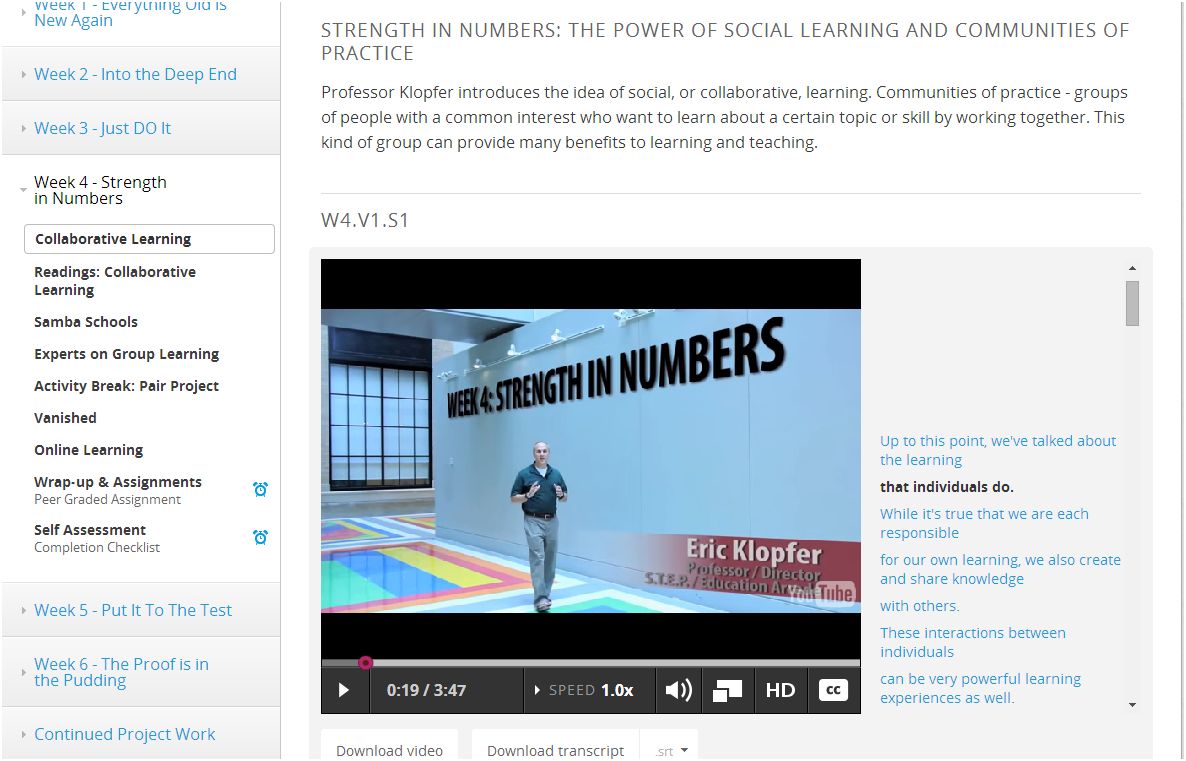
The course I chose was with one of the leading provider’s edX and is called Design and Development of Educational Technology. Okay not for everyone but so far I have found it very impressive.

The course was delivered over 6 weeks. It consisted of video lectures with a designated tutor Professor Eric Kloper introducing many of them himself.

There were links to further reading and sessions requiring a hands on approach, in some instances “playing” with software to find out how it works. In addition there were tasks and projects to complete, all recognised by the awarding of a certificate at the end. And yes it was free. Like my students however I have already fallen behind, but I do plan to complete the programme as so far I have found it both engaging and rewarding.

But what of the future – What we can say is that some MOOCS have responded to the criticisms and are now delivering first class courses to thousands of students, online and for free. But MOOCS are still evolving; blending MOOCs with traditional face to face courses is gaining in popularity for example.

There is however still the big question as to how they are funded, and for me this is about quality. Anyone can put information that is already freely available online in a thoughtless way and leave it for the students to curate. But a well thought through MOOC takes considerable time and skill to design and deliver. This is of course no different to an online or classroom course. A good course needs good people and they cost money. But I see no reason why MOOCs can’t charge, I would gladly have paid for mine. The cost would be low given the volumes, say £1 – £500 but the reach would still be global. And the monies would enable the providers to continually invest in order to deliver the best courses possible.

Bill Gates talks about MOOCS well worth watching, its only 4 minutes “the information has been in the textbook for hundreds of years….online does not enhance knowledge…” 

Ps I promise no more animal pictures next month.

*Author of Connectivism: A Learning Theory for the Digital Age


Are exams fit for purpose (part two) – what are the alternatives?

You dont fatten pigs 2

Last month’s blog came to the conclusion that examinations* are fit for purpose or at least “a purpose.”

They provide the student with a clear objective to which they can direct their efforts and focus attention and are a transferable measure of competency that can be assessed at scale. The “at scale” point is important as there are many ways of assessing competence but few that can cope with the need to test thousands of students all at the same time.

The main problem with examinations is that they don’t always examine what is most valued; the method of assessment often has significant limitations as to what it actually tests and the results are presented in league tables that give a far too simplistic view of success.

I am not sure we can resolve all of these but it might be worth exploring other options, specifically alternative methods of assessment. For example If you change the method of assessment from a formal, often timed written exam to say a portfolio of work, not only do you change the method of assessment but you will change what is being examined, two birds with one stone perhaps.

Different methods of assessing competence

Open book exams

Open book assessment offers a way of testing application rather than memory. Students have access to a text book that contains information relevant to what they are being asked. It’s the use of knowledge that is important, not the knowledge itself. The idea of open book could easily be adapted, why not allow students access to the internet during the exam, they could look up anything they wanted. Is this not more representative of what happens in the real world?

Take out exams

Similar to the above the so called “take out exam” allows the student to take the exam away to work on at home using whatever resources they prefer, books, internet etc. They return the next day with a completed answer. This can work better than you might at first think so long as you have a robust mechanism to detect plagiarism. There are several very good software packages that can spot the most sophisticated types of copying.

Case studies/simulations

A case study provides an environment for the student to demonstrate they can use their knowledge to solve problems and or offer advice in a virtual world. Most case studies tend to be written but this is one area that we could see some clever and affordable use of technology to better simulate the real world.

Performance tests

In a performance test students are required to demonstrate a skill/process, create a product etc while being observed by the assessor who will evaluate the performance. A great example of testing ability to apply knowledge but suffers from the subjectivity of the assessor and has limited application at scale.

Portfolios

Portfolios are most often collections of the student’s work that demonstrate their ability to perform a specific task. These can be simulations of the real world or portfolios of work actually undertaken on the job. A portfolio can include written documents, emails, audio or video recordings, in fact anything that provides evidence as required by the assessor.   Portfolios are perfect for assessing application but the process of assessment is expensive and not without bias.

Viva Vocal – (living voice) Oral exam

Often used to test PhD students, an oral exam gives the assessor chance to question the student. This is a very effective method where you are looking for higher level skill and depth of understanding. As identified last month it’s probably one of the oldest forms of assessment.

Digital badges – capturing the learning path

Being awarded a badge as recognition of achievement is something many will be familiar with especially if you were a boy scout or girl guide. But digital badging is new and becoming increasingly popular because of the internet. A good example would be linkedin and the badges awarded to you by others as recognition of certain skills.  Many of the assessment methods above provide a first past the post type of assessment, you pass and that’s it. Digital badging on the other hand is a form of lifelong assessment that evolves along with your career.

Digital badging for me is one of the most exiting forms of assessment and I am not alone Nasa have been using digital badging since 2011. Read more about digital badging.

Assessment in the future

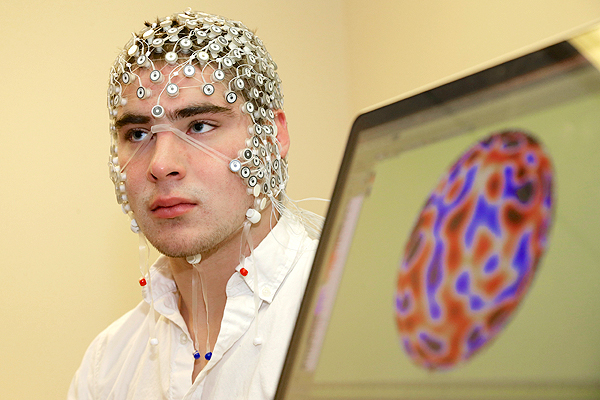
Scanning for competenceThe list above is far from comprehensive and many other equally valid types of assessment exist e.g.  Role plays, Slide presentations, Assignments etc but what might assessment look like 15 years from now. Well how about using MRI scans to identify which parts of the brain are being used?  Not sure it will catch on but it would provide some interesting evidence as to how the student is getting to the answer, simple memory or a genuine and deep understanding .

*Examinations defined as a written test administered to assess someone’s level of understanding, knowledge or skills

Are exams fit for purpose? (part one)

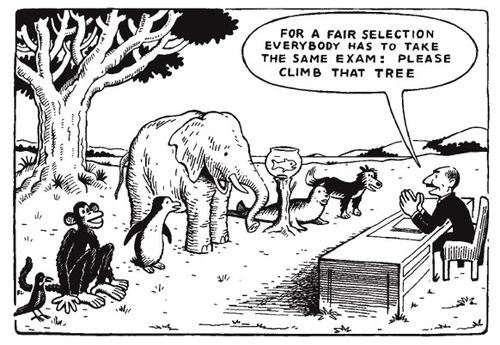
take-the-same-testI have written in the past about what passing an exam proves but have never questioned if exams achieve what they were originally designed to do, are they fit for purpose?

Firstly let me define what I mean by an exam. A written test administered to assess someone’s level of understanding, knowledge or skill that results in a qualification if successful. This is in contrast to a test which is a method of assessing someone’s level of understanding, knowledge or skill often as part of a course in order to provide feedback. A test does not have to be written. Although exams don’t have to be written either, many are and initially at least I would like to keep the definition as narrow as possible.

In order to answer the question, are exams fit for purpose we must first take a step back and look at how we got to where we are now.


A brief history of examinations

The first standardised test is believed to have been introduced by the Chinese in 606 AD to help select candidates for specific governmental positions. However most examinations around this time would have been oral, requiring the candidate to recite a dissertation or answer questions. Although there is evidence of written exams being used as early as 1560*, it was not until the 1820’s that many Universities began to adopt the practice. From 1850 onwards the written exam became the norm in most UK Universities. In 1854 under the Gladstone government selection of Civil servants was based on their ability to pass an exam, this time however it was written.

Bureaucracy – In 1917 to help bring some order to what had been described as chaotic the Certificate and the Higher School Certificate were introduced. Then in 1951 we had the General Certificate of Education (GCE) examinations, more commonly known as Ordinary ‘O’ level and Advanced ‘A’ level , these were normally taken at 16 and 18.

In the 1960’s the CSE (Certificate of Secondary Education) was born, opening up qualifications for all, not just those that went to Grammar school. However this two tier system was thought divisive and so in 1988 under the guidance of the then Education Secretary Sir Keith Joseph both sets of examinations were replaced by the GCSE. The GCSE was graded and contained credit for course work.  In 1991 the General National Vocational Qualifications, (GNVQS) were established intended to incorporate both academic and vocational elements, by 1995 these were accepted as ‘equivalent’ to GCSE.

In 2014 we find change again, gone is the course work and written examinations once again become the main method of assessment, although there will be grading, 1 to 9 with 9 being the higher mark. The exams will still be called GCSE’s, although officially they are known as GCSE (England). This is to avoid confusion with Wales and Northern Ireland, who are not changing.

Yes they are

Historically at least it would appear the purpose of the exam was to provide a recognised and transferable measure of competency in a given subject or discipline. The lack of transparency and consistency of the oral exam resulted in them being replaced with written ones and a more formal bureaucratic structure was developed to administer the process.

And in many ways there is very little wrong with this.

The problem is not with the exam itself, but with what is being examined. If as a society we value “thinking and creativity” for example, then should we not be examining these rather than subjects that require the candidate to do little more than rote learn facts.  Perhaps we should explore different methods of assessment, the written exam has its uses but hand written papers are looking increasingly outdated in a world that communicates electronically not only in short texts and tweets but with video and photos . In addition the way exam results are used in league tables to show winners and losers is divisive. It looks like a measure but has in fact become a target that schools and teachers must hit or be considered failures.

Please watch this it’s very funny…..and thought provoking

Not on the test


In the second blog about exams I want to look more closely at some of these points, in particular what other ways we can assess what people know.

*Assessment around this time was through debate between a number of learned people all at the same time and lasting for two hours or more.

Big fish – little pond

Best be a Big fish in a Small pond

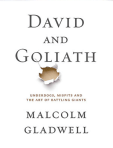
It’s taken me a little time to get round to reading the latest Malcolm Gladwell (MG) book, David and Goliath, underdogs, misfits and the art of battling giants. Although consisting of three separate sections they all examine the idea of what it means to have an advantage and how we account for the success of the underdog.

Of all the ideas MG lays before the reader, the one I felt was of most interest is something called the big fish little pond effect (BFLPE) and the theory of relative deprivation.

Relative deprivation theory (RDT)

Relative deprivation refers to the discontent people feel when they compare their positions to others and realise they have less. e.g. I judge BMW ownermyself to be successful on the basis I have a brand new car that cost £15,000.  That is until my neighbour pulls on the drive with a brand new BMW costing £30,000, now how successful do I feel?

MG applies this theory to the world of academia. If you take Harvard’s Economics PhD programme and consider the number of times each PhD graduate was published in the last 6 years, Harvard’s top students will do this 4.31 times. Those that are about 5th or 6th in the class publish .71 times and those that are about average .07 times. If however you compare these results to a “mediocre” school, say the University of Toronto, where MG went,  the top students will publish 3.13 times, those that are 5th or 6th .29 times and those that are average .05 times. The point being that students who attend a much lesser university but where they are top of their group perform considerably better than the 5/6th best at Harvard. The question is why?

The smarter your peer group the dumber you feel…..

This is where RDT comes in, we tend to judge our ability by comparing with others, and if you are in a class with very smart people who always do better than you, your perception of your own ability will be effected. The second problem is that this self perception will have a significant impact on your behaviour and ultimately what you achieve, hence the results above. The implication, you will achieve more if you are in a class with others of equal or less ability than yourself.

Bottom line, your performance will improve if you are a big fish in a small pond. It’s even called, the big fish little pond effect (BFLPE)

But what to do?

Admittedly you can’t always pick and choose your peer group, but you can be aware that comparing yourself with the very best may be having a detrimental impact on your own performance, so stop doing it! Instead be inspired by the best but compare your performance with those that are the same as you. Better still compare your current performance with what YOU have achieved in the past and if you are doing better you must be improving…..

David-and-Goliath-Malcolm-Gladwell


Listen to MG talking about relative deprivation theory or if you prefer the Big Fish little pond theory….


Listen to MG being interviewed about the book

Sleep is for wimps – oh and successful students

Get some sleepAlthough I am sure someone is preparing for an exam this very minute, July/August are the traditional months to take a holiday and get some well earned rest. A holiday can be exactly what you need especially if you have just come to the end of a long period of study followed by in some instances, weeks of exams.

I have to express a personal bias in so much that I believe holidays are essential if you are to be at your best. For me this years holiday has to provide some degree of relaxation after what has been a particularly busy 6 months. I am looking forward to a change of scene, meeting different people and the freedom to wake naturally, feeling rested after a good nights sleep. Holidays are of course very personal and for some an adventure holiday, travelling to new places every day, might be far more desirable.

But one thing that all holidays should provide is the ability to relax and catch up on sleep, even if that means you climb two mountains, swim for three hours before crashing out in a state of satisfied exhaustion on the evening.

Sleep is essential for learning 

Of course sleep is something you should do “properly” every day, it’s just that we don’t. Modern life steals that vital rest time, this is acutely the case when trying to balance both work and study. Studying is often undertaken on an evening and sometimes late into the night as you effectively try to do, too much in too little time.   We now sleep less than we did 50 years ago, it used to be around 8.5 hours, it’s now only 6.5. The sleep should also be of high quality, yet our sleep is interrupted by the lights of mobile phones, and sounds made when texts arrive late into the night. In order to sleep better it is a good idea to avoid light approximately 30 minutes before going to sleep, yet how many read in bed from iPads or equivalent with the bright light emitted from the screen telling your brain to stay awake.

Why sleep is important

We have known that sleep has been important for many years but we didn’t know why, cognitive scientists now have some of the answers. There are three views as to why sleep is beneficial:

One restoration – some of our genes only turn on when we sleep, their role being to make essential repairs.

Two conservation – we sleep to conserve energy, and

Three consolidation – our brain revisit events and experiences, and begins to make sense of them, moving data into long term memory and solving complex problems.

Susanne Diekelmann at the University of Tubingen in Germany says “sleep helps stabilise the memories and integrate them into a network of long-term memory, it also helps us to generalise what we’ve learnt, giving us the flexibility to apply the skills to new situations. So although you can’t soak up new material, you might instead be able to cement the facts or skills learned throughout the day.”  Bodies need rest – the brain needs sleep Sometimes you may find yourself having to push sleep to one side and in specific situations thats fine.

It’s when lack of sleep becomes the norm that problems arise, the result is greater stress, poor judgement and ineffective learning.   So now the exams are over, take a break, get some quality sleep and try and make a few simple adjustments in you life so that sleep takes more of a priority.

It is a common experience that a problem difficult at night is resolved in the morning after the committee of sleep has worked on it.

John Steinbeck  

Music to help you sleep and two video to watch but not just before you go to sleep

TED neuroscientist Russell foster  explains more about why we sleep  

Arianna Huffington talks about the importance of sleep

Teaching to the test – Interesting research but the fat lady is still in good voice

Fat lady still singingThis week researchers from the University of East Anglia released some very interesting findings that resulted from testing 594 bio-science students in their first week of term at five universities.

The students selected would be considered by many more than competent in their subject, almost all had a grade A*, A or B in biology at A-level. Yet when they were given 50 minutes to answer 38 multiple choice questions on cells, genetics, biochemistry and physiology from their A level core syllabus, they only got 40% correct. The period of time between the students sitting their A levels and the test was three months.

Lead researcher for the study, Dr Harriet Jones, said: “What our research shows is that students are arriving at university with fantastic A-level grades, but having forgotten much of what they actually learned for their exams.”  She went on to say that the trend to teach to the test, to ensure good results for schools’ reputations, was the problem.

The schools are to blame then

The facts of the research are clear, students who had successfully passed a test, were unable to pass a similar test three months later. The conclusion reached is that the students did not understand (see my blog on understanding) their subject well enough and passed their A levels probably using little more than memory. And who is to blame, the schools of course, for teaching to the test. Why the school do this is worthy of further debate, but government pressure and the impact of league tables will certainly be in the mix.

But do employers not accuse Universities of delivering up similar ill prepared students. The test is different but from the employers perspective the result is the same. A University student who professes to know something but when tested “in the real world” doesn’t.

Does this mean that Universities are also teaching to the test!

It’s about the test etc

The problem is not in teaching to the test; the problem is with the test, the pass mark and possibly the marking. If the test was more Testing but for what!aligned to what the student needs to know/do at a fundamental level, the pass mark sufficiently high and the marker having some degree of autonomy to form judgements, then the results would probably be different. It could of course be that the exams are easier – Exam chief: ‘you don’t have to teach a lot’ for our tests.

The big criticism of teaching to the test is, it results in a narrowness of understanding, little in the way of depth and does not push students to think in abstract and creative ways. But if the test, which incidentally does not have to be in the exam hall or on paper/PC was able to “test” for these qualities then teaching towards it would perhaps be more acceptable.

Bottom line

Teaching to the test is unlikely to change, in fact given the popularity of league tables  in education just now it may well increase, but with more effective testing the results might be better students, happy Universities and even happier employers.