
Video killed my teacher – metaphorically speaking

Video killed the radio star

What did you do the last time you needed to repair, cook or dare I say learn something? Did you google it and follow the link to YouTube? If so you are no different to the over one billion people who actively use YouTube every month.

This blog is not actually about YouTube but the medium of video and the increasingly important role it plays in our daily life and how we use it to learn.


Social learning and the bobo doll

Albert Bandura is the Professor Emeritus at Stanford University and is widely regarded as one of the greatest living psychologists. He is perhaps most famous for his Social learning theory, the theory of how people learn by observing others, and the bobo doll experiment. Click here to listen to Bandura himself explain.

Behavioral theories of learning suggested that all learning was the result of associations formed by conditioning, reinforcement, and even punishment, see Skinner and Pavlov. Bandura’s social learning theory proposed that learning can also occur simply by observing the actions of others. And that is where the true value of video lies, it is in the ability of people to watch what others do and learn from them.

What makes a good learning video?

Firstly, as with any form of delivery it needs to planned and structured. What is the purpose of the video, why use video and not send an email? Think about the audience, why will they want to watch it, what makes it relevant for them? Break it into three sections, a beginning, where you tell the audience what you are going to tell them, the middle, where you actually tell them, and the end where you tell them what you have told them.

Secondly It has to be relatively short, 10 minutes is a maximum. Even 6 minutes of good video takes a lot of planning, equally it wont test concentration levels too much. This does not mean you can’t record many hours of video, it just needs to be chunked, labeled and structured so it can be easily followed.

And lastly think about your delivery. Pace, tone of voice and body language all help the learner. This is where you manage the mood of your audience, if your happy they will be happy. Generally, speak more slowly than you would normally but be careful toooo slowww can be boring, vary how you say something depending on what you’re saying. Also think about the visuals and if it would be better to show an image rather than talk. But don’t go mad and put too much on screen all at the same time, it gets confusing.

Examples of good video 

But of course the best way to explain the power of video in learning is to show the videos.

1.The queen of cooking Delia is also the expert of slow deliberate, perfectly planned presenting. Here she explains how to cook an omelet, notice the attention to detail.  Ps Delia left school at 16 without a single GCE O-level. 3.43 minutes in length.

2.Here is someone who breaks the presenting rules, certainly the one that says don’t talk too fast. However, CGP Grey is great at using visuals, his dialogue is fast but incredibly informative, its packed with information, and it’s funny. If you are confused by the US elections, you won’t be after watching this.  5.19 minutes in length.

3.Crash course is a little like Khan academy which I have written before, what makes it different is the humour and how it is shot to camera using powerful visuals. Watch this clip if you want to learn about supply and demand. This pushes the boundaries time wise at 10.21 minutes.

4.This is the big one certainly as far as hits are concerned. James Stevens, Vsauceis watched by 19 million people. This one answers the questions as to, what would happen if everyone jumped at once? 7.12 minutes in length.

Why cramming works and making stuff up is okay

Will making stuff up

Will making stuff up

To a certain extent I have spent much of my career making things up. When I was a student that was not the case, I listened and learned and so when I spoke, I spoke with confidence that what I was saying was correct, because someone had just told me it was. Yet knowing is only the start, and in some ways a poor relative of the “figuring it out for yourself” technique.  I am reminded of quote from the film Good Will Hunting, which along with Dead Poets capture some really magical moments in learning.

Will Hunting – “See, the sad thing about a guy like you is in 50 years you’re gonna start doing some thinkin on your own and you’re gonna come up with the fact that there are two certainties in life.” “One, don’t do that.” “And Two, you dropped a hundred and fifty grand on a f***in education you coulda got for a dollah fifty in late charges at the public library.”

 Question practice – the secret to exam success

Having had no real formal educational training I have been exploring ideas as to why some techniques work and others don’t, why it is that student A passes yet student B who did exactly the same, failed. One clear observation from over twenty years in the high stakes exam world is that the most important activity that a student can engage in is, question practice. As a lecturer I would make statements, explain them using real world examples, get students to laugh, and maybe even enjoy the subject. But, the very best learning seemed to happen when the student was required to do a question. So it was with great interest that I read of some research that came out of the US in 2011, it’s called Retrieval Practice.

 Retrieval practice – the power of cramming

Retrieval practice is simply the process of retrieving something from memory.  So for example if I asked you, who was the Prime Minister that took us into the European Economic Community in 1973, you might say, on reflection Edward Heath. You already knew the answer but were forced to recall it. If however you were not sure who it was and were subsequently told (given feedback) it was Edward Heath and that Harold Wilson in 1975 held the first referendum, you are likely to remember both. But the most interesting and perhaps surprising aspect of this research is that not only can you recall the facts, it also leads to a deeper learning in so much that you can answer questions on related information. This in some ways gives credence to the idea that cramming information, maybe not at the last minute could be beneficial, not simply because you will remember it for a few hours’ but that it will lead to deeper learning.

Mark McDaniel is a psychology professor at Washington University in St. Louis

“We think of tests as a kind of dipstick that we insert into a student’s head, an indicator that tells us how high the level of knowledge has risen in there when in fact, every time a student calls up knowledge from memory, that memory changes.” “Its mental representation becomes stronger, more stable and more accessible.”

Jeffrey Karpicke, a professor of cognitive psychology at Purdue University

“Retrieving is the principal way learning happens.” “Recalling information we’ve already stored in memory is a more powerful learning event than storing that information in the first place,” he says. “Retrieval is ultimately the process that makes new memories stick.” “Not only does retrieval practice help students remember the specific information they retrieved, it also improves retention for related information that was not directly tested.”

Final thoughts

And so I am pleased to say that what I have observed in the classroom, that question practice improves exam results might be a little simplistic and that not only does it help students pass exams they might actually have been learning something at the same time 🙂

If you want to read more follow these links

To Really Learn, Quit Studying and Take a Test (New York Times)

Researchers Find That Frequent Tests Can Boost Learning (Scientific American)

So you want to be an astronaut – assessment for astronauts


Astronaut-Tim-Peake-Dials-Wrong-Phone-Number-from-Space

Your there by yourself. There’s no doctor, there’s no computer engineer – so you have to learn all of these skills. Tim Peake

What is the purpose of assessment?

In order to gain a better understanding of the assessment process for astronauts, let’s ask a more basic question first, what is an assessment and what does it prove?

At one level it is simply a measurement of performance benchmarked against a given outcome or standard. The results can, help a teacher identify progress so they can adapt the next lesson, or give assurance an individual is capable of performing a particular task. This is probably the most important type of assessment for astronauts.   Modern high stakes “examinations however play another role; they offer the student a transferable badge of honour that can help open doors to better career prospects and increased salary. If you doubt the importance of this last point, click this link to read about the level of corruption in India and the lengths people will go in order to obtain a certificate saying they have passed an exam.

Employability gap – so what’s the problem?

However examinations on their own do not provide a guarantee that the individual who passes will be able to do the job.  And it is here where the disconnect becomes clear. Often the method of assessment is not based on what the student will be doing in the work place, and even if it is, it is not set in the same context. Many believe this gap has become ever wider as more and more students come out of school/university lacking the skills required by the employer.

But should the exam/assessment be changed to narrow the gap or is it the role of the employer to provide the necessary “on the job” education in the work place? However the problem with the employer being given the responsibility, it implies that what you study doesn’t matter, only that you do. This just seems wasteful, wasteful of time, money and effort. Assessment must get closer to measuring the skills required for one simple reason, what gets measured gets achieved, a cliché for sure but a true one.

Assessment for astronauts

Costs – The costs involved in training astronauts is a bit unclear, NASA will pay Russia $70m for a seat on Russian space craft in 2017 that includes training, figures of around $25m are also cited, Tim Peaks training was quoted as £16m so very similar.

Basic requirements – Mission Specialist (non pilots – most are pilots with a military background) include the following:

  1. Bachelor’s degree from an accredited institution in engineering, biological science, physical science, or mathematics. The degree must be followed by at least three years of related, progressively responsible, professional experience.
  2. Ability to pass a NASA space physical, which is similar to a military or civilian flight physical.
  3. Height between 58.5 and 76 inches.

Training – Tim Peak’s education started in 2008 when he was selected by ESA (European space agency) from 8,413 applicants. Tests at this stage included, intelligence, spatial awareness and concentration. Then for the 10 selected another 18 months of intense training followed, this time on topics as wide ranging as space law, rocket propulsion, spaceflight engineering and the hardest for Tim, learning to speak Russian. He was also subject to one week’s caving in Sardinia, Italy, with five other astronauts to simulate what it would be like in space, this was to build teamwork, problem solving and cope with poor hygiene facilities. Then it was one year of advanced training, including working underwater to simulate the lack of gravity. In 2013 it was time to go into space for the first time, this was the last test before being selected and then finally in 2015 Tim was allowed to do the job for real. In all it had taken 6/7 years.

What have we learned?

Clearly you need some underpinning academic skills i.e. a degree but a relevant one. The training is provided by the state, the argument being that it is for the greater good of society so the costs should be met by the tax payer. An interesting point for those that believe this should be the case for all education. But most importantly the assessments were all built around making sure that when Tim got into the space he could do the job. Very few of the tests required a piece of paper and a desk, and many were simulations of what he would meet in the real world.

Given the advances in technology the time is now right to introduce more simulations into the exam room, not so we can all become astronauts but to help prepare the next generation for the work place.

And just imagine your badge of honour when going for that next job – “what exams have you passed” “oh a few, but did I mention I was an astronaut…..”


A Nostradamus moment – Predicting learning in the future

Top-5-Nostradamus-Predictions-That-Came-TrueLast year along with a colleague I looked into some of the key trends that were shaping the world of Professional Education. The result was the production of a Learning Strategy completed in December 2014. The document highlighted some of what we thought might impact our organisation in the future. Taking the technologies, attitudes and resources of today and guessing how they might change is certainly brave, possibly foolish, but reading what others think is always interesting.

Tomorrow I will be visiting the Digital Education show in Earls Court; guest speakers include Sugata Mitra, Richard Gerver and Sir Ken Robinson. The topics up for debate are current, wide reaching and of course equally prophetic.  Add to this the publication of the 2015 Horizon higher education report and you get an irresistible mix of views on the future, some of which I have highlighted below.

The measurement of learning will increase

Good teachers have always tracked student performance. It may have been in their head, summarised at the end of term in the form of a report but measuring student performance is certainly not new. The difference is now the results are more public, displayed in league tables showing winners and losers. In addition we have data not just on one student but thousands and once you have data, big data in fact, you analyse it, learning analytics is born. This allows you to make recommendations for improvement and predictions based on the observed trends and patterns. Given that new technologies make the gathering of data relatively easy, measuring student performance and the methods by which they learn will only increase.

All classroom courses will become a blend

The genie is out of the bottle, learning in a classroom complimented by the use of instructionally sound online resources offers so many benefits. It enables a more personalised learning experience, makes effective use of student time outside the classroom and is often mobile resulting in greater convenience.  It is hard to see why you would ever have just classroom only courses again. Yet not all courses are a blend or to be precise although they have online resources they are little more than a classroom course with some online PDF’s or links that are not used due to poor quality, relevance or support from the teacher, so we still have some way to go.

Informal learning will emerge from the shadows

So wrong!

So wrong!

Informal learning or as it sometimes called student/curiosity led learning has always existed but is now more easily recognised. Teachers and educators are also beginning to invest time into using it more effectively.  Once again technology is playing an important role by making knowledge more accessible and facilitating greater collaboration via online forums and social networks.

Video is an incredibly successful example of social learning, it’s hard to imagine but YouTube didn’t exist before 2005, that’s only 10 years ago. It now has 1 billion users, 300 hours’ of video are uploaded every minute and is available in 61 languages. A very practical example of learning with video can be found by clicking the banana – trust me you won’t be disappointed.

And that’s just three

I could equally have mentioned:

  • More money will be spent on personalisation and adaptive technologies
  • Greater acceptance of BYOD – your own devise that you take from home to class to work
  • Wearable learning technologies – think how wearable sports devices have expanded recently
  • Internet of things (IoT) – a network of connected objects that link the physical world with the world of information through the web could provide a wealth of new ways of learning

How did I do?

A similar blog from 2011


Blended – taking responsibility for your own learning

Taking responsibilityBlended course programmes are here to stay. The idea that studying comprises of both time in the classroom with others and time learning on your own using online or even traditional learning materials is certainly not new. Of course the purist will argue that blended learning has to or exclusively use online materials rather than a text book – no matter.

This blog is not about blended learning, more the implications of what studying on blended programmes means i.e. you have to study on your own and as a result take responsibility for how you learn.

Instructor led – easier

In a traditional classroom the teacher (instructor) stands at the front of the classroom and leads the learning. They tell you what to learn, when to learn, even how to learn.  They also dictate the pace and mood of the delivery. There is of course nothing wrong with this and many students really value it, in fact it’s their preferred method of learning. Of course its far from perfect, not everyone learns at the same pace or in the same way, but let’s put that debate, or blog aside for another day.

With a blended programme the student has to leave the security of the classroom and enter the world of self managed learning (SML).

Student led (SML) -harder but more effective

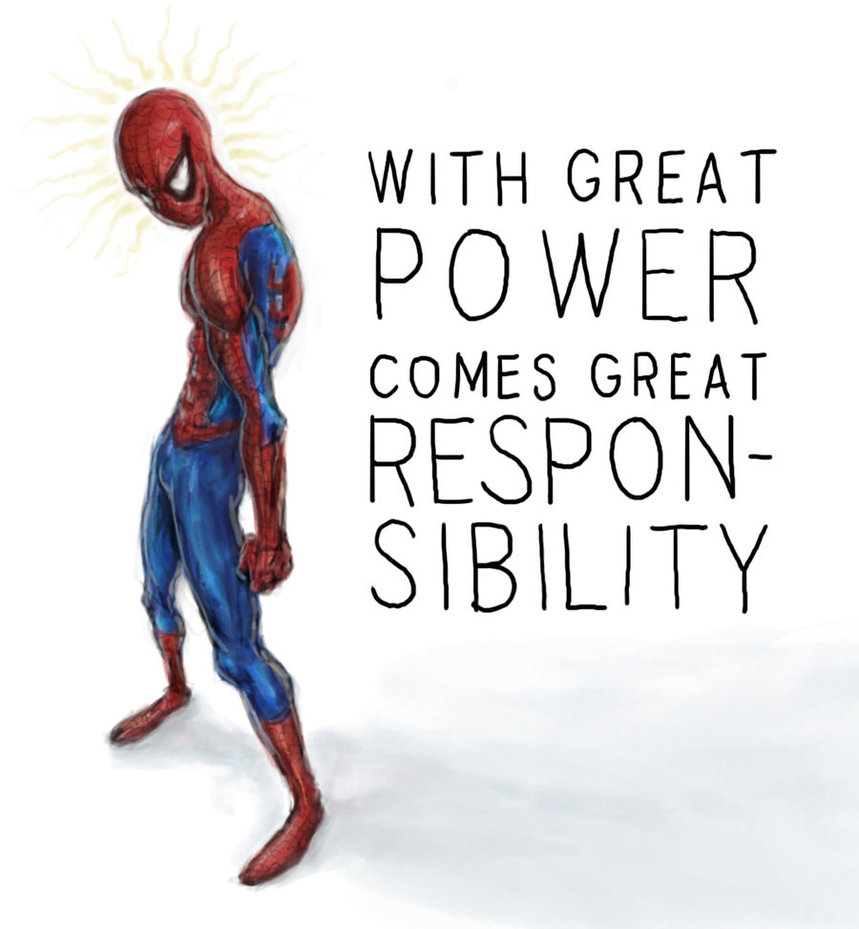
Self managed learning gives the student great power, they can study what they want, perhaps not the subject matter but certainly the order, when they want, how they want etc. However as Spiderman* once said, with great power comes great responsibility. You now have to take responsibility for the result. This means if something doesn’t make sense it’s not the teacher’s fault it’s yours!

Its perhaps even more basic than that, you are also responsible for how long you spend studying, you don’t have to do anything if you don’t want to. You can study on a Monday or Wednesday, or just the weekend. You can study for one hour or for 20 minutes. And there lies the problem, when it’s up to the individual a lot of people take the easy way out, the route of least resistance and put it off for another day.

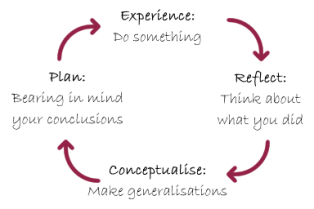
However when you do take responsibility, the quality of the learning is significantly improved. Listening to the teacher is easy but not always that effective. The SMLearner has to set goals, monitor their performance and finally reflect, how well did they do compared with how well they thought they would? It is partly this process that makes the learning so good, but it will feel harder.

How to be a SML

These may all be worth covering in more detail in another blog but for now think of this as a check list.

  • Use a timetable – Google calendar is great for this. Put in all your key dates including exactly what you will do e.g. read chapters one to three – make notes – answer question 2,3 and 4.
  • Have a place to learn. This might seem obvious but you need somewhere that is quiet, plenty of space, good lighting, with little distraction. Perhaps most important is that you know that when you are in this room you feel ready to study.
  • Read carefully, I have written on this before. Underline key points as you go. Don’t just read, you have to think as well.
  • Make notes, even if you have pre- prepared ones. Once again I have written on the best way to do this. If you are following an e learning module make notes as you work through the online guidance.
  • Listen to your internal dialogue. When you are working alone just make sure that what you are saying to yourself is positive. Remember this is not about telling yourself everything will be fine, it’s about moving forward e.g. I just don’t understand this, what I need to do is read it again perhaps from another book.

Taking responsibility

Want to find out more about taking responsibility for learning – watch video 1video 2video 3. They are all less than three minutes long and well worth it.

PS *Of course Spiderman can’t really talk it was Stan Lee the writer of Spiderman, although Franklin D Roosevelt and others have also been quoted as saying this or something similar.


Turn off the mobile – multi tasking doesn’t work

Information every whereThe background to Dr Daniel J Levitin latest book, “Thinking Straight” is that the information age is drowning us with an unprecedented deluge of data and we need to develop strategies to cope. Information overload and distraction are two problems we face when it comes to learning. How easy do you find it to concentrate when studying? Do you sit in a quiet room with no distractions and focus your attention on one task or is your mobile phone, PC or tablet sat close at hand waiting to deliver the worlds information in a second.

In the past books were precious due to their scarcity and knowledge hard to acquire the result of people’s inability to read. Following the invention of the printing press in 1450 books became more readily available but even then the amount of information any one individual was exposed to was very small. In addition the pace of life was slower, expectations as to what could be achieved balanced against the practicalities of what was humanly possible.

information_overloadBut look at the situation today, we live in an information rich society, all of it accessible at the press of a button. The problem now is not availability of knowledge (western world centric I know) but curation, synthesis and prioritisation. Yet how well is our brain programmed to cope with this new world?

Good job we can multi task

Levitin argues that multi tasking is inefficient, it’s a myth. The idea that one solution to this deluge of data is to do several things at the same time is simply wrong.  When you are doing two things at once, reading a book whilst monitoring your Twitter feed or face book account for example you are not in fact doing two things at once, you’re switching between neurones very quickly and this is giving the illusion of multi tasking. The downside of this process is it drains energy, neurones need glucose and the constant switching depletes it, resulting in poor concentration and an inability to learn as effectively. Multi tasking

I have written before (Attention Breach of duty as a student) on the importance of focusing your attention on one thing at a time and Levitin is supporting doing just that. However he does add something that I think is of interest. When you flit between two competing information sources the brain will reward you with a shot of dopamine, the pleasure drug. The result being you will enjoy the experience. This was valuable for Stone Age man because discovering a new food source at the same time as avoiding being eaten was helpful but in a modern world it is just problematic.

Externalise the information – organise, reduce and prioritise

What Levitin suggests is that you need to externalise, get the information out. In simple terms write it down, making lists is an example of externalising. He also states that you should write rather than type as this requires deeper processing.

So if you want to follow a more brain friendly approach to learning you should:

  • Break information down (A common message) into chunks and write out the key points. This will help you focus and process the information at a deeper level.
  • Find a place that is free from distraction, turn off all mobile devises. This is probably the most important message; your brain does not deal well with doing two things at once.
  • Make a list of what you have to do. Interestingly this is where technology can help. Google calendar can set up simple reminders so that you don’t have to keep distracting yourself by thinking about something you need to do later.

And if you’re interested click this link to read – Why the modern world is bad for your brain.

Ps Beth this ones for you!

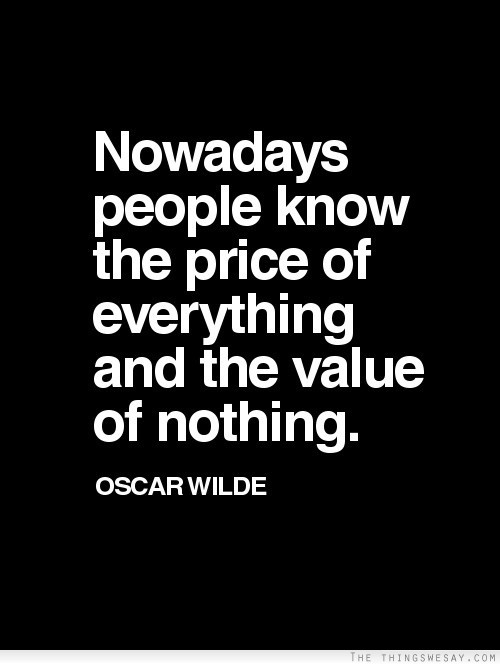
The Price is right? – Value for Money Education

The Price is RightThe idea behind the price is right was that you had to guess the price of an everyday object. Not a complicated game I admit but by game show standards a successful one, it ran from 1984 to 2007. But how do you know if something is the right price? What does “right price” even mean?


Easier in a market where there are many similar products all providing a similar service or experience, not so easy when assessing the value is subjective, comparability difficult  and getting it wrong  expensive. This is exactly the situation you might find when trying to choose a course provider, a college or university. How do you know if you’re getting value for money, if one provider is more expensive than another is it extra profit, inefficiency or a measure of quality and so value?

What do you want?

The first question to ask is, what do you want from the course provider and how will you measure success? On the face of it the answer may seem obvious – it’s to pass the exam or get as high a grade as possible. But learning is about so much more than the exam result, isn’t it?

What about the skills you develop and the knowledge you acquire, what about the people you will meet and the inspiration, motivation and direction you will receive? These are difficult to measure and are often ignored yet in the long run are probably far more valuable than the passing of an exam.  Also would you be happy with knowing just enough to pass and then afterwards forgetting everything, is that what you pay for, is that value for money?

A high quality provider will teach content and explain concepts so that you not only retain knowledge but develop a deeper understanding of the subject matter.

So it’s all about passing?

You may want to pass but what method of study will give you the best chance of passing? How much contact time do you The price of everythingexpect? Are you sufficiently self motivated that you need little or no help, do you want the convenience of studying online or the discipline of having to go to lectures? You may be aware of the method you prefer but many students aren’t. The better provider will know enough about you as an individual, and if they don’t they will ask before making any recommendations as to what method of study is best.

Risk and cost of failure

How important to you is passing, or passing as soon as possible? It could be a false economy to go with the provider who suggests the course can be covered in 10 weeks at a cost of £1,000 when another suggests 15 weeks at £1,500. The longer course with the higher price could well be good value for money if you pass first time. Equally when the stakes are high you don’t want to make a mistake,  consider something like eye surgery, would you go to the cheapest provider where the risk of getting it wrong could be life changing.  Of course expensive does not always mean value for money. You will need to do some homework first. Below is some advice as to what to look for when choosing a provider before you part with any money.

What to look for in a course provider

Fundamentally it’s about trust and confidence in the provider. Education is not a commodity, it’s not homogenous, it’s personal and too important to get wrong

Here are a few things to look out for and questions to ask.

  • Experience and quality of the Teachers/Lecturers – having a stable and experienced lecture team is an indication of quality. Ask how the college ensures their staff are up to date, do they have a formal training scheme? What research credentials do they have?
  • Long term player – How long has the organisation been in existence, ask them what their long term strategy is for learning or at least what they think the future might hold.
  • Where do they rank in league tables – maybe they have industry awards or accreditation by external bodies.
  • Investment in the future and level of innovation – what do the premises look like, are they well maintained? What technologies have they introduced recently?
  • What are the range of different study options (length of course/F2F contact time etc) and levels of personalisation – for you to have the best course the provider should be able to offer some degree of personalised learning.
  • Ask if you can try before you buy – What have you got to lose they can only say no. Oh and ask them how easy it is to transfer to other courses and get your money back if you’re not happy.
  • And finally one of the most useful ways in making any decision is to ask friends/colleagues what they think or experiences have been, and don’t forget to check them out on the social media sites.

Conclusion

There is a lot more to this debate and the topic is certainly worthy of another blog. Value for money is a big question in education. I have not for example even mentioned the cost of education in the context of employability and student debt. Nor which subjects have the highest employability statistics etc.

The purpose of this blog was to highlight the complexity of choosing a provider and to give some advice as to what to look for.

In summary, clarify exactly what you want from your course provider before you start looking, ask some of the questions above and dependant on the answers you get make your decision. And if all goes to plan you will you end up with the right provider, at the right price and so great value for money.

PS Happy New Year everyone – I think as far as learning and exams are concerned 2015 is going to be as interesting and as uncertain as 2014. I am looking forward to it.


And the cow said – MOOOOCS

MOOOOCIn October I decided I would find out first hand exactly what it was like to study online so I joined a MOOC. For those that don’t know what these are, a Massive Open Online Course is a free or at least normally free online course that has the capacity to have thousands of students in the same virtual classroom.

In fact only last month the British Council launched its first MOOC on English language attracting over 100,000 students. In essence a MOOC provides “education” at scale, accessible globally for free, and what could be wrong with that? Well in essence nothing, having a well educated society not only helps with social mobility but as has been well documented adds significant economic value.

Problems with MOOCS

But as you can imagine not everyone is happy, most of the concerns centre around quality.

If MOOCS are so good why is it that despite the large numbers of students enrolling there are very few, around 8% who actually complete the course.

Is this the result of poor instructional design, the fact that some MOOCS have very little student/ teacher engagement and are simply a series of videos linked together with reference to materials available elsewhere on the web. Is it because no one person is accountable for the students, there is no “teacher” to motivate the student if they fall behind. And due to the scale, feedback has to be automated or assessed by peers who are clearly not experts.

Well it might be all of the above and the course completion rate is clearly of concern yet some would argue that having a less teacher centric course is exactly what you need for students to develop a much deeper understanding. This is something *George Siemem’s argues.

Making sense of the chaos is what learning is all about, if teachers plot the route it reduces the value of what is being or could be learned.”

 “The great thing about MOOCS is that the learning does not end when the course ends, because the students have built their own communities, the learning becomes life long.”

M+O+O+C+S

People talk about MOOCs in so many different ways, in fact the name itself can be confusing when trying to understand exactly what a MOOC is.

  • Massive – A MOOC works on a platform that enables thousands of students to see and hear the same thing at the same time. The technology behind this is impressive and using one tutor to deliver the course enables the most to be made of the expertise.
  • Open – its open to anyone, there are no prior learning requirements. It is also open in the context of being free, and the learning not being restricted to the views of one person, the community are also teachers.
  • Online – it is online but is not what some would class as an online course. An online course unlike a MOOC would be instructionally designed to ensure the learning is consistent with the learning outcomes and incorporates the latest developments from the field of learning science.
  • Course – It has a cohort, a subject matter and a beginning, middle and end. But as outlined above, at its simplest it could be little more than linked video with no overall instruction and some would argue this is not a course.

A MOOC on one level is the next generation text book

Listen to Anant Agarwas on TED 

Providers

It is important to say that as MOOCs are so new, the first ones established around 2011, it is hard to pin them down as they are constantly changing. But if you are interested here is a note of the key providers.

  • Future Learn – owned by Britain’s Open University Offers MOOCs from many UK Universities. The newest of the MOOCs with approximately 750,000 plus users.
  • Coursera has around 10 million users and is by far the biggest, a for-profit founded by two Stanford University Professors.
  • edX  have around 3 million users, a not for profit MOOC founded by MIT and Harvard University.
  • Udacity have around 1.6 million users.  A for -profit backed by Sebastian Thun (co founder) and two Venture capitalist. It is currently repositioning its offering to be more vocational, targeted at professionals. Listen to Peter Norvig early observations in 2012 on TED. Peter taught one of the first classes with Sebastian Thun on artificial intelligence with over 100,000 online.

My MOOC – conclusions

edX

My edX course with MIT

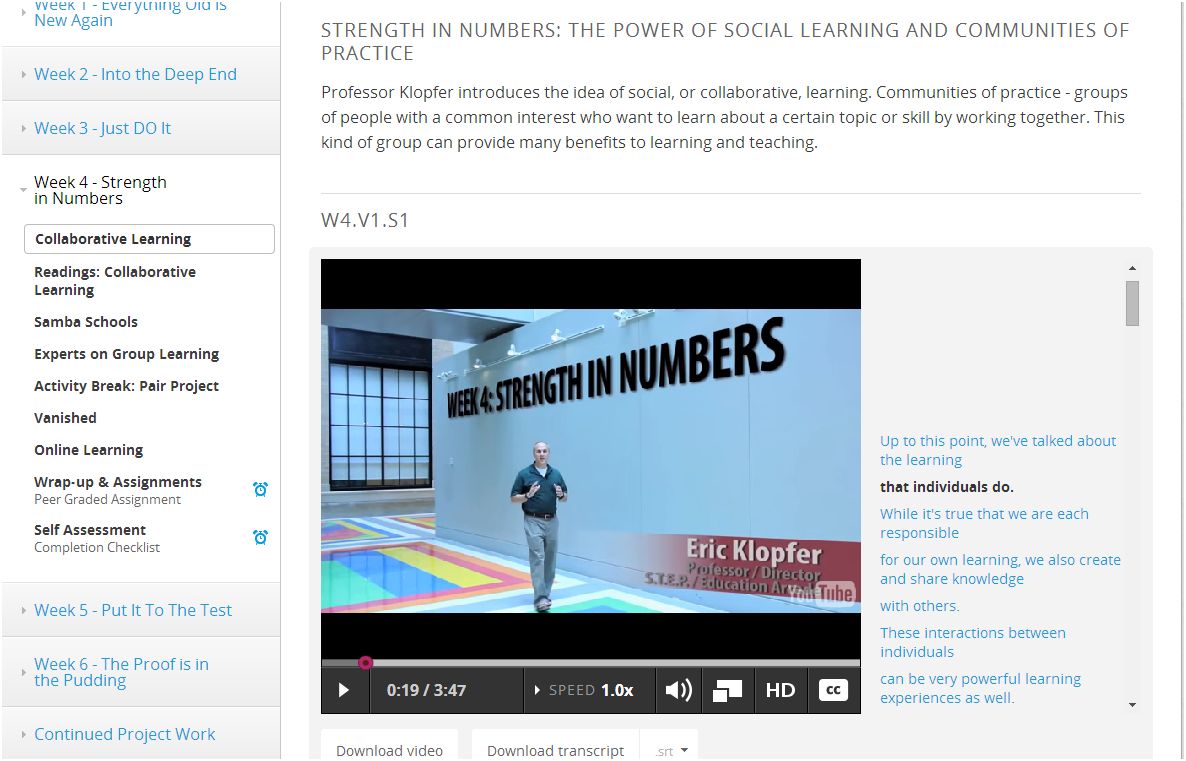
The course I chose was with one of the leading provider’s edX and is called Design and Development of Educational Technology. Okay not for everyone but so far I have found it very impressive.

The course was delivered over 6 weeks. It consisted of video lectures with a designated tutor Professor Eric Kloper introducing many of them himself.

There were links to further reading and sessions requiring a hands on approach, in some instances “playing” with software to find out how it works. In addition there were tasks and projects to complete, all recognised by the awarding of a certificate at the end. And yes it was free. Like my students however I have already fallen behind, but I do plan to complete the programme as so far I have found it both engaging and rewarding.

But what of the future – What we can say is that some MOOCS have responded to the criticisms and are now delivering first class courses to thousands of students, online and for free. But MOOCS are still evolving; blending MOOCs with traditional face to face courses is gaining in popularity for example.

There is however still the big question as to how they are funded, and for me this is about quality. Anyone can put information that is already freely available online in a thoughtless way and leave it for the students to curate. But a well thought through MOOC takes considerable time and skill to design and deliver. This is of course no different to an online or classroom course. A good course needs good people and they cost money. But I see no reason why MOOCs can’t charge, I would gladly have paid for mine. The cost would be low given the volumes, say £1 – £500 but the reach would still be global. And the monies would enable the providers to continually invest in order to deliver the best courses possible.

Bill Gates talks about MOOCS well worth watching, its only 4 minutes “the information has been in the textbook for hundreds of years….online does not enhance knowledge…” 

Ps I promise no more animal pictures next month.

*Author of Connectivism: A Learning Theory for the Digital Age


Are exams fit for purpose (part two) – what are the alternatives?

You dont fatten pigs 2

Last month’s blog came to the conclusion that examinations* are fit for purpose or at least “a purpose.”

They provide the student with a clear objective to which they can direct their efforts and focus attention and are a transferable measure of competency that can be assessed at scale. The “at scale” point is important as there are many ways of assessing competence but few that can cope with the need to test thousands of students all at the same time.

The main problem with examinations is that they don’t always examine what is most valued; the method of assessment often has significant limitations as to what it actually tests and the results are presented in league tables that give a far too simplistic view of success.

I am not sure we can resolve all of these but it might be worth exploring other options, specifically alternative methods of assessment. For example If you change the method of assessment from a formal, often timed written exam to say a portfolio of work, not only do you change the method of assessment but you will change what is being examined, two birds with one stone perhaps.

Different methods of assessing competence

Open book exams

Open book assessment offers a way of testing application rather than memory. Students have access to a text book that contains information relevant to what they are being asked. It’s the use of knowledge that is important, not the knowledge itself. The idea of open book could easily be adapted, why not allow students access to the internet during the exam, they could look up anything they wanted. Is this not more representative of what happens in the real world?

Take out exams

Similar to the above the so called “take out exam” allows the student to take the exam away to work on at home using whatever resources they prefer, books, internet etc. They return the next day with a completed answer. This can work better than you might at first think so long as you have a robust mechanism to detect plagiarism. There are several very good software packages that can spot the most sophisticated types of copying.

Case studies/simulations

A case study provides an environment for the student to demonstrate they can use their knowledge to solve problems and or offer advice in a virtual world. Most case studies tend to be written but this is one area that we could see some clever and affordable use of technology to better simulate the real world.

Performance tests

In a performance test students are required to demonstrate a skill/process, create a product etc while being observed by the assessor who will evaluate the performance. A great example of testing ability to apply knowledge but suffers from the subjectivity of the assessor and has limited application at scale.

Portfolios

Portfolios are most often collections of the student’s work that demonstrate their ability to perform a specific task. These can be simulations of the real world or portfolios of work actually undertaken on the job. A portfolio can include written documents, emails, audio or video recordings, in fact anything that provides evidence as required by the assessor.   Portfolios are perfect for assessing application but the process of assessment is expensive and not without bias.

Viva Vocal – (living voice) Oral exam

Often used to test PhD students, an oral exam gives the assessor chance to question the student. This is a very effective method where you are looking for higher level skill and depth of understanding. As identified last month it’s probably one of the oldest forms of assessment.

Digital badges – capturing the learning path

Being awarded a badge as recognition of achievement is something many will be familiar with especially if you were a boy scout or girl guide. But digital badging is new and becoming increasingly popular because of the internet. A good example would be linkedin and the badges awarded to you by others as recognition of certain skills.  Many of the assessment methods above provide a first past the post type of assessment, you pass and that’s it. Digital badging on the other hand is a form of lifelong assessment that evolves along with your career.

Digital badging for me is one of the most exiting forms of assessment and I am not alone Nasa have been using digital badging since 2011. Read more about digital badging.

Assessment in the future

Scanning for competenceThe list above is far from comprehensive and many other equally valid types of assessment exist e.g.  Role plays, Slide presentations, Assignments etc but what might assessment look like 15 years from now. Well how about using MRI scans to identify which parts of the brain are being used?  Not sure it will catch on but it would provide some interesting evidence as to how the student is getting to the answer, simple memory or a genuine and deep understanding .

*Examinations defined as a written test administered to assess someone’s level of understanding, knowledge or skills

Eureka – I Understand Understanding!

I Understand!If you understand the subject you are studying your chances of passing the exam must be good.

A simple and perhaps obvious statement but what does understand mean and what do you have to do to truly understand something? Of course understanding is a key part of passing but it is not enough on its own, you can understand something yet fail because you run out of time, misinterpret the question, thought you understood but didn’t! etc.

To understand

The dictionary defines to understand as, to know what someone or something means, to grasp the meaning, to be familiar with, make sense of etc. Understanding is clearly different to knowing, for example, you may know that gravity is a force that pulls objects to earth but that does not mean you understand what gravity is or how it works. Of course you need both knowledge and understanding, the one is no good without the other. Examiners try to test for understanding by asking questions that require you to compare, contrast, explain, interpret etc.

Understanding is not a Eureka moment, it has different levels. It might seem that there is a point where you didn’t understand and then suddenly you did, a Eureka moment. In reality what you have done is move closer to gaining a better and fuller understanding. Ask any lecturer or teacher, often they will tell you they never fully understood something until they had to teach it, they just thought they did.

Proving you understand – The 6 facets of understanding

Understanding by design, Wiggins and McTighe (1998) is one part of an instructional design process that provides a very helpful framework we can use to explore the depth of understanding and perhaps more importantly what you can do to develop a deeper understanding. Think of it as a hierarchy with the easiest one first, the greater you’re understanding the higher the number.

1. Explain, the classic exam question – Explain to someone what the concept/idea means and say why. Explaining out loud to yourself or making a recording can be just as effective.

2. Interpretation – Relate the concept/idea to your own experiences, tell a meaningful story. Try to add something personal into your explanation. To do this you will need to reflect on past events, whilst attempting to find parallels with the concept/idea.

3. Application – Use the concept/idea in a different context. The ability to apply knowledge in different contexts (transfer) is a key milestone in learning as well as understanding. It should result in you never being caught out by a difficult exam question. Understand to this level and it doesn’t matter what the examiner asks.

4. Perspective – Read around the concept/idea, get other people’s views, and see the big picture. If your struggling with understanding, read another text book or my favourite is to go onto you tube and watch a video. The internet is great for discovering alternative views.

5. Empathy – Try to get inside another person’s feelings about the concept/idea. This is difficult as it requires you to put aside your feelings about the concept/idea and accept that it is not the only way of thinking about it.

6. Self Knowledge – Ask questions about your understanding, ask what are the limits of your understanding, what are your prejudices, become aware of what you don’t understand. Often called metacognition, the ability to think about thinking.

The Eureka moment

Understanding, like Eureka moments are not of course the result of sitting in a bath and suddenly finding you understand something you had previously found confusing. It is the gift of hard work and long hours of study, hopefully by trying some of the techniques above your depth of understanding will only improve.

Ps apparently the jeweller was trying to cheat the king….

Understanding by Design

Want to know more about understanding by design, watch this. 


Carrots and sticks – Motivation and the thinking Donkey

Donkey carrot and stickMotivation is one of those topics that is so important to learning and passing exams that we will constantly keep coming back to it.

If you are motivated when studying then you will study for longer, more frequently and be more focused.

As a result I have written about motivation in the past Motivation – How to want to study, Rocky boxing No – it’s about motivation to name but two.

I have always liked the simple idea that if you want to motivate someone to do something then you give them a reward (carrot) or a punishment (stick). You will probably have used carrot and stick techniques on yourself. If I answer these exam questions by the weekend I will have Sunday off or if I don’t answer these exam questions by the weekend then I won’t have Sunday off.

But are we more complicated?

In his book Drive – the surprising truth about what motivates us, Daniel H Pink (a former Al Gore speech writer) argues that there are in fact three motivational systems. One survival , motivated to eat, drink and reproduce. Two, seek reward and avoid punishment, the so called carrot and stick and three, intrinsic  motivation, the idea that motivation comes from within not from external stimuli.

These are not mutually exclusive, you are still motivated to eat, drink and reproduce, equally carrots and sticks do work, but what are these intrinsic motivators.

Type X and Type I

Type X behaviour is fuelled more by extrinsic desire, how much money will I get, I don’t want to have to work Sunday, this fits with carrot and stick. Type I behaviour requires intrinsic motivation and is concerned with the satisfaction gained from an activity. Pink argues that extrinsic motivation works better for algorithmic/routine tasks that require little cognitive processing. But if you have to think, understand, create then intrinsic motivation is more effective. Got it……

And the point is……

Studying and learning require a huge amount of cognitive processing (It is a type I behaviour) and so rather than using carrot and stick motivators you would be better using intrinsic ones. Pink explains that intrinsic motivators can be broken into Autonomy, Mastery and Purpose.

  • Autonomy – This can be achieved by making your own decisions as to how you study when you study, rather than listening to others or being rewarded for doing it. It’s about taking ownership.
  • Mastery -This is a mind set and involves you believing that what you are learning is not something in isolation but contributing to a greater and longer term skill set.
  • Purpose – This links nicely back to goals, which has been the topic of previous blogs. You must feel that what you are learning has some value and purpose possibly beyond simply passing the exam. Will it help you do your job better etc

Motivation can be difficult to understand, personally I feel that it does come from within (intrinsic), it’s my desire to do something not someone else’s and so the argument that you should not use carrot and stick (extrinsic ) type rewards makes a whole lot of sense.

Let me know what you think….?

Listen to Daniel H Pink at TED And an RSA animated lecture 

Tipping the exam is bad….right?

No TippingFor me holidays are not a treat, they are an essential way of  recharging your batteries and provide an opportunity to re think ideas and put things into perspective. I am writing this particular blog whilst visiting Washington DC for a few days before moving onto the real America, Disneyland!


Exam tipping
Now whether its because I was having to get my head around the whole US tipping culture I don’t know, but I found my mind wondered to a conversation I had just before I came away as to the merits of predicting topics that will be on the next exam, so called tipping. This is a fascinating question, and one that is at the heart of the exam focused approach. The logic of the exam focused approach is simple (see  earlier blog for more detail) if the main objective is to pass the exam then the best preparation is to practice The questions that will be on that exam. But on the basis we don’t have The actual exam, then the next best preparation is to practice questions that “you think” will be in that exam, hence the tip.
In many other training environments this approach is common and well accepted. My daughter was taken on the routes most used by the driving test examiner. Although on the day she didn’t know exactly which route it was going to be. As a result of the training and familiarity she felt well prepared, more relaxed which in turn built her confidence, and I am sure this improved her performance on the day.
So what’s the problem?
The problem is that if taken to an extreme, teachers might only teach what they think will be on that particular exam, the so called “teaching to the test”. This results in students not receiving a sufficiently broad or in-depth coverage of the subject and exposing them and their chances of passing to risk, heads you pass, tails you fail.
Application – Focus – Prioritisation 
However exam questions are great tools for application, focus and prioritisation. If a student is taught something and then set a question on that topic, they very quickly appreciate its relevance and value. It certainly helps with concentration, focus and  putting topics in order of importance. The, you can’t learn everything so stop worrying and get on with this question approach…..
Its all about time
If students have sufficient time they should of course learn everything. Although if you think about it you can’t learn “everything”, so there is always some degree of prioritisation.  But in the professional education sector, they don’t. Many hold down demanding jobs by day and study is part time. They look to the educator to give them some degree of priority in what to learn. This comes into sharp focus in the last few days before the exam, and that’s why they will ask for what is most likely to be on the exam, the tip.
So should the teacher tip
It’s all about degrees, at one end of the spectrum, it is very risky and narrows a students learning, at the other it gives focus and application in the last few days before the exam. Personally I would like to see  research on this area some solid evidence to focus the debate. There may be something out there but I have not read anything on this specific question.
But in the absence of such research my view is not to be too dismissive of tipping, it is very easy to completely write it off, leaving the choice of what to focus on just before the exam to the student, when the teacher is probably in a better position to give advice.
and if your interested – How to predict exam questions


And finally my  Holiday books 
I have just started Sal Khans The one world school house – very easy to read summary of how Salman Khan got to become “Bill Gates favourite teacher” and the logic behind what the Khan Academy does.
Thinking fast and slow and The chimp paradox are still as yet to be read.


Now where’s that bill or is it cheque….20% tip!

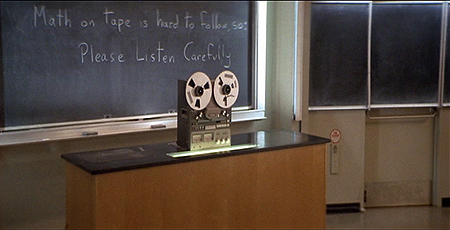
The lecture -When does learning happen?

“Lectures were once useful; but now the internet and online content are freely available, lectures are unnecessary. If your attention fails, and you miss a part of a lecture, it is lost; you cannot go back as you can with online content. “

The above quote makes the point very forcefully that lectures may not be that effective, and certainly not as good as online. But let me ask a broader question, what is the purpose of a lecture in the first place, does it help you learn and if so when does the learning begin?

The lecture – step by step

In its most simple form the lecture involves little more than a lecturer standing at the front of the class reading from a set or prepared notes or reciting from memory, the student then listens and copies down what the lecturer is saying, presumably to read and absorb later.

So let us break down this process and consider how a lecture helps with learning. Firstly the student has made the effort to attend, this in itself means there is some motivation involved. Secondly they are in an environment designed for learning and with other like minded individuals. All of this helps to put the student in the right frame of mind.

The lecturer will however play a very important part. How well they explain the subject, their level of knowledge, passion and genuine interest can all make a dull topic seem fascinating. And if it is fascinating the student will find it easier to learn. But how much of this can you get from a book, and can this all be achieved online?

And when is the real learning taking place? True the lecturer may ignite a flame and create a sense of curiosity in the student, but the real learning takes place in private, by the student as they revisit the book, video or notes, rewrite, talk out loud and practice questions.  As I have heard student’s say many times, “I need to go over this latter and get it into MY head.”

I am reminded of an Ali quote.

The fight is won or lost far away from witnesses – behind the lines, in the gym, and out there on the road, long before I dance under those lights.

Conclusion

A lecture is a poor method of transferring information, a book or video can explain a topic as easily as a lecturer if well written/filmed. The book and video are both good at providing technically accurate information, but can they transfer the passion, maybe…… but I would argue not as well as the lecture.

You will get a far better view of a sporting event with expert commentary and the ability to watch again on TV, but you are more likely to get a life changing experience if your there watching it unfold live.

So if the only reason you are going to the lecture is to capture information then don’t bother. Stay in bed and get a good book, copy your friends notes or watch the lecture online. But if you want to be inspired/motivated, possibly get a unique view, then go to the lecture.

There is of course a message here for lecturers, your job is to be unique, to inspire and ignite the flame. If not you should also stay in bed, after recording all of you lecture of course.

And for the avoidance of doubt, I do not think this can all be achieved online, a live lecture is different, but the lecturer has to play their role, they have to entertain.

The debate is of course not new – the twist in the tale

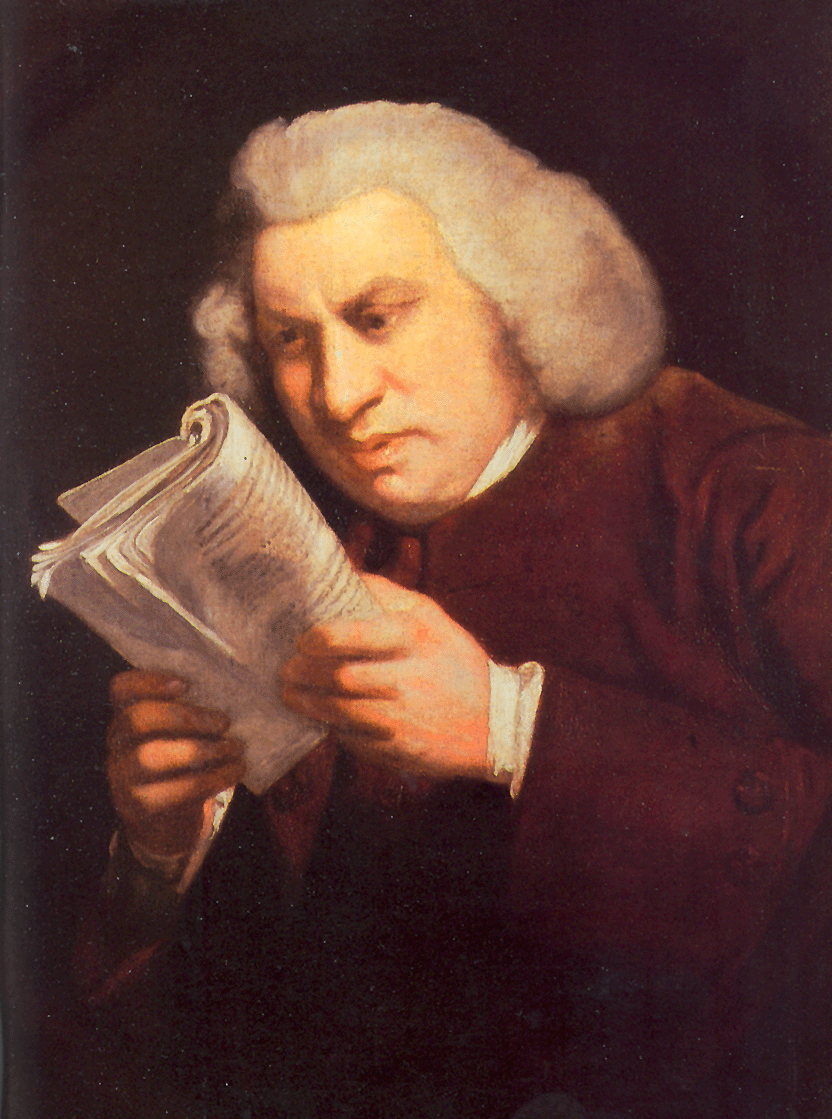
Some of you may have recognised the above quote, it’s taken from (with a few amendments from me) James Boswell’s, life of Johnson, the quote is from Samuel Johnson, and the year…..1791!

Lectures were once useful; but now, when all can read, and books are so numerous, lectures are unnecessary. If your attention fails, and you miss a part of a lecture, it is lost; you cannot go back as you do upon a book. . . . People have nowadays got a strange opinion that everything should be taught by lectures. Now, I cannot see that lectures can do as much good as reading the books from which the lectures are take.

Examples of lectures

If only more lecturers could be like this – watch this

And not like this

And although not entirely my thing, everyone should watch the last lecture by Randy Pausche. Although you need to put aside over an hour you will not be disappointed and when you have you will join the 16 million others who have done the same.

There’s no such thing as a stupid question – Learning by questions

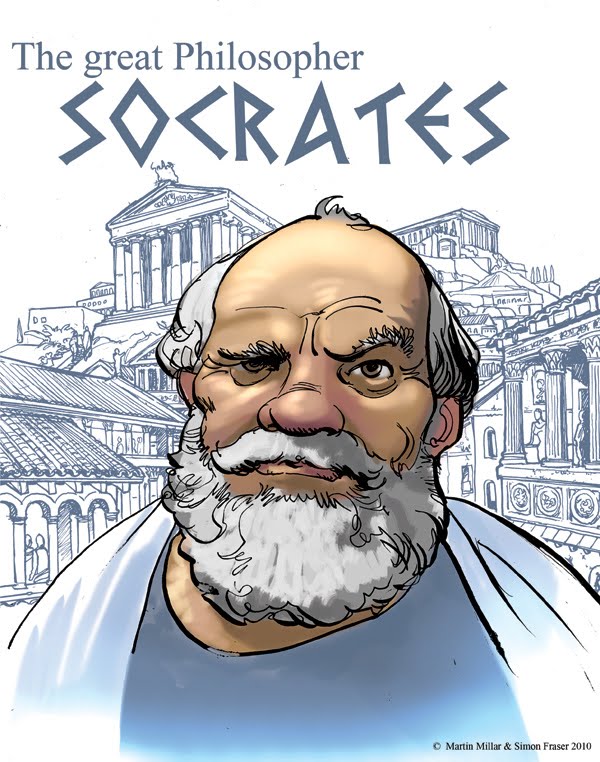
Ask questionsThe Greek philosopher Socrates was born 469 B.C in Athens, and died in 399 B.C. He is considered by many to be one of the world’s greatest thinkers. He is known for the Socratic Method and the pursuit of knowledge. The Socratic Method involves asking a series of questions until a contradiction emerges invalidating the initial assumption.

Socratic questioning does not seek to find THE answer, there are often many answers. The primary goal is to explore the contours of often difficult issues and to teach critical thinking skills. This method encourages you to go beyond the simple memorising of facts, enabling you to develop a higher level of understanding.

Socratic questions

1. Questions for clarification – Why do you say that?
2. Questions that probe assumptions – What could we assume instead?
3. Questions that probe reasons and evidence – What would be an example?
4. Questions about Viewpoints and Perspectives – What is another way to look at it?
5. Questions that probe implications and consequences – What are you implying?
6. Questions about the question – What was the point of this question?

If you can formulate a question – you have 60% of the answer
When you pass one exam the bad news is you are often faced with another. Exams at times can seem endless. But as you progress, what you are asked to do will change. When you first start studying a subject you will be asked relatively simple questions such as, what is the capital of FranceChildren are good at asking questions. To answer questions like this you need little more than a good memory. However when you get to the final level, examiners are more interested in understanding and application, not simply knowledge. What they really want you to do is think….

And so you may need to form an opinion, a view of your own. I am sure that you have many opinions now, but how informed are they, what facts support your view and how much have you thought around this view sufficient that you can deal with challenge.

This is where asking good questions can really help. When studying on your own, if you can formulate the right question you are more than half way to answering it yourself. Because to even get to this question, you will have had to think deeply about what you are trying to do, how it might work, what resources you might need, why has no one done this before etc. And only when you have thought this deeply will you be able to ask your question.

The next step is to post your question on the internet, someone will have the answer, the interesting thing is, by the time you come to do this, you may have the answer yourself!

Questions really are a great way of learning.

Judge a man by his questions rather than his answers.
Voltaire

The last word will go to Scott Adams
If there are no stupid questions, then what kind of questions do stupid people ask? Do they get smart just in time to ask questions?

Or should it!

Blogging to learn – Learn to Blog

12-bloggers-for-2012[1]Writing a blog can sometimes be a challenge, and sometimes a joy. Yet I have to admit I am not always sure as to my motives for writing one. Why would you want to share your thoughts on a particular subject with the world?

In years gone by it seemed everyone wrote letters or kept diaries. Now people keep in touch using social networks and only politicians keep diaries, needing them for the inevitable autobiography.
 

Never talk to strangers

Maybe blogging fills a void left by the letter writers and diarists of the past, being both a record of your thoughts and a means of communicating with others, even if you don’t know them.

Motives for blogging

There are said to be more than 180 million blog pages in existence, that sure is a lot of motivated people, but why do they bother?

Here are a few reasons and many of them are related to learning.

• Firstly It’s a great way to learn – one reason that making notes is so helpful when trying to learn is that you have to externalise your thoughts and physically write something down, blogging is no different.

• It helps clarify your thoughts – the process of writing also helps clarify exactly what you think, it gets you to question what you know, and as a result you begin to develop a deeper understanding of the subject or topic. Micro blogging (Twitter) is especially effective, not only do you need to be clear in what you want to say, you have to be incredibly concise, less than 200 characters in fact. And yes that includes spaces, full stops etc.

• It becomes a permanent record – others will of course be able to see what you have written but so can you. This means you can look back and reflect on what you thought at a point in time. A modern day diary! Published in weekly or monthly installments

• You become an expert – the more you think and write, the more you engage in something, the better you get. In order to support your views you will probably need to undertake a certain amount of research to check your facts. This again is something that will expand and deepen your knowledge. Remember you can add videos and pictures to the blog; it makes it far more interesting when you do.

• Do you have something to say – ever had a thought in your head and just needed to write it down? Ever had an opinion or a view and wanted to share it with others to get their reaction? A blog is a great medium to express your views and provides you with a much wider audience.

• You get feedback from others and intern learn from them – so having shared your view, the blog becomes a focal point for debate, allowing others to comment on what you have said. Perhaps challenging your views, teaching you new things and forcing you once more to think more deeply.

Learning blogs

You can blog about pretty much anything, but if your studying why not blog about the subjects or even the techniques you find work best when it comes to learning.

Every day you go to University, college or school you come across something new, let the events of your day inspire you. Happy Blogging!

Want to Learn morewikis and blogs

Enjoy the break

As July comes to an end and attempts to reprieve itself with a little sun it also means that the exam season is over for many, at least for a short time. But what should you do with this time off, what is the best use of time after exams?

I have always been interested by the idea that I am sure was in an updated version of Tom Peters and Bob Waterman’s book, In Search of Excellence, first published in 1988. This was a book about what made American companies great. But rather than building ideas from first principle, it looked at successful US companies and worked backwards in order to find common themes, a simple modeling exercise.

What I found of particular interest was the updated chapter that I believe was called, the price of excellence. In this chapter they argued that to be excellent you have to make sacrifices, having a balanced life was all well and good but it did not lead to excellence, excellence required to some extent obsession. As I watched the opening of the Olympic Games last night I wonder how many of those athletes had a holiday or were at home every night to kiss their children good night, how many sacrifices had they made.

No man ever reached to excellence in any one art or profession without having passed through the slow and painful process of study and preparation”

Quintus Horatius Flaccus – Roman Poet

But this is not an argument for obsession, well maybe short spurts of obsession, with rest and variety in the middle. The brain needs sleep and ideas need fertilising, sometimes connections and understanding come when you are least expecting them.

So go on holiday, engage in different activates, and challenge your understanding of what is around you but most of all have a great holiday…

Final thoughts

Excellence in the opening of the London 2012 Olympic games.

And just for sheer entertainment a fabulous presentation by Marco Tempest telling the story of Nicola Telsa, “The greatest Geek who ever lived.”

Are you taught in the most efficient & effective way? – The flipped classroom

To pass any exam you need to learn in the most efficient and effective way but only part of that is down to you the student, much is about the way in which you are taught.

Little has changed in the way knowledge has been transferred over the years. Initially teaching was one person talking to a few people; let’s call this the Neanderthal approach, the first classroom? Then we had a major innovation the printing press, around 1450, which made it possible for knowledge to flow around the world, all be it slowly, no email in those days. But with the advent of the computer in 1837 (Charles Babbage) or 1942 (first digital computer) or the first PC, IBM 1953, the ability to store and transfer information to the masses was possible. Yet little changed in the way we were taught, until now.

Now we have both online and classroom learning. But what is best way to learn, what is the most efficient and effective way to transfer knowledge?

The lecture

If you think of a traditional lecture, the lecturer stands at the front and talks, the student makes notes and then goes away to read and perhaps actually learn something about the subject.

The online approach

A mass of content is available online, you can watch the very best lecturers from all around the world, stopping and starting the presentation to suite the speed in which you learn. Or perhaps you have a sophisticated e learning course where activities are carefully constructed to explain what you need to know. But this can be lonely and despite the claim that online is the same as being in a classroom, from my experience it is not, it is different.

The blend and the flip

But is the best method to have a blend of both online and Classroom / Lecture Theater. This is the idea behind the blended course. Attend the lecture and then watch some online instruction later in the day perhaps. However much thought needs to be given to how this works, directing students to random You Tube clips is far from ideal. Yet it feels like a move in the right direction.

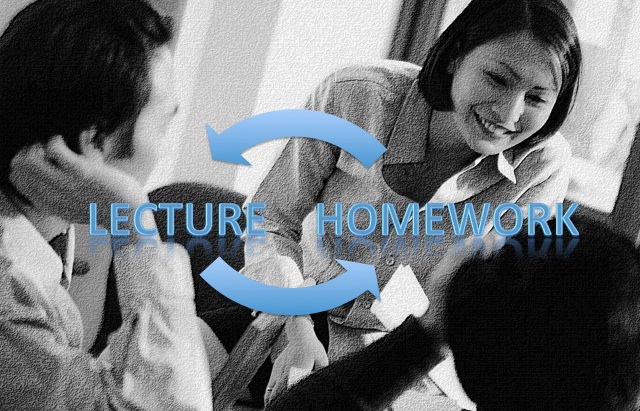
And now the Flip – The flipped classroom (2004 ish) takes its name from the idea that content has historically been taught in the day and students expected to apply that content in their own time for homework.  But is making notes in class the best use of that face to face time? Should students not watch the lecture on the evening, benefiting from studying at their own pace and then attend class the next day, where they can ask questions? Can we flip the process?

In class the lecturer or teacher can then bring the subject to life using real world examples, answer student questions and deal with individuals on a one to one basis.

It’s not perfect, but it is better

Okay it is far from perfect and it has yet to be proven over time. But it does seem to make a lot of sense and for the first time we may be seeing the power of the PC complementing rather than competing with the classroom.

Oh and it has some powerful supporters Sal Khan & Bill Gates

Watch this for a great explanation why flipping the class is a good idea

Sleep, picture, talk – learn smarter

Three stories caught my eye this month that I thought might be of interest.

They are all ways in which new research is providing evidence as to how it is possible to learn more effectively, a kind of smart brain learning.


Sleep is good for study

A new study from the University of Notre Dame suggest  that sleeping soon after learning new material is best for recall. This clearly has implications for students in those latter stages of revision and arguably the night before the exam.  The answer it would seem is that you can study right up to the last minute (probably memorising  facts) as long as you are getting a good night’s sleep after wards.

Although it is not known with certainty why sleep is so good, it is believed that it brings some form of consolidation of the facts, a kind of updating and reorganising of the brain while you rest.

The idea is not that new, this research was out in 2004

Pictures are better than words

This might come as no surprise to people who have read this blog before but it is reassuring that there is some science to support the view that the brain is more effective with pictures than words.

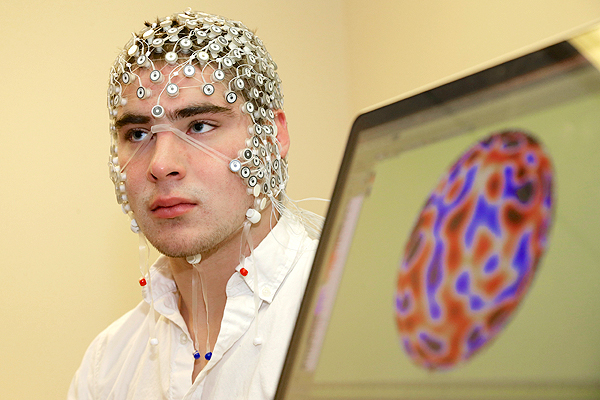
A story from the BBC about a group of people who had their brainwaves scanned while completing a series of tasks, individually and in groups, to see if data visualisation, presenting information visually, in this case a series of mind maps can help. The results showed that when tasks were presented visually rather than using traditional text, individuals used arround 20% less cognitive resources. In other words, their brains were working a lot less hard.

The research was carried out by Mindlab International, an independent research company that specialises in neurometrics – the science of measuring patterns of brain activity through EEG, eye tracking and skin conductivity, which tracks emotions.

This is not just another plug for mind maps, they are just one way in which information is presented visually. When reading a book or study manual, put information in boxes, use graphs, draw people and objects, make it look visual, it will all help.

The first sign of madness – talking to yourself out loud

Gary Lupyan, a cognitive psychologist at the University of Wisconsin-Madison often found himself talking out loud so he thought it might try to find out if it helped, and guess what it did.

In one experiment, volunteers were shown 20 pictures of various objects and asked to look for a specific one, such as a banana. In half of the trials, participants were asked to repeatedly say what they were looking for out loud to themselves, the others were asked to remain silent. The researchers found self-directed speech helped people find objects more quickly by about 50 to 100 milliseconds.

Most people talk to themselves when studying, but they don’t say the words out loud they keep it inside their heads. What this research suggests is that what you should do is say the words out loud, use different voices even. I know it sounds strange but it does work. Okay maybe you should do it behind closed doors; you don’t want to upset the neighbors…..


Deliberate reading – How to read technical content

In his book Five Minds for the Future Howard Gardner identifies one mind as the Synthesising Mind. He describes this as the mind that takes informationfrom disparate sources, understands and evaluates that information objectively, and puts it together in ways that make sense to the synthesiser and also to other persons.

We live in an age where knowledge is not hard to find, just Google something and you will find no shortage of information on any subject. The skill or mind that you need to develop is to be better able to filter information focusing only on what is important and ignoring what is not. 

But there is just too much!

As a student at some point you will find yourself having to read a book that contains masses of information that you need to learn but given the volume probably not able to absorb. You will need to filter the information, reduce it down into manageable chunks that can be understood and made sense.

As Gardner suggests, this understanding is initially for your benefit but eventually you will have to explain it to others, so the understanding needs to be deeper than simply knowing.

So we need a way in which you can both read and learn at a deep level. Children read instinctively using their finger, putting it under the words they are trying to say. Of course when they go to school using your finger to learn is not encouraged, so they stop. But there is good reason that children do this, you need to focus your attention and pointing or underlining is one way of doing it. Below is a step by step guide as to how to read technical stuff or in fact anything that you need to have a far better understanding than a few random facts.

How to read with your synthesising mind

1. Find the content page in your book and very loosely mind map or write out the chapter headings; see my previous blog on mind mapping. Do this IN THE BOOK, okay you will have to write on the book and that might feel uncomfortable, but you need the information all together and the book is the best place to store it. This will help you gain an overview of what is to come. Your brain will already begin to put some shape to what you are about to learn and begin to make linkages.

2. Read each chapter, but underline the key points, try to underline key words and not huge paragraphs. This in itself will help you start to focus on what is important. Yes it will slow you down but you are not just reading you are learning. Knowing what the key points are is not easy so you will have to concentrate, however don’t spend forever, often your gut instinct is the right one.

3. Write in the margin your understanding of the key points or even just copy out what is in the book. The purpose of this is to reinforce the knowledge and to make it stand out even more. It is better if you have to think about what is said in the context of what you are trying to learn and write it out in your own words. However you don’t always have time, so never be afraid to simply copy.

4. Mind map or summarise all the key points that you have written in the margin within the chapter at the front of that chapter. This is your chance to show how it all fits together. Double check your summary with the one that is in the back of the chapter, this will make sure you don’t miss anything. Now of course what you could do is just read the summaries at the end of each chapter and if you are really short of time this can be very effective, however you will not learn from this, but it can be a better way of getting a more detailed overview than you would from the contents page.

5. Look at each of the chapter summaries and add to your initial overview of the book or simply re write the whole thing. This final summary or mind map will help consolidate your thoughts on what the really important points were, the key messages and aid your understanding.

Also in a few years if you pick this book off your shelf, or when you come to revise, it will be this summary that will bring everything flooding back.

And just in case your curious – the other four minds are

The Disciplined Mind

The disciplined mind has mastered at least one way of thinking – a distinctive mode of cognition that characterizes a specific scholarly discipline, craft or profession.

The Creating Mind

The creating mind breaks new ground. It puts forth new ideas, poses unfamiliar questions, conjures up fresh ways of thinking, arrives at unexpected answers.

The Respectful Mind

The respectful mind notes and welcomes differences between human individuals and between human groups, tries to understand these “others,” and seeks to work effectively with them.

The Ethical Mind

The ethical mind ponders the nature of one’s work and the needs and desires of the society in which he lives. This mind conceptualizes how workers can serve purposes beyond self-interest and how citizens can work unselfishly to improve the lot of all.

It’s a Wonderful Life – lifelong learning

In 1946 Frank Kapra made what is arguably the best Christmas film of all time, it’s a Wonderful Life. It tells the story of George Bailey (Jimmy Stewart) who on Christmas Eve gets drunk after being told that there is a warrant out for his arrest for bank fraud.  In a moment of despair he threatens to throw himself into an icy cold river, believing that this will solve all his problems. He is interrupted by Clarence, his guardian angel (second class) who appears and jumps into the water before him. George is forced to rescue Clarence but does not believe that he is his guardian angel and wishes that he had never been born.

And so the scene is set for Clarence to show George that the world would be a very different place had he not been born. Had he not saved his brother from drowning, stopped Mr Gower (the local pharmacist) giving out a lethal prescription and put his dream of travelling the world on hold to run the local bank (Savings and loan).

George was a man with ambition and drive, he constantly put others before himself, in every way a good man. But as can often happen he found himself in situations that he had not expected, arguably did not deserve, that at the time seemed impossible to solve.

Lifelong learning

We often think that studying is something that you do when you are young and then when you have learned everything by the age of say 25/30, you sit back and relax!  Of course this is not true, learning is a lifelong pursuit. It may not always have an exam at the end, but there are lessons to learn and successes and failures to deal with in equal measure. A Wonderful Life follows the ups and downs of George Bailey and in one way is sad because he never does fulfil his ambition to travel. But he learns so many other things along the way, perhaps most importantly that some of the smaller things you do have a huge impact on others and that when faced with apparent failure or disappointment there is always a solution, and it’s not jumping off a bridge…

So perhaps you didn’t get the exam results you wanted or didn’t get a place at university but this is only a moment in time. It is not the end of the journey; it’s just a different beginning.

Steve Jobs tells a great story about “Joining the dots” how you can only join the dots backwards not forwards. Had he not dropped out of Reed College and wondered into a calligraphy class one day then in Steve’s words “the Mac would have never had multiple typefaces or proportionally spaced fonts. And since Windows just copied the Mac, it’s likely that no personal computer would have them.”

So wherever you are in your lifelong learning class, have a very Merry Christmas.

A lesson for today’s bankers

When faced with the bank collapsing George Bailey put in his own money to save it. A modern day lesson for some of today’s greedy bankers perhaps. Sir Fred Goodwin, please note….