
Effective learning = Affective learning

When we think of learning, we often focus on acquiring knowledge and developing skills. But there’s a third, often overlooked dimension, the affective domain. These are our attitudes, motivation, values, and emotions. It’s easy to view them as somehow less important and yet they are what transform knowledge and skill into true expertise.

Imagine two students sitting in a maths class, both are taught about addition (knowledge). They are then asked to add several numbers together, which they do successfully (skill). But one of them believes they are not very good at maths and that the subject is boring. The other likes the subject and is looking forward to the next class. It’s not hard to figure out who will learn more, not because they were in some way smarter but because of the difference in their attitude, levels of motivation and beliefs.

I’m trying something different this month – a two minute video explainer of the blog, enjoy

How to play the violin
One way to understand how knowledge, skills and the emotional side of learning fit together is to consider how you might learn to play the violin.

First you need to be able to read music, this is the knowledge phase. It’s not easy of course, and in some ways may feel a little abstract and lacking in purpose. Next there is the physical skill of being able to play the violin. Reading music is a prerequisite but its practice and repetition that will help you improve. And lastly, you pick up the violin and play a piece of music, this is when the affective domain becomes important. How confident are you there will be no mistakes, do you feel sad when playing, what emotion are you trying to pass onto your audience. To deliver a great performance will require the combination of knowledge, skills, and emotions, interwoven so closely they cannot be separated.

The research – There is a large body of evidence supporting the impact of emotions, attitudes, and beliefs on learning. In 2014 Reinhard Pekrun published Emotions and Learning, in it he demonstrated that positive emotions like enjoyment and pride enhance learning by increasing motivation, engagement, and cognitive flexibility. In contrast, negative emotions such as boredom and anxiety can suppress learning.  Carol Dweck’s work on growth mindset (2006) further reinforces this idea. She showed that learners who believe effort leads to improvement are more likely to persist through challenges. These beliefs rooted in the affective domain shape how students respond to setbacks and how resilient they become in the face of difficulty.

Another Bloom’s taxonomy!
Many will have heard about Blooms taxonomy but what you might not know is that there are three of them. The first is Cognitive, the Bloom most of us have seen before (The pyramid), the second Psychomotor domain, that looks at physical skills, and lastly the Affective domain that defines behaviours that correspond to attitudes and values.

This affective domain has five levels:

  • Receiving – The willingness to attend or listen, giving your attention  
  • Responding – Actively participating, effectively engaging
  • Valuing – Attaching worth to an idea, making it personal, forming the belief
  • Organisation – Integrating the values into your belief system, embedding the belief
  • Characterisation – The learning becomes part of your identity

Why it works – Bloom sets out the hierarchy of development but the reasons our brains respond and change are, firstly emotion directs attention and strengthen memory. Our brains evolved to prioritise emotionally charged information. Secondly, positive feelings boost motivation. When learners feel valued and capable, dopamine release reinforces effort and persistence. And lastly supportive environments reduce cognitive overload, freeing up working memory for reasoning and problem-solving

What does this all mean?
Understanding that there is a third aspect of learning is important, if not educators will spend disproportionate amounts of time on knowledge and skills, which of course is often the case! When in fact they should be thinking about how to use affective techniques to deepen learning. For students it gives an insight into the human side of learning, you are not ChatGPT able to simply scan content and recall it whenever needed, you are a human being who needs to feel, connect, and value the material for it to stick. That emotional and motivational component is the fuel you need for long-term mastery. Simply knowing that can make a big difference.

Want to learn more – Listen to Nick Shackleton-Jones talking with John Helmer about affective learning, and a lot more.

Sticky – The Science of Storytelling

Long before writing, and even “classrooms,” people shared knowledge through the telling of stories. These stories conveyed essential lessons in survival and reflected the social norms of their time, handed down through generations.

To fulfil their purpose, they had to be memorable. What remains unclear is, did the story evolve to fit the brain’s natural ability to remember or did stories in some way shape our brains to make them easier to recall – a classic chicken-and-egg dilemma.

Regardless, it could be argued that stories were our first educational technology, influencing culture, guiding decisions, and ensuring knowledge was not lost.

If you don’t have time to read this month’s blog – listen to my AI alter ego summarise the key points.

Today, when we think of stories, we often associate them with novels, films, animations and more recently podcasts. At its core, they are simply a structured way of sharing events and information, with most following a familiar pattern. They begin by setting the scene, move into a middle phase where the story unfolds and end with some form of resolution that provides clarity or closure. This structure helps us make sense of experiences, maintain attention, communicate ideas, evoke emotions, and connect with others in meaningful ways. All of which help with recall.

They are also incredibly persuasive, and can become a vehicle for knowledge transfer, simply saying, “let’s take a moment, relax, I want to tell you a story” changes the mood in the room and opens the mind for a new experience.

If you’re still unsure about their power, Yuval Noah Harari provides a compelling example. He explains that money holds no inherent value, a banknote is simply paper, and digital currency just data. What makes money meaningful is the collective belief in its worth. This shared understanding allows it to function as a medium of exchange for goods, services, and influence.

He goes on to say….

Why are stories sticky?
But what is happening in the brain when you hear a story or read one for yourself? Why do stories stay with us long after we’ve heard them, what makes them stick?

Cognitive rapport – When someone tells a story, something remarkable happens in the brain. Instead of just processing words, the listener’s brain begins to light up in multiple areas all at once. Stories create what researchers call neural coupling, the listener’s brain patterns start to mirror the storyteller’s, helping ideas flow more smoothly and making them easier to understand (Stephens et al., 2010).

Emotional – Importantly, stories also stir emotion and when emotions are triggered, the amygdala and hippocampus work together to strengthen memory (Article McGaugh, 2013). In one test, a neutral learning event was given an emotional focus. Subjects were asked to memorise a list of words, a non-emotional task. They were then exposed to a brief, intense emotional experience e.g. Putting their arms into icy water (Cold Pressor Stress Test), which released stress hormones, epinephrine, and cortisol, telling the brain it is an important event. When tested weeks later, the individuals had forgotten the cold-water experience, but remembered the list of words!

Structured – Stories give knowledge a shape and structure. A beginning, a challenge, and a resolution acting like mental scaffolding, allowing learners to slot new information into place. Structure also reduces cognitive load, (John Sweller 1988), and help create schemas, which are interconnected mental chunks of knowledge that are stored more easily in long term memory.

Engaging – And lastly, stories build a human connection, helping creat greater levels of engagement. Neuroscientist Paul J. Zak (2015) discovered that compelling narratives those with a strong dramatic storyline trigger the release of oxytocin, the neurochemical responsible for trust and empathy. In a learning context, this surge of empathy makes you more receptive to the message and strongly motivates, helping internalise the information and transforming simple facts into knowledge.

A word of caution – seductive details
However not all stories help us learn. The danger is that they include fascinating but irrelevant information known as “seductive details” (Harp & Mayer, 1998). This results in cognitive overload, causing the brain to waste resources processing the more interesting information at the expense of core principles. It can also break down that strong mental scaffolding, misdirecting the brain, to build a new organisational framework around the wrong idea. To avoid this, the detail in your narrative must directly support the learning objective, ensure the story integrates the facts, rather than just decorating them.

The final chapter
For educators, storytelling is not just a “nice extra” it’s a valuable tool and a natural way to help people learn. A well-told story draws attention, lowers resistance, and creates the sense that what follows is worth holding on to. Learners don’t just hear the information, they experience it, making knowledge far more memorable.
For learners, resist the urge to dismiss the story as a diversion from the important stuff, and instead listen with curiosity. They work on the mind in subtle ways connecting ideas, evoking emotions, and helping you see meaning, long after the classrrom door has closed. In this state, your brain does much of the hard work for you.

Want to know more?

Human superpowers – Creative, Analytical and Critical thinking

Are you sure Gen AI doesn’t make mistakes Mr Spock? Because this just “feels” wrong to me.

Back in July 2022, I wrote about the importance of critical thinking, a skill long considered essential in education, leadership, and the workplace.

But that was before Gen AI arrived in the November, bringing with it the ability to answer almost any question within seconds. Its presence prompted reflection on the nature of learning, how education might change and what role humans should now play, if any.

If you don’t have time to read this month’s blog – listen to my AI alter ego summarise the key points.

But all is not lost we still have one last card to play, our ability to think and feel, okay maybe that’s two cards. Thinking is hopefully what you are doing whilst reading this blog, neurons will be firing as you reflect, analyse and question what is being said. It’s something we do in between day dreaming, sleeping and unconscious behaviours such as cleaning our teeth.

Thinking is however a little more nuanced, and there are many different types, for example you can think creatively, analytically, or critically. Whichever mode you engage in, there’s another essential human attribute that quietly shapes the process…. our emotions. These are the subjective experiences rooted in our limbic system that help us interpret information and as such see the world. Together these are our superpowers offering something AI can’t replicate, not yet at least!

An Artist, Pathologist and Judge walk into a bar
Critical thinking, creative thinking, and analytical thinking are often grouped under the umbrella of “higher-order cognitive skills,” but each one is different, playing a role in how we process, evaluate, and generate ideas.

  • Critical thinking is fundamentally about evaluation, it involves questioning assumptions, weighing evidence, and forming reasoned judgments. It’s the internal referee that asks, “Does this make sense? Is it credible? What are the implications?”
  • Meanwhile, analytical thinking breaks down complexity into more manageable components, identifying patterns, and applying logic so that we can better understand relationships.
  • And creative thinking is generative. It thrives on ambiguity, imagination, and novelty. Where critical thinking narrows and refines, creative thinking expands and explores. It’s the spark that asks, “What if? Why not? Could we do this differently?”

Humans are emotional – Far from being a distraction, emotions actively shape how we think, judge, and create. In creative thinking, emotion is the spark that fuels imagination and unlocks divergent ideas. In analytical thinking, emotion plays a subtler role influencing how we interpret data, what patterns we notice, and our levels of motivation.  Critical thinking, meanwhile, relies on emotion to provide an ethical compass and improve our self-awareness.

Learning to be a better thinker
Critical, creative, and analytical thinking aren’t fixed traits, they’re learnable skills. It’s tempting to believe they can only be acquired through the slow drip of wisdom from those who have had a lifetime of experience. The truth is, with good instruction, these skills can be learned well enough for any novice to get started. At first the beginner may simply replicate what they have been taught but with practice and reflection, they begin to refine, adapt, and eventually think for themselves.

By way of an example, this is how you might start to learn to think more critically.

  1. Start with knowledge – Critical thinking is the analysis of available facts, evidence, observations, and arguments to form a judgement.
  2. Use a framework
    • Formulate the question – what problem(s) are you trying to solve?
    • Gather information – what do you need to know more about?
    • Analyse and evaluate – ask challenging questions, consider implications, and prioritise.
    • Reach a conclusion – form an opinion, and reflect.
  3. Bring in Tools – These can provide ideas or change perspective, for example Edward de Bono’s six thinking hats.
  4. Apply by practicing with real world problems. This is largely experiential, and requires continual reflection and looping back to check you have asked the right question, gathered enough information, and correctly prioritised.

The real challenge and deeper learning take place in the application phase.  By working in groups, your arguments may well be questioned and potentially exposed by the use of Socratic type questions and differing views.  Your only defence is to start thinking about what others might say in advance. Over time like any other skill, it can begin to feel more like an instinct, requiring less conscious effort, simply popping into your mind when most needed.

To boldly go
Generative AI may offer logic, precision, and even flashes of creativity but it does not feel the weight of a decision, nor wrestle with the moral ambiguity that defines human experience. It is Spock without Kirk, brilliant, efficient, and deeply insightful, yet missing the emotional compass that gives judgment its humanity. True thinking is not just analysis, its empathy, intuition, and the courage to act without certainty. AI can advise, assist, and illuminate, but it cannot replace the uniquely human interplay of reason and emotion. Like Kirk and Spock, the future belongs not to one or the other, but to the partnership. Or at least I hope so…..

I will leave the last word to Dr McCoy.

Measuring success – “Authentic” Assessment

There is a saying often attributed to Peter Drucker – “what gets measured gets achieved.” I think the quote is “gets done” but that always feels a little clumsy. Although it’s easy to argue that the statement is crude and simplistic, it has a real-world truth.

Such is the inherent challenge with exams. Once a syllabus is written and a pass mark set, the students’ goal often shifts from trying to learn the subject to simply figuring out what needs to be done in order to pass. This, in turn, creates a ripple effect for teachers, especially if their performance is measured by pass rates. They will inevitably adapt their teaching methods to align with that target.

If you dont have time to read this months blog – listen to my AI alter ego summarise the key points.

Having spent over 30 years helping accountancy students pass high-stakes exams, I’m not personally going to criticise this (exam driven) approach, though I appreciate many will. I have seen how effective it can be in providing clarity and focus for students, helping them manage the huge amounts of information they are required to learn, and in many ways making what might seem impossible – possible.

But this isn’t an argument for ‘teaching to the test’, it’s an acknowledgment of a fundamental truth that targets shape behaviour, regardless of how well intentioned the original objectives. Keep this in mind as we discuss one of the solutions currently being proposed to improve assessment, it’s called – Authentic Assessment.

Authentic assessment
First a definition, authentic assessment (Grant Wiggins 1989) involves evaluating learners through realistic tasks that reflect the types of challenges they will face in the workplace. It prioritises realism, and encourages learners to “do” the subject, mirroring or simulating the real-world. These assessments measure a learner’s ability to apply knowledge and skills to complex, realistic tasks. There are two main components, one a real-life task that needs to be completed by the learner and two, a rubric by which their performance can be measured.

Beyond the exam room – Instead of asking learners to sit in a room for two maybe three hours regurgitating memorised content, an authentic assessment might need the learner to prepare a portfolio, complete a project, engage in a debate, and even enter a realistic business environment, as required for a case study or simulation. Many consider them more engaging and motivational largely because learners can appreciate their real-world application. They also foster the development of critical thinking, problem-solving and ease the transition into the workplace.

But they are not a panacea – and there area number of problems with authentic assessments, not least the lack of consistency in measuring performance. This is because they prioritises validity (measuring what it’s supposed to) over reliability (consistent results – marking scripts to the same standard). The issue with reliabilty is partly the result of not having a “perfect” model answer that can be used as a benchmark, nor a sufficiently robust rubric (marking guide). Traditional exams by way of contrast aim for high statistical reliability through objective scoring but allow little flexibility in rewarding learners who produce creative or original answers and arguably benefit those who are just good at exams.

In addition to the difficulty in objectively measuring success, as a method of assessment they are not well defined, for example what exactly is the “real world,” and what is meant by “authentic.” One company’s definition of the workplace will be very different from another.

One final observation, although authentic assessment has been proven to increase employability type skills, there is no evidence to show that having been assessed in this way increases you chances of getting a job!

What gets measured……
Changing the assessment directly alters the focus for both learners and teachers, shifting it towards real-world tasks means that learners are less a consumer of information but active participants in its use. For teachers, instead of concentrating on delivering content their role becomes more facilitative, guiding learners through complex tasks rather than just lecturing. And overall this change in approach is hugely positive.

But as highlighted above, it comes at a cost, there is some confusion over what authentic actually means, and measuring success becomes subjective making it difficult to mark consistently. This last point is important, because it means that one person may interpret your answer as a pass and another as a fail – it then becomes the luck of the draw!

The answer….well one of them – think of assessment not as a single exam but as a framework under which several different formats and approaches can be used. The assessment framework will expose the learner over several modules or even several years to a blend of formal (reliable) exams and authentic (valid) exams. The outcome, might just give us – the best of both worlds.

Learning starts with what you already know – Making connections  

Have you ever stopped to think about what you already know?

It’s not something we tend to do every day, but it’s a surprisingly powerful technique especially when you’ve made a mistake and feel like you’ve learned nothing. In moments like these, recognising what you already know can be both grounding and motivating. Rather than starting from scratch, you’re building on a foundation that already exists.

And it is on this principle of foundational knowledge that the educational psychologist David Ausubel developed one of the most important theories in learning. He said that making connections between new ideas and prior knowledge helps us learn more deeply and retain information for longer. He referred to this as meaningful learning.

Ausubel’s meaningful learning
Ausubel’s meaningful learning offers a stark contrast to rote learning, primarily because it aligns more effectively with how our brains naturally process and retain information. Instead of treating the mind as a passive storage unit, merely accepting and holding isolated facts, meaningful learning actively engages the learner’s existing cognitive structure. While rote learning might achieve short-term recall, it fosters a superficial understanding devoid of context or connection to existing knowledge. This isolation makes the newly “learned” information fragile and easily forgotten.

But if making connections is the objective, how is this best achieved?

Anchoring New Information – When you come across new information it needs to be anchored to a relevant and stable concept that already exists. The stronger and more clearly defined this anchor is, the more effectively the new information can be integrated and retained. For example, imagine you understand what a mammal is, and are introduced to new information about a “dolphin,” if you can appreciate that despite living in the water, the dolphin shares many core characteristics with mammals the connection can be built.

Developing context (Advance organisers) – When you’re learning something completely new, its possible you dont have a solid enough understanding of the subject on which to anchor the new information. To solve this, its a good idea to have a general outline or some background information as a way of introducing the subject. This can help provide the new information with something it can be anchored to. For example, before talking about the concept of supply and demand, ask the students to think about something they might like to buy, perhaps training shoes, and why the price might be so high? Follow that up by adding “today we are going to see that it’s a function of how many units of the product the company is willing to make at a given price, compared to how much the consumer is willing to pay.” This simple introduction provides the student with sufficient “prior knowledge” to connect the new information. Note that the training shoes example is practical, tangible and relatable.

Impact of AI
It is not of course possible for me to write a blog without referencing AI, and there are some interesting ways in which Ausbells theory could become more effective, for example:

  • Analysing prior knowledge (personalisation) – It could be used to asses student’s prior knowledge and generate highly tailored “advance organisers”. Instead of a generic introduction, AI could create summaries, analogies, or concept maps specifically designed to connect with what the student already knows.
  • Intelligent tutoring – AI tutors can engage students in conversation that encourage them to explicitly connect new information to their existing knowledge. By asking probing questions and providing feedback, AI can guide students through the process of meaningful integration.  
  • Identifying knowledge gaps – AI can analyse student responses and identify specific gaps in their prior knowledge that might hinder their ability to link the new information.
  • Dynamic concept and mind mapping – AI tools can help students create and visualise maps that explicitly show the relationships between new and existing knowledge.

Implications for students
This is all very interesting but what does it mean if you are studying.

  • Reflect, think back Before diving into something new, take a moment to think about what you already know that might be related. Even a little connection can make a big difference.
  • Ask “how does this fit?” As you learn new things, constantly ask yourself how this new information connects to what you already understand.
  • Look for similarities and differences – How is this new idea like something you’ve learned before?
  • Pay attention to introductions – When your teacher/lecturer gives you an overview or a summary before starting a new topic, pay close attention! These “advance organisers” are like maps that show you where you’re going and how the new content fits into the bigger picture.  
  • Use mind maps or concept maps Often, it’s helpful to understand the main ideas first and how each one relates to the other.

The teacher – facilitator of connection
The educator’s role will shift from “sage on the stage” to “guide on the side.” They should become facilitators of connection, helping learners build bridges between new and existing knowledge. In this new role, educators do not just guide students toward knowledge, they inspire them to see the interconnectedness of ideas and the possibility of shaping their own paths of understanding.

Research (update) – Ausubel’s meaningful learning re-visited – the core idea that what a learner already knows remains a key principle, but recent research in cognition and neuroscience shows that memory is dynamic and not just like retrieving fixed recordings.

GenAI for Gen Z: Rethinking studying with GenAI

If you dont have time to read this months blog – listen to my AI alter ego summarise the key points.

Anyone falling into the Gen Z category would have been born between 1997 and 2012, meaning they range in age from 13 to 28. They are the first true digital natives, having grown up with the internet, smartphones, and social media as integral parts of their lives. This constant connectivity has shaped their worldviews, making them, in theory tech-savvy, innovative, and quick to adapt to new digital tools and platforms.

Gen Z is at the forefront of Generative AI adoption (GenAI), with high usage rates across various platforms. Whilst it’s hard to get exact numbers especially those of school age, a poll undertaken by the Higher Education Policy Institute, said that 88% of undergraduates had used GenAI over the past year,  and 25% said they had used AI-generated text to help them draft assessments. Most however “said” they were using ChatGPT and similar tools to explain concepts, summarise relevant articles or suggest ideas.

67% agreed that it was essential to understand how to use AI and yet only 36% said that they had received support from their university

Like it or not GenAI is becoming an integral part of learning, studying and assessment. And that’s why there needs to be more guidance on its use, welcome to this month’s blog – Rethinking studying with GenAI.

Tasks not Tech
The common mistake people make with technology, in this instance GenAI is they get caught up with what it can do and start to look for ways they can use it. This is perfectly logical, but not the best approach – it’s a great example of:

Far better is to identify a specific task and decide how you might save time without reducing the effectiveness of learning. For example, using GenAI to generate ideas for an essay is time consuming, and whilst it could be argued that you can learn from almost any activity, generating ideas does not significantly improve learning. Contrast this with actually writing the essay. This also takes time but the learner will have to structure their thoughts, challenge ideas, and produce an answer that not only makes sense to them but to others. It is this type of mental gymnastics that helps people learn and should never be substituted by GenAI.  

Using GenAI to study more effectively
Here are some of the best ways of transforming your study approach by leveraging GenAI. Importantly, these methods are designed to enhance learning without compromising the depth and quality of understanding. Note Generative AI (GenAI) is a type of artificial intelligence that creates new content. A GPT is a specific kind of GenAI e.g. ChatGPT and Claude.

1. Planning

  • Personalised Study Planning – Use ChatGPT, Claude etc to create a tailored study timetable based on exam dates and your personal strengths and weaknesses. This can be as detailed as you like, but because it’s personalised the GPT could for example allocate more time to the areas you find more difficult. Another level of sophistication might be to prioritise your time on the more examinable topics.
  • Identifying examinable areas – Analysing past papers and reading examiners guidance and reports has long been a top study tip. This is an ideal task for a GPT, get the prompt right and it will even put it into a table for you.

2. Reducing cognitive load (information overload)

One of the challenges in learning is coping with the large amounts of information you need to learn. GenAI can help by:

  • Chunking content – This is a hugely effective technique, just ask the GPT to break down complex ideas into smaller, digestible parts.
  • Filtering information – A lot of time can be spent reading documents not really learning because you are only skimming looking for key words or phrases. GPT’s are excellent at extracting key information from documents, videos, and even discussions.
  • Visual aids – A picture paints a thousand words, ask the GPT to provide information in different formats for examples a diagram, chart, table, or mind map.

3. Summarising

This is similar to chunking but more specific, all you need to do is add more guidance when designing the prompt. This is not about reducing content, but capturing the essence of what is being said.

  • Summarising large amounts of text or articles – Asking a GPT to summarise an article may be a little vague. Be more specific, by stating how many words you want it to use or asking it to focus on five key areas. You can also ask it to summarise the information in a style easier for the individual to consume, perhaps for someone with dyslexia.
  • Note taking from video – In addition to YouTube, many organisations now offer video recordings of lectures, webinars, and presentations that can be watched later. A GPT can scan the transcript and summarise the key points, even offering alternative explanations if it was not clear.
  • Forum conversations – Whilst a forum is an excellent way of engaging with others, it’s possible you don’t have the time. A GPT can easily summarise a thread picking out the main points.  

4. Improving understanding

  • Breaking down complex topics – Although this also reduces cognitive load, breaking down complex topics is an excellent way of helping to gain a better understanding of a subject or topic. One of the bests ways to do this is by asking the GPT to break the problem down into a series of steps. You could also ask it to explain the topic to someone who has only recently started the course, or maybe even a 10 year old.
  • Ask questions – This is possibly the most popular use of a GPT, simply asking it a question. For example, what is the capital asset pricing model and can you give me an example? The best part is you can ask follow up questions if you don’t understand the first time.
  • Teach me – Why not ask the GPT to teach you the topic.  It might be easier to use one of the custom GPT’s that’s been specifically designed to do this, for example check out Universal Primer. Some of these can act as a coach and not simply give you the answer but ask you further questions to test your understanding and then provide feedback.

5. Creating study materials

One of the most powerful ways to use GPTs for studying is to generate structured, personalised materials tailored to your learning needs.

  • Flip cards – This can be time consuming but not for a GPT. They can generate question and answer pairs from textbooks, lecture notes, or past exam papers. For example, “Create 10 flashcards on Modigliani and Miller’s capital structure theory.”
  • Study notes and revision notes – Many learners struggle with condensing large volumes of information into digestible summaries. GPTs can simplify this process by extracting key points, breaking down complex ideas, and even adapting explanations to suit your level of understanding.
  • Mind maps – Mind maps help learner see relationships between concepts, improving comprehension and recall. GPTs can create structured outlines that you can easily convert into visual diagrams. For example, “Create a structured mind map for managing foreign exchange risk, including hedging strategies.”
  • Writing questions and designing quizzes – One of the best ways to test knowledge is through self-assessment. GPTs can generate quizzes tailored to your own study material, which can range from basic recall to complex scenario-based questions. For example, “Generate five exam style exam questions on interest rate risk, including one scenario-based question.”

6. Assessments and Feedback

This section highlights situations were using a GPT is not advisable, particularly when answering questions designed to test your understanding and promote learning. While a GPT can generate correct answers, it does not facilitate the deeper cognitive processes in the leaner for them to fully grasp concepts.

Another concern is that GPTs can occasionally produce answers that, although plausible, may be incorrect or oversimplified. This is especially problematic in technical subjects, where even small errors can lead to significant misunderstandings and hinder a student’s ability to apply knowledge accurately.

But they can be used to help

  • Plan the answer for your assessment – GPTs can be an invaluable tool for structuring and planning your response to an assessment. They can help you break down complex questions, identify key themes, and organise your thoughts logically, which can significantly improve the quality of your answer. However, it’s essential to use GPTs responsibly by focusing on the planning and brainstorming phase rather than relying on them to generate the entire response.
  • Providing feedback – A GPT can be a powerful tool for providing feedback, offering valuable insights to help improve the quality of your work. Whether you’re refining an essay, reviewing a problem set, or crafting a project, GenAI feedback can highlight areas that need attention, suggesting ways to enhance clarity, depth, and structure. However, it’s important to approach this feedback with a critical and reflective mindset to ensure it leads to genuine learning and improvement, rather than simply accepting it at face value.

Conclusions
This is not an exhaustive list, but I hope it has inspired you to explore these tools and use them responsibly. GenAI can be a powerful aid in helping you learn more effectively, from breaking down complex topics to enhancing revision and providing feedback. However, its true value goes beyond simply learning, by using GenAI thoughtfully while studying, you are also developing essential digital skills that will be increasingly important in the future of work.

Predicting Learning in 2025 +

Making predictions is of course a mugs game. Most people start with what they currently know and project forwards using logic to justify their conclusions. This however leads to our first problem – “you don’t know what you don’t know.”

Secondly, a prediction is more likely to be true if the environment is stable, and that leads to problem number two – we are living in hugely unpredictable times. Technology, in particular AI is moving so fast it’s hard to keep up, politically there is both change and instability, making it difficult to say with any certainly what policies or regulatory requirements will come into effect, and the climate is shouting at us, although we don’t seem to be listening.

And yet it’s still worth making predictions, not so much to see if you can get it right, but to play around with what the future might bring, take advantage where you can and make changes or at least warn others if you don’t like what you see. 

So here goes – what might happen this year in the world of learning? 

1.Learning will not change: But learners will adapt to different ways of studying
While the world around us continues to change, the fundamental way we learn as humans remains largely unchanged. Despite advancements in AI, neuroscience, and educational tools, the core processes of how our brains absorb and retain information are rooted in biology and consequently, relatively stable. But learners will begin to adapt to this new world, and some will take full advantage of what these new technologies have to offer.

“There are no gains without pains” Benjamin Franklin

However, there will be those who fall into the trap of taking the easy way out and using the technology to “offload” learning, and as a consequence, learn very little. My prediction is that we will see far more people offloading learning in 2025, which is clearly a concern!

2.AI (GenAI) will continue to dominate: Bye Bye Text Books
Possibly the easiest prediction is that AI will dominate. Almost every day we are met with a new model that is easier to use, providing more effective ways of answering questions, summarising complex information and responding with high quality opinion. By the end of 2025 AI (GenAI) will have firmly established itself as a tool for learning, offering instant access to vast amounts of information. Traditional textbooks will become increasingly less valuable as students and professionals turn to large language models to provide real-time answers and explanations.

But AI’s capabilities extend far beyond simply generating content.  We will also see the expansion of the use of chat bots (study buddies) to not only answer questions but, provide coaching, motivation, and personalised feedback. The natural progression for these “study buddies” is that they will develop into “intelligent agents/tutors.” Agents are more autonomous and can perceive the environment, process information, and take actions to achieve specific goals. This means they will be able to analyse individual progress, suggest next steps, adapt materials in real time, and offer tailored support.  

3.Sector disruption: Content, assessment, and the thirst for data
The focus here is on the educational publishers, institutions that produce textbooks, workbooks, teacher guides and even digital learning platforms. With AI being capable of generating high-quality content quickly and at scale, traditional content providers will need to rethink their business models. Although there is unlikely to be a significant impact in 2025, we will begin to see changes in how some of these businesses operate. The focus will shift from storing knowledge inside “books” to recognising the value is in curation and providing meaningful learning experiences, organising knowledge into effective sequences and simplifying complex topics to support deeper understanding.

Assessments are in need of significant transformation and we will increasingly see calls for alternative methods of assessment to be used. This is mostly driven by concerns around plagiarism, but AI brings some interesting and arguably more robust ways of testing knowledge and skills. For example, AI-driven adaptive testing, offering real-time performance analysis and personalised assessments that move beyond standardised testing. Skills will remain high on the agenda this year with even more pressure being applied on educators to encourage them to close the gap between what is taught in the classroom compared to what is required in the workplace.  A change in assessment, perhaps using real world simulation to assess these skills, could be part of the solution.

It is easy to get carried away with predictions and forget about some of the reasons they may not come to fruition. One such barrier is that organisations will struggle to get their data in one place to provide meaningful information for these models. 2025 will see organisations spending significant amounts of both time and money cleaning and tagging data so that it is useful

4.Regulation, the green agenda, and commercial pressures
Speaking of barriers, by the end of 2025, regulatory frameworks for AI in education will be far more developed but the landscape for adoption is likely to be patchy. Governments and educational bodies both in the UK and around the world will seek to strike a balance between innovation and ethical concerns, ensuring that AI-driven learning tools are used responsibly. The environmental impact of AI will become an increasingly critical consideration, with growing awareness of the substantial energy consumption required to train and run large AI models. These high energy costs add complexity to discussions about AI’s role in education.

Commercial interests and financial investments will heavily influence the direction of policy. Big technology firms will continue to play a major role in shaping the future of education, with their AI tools becoming more deeply embedded in learning institutions. As AI becomes an integral part of the education ecosystem, the debate will centre around who controls the technology and how it can best serve learners rather than corporate interests, all while addressing the significant environmental footprint of the AI infrastructure.

Summary
I have summarised the key points below, briefer of course but as a consequence less nuanced. Will they come true, maybe but as Yogi Berra once said – “It’s tough to make predictions, especially about the future.”

  • Prediction 1 – learning will not change but learners will. They will begin to adapt, changing how they study, the problem is this could lead to them not learning at all.
  • Prediction 2 – AI (GenAI) will continue to dominate. This will lead to the demise of the text book, the development of GenAI study buddies and in time, intelligent agents/tutors.
  • Prediction 3 – Watch out for  sector disruption, especially for educational publishers. In addition, assessments are due for a revamp but data will remain king.
  • Prediction 4 – Regulation will be in conflict with innovation. There will be a growing tension between regulation and the responsible use of AI with commercial organisations having the space to innovate.

 The 5 best exam techniques ever……

Father Christmas is so happy because he’s remembered all the names of his reindeer by using the acronym, Reindeer Dance Brightly Visiting Delighted People Cheerfully Carrying Candy. The elves on the other hand just thought they knew the answer!

Although you might think I am using this ‘clickbait grabbing’ headline purely to attract new readers to my blog, which, admittedly, would be nice, you are only partly right.

I thought it would be an interesting and challenging exercise to see if I could pick the “best exam techniques ever.” This is because one of the most valuable skills in teaching and learning is reduction – taking complexity and making it simple.

Clarity is the counterbalance of profound thoughts. Luc de Clapiers (French writer)

From a social media perspective there is of course no downside to a clickbait headline, you might for example find the post helpful, too simple, disagreeable or disappointing. Regardless of what you think, its already too late you have been hooked, which is the whole point. 

Although I can’t promise my list won’t disappoint, it is based on over 30 years of experience in the high-stakes exam world. Additionally, I will provide context and most importantly a justification for each choice.

Sometimes the simplest things are the most profound. Carolina Herrera (Fashion designer)

Context – The exam success formula
To add context and inevitably some complexity we should consider what you need to do to be successful in an exam. The diagram below is an outline of the key components, firstly you need knowledge, you can’t pass an exam without it. Secondly you must be proficient in certain skills, think here about time management, reading the question properly, and memory techniques. And lastly, your attitude matters. This is your mental state or disposition and it will influence how you think, feel, and behave. In terms of the exam this includes, having a positive attitude, being confident, resilient, and managing those exam nerves.

Why you need exam techniques

You can’t pass an exam without knowledge, but you can fail one even though you are knowledgeable.” Stuart Pedley-Smith

This quote encapsulates why exam techniques are so important. Knowledge alone isn’t enough – you need to apply that knowledge under exam conditions which requires other skills. Many good students fail because they don’t use exam techniques, largely because they think knowing the subject is sufficient. An exam room is an artificial environment and you need to be aware of the challenges it will bring.

The best exam techniques……ever
Now for the tricky part – narrowing down all the methods for exam preparation to just five.

1. Question practice: As regular readers of my blog will already know; question practice is essential. But as you get closer to the exam the emphasis shifts from helping you learn to being well prepared for the exam itself.  Question practice supports most of the techniques in the list below, which is why it’s number one. Practicing past papers is even more powerful because it – reinforces understanding, provides feedback, helps develop resilience, enhances time management, identifies knowledge gaps, improves exam writing skills, and clarifies the standard required to succeed. And breath!

2. Preparation – Revision: About two to three weeks before the exam is the best time to start revising. You cannot go into a high stake’s exam without preparation. Revision is the period where you reinforce past knowledge and, in many instances, actually understand some topics for the first time. Although cramming the night before does work to a certain extent, your chances of success are far higher if your revision is well planned and spaced out over time.

3. Recall – Memory techniques: “You can’t know something if you don’t remember it”. Understanding a topic will help with recall, however it’s not enough because you won’t understand everything and the volume of information you are required to learn is often huge.  This is why you need to use memory techniques such as acronyms, acrostics, rhythm and rhyme and mind mapping.

4. Develop a positive mental attitude: There is a lot to unpack in this one. It’s in the top 5 because if stress or test anxiety levels are too high or you lose confidence in your abilities, at best you could freeze in the exam and lose valuable time, at worst you might simply give up. A positive attitude is not believing everything will be fine, that will almost guarantee failure. It’s about developing a series of mental strategies that will help. These include challenging negative thoughts, setting realistic goals, and appreciating that learning from mistakes is a good thing.

5. Effective time management: There were many other techniques that could have occupied the number 5 slot, but I chose time management because, if you don’t manage your time in the exam you will fail. Having sufficient knowledge to pass means very little if you spend too much time on question one, and as a consequence answer the other questions poorly due to the time pressure. Allocating the right amount of time to each question is easy in theory, but doing it in the exam requires practice.

Complexity to simplicity
To be fair I quite enjoyed looking back and thinking about the exam tips and hints that I and others have given over the years. However as I expected it wasn’t easy, there were lots of other very worthy techniques that didn’t make the cut, but overall, I’m happy with the top five. Are they the best exam techniques ever…….well if you got this far in terms of my click rate, it doesn’t matter.

Transforming Learning – GenAI is two years old

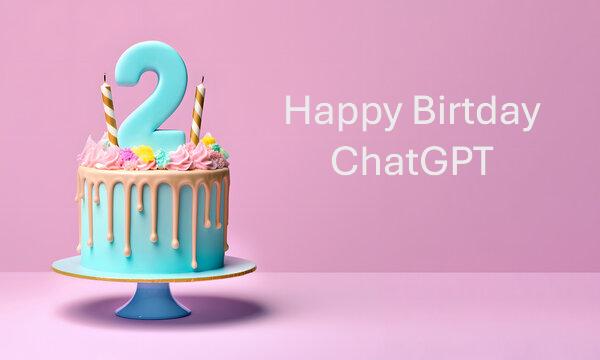
ChatGPT – Happy second birthday
Generative AI (GenAI), specifically ChatGPT exploded onto the scene in November 2022, which means it is only two years old. Initially people were slow to react, trying to figure out what this new technology was, many were confused, thinking it was a “bit like Google.” But when they saw what it could do – “generating” detailed, human-like responses to human generated “prompts,” ideas as to what it could be used for started to emerge. The uptake was extraordinary with over 1 million people using it within the first five days, a year later this had grown to 153 million monthly users and as at November 2024 its around 200 million. The use of GPTs across all platforms is difficult to estimate but it could be something in the region of 400 – 500 million. That said, and to put this in perspective, google search has over 8.5 billion searches every day, that’s the equivalent to the world’s population!

From Wow to adoption
Initially there was the WOW moment, true AI had been around for a long time but GenAI made it accessible to ordinary people. In the period from November 2022 to early 2023 we saw the early adopters, driven mostly by curiosity and a desire to experiment. By mid 2023 it became a little more mainstream as other GPTs emerged e.g. Googles Bard (Now Gemini), and Microsoft’s Copilot to name just two. But it was not all plain sailing, ethical concerns began to grow and by the end of 2023 there were people talking about misinformation, problems with academic integrity, and job displacement. This led to calls for greater regulation especially in Europe, where AI governance frameworks were developed to address some of the risks.

In terms of education, initially there were calls to ban learners from using these tools in response to answers being produced that were clearly not the work of the individual. And although many still worry, by early 2024, there was a creeping acceptance that the genie was out of the bottle and it was time for schools, colleges, and universities to redefine their policies, accept GPTs, and integrate rather than ban. 2024 saw even greater adoption, according to a recent survey, 48% of teachers are now using GenAI tools in some way.

GenAI – Educational disrupter
There have been significant changes in education over the last 50 years e.g. the introduction of personal computers and the Internet (1980s -1990s), making content far more accessible, and changing some learning practices. Then in the 2000 – 2010s we saw the development of E-learning Platforms and MOOCs such as Moodle, Blackboard and Coursera. This fuelled the growth of online education providing learners with access to quality courses across the globe.

But I am going to argue that as important as these developments were, not least because they are essential underpinning technologies for GenAI, we are always “standing on the shoulders of giants” – GenAI is by far the biggest educational disrupter than anything that has come before. Here are a few of the reasons:

  • Personalised Learning at scale: GenAI tools make it possible for everyone to enjoy a highly personalised learning experience. For instance, AI can adapt to an individual’s learning style, pace, and level of understanding, offering custom explanations and feedback. This brings us far closer to solving the elusive two sigma problem.
  • Easier access to knowledge and resources: Although it could be argued the internet already offers the worlds information on a page, the nature of the interaction has improved making it far easier to use, and have almost human conversations. This means learners can now explore topics in depth, engage in Socratic questioning, produce summaries reducing cognitive load and be inspired by some of the questions the AI might ask.
  • Changing the Teachers role: Teachers and educators can use GenAI to automate administrative tasks such as marking and answering frequently asked questions. And perhaps more importantly the traditional teacher centered instructor role is shifting to that of a facilitator, guiding students rather than “telling” them.
  • Changes the skill set: Learners must rapidly enhance their skills in prompting, AI literacy, critical thinking, and foster a greater level of curiosity if they are to remain desirable to employers.
  • Disrupting Assessment: The use of GenAI for generating essays, reports, and answers has raised concerns about academic integrity. How can you tell if it’s the learners own work? As a result, educational institutions are now having to rethinking assessments, moving towards more interactive, collaborative, and project-based formats.

Transforming learning
GenAI is not only disrupting the way learning is delivered its also having an impact on the way we learn.

A recent study by Matthias Stadler, Maria Bannert and Michael Sailer compared the use of large language models (LLMs), such as ChatGPT, and traditional search engines (Google) in helping with problem-based exploration. They focused on how each influences cognitive load and the quality of learning outcomes. What they found was a trade-off between cognitive ease and depth of learning. LLMs are effective at reducing the barriers to information, making them useful for tasks where efficiency is a priority. But they may not be as beneficial for tasks requiring critical evaluation and complex reasoning. Traditional search engines, need the learner to put in far more effort in terms of thinking, which results in a deeper and better understanding of the subject matter.

The research reveals a fascinating paradox in how learners interact with digital learning tools. When using LLMs, learners experienced a dramatically reduced cognitive burden. In other words, they had far less information to think, making it easier to “see the wood from the trees.” This is what any good teacher does, they simplify. But because there was little effort required (desirable difficulty) they were less engaged and as a result there was little intellectual development.

This leads to one of the biggest concerns about Generative AI, the idea that it is seen as a way of offloading learning – the problem is you cant.

Conclusions
As we celebrate ChatGPT’s second birthday, it’s clear that GenAI is more than a fleeting novelty, it has already begun to disrupt the world of education and learning. Its ability to personalise learning, reduce cognitive barriers, and provide a human friendly access to resources holds immense potential to transform how we teach and learn. However, the opportunities come hand in hand with significant challenges.

The risk of over-reliance on GenAI, where learners disengage from critical thinking and problem solving, cannot be ignored. True learning requires effort, reflection, and the development of independent thought, skills that no technology can substitute.

The role of educators is crucial in ensuring that GenAI is used to complement, not replace, these processes.

The Silent Teacher – learning environments

Have you ever walked into a bar or restaurant looking for atmosphere and when its not there, walked out? Isn’t that just a little bit odd! – and yet we have probably all done it. This gives some indication as to how sensitive we are to the environment in which we live, work, and play. The way you pull of this insightful magic trick is by detecting nonverbal cues such as body language, facial expression, tone of voice etc, soaking up the lighting, colour, sound and temperature, whilst sensing the emotions in the room using your primeval antennae.

We also learn in an environment – which is why it’s important we are mindful of the spaces we choose for study. The term learning environment is broad, encompassing all aspects that surround you, including the physical setting and learning materials, psychological factors, such as motivation and emotions, as wells as cultural influences. These elements all play a crucial role in your ability to absorb, process, and retain information, directly impacting learning outcomes.

Impact on learning
There is considerable evidence to support the importance of a “good” learning environment.

One study by Barrett et al. (2015) found that the physical characteristics of a classroom (light, noise, temperature, air quality, and seating arrangements) explained 16% of the variation in pupils’ academic progress. Ambady and Rosenthal (1993) discovered that people could accurately gauge a teachers’ mood and effectiveness from just six seconds of silent video clips. And as we know attitudes and moods are contagious, contributing to the overall feeling of a classroom. As discussed in a previous blog, in 2006 Carol Dweck’s brought to us the importance of a growth mindset that showed that learners who “feel psychologically” supported and encouraged are more likely to embrace challenges and persist in learning.

My blog Reading underwater – Context dependant memory, concludes that where you learn has a bearing on what you are able to remember at a later date. And Top Gun: Maverick or a Study With Me Video? Identifies the interesting trend of students choosing to play a video of other students studying in the background to create the “right mood” to help them study.

Having an effective study environment can improve….

Which is a very powerful list of learning ingredients.

The online learning environment
It’s essential to recognise the digital space as a learning environment and not merely a platform for content delivery. Whether through asynchronous (self-managed) or synchronous (real time streaming) methods, the design of online environments plays a crucial role in enhancing engagement, motivation, and knowledge retention.

To be effective the asynchronous environment must provide structured pathways, clear objectives, and opportunities for self-assessment. Incorporating interactive elements such as discussion boards, quizzes, and multimedia resources to promote active engagement. Whilst synchronous learning needs to develop a sense of community and provide immediate interaction. Designing sessions to encourage collaboration and participation is vital. Facilitators should use breakout rooms for small group discussions and incorporate polls or Q&A sessions to keep learners engaged and motivated.

Creating your own learning environment
But what does this all mean if you are studying on your own? Here is some guidance on creating your very own learning environment.

  • Physical environment – Have your own learning space – Choose a well-lit, quiet area with a comfortable chair and desk. A dedicated workspace signals to your brain that it’s time to focus, which can improve concentration and productivity. Organise your materials – Keep books within reach to minimise distractions. Use visual aids – Incorporate posters or mind maps, but make sure the space is uncluttered.
  • Maximising motivation – Set clear goals – Break study sessions into specific, achievable objectives. This provides direction and a sense of purpose, helping you maintain motivation throughout your studies. Self-assessment – Use quizzes and flashcards to evaluate your understanding. Celebrate small achievements – Keep a note of your progress and consider social media posts when achieving milestones.
  • Psychological environment Cultivate a positive mindset – Focus on progress and remind yourself of your goals. A positive mindset enhances resilience, making it easier to overcome challenges and stay committed to your learning journey. Manage distractions – Use techniques like the Pomodoro Technique for focused study sessions.
  • Emotional environment Create an enjoyable atmosphere – Listen to background music (preferably instrumental) or find a calming spot. A pleasant environment can reduce stress and make learning more enjoyable, which can improve retention. Practice mindfulness – Use deep-breathing exercises to reduce anxiety and maintain focus.
  • Social learning opportunities – Join online communities – Participate in forums or study groups for support and discussion. Engaging with others can provide motivation, diverse perspectives, and valuable insights into the material. Teach others – Explain concepts to a virtual peer or record yourself teaching. Teaching reinforces your understanding and helps clarify your own knowledge.

So, whether you step into a bar, restaurant, or classroom, remember that the right atmosphere can make all the difference. Just as a great venue enhances your night out, a well-designed learning environment can be the key to unlocking your best study experience.

The purpose of learning – Wisdom? Reflections on 30 years

I have always thought that wisdom was something slightly magical, even biblical, reserved for those who have travelled the world in search of the secrets and meaning of life.

But in reality, it’s far less mystical and is more likely the result of a lifetime or simply a longtime of “good learning”. 

This year marks my 30 years with Kaplan a professional education company here in the UK and I am leaving for pastures new. This has inevitably meant I have been doing a lot of thinking about the past, reflecting, and asking some fundamental questions such as, what do I know now that I didn’t know 30 years ago, what has been my most important lesson, and of course the classic, what do I know now that I would share with my younger self? So, I hope you will allow me this slightly self-indulgent post about wisdom.  

What is wisdom?
There seems to be no single definition of wisdom, although all agree that it is much more than simply possessing knowledge. There is also a commonly held view that intelligence plays a part largely because if you are intelligent you are able to solve problems and learn from experiences, but it would be wrong to conclude that intelligent people are wise.

A simple definition is probably all we need – “Wisdom is the ability to make sound judgments and decisions based on knowledge, experience, and understanding.” And when you read that back, wisdom becomes far more accessible and less mysterious. In fact, who wouldn’t want to make sound judgments every single day – We all need wisdom.

But the definition gives little away in terms of what is meant by knowledge, experience and understanding.  John Vervaeke, the philosopher, and cognitive scientist goes a little further by saying that to be wise you need the ability to identify what is relevant from the vast amount of information we are exposed to. “Relevance realisation” helps us navigate complexity and make sense of our world, but to do this you need to pay attention and challenge what you see, continually looking for feedback. This is an example of thinking about how you are thinking or metacognition, reflecting on what was momentarily in your mind and asking questions as to its accuracy, your bias and prejudice. And when you can do that, it becomes possible to develop insight, the aha” moment that comes from a deep understanding, revealing previously unseen connections.  

Okay, that might be a little too much detail but I think it shows that in order to develop wisdom you need the ability to challenge your own thinking, in search of a greater and deeper understanding.

Wisdom and age

The relationship between age and wisdom is nuanced and multifaceted. While age can contribute to wisdom, it is not an absolute guarantee. Wisdom, can be accumulated over time as a result of having different life experiences, but its not necessarily the experience that creates wisdom, it’s what you learn from it. Additionally, with age often comes a greater capacity for reflection, you may simply have more time to integrate your experiences into a broader understanding and as consequence develop that all important insight. Emotional regulation also tends to improve with age, contributing to more thoughtful and less emotional and reactive decision-making.

However, it is important to acknowledge counterpoints that some cognitive abilities for example problem-solving and processing speed, decline with age. In fact, studies from the Berlin Wisdom Project suggest there is a plateau of optimal wisdom performance in middle and old age, with some evidence of wisdom decline starting at the age of 75.  One interesting aside, wisdom tends to correlate with less loneliness. In a study from the University of California, San Diego, in 2020 researchers found that for middle-aged and older adults wisdom warded off the worst effects of loneliness.

In conclusion, it’s not necessarily age that helps you develop wisdom. Its just that you have had more life experience and time on which to reflect together with a greater inclination to do so.

How to acquire wisdom
To think that you can provide an instruction manual for wisdom is at best ambitious and more likely foolish, but there might a few lessons we could learn that will move us in the right direction. A good starting point might be to ask a couple of experts:

  • Confucius said “By three methods we may learn wisdom: First, by reflection, which is noblest; Second, by imitation, which is easiest; and third by experience, which is the bitterest.”
  • And Socrates “I am the wisest man alive, for I know one thing, and that is that I know nothing.

From these “wise words” we can perhaps extract some of the traits of wise people. Wisdom comes from:

  • Reflection – is the process of introspectively examining and evaluating your thoughts, experiences, and actions. It’s a continuous process requiring a creative and inquisitive mind, questioning assumptions and seeking new perspectives. Reflection is an essential component of both learning and wisdom.
  • Experience – you need to have had some interesting life experiences on which to reflect. It is however not necessary to have “seen it all,” only that you questioned, challenge and thought about the experiences you have had.
  • Humility – Socrates went around asking people questions about justice, truth, and wisdom and found that despite them thinking they knew lots, in reality they were ignorant. To be wise you need to reach a sufficiently high level of questioning that you find your own level of ignorance, whilst at the same time not slipping into becoming arrogant.
  • Although not derived directly from the quotes, we should include Virtue – this is about consistently choosing to do what is right and good. It requires perspective, the ability to see things from the point of view of others as well as honesty, courage, kindness, and fairness.

30 years later
What a long time 30 years is, but so far it has been a real privilege to work with good people in an industry that helps people learn, and get a chance to change lives for the good. If I’m honest It wasn’t what I set out to do but its not worked out to badly.

And now to the hardest part, how would I answer those three questions I posed at the start?

  • What do I know now that I didn’t know 30 years ago – in some ways this is the easiest one because I have learned so much. But if I had to pick one thing it would be the understanding I now have as to how learning works. This has served me well in both my teaching and wider career in education.
  • What has been my most important lesson – work hard, have focus and purspose but try to be kind, make friends, and don’t fall out with people, life’s too short.
  • What do I know now that I would share with my younger self – A couple of things I guess, firstly that Socrates was right, “I know that I know nothing.” This is not so much about humility but a recognition that even when you get to a level of competence or expertise, there is always another higher-level waiting for you. And secondly don’t compare yourself with others, only with yourself, if you’re moving forward that’s good enough.

I cant claim the above as wisdom, but give me another 30 years and maybe I will have something for you.

Is travel the best teacher? – Informal Learning

I have just come back from a trip to Vietnam and Cambodia, two counties with long and complicated histories. Vietnam has become the destination of choice for many Gen Z’s partly because its cheap but more importantly it offers a real-life experience, different attitudes, cultures, smells, and flavours, with a kindness in its people that is infectious.

There is also a wisdom that has developed over time as a result of relations with other countries (China, Japan France, and the USA), its different religions (Hinduism and Buddhism), competing political ideologies (Capitalism and Communism) and a reflective mindset that tries to take the best from the wars they have fought and the atrocities experienced.

Wisdom often manifests itself in saying or proverbs, and one Vietnamese proverb that stood out for me was, “a day of traveling will bring a basketful of learning.” But do you really learn from travelling, and even if you do, how effective is it when compered with other methods of delivery and teaching?

Real-world and Experiential learning
To help answer this question let’s start by looking at two types of learning that on the face of should provide some insight, real world, and experiential learning.

Real-World Learning involves engaging with real-life situations and practical experiences outside the traditional classroom setting. It focuses on applying theoretical knowledge to solve actual problems often in the workplace, it also requires the individual to communicate and engage with others.

Experiential Learning, as defined by Kolb et al is a broader concept that encompasses learning through experience. It involves a cyclical process of experiencing, reflecting, thinking and acting. Its sometimes more narrowly defined as “learning through reflection on doing.”  Experiential learning can occur in various settings, not just real-world contexts, and includes structured activities designed to simulate real-life situations, for example case studies and role plays . Real-world learning is a form of experiential learning.

One other theory related to experiential learning worthy of mention is, Constructivist Learning. This is where learners construct knowledge through their experiences and interactions with the world. This fits perfectly with travel which offers diverse and rich contexts for individuals to build and refine their understanding of already learned facts and opinions.

As you can see the methods are similar but not the same, by way of an example you would engage in experiential learning if involved in a role play, perhaps negotiating the price for a new product with a colleague. Whereas real-world learning might result in you actually working in a company, actively engaged in a real world negotiation, possibly as part of a team.

The role of knowledge – Just to be clear, the precursor to both experiential and real-world learning is knowledge, they are application models e.g a means of testing out how well you have understood what you have already learned, can you apply your knowledge in the real or simulated world?  And in that application, reflecting and challenging what you have learned as you attempt to reconcile the theory with practice.

Benefits – There have been several studies looking at the effectiveness of these application-based methods, and they have been shown to result in higher levels of engagement and motivation, improvement in critical thinking and problem-solving skills, higher levels of retention, and the cementing of previously learned knowledge.

But these methods are often part of a structured, formal training programme, overseen by a teacher or coach with predetermined learning outcomes and some type of assessment. When you go traveling, this framework does not exist.

Travelling is learning – it’s just informal
But if you look closely the clues are there as to why travel is a good teacher, its just you must take more responsibility yourself. Firstly, you choose to travel, you are motivated (internally), curious, and inspired, you are looking for something, an experience perhaps. Interestingly you probably don’t know what it is, it’s possibly more of an itch that needs scratching, a desire to explore, to break away from the norm. You are “motivated away” from what you have towards something different that is unknown. This is informal learning, there is no desired outcome, you are simply moving away from the status quo and not towards a specific learning outcome.

Secondly you may have certain expectations as to what you will experience, but when you are there, those preconceptions may well be challenged, the stereotypes dispelled. This is Kolb in action, experiencing, reflecting, thinking, and acting. To make sense of the world around you at that point, you might need to challenge your existing beliefs, black and white suddenly becomes grey, and blurred lines emerge where previously non existed. Thirdly it opens up a whole new world of possibility, expanding your horizons, turning the trip into a learning adventure. At the same time, you are in the real world having to navigate the changeable environment, communicate with others who look think and behave differently, you may have to adapt or change the way you do somethings completely. But most of all you begin to learn about yourself, and that humility gives you a wonderful perspective.

And it is this that makes travel a potential life changing experience, its as if you had removed the walls from the classrooms, making everything possible, forcing you to develop your own thoughts and ideas, not mimic others. Your senses will be in overdrive and your ability to recall significantly increased, making this a memorable event that you will reflect on throughout your life.

But this will not of course be the case for everyone, the learning is not guaranteed, some will come back with broken friendships and mosquito bites. And that’s life, travel is not the most efficient learning experience, it’s just possibly the best one.

But don’t take my word for it, watch this – 10 Reasons Why Travel is the BEST Education

You can’t outsource learning – Cognitive offloading 

As we begin to better understand the capabilities of Generative AI (Gen AI) and tools such as ChatGPT, there is also a need to consider the wider implications of this new technology. Much has been made of the more immediate impact, students using Gen AI to produce answers that are not their own, but less is known as to what might be happening in the longer term, the effect on learning and how our brains might change over time.

There is little doubt that Gen AI tools offer substantial benefits, (see previous blogs, Let’s chat about ChatGPT and Chatting with a Chat Bot – Prompting) including access to vast amounts of knowledge, explained in an easy to understand manner, as well as its ability to generate original content  instantly. However, there might be a significant problem of using these tools that has not yet been realised that could have implications for learning and learning efficacy. What if we become too reliant on these technologies, asking them to solve problems before we even think about them ourselves. This fear has found expression in debates well before Gen AI, in particular an article written by Nicholas Carr in 2008 asking “is Google making us stupid’’ – spoiler alert, the debate continues. And an interesting term coined by the neuroscientist and psychiatrist Manfred Spitzer in 2012, “Digital dementia”, describing the changes in cognition as a result of overusing technology.

But the focus of this blog is on cognitive offloading (Circ 1995), which as you might guess is about allowing some of your thinking/processing/learning to be outsourced to a technology.  

Cognitive offloading
Cognitive offloading in itself is neither good nor bad, it refers to the delegation of cognitive processes to external tools or devices such as calculators, the internet and more recently of course Gen AI. In simple terms there is a danger that by instinctively and habitually going to Google or Chat GPT for answers, your brain misses out on an essential part of the learning process. That is reflecting on what you already know, pulling the information forward, and as a result reinforcing that knowledge, (retrieval practice), then combining it with the new information to better understand what is being said or required.

As highlighted by the examples in the paragraph above cognitive offloading is not a new concern, and not specifically related to Gen AI. However, the level of cognitive offloading, the sophistication in the answers and opportunities to use these technologies is increasing, and as a result the scale and impact is greater.

Habitual dependency – one of the main concerns is that even before the question is processed, the student instinctively plugs it into the likes of ChatGPT without any attention or thought. The prompt being regurgitated from memory, “please answer this question in 100 words”. This will lead to possibly the worst situation, where all thought is delegated and worryingly the answer unquestionable believed to be true.

Cognitive offloading in action – Blindly following the Sat Nav! Research has shown that offloading navigation to GPS devices impairs spatial memory.

Benefits of Cognitive offloading – it’s important to add that there are benefits of using cognitive offloading, for example it reduces cognitive load, which is a significant problem in learning. The technology helps reduce the demand on our short-term memory, freeing the brain to focus on what is more important.

Also, some disagree as to the long-term impact, arguing that short term evidence (see below) is not necessarily the best way to form long term conclusions. For example, there were concerns that calculators would affect our ability to do math’s in our heads, but research found little difference whether students used calculators or not. And the debate has moved on to consider how calculators could be used to complement and reinforce mental and written methods of math’s. These benefits have led some to believe that cognitive offloading increases immediate task performance but diminishes subsequent memory performance for the offloaded information.

Evidence
There is little research on the impact of Gen AI due to it being so new, but as mentioned above we have a large amount of evidence on what has happened since the introduction of the internet and search.

  • In the paper Information Without Knowledge. The Effects of Internet Search on Learning, Matthew Fisher, et al found that participants who were allowed to search for information online were overconfident about their ability to comprehend the information and those who used the internet were less likely to remember what they had read. 
  • Dr Benjamin Storm the lead author of Cognitive offloading: How the Internet is increasingly taking over human memory, commented, “Memory is changing. Our research shows that as we use the Internet to support and extend our memory we become more reliant on it. Whereas before we might have tried to recall something on our own, now we don’t bother.”

What should you do?
To mitigate the risks of cognitive offloading, the simple answer is to limit or reduce your dependency and use Gen AI to supplement your learning rather than as a primary source. For example, ask it to come with ideas and lists but not the final text, spend your time linking the information together and shaping the arguments.

Trust me …….. I’m a teacher

This month’s blog is about something especially important to me just now, its an essential component of any real and meaningful relationship – TRUST. Ask yourself how many people do you really trust, three, four probably not that many, a few close friends, and family perhaps. If you trust someone, you believe they are honest and sincere and wont deliberately do anything to harm you, in fact they will always have your best interests at heart. As a consequence, you are more likely to listen carefully to what they say, giving them significant influence over what you think and do.

Trust takes years to build, seconds to break, and forever to repair.” Amy Rees Anderson

Trust is also one of those intangible qualities that companies and organisations crave, and yet when it matters most, they often fail to keep their end of the bargain. A recent survey by PwC concluded that the trust gap is widening, here are a few other headlines:

  • 93% of executives agree that building and maintaining trust improves the bottom line
  • It’s getting even harder to build trust – executives are facing more hurdles than before
  • 86% of executives say they highly trust their employees, but only 60% of employees feel highly trusted

Who can you trust?
Ipsos the market research company has run a poll on trust in the professions for many years. Their 2023 report identified that the most trusted professions in Britain were: nurses, airline pilots, librarians, doctors, engineers, teachers, and professors. Perhaps not surprisingly the bottom three were politicians, government ministers and advertising executives. Business leaders somewhat disappointingly scored only 30%, just above estate agents! Looking at the list it seems that trust takes a backseat when power and money are part of the equation.

Trust is the glue of life. It’s the most essential ingredient in effective communication. It’s the foundational principle that holds all relationships.” Stephen Covey

Trust in education
Trust plays a pivotal role in education, influencing various aspects of the learning process. When you think about it students don’t know if what they are being taught is actually worth knowing. They simply trust that the teacher will select relevant content and use the best learning methods to deliver it.

We should probably distinguish trust from respect, authority, and reliance. Respect is where you hold someone in “high regard,” recognising their worth, you might of course trust them as well but its not essential. Authority on the other hand is more about power, a student will “do as they are told” but that doesn’t mean they will see the value in what they are doing. And lastly reliance, this is closer to trust but its still not the same, you can rely on a calculator to come up with the correct answer but you cannot trust it, that’s because there is no relationship.

Think of a situation where the teacher asks the whole class to attempt 10 questions for homework, the problem is that the students don’t see any value in this and think it’s a waste of time. But when they get home, they reflect on what they have been asked to do and complete the questions, not because they have changed their mind but because they believe that the teacher wouldn’t want them to do something that wasn’t in their best interests. The result is that the next time the student is asked to do something, they are more likely to oblige. Okay so this is a rather idealistic view of the teacher, student relationship but hopefully it shows that trust can reach well beyond the walls of a classroom.

What about the neuroscience
Trust is much greater in people with higher levels of oxytocin (OT), which although not classed as a neurotransmitter, (chemicals in the brain that help link neurons) for our purposes we can think of it as being similar. In one experiment individuals administered with OT were more inclined to trust others with their money compared to those given a placebo. If you want to increase levels of OT, but don’t want to give a massage! (physical contact can help), you should demonstrate that you care about the individual and are kind to them. Which when you think about it makes a lot of sense.

Trust is like the air we breathe – when it’s present, nobody really notices; when it’s absent, everybody notices.” Warren Buffett

Increased engagement and communication
In terms of evidence studies have shown that when students trust their teachers, they are more likely to engage in learning activities, seek feedback, and participate in class discussions (Roorda et al., 2011). This trust enables educators to create supportive learning environments where students feel safe to take risks, ask questions, and explore new ideas. In addition, trust between students and educators facilitates effective communication and collaboration. Research by Bryk and Schneider (2002) suggests that high levels of trust in schools are associated with improved teacher morale and greater job satisfaction.

Conclusions
You can of course be a good teacher without building trust, and a student doesn’t need to trust their teacher to learn but it can be empowering, motivational and in some situation’s life changing. After all, as a teacher what do you have to do, simply have the students’ best interests at heart, and take an interest, and any good teacher will do that. As for the student your role is to trust, which is of course is far more difficult.

To learn more about trust in learning – watch the 4m video – The key role trust plays in learning

My thanks to Monika Platz and her paper on Trust Between Teacher and Student in Academic Education at School which provided inspiration and insight for this blog.

Solving crimes using Concept Mapping

Have you ever wondered why in pretty much every crime drama the “hero” stares at a wall, with names, locations and pictures pinned to it. He’s trying to solve a crime but there’s no logic, nothing makes sense, he has more questions than answers. The phone rings, it’s his daughter asking when he will be home, the dog is barking in the background, then suddenly he puts down the phone and says “that’s it, why didn’t I see that connection before” “why did the dog not bark that night?” The connection is made and the crime solved.

What was on the wall was effectively a concept map, a visual tool used to organise and represent knowledge or ideas in a hierarchical manner, showing the relationships between them to help develop a better understanding, clarify relationship and in some instances solve problems.

Concept mapping
Although a concept map and a mind map are both visualisation tools, they are not the same. A concept map differs in that as the name suggests its focus is on the relationship between concepts rather than on a single theme placed at the centre of a blank page as is the case with a mind map. Another way of thinking about them is that concept maps are more suited to planning and organising, they have a structured hierarchy and highlight relationships. On the other hand, mind maps are “free spirits”, used more spontaneously, encouraging creativity.

A concept map typically consists of nodes, representing concepts or ideas, connected by labelled lines or arrows to indicate the relationships between them.

Why concept maps work
Concept maps are effective because they mirror the way our brains naturally categorise and store information. When we create one it activates various regions of the brain involved in memory, comprehension, and critical thinking. This process helps to reinforce learning and deepen understanding by facilitating the formation of neural connections. Additionally, the visual nature of concept maps appeals to the brain’s preference for processing information in a spatial and interconnected manner, making it easier to grasp complex relationships and retain information over time.

Concept mapping as a technique was developed by Dr. Joseph D. Novak at Cornell University in the 1960s and is based on the theories of Dr. David Ausubel, who emphasised the importance of prior knowledge in learning new information. It stems from the ‘constructivism‘ approach to learning which suggests that individuals construct their own understanding and knowledge of the world, based on their own unique experiences.

“The most important single factor influencing learning is what the learner already knows. Ascertain this and teach accordingly.” David Ausubel. (1968).

Research also supports their use with studies showing that they improve learning outcomes, promote critical thinking, and increase retention of information. For example, a meta study published in 2024 concluded that “concept maps are highly effective in enhancing the academic achievement of students and must be used in the education process”.

How to design a concept map
Designing a concept map involves visually organising information to illustrate the relationships between concepts. Here’s a brief introduction to the process:

  1. Identify Key Concepts: Start by identifying the main concepts relevant to your topic. Think of them as the building blocks of your map.
  2. Determine Sub-Concepts: Branch out to list related sub-concepts, organising them from general to specific. Then start thinking about the relationship between the concepts, is there for example a cause-and-effect.
  3. Connect the Dots: Draw lines to connect related concepts, and label the lines to explain the relationships and organise in a hierarchy if not already done so.
  4. Refine and Expand: As you study, add more concepts and links, perhaps using colour to clarify different groupings, continually refining the map as your understanding develops.

Although you can use pen and paper there are lots of digital tools available, you can find some here – 10 Top Free Concept Map Makers & Software in 2024.

And finally – the best way to learn how to produce a concept map is to watch someone building one – here is a short 8-minute video that explains all.  How to Make a Concept Map.

Roger Federer the Master – Mastery learning

Roger Federer is widely regarded as one of the greatest tennis players of all time and often referred to as a master of tennis. His extraordinary talent, remarkable achievements, consistency, and longevity in the sport have solidified his status as a tennis legend. He also seems to be a very nice bloke!

Relevance to learning?
To improve your position in the tennis rankings, you must first prove yourself at the lower levels before you move to the higher ones, which seems like a pretty solid idea, and yet that’s not how it works in education. If you think back to your school days, although there were different recognised levels of ability within a year, everyone progressed to the next stage of learning based on age. This could mean that you were studying something at a higher level having not mastered the basics at the lower one.

What is Mastery
Mastery learning is an educational approach where learners are expected to achieve a high level of proficiency or mastery in a particular subject or skill before progressing to more advanced material or a higher level. In other words, you must demonstrate mastery of the current material before moving on. For example, in a math’s lesson learners may be required to demonstrate proficiency in solving algebraic equations before moving on to more advanced topics such as calculus. Similarly, in English, learners must demonstrate their proficiency in grammar and punctuation before progressing to writing essays.

Benjamin Bloom, remember him, is often credited with pioneering the concept of mastery learning. In the 1960s. Bloom proposed the idea as a response to the limitations of traditional instructional methods, which often resulted in some learners falling behind while others moved ahead without mastering the material. He emphasised the importance of ensuring that all learners achieve a solid understanding of core concepts before progressing to more advanced topics. This approach required personalised instruction, continuous assessment, and opportunities for remediation to support every learner in reaching mastery. An example of this type of mastery teaching can be found in the personal tutor market, where parents pay an expert to coach and mentor their children so that they will be able to ace high stake tests.

There is also substantial evidence supporting the effectiveness of mastery learning. Several studies have highlighted the advantages, indicating that learners taught using mastery typically exhibit superior academic performance, greater retention of information, and deeper comprehension compared to those instructed using traditional methods. For instance, a meta-analysis published in the “Review of Educational Research” in 1984, analysed 108 studies on mastery learning and concluded that learners consistently outperformed their counterparts on standardised tests and other metrics of academic attainment. 

Mastery grade – Although the emphasis in mastery is on ensuring that learners understand and can apply the material, rather than achieving a specific grade, if the assessment method includes questions, then there has to be a “pass mark”. Although the exact percentage may vary, I saw 80% – 85% mentioned, the consensus seems to be 90% or higher.

“Ah, mastery… what a profoundly satisfying feeling when one finally gets on top of a new set of skills… and then sees the light under the new door those skills can open, even as another door is closing.” Gail Sheehy

The impact of technology
While we have seen that the effectiveness of mastery learning has been proven it is not without its challenges. One issue is the increased time needed, the result of personalised tuition, and additional resources e.g. more questions and course materials. This can put a significant strain on any organisation that might result in them cutting corners in practice. However, this is where technology can really help, we are now in the age of AI and adaptive learning which has the potential to offer the high levels of personalisation required to deliver at scale on the mastery promise. Which could mean that mastery and all its benefits becomes well within the reach of everyone rather than a privileged few.

But, but, but the devils in the detail
In practice there are of course other problems, what role if any will teachers play, will there need to be significant retraining? Who will pay for all of this, and what of the social stigma that may result for those held back because they are not “bright enough”?

Three bigger questions:

  • Firstly, there is the argument that by focusing on mastering the component parts of a subject, the wider learning is lost, for example the cultivation of critical thinking and problem-solving skills. In addition, attaining genuine mastery for all learners within a given timeframe poses challenges where the demographic is more diversified in terms of learning styles, backgrounds, and abilities.
  • Secondly, how do we really know if a subject has been learned, let alone mastered. Although someone might have moved to the next topic having scored 92% 3 months earlier, what if the test itself wasn’t sufficiently robust for the level of understanding required at the higher level?
  • And lastly, we know that as we progress our tendency to forget increases, unless of course that original information is revisited, think here about the forgetting curve. While the speed at which we forget varies greatly, the consistent observation from decades of research is that, with time, we inevitably lose access to much of the information once retained.

Now there are answers for most of these, however there is the potential for well-meaning organisations to promote so called “mastery courses” when in reality they are fundamentally flawed.

What does this all mean
For learners – Mastery is compelling and should be kept in mind when studying. Going back over something to make sure you understand it will not only reinforce what you already know but builds a solid base from which to move forward. However, there will be times when you don’t fully grasp something and time runs out, leaving you no alternative but to move on. The secret here is not to worry, it might be that this particular piece of knowledge or skill is not required in the future and if it is, you can always go back and learn it, again!

For educators – Mastery is certainly something worth pursuing but be careful, it’s very easy to get caught up in the ideal and create something that looks like it’s working but it’s not because of a lack of attention to the detail required to make this work in practice.

Unfortunately I couldn’t find anything about mastery from Roger Federer, but I’m sure he would wholeheartedly endorse this by a master with a different skill.

“If people knew how hard I worked to get my mastery, it wouldn’t seem so wonderful at all.” Michelangelo

Educational side effects – better decision making

Having a robust education system and well-educated citizens is a key objective for most governments. (World best education systems ) One reason for this is that an educated population is linked to economic growth, partly the result of higher levels of productivity and innovation. And this makes for a very compelling argument as to why governments believe education is important and worthy of investment. The UK spends between 4% – 5% of GDP on education.

But what about the individual, is it worth them investing both time and money in their own education and what of the benefits, do they outweigh the costs? To put this more bluntly, is it worth getting a so-called good education?

In terms of costs, in the UK between the ages of 5 to 18 attending school is compulsory but perhaps more importantly its free. Although not everyone wants something for nothing, the national absence rate for 2022 was 7.6%, well above the 4%-5% pre Covid figure. I am going to side step the question around the value of higher education, partly because its complicated and most people seem to agree that is worth the money, just about! But what are the benefits of a good education, this feels a little bit like asking what did the Romans do for us? How about it improves your social mobility, opens the door to new job opportunities and advancements in your career, improves levels of confidence and helps with the development of new skills. And I nearly forgot, highly educated people earn more money and actually live longer.

A good education   

Of course, education is good for you, but I want to pick out one benefit that might not be so obvious – a good education helps you make better decisions. This is a skill that is not only valuable in the workplace but also in life. Everyday people make lots of “micro decisions”, in themselves none are especially important but when combined they can dictate your future. We all need to be better at making decisions.

In 2018 Hyuncheol Bryant Kim, an associate professor at Columbia University set out to answer the question, does education improve economic rationality? Kim’s research proved that it did, he said “While we know that schooling has been shown in previous work to have positive effects on a wide range of outcomes, such as income and health, our work provides evidence of potentially additional benefits of education coming from improvements in people’s decision-making abilities.”

Just to be clear this doesn’t mean that all the decisions you make will be good ones, often this can only be judged with hindsight. It’s that a well-informed person is more likely to make a better decision than an ill-informed one.

Bad decisions (The Cobra effect) – During British rule in India, a bounty was placed on cobras to reduce their population. However, as a result people started breeding them for the reward, leading to an increase in the cobra population. Eventually the bounty was withdrawn which meant cobras had no value and were released into the wild.  

Decision making

Decision-making is the process of selecting a course of action from different alternatives to achieve a specific goal or solve a problem. We are talking here about a cognitive process, meaning it requires conscious thought and involves, gathering relevant information, evaluating available options, and choosing the most appropriate action. It worth saying that people are not inherently born as good or bad decision-makers. Instead, decision-making skills are developed and refined over time through a combination of educational, environmental, and experiential factors.

Bad decisions (ignorance) – The operators and decision-makers at the Chernobyl Nuclear Power Plant in Ukraine were unaware of the potential risks and lacked a comprehensive understanding of the reactor’s design. During a safety test, a series of poor decisions, coupled with a lack of knowledge about the reactor’s vulnerabilities, led to a catastrophic explosion that resulted in one of the most significant nuclear disasters in history.

There are a number of reasons that someone with a good education is more likely to make better decisions:

  • High levels of knowledge and skills – Having facts, data, knowledge, and skills that you can draw upon is going to help you make better decisions. Ignorance on the other hand can only lead to the exact opposite.
  • Developed critical thinking – Education, especially at higher levels, is associated with the development of critical thinking. The ability to analyse information, consider different perspectives, and make informed decisions is often enhanced through educational experiences.
  • Improved process skills – It provides individuals with the tools to process and analyse information effectively. This includes skills such as information literacy, research abilities, and the capacity to evaluate the reliability and relevance of data.
  • Understanding of risk – People with higher levels of education tend to be more adept at evaluating potential risks and benefits associated with different options.
  • Able to consider implications – Individuals with a solid educational foundation often have a better understanding of the consequences of their decisions and are more likely to consider future implications.

The side effects  

Please don’t think that this means well educated people are in some way better than less educated ones, they are not. Many of the world’s most dangerous and powerful people have had a world class education and yet make bad decisions. For example, President Richard Nixon’s cover up in the Watergate scandal or Dominic Cummings decision to take a drive with his family to “test his eyesight”, when he knew it was against the covid rules!

The point is that many people believe they succeed because of what they know, when in fact it is also because of the decisions they make, and that skill was learned, a side effect of a good education.

In simple terms – want to make good decisions “Go to school”.

Bad decisions (killing sparrows). As part of the Great Leap Forward in the late 1950s Chinas Mao Zedong launched a campaign to eliminate pests (including sparrows) that were believed to threaten crops. The decline in sparrows led to an ecological imbalance as they were natural predators of insects, including crop-eating pests and a significant decrease in agricultural output.

Want to make better decisions…here are a few interesting videos about how to do that.


The world of Pure Imagination

There is no life I know, to compare with pure imagination, living there, you’ll be free, if you truly wish to be.  If you want to view paradise, simply look around and view it, anything you want to, do it, want to change the world? There’s nothing to it”

These are a few lines from the song “Pure Imagination” performed by Gene wilder in the original 1971 Willy Wonka movie, always a good watch at Christmas. It was remade with Johnny Depp in 2005 and a prequel called Wonka was released this December to much acclaim, staring Timothée Chalamet. The original story tells of a poor boy named Charlie Bucket who wins a golden ticket to tour the magical chocolate factory of the eccentric Willy Wonka.  Although the story still has a contemporary feel, its appeal has more to do with the magical world Wonka creates, the morality of greed, and recognising that actions have consequences.

The point however is, to create such a fantastical, spectacular, stupendous chocolate factory, Wonka required a very special quality – Imagination!

Imagination
Imagination is tricky to define, with many linking it to creativity and contrasting it with knowledge, but I like this explanation provided by Chat GPT, checked of course.

Imagination is the cognitive ability to form mental images, ideas, or concepts that are not directly perceived through the senses. It involves the capacity to create, manipulate, and combine mental representations, allowing individuals to explore possibilities, envision scenarios, and generate novel ideas.

There is a strong visual element to imagination but it’s not driven by our senses, we are not looking at an object in the real world (external) and creating something new as a consequence. When you use your imagination, its coming from your internal world, often unconsciously influenced by your memories and feelings. In fact, when you imagine something, you don’t have to have experienced it before at all.

Imagination, creativity, and knowledge are intricately connected in the process of thinking, especially at the higher levels. Knowledge is the foundation, providing the raw material for imaginative exploration and creative synthesis. Imagination draws upon knowledge, resulting in mental representations and visual possibilities. Creativity transforms these imaginative ideas into valuable outcomes, for example solving a problem or developing a new product.

Imagination, original thought and Gen AI
I didn’t think this blog was going to have anything to do with Gen AI, apologies, I was trying to make it Gen AI free. But using it by way of contrast might help with our understanding of imagination and to some extent original thought i.e. ideas, concepts, or perspectives that are unique.

At the time of writing no matter how impressive a Gen AI created poem or picture might be it is not the result of imagination as described above. The AI is simply accessing the huge data sets on which it has been trained and predicting the most likely next word or brush stroke. In other words, it isn’t capable of what we would call “original thought”, that is having new ideas of its own. I should add that when I discussed this point with Chat GPT it disagreed.

Genetics – And finally in terms of understanding imagination, being imaginative or creative is not thought to be genetic. While genetic predispositions may create a foundation, the development and expression of imagination is shaped more by external influences. (Nichols 1978, Barron & Parisi 1976, Reznikoff 1973).

The neuroscience of imagination – Watch this if your interested as to what is happening in your brain when you use your imagination.

Does imagination help with learning?
All very interesting, at least I hope so but can using your imagination improve learning, of course it can, below are some of the benefits:

  • Brings into play the imagination effect – A study in 2014 required two different groups to learn the parts of the respiratory system. One group were asked to imagine the parts from a text description but without a picture, the other had both text and picture (control).  Those who had to imagine the picture did better on a test than the control. The conclusion – people learn more deeply when prompted to form images depicting what the words describe. There are a number of reasons for this, but one is thought to be the reduction in cognitive load.
  • Encourages independent learning – The ability to think about a particular problem or situation using your imagination helps develop a more independent approach to learning.
  • Increases engagement – Imagination can make learning more engaging and enjoyable partly because the learning becomes more personal, as new information is related to something already known.
  • Improved memory retention – Creating mental images or scenarios related to the material being learned can improve memory retention. Imagination often requires visualisation, making it easier to recall information later.
  • Facilitates critical thinking – Imagining different scenarios and perspectives encourages critical thinking, allowing the learner to analyse information more deeply and consider various angles, leading to a richer understanding of the subject matter.
  • Stimulation of curiosity Imagination sparks curiosity, motivating learners to explore topics further. This intrinsic type of motivation can then lead to a lifelong learning mindset.

What happened to Charlie Bucket and friends?
Charlie, (Peter Ostrum) only ever stared in Willy Wonka. He later became a Vet in New York. Veruca, Salt (Julie Cole) continued to act but later became a psychotherapist. Violet Beauregarde (Denise Nickerson) also acted for a short while before getting a job as a receptionist. And Michael Bollner (Augustus Gloop) is a lawyer in Germany.

Want to now moreImagination: It’s Not What You Think. It’s How You Think – Charles Faulkner.

The last word we will give to Willy Wonka……But what do you think it means?

“We are the music makers; we are the dreamers of dreams.” Willy Wonka

Test, Learn, Test – Pretesting is hard to believe

What would it be like to get into a car with someone who had never driven before and ask them to take a test.

They might of course have some prior knowledge, perhaps having seen others drive but there has been no formal driving instruction. You have to admit in principle it doesn’t seem a very good idea.

Just to be clear, the test would be similar to the one they will take after the instruction and include reversing, parallel parking, emergency stop etc. 

The idea of testing before learning is hugely counterintuitive and it won’t work or be desirable in every situation, driving a car is a good example, but read the rest of this blog and you might just change your mind.  

The pretesting effect
But first, Pretesting, this involves assessing learners on information related to upcoming material before any formal instruction. There is good reason for this from a learning perspective, the pretesting identifies the baseline level of knowledge of the learner before being taught. The teacher can then work their magic, and when we test again the learner will do much better, leading to the conclusion that learning has taken place.

The pretesting effect is different, this is where the learner who takes the test before any formal instruction performs better on subsequent tests than those who didn’t take the pretest. The implication is that the very process of pretesting improves learning.

In a typical pretesting study, one group of learners would take the pretest and the other group would not (The control). All learners then study a specific topic on which they are tested (The post test). Some questions in the post test are from the pretest but some are new, meaning they have never been seen before by either group. The findings from most studies will show that the learners who did the pretest score higher than the control group, but interestingly this is on both the pretested questions and the new ones.

Let’s just pause at that point, this is pretty strange, why would the pretested group do better? All they have done is attempt some questions that on the whole they didn’t know the answer to, which might be pretty demoralising. And it can’t be because the pretested group remembered the answers because we are told they also did better on the questions they had not seen before.

Why might this work?
There have been a lot of studies in this area in order to try to better understand what is happening, for example does the type of question make a difference, Little, J.L., Bjork, what impact does it have if the learner gets the question wrong Richland LE, Kornell N, Kao LS. Spoiler, even if the learner gets the pretest question wrong, they still perform better as a result of doing it.  A word of warning, pretesting is not better than post testing, its just better than learning the material without a pretest.

Here are a few reasons:
Activates prior knowledge – one suggestion is that pretesting connects new information to what is already known making it more meaningful and easier to remember.
Increases difficulty (desirable difficulty) – Introducing challenge during the pretests, recalling information before any formal instruction can improve the durability and transferability of learning.
Increases attention and identifies importance – Being asked a question on a specific area that is not understood might cue the learner to pay greater attention when they come across it later in their studies. It also makes them more aware of the type of questions that will be asked.
Feedback helps – As with any learning process the feedback received from the pretest can help clarify what the question was asking and of course offers up the answer.
The hypercorrection effect – This is really interesting, errors committed with high levels of confidence are more likely to be remembered as long as the feedback is persuasive.
Improves metacognition – Learners become more aware of what they know and what they need to learn.

When you read through this list, there is a rational and maybe it starts to make sense. The difficulty with pretesting is that it sounds so illogical that you don’t even try, why should you waste your time proving that you don’t know something. And if you take the test and get a low score as you believe you will, it’s easy to lose confidence in both yourself and the process. To get the most from this, you need to believe it’s going to work and that its worth the effort and time. It is also important to appreciate that the feeling of discomfort and not knowing is perfectly normal, and that can be hard to do, but as the evidence shows if you an do this, it will ultimately be worth it.

This is worth a read if you would like to know more. Test first, learn later: The power of pretesting to enhance learning, and watch this short video, it explains the concept really well – Pre-Testing: A Better Way to Learn.

Whose fault is it that you failed? – Attribution theory 

If you are motivated, learning will be easy and even enjoyable, however motivating people to learn is one of the biggest challenges there is in education. And it’s complicated, what motivates one person does not motivate another.

One area that is worth exploring in order to get a better understanding of motivation is called attribution theory. Could it be that what you believe about the causes of your successes and failures play a part (Weiner 1995), If for example you believe that your success was as a result of hard work would you be motivated to work even harder?

“I’m a greater believer in luck, and I find the harder I work the more I have of it”. Thomas Jefferson

Attribution theory
Attribution theory was developed by Fritz Heider an Austrian psychologist in the late 1950s. It’s a concept about how people explain the causes of an event or behaviour. The individual’s conclusion will have a significant influence on their emotions, attitudes, and future behaviours. It’s important to note that this is how individuals explain causality to themselves, they are perceptions and interpretations rather than concrete objective realities. Working harder may well be the answer, and yes it was unlucky to be ill on the day of the exam, those are the realities, but attribution theory is about perception. It’s how the individual makes sense of such events that sit comfortably with their view of the world.

“I never blame myself when I’m not hitting. I just blame the bat and if it keeps up, I change bats. After all, if I know it isn’t my fault that I’m not hitting, how can I get mad at myself?” Yogi Berra (baseball player)

Internal and external – Heider’s basic theory suggested that causes could be internal, something under your control or external, something outside of your control. For example, if you scored highly in an exam, you might conclude that this was because you are very smart and worked hard, these are internal attributions. Conversely, if you did badly in the exam, an external attribution would be that the exam was unfair, and the questions unclear. There is a certain positivity about this perspective, but what if you thought the reason you failed was because you are not bright enough, and the only reason you have been successful in the past was pure luck?  The first more positive perspective would build self-esteem, the second erode it.

There is one other aspect of the theory that is worth highlighting, it relates to the perception the individual has in terms of the stability of the attribution. If its stable then it’s thought difficult to change, unstable, easier to change. For example, if you believe that you passed the exam because of your innate intelligence, which is stable, you are more likely to stay the course and overcome setbacks and failures. But if you believe that your intelligence is not fixed, and can get worse, maybe with age, then when faced with a challenge, you may well give up.

“In short, Luck’s always to blame”. Jean de La Fontaine (French Poet)

Why does this matter?
Attribution theory explains how “your perception” of events such as exam success and failure can impact your behaviour and levels of motivation. If you are aware of it you will develop a greater sense of self-awareness and an ability to be able to frame these events in a more positive and helpful way. Remember all that your doing is changing your perception of the event, not the event itself.

Below are a few more observations:

Embrace an attribution style that fosters a growth mindset. Attribute your successes to effort and strategies, and your failures to factors you can change. This mindset promotes a belief that you can develop your abilities over time through hard work.

Use attribution theory to fuel your motivation. When you attribute success to your efforts, it encourages you to work harder in your studies. Likewise, attributing failure to controllable factors can motivate you to adjust your strategies and try again. In order to help maintain your self-esteem and resilience, recognising that sometimes, external circumstances play a role, and it’s not always about your abilities or efforts.


When receiving feedback on your academic performance, ask for specific information about what contributed to your success or failure. This can help you make more accurate attributions and guide your future actions.

This blog is not really about attribution theory, its purpose it to provide you with an understanding of yourself so that you are better prepared for the challenges you will face both inside and outside the exam room.

Attribution or truth…..

“I’ve failed over and over and over again in my life and that is why I succeed”. Michael Jordan

Arnold Schwarzenegger new book– Arni has just brought out a new book called “Be Useful: Seven Tools for Life” and two of his seven tools are “Overcome Your Limitations.” and “Learn from Failure.” Both of which would require some aspect of changes in attribution.