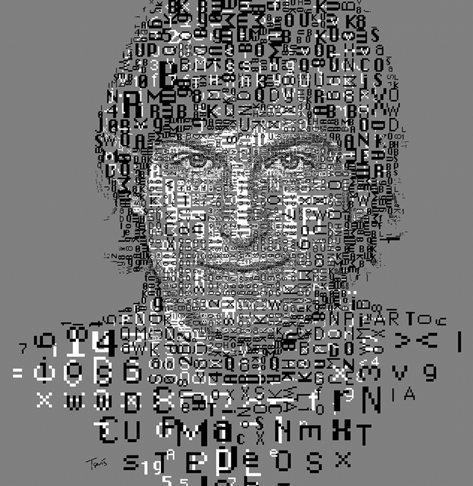
After dropping out of Reed College, Steve Jobs attended a calligraphy class simply because he was fascinated by the lettering on signs. A decade later, that impulsive detour paid off because he used his knowledge of spacing and serif styles to give the Macintosh the world’s first beautiful digital typography, transforming modern computing forever.
People like to draw straight lines between what they want, their objective and the way they get there. And why not, it’s efficient and logical. But sometimes the fastest route is not always the best one.
Students often assume that the main reason for answering a question is to test their understanding and prove they were paying attention. And while there is merit in this, the real purpose is a little more nuanced. What we can say with some certainly is that teachers don’t set questions because they are looking for the answer themselves, the goal is in some way to provoke a cognitive change in the student.
TL;DR – the short audio version
Questions are set because the process involved in producing an answer, researching, structuring, arguing, thinking and deciding what to write is where learning actually happens. In fact, the answer is little more than a by-product. The problem is that somewhere along the way we have taught students to see the answer as the objective or destination. Complete the task, hand it in, get a good mark and move on. Once you see learning like this, the sensible thing to do is to find the fastest route to the answer.
Nobody does a jigsaw for the picture
A good performance is not an indication of good learning
To put this another way, a high score on a test does not prove learning has taken place. In their 2015 paper, Soderstrom and Bjork (Learning Versus Performance: An Integrative Review) pointed out that what we can observe while someone is learning, their performance, is an unreliable guide to whether anything has been learned. Some conditions boost performance in the moment but leave little behind, while others make things feel harder and slower yet produce far better long-term learning.
This distinction has clear implications for test performance. A student who crams the night before an exam, rereads their notes repeatedly, or memorises a model answer may score well the next day. Yet these strategies mostly improve short-term performance rather than long term learning. Similarly, exam techniques, such as spotting question patterns or eliminating unlikely options, can raise a score without deepening understanding of the subject.
Hypocrite I hear you cry – Given much of what I have written before about how to pass exams this may sound “slightly” hypercritical, but in my defence…… Professional exams are incredibly demanding, they require the individual to perform at a very high level often in a three-hour artificial environment. Under these conditions even the best students, those who have an excellent understanding of their subject can fail to perform. The exam techniques are a tool they can use to redress the balance.
This does not mean these techniques are effective in terms of long terms memory and learning. I would argue they are necessary to win the game that students have been forced to play.
“Exam skills help good students avoid failure” SPS
Questions and answers in an AI world
Let’s return to why we set tests in the first place, and as already stated, it isn’t because we need more answers. The value lies in the process of getting there, the recall, the struggle, the mistakes and corrections. If students skip that process and avoid the effort it demands, very little is actually learned.
This brings us, as ever, to AI. If the answer is the destination, then a tool that produces a perfectly good essay in seconds is the ultimate shortcut, and from the student’s point of view, it works. Generative AI has turbocharged an issue that already existed, mistaking a good answers for genuine understanding. Students can hand in very high scoring script while learning next to nothing, and unfortunately, they may not even realise it. This is exactly what Richard Feynman was warning about where students fool themselves.
“The first principle is that you must not fool yourself, and you are the easiest person to fool.” Richard P. Feynman
This problem is only going to get worse, according a recent report 87% of 11 to 24-year-olds have already used AI tools, nearly two-thirds for homework.
What can we do?
Firstly, educate students as to how learning works. They need to understand the science, that effort, difficulty and retrieval help develop knowledge, and that leaning on AI shortcuts undermines their own skill development. Students who understand why the struggle matters are far more likely to choose it.
Secondly, build in controls and a change in assessment. When success is measured by an exam result which will open doors to new careers and higher salaries, even when you know something is bad for you, often the temptation can be just too great. Meaning that some students will still reach for the shortcut, however well informed they are. In these cases, we need controls that make shortcutting impossible during the essential learning phases, such as supervised, in-class work or tasks designed so that the thinking has to happen in the room. The aim isn’t to ban AI, but to protect the moments when effort itself is the essentIal.
“When a measure becomes a target, it ceases to be a good measure” Marilyn Strathern, (Goodhart’s law)
Conclusion
Steve Jobs didn’t take that calligraphy class because he thought it would help him build the Macintosh, nor to enhance his career in some way by attending. Yet the process left something behind that paid off ten years later. That something was learning.
Performance was always an imperfect guide to learning, and now AI can help produce answers where there has been no learning at all. A polished essay or a high mark no longer tells us that thinking has taken place. Exam techniques do not lead to long term learning and it’s easy to see a contradiction between what I am writing here and the many posts I have made over the years in support of these skills. But I believe that tension is superficial. So long as assessment remains an artificial game, we should give students the right tools to do well even if that means in some cases little is learned.
What’s more important is that we protect the moments where effort is required. That means teaching students why the struggle matters and designing tasks where the thinking has to happen” in the room”. The aim isn’t to ban shortcuts, but to ensure students engage in the intellectual work that actually builds understanding.
Because in the end, AI might be able to give us all the answers but it should never be allowed to do our thinking for us.