
The 5 best exam techniques ever……

Father Christmas is so happy because he’s remembered all the names of his reindeer by using the acronym, Reindeer Dance Brightly Visiting Delighted People Cheerfully Carrying Candy. The elves on the other hand just thought they knew the answer!

Although you might think I am using this ‘clickbait grabbing’ headline purely to attract new readers to my blog, which, admittedly, would be nice, you are only partly right.

I thought it would be an interesting and challenging exercise to see if I could pick the “best exam techniques ever.” This is because one of the most valuable skills in teaching and learning is reduction – taking complexity and making it simple.

Clarity is the counterbalance of profound thoughts. Luc de Clapiers (French writer)

From a social media perspective there is of course no downside to a clickbait headline, you might for example find the post helpful, too simple, disagreeable or disappointing. Regardless of what you think, its already too late you have been hooked, which is the whole point. 

Although I can’t promise my list won’t disappoint, it is based on over 30 years of experience in the high-stakes exam world. Additionally, I will provide context and most importantly a justification for each choice.

Sometimes the simplest things are the most profound. Carolina Herrera (Fashion designer)

Context – The exam success formula
To add context and inevitably some complexity we should consider what you need to do to be successful in an exam. The diagram below is an outline of the key components, firstly you need knowledge, you can’t pass an exam without it. Secondly you must be proficient in certain skills, think here about time management, reading the question properly, and memory techniques. And lastly, your attitude matters. This is your mental state or disposition and it will influence how you think, feel, and behave. In terms of the exam this includes, having a positive attitude, being confident, resilient, and managing those exam nerves.

Why you need exam techniques

You can’t pass an exam without knowledge, but you can fail one even though you are knowledgeable.” Stuart Pedley-Smith

This quote encapsulates why exam techniques are so important. Knowledge alone isn’t enough – you need to apply that knowledge under exam conditions which requires other skills. Many good students fail because they don’t use exam techniques, largely because they think knowing the subject is sufficient. An exam room is an artificial environment and you need to be aware of the challenges it will bring.

The best exam techniques……ever
Now for the tricky part – narrowing down all the methods for exam preparation to just five.

1. Question practice: As regular readers of my blog will already know; question practice is essential. But as you get closer to the exam the emphasis shifts from helping you learn to being well prepared for the exam itself.  Question practice supports most of the techniques in the list below, which is why it’s number one. Practicing past papers is even more powerful because it – reinforces understanding, provides feedback, helps develop resilience, enhances time management, identifies knowledge gaps, improves exam writing skills, and clarifies the standard required to succeed. And breath!

2. Preparation – Revision: About two to three weeks before the exam is the best time to start revising. You cannot go into a high stake’s exam without preparation. Revision is the period where you reinforce past knowledge and, in many instances, actually understand some topics for the first time. Although cramming the night before does work to a certain extent, your chances of success are far higher if your revision is well planned and spaced out over time.

3. Recall – Memory techniques: “You can’t know something if you don’t remember it”. Understanding a topic will help with recall, however it’s not enough because you won’t understand everything and the volume of information you are required to learn is often huge.  This is why you need to use memory techniques such as acronyms, acrostics, rhythm and rhyme and mind mapping.

4. Develop a positive mental attitude: There is a lot to unpack in this one. It’s in the top 5 because if stress or test anxiety levels are too high or you lose confidence in your abilities, at best you could freeze in the exam and lose valuable time, at worst you might simply give up. A positive attitude is not believing everything will be fine, that will almost guarantee failure. It’s about developing a series of mental strategies that will help. These include challenging negative thoughts, setting realistic goals, and appreciating that learning from mistakes is a good thing.

5. Effective time management: There were many other techniques that could have occupied the number 5 slot, but I chose time management because, if you don’t manage your time in the exam you will fail. Having sufficient knowledge to pass means very little if you spend too much time on question one, and as a consequence answer the other questions poorly due to the time pressure. Allocating the right amount of time to each question is easy in theory, but doing it in the exam requires practice.

Complexity to simplicity
To be fair I quite enjoyed looking back and thinking about the exam tips and hints that I and others have given over the years. However as I expected it wasn’t easy, there were lots of other very worthy techniques that didn’t make the cut, but overall, I’m happy with the top five. Are they the best exam techniques ever…….well if you got this far in terms of my click rate, it doesn’t matter.

Revising Revision – and exam proximity

Several years ago, I was asked a very interesting question, why do students’ revise just before the exam. At the time I thought it odd that anyone would even ask, but I realised I hadn’t thought much about it, partly because that’s the way it had always been.

The alternative approach was, rather than having one big revision session at the end of the course, we should have two or three shorter ones at appropriate points during the course. This would avoid the need to revise so much all at once and as a consequence reduce the effort required. It was a good question…….

What is revision?
Lets start with a definition, the word revision can be traced back to the Latin “reviser” which means to look at again, visit again, look back on.

In learning it can be thought of as the process of reviewing and re-examining previously learned material to reinforce understanding, improve retention, identify gaps in knowledge and be well prepared for the test, exam or assessment.

To better understand what revision is, let’s take a closer look at some of those objectives.

  • Reinforcing understanding – people tend to think of understating in binary terms, that is you either understand or you don’t. But understanding has several different levels, starting with the most basic, can you explain something? For example, I can explain to some degree, how a combustion engine works but could I apply that knowledge to how it might work in F1, I don’t t think so. Being able to apply your knowledge in different ways is a higher level of understanding. At the opposite end of the spectrum to being able to explain something is what is called self-knowledge. This is the highest level of understanding and is where you are so good, you can challenge your own thinking by asking, what are the limits of my understanding, identify prejudices and ultimately become aware of what you don’t really understand, which is kind of ironical when you think about it! The point being that when you look back and reflect on what you have already studied there may be an element of reinforcing or reconfirming your understanding of a particular topic but you will also be deepening your understanding, effectively moving it to another level.  

“I know only one thing: that I know nothing”. Socrates

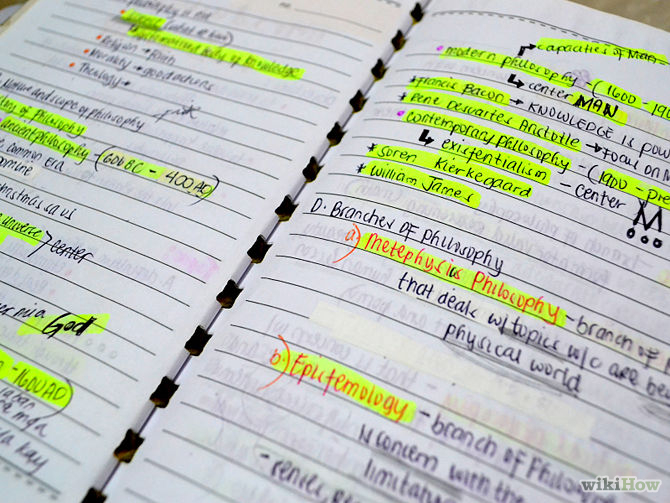
  • Improving retention – we have to be careful with this one, although the act of looking back improves retention, the secret lies in how you do it. For example, re-reading notes, even with the use of a highlighter may feel that its helping but this is a well-researched area and the evidence tells us in terms of retention, it doesn’t really work. This is in contrast to retrieval practice, a study method that I have written about in several previous blogs. Here the learner is forced to engage with the material in an active way rather than a passive one, most often by asking them to complete a test or answer a question, in fact it’s often referred to as the testing effect. The very process of making the learner think about what they know, strengthens the connection with the material they are trying to learn, and moves it from short term memory into long term memory, which is how learning happens.
  • Identify knowledge gaps – this is perhaps the most obvious one, looking back on a subject will reveal areas that you might not even remember studying at all. The implication is that there will be a certain amount of learning taking place for the first time. Of course, gaps in knowledge should be kept to a minimum by ensuring that the subject coverage is as comprehensive as possible, or at the very least focused on the most important areas. However, do not expect to have a complete grasp of everything, this is especially true as you move up that academic ladder, even experts have gaps in their knowledge.
  • Preparation for the test – this is not really about learning, its preparation for the challenge ahead, effectively making sure you are match fit.  One of the best things you can do in the revision period is practice past questions, including the completion of a mock exam. Not only will you be benefiting from retrieval practice, you will also be developing what researchers in 2016 called “question literacy”, the ability to know what the examiner is asking because you have seen similar questions before. Attempting a mock under exam conditions can also help you better manage time and be prepared for the way you feel under pressure. It’s no good having worked hard to understand the subject matter if you can’t answer the questions in the time available. Equally you need to practice leaving questions you want to answer in favour of those that you don’t, remember its always easier to get the marks at the start of a question than at the end.   And finally, when the exam is just around the corner, although you may feel more anxious your levels of motivation, concentration and work ethic will almost certainly rise.  

Preparing for the test doesn’t help you pass; it stops you failing. SPS

Why revision should be just before the exam
Whilst it’s possible to improve retention and identify knowledge gaps during your studies, you can’t effectively prepare for the exam until its close enough that the reality of how little time you have left is clear. Why do people suddenly become motivated, well its partly because the challenge is no longer distant, it’s no longer at some point in the future, its next week. It’s a variation on something called myopic discounting. For example, it’s very difficult to motivate yourself to work over a weekend in September if you know the exam is in June the following year. Also, the way you are learning changes when the exam is very close, you are no longer sitting in lectures or reading books but practicing past questions, improving your question literacy whilst building up your levels of resilience and learning new exam skills such as time management.

And one final thought, although some of what is memorised, rather than understood in the revision period may be forgotten, it can still help you pass on the day. Poor learning perhaps but good exam technique.

Top Gun: Maverick or a Study With Me Video?

I like to think I’m reasonably up to date with what’s happening, especially when it comes to studying and learning but I have to confess I have only recently come across what are called “study with me videos”, which have actually been around for more than 5 years. Study with me videos are exactly what they say they are, a type of video in which people prepare for an exam on camera, while others watch and study at the same time, it’s literally a video of someone studying, either live streamed or recorded.

Before we go any further its worth taking a look at some of these videos.

Firstly, Thomas Frank who describes himself as a video creator and writer with a focus on productivity, learning, and personal development. Thomas has a huge following on YouTube with nearly three million subscribers, although he offers far more than just study with me videos, here is one of his, a  25-Minute Pomodoro Session.

Secondly a Korean YouTuber who broadcasts under the name of “the man sitting next to me”. In Korean they call making these video gongbang, which translates to “study broadcast”. Normally the man sitting next to me live streams but here is a recording with a background rain sound effect thrown in for good measure.

And thirdly Jamie Lee, who lives in New York and has a YouTube channel called “The Strive to Fit.” She started her channel when she was in medical school but even though she has now qualified as a doctor she continues to broadcast. Unlike The Man Sitting Next to Me, Jamie’s “study with me” video are pre-recorded. Two clips from Jamie, the first a typical study session, with background music, its already had 1.3 million views, and secondly a get to know me video where Jamie answers questions.

What purpose do they serve?

As you can see from these videos each person has their own individual style with some streaming live whilst others are pre-recorded and slightly more professional with music, the sound of rain or pen on paper etc. As a slight aside if you just want the background noise and a relaxing scene, here are a few more videos, an ancient library with a roaring fire, a cosy library with jazz playing in the background and heavy rain that will apparently help you throw away that stress.

But what’s the point of these videos, why do people find them helpful?

  • Motivational and help with feelings of isolation – the YouTubers who make these videos are all students, they are therefore by definition the same as the people watching, and if they can sit down for two and a half hours and study, I guess you can do the same. Rather than getting in with a “bad crowd” you’re in with the good guys, they are hardworking, studious, and ambitious, their behaviour and attitude can and does rub off. This is consistent with Albert Banduras social learning theory, where he discovered that when people observe others they begin to model and imitate their behaviours. In addition, these are communities, comments are made underneath the videos by the many students that watch them, reminding you that you are not alone, and that others are feeling the same pressures. These YouTubers often connect on a personal level, by explaining why they work so hard and sharing details of their personal lives, successes and failures. To all intents and purpose, they are your study buddy.
  • Excellent for time management – the Pomodoro technique, which was mentioned above is where you break your studying down into short 25-minute sessions, these videos work very much in the same way by helping manage your time.  In fact, as you saw in the Thomas Frank video, he actually studies for exactly 25 minutes. There is also some evidence to show that studying like this in short bursts helps with memory and improved attention.
  • An inspiring learning environment – environment plays an important when it comes to learning, having a physical location where you study can get you into the right mood as soon as you enter it. It’s one of the reasons people go to a library, you know that before you walk through those doors what you are there for and need to do. As a result, when you sit down at your desk open up your laptop and put on your study with me video, it’s time to start work.
  • Good study practice – in addition to producing the study with me videos many YouTubers will offer up study tips such as how to use mind maps, memory skills, effective note taking etc.   
  • But the research shows that silence is the best – it may be that the sound of rain or the scribbles of a pen on paper help you feel less isolated, almost all of the research in this area has shown that problem solving and memory recall tasks are performed better in silence. As a result, there may be a time when you would be best just turning the sound down.
  • They help the YouTuber as well – most of those making these videos acknowledge that because they feel a responsibility to their fellow students it motivates them to study as well.

One final observation about these videos they are not collaborative in the sense that students work together in order to solve a problem, that’s just not what they are trying to achieve.  

But which one is best, Top Gun or study with me videos?

In the interests of balance, here is the trailer for Top Gun: Maverick for you to decide for yourself.  

COVID Time – spend (£) it wisely

If you asked a group of students what was one of their biggest problems, many would say – lack of time.  

Now it’s unfair to highlight this as something unique to students, we all suffer from a lack of time. A look across the virtual bookshelves for titles that make reference to Time Management will give you some idea as to how many people are looking for solutions to this problem.

Life in the UK and across the world has changed as a result of Covid 19, one of those changes has been a disruption to normality. No longer does your alarm go off at 7.00 am, which is essential if you are to have a shower, grab some breakfast and be at your desk for 9.00 am. No longer do you have to leave the office at 5.05pm to be on the train for 5.30 pm, which will give you a fighting chance of being home for 7.00 pm. If your studying on the evening this strict time management regime will permit an evening meal and provide two hours of effective study before you go to bed.

Of course, your day may not be anything like this, in fact it’s possible you are busier than ever, but for many Covid has reset normality, effectively putting a line through what you were doing and replacing it with……time. The secret of course is not to waste it, reflect on what you were doing and think carefully before you fill the space with other activities, spend this time wisely on what is most important to you!

The key is in not spending time, but in investing it.”   Stephen R. Covey

Thinking about time – it doesn’t really fly
Time is in itself an interesting concept, the Greeks had two words for it, Chronos which refers to the more traditional understanding as with a clock or calendar, it is measurable and predictable. Kairos on the other hand considers the human perspective, how we experience time, the quality of time, finding the “right time” to start studying perhaps. This perception of time is explained neurologically by the way the brain changes, impacted by neurotransmitters and chemical stimulants. When neurons are fired more quickly time will go faster, fire them slowly and time will drag. See also Circadian rhythms. This might help explain why there is never enough time for interesting subjects but too much for boring ones.

Impact on studying
Several studies indicate that students who manage their time not only perform better in the exam but experience less stress. There is also evidence that students are not good at managing their schedules, finding it difficult to strike the right balance between studying and the other demands on their time. This lack of balance often leads to disrupted sleep patterns and higher levels of stress. It may well be that “pulling an all-nighter” a common solution to running out of time is in effect a coping strategy to compensate for the lack of good time management skills. Interestingly, students are well aware of the problem, Ling, Heffernan, and Muncer (2003) found that time management was often stated as being a factor in poor exam performance.

One caveat, it’s possible that the research only shows a correlation not a causation, “good students” who would do well in the exam anyway just happen to plan, prioritise and stick to deadlines. These skills are not contributing to those higher grades, they are simply incidental behaviours. That said if “good students” manage time well and in the absence of anything to the contrary, maybe it’s worth doing anyway?

The common man is not concerned about the passage of time, the man of talent is driven by it.”  Arthur Shoppenhauer, German philosopher

Making the most of your C time
But what can you do to improve your ability to get things done in this newly discovered Covid time? There are many tips and techniques that can help, below are a few of the best ones.

Planning backwards – this is probably one of the most effective. Start by asking the question, when do I want to pass the exam, if its June 2021, put that date in your calendar or planner. Then ask another question, how much do I need to learn before then? To give some idea as to how you might answer this, break down what you have to learn into chunks, looking at how many chapters there are in the book is one way of doing this. Then ask, if there are 10 chapters when do I have to start, assuming for example each one will take a month. Hopefully you get the idea, at each stage you ask a question breaking the larger activity into a series of smaller ones. This not only makes each task more manageable it provides a month by month plan that will lead all the way to the exam.

Using technology – often technology is seen as a problem, a distraction, when it comes to getting things done. But there are some very useful apps available these days to help better manage time.

  • Google calendar – other calendars are of course available but Google provides one of the most effective planning tools on the market. Not only is it free but it performs equally well across all devices from phone to desktop. This is the place to put those key dates and deadlines that came from the planning process.
  • Trello –  is effectively a project management tool or as some have described it “Post-it notes on steroids.” It can help capture ideas and organise thoughts with the added advantage they can easily be shared with others who can also contribute in real time.
  • Remember the milk – is extremely helpful for making lists and as with Trello can also be shared. It includes the ability to set reminders and integrates with Gmail, Google Calendar and Evernote.
  • StayFocused – is a blocking app, available on the chrome browser that temporarily blocks the internet except for the websites you give an exception.

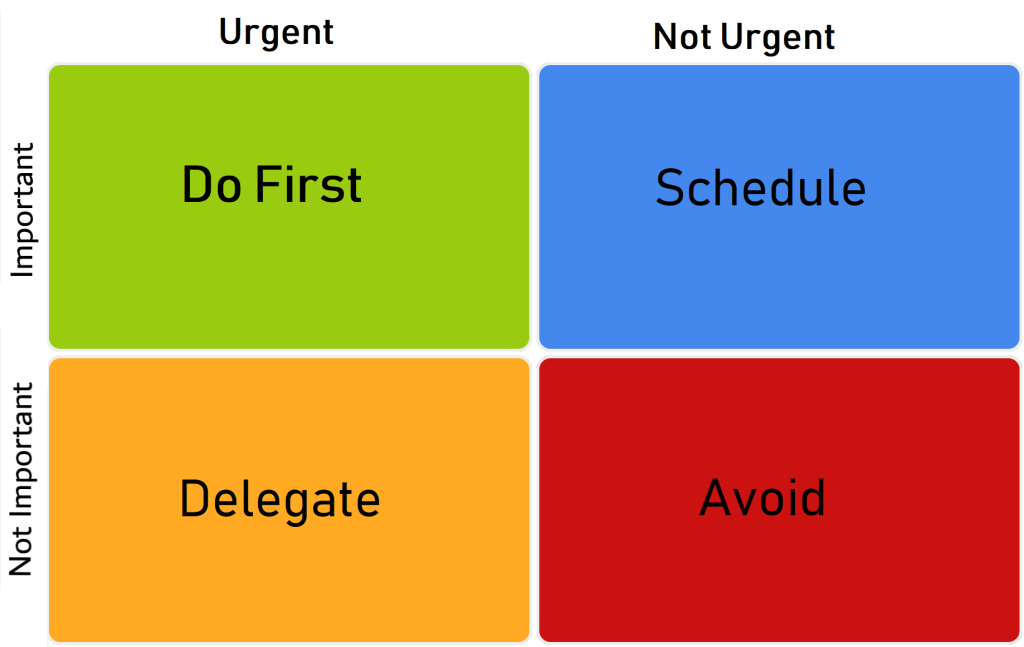
Prioritisation – Choosing what you should spend time on is called prioritisation. One technique that many people have found useful is the Eisenhower decision matrix. So, called because Dwight D. Eisenhower is said to have used it to help him make better decisions by organising and prioritising his workload.

A simple 2 by 2 matrix that has the level of urgency on one side set against the level of importance on the other.

It’s relatively self-explanatory but one of the most important messages is the need to make time for tasks that are important but not urgent. If something is important and urgent you have to do it now but there is danger with some activities that they are never urgent, the result, they are constantly put off. For example, starting to study, this is incredibly important especially if you want to pass the exam in June 2021, but because it’s not urgent you can always start tomorrow.

I will leave you with one final quote about time from Bill Keane the American cartoonist which I have always found insightful.

“Yesterday is history, tomorrow is a mystery, today is a gift, which is why we call it the present.”

Enjoy your gift…..

Time management skills have been shown to have a positive impact on student learning and student outcomes (Kearns & Gardiner, 2007; Kelly, 2002; McKenzie & Gow, 2004)
Many students find it hard to regulate both their studies and their external lives (Van der Meer, Jansen, & Torenbeek, 2010)

Cramming works, but only until tomorrow

Cramming

I have written about cramming before or to be precise it was in the title of a previous blog but the main focus was on the benefits of attempting exam questions. As a result, I feel I should say far more about what many students reluctantly admit is their most commonly used study method.

Cramming is the process of leaving everything until the last minute and then studying intensely in a relatively short period of time. Students know they shouldn’t do it and yet the “cramming badge of honour” is often worn with pride. It is accompanied by the boast, “anyway I work better under pressure”.

Better under pressure

Yerkes and Dodson (Yerkes-Dodson Law) famously put rats in a maze and administered electric shocks as they attempted to choose between a black and white door. They noticed that mild shocks improved the rats’ performance until a certain point, after which it greatly decreased. A chart of the shock strength versus performance takes the shape of an inverted U. And although there has been some criticism as to the exact findings, the concept that people perform better under pressure is true but only to a point, and of course judging when that point is reached is personal and arguably impossible.

The conclusion therefore has to be that creating a stressful situation by leaving everything until the last minute is not a particularly sensible strategy. An exam environment brings its own high level of stress without you having to manufacture your own.

Back to cramming

In June and July, I identified 6 scientifically proven learning strategies, and it is here that we can find the answer to the question, does cramming work?

Spaced practice is the process of studying over time compared with studying the same content but intensely at the end, normally prior to a test. The results as to which one is best is conclusive, spacing your learning is far better because you will not only improve what is called retrieval strength but also storage strength. The implications being that you will you be able to recall what you have learned quickly and the information will be stored waiting for when you might need it in the future.

However, studying at the end, effectively cramming also works, it has to, students have been using this method of revising since the very first exam. But, and there is a but, it only helps with retrieval strength, that is you will only be able to retrieve the information for a short period of time, perhaps as little as a day. Should you want to recall what you learned at some point in the future it won’t be there. The reason, a short burst constantly topped up will keep the information in short term memory but due to the lack of time the brain is unable to consolidate what you have learned, effectively taking it into long term memory. There is some evidence to support the view that this consolidation takes place when you are a sleep, something else that students who cram often don’t get, but that is a sufficiently large enough topic it would need a future blog.

Conclusions

Cramming does work for short term chunks of information for example formulas, key words that remind you of knowledge stored in long term memory, formats, illustrations etc. Simple memory techniques such as acronyms and acrostics are great and should be used, they are part of the tool kit of a professional student. But they are in addition to a more structured and spaced out way of learning, not an alternative.

Here are a few more resources.

This past blog gives specific advice – Twas the night before ………..the exam – but what to do?

Video (5m) – How to: Cram the night before a test and PASS – This is worth watching 472, 000 others have.

Video (2.5m) – How to Cram for a Test.


The science of Learning – Top six proven study techniques (Part two )

Welcome to part two, exploring the facts and what really works in learning.

Elaboration

Eliot Hirshman defined elaboration as “a conscious, intentional process that associates to-be-remembered information with other information in memory. In other words adding something new to what you already know e.g. elaborating. There are a number of variations as to how this concept might be used but one is called elaborative interrogation, and involves students questioning the materials they are studying. This might be students asking “how and why” questions in groups and answering them either from their course materials or ideally memory. This technique can also be used by a student studying alone, outside of the classroom, a kind of loud self enquiry.

Although the science on exactly how effective some of these ideas are is not conclusive, I would argue that many teachers I have met learn a great deal by saying something out loud to a class, in some instances many times, and then asking themselves challenging questions, e.g. “if it works in this situation why won’t it work now”? The truth is it is often the student who asks the challenging question!

Concrete examples

Concrete examples make something easier to understand and remember, largely because the brain can both recognise and recall concrete words more readily than abstract ones. In addition it has been demonstrated that information that is more concrete and imageable enhances the learning of associations, even with abstract content.

What you have just read to a certain extent is a group of abstract words, easier for example, easier than what? But if we added that it was easier than eating an apple? Although the experience of eating an apple may vary, everyone knows what an apple looks, smells and tastes like.

A concrete term refers to objects or events we can see or hear or feel or taste or smell.

By using concrete examples it makes it much easier to concisely convey information, that can be remembered and visualised. It is a good example of Dual coding.

Dual coding

Few people would disagree with the idea that pictures are more memorable than words, this is referred to as the picture superiority effect. Dual coding supports this by suggesting that text when accompanied by complementary visual information enhances learning. It is important to be clear, dual coding is the use of both text and visuals, replacing a word with a picture is not the same.

In addition there is some evidence to suggest that by adding a movement such as drawing something rather than showing the static image can enhance the process even more.

One final point that I have written about many times before, duel coding should not be confused with learning styles. This is not suggesting that some people will “get” dual coding” because it fits with their learning styles, it works for everyone.

Well that’s it six of the top learning techniques that you can use with confidence and are proven to work.

See you next month, I am just off to enjoy a concrete experience, Clam Chowder on Pier 39.

The science of Learning – Top six proven study techniques (Part one)

Brain in jar

One of the most difficult questions to answer is – “How do you know”? This is because it challenges both the logic behind your thinking and the quality of information on which you based your statement or opinion. Is it possible you have taken reliable information and put it together in the wrong way or is the evidence supporting your argument questionable?

Saying something with confidence will lead people to believe that what you are saying is true but without real evidence it is still only an opinion.

The so called scientific method which introduced us to the idea of gathering evidence cannot be attributed to one individual, the high-profile contributors include Aristotle, Ibn al-Haytham, Descartes and Newton. It was clearly an organic process that Newton eloquently described as standing upon the shoulder of giants.

Regardless of the originator, the scientific method has changed the way we think and shaped much of the modern world, from discoveries in medicine, putting a man on the moon and the creation of the internet. But……Not Learning.

Learning science

Although still a relatively new field there are a group of individuals who include cognitive and computer scientists, linguists and educational phycologists who collectively call themselves Learning Scientists. By gathering evidence in the form of data about how students learn they have been able to draw conclusions that are “evidence based”. What can be proven and what cannot. For both students and teachers their findings should be essential reading.

One important point, this does not in any way detract from what a good teacher does, no more than offering advice to doctors on the evidence supporting the success of a new drug.

The top 6 evidence-based study techniques

1. Spaced practice (distributed)

Spaced practice is the exact opposite of cramming, you are effectively taking the same amount of time to study, just doing it over a longer period of time. The evidence shows that if you revisit what you have studied over time it boosts what is called your retrieval and storage strength but if you study in a short period of time, your retrieval strength improves but your storage strength reduces. One implication is that cramming can work but only if you want to retain information for a short period of time, to pass an exam for example. As such it is understandable why students do this, because they have proved in the past it was successful.  If, however you need that information for the next level of study, you may need to learn it all over again!

“The effect is simple: the same amount of repeated studying of the same information spaced out over time will lead to greater retention of that information in the long run, compared with repeated studying of the same information for the same amount of time in one study session.”

Watch this video, it’s an excellent summary.

2. Interleaving

Interleaving is simply studying different subjects or topics as opposed to studying one topic very thoroughly before moving to the next, this latter process is called blocking. However as with spaced practice students might find it harder (see desirable difficulty) because interleaving involves retrieval practice and is more difficult than blocked practice, but the knowledge is retained for far longer. One proven technique is for students to alternate between attempting a problem and viewing a worked example. This is much better than attempting to answer one question after another. Its simply about switching activity.

But be careful, interleaving is best done within a subject, don’t move from Chemistry to Art for example. Unfortunately we don’t have any evidence as to what the optimum time period should be, so that might have to come down to trial and error. If however its too short a time there is a danger you will effectively be multitasking, and as I have mentioned in a previous blog, that simply doesn’t work.

This video by brain hack is excellent

“Interleaving occurs when different ideas or problem types are tackled in a sequence, as opposed to the more common method of attempting multiple versions of the same problem in a given study session, known as blocking.”

3. Retrieval practice

This may come as no surprise to many students and certainly not to anyone who reads this blog, its true testing actually improves memory. The process of reflecting back and having to retrieve a memory of something previously learned is very powerful.  There is also an added benefit, if you are told there is going to be a test, the increased test expectancy leads to better-quality encoding of the new information.

One concern is that while there is little doubt that retrieval practice works, there is some research to show that pressure, perhaps the result of test anxiety during retrieval can undermine some of the learning benefit.

“However, we know from a century of research that retrieving knowledge actually strengthens it.”

Part two, next month

I hope this insight into evidence based learning has been useful, next month I will cover Elaboration, Concrete examples and Dual coding.

And if you would like to find out more here is a link to the article that quotes much of the research to support these techniques.

The tip of the iceberg – exam tipping is becoming obsolete

tip1

Assessment is changing, there was a time when all examinations were sat in a room, the answers would be hand written on a piece of paper and a retired English teacher would stand at the front reading out instructions as to what you could and couldn’t do in the next three hours.

Not any more…….you request a date that is convenient, turn up at the exam center, no longer is this a sports hall, it might be a driving school test center or the college you studied at. Then you log onto the PC and answer questions on the computer screen in front of you. The results may be immediate; it depends on if it is “human marked” or computer marked.

But in some ways these changes are only the tip of the iceberg!

What no past exam papers.

As examinations move into the digital world we are seeing other changes as well. There is a move towards objective testing, scaled scoring and examining bodies no longer providing past exam papers, what did you say, no past exam papers……!

This is partly down to the nature of the test i.e. you can’t provide an exact replica of a past exam question if it is an objective test. Remember objective test questions are randomly selected from a pool, and are different for each student. But there is also a shift towards some examining bodies only providing an example of the type of questions that could be set rather that a continuous flow of, the last exam papers.

If the test changes – how you study (and teach) has to change

Now for someone who has advocated that students analyse past exam questions in order to identify key areas so as to better direct their studies, this is a bit of a blow. It has also been the method I have used in the past to focus my own delivery in class and on line. Of course using past exam questions has always been much more than just spotting key areas, it is about focus, providing a place to start, showing content in the right context, helping with writing style etc.

There will still be past questions, sample questions will be provided. What we don’t know is how representative they will be of the examination. Or will it be as we have seen in the past with pilot and specimen papers, they change over time, drifting away from the original in terms of style and emphasis. Although I can see the logic in examining bodies not releasing papers, I hope they will continue to keep the sample papers fresh, in keeping with current thinking about the subject and how it will be examined.

What to do?

Students and tutors still need focus, there has to be emphases on key areas in order to chunk the content so that it can be more easily learned, it’s just that we won’t be able to use past questions or at least as much as we have in the past. That emphasis will now have to come from articles written by the examiners, examiner reports and syllabus weightings. If faced with a new subject where there is only one sample paper, it will be necessary to read the guidance from the body closely, noting reference to “this being a key part of the subject” or “one the examiner thought was answered badly in the past.” These together with the syllabus weightings and specific learning outcomes will have to be your guide. It is of course possible that the subject has not changed much from before and so some of the older past question can be used. As far as questions style is concerned then that will have to come from the questions and answers that are published, it may not be ideal but it’s the best we can do.

The overall impact of these changes is that students will have to know more, something that is hard to argue with. Students and tutors alike will have to devote far more time to the subject, which is fine if students have the time and can afford the extra costs involved in longer periods of study.

But it’s not all bad news, new technologies can help students make the most of dead time, studying on the train using their mobile phone for example. Also knowledge is more freely available than ever before as many top institutions provide a huge amount of free easy to access content online.

One final thought, examinations may change and they may not be fair but on the whole they are equal, everyone as before is in the same boat, and someone will always pass, wont they!

The future – Sitting the exam at home?

On line exams

An online student, all be it a mature one shows his ID to the online assessor

And maybe even the exam room will become obsolete. Proctur U is a US based company that also has a presence in the UK offering online invigilation. Watch this video to see how it works and judge for yourself


For example – how to get higher marks in written questions

MORE-EXAMPLES

It’s great to be knowledgeable, but to pass an exam knowing the answer is often not enough. Questions set by examiners seek to do far more than identify people who “know stuff,” they want the student to prove understanding and that they can use the knowledge, not simply reproduce it.

The knowing doing gap

There is sometimes a disconnect between what you know and what you can explain. Have you ever said to yourself, “I know what I want to say but can’t find the words” or “what more can I say, I feel like I am just repeating the same point”. This may be the result of a lack of understanding and simply requires more study (see Eureka I understand understanding) or it might be that you just need a better way to think about what you’re trying to do.

Analyse, Explain – clarify – Example e.g.e.g.e.g.

Imagine you’re faced with a question, it asks that you, provide a possible  explanation as to why we have seen a fall in stock market prices in recent weeks and what impact this might have on  economic growth in the UK . Often the first problem is knowing where to start, below are a few ideas that might help.

You will need a few headings to help give structure, these can often be found in the question, here for example we could use, Why stock markets might fall and Impact on the UK. Then under each heading think about analysing, explaining, clarifying and giving examples. These are not headings; they are to help expand on what you have been asked to do and give a perspective from which to think.

  1. First you analyse – If you analyse something you break it up into smaller parts so as to gain a better understanding. For example going back to the question, perhaps we should identify exactly by how much the stock market has fallen, over what period, what other events were happening at the same time, do we have any theories that could help or theoretical models we could apply etc. By examining what you have found, something new and obvious may become clear.
  1. Then you explain – an explanation is an attempt to make clear what you mean. One way of doing this is by making a series of statements. So for example, if you noticed that during the period in which we had the fall in the stock market, China’s economy also slowed and oil prices fell to unprecedented levels. This might lead you to make the statement – one of the reasons for the fall in stock market prices would appear to be the slowdown in the Chinese economy and the fall in demand for oil.

A subset of explanation is clarification. Definitions are a great way to clarify exactly what something means and in what context it is being used. Here for example we might want to include a definition of economic growth.

  1. And finally the example itself, possibly one of the very best ways of explaining and a very powerful technique to demonstrate understanding.

Example “Metaphor’s forgotten sibling”. John Lyons

It may be a reference to a real world example. In the question we have to address the impact on the growth in the UK economy. If you gave an example of the last time oil prices were so low and what happened as a result you will not only be demonstrating breadth of knowledge but also moving the debate forward, suggesting perhaps that the same will happen again?

Real world examples demonstrate the complexity and unpredictability of real issues, and as such, can stimulate critical thinking.

Students learn by connecting new knowledge with their own prior knowledge and real-world experiences. Piaget et al

An example may also be a construct, something that you talk through to illustrate a point. For example, let us imagine the impact of falling oil prices on an engineering company in the West Midlands. A reduction in oil prices would result in lower transportation costs that could be passed onto customers in the form of lower prices, in turn this should increase demand.

“Examples are indispensable to the acquisition of knowledge and they appertain to the domain of intuition”. Kant

Although this blog has covered an approach to structuring written answers, it is the use of examples that for me is the most important. And if it was not obvious enough, look how many times I used examples to explain what I was trying to say …….

27 Million People per day can’t be wrong – Gamification

League of LegendsThe statistics are astonishing, as of January 2014, over 67 million people play League of Legends per month, 27 million per day, and over 7.5 million concurrently during peak hours. And if your good at it the prize money for winning the world championship might get you to question your chosen profession, it was $2.3m in 2014 and 2015. Playing an on-line game is part of daily life for many people.


This blog is “of course” not about League of Legends. In fact I have to admit I had never heard of it, just shows how far out of touch you can become with popular culture. It’s not even about the gaming industry which is said to be worth £3.9 bn to the UK economy, it’s about a growing and fascinating area of learning called gamification.

Gamification is the use of game mechanics (rules, design and tools) in a non game context to better engage and motivate learners to achieve a desired objective. There are two types, structured, where you are looking to propel a learner through content and reward them for the desired behaviours and content driven where the game is the content i.e. the learner is a character in the game and is required to undertake tasks that are in turn rewarded.

Gamification techniques – Game mechanics

Games are not of course all the same but they do have similar characteristics, these “techniques” can then be used in a non game context i.e. a learning context. The idea being that if they engage and motivate the gamer, they will do the same for the student.  Games need some form of measurement to assess performance and a reward to act as an incentive.  Below is a note of some of the measurements and rewards used in gaming but could be adapted for learning.

  • Points – Used to keep score
  • Badges – visual stamps that are awarded to users on certain achievements and are normally displayed in their header and profile page
  • Levels – shows ranking and progress
  • Leader boards – a high score that is displayed for all to see
  • Rewards – not a badge but something tangible e.g. money….

Personal gamification

You don’t need to spend millions developing a game to get the benefits from gamification, and its not all about beating others, here are a few tips.

  • Set up a points system – identify the activities that will help you achieve your goal e.g. spend 2 hours each evening studying, 10 points. Answer 2 questions each evening, 20 points. Attempt the mock exam, 40 points. Score 50%, 80 points etc. Keep a running total of your points in a place that you can see when you study
  • Levels – Only move onto the next chapter or session when you have the desired points
  • Leader board – Keep a note of your highest score from the other subjects
  • Rewards – The best part. Set up a series of rewards e.g. a night off, go for a run, have a glass of wine, bar of chocolate etc. Increase the rewards as gaining the points becomes more difficult. If you beat your leader board score, then your rewards can be even greater, maybe a day out shopping/at the football etc. Why not ask others to contribute to the reward, if I get to the top of my leader board how about you buy me dinner. You will be surprised how many people, friends and family will effectively sponsor you.Other brands are available....

And finally tell your friends what you have done, “just eating a massive bar of chocolate which was my reward for scoring 80 points on my study game.”

Of course you might get fat doing this, but don’t worry there is another game that can help – it’s called weight watchers…..

Technology can help

As ever technology can help, check out this app HabitRPG – Click 

Staying the course – commitment

Mo-Farah-EthiopiaYesterday Brendan Foster described Mo Farah as the greatest sportsman Britain has ever had. You may of course disagree, it’s probably one of those conversations best left to have in the pub, I am sure there are many worthy contenders. Farah responded modestly by saying that because we have so many great sportsman simply being put in the “great” category was amazing. He nominated his greats, David Beckham, Sir Alex Fergusson and Sir Steve Redgrave.

Watch Mo win the 5,000 meter gold at the world athletics championship 2015.

I have to confess to knowing little about sport or in fact having much interest, but what has always impressed and inspired me is the level of commitment successful sportsmen and women have. I have written in the past about Sir Steve Redgrave who won gold medals in five consecutive Olympics. How do you do that, how do you get up every morning and work towards a goal that is four years away, every day for 25 years?

Mandy Monday – procrastination

Start MondayMandy is a weight watcher character who promises to start her diet on Monday, in the interest of gender equality I am sure there is a male equivalent let’s call him Marty. Of course Monday never comes and so although Mandy sort of commits to Monday she constantly puts it off, choosing to do “other things” in preference. Initially this seems like you are delaying the pain in favour of the pleasure but I am not sure delaying something that is in your best interest is pleasurable? Pleasure implies satisfaction and I don’t think you feel satisfaction, probably more like relief.

Exams – you need to commit

It can be like this with studying and exams. Very few students want to sit an exam, its hard work, stressful and you might fail. So if you were given a choice when to sit the exam when would it be, Monday?

In fact delaying an exam can feel perfectly logical and rational. This is how the internal conversation might sound. “I have to sit this exam and it’s not going to be easy, to pass you need to know everything. There is no point sitting the exam if I am not 100% ready, an athlete wouldn’t enter a race if they weren’t 100% fit, it’s like that for me. The best thing to do is sit the exam in another month, another month is all I need, then I will be ready.

The million dollar question is do you ever feel ready?

On demand exams – Set the date and stick to it

If the exam was once every four years my guess would be that most students would not put the exam off, can you imagine waiting another four years? But when an exam is on demand and its left to the individual when you have to take the exam, you never have to commit. At the back of your mind you know that you can always delay. This means you never made the commitment in the first place.

But how to commit – Take a calendar and pick the date you want to finish all of your exams, when you want to qualify, write it down. Then list out all the exams you have to pass to get there, set dates for these and write them down as well. Put them on a wall chart, electronic calendar, even post them on Facebook, they cannot change. These dates are no longer in your control; you have passed that to someone else and in so doing have made the commitment to yourself. Go on do it now!

And finally an antidote to exams

Not anti school, but pro education – If you have not seen any of these spoken word videos – watch this one. Why I hate school but love education, you will not be disappointed.

Ps if you like the no add video check out quite tube.

Stress or Pressure – Don’t let the bridge collapse

Releasing PressureI have long been interested in the way knowledge from one domain can help inform another and have had two very good examples of this recently, both leading in the same direction.


The first came from an engineering friend of mine who started a conversation about the meaning of stress and pressure in his world. He described stress and pressure as essentially the same except being applied in different forms. Pressure is applied on the external surface of a body, while stress is the internal resistive force per unit area of that body, which resists its elongation or compression.

Alternatively – Stress is generated within the material whereas pressure is the applied force.

The second example came from a stress management seminar* I recently attended, not so abstract you might say but it wasDont let the bridge collapse the analogy the presenter used that was interesting. He asked that we thought of a bridge, the cars going over the bridge created pressure on the bridge and as a result the bridge would experience stress.

No matter how strong the bridge, there was a point that if too many cars were on at any one time it would collapse.

How does this help?

Analogies can be very helpful where it’s difficult to conceptualise or understand complex ideas. For example the bridge will show signs of stress before it collapses. This is no different for people; signs of stress will be present well before the stress levels are high enough to cause problems e.g. short temper, lack of sleep, headaches etc.  Also if we carry on with the analogy, there are two ways in which you can make sure the bridge doesn’t collapse. One, don’t have so many cars on the bridge and two, support the bridge so that it can take more cars. This translates into reducing the number of external pressures you are under (less cars) and having coping strategies to help when you are under pressure (some support).

Pressures when studying

A lot of pressures when studying are time related, for example taking on too many subjects or having to study as well as holding down a responsible job.  But some pressure might be created by the way you feel about yourself, not being capable or clever enough. Also people often put themselves under pressure – interesting term “putting yourself under pressure” by having very high expectations or maybe those expectations are put upon them by others.

The simple answer – take some of the cars off the bridge, reduce the number of subjects your studying, lower your expectations etc. This is not to say that having high expectations is not good, but if it is affecting your performance in a negative way, then you have to do something. And I know it may not be easy to do this in all circumstances; do you step down from that responsible job, how practical is that?  Yet if you do nothing, the bridge will collapse and that has to be avoided at all costs.

The alternative to taking cars off the bridge is to add in extra support.

Strategies to cope

Lazarus and Folkman in 1984 suggested that stress is the result of an “imbalance between demands and resources” or results when “pressure exceeds one’s perceived ability to cope”. They came up with two types of coping responses.

Emotion-focused – These techniques work very well when the stress is or at least appears to be outside the individual’s control.

  • Keep yourself busy to take your mind off the issue – just keep working through the course
  • Let off steam to other students/partners, anyone who will listen in fact
  • Pray for guidance and strength – and why not
  • Ignore the problem in the hope it will go away – not always ideal but the problem may sort itself
  • Distract yourself – go for a run
  • Build yourself up to expect the worse – “I will probably fail anyway”

Problem-focused – These techniques aim to remove or reduce the cause of the stress.  These are similar to taking cars off the bridge.

  • Take control – being out of control is often the cause of much stress. Revaluate what the problem is, and ask is it worth it!
  • Information seeking, perhaps the most rational action. Find out what is causing the problem and look to solve it e.g. why do you have such high expectations, does it help?
  • Make a list, evaluate the pros and cons and put in order of importance.

Studying can be stressful and this can result in feeling under pressure but this is not altogether a bad thing stress and pressure are key motivational forces, so don’t think of stress as the enemy but watch out for any cracks that might appear in the bridge.

Watch this TED – Kelly McGonigal: How to make stress your friend.

Related posts – Exam stress – or is it your stress and Exam stress Mindfulness and the “7/11”

* The course was delivered by the stress management societyclick here for their website.

Turn off the mobile – multi tasking doesn’t work

Information every whereThe background to Dr Daniel J Levitin latest book, “Thinking Straight” is that the information age is drowning us with an unprecedented deluge of data and we need to develop strategies to cope. Information overload and distraction are two problems we face when it comes to learning. How easy do you find it to concentrate when studying? Do you sit in a quiet room with no distractions and focus your attention on one task or is your mobile phone, PC or tablet sat close at hand waiting to deliver the worlds information in a second.

In the past books were precious due to their scarcity and knowledge hard to acquire the result of people’s inability to read. Following the invention of the printing press in 1450 books became more readily available but even then the amount of information any one individual was exposed to was very small. In addition the pace of life was slower, expectations as to what could be achieved balanced against the practicalities of what was humanly possible.

information_overloadBut look at the situation today, we live in an information rich society, all of it accessible at the press of a button. The problem now is not availability of knowledge (western world centric I know) but curation, synthesis and prioritisation. Yet how well is our brain programmed to cope with this new world?

Good job we can multi task

Levitin argues that multi tasking is inefficient, it’s a myth. The idea that one solution to this deluge of data is to do several things at the same time is simply wrong.  When you are doing two things at once, reading a book whilst monitoring your Twitter feed or face book account for example you are not in fact doing two things at once, you’re switching between neurones very quickly and this is giving the illusion of multi tasking. The downside of this process is it drains energy, neurones need glucose and the constant switching depletes it, resulting in poor concentration and an inability to learn as effectively. Multi tasking

I have written before (Attention Breach of duty as a student) on the importance of focusing your attention on one thing at a time and Levitin is supporting doing just that. However he does add something that I think is of interest. When you flit between two competing information sources the brain will reward you with a shot of dopamine, the pleasure drug. The result being you will enjoy the experience. This was valuable for Stone Age man because discovering a new food source at the same time as avoiding being eaten was helpful but in a modern world it is just problematic.

Externalise the information – organise, reduce and prioritise

What Levitin suggests is that you need to externalise, get the information out. In simple terms write it down, making lists is an example of externalising. He also states that you should write rather than type as this requires deeper processing.

So if you want to follow a more brain friendly approach to learning you should:

  • Break information down (A common message) into chunks and write out the key points. This will help you focus and process the information at a deeper level.
  • Find a place that is free from distraction, turn off all mobile devises. This is probably the most important message; your brain does not deal well with doing two things at once.
  • Make a list of what you have to do. Interestingly this is where technology can help. Google calendar can set up simple reminders so that you don’t have to keep distracting yourself by thinking about something you need to do later.

And if you’re interested click this link to read – Why the modern world is bad for your brain.

Ps Beth this ones for you!

Sleep is for wimps – oh and successful students

Get some sleepAlthough I am sure someone is preparing for an exam this very minute, July/August are the traditional months to take a holiday and get some well earned rest. A holiday can be exactly what you need especially if you have just come to the end of a long period of study followed by in some instances, weeks of exams.

I have to express a personal bias in so much that I believe holidays are essential if you are to be at your best. For me this years holiday has to provide some degree of relaxation after what has been a particularly busy 6 months. I am looking forward to a change of scene, meeting different people and the freedom to wake naturally, feeling rested after a good nights sleep. Holidays are of course very personal and for some an adventure holiday, travelling to new places every day, might be far more desirable.

But one thing that all holidays should provide is the ability to relax and catch up on sleep, even if that means you climb two mountains, swim for three hours before crashing out in a state of satisfied exhaustion on the evening.

Sleep is essential for learning 

Of course sleep is something you should do “properly” every day, it’s just that we don’t. Modern life steals that vital rest time, this is acutely the case when trying to balance both work and study. Studying is often undertaken on an evening and sometimes late into the night as you effectively try to do, too much in too little time.   We now sleep less than we did 50 years ago, it used to be around 8.5 hours, it’s now only 6.5. The sleep should also be of high quality, yet our sleep is interrupted by the lights of mobile phones, and sounds made when texts arrive late into the night. In order to sleep better it is a good idea to avoid light approximately 30 minutes before going to sleep, yet how many read in bed from iPads or equivalent with the bright light emitted from the screen telling your brain to stay awake.

Why sleep is important

We have known that sleep has been important for many years but we didn’t know why, cognitive scientists now have some of the answers. There are three views as to why sleep is beneficial:

One restoration – some of our genes only turn on when we sleep, their role being to make essential repairs.

Two conservation – we sleep to conserve energy, and

Three consolidation – our brain revisit events and experiences, and begins to make sense of them, moving data into long term memory and solving complex problems.

Susanne Diekelmann at the University of Tubingen in Germany says “sleep helps stabilise the memories and integrate them into a network of long-term memory, it also helps us to generalise what we’ve learnt, giving us the flexibility to apply the skills to new situations. So although you can’t soak up new material, you might instead be able to cement the facts or skills learned throughout the day.”  Bodies need rest – the brain needs sleep Sometimes you may find yourself having to push sleep to one side and in specific situations thats fine.

It’s when lack of sleep becomes the norm that problems arise, the result is greater stress, poor judgement and ineffective learning.   So now the exams are over, take a break, get some quality sleep and try and make a few simple adjustments in you life so that sleep takes more of a priority.

It is a common experience that a problem difficult at night is resolved in the morning after the committee of sleep has worked on it.

John Steinbeck  

Music to help you sleep and two video to watch but not just before you go to sleep

TED neuroscientist Russell foster  explains more about why we sleep  

Arianna Huffington talks about the importance of sleep

Twas the night before ………..the exam – but what to do?

keep-calm-and-study-all-night-5 Well not exactly all night

For students May and June are the main exam months. Studying and learning can be enjoyable…. honestly, but the fun has to come to an end and it does, with the exam. It cannot be avoided and so is best embraced, treat the exam as a game and you the player. What you need to do is give yourself the very best chance of winning.

Become a professional exam taker, someone who follows a process of preparation, very much like a top sportsperson. This means you personally need to be in the best physical and mental shape and have a series of exercises that will get you match fit.

Below is your training regime from the night before the exam – good luck

The night before

You should by now have:

  • Read through and reduce your class/tuition notes down to approximately 10 pages (20 max) of revision notes, see March Blog on how to prepare notes. You may have some professionally produced revision notes, but it is still best to make your own.
  • Practiced past questions on the key examinable areas both under exam and non exam conditions.
  • Started the process of memorising the revision notes.

Be realistic – The key to the night before the exam is to be realistic. You don’t have much time, so don’t think you can cover everything. Let’s assume you have 3/4 hours, 6.00pm – 10.00pm maybe.

Put to one side the large folder that contains all your notes taken throughout the term/year, and concentrate only on the 10-20 page revision notes.

Focus and memorise – In the 3/4 hours that you have you want to get an overview of the subject and focus on the areas that need memorising. These should be the key examinable areas and are most likely to be standard formats, definitions, lists, formulas s not given in the exam etc.  Memorising should include some rewriting of notes, but very little, focus on talking out loud, drawing pictures, writing out mnemonics etc. See my blogs on memory, in particular: Thanks for the memories  and To pass an exam do and exam.

Admin – make sure you have set to one side everything you will need the next day. This includes your exam entry documents, calculator, gum, mints etc. You don’t want to be thinking of these in the morning. And of course make sure you know exactly what time you need to leave to get to the exam with about 1 hour to spare.

Physical and mental preparation – Drink lots of water, avoid tea, coffee etc as you will need to get a good night’s sleep. Exercise is an incredibly effective method of reducing tension and stress. So you may want to build into your 4 hours, 30 minutes for a run or brisk walk. This could be at the half way point of your evening, combining a well earned break with the exercise maximises your time.

Getting sleep is important, so avoid reading your notes and then going straight to sleep. Pack you notes away, put them ready for the morning, then physically go into another room if possible or even outside, watch TV for 10 minutes, something trivial or read a book. You need to break the state of mind from that of studying, relaxation leads to sleep not stress.

And finally keep a positive attitude, think about what you know and are good at and not what you don’t know and are bad at. Keep telling yourself that you have done everything possible, and if you follow these steps you will have. Thinking you know nothing and should have done more will not help at this stage, it’s a pointless thought strategy and not what the professional exam taker does.

The morning before

Set your alarm sufficiently early to give you at least another hour of revision. You don’t need to get out of bed, just continue memorising your notes. This is now about little and often, short 10 minute intervals. Don’t worry about falling to sleep in the exam; the adrenalin won’t let you.

1 hour before

What you do after arriving at the exam centre/School etc  is personal. Some will prefer to sit on their own going over the revision notes; don’t bother taking your folder of course notes. This is still very much about short term memory. Others will prefer to talk, chatting about nothing, just to stop them worrying. Both are fine.

After the examExam post it!

Afterwards is also a little personal, most will go home, but some will want to talk through what was in the exam, looking perhaps for some conformation they have not made a complete mess of it. Most importantly, if you have another exam, go home, put your old revision notes to one side, forget everything and start on your next subject.

The American basket ball player Art Williams had a good saying that I will leave you with. I’m not telling you it is going to be easy — I’m telling you it’s going to be worth it”

And although personally I found exams difficult I have never regretted the hard work, it was for me worth it.

And something to watch

How to: Cram the night before a test and PASS

Or you could try this

This blog is for Beth – good luck xx

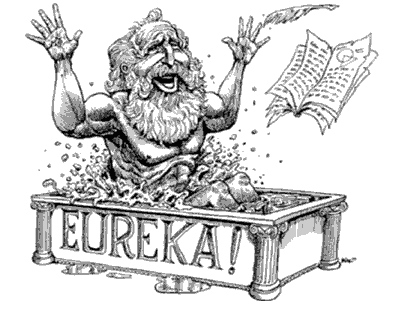
Eureka – I Understand Understanding!

I Understand!If you understand the subject you are studying your chances of passing the exam must be good.

A simple and perhaps obvious statement but what does understand mean and what do you have to do to truly understand something? Of course understanding is a key part of passing but it is not enough on its own, you can understand something yet fail because you run out of time, misinterpret the question, thought you understood but didn’t! etc.

To understand

The dictionary defines to understand as, to know what someone or something means, to grasp the meaning, to be familiar with, make sense of etc. Understanding is clearly different to knowing, for example, you may know that gravity is a force that pulls objects to earth but that does not mean you understand what gravity is or how it works. Of course you need both knowledge and understanding, the one is no good without the other. Examiners try to test for understanding by asking questions that require you to compare, contrast, explain, interpret etc.

Understanding is not a Eureka moment, it has different levels. It might seem that there is a point where you didn’t understand and then suddenly you did, a Eureka moment. In reality what you have done is move closer to gaining a better and fuller understanding. Ask any lecturer or teacher, often they will tell you they never fully understood something until they had to teach it, they just thought they did.

Proving you understand – The 6 facets of understanding

Understanding by design, Wiggins and McTighe (1998) is one part of an instructional design process that provides a very helpful framework we can use to explore the depth of understanding and perhaps more importantly what you can do to develop a deeper understanding. Think of it as a hierarchy with the easiest one first, the greater you’re understanding the higher the number.

1. Explain, the classic exam question – Explain to someone what the concept/idea means and say why. Explaining out loud to yourself or making a recording can be just as effective.

2. Interpretation – Relate the concept/idea to your own experiences, tell a meaningful story. Try to add something personal into your explanation. To do this you will need to reflect on past events, whilst attempting to find parallels with the concept/idea.

3. Application – Use the concept/idea in a different context. The ability to apply knowledge in different contexts (transfer) is a key milestone in learning as well as understanding. It should result in you never being caught out by a difficult exam question. Understand to this level and it doesn’t matter what the examiner asks.

4. Perspective – Read around the concept/idea, get other people’s views, and see the big picture. If your struggling with understanding, read another text book or my favourite is to go onto you tube and watch a video. The internet is great for discovering alternative views.

5. Empathy – Try to get inside another person’s feelings about the concept/idea. This is difficult as it requires you to put aside your feelings about the concept/idea and accept that it is not the only way of thinking about it.

6. Self Knowledge – Ask questions about your understanding, ask what are the limits of your understanding, what are your prejudices, become aware of what you don’t understand. Often called metacognition, the ability to think about thinking.

The Eureka moment

Understanding, like Eureka moments are not of course the result of sitting in a bath and suddenly finding you understand something you had previously found confusing. It is the gift of hard work and long hours of study, hopefully by trying some of the techniques above your depth of understanding will only improve.

Ps apparently the jeweller was trying to cheat the king….

Understanding by Design

Want to know more about understanding by design, watch this. 


An illogical great idea – Tips for making study notes

Illogical my dear WatsonLogic is a process driven by reasoning. Here is a logical argument: Everything I need to know is in this book, if I read this book I will know everything.

And yet this is what most students do. Read the book, then begin the laborious and time consuming process of re writing some of it, which bits are chosen can at times be a little random.

On the face of it this, dare I say is illogical. If the book contains everything you need to know then why re write it, and why only parts?

The answer – because as every student knows, if they are to stand any chance of learning what’s in the book rewriting is essential. This is one of the arguments for taking notes. But notes are not just made from a book they are also used to capture what is said by the lecturer or teacher.

But first……

Here is a simple example borrowed from a colleague (thanks Gareth). Below are four opposites, can you find the missing letters?

  • Pa-s & Fail
  • Amate-r & -rofessional
  • -ccid-ntal & Intenti-na-
  • Co-p-ls-r- & V-lun-a- –

I will come back to this at the end.

Student own notes?

Making notesThere are two reasons for making notes, one because it helps with learning (Encoding) and secondly so that you have a copy for reference later (External storage). I will focus on the encoding in this blog.

Encoding – Three factors have an impact on the effectiveness of students making their own notes.

  • The amount of effort If you take notes but make very little effort to understand what is being said, simply recording the lecturer’s words, the value of taking your own notes is limited.  It is far better to identify and highlight the key points being made and add your views and inferences.
  • The nature of the input – If the lecturer is speaking quickly or giving little time to consolidate what is being said then the quality of the notes will be affected. The most effective rate for speaking is thought to be around 84 words per minute. A second factor is the density of facts to words, if the density is low, 106 facts to 2,000 words then student notes are far better than if the density is higher at say 206 facts to 2,000 words.
  • The learner’s purposes and goals – Of course each student will have an objective for being in the lecture in the first place; often this is to pass the exam.  Research shows that students will take down what the lecturer  says  and therefore learn more if, the topic is believed to be examinable, is written out by the lecturer, dictated or repeated.

Pre-prepared (lecturer) notes

What the above shows is that making your own notes is probably the most effective way of learning as long as you are not simply recording what is said without thought. The more you add and personalise the notes with your own views the better. However as can be seen taking notes in class has its problems, the quality is affected by the speed and density of delivery and the learner’s goals. So maybe the best notes are those prepared by the lecturer?

Although I was not able to find any definitive research on this very point, Fisher and Harris (1973) did conclude that students “who reviewed (used for revision) their own notes outperformed those who reviewed the lecturer’s notes.”

What we can say is that pre-prepared (lecturer notes) can help overcome some of the problems with students own notes. But they should not be complete; they should not contain everything the student needs to know. If they do not only will the notes become too large but they will leave the student with few opportunities to add their own thoughts and as a result learn.

And last…….

At the start of this blog I asked you to find the missing letters. I hope the task itself was not too onerous, it was meant to show that when you have to think and make an effort you are far more likely to remember at a later date. So tomorrow when you reflect back on this blog, ask yourself which ones do you remember – it should be the ones lower down the list.


I have written before on making notes and mind maps – click the links below

Mind Mapping unplugged – How to Mind Map from beginning to end

The De Vinci code – Mind Mapping to pass exams

Also to read more about the research used to write this blog click here

The answers just in case

Pass & Fail – Amateur & Professional – Accidental & Intentional – Compulsory & Voluntary

Just answer the question!!! – but how?

Last month I looked at the best way to tackle a case study, but case study is only one type of exam, what about the more traditional style of exam question?

The world is full of great advice, lose weight, exercise more, stop smoking, just answer the question ….all these statements are very clear with regard to WHAT you should do but terribly unhelpful as HOW to do it.

The reason that students fail exams is simple, every examiner since the beginning of time will have made some of these comments.

Students fail exams because?

  • They don’t know the subject – inexcusable and the only reason you should fail
  • They don’t read the questions properly – and as a result  misunderstand what was being asked
  • They don’t  manage their time – so only complete 50% of the paper
  • They don’t write good answers – true this might be due to lack of knowledge but could also be the result of not knowing how much to write

The last three of these can be overcome with the use of good exam techniques. In this blog I want to share with you two simple techniques that I think will help.

How to read questions properly – Tip one, the rule of AND

Below is an exam question worth 12 marks. You don’t need to know anything about the subject so don’t worry.

Using the information given for DT Co, calculate the adjusted present value of the investment and the adjusted discount rate, and explain the circumstances in which this adjusted discount rate may be used to evaluate future investments. (12 marks)

The rule of AND is simple, where there is an AND in the question simply put a line through the AND then make the next statement the start of a new question.

Now read the question

1. Using the information given for DT Co, calculate the adjusted present value of the investment. and

2. (calculate) The adjusted discount rate, and

3. Explain the circumstances in which this adjusted discount rate may be used to evaluate future investments.                                                                                  

There are now three questions and because we have broken it up, it is so much clearer what you have to do.  If we were really clever we might be able to guess how many marks out of 12 relate to those three questions, a tip for another day perhaps.

How to write a good answer – Tip two, Define. Explain and Illustrate

Define Explain and Illustrate is a technique to help you write more using a simple structure.

Read this question

Discuss the proposal to repurchase some of the company’s shares in the coming year using the forecast surplus cash. Other implications of share repurchase for the company’s financial strategy should also be considered. (10 marks)

Firstly Define the technical words. In this example the technical word is repurchase, so firstly we need to say what a share repurchase is.

E.g.  a share repurchase is where a company buys back its own shares and as a result reduces the number of shares available on the market.

Secondly Explain in more detail.

E.g. the share buy back has to be financed in some way so one implication is that it will result in a reduction in the company’s cash balance. It also means that because there are fewer shares, earnings per share (eps) will increase.

And lastly and in many questions most importantly, Illustrate. This could be by way of a diagram an example or by referencing to the question in more detail. The reason this is so important is that this is how you will demonstrate to the examiner that you can apply the knowledge. If you don’t understand something you will not be able to apply it. The application section of the answer will often carry the most marks.

E.g. in the example above it is clear that the company is forecasting surplus cash, i.e. they have more money in the future than they need. Leaving this money in the bank is not considered sensible partly because the level of return that can be earned from the bank will be less than the shareholders require, it can also be interpreted as a lack of ambition on the part of the Directors. Blah blah blah

Depending on the detail provided in the question this final illustration section can go on and on. How much you write will depend on the marks available.

I hope you have found these two tips helpful, if you want more in the coming months just add a comment to this blog and I will oblige.

Epic exam failure – what not to put on your exam paper

And finally a short video showing students real exam answers – funny

Click here


Thinking in box’s – Cracking case study

Put it in a boxExaminations come in many shapes and sizes, short form, multiple choice, essay, case study etc. I know there are other methods of assessment but I am thinking here of the most common. Of these one stands out as being very different, the case study. Developed by Harvard in the 1920s the  case study involves giving the student a  real life, normally business situation and asking relatively broad Socratic type questions e.g. what do you think, why etc.

It not only puts the student in a realistic situation but also requires them to think far more deeply.  The cognitive process involved in answering a question such as what is the capital of France or can you add 2+2, on the whole is very simple and may need little more than memory. However giving student a real life business to analyse and asking them to give an opinion as to what the company should do next requires higher level thinking as well as effective communication skills.

Too much to read

One other aspect of a case study is that it often involves large amounts of narrative, all will need reading digesting and putting into context. On the face of it this can seem daunting, but it can be done and as with so many aspects of learning there is a process that can help. I have written about, having too much to read and the benefits of chunking before but I want to bring these together with another powerful technique “thinking in box’s”.

Thinking in box’s 

Volume and lack of direction is the main problem here, so we need to find our own direction and reduce the volume. Thinking in box’s refers to the natural process we have in compartmentalising thoughts. In order to make sense of the world we often put “stuff” into box’s, work, study, relationships etc. We can then open the box’s when we are best able to deal with them. The  point being that  we can’t deal with everything all at once. If this whole idea sounds a bit odd, then just consider the saying “Thinking outside the box”. This refers to the imaginary frame we put around something that restricts our ability to solve a problem and think more creatively. Strange isn’t it…..

Case study

Imagine that you have 10 pages of narrative to read based on a particular industry, a case study. There are a few sub headings and some paragraphing. You are required to provide guidance to the board of Directors as to what the companies strategy should be in the next five years.

The process 

In order to give the advice required by this question, you need to fully grasp the current situation, which means you have to  read, understand and comprehend what is written on the 10 pages. To add structure to the case firstly take chunks of content and put a frame around it, this will help focus just on this chunk of information, it also reduces the volume. A chunk will often be information under a heading or specific paragraphs. Once you have the content in a box, sift through it looking for the “key words” and underline them.  Focusing only on the key words but taking into account the context, ask yourself, what do I think about this? What does it mean, what is it telling me etc. Then write down your thoughts. Do this for every chunk of information, then number each chunk.

At the end of this process you should have read and thought about each chunk, captured those thoughts and have a numerical reference by which to structure them. The final part of the process is to read each of those chunks again and produce a SWOT. This brings all 10 pages down to just one. And by using the SWOT supported by your detailed analysis you should be able to give the advice required by the question.

watch_this_videoIn this short video I demonstrate the thinking in box’s approach.

      Thinking in box’s

And finally – A few words from Terry Pratchet

I will be more enthusiastic about thinking outside the box when there is some evidence of thinking inside it!

There’s no such thing as a stupid question – Learning by questions

Ask questionsThe Greek philosopher Socrates was born 469 B.C in Athens, and died in 399 B.C. He is considered by many to be one of the world’s greatest thinkers. He is known for the Socratic Method and the pursuit of knowledge. The Socratic Method involves asking a series of questions until a contradiction emerges invalidating the initial assumption.

Socratic questioning does not seek to find THE answer, there are often many answers. The primary goal is to explore the contours of often difficult issues and to teach critical thinking skills. This method encourages you to go beyond the simple memorising of facts, enabling you to develop a higher level of understanding.

Socratic questions

1. Questions for clarification – Why do you say that?
2. Questions that probe assumptions – What could we assume instead?
3. Questions that probe reasons and evidence – What would be an example?
4. Questions about Viewpoints and Perspectives – What is another way to look at it?
5. Questions that probe implications and consequences – What are you implying?
6. Questions about the question – What was the point of this question?

If you can formulate a question – you have 60% of the answer
When you pass one exam the bad news is you are often faced with another. Exams at times can seem endless. But as you progress, what you are asked to do will change. When you first start studying a subject you will be asked relatively simple questions such as, what is the capital of FranceChildren are good at asking questions. To answer questions like this you need little more than a good memory. However when you get to the final level, examiners are more interested in understanding and application, not simply knowledge. What they really want you to do is think….

And so you may need to form an opinion, a view of your own. I am sure that you have many opinions now, but how informed are they, what facts support your view and how much have you thought around this view sufficient that you can deal with challenge.

This is where asking good questions can really help. When studying on your own, if you can formulate the right question you are more than half way to answering it yourself. Because to even get to this question, you will have had to think deeply about what you are trying to do, how it might work, what resources you might need, why has no one done this before etc. And only when you have thought this deeply will you be able to ask your question.

The next step is to post your question on the internet, someone will have the answer, the interesting thing is, by the time you come to do this, you may have the answer yourself!

Questions really are a great way of learning.

Judge a man by his questions rather than his answers.
Voltaire

The last word will go to Scott Adams
If there are no stupid questions, then what kind of questions do stupid people ask? Do they get smart just in time to ask questions?

Or should it!