
Willpower – A muscle not a trait

Many people talk about willpower as if it’s all or nothing, something you either have or don’t. But that’s not how it works. Willpower isn’t genetic, its better thought of as a skill that you improve and develop over time. While we all have a basic foundation, the strength of your willpower depends heavily on learned habits. The implication being that anyone can improve their willpower through practice, just as they would strengthen a *muscle.

What is willpower?
While psychologists define willpower as the ability to resist short-term temptations for a longer-term gain, it might more easily be thought of as “doing what you know you should, even when you don’t want to do it.” There are also many terms used in a similar context as willpower that can be confusing. To add some clarity, here are a couple of sentences that puts them all together.

To achieve a long-term goal, Motivation provides the reason to start. Determination is the short-term commitment required to stay on track, Willpower is the moment to moment self-control needed to avoid temptation, and Grit is the perseverance necessary in the long term.

The science
Interestingly we know a reasonable amount about willpower and what is happening in the brain. Neuroscience research shows us that there is something called the Anterior Cingulate Cortex (ACC) which is heavily involved in conflict monitoring, spotting when short term impulses clash with long-term goals and in regulating attention and effort. The implication is that when you resist temptation or push through discomfort, the ACC becomes more active, helping the prefrontal cortex enforce discipline over the brain’s reward systems. In this way, the ACC functions as a kind of “emotional referee,” guiding persistence and aligning behaviour with intention.

Imagine you’re on a diet and someone offers you a slice of chocolate cake. In that moment, your brain experiences a clash between the short‑term impulse to enjoy the cake and the long‑term goal of losing weight. The ACC will spot the conflict and tell your prefrontal cortex, which steps in to enforce discipline over the brain’s reward systems. By saying “no thanks” and resisting the temptation, that’s willpower in action.

What this tells us about willpower is that it is not a fixed trait but a dynamic process rooted in brain activity. The ACC demonstrates that willpower is about managing competing signals balancing the pull of short-term gratification against the push of long-term purpose. Studies suggest that repeated acts of self-control strengthen ACC pathways, making persistence easier over time. In short, the science shows that willpower is a trainable skill, shaped by the brain’s ability to detect conflict and sustain effort, rather than an innate quality we are born with.

Willpower is closely linked to self-control, providing the mental energy it needs to be effective.  And as identified by University of Pennsylvania psychologists Angela Duckworth, and Martin Seligman this makes a real difference. Their research explored self-control in eighth-graders over the course of the school year. They found students who ranked high on self-discipline had better grades, better school attendance, and higher test scores, and were more likely to be admitted to a competitive high school program. Self-discipline, the researchers found, was more important than IQ in predicting academic success.

How to strengthen your Willpower
The good news is that willpower can be strengthened over time. By practicing small, deliberate strategies, it’s possible to build the mental resilience needed to make better choices, sustain effort, and push through discomfort. The following steps outline practical ways to improve your willpower and make it easier to stay on track when challenges arise.

  • Start small and build gradually – Begin with minor challenges, such as not checking your phone every 10 minutes. Each small success builds confidence and stamina for bigger goals.
  • Practice delayed gratification – Train yourself to pause before giving in to impulses. Even short waits strengthen your ability to resist temptation.
  • Manage stress and energy – Stress drains willpower, so restore your mental reserves with mindfulness, deep breathing, or just plain old regular sleep.
  • Set clear, achievable goals – Define specific actions like “I’ll study for 45 minutes this evening” instead of vague ones like “I will study a lot this week.” Concrete goals reduce decision fatigue.
  • Build routines and habits – Automating good choices such as scheduled study time reduces the need for constant self‑control and frees willpower for bigger challenges.
  • Reward progress. Celebrate achievements along the way to reinforce motivation and keep momentum strong.

For learning, this has important implications. Success is not simply about intelligence or talent, but about the discipline to persist, to resist distraction, and to sustain focus when challenges arise. Each act of willpower, choosing to study instead of scrolling, pausing before giving in to temptation, setting clear goals etc, reinforces the neural pathways that make staying with your task easier next time.

In this way, learning itself becomes an exercise in willpower – a process of training the mind to align effort with purpose.

Worth a listen – How to Build Extreme Willpower, David Goggins & Dr. Andrew Huberman

*Muscle – Its worth saying that the muscle reference is an analogy, it works to a certain extent but is not perfect. Some think a better example might be a battery, it has finite energy, reduces over time and with use, but can be recharged. Also it doesn’t get bigger the circuits become more efficient.

 The 5 best exam techniques ever……

Father Christmas is so happy because he’s remembered all the names of his reindeer by using the acronym, Reindeer Dance Brightly Visiting Delighted People Cheerfully Carrying Candy. The elves on the other hand just thought they knew the answer!

Although you might think I am using this ‘clickbait grabbing’ headline purely to attract new readers to my blog, which, admittedly, would be nice, you are only partly right.

I thought it would be an interesting and challenging exercise to see if I could pick the “best exam techniques ever.” This is because one of the most valuable skills in teaching and learning is reduction – taking complexity and making it simple.

Clarity is the counterbalance of profound thoughts. Luc de Clapiers (French writer)

From a social media perspective there is of course no downside to a clickbait headline, you might for example find the post helpful, too simple, disagreeable or disappointing. Regardless of what you think, its already too late you have been hooked, which is the whole point. 

Although I can’t promise my list won’t disappoint, it is based on over 30 years of experience in the high-stakes exam world. Additionally, I will provide context and most importantly a justification for each choice.

Sometimes the simplest things are the most profound. Carolina Herrera (Fashion designer)

Context – The exam success formula
To add context and inevitably some complexity we should consider what you need to do to be successful in an exam. The diagram below is an outline of the key components, firstly you need knowledge, you can’t pass an exam without it. Secondly you must be proficient in certain skills, think here about time management, reading the question properly, and memory techniques. And lastly, your attitude matters. This is your mental state or disposition and it will influence how you think, feel, and behave. In terms of the exam this includes, having a positive attitude, being confident, resilient, and managing those exam nerves.

Why you need exam techniques

You can’t pass an exam without knowledge, but you can fail one even though you are knowledgeable.” Stuart Pedley-Smith

This quote encapsulates why exam techniques are so important. Knowledge alone isn’t enough – you need to apply that knowledge under exam conditions which requires other skills. Many good students fail because they don’t use exam techniques, largely because they think knowing the subject is sufficient. An exam room is an artificial environment and you need to be aware of the challenges it will bring.

The best exam techniques……ever
Now for the tricky part – narrowing down all the methods for exam preparation to just five.

1. Question practice: As regular readers of my blog will already know; question practice is essential. But as you get closer to the exam the emphasis shifts from helping you learn to being well prepared for the exam itself.  Question practice supports most of the techniques in the list below, which is why it’s number one. Practicing past papers is even more powerful because it – reinforces understanding, provides feedback, helps develop resilience, enhances time management, identifies knowledge gaps, improves exam writing skills, and clarifies the standard required to succeed. And breath!

2. Preparation – Revision: About two to three weeks before the exam is the best time to start revising. You cannot go into a high stake’s exam without preparation. Revision is the period where you reinforce past knowledge and, in many instances, actually understand some topics for the first time. Although cramming the night before does work to a certain extent, your chances of success are far higher if your revision is well planned and spaced out over time.

3. Recall – Memory techniques: “You can’t know something if you don’t remember it”. Understanding a topic will help with recall, however it’s not enough because you won’t understand everything and the volume of information you are required to learn is often huge.  This is why you need to use memory techniques such as acronyms, acrostics, rhythm and rhyme and mind mapping.

4. Develop a positive mental attitude: There is a lot to unpack in this one. It’s in the top 5 because if stress or test anxiety levels are too high or you lose confidence in your abilities, at best you could freeze in the exam and lose valuable time, at worst you might simply give up. A positive attitude is not believing everything will be fine, that will almost guarantee failure. It’s about developing a series of mental strategies that will help. These include challenging negative thoughts, setting realistic goals, and appreciating that learning from mistakes is a good thing.

5. Effective time management: There were many other techniques that could have occupied the number 5 slot, but I chose time management because, if you don’t manage your time in the exam you will fail. Having sufficient knowledge to pass means very little if you spend too much time on question one, and as a consequence answer the other questions poorly due to the time pressure. Allocating the right amount of time to each question is easy in theory, but doing it in the exam requires practice.

Complexity to simplicity
To be fair I quite enjoyed looking back and thinking about the exam tips and hints that I and others have given over the years. However as I expected it wasn’t easy, there were lots of other very worthy techniques that didn’t make the cut, but overall, I’m happy with the top five. Are they the best exam techniques ever…….well if you got this far in terms of my click rate, it doesn’t matter.

Test, Learn, Test – Pretesting is hard to believe

What would it be like to get into a car with someone who had never driven before and ask them to take a test.

They might of course have some prior knowledge, perhaps having seen others drive but there has been no formal driving instruction. You have to admit in principle it doesn’t seem a very good idea.

Just to be clear, the test would be similar to the one they will take after the instruction and include reversing, parallel parking, emergency stop etc. 

The idea of testing before learning is hugely counterintuitive and it won’t work or be desirable in every situation, driving a car is a good example, but read the rest of this blog and you might just change your mind.  

The pretesting effect
But first, Pretesting, this involves assessing learners on information related to upcoming material before any formal instruction. There is good reason for this from a learning perspective, the pretesting identifies the baseline level of knowledge of the learner before being taught. The teacher can then work their magic, and when we test again the learner will do much better, leading to the conclusion that learning has taken place.

The pretesting effect is different, this is where the learner who takes the test before any formal instruction performs better on subsequent tests than those who didn’t take the pretest. The implication is that the very process of pretesting improves learning.

In a typical pretesting study, one group of learners would take the pretest and the other group would not (The control). All learners then study a specific topic on which they are tested (The post test). Some questions in the post test are from the pretest but some are new, meaning they have never been seen before by either group. The findings from most studies will show that the learners who did the pretest score higher than the control group, but interestingly this is on both the pretested questions and the new ones.

Let’s just pause at that point, this is pretty strange, why would the pretested group do better? All they have done is attempt some questions that on the whole they didn’t know the answer to, which might be pretty demoralising. And it can’t be because the pretested group remembered the answers because we are told they also did better on the questions they had not seen before.

Why might this work?
There have been a lot of studies in this area in order to try to better understand what is happening, for example does the type of question make a difference, Little, J.L., Bjork, what impact does it have if the learner gets the question wrong Richland LE, Kornell N, Kao LS. Spoiler, even if the learner gets the pretest question wrong, they still perform better as a result of doing it.  A word of warning, pretesting is not better than post testing, its just better than learning the material without a pretest.

Here are a few reasons:
Activates prior knowledge – one suggestion is that pretesting connects new information to what is already known making it more meaningful and easier to remember.
Increases difficulty (desirable difficulty) – Introducing challenge during the pretests, recalling information before any formal instruction can improve the durability and transferability of learning.
Increases attention and identifies importance – Being asked a question on a specific area that is not understood might cue the learner to pay greater attention when they come across it later in their studies. It also makes them more aware of the type of questions that will be asked.
Feedback helps – As with any learning process the feedback received from the pretest can help clarify what the question was asking and of course offers up the answer.
The hypercorrection effect – This is really interesting, errors committed with high levels of confidence are more likely to be remembered as long as the feedback is persuasive.
Improves metacognition – Learners become more aware of what they know and what they need to learn.

When you read through this list, there is a rational and maybe it starts to make sense. The difficulty with pretesting is that it sounds so illogical that you don’t even try, why should you waste your time proving that you don’t know something. And if you take the test and get a low score as you believe you will, it’s easy to lose confidence in both yourself and the process. To get the most from this, you need to believe it’s going to work and that its worth the effort and time. It is also important to appreciate that the feeling of discomfort and not knowing is perfectly normal, and that can be hard to do, but as the evidence shows if you an do this, it will ultimately be worth it.

This is worth a read if you would like to know more. Test first, learn later: The power of pretesting to enhance learning, and watch this short video, it explains the concept really well – Pre-Testing: A Better Way to Learn.

Revising Revision – and exam proximity

Several years ago, I was asked a very interesting question, why do students’ revise just before the exam. At the time I thought it odd that anyone would even ask, but I realised I hadn’t thought much about it, partly because that’s the way it had always been.

The alternative approach was, rather than having one big revision session at the end of the course, we should have two or three shorter ones at appropriate points during the course. This would avoid the need to revise so much all at once and as a consequence reduce the effort required. It was a good question…….

What is revision?
Lets start with a definition, the word revision can be traced back to the Latin “reviser” which means to look at again, visit again, look back on.

In learning it can be thought of as the process of reviewing and re-examining previously learned material to reinforce understanding, improve retention, identify gaps in knowledge and be well prepared for the test, exam or assessment.

To better understand what revision is, let’s take a closer look at some of those objectives.

  • Reinforcing understanding – people tend to think of understating in binary terms, that is you either understand or you don’t. But understanding has several different levels, starting with the most basic, can you explain something? For example, I can explain to some degree, how a combustion engine works but could I apply that knowledge to how it might work in F1, I don’t t think so. Being able to apply your knowledge in different ways is a higher level of understanding. At the opposite end of the spectrum to being able to explain something is what is called self-knowledge. This is the highest level of understanding and is where you are so good, you can challenge your own thinking by asking, what are the limits of my understanding, identify prejudices and ultimately become aware of what you don’t really understand, which is kind of ironical when you think about it! The point being that when you look back and reflect on what you have already studied there may be an element of reinforcing or reconfirming your understanding of a particular topic but you will also be deepening your understanding, effectively moving it to another level.  

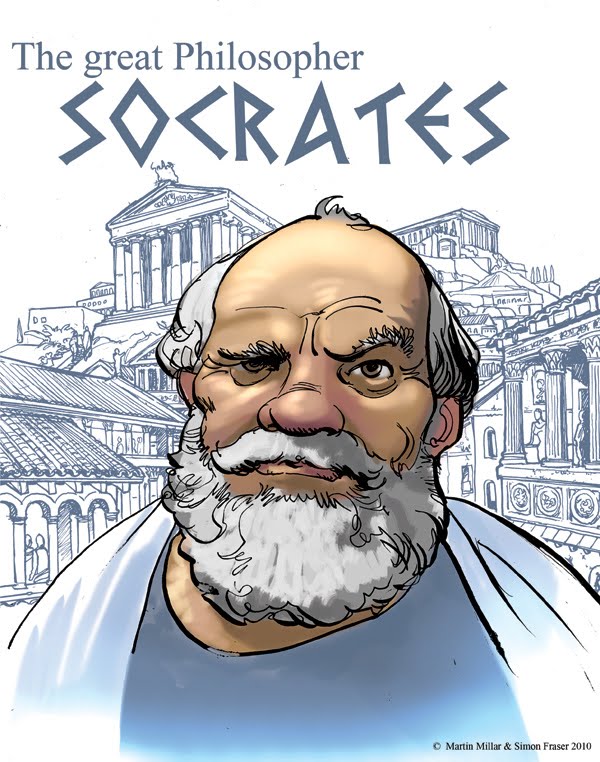
“I know only one thing: that I know nothing”. Socrates

  • Improving retention – we have to be careful with this one, although the act of looking back improves retention, the secret lies in how you do it. For example, re-reading notes, even with the use of a highlighter may feel that its helping but this is a well-researched area and the evidence tells us in terms of retention, it doesn’t really work. This is in contrast to retrieval practice, a study method that I have written about in several previous blogs. Here the learner is forced to engage with the material in an active way rather than a passive one, most often by asking them to complete a test or answer a question, in fact it’s often referred to as the testing effect. The very process of making the learner think about what they know, strengthens the connection with the material they are trying to learn, and moves it from short term memory into long term memory, which is how learning happens.
  • Identify knowledge gaps – this is perhaps the most obvious one, looking back on a subject will reveal areas that you might not even remember studying at all. The implication is that there will be a certain amount of learning taking place for the first time. Of course, gaps in knowledge should be kept to a minimum by ensuring that the subject coverage is as comprehensive as possible, or at the very least focused on the most important areas. However, do not expect to have a complete grasp of everything, this is especially true as you move up that academic ladder, even experts have gaps in their knowledge.
  • Preparation for the test – this is not really about learning, its preparation for the challenge ahead, effectively making sure you are match fit.  One of the best things you can do in the revision period is practice past questions, including the completion of a mock exam. Not only will you be benefiting from retrieval practice, you will also be developing what researchers in 2016 called “question literacy”, the ability to know what the examiner is asking because you have seen similar questions before. Attempting a mock under exam conditions can also help you better manage time and be prepared for the way you feel under pressure. It’s no good having worked hard to understand the subject matter if you can’t answer the questions in the time available. Equally you need to practice leaving questions you want to answer in favour of those that you don’t, remember its always easier to get the marks at the start of a question than at the end.   And finally, when the exam is just around the corner, although you may feel more anxious your levels of motivation, concentration and work ethic will almost certainly rise.  

Preparing for the test doesn’t help you pass; it stops you failing. SPS

Why revision should be just before the exam
Whilst it’s possible to improve retention and identify knowledge gaps during your studies, you can’t effectively prepare for the exam until its close enough that the reality of how little time you have left is clear. Why do people suddenly become motivated, well its partly because the challenge is no longer distant, it’s no longer at some point in the future, its next week. It’s a variation on something called myopic discounting. For example, it’s very difficult to motivate yourself to work over a weekend in September if you know the exam is in June the following year. Also, the way you are learning changes when the exam is very close, you are no longer sitting in lectures or reading books but practicing past questions, improving your question literacy whilst building up your levels of resilience and learning new exam skills such as time management.

And one final thought, although some of what is memorised, rather than understood in the revision period may be forgotten, it can still help you pass on the day. Poor learning perhaps but good exam technique.

Who needs a teacher – the power of self-explanation

One of the great skills of a teacher is that they explain things you don’t understand, that’s really helpful – right?

Well maybe not, a meta study entitled, Inducing Self-Explanation published back in 2018 concluded that it is better to ask a student to try and explain something to themselves, than for a teacher to do that for them. Although in fairness the teacher’s explanation was better than no explanation, which might seem an obvious point but it shows that the content is important and it’s not just the process. However, the process does help because it forces the student to recognise links between the knowledge or skills they have already learned and identify the gaps in their understanding which need to be bridged. In further defence of teachers, there is some evidence to show that the technique is more effective following an initial explanation, with the student asked to explain it to themselves afterwards.

In simple terms self-explanation requires the learner to try to explain concepts, ideas and processes in their head to themselves prior to answering a question. However there is a little more to it than that.

Self-explanation and elaborative interrogation
Elaborative interrogation is similar to self-exploration but not exactly the same. If you ask someone “why that makes sense” or “why is this true”, this is an example of elaboration, it generally relies on a specific chunk of prior knowledge that you are elaborating on. Self-explanation is more generic in that you could ask “what does this mean to you” or “explain what you have just read”. To answer these questions there is no need for past knowledge as the paragraph may only just have been read. As a result, self-explanation is better suited to knowledge acquisition.

But for all intent and purposes they are both techniques that force reflection, requiring the learner to assemble the component parts of process or argument in their head, challenge the conclusions and ask further questions to narrow the gap in their understanding. One last point, we also know that more effective learners (although you may think they are just really smart) are likely to engage in self-explaining naturally.

Learning requires effort – desirable difficulty
If this process sounds like hard work, it is, learning is not meant to be easy, it can be enjoyable and rewarding but not necessarily easy. Compare, trying to explain something to re-reading the textbook or highlighting key words. My guess is that you would much rather re-read or highlight, but they are both far less effective learning techniques.

The greater the difficulty, the greater the glory.
Marcus Tullius Cicero

This is yet another example of what Robert Bjork’s referred to as desirable difficulty (Bjork, 1994; McDaniel & Butler). It is the idea that having certain difficulties in the learning process greatly improves long-term retention. Other examples include, spacing, interleaving and retrieval practice which I have written about before. It’s the effort and reflection that helps transfer the knowledge from short term to long term memory and without that it would be forgotten.

More effective
The key point is not about the difficulty of learning but the effectiveness of the methods used to learn, and developing the confidence that when something is hard it’s probably a good thing. So, the next time you are asked a question that requires an explanation and you can’t give one, don’t jump straight back into the textbook to reread the entire chapter. Think and reflect on what it is you don’t understand, create a sentence that captures that lack of understanding, maybe even saying it out loud, find the answer and then attempt to explain it again.

A little more difficult of course but you will be learning and not just sitting there thinking you are.

My thanks to John Eaton for his observations on this topic and for the fab picture of Less Dawson.

True Grit – Passion and persistence

True Grit“They say he has grit. I wanted a man with grit.” So says Mattie Ross in the 1969 film True Grit staring John Wayne. But what exactly does the young Mattie Ross actually mean, what is grit?

Well maybe Angela Duckworth can answer this, she is the author of a book called, Grit, the power of passion and perseverance.

IQ, EQ and Grit

Many will be familiar with IQ (The Intelligent Quotient). It was developed by Alfred Binet around 1911. Not to measure intelligence so that individuals can demonstrate superiority over others, but to identify under performers so that remedial action could take place. Then in 1995 Daniel Goleman wrote about the Emotional Quotient (EQ) or Emotional Intelligence. The idea that individuals can recognise their own, and other people’s emotions, discriminate between different feelings and use this emotional information to guide thinking and behaviour. This idea has enjoyed some success and helped people shift their focus towards valuing something other than simply being clever.

Grit in a way makes a similar point. If we took at a group of highly successful individuals, what qualities would they have, what would it be that made them so successful? Would it be intelligence, maybe a high EQ or is it something else. Angela Duckworth found that it was grit, which she defines as having a passion and persistence for long term goals.

Grit is sticking with your future, day in, day out, not just for the week, not just for the month, but for years, and working really hard to make that future a reality. Grit is living life like it’s a marathon, not a sprint.’

Gritty people work hard, but they are doing this with a long term goal in mind.  They also find their work meaningful, important and interesting.

I’ve never interviewed someone who was truly world class in what they do, who didn’t say in the first five minutes “I love what I do”.

You can become grittier

To learn how to become “more gritty” we need to bring in Carol Dweck. A professor of psychology from Stanford University. Dweck coined the phrase a growth mind set and identified two groups of people. One those who believe their success is based on innate ability, a fixed mindset and two, those who believe their success is based on hard work, learning, training and doggedness a growth mindset.

The logic being that you are more likely to develop grit if you have a growth mindset. This is because if you fail, rather than giving up, you see it as a learning experience and continue to work hard towards your long term goal. Dweck even uses the term doggedness, often described as someone who has an obstinate determination or persistence.

Grit and exam success

I would argue that examination success has far less to do with intelligence and more to do with grit. This is not to say that passing an exam does not require intelligence just that along the way most will face some form of failure and having a growth mindset together with a large dollop of grit is more likely to result in success.

Think about the following:

  • You don’t have to be the cleverest person to pass the exam
  • It is possible to learn most things – if you work hard
  • It’s a marathon not a sprint – failing an exam can be a setback but that’s all, pick yourself up and carry on
  • Be clear what your long term goal is – three years to pass an exam is a long time but your goal is probably much longer. Passing the exam is only part of the journey
  • You may not at first find the work meaningful, but almost everything you learn can be interesting

Find out your grit score

If you would like to find out what your grit score is then click here, it will take less than a minute and you get immediate feedback.

John Wayne also said

Tomorrow is the most important thing in life. Comes into us at midnight very clean. It’s perfect when it arrives and it puts itself in our hands. It hopes we’ve learned something from yesterday.

A growth mindset perhaps.

For example – how to get higher marks in written questions

MORE-EXAMPLES

It’s great to be knowledgeable, but to pass an exam knowing the answer is often not enough. Questions set by examiners seek to do far more than identify people who “know stuff,” they want the student to prove understanding and that they can use the knowledge, not simply reproduce it.

The knowing doing gap

There is sometimes a disconnect between what you know and what you can explain. Have you ever said to yourself, “I know what I want to say but can’t find the words” or “what more can I say, I feel like I am just repeating the same point”. This may be the result of a lack of understanding and simply requires more study (see Eureka I understand understanding) or it might be that you just need a better way to think about what you’re trying to do.

Analyse, Explain – clarify – Example e.g.e.g.e.g.

Imagine you’re faced with a question, it asks that you, provide a possible  explanation as to why we have seen a fall in stock market prices in recent weeks and what impact this might have on  economic growth in the UK . Often the first problem is knowing where to start, below are a few ideas that might help.

You will need a few headings to help give structure, these can often be found in the question, here for example we could use, Why stock markets might fall and Impact on the UK. Then under each heading think about analysing, explaining, clarifying and giving examples. These are not headings; they are to help expand on what you have been asked to do and give a perspective from which to think.

  1. First you analyse – If you analyse something you break it up into smaller parts so as to gain a better understanding. For example going back to the question, perhaps we should identify exactly by how much the stock market has fallen, over what period, what other events were happening at the same time, do we have any theories that could help or theoretical models we could apply etc. By examining what you have found, something new and obvious may become clear.
  1. Then you explain – an explanation is an attempt to make clear what you mean. One way of doing this is by making a series of statements. So for example, if you noticed that during the period in which we had the fall in the stock market, China’s economy also slowed and oil prices fell to unprecedented levels. This might lead you to make the statement – one of the reasons for the fall in stock market prices would appear to be the slowdown in the Chinese economy and the fall in demand for oil.

A subset of explanation is clarification. Definitions are a great way to clarify exactly what something means and in what context it is being used. Here for example we might want to include a definition of economic growth.

  1. And finally the example itself, possibly one of the very best ways of explaining and a very powerful technique to demonstrate understanding.

Example “Metaphor’s forgotten sibling”. John Lyons

It may be a reference to a real world example. In the question we have to address the impact on the growth in the UK economy. If you gave an example of the last time oil prices were so low and what happened as a result you will not only be demonstrating breadth of knowledge but also moving the debate forward, suggesting perhaps that the same will happen again?

Real world examples demonstrate the complexity and unpredictability of real issues, and as such, can stimulate critical thinking.

Students learn by connecting new knowledge with their own prior knowledge and real-world experiences. Piaget et al

An example may also be a construct, something that you talk through to illustrate a point. For example, let us imagine the impact of falling oil prices on an engineering company in the West Midlands. A reduction in oil prices would result in lower transportation costs that could be passed onto customers in the form of lower prices, in turn this should increase demand.

“Examples are indispensable to the acquisition of knowledge and they appertain to the domain of intuition”. Kant

Although this blog has covered an approach to structuring written answers, it is the use of examples that for me is the most important. And if it was not obvious enough, look how many times I used examples to explain what I was trying to say …….

27 Million People per day can’t be wrong – Gamification

League of LegendsThe statistics are astonishing, as of January 2014, over 67 million people play League of Legends per month, 27 million per day, and over 7.5 million concurrently during peak hours. And if your good at it the prize money for winning the world championship might get you to question your chosen profession, it was $2.3m in 2014 and 2015. Playing an on-line game is part of daily life for many people.


This blog is “of course” not about League of Legends. In fact I have to admit I had never heard of it, just shows how far out of touch you can become with popular culture. It’s not even about the gaming industry which is said to be worth £3.9 bn to the UK economy, it’s about a growing and fascinating area of learning called gamification.

Gamification is the use of game mechanics (rules, design and tools) in a non game context to better engage and motivate learners to achieve a desired objective. There are two types, structured, where you are looking to propel a learner through content and reward them for the desired behaviours and content driven where the game is the content i.e. the learner is a character in the game and is required to undertake tasks that are in turn rewarded.

Gamification techniques – Game mechanics

Games are not of course all the same but they do have similar characteristics, these “techniques” can then be used in a non game context i.e. a learning context. The idea being that if they engage and motivate the gamer, they will do the same for the student.  Games need some form of measurement to assess performance and a reward to act as an incentive.  Below is a note of some of the measurements and rewards used in gaming but could be adapted for learning.

  • Points – Used to keep score
  • Badges – visual stamps that are awarded to users on certain achievements and are normally displayed in their header and profile page
  • Levels – shows ranking and progress
  • Leader boards – a high score that is displayed for all to see
  • Rewards – not a badge but something tangible e.g. money….

Personal gamification

You don’t need to spend millions developing a game to get the benefits from gamification, and its not all about beating others, here are a few tips.

  • Set up a points system – identify the activities that will help you achieve your goal e.g. spend 2 hours each evening studying, 10 points. Answer 2 questions each evening, 20 points. Attempt the mock exam, 40 points. Score 50%, 80 points etc. Keep a running total of your points in a place that you can see when you study
  • Levels – Only move onto the next chapter or session when you have the desired points
  • Leader board – Keep a note of your highest score from the other subjects
  • Rewards – The best part. Set up a series of rewards e.g. a night off, go for a run, have a glass of wine, bar of chocolate etc. Increase the rewards as gaining the points becomes more difficult. If you beat your leader board score, then your rewards can be even greater, maybe a day out shopping/at the football etc. Why not ask others to contribute to the reward, if I get to the top of my leader board how about you buy me dinner. You will be surprised how many people, friends and family will effectively sponsor you.Other brands are available....

And finally tell your friends what you have done, “just eating a massive bar of chocolate which was my reward for scoring 80 points on my study game.”

Of course you might get fat doing this, but don’t worry there is another game that can help – it’s called weight watchers…..

Technology can help

As ever technology can help, check out this app HabitRPG – Click 

Staying the course – commitment

Mo-Farah-EthiopiaYesterday Brendan Foster described Mo Farah as the greatest sportsman Britain has ever had. You may of course disagree, it’s probably one of those conversations best left to have in the pub, I am sure there are many worthy contenders. Farah responded modestly by saying that because we have so many great sportsman simply being put in the “great” category was amazing. He nominated his greats, David Beckham, Sir Alex Fergusson and Sir Steve Redgrave.

Watch Mo win the 5,000 meter gold at the world athletics championship 2015.

I have to confess to knowing little about sport or in fact having much interest, but what has always impressed and inspired me is the level of commitment successful sportsmen and women have. I have written in the past about Sir Steve Redgrave who won gold medals in five consecutive Olympics. How do you do that, how do you get up every morning and work towards a goal that is four years away, every day for 25 years?

Mandy Monday – procrastination

Start MondayMandy is a weight watcher character who promises to start her diet on Monday, in the interest of gender equality I am sure there is a male equivalent let’s call him Marty. Of course Monday never comes and so although Mandy sort of commits to Monday she constantly puts it off, choosing to do “other things” in preference. Initially this seems like you are delaying the pain in favour of the pleasure but I am not sure delaying something that is in your best interest is pleasurable? Pleasure implies satisfaction and I don’t think you feel satisfaction, probably more like relief.

Exams – you need to commit

It can be like this with studying and exams. Very few students want to sit an exam, its hard work, stressful and you might fail. So if you were given a choice when to sit the exam when would it be, Monday?

In fact delaying an exam can feel perfectly logical and rational. This is how the internal conversation might sound. “I have to sit this exam and it’s not going to be easy, to pass you need to know everything. There is no point sitting the exam if I am not 100% ready, an athlete wouldn’t enter a race if they weren’t 100% fit, it’s like that for me. The best thing to do is sit the exam in another month, another month is all I need, then I will be ready.

The million dollar question is do you ever feel ready?

On demand exams – Set the date and stick to it

If the exam was once every four years my guess would be that most students would not put the exam off, can you imagine waiting another four years? But when an exam is on demand and its left to the individual when you have to take the exam, you never have to commit. At the back of your mind you know that you can always delay. This means you never made the commitment in the first place.

But how to commit – Take a calendar and pick the date you want to finish all of your exams, when you want to qualify, write it down. Then list out all the exams you have to pass to get there, set dates for these and write them down as well. Put them on a wall chart, electronic calendar, even post them on Facebook, they cannot change. These dates are no longer in your control; you have passed that to someone else and in so doing have made the commitment to yourself. Go on do it now!

And finally an antidote to exams

Not anti school, but pro education – If you have not seen any of these spoken word videos – watch this one. Why I hate school but love education, you will not be disappointed.

Ps if you like the no add video check out quite tube.

“You never fail until you stop trying.” – Toms story

The young Tom

The young Tom – inspiring us even then

I am not sure when I first met Tom but it was certainly early on in his studies. Tom was not your typical accountancy student, he was slightly older and perhaps more reflective, the two points may be related. Students studying for professional accountancy exams are probably around 25 and focused very much on looking forward, not back.

Tom started his exam journey in November 2009, his first 2 papers went well and he passed them first time. You need to pass 10 exams broken down over three levels if you want to become a member of the Chartered Institute of management accountants (CIMA).  Boosted by this Tom decided to sit the next 4 papers all at once, something he now thinks was a mistake, he passed just the one. By the end of 2011 however he had passed the other 3. That was 6 papers and two levels complete, Tom was back on track.

“Even though the ship may go down, the journey goes on.” – Margaret Mead

2012 was not a great year for Tom on a personal level which almost certainly had an impact on his performance in the exam room. As a result the whole of that year went by with only one exam success. Between 2012 and 2013 Tom sat one of the remaining papers three times and the other one six times, to quote Tom, that’s six, count them 1…..2….3…..4…..5…..6….. He finally passed that paper in November 2013.

It’s probably worth pausing at this point, how would you feel if you sat an exam twice and failed, let alone 6 times. At this stage your biggest enemy is your own mental attitude. You begin to question your ability, your intelligence and even your choice of career. On top of this is the boredom and stress of having to study the same exam over and over again, trying to do something different, fearing if you don’t you will get the same result. And of course as many of you will know when you are studying your life is on hold, making decisions about work, family/friends is difficult as you need to put your studies first.

In fact Tom did consider giving up, but there were two reasons he didn’t. One the support of his teacher, Maryla who remained positive throughout whilst working with Tom on what he needed to do to improve, and two Toms stubborn attitude, his determination and desire to get something good from all the hard work he had put in so far. To quote Tom, “all I kept thinking was I have lost so much because of this bloody course I have to get something positive from it.” When Tom finally passed that paper he felt excited, and as if he had slain a personal demon.

“Adversity causes some men to break; others to break records.” – William Ward

With only one paper to go Tom was still to face a number of challenges, and it was far from plain sailing.  Knowing a large amount of detail was essential for the earlier papers, now it was all about the big picture, prioritisation and time management.

He was told that gaining the qualification would open doors … So he imagined an open door, on the other side were green fields, money, cars, holidays, being the boss. This focus really helped motivate him to see it through. He passed his last exam on the 29th of May 2015.

It had taken Tom 6 years, in which he had sat in the exam room approximately 22 times. This is not the story of someone who always knew he would pass, destined for success nor of a naturally gifted student who simply needed the right motivation to bring out his talent. This is about what you can achieve if you are willing to make sacrifices, give everything you have and learn from failure.

Congratulations Tom you deserve your success.


Stress or Pressure – Don’t let the bridge collapse

Releasing PressureI have long been interested in the way knowledge from one domain can help inform another and have had two very good examples of this recently, both leading in the same direction.


The first came from an engineering friend of mine who started a conversation about the meaning of stress and pressure in his world. He described stress and pressure as essentially the same except being applied in different forms. Pressure is applied on the external surface of a body, while stress is the internal resistive force per unit area of that body, which resists its elongation or compression.

Alternatively – Stress is generated within the material whereas pressure is the applied force.

The second example came from a stress management seminar* I recently attended, not so abstract you might say but it wasDont let the bridge collapse the analogy the presenter used that was interesting. He asked that we thought of a bridge, the cars going over the bridge created pressure on the bridge and as a result the bridge would experience stress.

No matter how strong the bridge, there was a point that if too many cars were on at any one time it would collapse.

How does this help?

Analogies can be very helpful where it’s difficult to conceptualise or understand complex ideas. For example the bridge will show signs of stress before it collapses. This is no different for people; signs of stress will be present well before the stress levels are high enough to cause problems e.g. short temper, lack of sleep, headaches etc.  Also if we carry on with the analogy, there are two ways in which you can make sure the bridge doesn’t collapse. One, don’t have so many cars on the bridge and two, support the bridge so that it can take more cars. This translates into reducing the number of external pressures you are under (less cars) and having coping strategies to help when you are under pressure (some support).

Pressures when studying

A lot of pressures when studying are time related, for example taking on too many subjects or having to study as well as holding down a responsible job.  But some pressure might be created by the way you feel about yourself, not being capable or clever enough. Also people often put themselves under pressure – interesting term “putting yourself under pressure” by having very high expectations or maybe those expectations are put upon them by others.

The simple answer – take some of the cars off the bridge, reduce the number of subjects your studying, lower your expectations etc. This is not to say that having high expectations is not good, but if it is affecting your performance in a negative way, then you have to do something. And I know it may not be easy to do this in all circumstances; do you step down from that responsible job, how practical is that?  Yet if you do nothing, the bridge will collapse and that has to be avoided at all costs.

The alternative to taking cars off the bridge is to add in extra support.

Strategies to cope

Lazarus and Folkman in 1984 suggested that stress is the result of an “imbalance between demands and resources” or results when “pressure exceeds one’s perceived ability to cope”. They came up with two types of coping responses.

Emotion-focused – These techniques work very well when the stress is or at least appears to be outside the individual’s control.

  • Keep yourself busy to take your mind off the issue – just keep working through the course
  • Let off steam to other students/partners, anyone who will listen in fact
  • Pray for guidance and strength – and why not
  • Ignore the problem in the hope it will go away – not always ideal but the problem may sort itself
  • Distract yourself – go for a run
  • Build yourself up to expect the worse – “I will probably fail anyway”

Problem-focused – These techniques aim to remove or reduce the cause of the stress.  These are similar to taking cars off the bridge.

  • Take control – being out of control is often the cause of much stress. Revaluate what the problem is, and ask is it worth it!
  • Information seeking, perhaps the most rational action. Find out what is causing the problem and look to solve it e.g. why do you have such high expectations, does it help?
  • Make a list, evaluate the pros and cons and put in order of importance.

Studying can be stressful and this can result in feeling under pressure but this is not altogether a bad thing stress and pressure are key motivational forces, so don’t think of stress as the enemy but watch out for any cracks that might appear in the bridge.

Watch this TED – Kelly McGonigal: How to make stress your friend.

Related posts – Exam stress – or is it your stress and Exam stress Mindfulness and the “7/11”

* The course was delivered by the stress management societyclick here for their website.

Twas the night before ………..the exam – but what to do?

keep-calm-and-study-all-night-5 Well not exactly all night

For students May and June are the main exam months. Studying and learning can be enjoyable…. honestly, but the fun has to come to an end and it does, with the exam. It cannot be avoided and so is best embraced, treat the exam as a game and you the player. What you need to do is give yourself the very best chance of winning.

Become a professional exam taker, someone who follows a process of preparation, very much like a top sportsperson. This means you personally need to be in the best physical and mental shape and have a series of exercises that will get you match fit.

Below is your training regime from the night before the exam – good luck

The night before

You should by now have:

  • Read through and reduce your class/tuition notes down to approximately 10 pages (20 max) of revision notes, see March Blog on how to prepare notes. You may have some professionally produced revision notes, but it is still best to make your own.
  • Practiced past questions on the key examinable areas both under exam and non exam conditions.
  • Started the process of memorising the revision notes.

Be realistic – The key to the night before the exam is to be realistic. You don’t have much time, so don’t think you can cover everything. Let’s assume you have 3/4 hours, 6.00pm – 10.00pm maybe.

Put to one side the large folder that contains all your notes taken throughout the term/year, and concentrate only on the 10-20 page revision notes.

Focus and memorise – In the 3/4 hours that you have you want to get an overview of the subject and focus on the areas that need memorising. These should be the key examinable areas and are most likely to be standard formats, definitions, lists, formulas s not given in the exam etc.  Memorising should include some rewriting of notes, but very little, focus on talking out loud, drawing pictures, writing out mnemonics etc. See my blogs on memory, in particular: Thanks for the memories  and To pass an exam do and exam.

Admin – make sure you have set to one side everything you will need the next day. This includes your exam entry documents, calculator, gum, mints etc. You don’t want to be thinking of these in the morning. And of course make sure you know exactly what time you need to leave to get to the exam with about 1 hour to spare.

Physical and mental preparation – Drink lots of water, avoid tea, coffee etc as you will need to get a good night’s sleep. Exercise is an incredibly effective method of reducing tension and stress. So you may want to build into your 4 hours, 30 minutes for a run or brisk walk. This could be at the half way point of your evening, combining a well earned break with the exercise maximises your time.

Getting sleep is important, so avoid reading your notes and then going straight to sleep. Pack you notes away, put them ready for the morning, then physically go into another room if possible or even outside, watch TV for 10 minutes, something trivial or read a book. You need to break the state of mind from that of studying, relaxation leads to sleep not stress.

And finally keep a positive attitude, think about what you know and are good at and not what you don’t know and are bad at. Keep telling yourself that you have done everything possible, and if you follow these steps you will have. Thinking you know nothing and should have done more will not help at this stage, it’s a pointless thought strategy and not what the professional exam taker does.

The morning before

Set your alarm sufficiently early to give you at least another hour of revision. You don’t need to get out of bed, just continue memorising your notes. This is now about little and often, short 10 minute intervals. Don’t worry about falling to sleep in the exam; the adrenalin won’t let you.

1 hour before

What you do after arriving at the exam centre/School etc  is personal. Some will prefer to sit on their own going over the revision notes; don’t bother taking your folder of course notes. This is still very much about short term memory. Others will prefer to talk, chatting about nothing, just to stop them worrying. Both are fine.

After the examExam post it!

Afterwards is also a little personal, most will go home, but some will want to talk through what was in the exam, looking perhaps for some conformation they have not made a complete mess of it. Most importantly, if you have another exam, go home, put your old revision notes to one side, forget everything and start on your next subject.

The American basket ball player Art Williams had a good saying that I will leave you with. I’m not telling you it is going to be easy — I’m telling you it’s going to be worth it”

And although personally I found exams difficult I have never regretted the hard work, it was for me worth it.

And something to watch

How to: Cram the night before a test and PASS

Or you could try this

This blog is for Beth – good luck xx

Eureka – I Understand Understanding!

I Understand!If you understand the subject you are studying your chances of passing the exam must be good.

A simple and perhaps obvious statement but what does understand mean and what do you have to do to truly understand something? Of course understanding is a key part of passing but it is not enough on its own, you can understand something yet fail because you run out of time, misinterpret the question, thought you understood but didn’t! etc.

To understand

The dictionary defines to understand as, to know what someone or something means, to grasp the meaning, to be familiar with, make sense of etc. Understanding is clearly different to knowing, for example, you may know that gravity is a force that pulls objects to earth but that does not mean you understand what gravity is or how it works. Of course you need both knowledge and understanding, the one is no good without the other. Examiners try to test for understanding by asking questions that require you to compare, contrast, explain, interpret etc.

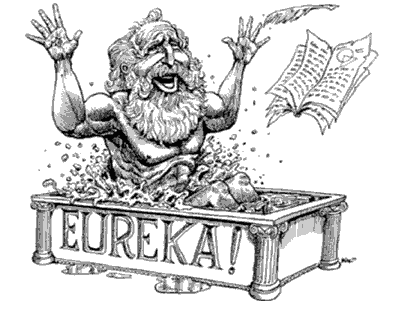
Understanding is not a Eureka moment, it has different levels. It might seem that there is a point where you didn’t understand and then suddenly you did, a Eureka moment. In reality what you have done is move closer to gaining a better and fuller understanding. Ask any lecturer or teacher, often they will tell you they never fully understood something until they had to teach it, they just thought they did.

Proving you understand – The 6 facets of understanding

Understanding by design, Wiggins and McTighe (1998) is one part of an instructional design process that provides a very helpful framework we can use to explore the depth of understanding and perhaps more importantly what you can do to develop a deeper understanding. Think of it as a hierarchy with the easiest one first, the greater you’re understanding the higher the number.

1. Explain, the classic exam question – Explain to someone what the concept/idea means and say why. Explaining out loud to yourself or making a recording can be just as effective.

2. Interpretation – Relate the concept/idea to your own experiences, tell a meaningful story. Try to add something personal into your explanation. To do this you will need to reflect on past events, whilst attempting to find parallels with the concept/idea.

3. Application – Use the concept/idea in a different context. The ability to apply knowledge in different contexts (transfer) is a key milestone in learning as well as understanding. It should result in you never being caught out by a difficult exam question. Understand to this level and it doesn’t matter what the examiner asks.

4. Perspective – Read around the concept/idea, get other people’s views, and see the big picture. If your struggling with understanding, read another text book or my favourite is to go onto you tube and watch a video. The internet is great for discovering alternative views.

5. Empathy – Try to get inside another person’s feelings about the concept/idea. This is difficult as it requires you to put aside your feelings about the concept/idea and accept that it is not the only way of thinking about it.

6. Self Knowledge – Ask questions about your understanding, ask what are the limits of your understanding, what are your prejudices, become aware of what you don’t understand. Often called metacognition, the ability to think about thinking.

The Eureka moment

Understanding, like Eureka moments are not of course the result of sitting in a bath and suddenly finding you understand something you had previously found confusing. It is the gift of hard work and long hours of study, hopefully by trying some of the techniques above your depth of understanding will only improve.

Ps apparently the jeweller was trying to cheat the king….

Understanding by Design

Want to know more about understanding by design, watch this. 


Carrots and sticks – Motivation and the thinking Donkey

Donkey carrot and stickMotivation is one of those topics that is so important to learning and passing exams that we will constantly keep coming back to it.

If you are motivated when studying then you will study for longer, more frequently and be more focused.

As a result I have written about motivation in the past Motivation – How to want to study, Rocky boxing No – it’s about motivation to name but two.

I have always liked the simple idea that if you want to motivate someone to do something then you give them a reward (carrot) or a punishment (stick). You will probably have used carrot and stick techniques on yourself. If I answer these exam questions by the weekend I will have Sunday off or if I don’t answer these exam questions by the weekend then I won’t have Sunday off.

But are we more complicated?

In his book Drive – the surprising truth about what motivates us, Daniel H Pink (a former Al Gore speech writer) argues that there are in fact three motivational systems. One survival , motivated to eat, drink and reproduce. Two, seek reward and avoid punishment, the so called carrot and stick and three, intrinsic  motivation, the idea that motivation comes from within not from external stimuli.

These are not mutually exclusive, you are still motivated to eat, drink and reproduce, equally carrots and sticks do work, but what are these intrinsic motivators.

Type X and Type I

Type X behaviour is fuelled more by extrinsic desire, how much money will I get, I don’t want to have to work Sunday, this fits with carrot and stick. Type I behaviour requires intrinsic motivation and is concerned with the satisfaction gained from an activity. Pink argues that extrinsic motivation works better for algorithmic/routine tasks that require little cognitive processing. But if you have to think, understand, create then intrinsic motivation is more effective. Got it……

And the point is……

Studying and learning require a huge amount of cognitive processing (It is a type I behaviour) and so rather than using carrot and stick motivators you would be better using intrinsic ones. Pink explains that intrinsic motivators can be broken into Autonomy, Mastery and Purpose.

  • Autonomy – This can be achieved by making your own decisions as to how you study when you study, rather than listening to others or being rewarded for doing it. It’s about taking ownership.
  • Mastery -This is a mind set and involves you believing that what you are learning is not something in isolation but contributing to a greater and longer term skill set.
  • Purpose – This links nicely back to goals, which has been the topic of previous blogs. You must feel that what you are learning has some value and purpose possibly beyond simply passing the exam. Will it help you do your job better etc

Motivation can be difficult to understand, personally I feel that it does come from within (intrinsic), it’s my desire to do something not someone else’s and so the argument that you should not use carrot and stick (extrinsic ) type rewards makes a whole lot of sense.

Let me know what you think….?

Listen to Daniel H Pink at TED And an RSA animated lecture 

Just answer the question!!! – but how?

Last month I looked at the best way to tackle a case study, but case study is only one type of exam, what about the more traditional style of exam question?

The world is full of great advice, lose weight, exercise more, stop smoking, just answer the question ….all these statements are very clear with regard to WHAT you should do but terribly unhelpful as HOW to do it.

The reason that students fail exams is simple, every examiner since the beginning of time will have made some of these comments.

Students fail exams because?

  • They don’t know the subject – inexcusable and the only reason you should fail
  • They don’t read the questions properly – and as a result  misunderstand what was being asked
  • They don’t  manage their time – so only complete 50% of the paper
  • They don’t write good answers – true this might be due to lack of knowledge but could also be the result of not knowing how much to write

The last three of these can be overcome with the use of good exam techniques. In this blog I want to share with you two simple techniques that I think will help.

How to read questions properly – Tip one, the rule of AND

Below is an exam question worth 12 marks. You don’t need to know anything about the subject so don’t worry.

Using the information given for DT Co, calculate the adjusted present value of the investment and the adjusted discount rate, and explain the circumstances in which this adjusted discount rate may be used to evaluate future investments. (12 marks)

The rule of AND is simple, where there is an AND in the question simply put a line through the AND then make the next statement the start of a new question.

Now read the question

1. Using the information given for DT Co, calculate the adjusted present value of the investment. and

2. (calculate) The adjusted discount rate, and

3. Explain the circumstances in which this adjusted discount rate may be used to evaluate future investments.                                                                                  

There are now three questions and because we have broken it up, it is so much clearer what you have to do.  If we were really clever we might be able to guess how many marks out of 12 relate to those three questions, a tip for another day perhaps.

How to write a good answer – Tip two, Define. Explain and Illustrate

Define Explain and Illustrate is a technique to help you write more using a simple structure.

Read this question

Discuss the proposal to repurchase some of the company’s shares in the coming year using the forecast surplus cash. Other implications of share repurchase for the company’s financial strategy should also be considered. (10 marks)

Firstly Define the technical words. In this example the technical word is repurchase, so firstly we need to say what a share repurchase is.

E.g.  a share repurchase is where a company buys back its own shares and as a result reduces the number of shares available on the market.

Secondly Explain in more detail.

E.g. the share buy back has to be financed in some way so one implication is that it will result in a reduction in the company’s cash balance. It also means that because there are fewer shares, earnings per share (eps) will increase.

And lastly and in many questions most importantly, Illustrate. This could be by way of a diagram an example or by referencing to the question in more detail. The reason this is so important is that this is how you will demonstrate to the examiner that you can apply the knowledge. If you don’t understand something you will not be able to apply it. The application section of the answer will often carry the most marks.

E.g. in the example above it is clear that the company is forecasting surplus cash, i.e. they have more money in the future than they need. Leaving this money in the bank is not considered sensible partly because the level of return that can be earned from the bank will be less than the shareholders require, it can also be interpreted as a lack of ambition on the part of the Directors. Blah blah blah

Depending on the detail provided in the question this final illustration section can go on and on. How much you write will depend on the marks available.

I hope you have found these two tips helpful, if you want more in the coming months just add a comment to this blog and I will oblige.

Epic exam failure – what not to put on your exam paper

And finally a short video showing students real exam answers – funny

Click here


Thinking in box’s – Cracking case study

Put it in a boxExaminations come in many shapes and sizes, short form, multiple choice, essay, case study etc. I know there are other methods of assessment but I am thinking here of the most common. Of these one stands out as being very different, the case study. Developed by Harvard in the 1920s the  case study involves giving the student a  real life, normally business situation and asking relatively broad Socratic type questions e.g. what do you think, why etc.

It not only puts the student in a realistic situation but also requires them to think far more deeply.  The cognitive process involved in answering a question such as what is the capital of France or can you add 2+2, on the whole is very simple and may need little more than memory. However giving student a real life business to analyse and asking them to give an opinion as to what the company should do next requires higher level thinking as well as effective communication skills.

Too much to read

One other aspect of a case study is that it often involves large amounts of narrative, all will need reading digesting and putting into context. On the face of it this can seem daunting, but it can be done and as with so many aspects of learning there is a process that can help. I have written about, having too much to read and the benefits of chunking before but I want to bring these together with another powerful technique “thinking in box’s”.

Thinking in box’s 

Volume and lack of direction is the main problem here, so we need to find our own direction and reduce the volume. Thinking in box’s refers to the natural process we have in compartmentalising thoughts. In order to make sense of the world we often put “stuff” into box’s, work, study, relationships etc. We can then open the box’s when we are best able to deal with them. The  point being that  we can’t deal with everything all at once. If this whole idea sounds a bit odd, then just consider the saying “Thinking outside the box”. This refers to the imaginary frame we put around something that restricts our ability to solve a problem and think more creatively. Strange isn’t it…..

Case study

Imagine that you have 10 pages of narrative to read based on a particular industry, a case study. There are a few sub headings and some paragraphing. You are required to provide guidance to the board of Directors as to what the companies strategy should be in the next five years.

The process 

In order to give the advice required by this question, you need to fully grasp the current situation, which means you have to  read, understand and comprehend what is written on the 10 pages. To add structure to the case firstly take chunks of content and put a frame around it, this will help focus just on this chunk of information, it also reduces the volume. A chunk will often be information under a heading or specific paragraphs. Once you have the content in a box, sift through it looking for the “key words” and underline them.  Focusing only on the key words but taking into account the context, ask yourself, what do I think about this? What does it mean, what is it telling me etc. Then write down your thoughts. Do this for every chunk of information, then number each chunk.

At the end of this process you should have read and thought about each chunk, captured those thoughts and have a numerical reference by which to structure them. The final part of the process is to read each of those chunks again and produce a SWOT. This brings all 10 pages down to just one. And by using the SWOT supported by your detailed analysis you should be able to give the advice required by the question.

watch_this_videoIn this short video I demonstrate the thinking in box’s approach.

      Thinking in box’s

And finally – A few words from Terry Pratchet

I will be more enthusiastic about thinking outside the box when there is some evidence of thinking inside it!

There’s no such thing as a stupid question – Learning by questions

Ask questionsThe Greek philosopher Socrates was born 469 B.C in Athens, and died in 399 B.C. He is considered by many to be one of the world’s greatest thinkers. He is known for the Socratic Method and the pursuit of knowledge. The Socratic Method involves asking a series of questions until a contradiction emerges invalidating the initial assumption.

Socratic questioning does not seek to find THE answer, there are often many answers. The primary goal is to explore the contours of often difficult issues and to teach critical thinking skills. This method encourages you to go beyond the simple memorising of facts, enabling you to develop a higher level of understanding.

Socratic questions

1. Questions for clarification – Why do you say that?
2. Questions that probe assumptions – What could we assume instead?
3. Questions that probe reasons and evidence – What would be an example?
4. Questions about Viewpoints and Perspectives – What is another way to look at it?
5. Questions that probe implications and consequences – What are you implying?
6. Questions about the question – What was the point of this question?

If you can formulate a question – you have 60% of the answer
When you pass one exam the bad news is you are often faced with another. Exams at times can seem endless. But as you progress, what you are asked to do will change. When you first start studying a subject you will be asked relatively simple questions such as, what is the capital of FranceChildren are good at asking questions. To answer questions like this you need little more than a good memory. However when you get to the final level, examiners are more interested in understanding and application, not simply knowledge. What they really want you to do is think….

And so you may need to form an opinion, a view of your own. I am sure that you have many opinions now, but how informed are they, what facts support your view and how much have you thought around this view sufficient that you can deal with challenge.

This is where asking good questions can really help. When studying on your own, if you can formulate the right question you are more than half way to answering it yourself. Because to even get to this question, you will have had to think deeply about what you are trying to do, how it might work, what resources you might need, why has no one done this before etc. And only when you have thought this deeply will you be able to ask your question.

The next step is to post your question on the internet, someone will have the answer, the interesting thing is, by the time you come to do this, you may have the answer yourself!

Questions really are a great way of learning.

Judge a man by his questions rather than his answers.
Voltaire

The last word will go to Scott Adams
If there are no stupid questions, then what kind of questions do stupid people ask? Do they get smart just in time to ask questions?

Or should it!

Appy Christmas – Apps for learning

appsIt’s always interesting writing a Blog in the holidays, maybe it’s because you have more time than normal so think you should come up with something different, dare I say original. The reality is that when you have such a large canvas on which to think, you can’t think of anything!
The answer is to narrow it down, give yourself something specific to think about. So whilst staring at my ipad for inspiration, I stopped thinking about “everything”, focused on what was on my ipad and then it happened, an idea… ..Why not write about the apps I use most and how you might use them to improve your studying, so here goes.

It’s not about the technology stupid
First a disclaimer, although technology can be all absorbing, learning is a human quality, technology in many circumstances only makes learning more convenient, you still have to work at it. What it does do is provide you with the ability to study when you want and where you want. Time that would be wasted waiting for or actually on a train/bus etc can be much more effectively used learning. How good would it be if you had finished studying before you got home?

Google CalendarGoogle calendar – Helps plan your studies
I have written before about the importance of timetables and calendars. Sitting down and planning what you will study and when not only helps you become more organised it is essential for setting targets and challenges. And remember target setting is key to motivation.

Evernote Evernote – Organise and store notes
I am finding that I am using Evernote more and more. It is in effect a cloud based folder system. Consider setting up a folder for each subject you are studying. Then within each subject folder you can type notes, attach PDF’s, photos, maybe of places/objects/people relevant to that subject. You can even attach video. And if you want to collaborate with others just share the link. Maybe have a folder for revision with the questions you want to attempt linked via PDF, comment on what you found difficult and share with your friends. Evernote has so many uses.

PenultimatePenultimate – for making hand written notes and drawing mind maps
If you prefer to write rather than type, penultimate is for you, although I don’t think there is an android version at the moment. It is part of the Evernote family and links with Evernote so is easy to use. It is just like a paper based note book with a front cover showing the subject, page numbers and has a nice page turning feel. Unlike a paper based note book however, you can change the paper, plain/lined etc, save your work, add photos, and share with others. It also has a very clever way of making sure your hand when resting on the screen does not interfere with what you are writing.

Put simply it’s the best handwriting software I have come across, and comes close to replacing paper, close but not just yet….

DropboxDropbox – for file storage, back up and file sharing
Many of you will already be familiar with dropbox, it is free simple to use cloud based storage. Dropbox is great for saving/backing up all your files. This means that as long as you can get electronic versions of your text books and question banks you will be able to have them with you anywhere…

And you can share folders with friends.

Adobe ReaderAdobe reader – keep all PDF notes in one place and you can write on them!
This is just for Adobe PDF’s but as most documents can be turned into a PDF format that should not be a problem. Imagine having your notes in a PDF file, opening them up wherever you are and then updating them either by typing or writing on top of the PDF. You can also make margin notes that open up in a speech bubble, little reminders of what you were thinking, or additional work you need to look at.

Explain-EverythingExplain everything – become a teacher and teach yourself
Explain everything is a white board that you can add in pictures, shapes etc, and then the really clever part, record what you are doing in a high quality video. What makes this so good is how easy it is to use.

This would be ideal for working through a question, talking out loud explaining your thoughts (Explain everything will record your voice and your white board actions) and then when you get to the part that is difficult or simply don’t understand, ask your question out loud….? Then send the Mp4 file to your tutor/teacher or study colleagues for an answer. Unfortunately as with Penultimate I don t think there is an android version just yet.

twitterTwitter – limitless knowledge and support
Twitter can get a bad press when it comes to studying, it can be very distracting! But if used properly it can be great. The key is to follow people that have answers to your problems or are like you. If you are studying accountancy for example you will find lots of tweets from experts providing you with up to date news and information often linking to more in depth guidance, websites/PDF’s etc. Twitter is the most up to date text book you can get.

Okay a word of warning; just make sure you are not too far ahead of you teachers and the exam. Also that the people you are following are credible.
The other use is to follow fellow students who are studying the same subjects as you, it can be very reassuring that you are not the only ones who doesn’t understand something.

The big secret to twitter is is very selective who you follow, delete people that are not helping and keep the list down to about 200.

Mobile
Most of these are accessible on all mobile devises and for me that is the real benefit of the technology.

Happy 2013 and more apps
Hope you are all having a good Xmas and here’s to 2013, what will be new this time next year I wonder?

Related articles

Chunking

Whenever I deliver an exam technique or memory course I always come away feeling I have learned something, although I do of course hope it was not just me!

Last week was no exception; it was the memory technique course. Now I have written in the past about memory techniques, but last week one specific topic stood out, chunking.

One of the problems with learning any subject is that often you are faced with such large volumes of information it seems impossible to learn. This is not dissimilar to the position that memory champions find themselves, for example one of the tasks they have to undertake is to memorise a pack of cards.

How long would it take you, 30 minutes, 2 hours, maybe it’s not possible?

Well it is possible and you can do it in 24.97 seconds, don’t believe me, then watch this video.

So how is it done?

Well the first thing to say is it takes practice; secondly it uses some of the principles of memory, chunking, visualisation, and association. You break the task down into a series of smaller tasks, e.g. remember each separate card (chunking) then create a unique image of each card and finally put the events into a structure you are already familiar with, let’s say your journey to work (association).

Listen Professor Winston and Andi Bell world memory champion in 2002 explain more.

Chunking in a bit more detail

I have promoted the benefits of visulisation in previous blogs so let’s focus on chunking.

Look at these letters for 30 seconds

BAADHLWWFCBBACCA

Look away from the screen and write down as many as you can.

Now look at these letters

ACCA CBB WWF DHL BAA

Look away from the screen and write down as many as you can.

You should find that you did better at the second list, one because some of them are already familiar to you BAA – British Airways, but most importantly because they were broken down into smaller chunks.

It works for study as well

Chunking is not only a useful memory technique but a great way to study. When faced with a new subject, start by breaking it down into smaller chunks then priorities those chunks as to which is the most important. This would normally be the most examinable. You then focus on that chunk, don’t worry about all the other topics; just concentrate on that one, and when you have done that move onto the next etc.

And finally

The guy that broke the world record is Ben Pridmore from Derby in the UK

Sleep, picture, talk – learn smarter

Three stories caught my eye this month that I thought might be of interest.

They are all ways in which new research is providing evidence as to how it is possible to learn more effectively, a kind of smart brain learning.


Sleep is good for study

A new study from the University of Notre Dame suggest  that sleeping soon after learning new material is best for recall. This clearly has implications for students in those latter stages of revision and arguably the night before the exam.  The answer it would seem is that you can study right up to the last minute (probably memorising  facts) as long as you are getting a good night’s sleep after wards.

Although it is not known with certainty why sleep is so good, it is believed that it brings some form of consolidation of the facts, a kind of updating and reorganising of the brain while you rest.

The idea is not that new, this research was out in 2004

Pictures are better than words

This might come as no surprise to people who have read this blog before but it is reassuring that there is some science to support the view that the brain is more effective with pictures than words.

A story from the BBC about a group of people who had their brainwaves scanned while completing a series of tasks, individually and in groups, to see if data visualisation, presenting information visually, in this case a series of mind maps can help. The results showed that when tasks were presented visually rather than using traditional text, individuals used arround 20% less cognitive resources. In other words, their brains were working a lot less hard.

The research was carried out by Mindlab International, an independent research company that specialises in neurometrics – the science of measuring patterns of brain activity through EEG, eye tracking and skin conductivity, which tracks emotions.

This is not just another plug for mind maps, they are just one way in which information is presented visually. When reading a book or study manual, put information in boxes, use graphs, draw people and objects, make it look visual, it will all help.

The first sign of madness – talking to yourself out loud

Gary Lupyan, a cognitive psychologist at the University of Wisconsin-Madison often found himself talking out loud so he thought it might try to find out if it helped, and guess what it did.

In one experiment, volunteers were shown 20 pictures of various objects and asked to look for a specific one, such as a banana. In half of the trials, participants were asked to repeatedly say what they were looking for out loud to themselves, the others were asked to remain silent. The researchers found self-directed speech helped people find objects more quickly by about 50 to 100 milliseconds.

Most people talk to themselves when studying, but they don’t say the words out loud they keep it inside their heads. What this research suggests is that what you should do is say the words out loud, use different voices even. I know it sounds strange but it does work. Okay maybe you should do it behind closed doors; you don’t want to upset the neighbors…..