Teaching to the test – Interesting research but the fat lady is still in good voice

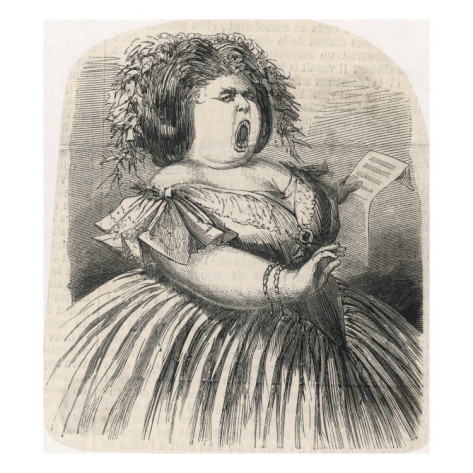
Fat lady still singingThis week researchers from the University of East Anglia released some very interesting findings that resulted from testing 594 bio-science students in their first week of term at five universities.

The students selected would be considered by many more than competent in their subject, almost all had a grade A*, A or B in biology at A-level. Yet when they were given 50 minutes to answer 38 multiple choice questions on cells, genetics, biochemistry and physiology from their A level core syllabus, they only got 40% correct. The period of time between the students sitting their A levels and the test was three months.

Lead researcher for the study, Dr Harriet Jones, said: “What our research shows is that students are arriving at university with fantastic A-level grades, but having forgotten much of what they actually learned for their exams.”  She went on to say that the trend to teach to the test, to ensure good results for schools’ reputations, was the problem.

The schools are to blame then

The facts of the research are clear, students who had successfully passed a test, were unable to pass a similar test three months later. The conclusion reached is that the students did not understand (see my blog on understanding) their subject well enough and passed their A levels probably using little more than memory. And who is to blame, the schools of course, for teaching to the test. Why the school do this is worthy of further debate, but government pressure and the impact of league tables will certainly be in the mix.

But do employers not accuse Universities of delivering up similar ill prepared students. The test is different but from the employers perspective the result is the same. A University student who professes to know something but when tested “in the real world” doesn’t.

Does this mean that Universities are also teaching to the test!

It’s about the test etc

The problem is not in teaching to the test; the problem is with the test, the pass mark and possibly the marking. If the test was more Testing but for what!aligned to what the student needs to know/do at a fundamental level, the pass mark sufficiently high and the marker having some degree of autonomy to form judgements, then the results would probably be different. It could of course be that the exams are easier – Exam chief: ‘you don’t have to teach a lot’ for our tests.

The big criticism of teaching to the test is, it results in a narrowness of understanding, little in the way of depth and does not push students to think in abstract and creative ways. But if the test, which incidentally does not have to be in the exam hall or on paper/PC was able to “test” for these qualities then teaching towards it would perhaps be more acceptable.

Bottom line

Teaching to the test is unlikely to change, in fact given the popularity of league tables  in education just now it may well increase, but with more effective testing the results might be better students, happy Universities and even happier employers.


50 Shades Darker – How much to test

How much to test

In August last year I wrote how Professional accountancy bodies believe that competency can be measured by a candidate scoring 50% and failure if scoring 49%. This all or nothing approach seems neither fair nor useful; hence the idea that grades of competence could be introduced e.g. 50% pass, 65% commendation, 75% distinction etc.

But the mark a student gets in an exam is only part of the story when it comes to measuring competence. Can a student be considered competent if the exam they pass only includes questions from say 75% of the syllabus? Yes the whole syllabus might be covered in an 18 month period but in any one exam 25% is not tested. Equally the 75% is often considered core and so examined every sitting, this means that a student need only focus on the 75%. Admittedly if the pass mark is 50% they need to score 50% out of 75% (67%) but with practice this is possible. One final observation, it is unlikely the student will score 0% on the non-core part of the syllabus. They may get say 5% or even 10% out of 25%. Not a great score but the 67% pass mark now becomes 58%. This logic sits at the heart of the exam driven approach.

Objective testing might be the answer?

Objective tests (OT) – test that are relatively short and can be unambiguously marked, are considered by some to be a weaker form of assessment, they are part of the dumbing down of examinations. The beauty of an OT question is that the marking is completely accurate, no marking bias at all. This is often ignored in traditional exams and not seen as a problem largely because it’s not that visible. But the OT does not solve the “how much to test” problem, in fact it makes it worse. If you are asking for less then you are examining less. So if the only benefit is the avoidance of marker bias why are more examining bodies using OT style exams, is it just about saving money…….?

An example

Imagine that you have 4,500 OT style questions that cover every aspect of the syllabus, let’s also assume that the student only has to answer 50. The 50 questions are randomly picked from the 4,500 in the question bank. Is it fair that a student is considered competent if they are only being tested on 1% of what they need to know?

I think the answer is Yes, because in order to be sufficiently prepared to answer 50 questions from a bank of 4,500 when there are no core topics you have to have be capable of getting all 50 correct (assuming a 100% pass mark) and because you don’t know which 50 are coming up this effectively means you have to be able to get all 4,500 correct. The examining body can of course control  the effectiveness and level of difficulty by changing the pass mark.

All OTs would be OTT

This is not an argument to suggest that all examinations should be assessed using OT type questions, they should not. For example they are not Less-is-Morevery effective at measuring a student’s ability to communicate or evaluate complex and ambiguous situations, but they should be considered part of the tool kit that examining bodies have in assessing competence.

So on the face of it OT’s may look like a soft option, anyone can tick a box but they are certainly not easy to get right. Maybe less is actually more…..

Reflection/Goals/Planning……Inspiration and bravery

2013_time100_yousafzaiIt’s nearly the start of a New Year 2014, traditionally a time for both reflection, taking stock of what went well/not so well and looking forward to what the future might hold. On the whole this is a healthy process, looking back gives you chance to put things into perspective and hopefully learn a few lessons, whilst looking forward gets you thinking about what you might like to happen and set goals to make those events more likely.

Looking back on 2013, one event that stood out for me was the nomination of Malala Yousufzai for the Nobel peace prize in November 2013*. It is not the nomination that is important but the fact it provided a reason to revisit the incredible story of one little girls determination to have an education, something that many of us are fortunate enough to be given for free or at least freeish!

Reflection – The story in brief

By 1997, the year in which Malala was born her father Ziauddin Yousufzai had been running a private girls school for several years in the Swat

A classroom in Swat valley

A classroom in Swat valley

district of Pakistan. This was before the Taliban took over. At the end of 2008 the local Taliban leader, Mullah Fazlullah, issued a warning, all female education had to cease within a month, or schools would suffer consequences. Malala was 11 and supported by her father started an anonymous blog for the BBC Diary of a Pakistan school girl.”  The blog stopped after only 10 weeks as Malala had to leave Swat. Although clearly influenced and inspired by her father Malala had a voice of her own and one that was now being heard outside Pakistan, she was passionate about education, especially for women. A documentary by the New York Times bought the story to a wider audience.

 All I want is an education, and I am afraid of no one. 

But on the 9th of October 2012 when Malala was just 15 two men boarded her school bus and asked “Which one of you is Malala? Speak up, otherwise I will shoot you all” The other girls looked at Malala, innocently identifying her; she was shot in the head and neck and left for dead. She was initially flown to a military hospital in Peshawar and then onto the Birmingham Queen Elizabeth hospital in the UK where she had further operations and continued her recovery.

They cannot stop me. I will get my education, if it is in (the) home, school or any place. 

On 12 July, nine months after the shooting, came a major milestone. Malala stood up at the UN headquarters in New York and addressed a specially convened youth assembly. It was her 16th birthday and her speech was broadcast around the world.

Goals and Planning

Malala wanted to be a Doctor, but wanting to be a Doctor is not an effective goal, it’s a wish or desire, it was outside her control. What was within her control was to work hard, motivate herself and fight for the education she deserved.

Malala wanted to be a Doctor but events changed all that, a bullet intended to kill her sent her down a different path. Now she wants to be a politician, not a goal but a wish, driven perhaps by a deep routed desire to help people less fortunate than herself. Yet those same goals of hard work, motivation and learning will equally help turn this wish into a reality.

Let us make our future now, and let us make our dreams tomorrow’s reality.

And so to 2014

When thinking back on 2013, learn from your mistakes, maybe the exams (life in general) didn’t go as well as you might have hoped. But don’t Happy New Yearask why, ask what have I learned and so need to do differently in 2014. Remember when setting those goals make sure they are within your control and take inspiration from the story of a brave little girl who worked hard, motivated herself and most of all believed in the importance of education.

  Let us remember: One book, one pen, one child, and one teacher can change the world. 

Ps

Malala is now working hard for her GCSE’s incidentally at the same school as my daughter.

Well worth watching – BBC – Shot for going to school.

And the *Nobel Peace Prize 2013 was awarded to Organisation for the Prohibition of Chemical Weapons “for its extensive efforts to eliminate chemical weapons.

Intelligence and IQ – does it matter?

Yesterday Boris Johnson delivered the annual Margaret Thatcher lecture at the Centre for Policy Studies in London, in it he said:

Whatever you may think of the value of IQ tests, it is surely relevant to a conversation about equality that as many as 16 per cent of our species have an IQ below 85, while about 2 per cent have an IQ above 130.”

Mr Johnson (Boris) uses the measure of IQ to make the point that if we don’t have equality in intelligence then economic equality is not possible. Effectively he is saying we should accept that some animals are more equal than others, apologies for the Animal Farm digression…..

What is Intelligence?

Yet a large part of Boris’s argument hinges on the term intelligence and that it has some meaning or value, but what is intelligence? The word itself is derived from the Latin verb intelligere, to comprehend or perceive. A good start, but that’s all it is a start, here are a few more definitions:

  • Judgment, otherwise called “good sense,” “practical sense,” “initiative,” the faculty of adapting one’s self to circumstances  (Alfred Binet the creator of the IQ)
  • The ability to learn or understand or to deal with new or trying situations (Merriam-Webster dictionary)
  • To my mind, a human intellectual competence must entail a set of skills of problem solving, enabling the individual to resolve genuine problems or difficulties that he or she encounters. (Howard Gardner, Multiple Intelligence Theory)

The last of these is my personal favourite as it gives purpose to having intelligence, to solve problems. The bottom line, there is no one single definition and experts disagree on how it should be tested/measured. Interestingly the IQ (intelligent quotient) developed by Alfred Binet was only ever intended to be used to identify intellectual disability not to form the basis of an elitist club or for Boris to hijack for his Margaret Thatcher lecture.

Does it matter?

People often have a personal view of their own intelligence, this can sometimes be empowering when you find out “You’re a god Dammed Genius” or limiting if “you discover your IQ is only 75.” Just for the record, 91-110 is average, 80-90 is dull normal, 66-79 borderline and 65 and below, defective.

The very fact that you believe you are intelligent can be motivational, resulting in you putting in more effort. The self belief that you can solve any problem will often result in you solving most of them, and of course proving you are not only intelligent but a genius!

I know that I am intelligent, because I know that I know nothing.

Socrates

Contrast that with the behaviour of someone who believes they are not intelligent or maybe not as intelligent as others. Faced with a problem they will give up, believing the solution is beyond them, and of course proving that they were also right and not a genius.

But Does Boris have a point?

Boris uses IQ (The measure of intelligence) to illustrate the point that we are all different, something that most people would readily accept. What I find uncomfortable is the deterministic nature of his proposition, it implies having a high IQ predicts success and by the exclusion of the many other factors that contribute to success, suggests is the only thing that matters. The Telegraph headline made this point very strongly.

Boris Johnson: some people are too stupid to get on in life

Natural differences between human beings will always mean that some will succeed and others will fail, the Mayor of London says in a speech

Yet on the basis that there is little agreement as to what Intelligence is, the testing and what should be tested is subjective, it would appear a poor basis on which to hang his argument.

Lessons for learning

What I do agree with is that we are all different and that some of this is the function of genetics. (Research indicates that 60% of intelligence is genetic) yet on the basis that you can do very little about this, does it matter?

It is always better to work on what you can change rather than what you can’t. I am sure many of us know people who seem to grasp principles, concepts’ etc and solve problems pretty quick. If you compare yourself to them it’s easy to conclude that they are better and you will always be second rate, so stop trying. The simple answer is don’t compare yourself with them, compare only with yourself, are you getting better and if you are then your improving, and that’s a result.

So forget about measuring intelligence and whether your better than someone else and get on with trying hard and being the best you can.

More on intelligence

Human intelligence, BBC Horizon. An interesting programme that evaluates the intelligence of different high performers.

And the smartest man in the world is…...click here

50 shades of Grade…..Measuring students worth

I don’t often write specifically about the market that I am most closely involved, that of accountancy training and education. But there does seem to be an anomaly in the way the accountancy world measure success that isn’t the case in many other professions and examinations.

To become a qualified accountant in the UK (ACCA, ICAEW,CIMA etc,  yes there are more) you have to pass a number of demanding examinations and submit evidence of practical experience. The exams are taken over 3 years and everything rests on a number of exams of 100 marks each, of which you need to get 50%. The pass rate for accountancy students varies from paper to paper but is around 60% In training and education terms these exams are often referred to as High stake exams. For some failure is not simply a setback in terms of time, it could result in a lost job.

50% good – 49% bad

The purpose of such exams (including the practical experience) is of course to ensure that those that pass are competent. But how competent….?  It seems that you are either competent or not, if you get 49% you are not competent, if you get 50% then you are. This makes the margin for error very high, many a career has taken a dramatic turn based on 1 mark. Now of course in any exam there has to be a point where someone succeeds and another fails but does competence not have many shades to it, is it not a continuous process rather than a discreet one.

Shades of Grade

You may be one of thousands of students (>300,000 actually) who have just had your A level results. But of course you don’t just pass or fail, in fact this has not been the case since 1963, even before then there was an indication of the mark. You are given a grade from A through to E and all are considered a pass, 98.1% passed their A levels this year.

And the grades refer to the marks e.g. E is 40%, a D is 50%, a C is 60%, a B is 70% and an A is 80%. A similar grading exists for Degrees, 2.1, 2.2 etc and for Law exams, Pass, Commendation, Distinction.

No pressure for excellence

So why is this not the case in accountancy? To be honest I am not sure. But by introducing grades above a pass you not only provide employers with a better indication of competency, you encourage colleges to teach to a higher and deeper level, motivated by the students who want to learn more. And that for me is the most important point; you create an incentive for students to try harder. At the moment if you are scoring 55% then why put in more work, a pass is a pass, but a distinction well that will make you stand out from the crowd.

Of course the market will adjust its perception of what a pass means, for example employers may only want students with a distinction rather than a simple pass, but they have always looked and will continue to look for differentiation, at least this is a meaningful one.

What it does not do is fix the 49% you fail problem, and careers will still hinge on 1 mark, but that unfortunately is the way with exams and the reason exam technique is so important.

So to all the accountancy examining bodies why not introduce grades – grey is good and isn’t it an accountants favourite colour?

Tipping the exam is bad….right?

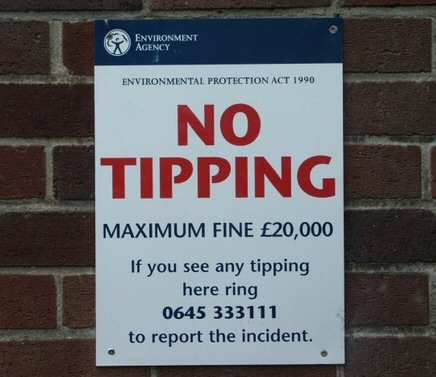
No TippingFor me holidays are not a treat, they are an essential way of  recharging your batteries and provide an opportunity to re think ideas and put things into perspective. I am writing this particular blog whilst visiting Washington DC for a few days before moving onto the real America, Disneyland!


Exam tipping
Now whether its because I was having to get my head around the whole US tipping culture I don’t know, but I found my mind wondered to a conversation I had just before I came away as to the merits of predicting topics that will be on the next exam, so called tipping. This is a fascinating question, and one that is at the heart of the exam focused approach. The logic of the exam focused approach is simple (see  earlier blog for more detail) if the main objective is to pass the exam then the best preparation is to practice The questions that will be on that exam. But on the basis we don’t have The actual exam, then the next best preparation is to practice questions that “you think” will be in that exam, hence the tip.
In many other training environments this approach is common and well accepted. My daughter was taken on the routes most used by the driving test examiner. Although on the day she didn’t know exactly which route it was going to be. As a result of the training and familiarity she felt well prepared, more relaxed which in turn built her confidence, and I am sure this improved her performance on the day.
So what’s the problem?
The problem is that if taken to an extreme, teachers might only teach what they think will be on that particular exam, the so called “teaching to the test”. This results in students not receiving a sufficiently broad or in-depth coverage of the subject and exposing them and their chances of passing to risk, heads you pass, tails you fail.
Application – Focus – Prioritisation 
However exam questions are great tools for application, focus and prioritisation. If a student is taught something and then set a question on that topic, they very quickly appreciate its relevance and value. It certainly helps with concentration, focus and  putting topics in order of importance. The, you can’t learn everything so stop worrying and get on with this question approach…..
Its all about time
If students have sufficient time they should of course learn everything. Although if you think about it you can’t learn “everything”, so there is always some degree of prioritisation.  But in the professional education sector, they don’t. Many hold down demanding jobs by day and study is part time. They look to the educator to give them some degree of priority in what to learn. This comes into sharp focus in the last few days before the exam, and that’s why they will ask for what is most likely to be on the exam, the tip.
So should the teacher tip
It’s all about degrees, at one end of the spectrum, it is very risky and narrows a students learning, at the other it gives focus and application in the last few days before the exam. Personally I would like to see  research on this area some solid evidence to focus the debate. There may be something out there but I have not read anything on this specific question.
But in the absence of such research my view is not to be too dismissive of tipping, it is very easy to completely write it off, leaving the choice of what to focus on just before the exam to the student, when the teacher is probably in a better position to give advice.
and if your interested – How to predict exam questions


And finally my  Holiday books 
I have just started Sal Khans The one world school house – very easy to read summary of how Salman Khan got to become “Bill Gates favourite teacher” and the logic behind what the Khan Academy does.
Thinking fast and slow and The chimp paradox are still as yet to be read.


Now where’s that bill or is it cheque….20% tip!

The lecture -When does learning happen?

“Lectures were once useful; but now the internet and online content are freely available, lectures are unnecessary. If your attention fails, and you miss a part of a lecture, it is lost; you cannot go back as you can with online content. “

The above quote makes the point very forcefully that lectures may not be that effective, and certainly not as good as online. But let me ask a broader question, what is the purpose of a lecture in the first place, does it help you learn and if so when does the learning begin?

The lecture – step by step

In its most simple form the lecture involves little more than a lecturer standing at the front of the class reading from a set or prepared notes or reciting from memory, the student then listens and copies down what the lecturer is saying, presumably to read and absorb later.

So let us break down this process and consider how a lecture helps with learning. Firstly the student has made the effort to attend, this in itself means there is some motivation involved. Secondly they are in an environment designed for learning and with other like minded individuals. All of this helps to put the student in the right frame of mind.

The lecturer will however play a very important part. How well they explain the subject, their level of knowledge, passion and genuine interest can all make a dull topic seem fascinating. And if it is fascinating the student will find it easier to learn. But how much of this can you get from a book, and can this all be achieved online?

And when is the real learning taking place? True the lecturer may ignite a flame and create a sense of curiosity in the student, but the real learning takes place in private, by the student as they revisit the book, video or notes, rewrite, talk out loud and practice questions.  As I have heard student’s say many times, “I need to go over this latter and get it into MY head.”

I am reminded of an Ali quote.

The fight is won or lost far away from witnesses – behind the lines, in the gym, and out there on the road, long before I dance under those lights.

Conclusion

A lecture is a poor method of transferring information, a book or video can explain a topic as easily as a lecturer if well written/filmed. The book and video are both good at providing technically accurate information, but can they transfer the passion, maybe…… but I would argue not as well as the lecture.

You will get a far better view of a sporting event with expert commentary and the ability to watch again on TV, but you are more likely to get a life changing experience if your there watching it unfold live.

So if the only reason you are going to the lecture is to capture information then don’t bother. Stay in bed and get a good book, copy your friends notes or watch the lecture online. But if you want to be inspired/motivated, possibly get a unique view, then go to the lecture.

There is of course a message here for lecturers, your job is to be unique, to inspire and ignite the flame. If not you should also stay in bed, after recording all of you lecture of course.

And for the avoidance of doubt, I do not think this can all be achieved online, a live lecture is different, but the lecturer has to play their role, they have to entertain.

The debate is of course not new – the twist in the tale

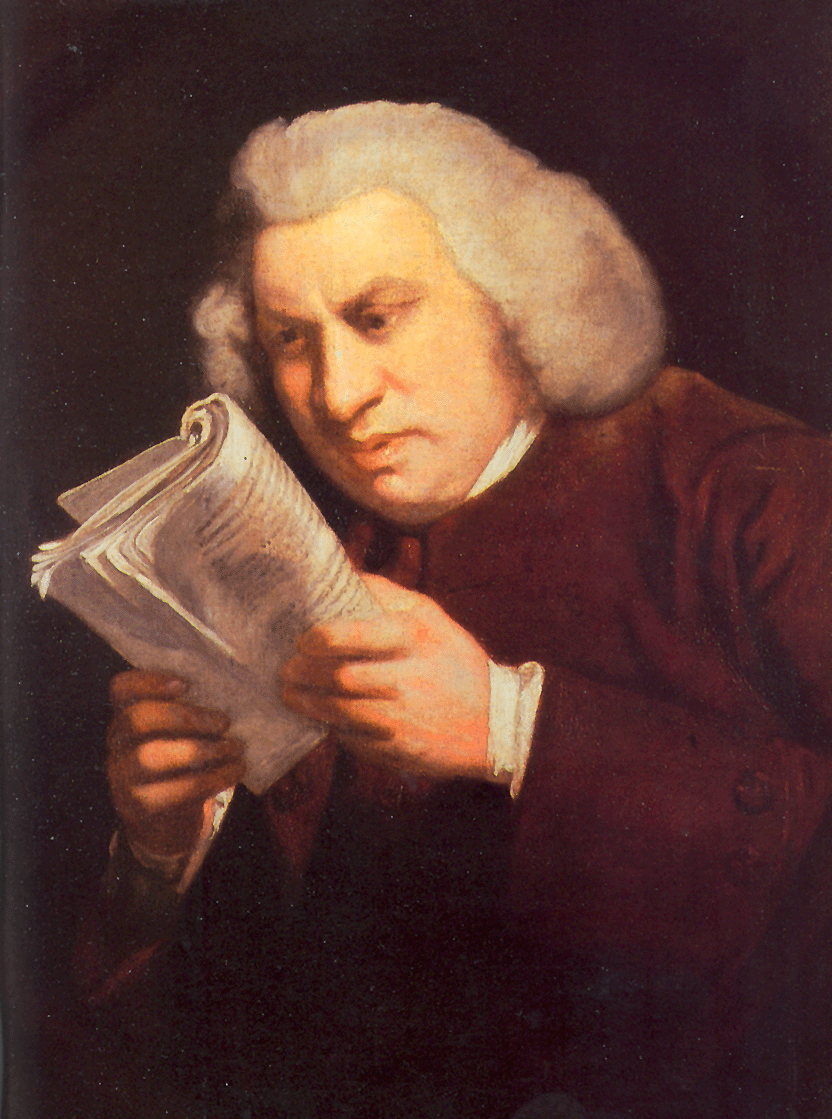
Some of you may have recognised the above quote, it’s taken from (with a few amendments from me) James Boswell’s, life of Johnson, the quote is from Samuel Johnson, and the year…..1791!

Lectures were once useful; but now, when all can read, and books are so numerous, lectures are unnecessary. If your attention fails, and you miss a part of a lecture, it is lost; you cannot go back as you do upon a book. . . . People have nowadays got a strange opinion that everything should be taught by lectures. Now, I cannot see that lectures can do as much good as reading the books from which the lectures are take.

Examples of lectures

If only more lecturers could be like this – watch this

And not like this

And although not entirely my thing, everyone should watch the last lecture by Randy Pausche. Although you need to put aside over an hour you will not be disappointed and when you have you will join the 16 million others who have done the same.

Thank you for the music – listening to music when revising

May and June are the traditional months when students around the world lock themselves away to revise for their exams.

In China for example over 9 million students will be sitting the university entrance exams.

Last May (2012) Teenagers at Xiaogang school in Hubei province were pictured hooked up to bags of intravenous fluids hanging from the classroom ceiling to boost energy levels during the revision period. An extreme action by anyone’s standards, but perhaps an example of how much pressure students feel this time of year.

As I mentioned in last month’s blog my daughter is currently caught up in this May/June exam frenzy. So once again I found myself looking to her for inspiration. What was she doing, how did she revise? This is not because she is a perfect example of a revision student, in many ways she is not, but I do think she is typical of many.

What does Beth do?

  • Makes notes from her notes – This is a standard exam skill, reducing content down into measurable and personal chunks. She does use mind maps (possibly my influence) but not exclusively.
  • Prepares as if she has to teach someone else – this I find interesting and has certainly not come from me. She writes on a white board the key points as if she was going to teach that subject. I like this idea, as many teachers and lecturers will tell you nothing focuses the mind nor motivates you more than having to teach it to others.
  • Practices past exam questions…of course!
  • Studies while listening to music – now this is the one that intrigued me and as a result I have devoted the rest of the blog to answering the question …..

Is it a good idea to revise whilst listening to music?

As ever the science needs much interpretation.

It’s a bad idea

Researchers from the University of Wales, tasked 25 students with memorising lists of consonants. Some were shown the letters while sitting in silence, others while listening to music by their favourite bands or by groups they had a strong aversion to. The conclusion was that listening to music, hampered their recall.

So it’s good then

Scientists at Stanford University, in California, believe there is a molecular basis for music known as the “Mozart Effect“. It was discovered that rats, like humans, perform better on learning and memory tests after listening to a specific Mozart Sonata in D.

But then there is the evidence that suggests that switching attention when trying to learn as might be the case with listening to music slows down the cognitive process.

Yet you cannot ignore the research that clearly shows music has the ability to alter your brain and induce relaxation which in turn helps create an ideal state for learning.

Watch what happens to your brain when you listen to music.

Hopefully you get the idea.

Conclusions

  • Listening to music puts you into a more relaxed frame of mind and that is of course good for learning. So listening to music before or after revising can help.
  • If you do want to listen to music, avoid music that requires you to shift your attention. This would suggest you should not listen to  music with lyrics  as it can mean you need to think about what is being said nor should you listen to something new that you may not have heard before. This is one of the reasons classical, in particular baroque music is the preferred choice of many students. Also don’t play the music too loud, keep it as background noise.
  • If there are specific facts that you simply need to know, then avoid listening to music completely, give it your full attention. But you can’t concentrate at this level all day, only for short periods.
  • On the whole be consistent don’t keep changing the type of music, you need familiarity.

Music to help you study

The internet has many websites that offer relaxing and helpful music, here are a few that might help.

Blogging to learn – Learn to Blog

12-bloggers-for-2012[1]Writing a blog can sometimes be a challenge, and sometimes a joy. Yet I have to admit I am not always sure as to my motives for writing one. Why would you want to share your thoughts on a particular subject with the world?

In years gone by it seemed everyone wrote letters or kept diaries. Now people keep in touch using social networks and only politicians keep diaries, needing them for the inevitable autobiography.
 

Never talk to strangers

Maybe blogging fills a void left by the letter writers and diarists of the past, being both a record of your thoughts and a means of communicating with others, even if you don’t know them.

Motives for blogging

There are said to be more than 180 million blog pages in existence, that sure is a lot of motivated people, but why do they bother?

Here are a few reasons and many of them are related to learning.

• Firstly It’s a great way to learn – one reason that making notes is so helpful when trying to learn is that you have to externalise your thoughts and physically write something down, blogging is no different.

• It helps clarify your thoughts – the process of writing also helps clarify exactly what you think, it gets you to question what you know, and as a result you begin to develop a deeper understanding of the subject or topic. Micro blogging (Twitter) is especially effective, not only do you need to be clear in what you want to say, you have to be incredibly concise, less than 200 characters in fact. And yes that includes spaces, full stops etc.

• It becomes a permanent record – others will of course be able to see what you have written but so can you. This means you can look back and reflect on what you thought at a point in time. A modern day diary! Published in weekly or monthly installments

• You become an expert – the more you think and write, the more you engage in something, the better you get. In order to support your views you will probably need to undertake a certain amount of research to check your facts. This again is something that will expand and deepen your knowledge. Remember you can add videos and pictures to the blog; it makes it far more interesting when you do.

• Do you have something to say – ever had a thought in your head and just needed to write it down? Ever had an opinion or a view and wanted to share it with others to get their reaction? A blog is a great medium to express your views and provides you with a much wider audience.

• You get feedback from others and intern learn from them – so having shared your view, the blog becomes a focal point for debate, allowing others to comment on what you have said. Perhaps challenging your views, teaching you new things and forcing you once more to think more deeply.

Learning blogs

You can blog about pretty much anything, but if your studying why not blog about the subjects or even the techniques you find work best when it comes to learning.

Every day you go to University, college or school you come across something new, let the events of your day inspire you. Happy Blogging!

Want to Learn morewikis and blogs

Exams in the headlines – but for the wrong reasons again!

Well it has certainly been an interesting time in the exam world! Here are just a few of the headlines.

Behind all of these headlines are personal stories, for example students who can’t get into sixth form colleges because they didn’t get the necessary grades. The argument being, that if the grade boundaries had not changed (by 10%) resulting in them getting a D and not a C then they would have got into their colleges of choice.

Stacey Cole chief executive of Ofqual said “the grades are right “

Although the impact on individuals is considerable, statistically the change was small. The proportion of test papers awarded at least an A fell by 0.8 percentage points to 22.4 per cent (this was 8.6 per cent in 1988!) the first annual drop since GCSE exams were first sat in 1988. A* grades also fell but only by 0.5 percentage points to 7.3 per cent.

However, when something goes up, it must come down so perhaps it was inevitable that the ever increasing improvement in student grades had to reverse or at least plateau.

What has changed/gone wrong? 

  • Teachers are encouraged to prepare students for the exam, because parents, employers and educational institutions measure success at least partly (exclusively?) by the results.
  •  Students are better at exam skills than ever before. After all, this blog is about how to pass exams and the skills needed to help.
  • Universities and employers seem equally unimpressed with the quality of students and candidates they get, complaining they don’t have basic levels of numeracy, literacy and common sense!

Answers to some of the questions

Have students been getting better each year?

I think the answer is yes, the results prove they have. But maybe they have been getting better at passingexams. And not improving on some of the more difficult to measure skills like, attitude, common sense, being thoughtful. Exams don’t give you time to be thoughtful! This might explain why employers are so unhappy.

But they may just be getting better…..
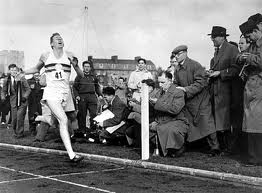
On the 6th of May 1954 Roger Banister ran the 4 minute mile, it is now the standard of all male middle distance runners. Does this mean the mile is now shorter…….or maybe runners have improved?

Why did someone not say something?

The pressure to succeed, measured by exam results has been so great on teachers, examining bodies and students that no one was willing nor was it in their best interest to say, “this just doesn’t make sense.”

Why do we have exams, to test knowledge/competence or to separate the best from the rest?

They should probably be to asses’ knowledge but are mostly used to try and pick the best people.

Have exams been made easier, the dumbing down argument?

This is tricky, and although you can compare exam papers it’s a bit like comparing Wayne Rooney with George Best. You can debate the pros and cons but I am not sure it is conclusive; things were just different in the past.

But it’s not fair

What does seem clear in this whole debacle is that raising the grade required
half way through the year is not an example of exam rigour, it’s an example of being unfair and that is the one thing exams should never be.

Also see my blog what do exams prove

Back to more exam tips next month….

Enjoy the break

As July comes to an end and attempts to reprieve itself with a little sun it also means that the exam season is over for many, at least for a short time. But what should you do with this time off, what is the best use of time after exams?

I have always been interested by the idea that I am sure was in an updated version of Tom Peters and Bob Waterman’s book, In Search of Excellence, first published in 1988. This was a book about what made American companies great. But rather than building ideas from first principle, it looked at successful US companies and worked backwards in order to find common themes, a simple modeling exercise.

What I found of particular interest was the updated chapter that I believe was called, the price of excellence. In this chapter they argued that to be excellent you have to make sacrifices, having a balanced life was all well and good but it did not lead to excellence, excellence required to some extent obsession. As I watched the opening of the Olympic Games last night I wonder how many of those athletes had a holiday or were at home every night to kiss their children good night, how many sacrifices had they made.

No man ever reached to excellence in any one art or profession without having passed through the slow and painful process of study and preparation”

Quintus Horatius Flaccus – Roman Poet

But this is not an argument for obsession, well maybe short spurts of obsession, with rest and variety in the middle. The brain needs sleep and ideas need fertilising, sometimes connections and understanding come when you are least expecting them.

So go on holiday, engage in different activates, and challenge your understanding of what is around you but most of all have a great holiday…

Final thoughts

Excellence in the opening of the London 2012 Olympic games.

And just for sheer entertainment a fabulous presentation by Marco Tempest telling the story of Nicola Telsa, “The greatest Geek who ever lived.”

Are you taught in the most efficient & effective way? – The flipped classroom

To pass any exam you need to learn in the most efficient and effective way but only part of that is down to you the student, much is about the way in which you are taught.

Little has changed in the way knowledge has been transferred over the years. Initially teaching was one person talking to a few people; let’s call this the Neanderthal approach, the first classroom? Then we had a major innovation the printing press, around 1450, which made it possible for knowledge to flow around the world, all be it slowly, no email in those days. But with the advent of the computer in 1837 (Charles Babbage) or 1942 (first digital computer) or the first PC, IBM 1953, the ability to store and transfer information to the masses was possible. Yet little changed in the way we were taught, until now.

Now we have both online and classroom learning. But what is best way to learn, what is the most efficient and effective way to transfer knowledge?

The lecture

If you think of a traditional lecture, the lecturer stands at the front and talks, the student makes notes and then goes away to read and perhaps actually learn something about the subject.

The online approach

A mass of content is available online, you can watch the very best lecturers from all around the world, stopping and starting the presentation to suite the speed in which you learn. Or perhaps you have a sophisticated e learning course where activities are carefully constructed to explain what you need to know. But this can be lonely and despite the claim that online is the same as being in a classroom, from my experience it is not, it is different.

The blend and the flip

But is the best method to have a blend of both online and Classroom / Lecture Theater. This is the idea behind the blended course. Attend the lecture and then watch some online instruction later in the day perhaps. However much thought needs to be given to how this works, directing students to random You Tube clips is far from ideal. Yet it feels like a move in the right direction.

And now the Flip – The flipped classroom (2004 ish) takes its name from the idea that content has historically been taught in the day and students expected to apply that content in their own time for homework.  But is making notes in class the best use of that face to face time? Should students not watch the lecture on the evening, benefiting from studying at their own pace and then attend class the next day, where they can ask questions? Can we flip the process?

In class the lecturer or teacher can then bring the subject to life using real world examples, answer student questions and deal with individuals on a one to one basis.

It’s not perfect, but it is better

Okay it is far from perfect and it has yet to be proven over time. But it does seem to make a lot of sense and for the first time we may be seeing the power of the PC complementing rather than competing with the classroom.

Oh and it has some powerful supporters Sal Khan & Bill Gates

Watch this for a great explanation why flipping the class is a good idea

What’s the point of exams – what do they prove?

With many students in the middle of exams right now, working long hours, making huge personal sacrifices and putting themselves under considerable pressure, perhaps we should stop, take a moment to reflect and ask ……….what’s the point of exams?

Why are you doing this, what will it prove when you do pass, what will passing give you that you don’t have now?


It’s not about knowledge

If you pass an exam, you have proved that you knew the answers to questions set by the examiner at a particular point in time. To be precise you have only really proved you knew enough answers to get a pass mark, in some instances this might be less than half! But you have not proved that you understand everything about the subject or that you could work unsupervised in practice, knowing what to do is not quite the same as doing it.

This is not to say that examinations are easy, they are not or to underestimate their importance, it is just to be a little clearer on what exam success means.

Higher level skills

By passing an exam you are demonstrating many other skills, for example;

Motivation – You have proved that when you set your mind to something you can achieve it.

Concentration – For some people, concentration comes easily for others it might involve removing all distractions by locking themselves in a room. Whatever method you used, you have learned how to cut out distractions and focus on the task in hand.

Prioritisation and Time management – Undoubtedly you have had too much to learn and too little time to learn it. But if you pass the exam you have proved that you got the balance between an endless, or at least what appeared endless set of demands and the overall objective just right.

But most of all exams give you….

A great sense of achievement – You set yourself a target and achieved it.  It is a statement to others that you worked hard and have succeeded. It will remain a tangible and permanent reminder of success that can never be taken away.

Self confidence – It will build self esteem and help you develop a type of confidence that only comes from being successful in a chosen field. Others will congratulate you and as a result, treat you differently.

Choices – it will open doors to opportunities that simply would not have been possible without the piece of paper that says “Congratulations, you have passed”. Exam success will give you choices, it will change how others look at you but perhaps more importantly it will change how you feel about yourself…

So if you have been working hard keep at it, you may not be proving you are the greatest mathematician in the world, but if all goes to plan the end result will make up for all the pain you are going through right now, honest!

But just in case…..everything doesn’t work out check out these Famous A-level flunkers

It’s a Wonderful Life – lifelong learning

In 1946 Frank Kapra made what is arguably the best Christmas film of all time, it’s a Wonderful Life. It tells the story of George Bailey (Jimmy Stewart) who on Christmas Eve gets drunk after being told that there is a warrant out for his arrest for bank fraud.  In a moment of despair he threatens to throw himself into an icy cold river, believing that this will solve all his problems. He is interrupted by Clarence, his guardian angel (second class) who appears and jumps into the water before him. George is forced to rescue Clarence but does not believe that he is his guardian angel and wishes that he had never been born.

And so the scene is set for Clarence to show George that the world would be a very different place had he not been born. Had he not saved his brother from drowning, stopped Mr Gower (the local pharmacist) giving out a lethal prescription and put his dream of travelling the world on hold to run the local bank (Savings and loan).

George was a man with ambition and drive, he constantly put others before himself, in every way a good man. But as can often happen he found himself in situations that he had not expected, arguably did not deserve, that at the time seemed impossible to solve.

Lifelong learning

We often think that studying is something that you do when you are young and then when you have learned everything by the age of say 25/30, you sit back and relax!  Of course this is not true, learning is a lifelong pursuit. It may not always have an exam at the end, but there are lessons to learn and successes and failures to deal with in equal measure. A Wonderful Life follows the ups and downs of George Bailey and in one way is sad because he never does fulfil his ambition to travel. But he learns so many other things along the way, perhaps most importantly that some of the smaller things you do have a huge impact on others and that when faced with apparent failure or disappointment there is always a solution, and it’s not jumping off a bridge…

So perhaps you didn’t get the exam results you wanted or didn’t get a place at university but this is only a moment in time. It is not the end of the journey; it’s just a different beginning.

Steve Jobs tells a great story about “Joining the dots” how you can only join the dots backwards not forwards. Had he not dropped out of Reed College and wondered into a calligraphy class one day then in Steve’s words “the Mac would have never had multiple typefaces or proportionally spaced fonts. And since Windows just copied the Mac, it’s likely that no personal computer would have them.”

So wherever you are in your lifelong learning class, have a very Merry Christmas.

A lesson for today’s bankers

When faced with the bank collapsing George Bailey put in his own money to save it. A modern day lesson for some of today’s greedy bankers perhaps. Sir Fred Goodwin, please note….

A beautiful mind or just a different one – Personalised learning

My Daughter is sitting her mock exams at the moment, my wife is taking her to school just in case the train breaks down! And I have just finished teaching revision; only the dog seems unaffected by this November/December exams season.

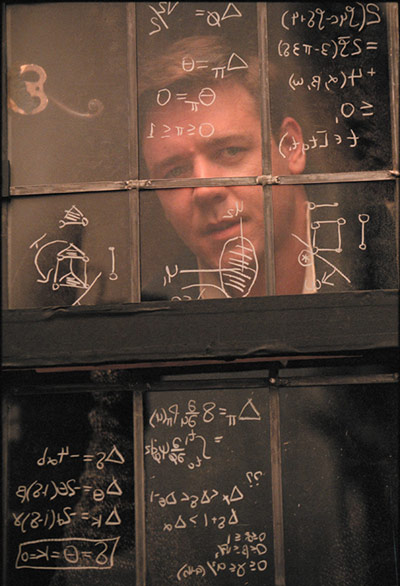
Watching my Daughter study was interesting, she has discovered that you don’t need a white board to make notes, and just like John Nash (A beautiful Mind) has been writing on our dining room windows with a marker pen.  She also created a game where the answer was under a flap of paper and found that she learned more effectively when teaching someone else, me. Go on ask me a question about respiration or stem cells…..

I have written on the merits of learning styles before,”learning styles don’t work or do they,” but in that blog I focused more on how you process information rather than using differing methods to learn. For example making notes using mind maps rather than in a linear format or writing on the window rather than on paper…..  Different people learn in different ways and at different speeds. This is why there is a big push in education to personalise learning, to make it sufficiently flexible for each individual to learn in their own way.

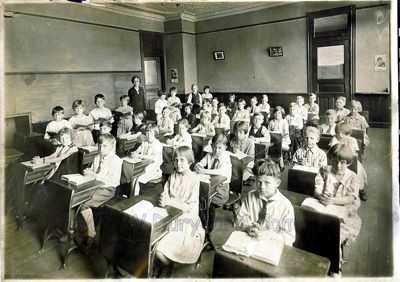
The argument is that in the last century education was delivered in a style needed to prepare people to work in factories. It required little in the way of individual thought just the ability to perform simple repetitive tasks, the same as everyone else. As a result pupils were all taught in the same way, sat in rows, repeating the same thing over and over again, and dressing alike. Okay a bit Orwellian and not entirely true, there have always been great teachers, but you get the point.

But now we live in a world that is constantly changing, problem solving is highly praised and keeping up to date with the latest information or developments is essential. So learning needs to change.

Different ways to learn

There are of course many ways to learn, but below are a few tips and hints.

  •  Making notes – writing something down is an incredibly powerful method of learning. Some people like mind maps, others prefer lists or bullet points and why not try Concept Mapping. The key point, just write it down.
  • Cards – reducing down what you have to learn and put it onto small cards. This is great for individuals who like to rearrange information, putting the most important first or eliminating what has been mastered.
  • Get a learning habit – make a routine out of what you do so that you perform a task without thinking. Learn one new fact before you go to bed, always have a book to hand or have notes on your mobile so that when you are on the train everyday you can study for 20/30 minutes.
  • Talk out loud – okay people may think you are a bit strange but listening to your own voice can really help.

Of course not all of the above will work for everyone that’s why you are you, an individual, the secret is not to give up if one method does not work.

Ps other great films about learning

Good will Hunting and the best of all Dead Poets Society

Let me know your favourites?

Learning styles – don’t work or do they?

Much has been written about learning styles and in the world of education the very idea that there might be one “good way” to learn remains controversial.

The term which refers to the many ways in which we learn is often used interchangeably with ‘thinking styles’, ‘cognitive styles’ and ‘learning modalities’.


However, a number of researchers have attempted to break down the concepts and processes that underlie the term into three inter-related elements:

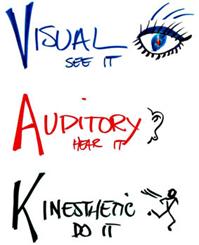
  • How you process Information – How you perceive, store and organise information, for example, VAK, visually, auditory, kinaesthetic.
  • The environment in which you learn – Your preference towards learning in a certain way, perhaps with others or on your own or in a certain setting or at a particular time of day.
  • Learning Strategies – Your use of differing methods to learn specific subject matter in a particular way. For example making notes using mind maps rather than in a linear format.

In this blog I want to concentrate on the first of these, how we process information, in particular VAK, however the observations are just as relevant to other learning styles.

 VAK – a preferred learning style

The argument is simple, everything you have learned at some point has come to you through your senses, but have you got a preference, is there one method that you as an individual are more receptive to than another? Do you for example prefer to look at pictures and diagrams  (visual) rather than listen to someone explain how it might work (auditory) or would you like to do something rather than talk about it (kinaesthetic).

Find out your learning style by taking this simple test

Learning style How we learn Learning tip
Visual seeing and reading Use mind maps and colours
Auditory listening and speaking Make an audio of your notes
Kinaesthetic touching and doing Practice questions.Build it….fix it….

But do learning styles work?

Watch this clip as Professor Daniel Willingham describes research showing that learning styles are a myth and that learning styles dont exist.

Baroness Susan Greenfield, Professor of Pharmacology at Lincoln College, Oxford University and ex Director of the Royal Institution has even been brought into the debate.

Writing in the Times Educational Supplement Magazine (29th July 2007), Susan Greenfield said that “from a neuroscientific point of view is nonsense” (the learning style approach to teaching) was nonsense. Humans evolved to build a picture of the world through our senses working in unison , exploiting the immense interconnectivity that exists in the brain, It is when the senses are activated together that brain cells fire more strongly than when the stimuli are received apart.” Abridged

Its learning about learning that matters

So, given this lack of consensus amongst researchers, why bother to consider learning styles at all?

The reason I would suggest that knowing about learning styles is helpful is not so that you can label yourself an “auditory learner” “theoretical learner” etc, this can narrow your ability to learn and even provide an excuse for poor performance, “I did not do very well at that because I am not that theoretical”. No it is to broaden your horizons and give you alternative ways of learning should you get stuck when trying to understand something.

Understanding more about how you (might) learn can really help. Imagine you are sat there at night reading and re reading a chapter in a book, clearly getting nowhere, becoming more frustrated at your own abilities. What if you stopped reading to yourself and begin reading out loud, thus changing a visual internal auditory style to a visual external auditory one. Susan Greenfield is right, we learn best when we stimulate the brain with all our senses and not just one of them. Understanding about learning styles is about creating more choice and flexibility, if one method isn’t working then change to another.

Sorry is not good enough – Exam paper mistakes

9 exam paper errorsExams seem to be in the news a lot these days, unfortunately often for the wrong reasons. This month we were told of at least six errors on exam papers sat by students studying A-level, AS-level and GCSEs taken in England, Wales and Northern Ireland. The errors were on questions with marks ranging from 1 to 11 and effect 90,000 students. In fact it is hard to keep up; only yesterday there was news of another possible three mistakes, bringing the new total to nine!

The examining bodies have said they were sorry and that they would take into account the errors when they come to mark the paper, ensuring that no students would be disadvantaged as a result. Firstly an apology is not good enough, it should not happen in the first place and secondly they can’t “take into account” the full impact of the mistakes. And it looks like David Cameron agrees……

Now of course everyone makes mistakes, but when the consequences are as important as this there should be a system in place to ensure they are spotted. That system should include having an examiner, an assessor and a sitter. This is in addition to the normal proofing and arithmetic checks. The examiner writes the paper, and presumably checks it, the assessor also checks the paper, ensuring the wording is clear and that what is being asked is within the syllabus and technically correct. The sitter should then attempt the paper under exam conditions, to make sure that it can be completed in the time available. If these processes are followed it would seem almost impossible for a mistake to be made, I wonder what went wrong?

Equally it is not possible for the examining body to ensure that no student is disadvantaged. What can they do, be generous with the marks for any attempts made?  What if the student looked at the question tried to do it, panicked and as a result wasted valuable time, making little or no attempt at the rest of that question, there is in effect nothing to mark. What can you do in these circumstances; just add on say 5 marks!

How can you take into account the student who raced through the second question because they spent so much time on the first and made mistakes due to the time pressure, add on another 5 marks!

And what about the student who looked at this question, lost their confidence and so failed to complete the paper, add another 5 marks!

Listen to this confident student describe the impact of a mistake in the exam.

And he got no reply…..

What to do if there is a mistake

There is however some good news, you can still give yourself the best chance of passing if you apply some simple exam techniques.

1. Stick to the mark allocation – if it is a 10 mark question then only spend 18 minutes on it, 1.8 marks per minute for a three hour exam. So even if you cannot answer the question because of a mistake on the paper you will not be wasting time that could be better used on the next question.

2. Don’t think you have to get everything exactly right. Your objective is to pass the exam with the highest mark, so you may have to accept that you will not get 100%. And of course getting 100% correct is impossible when the examining body has put down the wrong information! Do your best and move on.

3. Make assumptions – read the exam question slowly, underline the key points and if it doesn’t make sense clarify what you think it is saying by stating your assumptions. Then answer the question in accordance with your assumptions.

4. Don’t bother asking if you think there is a mistake. There is little point asking in the exam if there is a mistake on the paper. The invigilators on the day are unlikely to be subject experts and so will do nothing. Let others put their hand up and ask, you should keep your head down and get on with answering the question.

Remember exams are more than tests of knowledge and they are not always fair, but they are equal, everyone in the exam room is faced with the same examiners mistake. How you deal with those mistakes however can make all the difference….

Another TED lecture worth watching

And finally I have another TED lecture for you to watch. It is presented by Sir Ken Robinson who gives a very interesting talk on what he describes as a crisis in our education system – personalised learning not standardised/production driven learning.

Okay kids – Just remember always sit a mock exam

Always sit a mock exam

Rolf Harris has had a very varied career, musician, singer-songwriter, composer, painter, television personality and passionate advocate of sitting a mock exam. Okay I made that last one up but Rolf did make a very good point in an interview that I think illustrates one of the main benefits of sitting a mock exam.

In his early days Rolf used to paint on a huge canvass using wallpaper brushes and rollers, and it was in front of a live TV audience with only a 5 minute slot. Many years later in an interview he was asked why he practised painting the same thing over and over again, “after all Rolf you are a very good artist” said the interviewer, Rolf replied, “yes I can paint, but I am not practising to improve my painting, I am practising to make sure I finish on time, this is live television I have to finish at exactly the right time, that’s what I am trying to learn.”

And the same applies to mock exams, you’re not sitting a mock to find out what mark you’re going to get, that’s just the by product, you’re doing it to make sure you will finish on time. Knowing all the answers is no good if you run out of time….

Reasons to sit a mock exam:

1. Practice at leaving questions and moving on. Leaving a question you can do but have spent too much time on is easier said than done, remember there are often easier marks in the first 5 minutes of the next question than in the previous one. If you sit a mock exam you can practice leaving questions, sticking exactly to the time indicated by the marks in the question.

2. It’s an opportunity – I like to think of exams as opportunities to improve, they help identify what you need to improve to be better next time. This means the more mocks you sit the better you get!

3. Helps manage ignorance – There will certainly be questions in the exam that you won’t be able to do, where you don’t know the answer. Managing ignorance is a higher level skill, it is the ability to have a go, give it your best shot, even if you don’t know, just use your common sense. You may be very surprised at your mark. Only when you sit a mock will you really force yourself to have a go.

4. Gives you an indication of the topics that you are good at and the ones you aren’t. Sometimes you think you know something but when it comes to it, like in a mock you don’t.  Don’t worry there will still be time after the mock to brush up on those “think you know areas” areas.

5. Can help you deal better with stress. If you sit a mock exam it can feel like the real thing, but it isn’t. So if you panic and lose time as a result it doesn’t matter. It gives you a chance to think how you would deal with that situation should it arise again.

The best reason

But the best part of sitting a mock exam is if the mock you sit turns out to be very similar to the real thing. What would your chances of passing be then! Mocks should always be written with an eye on what might come up.

What it is not

On the whole a mock exam is not meant to predict success or failure although many people think of it like this, only the real exam matters. So why not give it a go and sit a mock exam this time, what have you got to lose.

And finally no mention would be complete of Rolf without a chance to watch Rolf sing Two little boys. Nothing to do with exams but a classic….

Exam techniques worth £100,000

I am not sure what to make of the latest news that a law student Maria Abramova is suing the Oxford Institute of Legal Practice (OXILP), part of Oxford Brookes University for £100,000 claiming they did not prepare her well enough to sit her legal examination, specifically they did not teach her exam techniques. 

She claims that failing the exams left her with a ‘blind spot’ when it came to taking future exams and eventually contributed to her failing the New York bar examination in 2008. She has since decided not re-sit the American examinations, as the process of taking legal tests causes her to become psychologically distressed.

Maria Abramova was clearly academically bright; she graduated in July 2004 with a 2:1 degree in law from Oriel College, Oxford. In all her studies with OXILP she had consistently been graded “very good”, the top grade.  Of the 357 other students that studied that year more than 99% went on to pass the paper at the heart of the litigation.

Who is to blame?

So what went wrong, does she have a case, is a college or university responsible for getting the student through the exam or is their job simply to deliver knowledge in an inspiring and understandable manner. And do exam techniques make that much difference anyway?

It is perhaps not surprising that a case of this nature has finally come to court. With exam results determining the opportunities for many and the price of education on the increase, why should educators not be accountable………….What is interesting is that this case has focussed not on the content of the course – “I was not taught X and X came up in the exam and that is the reason I failed,” but on exam techniques.

Now as someone who delivers courses on exam techniques and believes they are a vital part of passing examinations, it would be hard for me to argue they are unimportant or make no difference. But I come from a world (Professional accountancy and tax qualifications) where passing an exam is considered a vital part of the success of the course. I am not sure that this is the case with OXILP.

Its about responsibility

To answer some of these points you need to clarify how much responsibility should rest with the student and how much with the tuition provider. Education has to be a partnership; students are not empty vessels simply waiting to be filled with knowledge, they do have to try hard and study independent of the class, they should talk to other students and find out what they do and perhaps most importantly, they should challenge and if they are not happy seek a remedy.

I am of course no lawyer and await the outcome of this case with interest, but I can’t deny that I am pleased that someone has managed to put a £100,000 price tag on the value of exam techniques. And should Maria ever want to reconsider her decision to give up exams and need help with exam techniques I could certainly recommend a good book…..

Be proud of trying hard

There has been much in the media about schools and education recently and Michael Gove the Education secretary has been making the headlines with comments like “Rich thick kids do better than poor clever children when they arrive at school (and) the situation as they go through gets worse.”   

The Institute of Education tested children aged 22 months and again at the age of six years. It found that on average toddlers with low ability from the richest homes overtook high achieving children from the poorest backgrounds within a few years. The gap widens throughout school, research has found. By the age of 16, children eligible for free school meals are half as likely to get five decent GCSEs as pupils from wealthier backgrounds. 

For the government there are clearly problems here, if you wish to have a society that provides equality and opportunity for all regardless of your background then something is going wrong. However what struck me was the implication that after being tested at 22 months you should be successful at school, because at 22 months you had ability. How exactly do you measure ability at 22 months anyway? 

This is not a story about rich verses poor, and how the rich are using their sharp elbows to force their way to the top. This is a story about how anyone, almost regardless of ability can go onto achieve if they try, work hard, have the right environment, are motivated and inspired. The implication is that this message and these qualities are being provided by the parents of the “Thick rich kids” or they are paying for it outside of the traditional classroom. 

Trying hard

I sometimes think that trying hard or putting in a lot of work is thought of as not as impressive as being naturally talented. Yes it is great to see someone who has a natural talent, performing to the best of their ability, but show me a top sportsperson who, regardless of talent does not have to work hard and put in hours and hours of practice. If you pass an exam you should be proud of how much effort you put in and how hard you worked. The student who has more ability and fails but is happy, knowing they could have put in more work has much to learn.

So please celebrate hard work and be proud of what you have achieved knowing that you got their by working as hard as you could.