
The best GPTs for learning & exam success

If you have been on a desert island for the last 18 months without internet access or contact with the outside world it’s possible you have never heard of GenAI, GPTs or ChatGPT.

But even if you haven’t, it might still be worth a quick recap to bring you up to speed with some of the more recent developments and key terms before we go any further.

A GPT (Generative Pre-trained Transformer) is a type of AI designed to understand and produce human-like text. When you ask a GPT something, using a “prompt” it predicts what comes next in a sentence based on what it has learned. It doesn’t actually “think” like a human but uses patterns from its training to predict responses that often seem intelligent and relevant. A prompt is simply the text used to communicate with the GPT, it’s like a recipe, setting out the ingredient’s and how to combine them to get the desired result.

You input your question into what are called GPT models. These to a certain extent are defined by the companies that build them, for example ChatGPT is owned by OpenAI, Copilot, Microsoft, Gemini, Google, and Claude, Anthropic.

A whole industry has grown up around OpenAI’s ChatGPT. Custom GPTs are a feature of ChatGPT that lets users customise or fine-tune the GPT for specific tasks or domains. For example, “Legal Assistant GPT,” is trained on legal documents, case law, and regulations and helps lawyers with research and drafting, also “Math Tutor GPT” which specialises in explaining mathematical concepts and helping solve maths problems step-by-step. At the time of writing there were over 100,000 custom GPTs and growing. In many ways it’s like the app market where independent companies develop what they believe will be desirable GPTs, hoping to cash in at a later date when or if their GPT grows in popularity.

But which is the best?
This is a little like asking which is the best car or computer, it really depends on what you want to use it for. And even if we narrow it down and ask – what is the best GPT for learning, it’s still not that easy. For example, if you think of each GPT model as a different type of teacher, some are good at breaking down complex topics and making them easy to understand, others have a way with numbers or telling motivational stories, you get the idea.

But we must start somewhere so I have chosen 4 popular models, ChatGPT, Copilot, Gemini, and Claude. The plan is to put them each to the test using a series of standardised prompts, designed to mimic real-world learning and exam scenarios. By comparing their responses across various tasks, we should gain some insights into their strengths, weaknesses, and potential application in learning.

The testing focussed on professional accounting examinations using the free versions of the GPT models available at the time (August 2024). Each GPT was required to complete 7 different learning-based tasks, these were 1. Write practice questions, 2. Explain a particular concept, 3. Solve a numerical problem, 4. Summarise technical content, 5. Answer questions, 6. Provide feedback on an answer and 7. Create flashcards. The criteria used was Clarity, Accuracy, Relevance, and Teaching skills. This last category related to how well the GPT answers incorporated teaching skills such as step by step instruction, examples, motivation, coaching etc.

Results
The winner was ChatGPT with 86%, followed by Claude, scoring 77% and joint third with 65% were Copilot and Gemini. They all scored well on explaining concepts, summarising content, and giving feedback. But Copilot and Gemini were not always accurate, especially when dealing with numbers which brought their scores down. Although a link was provided to the respective syllabi, none of the GPTs were particularly good at producing exam standard questions. They were all too simplistic and lacked the required level of difficulty. A more detailed prompt with additional guidance providing examples of past question would however help improve this.

Conclusions
Based on these results, ChatGPT is the clear winner which is consistent with the findings of others, confirming that it is probably the best overall model at the moment. However, it’s possible that with more sophisticated prompts some of the problems that Copilot and Gemini had with calculations could be resolved.

More generally having now used these models for a few real-world learning tasks, they are hugely impressive but should be used with caution. They make mistakes but even worse the answers to the non-expert will appear convincing. That said as long as you know this, they can be of real value if used properly. Here are a few tips to help.

Use at least two GPTs – Save two GPTs into your task bar, and when in doubt as to the accuracy or relevance of an answer simply input the same question into both and let each validate the other. Based on these findings the best models to use would be ChatGPT and Claude. If they give different answers use a third.

• Use GPT’s to summarise content, provide feedback and explain complex topics

– Summarising a large block of text, reducing a complex topic down to easier to digest chunks of information not only saves time but reduces cognitive load.
– Feedback is as they say the “breakfast of champions,” which makes it an invaluable learning tool, all the GPTs were good at this. Put your answer into the GPT and ask how it might be improved or how to score more marks. If you provide a marking guide the answer will be more accurate.
– Explanations and examples are essential for learning. Simply ask the GPT to explain a concept in say “100 words” or to “a novice” who has never come across the topic before. Asking the GPT to include an example or go through it “step by step” can really help develop a much better understanding. And for difficult concepts, ask it to use an analogy or explain by way of a story.

• Use GPTs to help produce study timetables – but less so for flashcards and mind maps, which tend to be little more than words listed together. In fairness the problem with flashcards has more to do with teh quality of the questions and in some instances the answers.

• Be careful with asking technical questions – Stick to the texts that are produced by the experts and their answers.

The bottom line – Think of your GPT as a young teacher who sometimes gets over confident and makes mistakes but is very, very smart and wants to help you do well.

And if used properly it will!

Reading underwater – Context dependant memory

This month…..perhaps something you could practice on holiday when your in the pool – Context dependant memory.

Context-dependent memory refers to the phenomenon where the retrieval of information is influenced by the context or environment in which it was encoded or learned. In other words, people tend to recall information more effectively when they are in the same or similar context as the one in which the information was initially learned.

Let me give you an example, have you ever lost your keys and no matter how hard you try to remember where you put them, you can’t. Then someone says the magic words, “when did you last remember seeing them?”. This forces you to revisit the context, effectively the circumstances, background information or setting in which you last saw your keys. You may even find it helpful to physically go to the last location when you saw them, from which you are able to recreate the chain of events that followed sufficiently well that your keys will simply appear. This proves we are storing information often unconsciously as to what is around us when a particular memory is created. It’s a very similar process used in the Roman Room (Loci method) memory technique that involves associating information with specific locations or rooms within a familiar building, such as a house. The idea is to mentally visualise the information you want to remember being stored in each room, making it easier to recall later.

There are three primary processes involved in memory, encoding, storage, and retrieval. The context or environment provides powerful cues that help encode the information, making it far easier to store and ultimately retrieve at a later date. The secret for a better memory is to improve the process of encoding and to use techniques that are effective in terms of retrieval. Retrieval failure on the other hand occurs when the memory is available to us, but the necessary cues to access and recall are not.

The underwater memory

One of the most famous studies that identified the power of context dependent memory was conducted by Godden and Baddeley in 1975. In their research, they explored how the external context in which information is learned affects the ability to recall that information accurately. The study involved divers who were taught lists of words either on land or underwater. The participants were then asked to recall the words in either the same or a different environment from where they learned them. The four conditions tested were land-land, land-water, water-land, and water-water. The results of the study showed that participants had better recall when the environment of recall matched the environment of learning. In other words, those who learned the words underwater had better memory recall when they were tested underwater, while those who learned on land had better memory recall when they were tested on land.

The experiment proved that the context in which information is initially encoded becomes an important cue for memory retrieval.

Studying and testing in the same environment

Perhaps a more relevant example was conducted by Grant et al in 1998 which showed that there was a significant improvement in learners performance when the studying and testing environments were consistent or the same. It highlighted the importance of considering the environmental context when learning, for example most exams are taken in silence, sat at a desk using a computer. The rationale behind context dependent memory would suggest that the best way to study would be similar. The silence acting as an auditory cue to focus and concentrate and the sound of the keyboard helping the brain recreate thoughts and ideas in a similar way as to when they were first created.

Mood and emotions are also context

But context-dependent memory is not limited to environmental cues but can also extend to other contextual factors, such as emotional state or mood. Mood-dependent memory proposes that memory retrieval is generally more effective when the emotional state experienced during encoding aligns with the emotional state present during retrieval. This is one reason why sitting a mock exam is so effective, not only does it help prepare you mentally in terms of coping with uncertainty, but anything learned where anxiety and concentration levels are high, as is the case for a mock exam will be retained, only to be rediscovered when you enter that same state in the real exam. You may have already experienced this when taking an exam and a similar question is asked, the result, you are able to recall the answer with great clarity.

Criticism

As with most theories there are of course critics, some suggesting that the controlled laboratory experiments may not adequately replicate the complex and dynamic contexts people encounter in the real world. In addition memory effects may vary depending on individual differences, such as cognitive processes and personality traits.

However…….There is little doubt that the way information is encoded is a significant factor in determining how well you are able to remember something later. So why not give it a go when your next underwater.

Listen to DR Robert Byork discuss this in more detail, well worth 8.5 minutes of your time.

Flash Ah, Ahhhh……..Cards

y

I can’t believe I have not written about flashcards before. They are an incredibly popular learning tool and have moved relatively seamlessly to digital in recent years. Research published earlier this year found that 78% of students said they had used digital flashcards and of those who used both the digital and paper version, 60% preferred digital, largely because of their convenience and ease of use.

What is a flashcard? – essentially its a card with a question on one side and the corresponding answer on the other. You pick up the card and read the question, maybe it says, who was the 77th Prime minister in the UK? you then attempt to recall the answer in your head before flipping the card over to reveal the name “Boris Johnson”. Interestingly, in that same survey only 53 % of learners turn the card over to check if they were right, something we will discover later is not a particularly good idea. Which highlights another problem that might be happening, students are using flashcards, just not correctly.

Why do they work?
Of course, it doesn’t follow that just because lots of students use flashcards, they are good, but in this instance they are. Flashcards force students into doing things that we know are good for learning. For example, they are excellent for retrieval practice, spaced practice and interleaving, in fact, they support most of the evidenced based learning techniques. Let’s take a look at some of these in more detail.

Retrieval practice – The process of reflecting back and having to retrieve a memory of something previously learned is very powerful. When you look at the card and attempt to recall the answer the brain is working hard, this will result in the reinforcement of neural pathways, in simple terms you are learning. And of course, it requires effort, that’s the reason it works, don’t do as it would appear 47% of all learners and not check if you were right or flip the card over too soon.

Spaced practice – Spaced practice is the exact opposite of cramming, you effectively take the same amount of time to study, just do it over a longer period. The evidence shows that if you revisit what you have studied over time it boosts what is called retrieval and storage strength but if you study in a short period of time, your retrieval strength improves but your storage strength reduces. Flashcards can be used intermittently, effectively spacing out you’re learning, a good way to do this is to use something called the *Leitner system. Let’s assume there are three envelopes and on the first is written, “every day”, on the second, “every other day” and on the third, “once a week”. All flashcards initially start in envelope one, if you answer a flashcard correctly it moves into envelope two, if incorrectly it stays in envelope one. Each time you get a card correct, you move it to the next envelope but if you get it wrong, you move it back to the previous one. Eventually, in theory at least, all cards will end up in envelope three. Here is a video that shows exactly how it works.

*The Leitner system was developed by the German science journalist Sebastian Leitner in the 1970s.

Interleaving – Interleaving is simply studying different topics as opposed to studying one topic very thoroughly, this latter process is called blocking. Repetition is one of the main benefits of using flashcards, the process takes place naturally as you go through the pack several times, however that same repetition can make the process easier, because the brain will begin to remember cards by association with each other. This is not the same as remembering the information on the card, because if you change the order then the association is broken and you will forget. A simple technique is to shuffle the deck each time you go through it.

Paper based or digital
The evidence to support using paper-based flashcards or the digital version is mixed with some suggesting that digital is better, Azabdaftari & Mozaheb, 2012 and others Gilbert Dizon and Daniel Tang concluding that there is no significant difference. Although they do acknowledge as our earlier research did that students prefer digital when asked.

The arguments are that digital is more convenient, for example everyone carries a mobile and they easier to create and use due to the sophistication of some of the Apps available. However, in contrast producing your own papers-based cards, deciding what to put on them or how they should look, together with their tactile nature makes the learning more effective.

My advice, do whatever works best for you. Perhaps using an app such as Quizlet, Brainscape or the very popular AnkiApp for one subject and produce your own paper based cards for another.

Conclusions
I should have written about flashcards before, they are a hugely effective tool that utilise many of the best evidenced based strategies. Don’t worry about the, “should I use digital or paper” debate, it really doesn’t matter, try both.

And one last tip, don’t leave the use of flashcards until the end of your studies. To maximise their value start using them about a month before the exam, not the night before! Oh, and why not rate yourself in terms of confidence in getting the correct answer before turning the card over, it’s just another way of deepening learning through reflection.

You might find this helpful, it shows 5 ways to use flashcards, although in fairness some are just good note making skills, but then what’s wrong with that.

COVID Time – spend (£) it wisely

If you asked a group of students what was one of their biggest problems, many would say – lack of time.  

Now it’s unfair to highlight this as something unique to students, we all suffer from a lack of time. A look across the virtual bookshelves for titles that make reference to Time Management will give you some idea as to how many people are looking for solutions to this problem.

Life in the UK and across the world has changed as a result of Covid 19, one of those changes has been a disruption to normality. No longer does your alarm go off at 7.00 am, which is essential if you are to have a shower, grab some breakfast and be at your desk for 9.00 am. No longer do you have to leave the office at 5.05pm to be on the train for 5.30 pm, which will give you a fighting chance of being home for 7.00 pm. If your studying on the evening this strict time management regime will permit an evening meal and provide two hours of effective study before you go to bed.

Of course, your day may not be anything like this, in fact it’s possible you are busier than ever, but for many Covid has reset normality, effectively putting a line through what you were doing and replacing it with……time. The secret of course is not to waste it, reflect on what you were doing and think carefully before you fill the space with other activities, spend this time wisely on what is most important to you!

The key is in not spending time, but in investing it.”   Stephen R. Covey

Thinking about time – it doesn’t really fly
Time is in itself an interesting concept, the Greeks had two words for it, Chronos which refers to the more traditional understanding as with a clock or calendar, it is measurable and predictable. Kairos on the other hand considers the human perspective, how we experience time, the quality of time, finding the “right time” to start studying perhaps. This perception of time is explained neurologically by the way the brain changes, impacted by neurotransmitters and chemical stimulants. When neurons are fired more quickly time will go faster, fire them slowly and time will drag. See also Circadian rhythms. This might help explain why there is never enough time for interesting subjects but too much for boring ones.

Impact on studying
Several studies indicate that students who manage their time not only perform better in the exam but experience less stress. There is also evidence that students are not good at managing their schedules, finding it difficult to strike the right balance between studying and the other demands on their time. This lack of balance often leads to disrupted sleep patterns and higher levels of stress. It may well be that “pulling an all-nighter” a common solution to running out of time is in effect a coping strategy to compensate for the lack of good time management skills. Interestingly, students are well aware of the problem, Ling, Heffernan, and Muncer (2003) found that time management was often stated as being a factor in poor exam performance.

One caveat, it’s possible that the research only shows a correlation not a causation, “good students” who would do well in the exam anyway just happen to plan, prioritise and stick to deadlines. These skills are not contributing to those higher grades, they are simply incidental behaviours. That said if “good students” manage time well and in the absence of anything to the contrary, maybe it’s worth doing anyway?

The common man is not concerned about the passage of time, the man of talent is driven by it.”  Arthur Shoppenhauer, German philosopher

Making the most of your C time
But what can you do to improve your ability to get things done in this newly discovered Covid time? There are many tips and techniques that can help, below are a few of the best ones.

Planning backwards – this is probably one of the most effective. Start by asking the question, when do I want to pass the exam, if its June 2021, put that date in your calendar or planner. Then ask another question, how much do I need to learn before then? To give some idea as to how you might answer this, break down what you have to learn into chunks, looking at how many chapters there are in the book is one way of doing this. Then ask, if there are 10 chapters when do I have to start, assuming for example each one will take a month. Hopefully you get the idea, at each stage you ask a question breaking the larger activity into a series of smaller ones. This not only makes each task more manageable it provides a month by month plan that will lead all the way to the exam.

Using technology – often technology is seen as a problem, a distraction, when it comes to getting things done. But there are some very useful apps available these days to help better manage time.

  • Google calendar – other calendars are of course available but Google provides one of the most effective planning tools on the market. Not only is it free but it performs equally well across all devices from phone to desktop. This is the place to put those key dates and deadlines that came from the planning process.
  • Trello –  is effectively a project management tool or as some have described it “Post-it notes on steroids.” It can help capture ideas and organise thoughts with the added advantage they can easily be shared with others who can also contribute in real time.
  • Remember the milk – is extremely helpful for making lists and as with Trello can also be shared. It includes the ability to set reminders and integrates with Gmail, Google Calendar and Evernote.
  • StayFocused – is a blocking app, available on the chrome browser that temporarily blocks the internet except for the websites you give an exception.

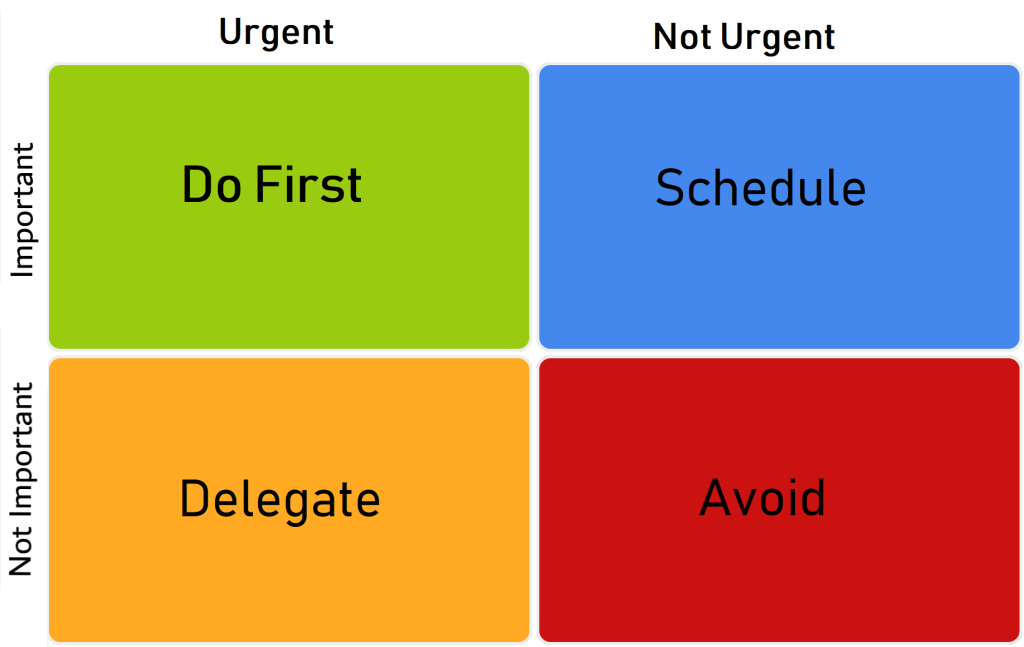
Prioritisation – Choosing what you should spend time on is called prioritisation. One technique that many people have found useful is the Eisenhower decision matrix. So, called because Dwight D. Eisenhower is said to have used it to help him make better decisions by organising and prioritising his workload.

A simple 2 by 2 matrix that has the level of urgency on one side set against the level of importance on the other.

It’s relatively self-explanatory but one of the most important messages is the need to make time for tasks that are important but not urgent. If something is important and urgent you have to do it now but there is danger with some activities that they are never urgent, the result, they are constantly put off. For example, starting to study, this is incredibly important especially if you want to pass the exam in June 2021, but because it’s not urgent you can always start tomorrow.

I will leave you with one final quote about time from Bill Keane the American cartoonist which I have always found insightful.

“Yesterday is history, tomorrow is a mystery, today is a gift, which is why we call it the present.”

Enjoy your gift…..

Time management skills have been shown to have a positive impact on student learning and student outcomes (Kearns & Gardiner, 2007; Kelly, 2002; McKenzie & Gow, 2004)
Many students find it hard to regulate both their studies and their external lives (Van der Meer, Jansen, & Torenbeek, 2010)

Closing the gap – learning from answers

Close-the-Gap

The single most important piece of advice for anyone sitting an exam is to practice questions, and where possible, past exam questions. It has been a consistent message for over 20 years, and although we have evidence to show its effectiveness it also has a common-sense logic. Would you for example go on a driving test having only read about driving in a book but never practiced in a car beforehand?

Although the process of practising questions provides insight not just about the exam but also how well you perform under timed conditions, there is another important and valuable lesson. What does comparing your answer to the model answer tell you about how well you understand the subject and what you need to do to get it right next time, effectively to close the gap?

Closing the gap
Checking if your answer is right or wrong is important for obvious reasons but there is a rich seam of learning to be found by looking at the detail in the answer and comparing it with yours. For numerical questions consider reworking the calculations, noting each iteration to help gain a better understanding of the answer. Although this will help should a similar question be asked again, that’s not the main objective. Focusing on one subject, one topic and a specific question helps direct your efforts to a problem that needs to be solved, and the brain loves to solve problems. It also adds context and purpose to what you have been learning.

Written answers are far more difficult to review as there is often a degree of interpretation. However, when you find a statement or section of narrative that is different to yours or perhaps didn’t appear in your answer, ask, why didn’t I put that? Was it that you knew what to say but didn’t think it relevant, was your answer similar but not as clearly expressed, has it exposed your level of knowledge or lack of it? It’s this process of reflection together with the guidance as to what you need to do to “close the gap” that makes doing it so worthwhile.

Different types of exam
There are different types of exam so in order to offer more specific advice, let’s look at two extremes.

Objective tests – these types of questions are the easiest to review because they are relatively short, but even if you passed don’t be satisfied, look at the questions you failed and learn from the answers. You may of course find your knowledge lacking, but going back to the textbook with a specific problem in mind is a very efficient way to learn. Also remember to add some comments to your notes as to what you have now learned, this will help you avoid making the same mistake again. And if you didn’t pass you obviously have even more work to do.

Case Study – looking at past questions for case studies is a very different learning experience. If the case study requires you to demonstrate application of knowledge, which is a common objective, reviewing the answer can provide excellent guidance as to how this can be done. Application is something many students find difficult, largely because their head is full of rules and not how those rules could be used in the context of a real-world problem.

In addition, you will get a feel for the required standard and how the right headings, phrases and structure can help give order to the random thoughts that will come to mind when in the exam. Equally don’t be afraid to effectively steal some of the set phrases or tricks of good writing, for example notice when making a series of points, firstly, secondly, thirdly can help the answer feel structured and yet not repetitive.

Reviewing past exam questions is learning from someone who has got the answer right, which sounds terribly logical when you think of it like that.

What to do if you fail the exam? – growth mindset

failure-sucess

Back in 2011 I wrote about what to do if you fail an exam, it’s one of my most read blogs. Last week I delivered an online presentation for the ACCA, (Association of Chartered Certified Accountants) on how having a growth mindset can help improve your chances of passing an exam, the very opposite of failing. But that is partly the point, very few successful people have never failed, in fact coping with failure is one of the reasons they ultimately succeed.   Having the “right mindset” can not only help you pass, it can give direction and motivation if you fail.

Mindset

The term “growth mindset” was coined by Carol Dweck, Professor of Psychology at Stanford University. She became fascinated as to why some children shrink in the face of problems and give up, while others avidly seek challenges, almost as a form of inspiration. What she discovered was that the type of mindset students held was at the heart of these two differing views. This search for resilience in the face of challenge and adversity has become her life’s work and something that has guided her research for over 40 years.

Fixed – When students have a fixed mindset, they tend to believe abilities are carved in stone, that you have a certain amount of let’s say talent or intelligence and that’s that. They perceive challenges as risky, that they could fail, and their basic abilities called into question. And the fact that they hit obstacles, setbacks, or criticism is just proof their views were correct in the first place.

Growth – In contrast, when students have more of a growth mindset, they believe that talents and abilities can be developed and that challenges were one way of doing this. Learning something new and difficult was in fact the way you get smarter. Setbacks and feedback are not seen as confirmation of frailty but as information that could be used to improve.

This does not mean that people with a growth mindset think talent doesn’t exist or that everyone is the same. To them it’s more a belief that everyone can get better at whatever they do, and improve through hard work and learning from mistakes.

How can you develop a growth mindset?

The good news is that you can develop a growth mindset, but just to be clear, the world is not divided into those with a growth mindset and those with a fixed one, a mindset is not a character trait. Everyone is a mixture of fixed and growth mindsets. You could have a predominant growth mindset in one area but there can still be a thought or event that acts as a trigger and moves you into a fixed one. The secret is to work on understanding your triggers so that you’re able to stay in a growth mindset more often.

Beliefs – ask, what you believe about yourself and the subject you are studying. Do you believe you are below average, not very clever or that the subject or topic you are studying too hard? If this is the case you have wandered into a fixed mindset. What you believe is neither true nor false. What we can say is that it’s certainly not “helpful” to believe you are not clever, and is not what someone with a growth mindset would do.

Talent and effort – thinking that people are either naturally talented or not, is a classic example of being in a fixed mindset. You may never be top of your class but you can improve, and this is achieved by making more effort and working harder.

Positive self-talk – we all have voice inside our head, it’s called your inner speech. It has a significant impact on what you believe and how you behave. If you find your inner speech is telling you to give up or that you will never understand a particular topic or subject, change your voice, tell it off, and then say something more positive. Dweck says that just by adding NOT YET to the end of your statement can help. For example, I don’t understand portfolio theory – at least NOT YET.

The importance of mindset and failure

If you have failed an exam or just sat one and believe you have failed, I have two pieces of advice.

Firstly, on the whole students are not the best judge of their own performance. They tend to reflect on what they didn’t understand or thought they got wrong rather than what they might have got right. As a result, you may have done better than you think and are worrying about nothing.

Secondly, if you do fail, you have a choice as to what this might mean. On the one hand, it might simply be confirmation of what you already know, that you are not very good at this subject or clever enough to pass. Alternatively, you could move to a growth mindset, recognising that you have slipped into a fixed one.  Find out what areas you need to work harder on, and start again.

Everyone has to deal with failure, it’s what you do when you fail that matters most.

The Paradox of on demand exams

paradox-of-choice-1

But which one is best when there is so much choice?

It is more blessed to give than receive, so it says in the bible, and Christmas is a time when you get to do this in abundance. What better feeling can there be when you find exactly the right present for that special person. You can even imagine the smile on their face when on Christmas day they rip open the paper to reveal the gift they either never new they wanted but did, or in their wildest dreams believed they could have or own.paradox-wonderful-christmas-time-1

BUT…….its not as easy as it used to be. Deciding on what you want to buy is one thing, finding the “best” or most suitable gift is another.

Paradox of choice

Although Psychologist Barry Schwartz wrote his book called The Paradox of Choice over 12 years ago, most if not all of what he said is more relevant today with the explosion of choice created by the internet and advances in technology. He argued that choice rather than being good, and by the way the basis for freedom, was not necessarily bad, but did not always result in the best decisions being made or to be precise, the feeling that the best decisions had been made.

There were two reasons for this, firstly, too much choice creates paralysis, a delay in the decision-making process (see also Buridan’s ass) that can result in no decision being made at all, and secondly if you do decide, ultimately you will become less satisfied with your choice for a variety of reasons e.g. regret, opportunity cost and the escalation of expectation.

But what has this all got to do with examinations?

On demand exams result in their own paradox

In the world of professional examinations for many years’ students and employers have been asking for more choice as to when the exam can be sat. Its only tradition and inflexible systems that have created a need for testing to take place at specific times of the year. But with technology comes flexibility and that flexibility now means that some examinations can be sat when you want, not when the professional body or university decides. Driving tests have long followed the concept of, “on-demand” testing.

This choice is however resulting in a paradox. Students are taking longer to pass their exams but despite having more time results are not improving. You would expect that having additional time to study would improve exam success not reduce it.

One of the reasons for taking longer to pass is because it is now within the student’s power to change the exam date if they so wish. There are a number of good reasons for doing this, for example, work pressure, not feeling ready for the exam or that you dont know enough. Logical reasons but are they “good” reasons?

That all depends of course on the objective, but if the objective is to pass the exam quickly, then the answer is no.

The best of both worlds

Schwartz never concluded that having a choice was bad, just that it was not the end game. Ultimate choice is not the objective. He did say that we should perhaps stop thinking in terms of maximising choice but set some standards that can be used to help navigate the choices available.  In fact, this is borne out by some initial research into this area which shows that students increase their chances of passing if they set an exam date, (the choice) enable sufficient time to study but don’t change the exam date later (the standard). The choice when to pass can be set but neither the length of study nor the exam date should change.

Alternatively:

Consult an expert – What do people do when they are faced with such a wide range of options they cannot decide, how about asking an expert? In this instance the expert would be the educational establishment or the examining body, what do they recommend?

Follow the norm – Data is now more readily available than ever before, many technologies make use of historical trends to make predictions or to offer advice when there are lots of choices. Everyone will be familiar with the web sites that suggest books or other items you should buy based on past behaviours. What worked best for you in the past, what did you do before that was successful or what do the most successful people do?

Now that we have cleared up how to make better decisions in a world of endless choices – I need to begin thinking about my New Year’s resolutions, oh dear if only there were not so many choices.

Happy new Year to you all

Click to watch Barry Schwartz TED lecture.


For example – how to get higher marks in written questions

MORE-EXAMPLES

It’s great to be knowledgeable, but to pass an exam knowing the answer is often not enough. Questions set by examiners seek to do far more than identify people who “know stuff,” they want the student to prove understanding and that they can use the knowledge, not simply reproduce it.

The knowing doing gap

There is sometimes a disconnect between what you know and what you can explain. Have you ever said to yourself, “I know what I want to say but can’t find the words” or “what more can I say, I feel like I am just repeating the same point”. This may be the result of a lack of understanding and simply requires more study (see Eureka I understand understanding) or it might be that you just need a better way to think about what you’re trying to do.

Analyse, Explain – clarify – Example e.g.e.g.e.g.

Imagine you’re faced with a question, it asks that you, provide a possible  explanation as to why we have seen a fall in stock market prices in recent weeks and what impact this might have on  economic growth in the UK . Often the first problem is knowing where to start, below are a few ideas that might help.

You will need a few headings to help give structure, these can often be found in the question, here for example we could use, Why stock markets might fall and Impact on the UK. Then under each heading think about analysing, explaining, clarifying and giving examples. These are not headings; they are to help expand on what you have been asked to do and give a perspective from which to think.

  1. First you analyse – If you analyse something you break it up into smaller parts so as to gain a better understanding. For example going back to the question, perhaps we should identify exactly by how much the stock market has fallen, over what period, what other events were happening at the same time, do we have any theories that could help or theoretical models we could apply etc. By examining what you have found, something new and obvious may become clear.
  1. Then you explain – an explanation is an attempt to make clear what you mean. One way of doing this is by making a series of statements. So for example, if you noticed that during the period in which we had the fall in the stock market, China’s economy also slowed and oil prices fell to unprecedented levels. This might lead you to make the statement – one of the reasons for the fall in stock market prices would appear to be the slowdown in the Chinese economy and the fall in demand for oil.

A subset of explanation is clarification. Definitions are a great way to clarify exactly what something means and in what context it is being used. Here for example we might want to include a definition of economic growth.

  1. And finally the example itself, possibly one of the very best ways of explaining and a very powerful technique to demonstrate understanding.

Example “Metaphor’s forgotten sibling”. John Lyons

It may be a reference to a real world example. In the question we have to address the impact on the growth in the UK economy. If you gave an example of the last time oil prices were so low and what happened as a result you will not only be demonstrating breadth of knowledge but also moving the debate forward, suggesting perhaps that the same will happen again?

Real world examples demonstrate the complexity and unpredictability of real issues, and as such, can stimulate critical thinking.

Students learn by connecting new knowledge with their own prior knowledge and real-world experiences. Piaget et al

An example may also be a construct, something that you talk through to illustrate a point. For example, let us imagine the impact of falling oil prices on an engineering company in the West Midlands. A reduction in oil prices would result in lower transportation costs that could be passed onto customers in the form of lower prices, in turn this should increase demand.

“Examples are indispensable to the acquisition of knowledge and they appertain to the domain of intuition”. Kant

Although this blog has covered an approach to structuring written answers, it is the use of examples that for me is the most important. And if it was not obvious enough, look how many times I used examples to explain what I was trying to say …….

27 Million People per day can’t be wrong – Gamification

League of LegendsThe statistics are astonishing, as of January 2014, over 67 million people play League of Legends per month, 27 million per day, and over 7.5 million concurrently during peak hours. And if your good at it the prize money for winning the world championship might get you to question your chosen profession, it was $2.3m in 2014 and 2015. Playing an on-line game is part of daily life for many people.


This blog is “of course” not about League of Legends. In fact I have to admit I had never heard of it, just shows how far out of touch you can become with popular culture. It’s not even about the gaming industry which is said to be worth £3.9 bn to the UK economy, it’s about a growing and fascinating area of learning called gamification.

Gamification is the use of game mechanics (rules, design and tools) in a non game context to better engage and motivate learners to achieve a desired objective. There are two types, structured, where you are looking to propel a learner through content and reward them for the desired behaviours and content driven where the game is the content i.e. the learner is a character in the game and is required to undertake tasks that are in turn rewarded.

Gamification techniques – Game mechanics

Games are not of course all the same but they do have similar characteristics, these “techniques” can then be used in a non game context i.e. a learning context. The idea being that if they engage and motivate the gamer, they will do the same for the student.  Games need some form of measurement to assess performance and a reward to act as an incentive.  Below is a note of some of the measurements and rewards used in gaming but could be adapted for learning.

  • Points – Used to keep score
  • Badges – visual stamps that are awarded to users on certain achievements and are normally displayed in their header and profile page
  • Levels – shows ranking and progress
  • Leader boards – a high score that is displayed for all to see
  • Rewards – not a badge but something tangible e.g. money….

Personal gamification

You don’t need to spend millions developing a game to get the benefits from gamification, and its not all about beating others, here are a few tips.

  • Set up a points system – identify the activities that will help you achieve your goal e.g. spend 2 hours each evening studying, 10 points. Answer 2 questions each evening, 20 points. Attempt the mock exam, 40 points. Score 50%, 80 points etc. Keep a running total of your points in a place that you can see when you study
  • Levels – Only move onto the next chapter or session when you have the desired points
  • Leader board – Keep a note of your highest score from the other subjects
  • Rewards – The best part. Set up a series of rewards e.g. a night off, go for a run, have a glass of wine, bar of chocolate etc. Increase the rewards as gaining the points becomes more difficult. If you beat your leader board score, then your rewards can be even greater, maybe a day out shopping/at the football etc. Why not ask others to contribute to the reward, if I get to the top of my leader board how about you buy me dinner. You will be surprised how many people, friends and family will effectively sponsor you.Other brands are available....

And finally tell your friends what you have done, “just eating a massive bar of chocolate which was my reward for scoring 80 points on my study game.”

Of course you might get fat doing this, but don’t worry there is another game that can help – it’s called weight watchers…..

Technology can help

As ever technology can help, check out this app HabitRPG – Click 

Staying the course – commitment

Mo-Farah-EthiopiaYesterday Brendan Foster described Mo Farah as the greatest sportsman Britain has ever had. You may of course disagree, it’s probably one of those conversations best left to have in the pub, I am sure there are many worthy contenders. Farah responded modestly by saying that because we have so many great sportsman simply being put in the “great” category was amazing. He nominated his greats, David Beckham, Sir Alex Fergusson and Sir Steve Redgrave.

Watch Mo win the 5,000 meter gold at the world athletics championship 2015.

I have to confess to knowing little about sport or in fact having much interest, but what has always impressed and inspired me is the level of commitment successful sportsmen and women have. I have written in the past about Sir Steve Redgrave who won gold medals in five consecutive Olympics. How do you do that, how do you get up every morning and work towards a goal that is four years away, every day for 25 years?

Mandy Monday – procrastination

Start MondayMandy is a weight watcher character who promises to start her diet on Monday, in the interest of gender equality I am sure there is a male equivalent let’s call him Marty. Of course Monday never comes and so although Mandy sort of commits to Monday she constantly puts it off, choosing to do “other things” in preference. Initially this seems like you are delaying the pain in favour of the pleasure but I am not sure delaying something that is in your best interest is pleasurable? Pleasure implies satisfaction and I don’t think you feel satisfaction, probably more like relief.

Exams – you need to commit

It can be like this with studying and exams. Very few students want to sit an exam, its hard work, stressful and you might fail. So if you were given a choice when to sit the exam when would it be, Monday?

In fact delaying an exam can feel perfectly logical and rational. This is how the internal conversation might sound. “I have to sit this exam and it’s not going to be easy, to pass you need to know everything. There is no point sitting the exam if I am not 100% ready, an athlete wouldn’t enter a race if they weren’t 100% fit, it’s like that for me. The best thing to do is sit the exam in another month, another month is all I need, then I will be ready.

The million dollar question is do you ever feel ready?

On demand exams – Set the date and stick to it

If the exam was once every four years my guess would be that most students would not put the exam off, can you imagine waiting another four years? But when an exam is on demand and its left to the individual when you have to take the exam, you never have to commit. At the back of your mind you know that you can always delay. This means you never made the commitment in the first place.

But how to commit – Take a calendar and pick the date you want to finish all of your exams, when you want to qualify, write it down. Then list out all the exams you have to pass to get there, set dates for these and write them down as well. Put them on a wall chart, electronic calendar, even post them on Facebook, they cannot change. These dates are no longer in your control; you have passed that to someone else and in so doing have made the commitment to yourself. Go on do it now!

And finally an antidote to exams

Not anti school, but pro education – If you have not seen any of these spoken word videos – watch this one. Why I hate school but love education, you will not be disappointed.

Ps if you like the no add video check out quite tube.

Stress or Pressure – Don’t let the bridge collapse

Releasing PressureI have long been interested in the way knowledge from one domain can help inform another and have had two very good examples of this recently, both leading in the same direction.


The first came from an engineering friend of mine who started a conversation about the meaning of stress and pressure in his world. He described stress and pressure as essentially the same except being applied in different forms. Pressure is applied on the external surface of a body, while stress is the internal resistive force per unit area of that body, which resists its elongation or compression.

Alternatively – Stress is generated within the material whereas pressure is the applied force.

The second example came from a stress management seminar* I recently attended, not so abstract you might say but it wasDont let the bridge collapse the analogy the presenter used that was interesting. He asked that we thought of a bridge, the cars going over the bridge created pressure on the bridge and as a result the bridge would experience stress.

No matter how strong the bridge, there was a point that if too many cars were on at any one time it would collapse.

How does this help?

Analogies can be very helpful where it’s difficult to conceptualise or understand complex ideas. For example the bridge will show signs of stress before it collapses. This is no different for people; signs of stress will be present well before the stress levels are high enough to cause problems e.g. short temper, lack of sleep, headaches etc.  Also if we carry on with the analogy, there are two ways in which you can make sure the bridge doesn’t collapse. One, don’t have so many cars on the bridge and two, support the bridge so that it can take more cars. This translates into reducing the number of external pressures you are under (less cars) and having coping strategies to help when you are under pressure (some support).

Pressures when studying

A lot of pressures when studying are time related, for example taking on too many subjects or having to study as well as holding down a responsible job.  But some pressure might be created by the way you feel about yourself, not being capable or clever enough. Also people often put themselves under pressure – interesting term “putting yourself under pressure” by having very high expectations or maybe those expectations are put upon them by others.

The simple answer – take some of the cars off the bridge, reduce the number of subjects your studying, lower your expectations etc. This is not to say that having high expectations is not good, but if it is affecting your performance in a negative way, then you have to do something. And I know it may not be easy to do this in all circumstances; do you step down from that responsible job, how practical is that?  Yet if you do nothing, the bridge will collapse and that has to be avoided at all costs.

The alternative to taking cars off the bridge is to add in extra support.

Strategies to cope

Lazarus and Folkman in 1984 suggested that stress is the result of an “imbalance between demands and resources” or results when “pressure exceeds one’s perceived ability to cope”. They came up with two types of coping responses.

Emotion-focused – These techniques work very well when the stress is or at least appears to be outside the individual’s control.

  • Keep yourself busy to take your mind off the issue – just keep working through the course
  • Let off steam to other students/partners, anyone who will listen in fact
  • Pray for guidance and strength – and why not
  • Ignore the problem in the hope it will go away – not always ideal but the problem may sort itself
  • Distract yourself – go for a run
  • Build yourself up to expect the worse – “I will probably fail anyway”

Problem-focused – These techniques aim to remove or reduce the cause of the stress.  These are similar to taking cars off the bridge.

  • Take control – being out of control is often the cause of much stress. Revaluate what the problem is, and ask is it worth it!
  • Information seeking, perhaps the most rational action. Find out what is causing the problem and look to solve it e.g. why do you have such high expectations, does it help?
  • Make a list, evaluate the pros and cons and put in order of importance.

Studying can be stressful and this can result in feeling under pressure but this is not altogether a bad thing stress and pressure are key motivational forces, so don’t think of stress as the enemy but watch out for any cracks that might appear in the bridge.

Watch this TED – Kelly McGonigal: How to make stress your friend.

Related posts – Exam stress – or is it your stress and Exam stress Mindfulness and the “7/11”

* The course was delivered by the stress management societyclick here for their website.

Turn off the mobile – multi tasking doesn’t work

Information every whereThe background to Dr Daniel J Levitin latest book, “Thinking Straight” is that the information age is drowning us with an unprecedented deluge of data and we need to develop strategies to cope. Information overload and distraction are two problems we face when it comes to learning. How easy do you find it to concentrate when studying? Do you sit in a quiet room with no distractions and focus your attention on one task or is your mobile phone, PC or tablet sat close at hand waiting to deliver the worlds information in a second.

In the past books were precious due to their scarcity and knowledge hard to acquire the result of people’s inability to read. Following the invention of the printing press in 1450 books became more readily available but even then the amount of information any one individual was exposed to was very small. In addition the pace of life was slower, expectations as to what could be achieved balanced against the practicalities of what was humanly possible.

information_overloadBut look at the situation today, we live in an information rich society, all of it accessible at the press of a button. The problem now is not availability of knowledge (western world centric I know) but curation, synthesis and prioritisation. Yet how well is our brain programmed to cope with this new world?

Good job we can multi task

Levitin argues that multi tasking is inefficient, it’s a myth. The idea that one solution to this deluge of data is to do several things at the same time is simply wrong.  When you are doing two things at once, reading a book whilst monitoring your Twitter feed or face book account for example you are not in fact doing two things at once, you’re switching between neurones very quickly and this is giving the illusion of multi tasking. The downside of this process is it drains energy, neurones need glucose and the constant switching depletes it, resulting in poor concentration and an inability to learn as effectively. Multi tasking

I have written before (Attention Breach of duty as a student) on the importance of focusing your attention on one thing at a time and Levitin is supporting doing just that. However he does add something that I think is of interest. When you flit between two competing information sources the brain will reward you with a shot of dopamine, the pleasure drug. The result being you will enjoy the experience. This was valuable for Stone Age man because discovering a new food source at the same time as avoiding being eaten was helpful but in a modern world it is just problematic.

Externalise the information – organise, reduce and prioritise

What Levitin suggests is that you need to externalise, get the information out. In simple terms write it down, making lists is an example of externalising. He also states that you should write rather than type as this requires deeper processing.

So if you want to follow a more brain friendly approach to learning you should:

  • Break information down (A common message) into chunks and write out the key points. This will help you focus and process the information at a deeper level.
  • Find a place that is free from distraction, turn off all mobile devises. This is probably the most important message; your brain does not deal well with doing two things at once.
  • Make a list of what you have to do. Interestingly this is where technology can help. Google calendar can set up simple reminders so that you don’t have to keep distracting yourself by thinking about something you need to do later.

And if you’re interested click this link to read – Why the modern world is bad for your brain.

Ps Beth this ones for you!

Big fish – little pond

Best be a Big fish in a Small pond

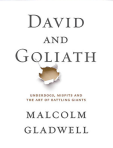
It’s taken me a little time to get round to reading the latest Malcolm Gladwell (MG) book, David and Goliath, underdogs, misfits and the art of battling giants. Although consisting of three separate sections they all examine the idea of what it means to have an advantage and how we account for the success of the underdog.

Of all the ideas MG lays before the reader, the one I felt was of most interest is something called the big fish little pond effect (BFLPE) and the theory of relative deprivation.

Relative deprivation theory (RDT)

Relative deprivation refers to the discontent people feel when they compare their positions to others and realise they have less. e.g. I judge BMW ownermyself to be successful on the basis I have a brand new car that cost £15,000.  That is until my neighbour pulls on the drive with a brand new BMW costing £30,000, now how successful do I feel?

MG applies this theory to the world of academia. If you take Harvard’s Economics PhD programme and consider the number of times each PhD graduate was published in the last 6 years, Harvard’s top students will do this 4.31 times. Those that are about 5th or 6th in the class publish .71 times and those that are about average .07 times. If however you compare these results to a “mediocre” school, say the University of Toronto, where MG went,  the top students will publish 3.13 times, those that are 5th or 6th .29 times and those that are average .05 times. The point being that students who attend a much lesser university but where they are top of their group perform considerably better than the 5/6th best at Harvard. The question is why?

The smarter your peer group the dumber you feel…..

This is where RDT comes in, we tend to judge our ability by comparing with others, and if you are in a class with very smart people who always do better than you, your perception of your own ability will be effected. The second problem is that this self perception will have a significant impact on your behaviour and ultimately what you achieve, hence the results above. The implication, you will achieve more if you are in a class with others of equal or less ability than yourself.

Bottom line, your performance will improve if you are a big fish in a small pond. It’s even called, the big fish little pond effect (BFLPE)

But what to do?

Admittedly you can’t always pick and choose your peer group, but you can be aware that comparing yourself with the very best may be having a detrimental impact on your own performance, so stop doing it! Instead be inspired by the best but compare your performance with those that are the same as you. Better still compare your current performance with what YOU have achieved in the past and if you are doing better you must be improving…..

David-and-Goliath-Malcolm-Gladwell


Listen to MG talking about relative deprivation theory or if you prefer the Big Fish little pond theory….


Listen to MG being interviewed about the book

Sleep is for wimps – oh and successful students

Get some sleepAlthough I am sure someone is preparing for an exam this very minute, July/August are the traditional months to take a holiday and get some well earned rest. A holiday can be exactly what you need especially if you have just come to the end of a long period of study followed by in some instances, weeks of exams.

I have to express a personal bias in so much that I believe holidays are essential if you are to be at your best. For me this years holiday has to provide some degree of relaxation after what has been a particularly busy 6 months. I am looking forward to a change of scene, meeting different people and the freedom to wake naturally, feeling rested after a good nights sleep. Holidays are of course very personal and for some an adventure holiday, travelling to new places every day, might be far more desirable.

But one thing that all holidays should provide is the ability to relax and catch up on sleep, even if that means you climb two mountains, swim for three hours before crashing out in a state of satisfied exhaustion on the evening.

Sleep is essential for learning 

Of course sleep is something you should do “properly” every day, it’s just that we don’t. Modern life steals that vital rest time, this is acutely the case when trying to balance both work and study. Studying is often undertaken on an evening and sometimes late into the night as you effectively try to do, too much in too little time.   We now sleep less than we did 50 years ago, it used to be around 8.5 hours, it’s now only 6.5. The sleep should also be of high quality, yet our sleep is interrupted by the lights of mobile phones, and sounds made when texts arrive late into the night. In order to sleep better it is a good idea to avoid light approximately 30 minutes before going to sleep, yet how many read in bed from iPads or equivalent with the bright light emitted from the screen telling your brain to stay awake.

Why sleep is important

We have known that sleep has been important for many years but we didn’t know why, cognitive scientists now have some of the answers. There are three views as to why sleep is beneficial:

One restoration – some of our genes only turn on when we sleep, their role being to make essential repairs.

Two conservation – we sleep to conserve energy, and

Three consolidation – our brain revisit events and experiences, and begins to make sense of them, moving data into long term memory and solving complex problems.

Susanne Diekelmann at the University of Tubingen in Germany says “sleep helps stabilise the memories and integrate them into a network of long-term memory, it also helps us to generalise what we’ve learnt, giving us the flexibility to apply the skills to new situations. So although you can’t soak up new material, you might instead be able to cement the facts or skills learned throughout the day.”  Bodies need rest – the brain needs sleep Sometimes you may find yourself having to push sleep to one side and in specific situations thats fine.

It’s when lack of sleep becomes the norm that problems arise, the result is greater stress, poor judgement and ineffective learning.   So now the exams are over, take a break, get some quality sleep and try and make a few simple adjustments in you life so that sleep takes more of a priority.

It is a common experience that a problem difficult at night is resolved in the morning after the committee of sleep has worked on it.

John Steinbeck  

Music to help you sleep and two video to watch but not just before you go to sleep

TED neuroscientist Russell foster  explains more about why we sleep  

Arianna Huffington talks about the importance of sleep

Twas the night before ………..the exam – but what to do?

keep-calm-and-study-all-night-5 Well not exactly all night

For students May and June are the main exam months. Studying and learning can be enjoyable…. honestly, but the fun has to come to an end and it does, with the exam. It cannot be avoided and so is best embraced, treat the exam as a game and you the player. What you need to do is give yourself the very best chance of winning.

Become a professional exam taker, someone who follows a process of preparation, very much like a top sportsperson. This means you personally need to be in the best physical and mental shape and have a series of exercises that will get you match fit.

Below is your training regime from the night before the exam – good luck

The night before

You should by now have:

  • Read through and reduce your class/tuition notes down to approximately 10 pages (20 max) of revision notes, see March Blog on how to prepare notes. You may have some professionally produced revision notes, but it is still best to make your own.
  • Practiced past questions on the key examinable areas both under exam and non exam conditions.
  • Started the process of memorising the revision notes.

Be realistic – The key to the night before the exam is to be realistic. You don’t have much time, so don’t think you can cover everything. Let’s assume you have 3/4 hours, 6.00pm – 10.00pm maybe.

Put to one side the large folder that contains all your notes taken throughout the term/year, and concentrate only on the 10-20 page revision notes.

Focus and memorise – In the 3/4 hours that you have you want to get an overview of the subject and focus on the areas that need memorising. These should be the key examinable areas and are most likely to be standard formats, definitions, lists, formulas s not given in the exam etc.  Memorising should include some rewriting of notes, but very little, focus on talking out loud, drawing pictures, writing out mnemonics etc. See my blogs on memory, in particular: Thanks for the memories  and To pass an exam do and exam.

Admin – make sure you have set to one side everything you will need the next day. This includes your exam entry documents, calculator, gum, mints etc. You don’t want to be thinking of these in the morning. And of course make sure you know exactly what time you need to leave to get to the exam with about 1 hour to spare.

Physical and mental preparation – Drink lots of water, avoid tea, coffee etc as you will need to get a good night’s sleep. Exercise is an incredibly effective method of reducing tension and stress. So you may want to build into your 4 hours, 30 minutes for a run or brisk walk. This could be at the half way point of your evening, combining a well earned break with the exercise maximises your time.

Getting sleep is important, so avoid reading your notes and then going straight to sleep. Pack you notes away, put them ready for the morning, then physically go into another room if possible or even outside, watch TV for 10 minutes, something trivial or read a book. You need to break the state of mind from that of studying, relaxation leads to sleep not stress.

And finally keep a positive attitude, think about what you know and are good at and not what you don’t know and are bad at. Keep telling yourself that you have done everything possible, and if you follow these steps you will have. Thinking you know nothing and should have done more will not help at this stage, it’s a pointless thought strategy and not what the professional exam taker does.

The morning before

Set your alarm sufficiently early to give you at least another hour of revision. You don’t need to get out of bed, just continue memorising your notes. This is now about little and often, short 10 minute intervals. Don’t worry about falling to sleep in the exam; the adrenalin won’t let you.

1 hour before

What you do after arriving at the exam centre/School etc  is personal. Some will prefer to sit on their own going over the revision notes; don’t bother taking your folder of course notes. This is still very much about short term memory. Others will prefer to talk, chatting about nothing, just to stop them worrying. Both are fine.

After the examExam post it!

Afterwards is also a little personal, most will go home, but some will want to talk through what was in the exam, looking perhaps for some conformation they have not made a complete mess of it. Most importantly, if you have another exam, go home, put your old revision notes to one side, forget everything and start on your next subject.

The American basket ball player Art Williams had a good saying that I will leave you with. I’m not telling you it is going to be easy — I’m telling you it’s going to be worth it”

And although personally I found exams difficult I have never regretted the hard work, it was for me worth it.

And something to watch

How to: Cram the night before a test and PASS

Or you could try this

This blog is for Beth – good luck xx

Eureka – I Understand Understanding!

I Understand!If you understand the subject you are studying your chances of passing the exam must be good.

A simple and perhaps obvious statement but what does understand mean and what do you have to do to truly understand something? Of course understanding is a key part of passing but it is not enough on its own, you can understand something yet fail because you run out of time, misinterpret the question, thought you understood but didn’t! etc.

To understand

The dictionary defines to understand as, to know what someone or something means, to grasp the meaning, to be familiar with, make sense of etc. Understanding is clearly different to knowing, for example, you may know that gravity is a force that pulls objects to earth but that does not mean you understand what gravity is or how it works. Of course you need both knowledge and understanding, the one is no good without the other. Examiners try to test for understanding by asking questions that require you to compare, contrast, explain, interpret etc.

Understanding is not a Eureka moment, it has different levels. It might seem that there is a point where you didn’t understand and then suddenly you did, a Eureka moment. In reality what you have done is move closer to gaining a better and fuller understanding. Ask any lecturer or teacher, often they will tell you they never fully understood something until they had to teach it, they just thought they did.

Proving you understand – The 6 facets of understanding

Understanding by design, Wiggins and McTighe (1998) is one part of an instructional design process that provides a very helpful framework we can use to explore the depth of understanding and perhaps more importantly what you can do to develop a deeper understanding. Think of it as a hierarchy with the easiest one first, the greater you’re understanding the higher the number.

1. Explain, the classic exam question – Explain to someone what the concept/idea means and say why. Explaining out loud to yourself or making a recording can be just as effective.

2. Interpretation – Relate the concept/idea to your own experiences, tell a meaningful story. Try to add something personal into your explanation. To do this you will need to reflect on past events, whilst attempting to find parallels with the concept/idea.

3. Application – Use the concept/idea in a different context. The ability to apply knowledge in different contexts (transfer) is a key milestone in learning as well as understanding. It should result in you never being caught out by a difficult exam question. Understand to this level and it doesn’t matter what the examiner asks.

4. Perspective – Read around the concept/idea, get other people’s views, and see the big picture. If your struggling with understanding, read another text book or my favourite is to go onto you tube and watch a video. The internet is great for discovering alternative views.

5. Empathy – Try to get inside another person’s feelings about the concept/idea. This is difficult as it requires you to put aside your feelings about the concept/idea and accept that it is not the only way of thinking about it.

6. Self Knowledge – Ask questions about your understanding, ask what are the limits of your understanding, what are your prejudices, become aware of what you don’t understand. Often called metacognition, the ability to think about thinking.

The Eureka moment

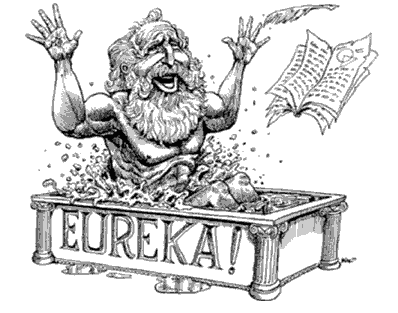
Understanding, like Eureka moments are not of course the result of sitting in a bath and suddenly finding you understand something you had previously found confusing. It is the gift of hard work and long hours of study, hopefully by trying some of the techniques above your depth of understanding will only improve.

Ps apparently the jeweller was trying to cheat the king….

Understanding by Design

Want to know more about understanding by design, watch this. 


Carrots and sticks – Motivation and the thinking Donkey

Donkey carrot and stickMotivation is one of those topics that is so important to learning and passing exams that we will constantly keep coming back to it.

If you are motivated when studying then you will study for longer, more frequently and be more focused.

As a result I have written about motivation in the past Motivation – How to want to study, Rocky boxing No – it’s about motivation to name but two.

I have always liked the simple idea that if you want to motivate someone to do something then you give them a reward (carrot) or a punishment (stick). You will probably have used carrot and stick techniques on yourself. If I answer these exam questions by the weekend I will have Sunday off or if I don’t answer these exam questions by the weekend then I won’t have Sunday off.

But are we more complicated?

In his book Drive – the surprising truth about what motivates us, Daniel H Pink (a former Al Gore speech writer) argues that there are in fact three motivational systems. One survival , motivated to eat, drink and reproduce. Two, seek reward and avoid punishment, the so called carrot and stick and three, intrinsic  motivation, the idea that motivation comes from within not from external stimuli.

These are not mutually exclusive, you are still motivated to eat, drink and reproduce, equally carrots and sticks do work, but what are these intrinsic motivators.

Type X and Type I

Type X behaviour is fuelled more by extrinsic desire, how much money will I get, I don’t want to have to work Sunday, this fits with carrot and stick. Type I behaviour requires intrinsic motivation and is concerned with the satisfaction gained from an activity. Pink argues that extrinsic motivation works better for algorithmic/routine tasks that require little cognitive processing. But if you have to think, understand, create then intrinsic motivation is more effective. Got it……

And the point is……

Studying and learning require a huge amount of cognitive processing (It is a type I behaviour) and so rather than using carrot and stick motivators you would be better using intrinsic ones. Pink explains that intrinsic motivators can be broken into Autonomy, Mastery and Purpose.

  • Autonomy – This can be achieved by making your own decisions as to how you study when you study, rather than listening to others or being rewarded for doing it. It’s about taking ownership.
  • Mastery -This is a mind set and involves you believing that what you are learning is not something in isolation but contributing to a greater and longer term skill set.
  • Purpose – This links nicely back to goals, which has been the topic of previous blogs. You must feel that what you are learning has some value and purpose possibly beyond simply passing the exam. Will it help you do your job better etc

Motivation can be difficult to understand, personally I feel that it does come from within (intrinsic), it’s my desire to do something not someone else’s and so the argument that you should not use carrot and stick (extrinsic ) type rewards makes a whole lot of sense.

Let me know what you think….?

Listen to Daniel H Pink at TED And an RSA animated lecture 

Just answer the question!!! – but how?

Last month I looked at the best way to tackle a case study, but case study is only one type of exam, what about the more traditional style of exam question?

The world is full of great advice, lose weight, exercise more, stop smoking, just answer the question ….all these statements are very clear with regard to WHAT you should do but terribly unhelpful as HOW to do it.

The reason that students fail exams is simple, every examiner since the beginning of time will have made some of these comments.

Students fail exams because?

  • They don’t know the subject – inexcusable and the only reason you should fail
  • They don’t read the questions properly – and as a result  misunderstand what was being asked
  • They don’t  manage their time – so only complete 50% of the paper
  • They don’t write good answers – true this might be due to lack of knowledge but could also be the result of not knowing how much to write

The last three of these can be overcome with the use of good exam techniques. In this blog I want to share with you two simple techniques that I think will help.

How to read questions properly – Tip one, the rule of AND

Below is an exam question worth 12 marks. You don’t need to know anything about the subject so don’t worry.

Using the information given for DT Co, calculate the adjusted present value of the investment and the adjusted discount rate, and explain the circumstances in which this adjusted discount rate may be used to evaluate future investments. (12 marks)

The rule of AND is simple, where there is an AND in the question simply put a line through the AND then make the next statement the start of a new question.

Now read the question

1. Using the information given for DT Co, calculate the adjusted present value of the investment. and

2. (calculate) The adjusted discount rate, and

3. Explain the circumstances in which this adjusted discount rate may be used to evaluate future investments.                                                                                  

There are now three questions and because we have broken it up, it is so much clearer what you have to do.  If we were really clever we might be able to guess how many marks out of 12 relate to those three questions, a tip for another day perhaps.

How to write a good answer – Tip two, Define. Explain and Illustrate

Define Explain and Illustrate is a technique to help you write more using a simple structure.

Read this question

Discuss the proposal to repurchase some of the company’s shares in the coming year using the forecast surplus cash. Other implications of share repurchase for the company’s financial strategy should also be considered. (10 marks)

Firstly Define the technical words. In this example the technical word is repurchase, so firstly we need to say what a share repurchase is.

E.g.  a share repurchase is where a company buys back its own shares and as a result reduces the number of shares available on the market.

Secondly Explain in more detail.

E.g. the share buy back has to be financed in some way so one implication is that it will result in a reduction in the company’s cash balance. It also means that because there are fewer shares, earnings per share (eps) will increase.

And lastly and in many questions most importantly, Illustrate. This could be by way of a diagram an example or by referencing to the question in more detail. The reason this is so important is that this is how you will demonstrate to the examiner that you can apply the knowledge. If you don’t understand something you will not be able to apply it. The application section of the answer will often carry the most marks.

E.g. in the example above it is clear that the company is forecasting surplus cash, i.e. they have more money in the future than they need. Leaving this money in the bank is not considered sensible partly because the level of return that can be earned from the bank will be less than the shareholders require, it can also be interpreted as a lack of ambition on the part of the Directors. Blah blah blah

Depending on the detail provided in the question this final illustration section can go on and on. How much you write will depend on the marks available.

I hope you have found these two tips helpful, if you want more in the coming months just add a comment to this blog and I will oblige.

Epic exam failure – what not to put on your exam paper

And finally a short video showing students real exam answers – funny

Click here


Thinking in box’s – Cracking case study

Put it in a boxExaminations come in many shapes and sizes, short form, multiple choice, essay, case study etc. I know there are other methods of assessment but I am thinking here of the most common. Of these one stands out as being very different, the case study. Developed by Harvard in the 1920s the  case study involves giving the student a  real life, normally business situation and asking relatively broad Socratic type questions e.g. what do you think, why etc.

It not only puts the student in a realistic situation but also requires them to think far more deeply.  The cognitive process involved in answering a question such as what is the capital of France or can you add 2+2, on the whole is very simple and may need little more than memory. However giving student a real life business to analyse and asking them to give an opinion as to what the company should do next requires higher level thinking as well as effective communication skills.

Too much to read

One other aspect of a case study is that it often involves large amounts of narrative, all will need reading digesting and putting into context. On the face of it this can seem daunting, but it can be done and as with so many aspects of learning there is a process that can help. I have written about, having too much to read and the benefits of chunking before but I want to bring these together with another powerful technique “thinking in box’s”.

Thinking in box’s 

Volume and lack of direction is the main problem here, so we need to find our own direction and reduce the volume. Thinking in box’s refers to the natural process we have in compartmentalising thoughts. In order to make sense of the world we often put “stuff” into box’s, work, study, relationships etc. We can then open the box’s when we are best able to deal with them. The  point being that  we can’t deal with everything all at once. If this whole idea sounds a bit odd, then just consider the saying “Thinking outside the box”. This refers to the imaginary frame we put around something that restricts our ability to solve a problem and think more creatively. Strange isn’t it…..

Case study

Imagine that you have 10 pages of narrative to read based on a particular industry, a case study. There are a few sub headings and some paragraphing. You are required to provide guidance to the board of Directors as to what the companies strategy should be in the next five years.

The process 

In order to give the advice required by this question, you need to fully grasp the current situation, which means you have to  read, understand and comprehend what is written on the 10 pages. To add structure to the case firstly take chunks of content and put a frame around it, this will help focus just on this chunk of information, it also reduces the volume. A chunk will often be information under a heading or specific paragraphs. Once you have the content in a box, sift through it looking for the “key words” and underline them.  Focusing only on the key words but taking into account the context, ask yourself, what do I think about this? What does it mean, what is it telling me etc. Then write down your thoughts. Do this for every chunk of information, then number each chunk.

At the end of this process you should have read and thought about each chunk, captured those thoughts and have a numerical reference by which to structure them. The final part of the process is to read each of those chunks again and produce a SWOT. This brings all 10 pages down to just one. And by using the SWOT supported by your detailed analysis you should be able to give the advice required by the question.

watch_this_videoIn this short video I demonstrate the thinking in box’s approach.

      Thinking in box’s

And finally – A few words from Terry Pratchet

I will be more enthusiastic about thinking outside the box when there is some evidence of thinking inside it!

Thank you for the music – listening to music when revising

May and June are the traditional months when students around the world lock themselves away to revise for their exams.

In China for example over 9 million students will be sitting the university entrance exams.

Last May (2012) Teenagers at Xiaogang school in Hubei province were pictured hooked up to bags of intravenous fluids hanging from the classroom ceiling to boost energy levels during the revision period. An extreme action by anyone’s standards, but perhaps an example of how much pressure students feel this time of year.

As I mentioned in last month’s blog my daughter is currently caught up in this May/June exam frenzy. So once again I found myself looking to her for inspiration. What was she doing, how did she revise? This is not because she is a perfect example of a revision student, in many ways she is not, but I do think she is typical of many.

What does Beth do?

  • Makes notes from her notes – This is a standard exam skill, reducing content down into measurable and personal chunks. She does use mind maps (possibly my influence) but not exclusively.
  • Prepares as if she has to teach someone else – this I find interesting and has certainly not come from me. She writes on a white board the key points as if she was going to teach that subject. I like this idea, as many teachers and lecturers will tell you nothing focuses the mind nor motivates you more than having to teach it to others.
  • Practices past exam questions…of course!
  • Studies while listening to music – now this is the one that intrigued me and as a result I have devoted the rest of the blog to answering the question …..

Is it a good idea to revise whilst listening to music?

As ever the science needs much interpretation.

It’s a bad idea

Researchers from the University of Wales, tasked 25 students with memorising lists of consonants. Some were shown the letters while sitting in silence, others while listening to music by their favourite bands or by groups they had a strong aversion to. The conclusion was that listening to music, hampered their recall.

So it’s good then

Scientists at Stanford University, in California, believe there is a molecular basis for music known as the “Mozart Effect“. It was discovered that rats, like humans, perform better on learning and memory tests after listening to a specific Mozart Sonata in D.

But then there is the evidence that suggests that switching attention when trying to learn as might be the case with listening to music slows down the cognitive process.

Yet you cannot ignore the research that clearly shows music has the ability to alter your brain and induce relaxation which in turn helps create an ideal state for learning.

Watch what happens to your brain when you listen to music.

Hopefully you get the idea.

Conclusions

  • Listening to music puts you into a more relaxed frame of mind and that is of course good for learning. So listening to music before or after revising can help.
  • If you do want to listen to music, avoid music that requires you to shift your attention. This would suggest you should not listen to  music with lyrics  as it can mean you need to think about what is being said nor should you listen to something new that you may not have heard before. This is one of the reasons classical, in particular baroque music is the preferred choice of many students. Also don’t play the music too loud, keep it as background noise.
  • If there are specific facts that you simply need to know, then avoid listening to music completely, give it your full attention. But you can’t concentrate at this level all day, only for short periods.
  • On the whole be consistent don’t keep changing the type of music, you need familiarity.

Music to help you study

The internet has many websites that offer relaxing and helpful music, here are a few that might help.