
Sal Khan didn’t start Khan Academy in 2004 with a grand vision to disrupt global education. His objective was to help his cousin, Nadia, with her maths homework. He wasn’t trying to change the world, just be a good teacher. Despite these humble beginnings Khan Academy has become a huge success.
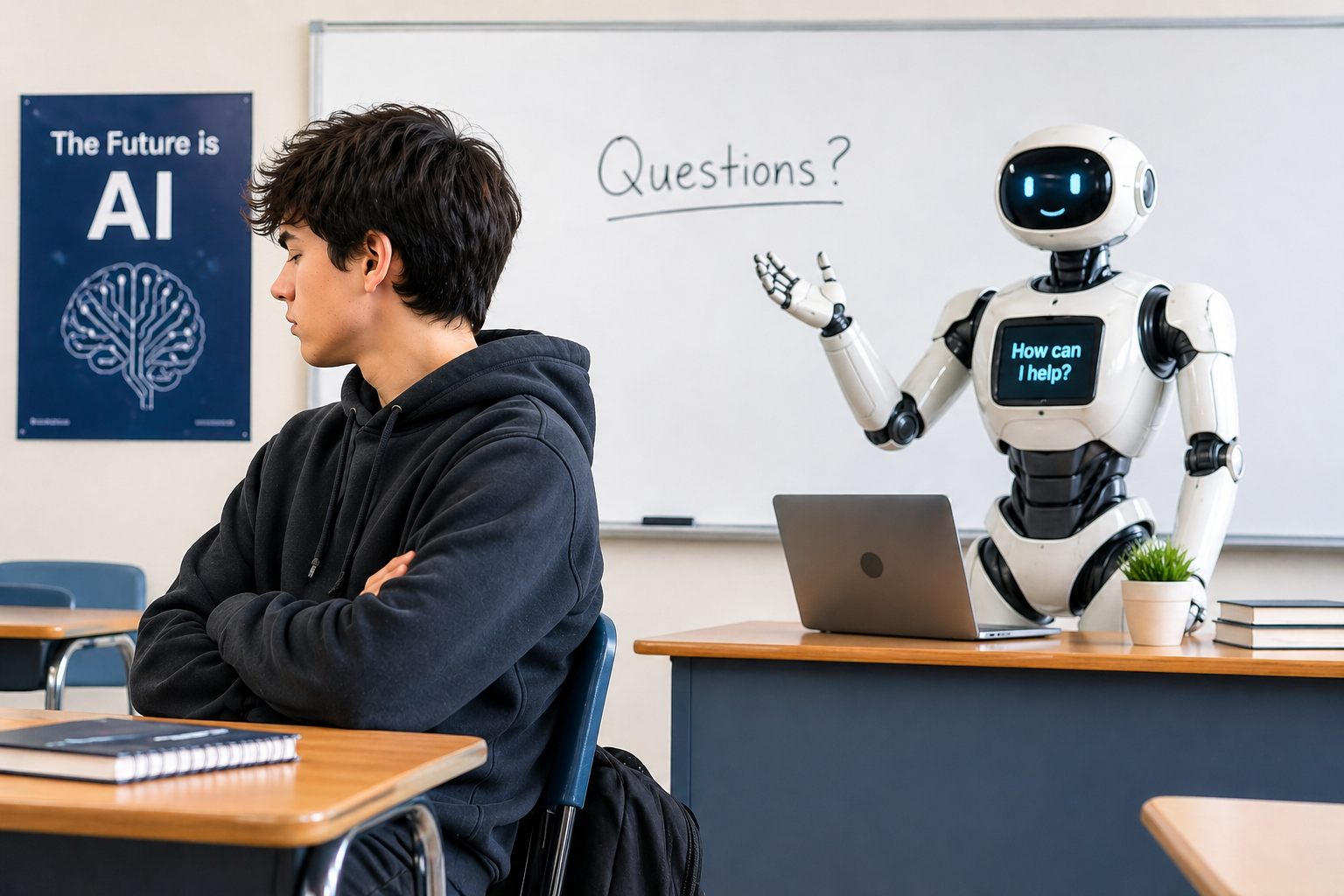
TL;DR – the short audio version
Khan Academy
Set up in 2005, the Khan Acadmey mission is to provide a free, world-class education to anyone, anywhere. It employs around 350 people and supports 40 to 50 million students each month. A not-for-profit that relies largely on donations (notably from the Gates foundation) to pay for its $120 million to $170 million operating costs.
It is built on the idea that students learn best when studying at their own pace, able to revisit topics as many times as they like to clarify understanding. Support is available in the form of instant feedback, tips and hints and progress checking. The style of instruction is short (chunked) videos, often just a coloured pen writing on a black screen, followed by practice questions and step by step answers. In terms of methodology It takes a flipped classroom approach. Instead of introducing new content in class, students watch videos or complete the initial learning at home. Class time can then be used for practice, discussion, and problem-solving. This allows the teacher to focus on addressing misunderstandings and supporting individuals. It incorporates mastery learning, where students are expected to fully understand a concept before moving on rather than progressing regardless of whether they’ve understood it or not.
Then in November 2022, the world changed when OpenAI launched ChatGPT, within two months it had 100 million monthly active users. Sal Khan actually received a personal email from OpenAI’s leadership just prior to its launch asking him to test the model. This was pretty special, a major new technology being given to educators, Duolingo were also early adopters because they offered something other businesses couldn’t. The opportunity to find out if AI could actually teach rather than simply automate process that led to efficiencies.
Khanmigo: Born 2023 Died 2026
On the 14th of March 2023 in partnership with OpenAI, Khanmigo was created. But this was no AI Chatbot simply offering answers to questions. Its core philosophy was to act as a virtual Socrates, asking questions such as: “what do you know about the subject already?” This was to reduce cognitive load, scaffold learning and create the right amount of desirable difficulty, all essential components for good learning. For teachers it helped them save time by producing lesson plans writing questions and tracking student progress.
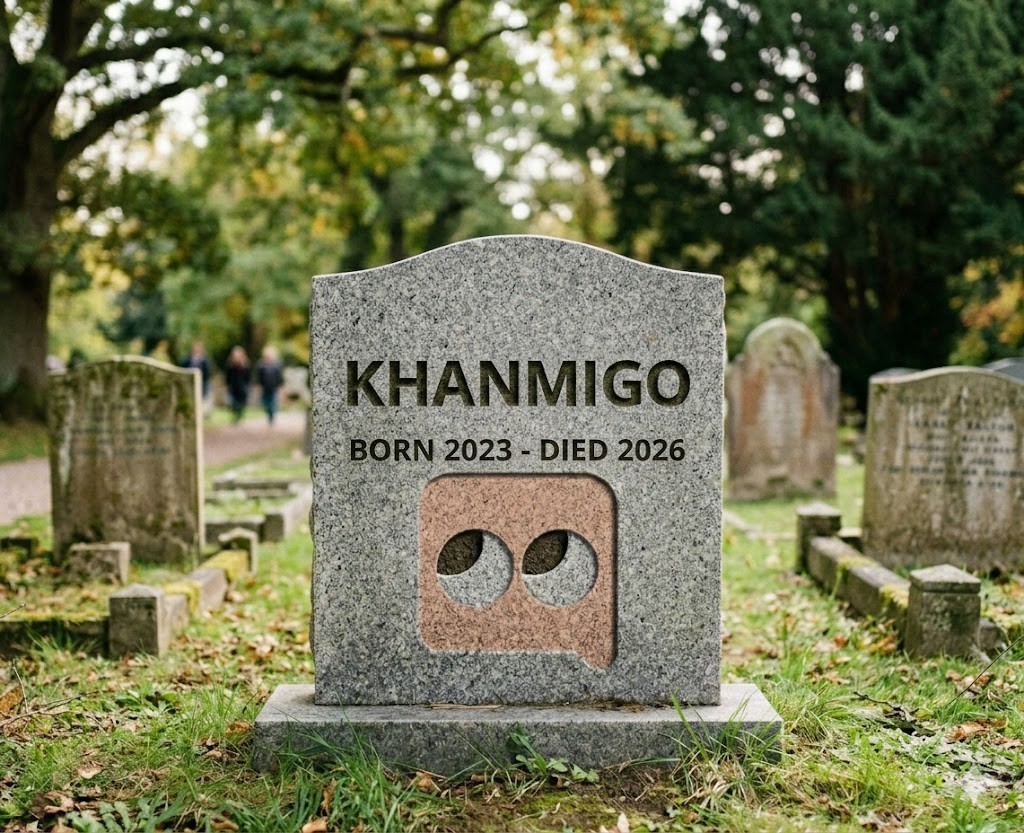
So, what went wrong – Sal Khan really believed that AI, in particular Khanmigo would change the future of learning. In a widely viewed TED Talk in 2023, he declared, “We’re at the cusp of using AI for probably the biggest positive transformation that education has ever seen.”
However, in April this year (2026) even Khan had to admit “for a lot of students, it was a non-event. They just didn’t use it much.” While he remains optimistic about the many applicationa of AI in education, he’s also come to see its limits.
“I just view it as part of the solution; I don’t view it as the end-all and be-all.” Chalkbeat.
Part of the problem has been attributed to the students themselves, with Khans CLO Kristen DiCerbo saying that students aren’t great at asking questions. You can give them access to the world’s best AI tutor, but if they don’t know what they don’t understand, they won’t ask. And if they don’t ask, Khanmigo simply doesn’t work.
Lessons learned
Sal Khan has come in for a fair amount of criticism, partly due to his initial claims about Khanmigo being the biggest positive transformation that education has ever seen, and then having to admit that it wasn’t. But isn’t that precisely what innovation looks like? It takes a rare kind of conviction to believe deeply enough in an idea to pursue it, and it takes genuine integrity to stand up and admit you were wrong. Sal Khan didn’t just theorise about improving education, he tried to do something to make it better.
But all is not lost, there are some really important lessons to be drawn from the Khanmigo experiment. Not least about how AI technology actually fits into the practice of learning, and what impact it has on students when put to the test in real classrooms.
- Students weren’t ready for Socrates – Khanmigo’s Socratic design required students to already possess some basic knowledge. When you don’t have the conceptual scaffolding to understand what you’re confused about, you can’t ask useful questions. This led some to simply past the same question into another AI platform to get the answer, and as a result learned nothing.
- It favoured good students – Those with strong metacognitive skills (The ability to notice, monitor, and manage your own thinking) did well, but for the others it was a struggle leading to frustration and reduced engagement, clicking a few times before giving up. Sal Khan said that it was like a shy student who won’t raise their hand.
- Engagement was passive – Students didn’t actively engage in conversation, when asked a question by Khanmigo they often replied “IDK” (I don’t know) rather than thinking about what the question, resulting in usage falling below expectations. Initially engagement was high, but this was put down to novelty, and over time this simply fell away.
- Not inspiring nor motivational – Although it was designed to be encouraging, you can only say “good attempt” so often before it has little effect. Students work hard for people. For a teacher who believes in them, a parent who will ask how they are feeling or a peer who can share their experience. Khanmigo removed all of that social texture. Although it is infinitely patient and never disappointed, there’s no one to let down.
- Extrinsic motivation is underrated – Education theory has long championed intrinsic motivation, the idea that students should want to learn for its own sake. Khanmigo was built on that assumption. But for most students, extrinsic factors really matter e.g. grades, approval, peer comparison. Strip that away and many students simply don’t engage.
- There was no relationship – Khanmigo could not replicate the sensitive, personal connection a human tutor provides, making it less effective, especially for struggling learners. A teacher knows that a student is distracted because of something that happened at home, or that they know the individual panics when faced with a test. The AI only “sees” the text.
Conclusion
Personally, I am a fan of Sal Khan, and see this as a huge educational experiment that simply didn’t work in the way it was intended. But “didn’t work as intended” is not the same as “wasted.” What Khanmigo revealed, perhaps more clearly than any research paper could, is that learning is stubbornly, irreducibly human. It requires relationship, stakes, and social texture. These are not new ideas, educators have argued this for decades but Khanmigo gave us a live, large-scale demonstration of what happens when we design as if those things don’t matter.
For those of us involved in teaching and course design, the lessons are important. We cannot assume metacognitive skill. Engagement needs scaffolding, not just encouragement. Motivation is more complex than theory suggests. And the relationship between teacher and learner is not a nice-to-have its critical.
Technology works best when it supports the human, not replaces them. Sal Khan himself has now arrived at this conclusion. The experiment is not over. But the next iteration will be better because of what this one taught us and that, in the end, is exactly how learning is supposed to work.


Pingback: The Antidote for an AI snake bite – Metacognition | Pedleysmiths Blog