
Motivation – How to want to study

2012, another year and an opportunity to set some New Year resolutions, but how many will you keep, and why won’t you keep them? It’s not because you don’t want to, it’s not because they are not important. But somehow you just don’t want them enough; you lack the motivation to make them happen.

Just imagine if you woke up every morning jumped out of bed and said, “I can’t wait to start studying today.” How much would you learn if that was the way you felt? Well, that’s what it would be like if you were motivated. The interesting thing is that motivation can be learned, just like anything else. With the right techniques you can improve your desire to want to study.

People often say that motivation doesn’t last. Well, neither does bathing – that’s why we recommend it daily.”

Zig Ziglar

What is motivation?

Motivation can be thought of as the wants, needs and beliefs that drive an individual towards a particular goal or perceived outcome. It will generally result in affecting a person’s behavior: they will do something as a result.

Setting goals is the first step in turning the invisible into the visible.

Tony Robbins

Motivation is about setting goals

If motivation is about being driven towards a particular goal, then, to be motivated, you must set a goal or outcome in such a way that it invades your thoughts and affects your actions. In principle, then motivation is about goal-setting. You cannot be motivated if you don’t want something.

In absence of clearly defined goals, we become strangely loyal to performing daily acts of trivia.

How to set goals

The process that you go through in order to set goals is important, below is an easy to follow guide as to what questions you need to ask to set motivational goals.

1. What do you want? State the goal in positive terms, what you want, not what you don’t want.

This needs to be something you want, so, saying “I don’t want to fail my exams” needs to be changed to “I want to pass my exams.”

2. What will you accept as evidence that you have achieved your outcome? – Make it real

  •  Ask – How will you know that you have this outcome? What will you see, what will you hear, how will you feel? or

So if your objective is to pass your exams, perhaps you would see yourself opening the letter and it showing a clear pass, you hear yourself shout “yes” and you feel so proud or maybe just relieved.

3. Is achieving this outcome within your control? –  Must not depend on others

  •  Ask – Is this something which you can achieve? Or does it require OTHER people to behave in a certain way?

If the answer to what do you want was, “To pass my exams,” then, when you get to this point it will become clear that this outcome is not achievable by you. To pass the exam, you need the examiner to consider your script worthy of a pass. So the outcome needs to be refined to smaller outcomes that can be achieved by you. E.g. “I want to practice more questions.” This is within your control.

4. Are the costs and consequences of obtaining this outcome acceptable?  – What do you gain and lose as a result of achieving your outcome?

  •  Ask – What are the advantages of making this change?
  • Ask – What are the disadvantages of making this change?

This will help identify if what you want (your outcome) is really best for you and the balance of your life? If you achieve your outcome, how will your life be affected?

5. And then….. Write them all down

 A creative man is motivated by the desire to achieve, not by the desire to beat others.

Ayn Rand

And finally – The E word

Many of my blogs, including this one contains extracts from my book “The E word,” the book about how to pass exams.

You can buy this book now at Amazon.

PS Want to know what the guys from Apple think text books should look like – check out this video

A beautiful mind or just a different one – Personalised learning

My Daughter is sitting her mock exams at the moment, my wife is taking her to school just in case the train breaks down! And I have just finished teaching revision; only the dog seems unaffected by this November/December exams season.

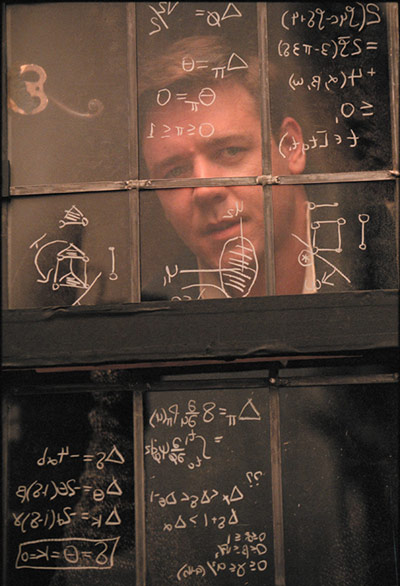
Watching my Daughter study was interesting, she has discovered that you don’t need a white board to make notes, and just like John Nash (A beautiful Mind) has been writing on our dining room windows with a marker pen.  She also created a game where the answer was under a flap of paper and found that she learned more effectively when teaching someone else, me. Go on ask me a question about respiration or stem cells…..

I have written on the merits of learning styles before,”learning styles don’t work or do they,” but in that blog I focused more on how you process information rather than using differing methods to learn. For example making notes using mind maps rather than in a linear format or writing on the window rather than on paper…..  Different people learn in different ways and at different speeds. This is why there is a big push in education to personalise learning, to make it sufficiently flexible for each individual to learn in their own way.

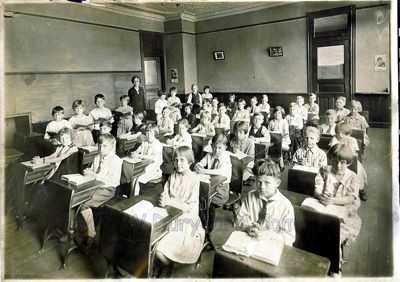
The argument is that in the last century education was delivered in a style needed to prepare people to work in factories. It required little in the way of individual thought just the ability to perform simple repetitive tasks, the same as everyone else. As a result pupils were all taught in the same way, sat in rows, repeating the same thing over and over again, and dressing alike. Okay a bit Orwellian and not entirely true, there have always been great teachers, but you get the point.

But now we live in a world that is constantly changing, problem solving is highly praised and keeping up to date with the latest information or developments is essential. So learning needs to change.

Different ways to learn

There are of course many ways to learn, but below are a few tips and hints.

  •  Making notes – writing something down is an incredibly powerful method of learning. Some people like mind maps, others prefer lists or bullet points and why not try Concept Mapping. The key point, just write it down.
  • Cards – reducing down what you have to learn and put it onto small cards. This is great for individuals who like to rearrange information, putting the most important first or eliminating what has been mastered.
  • Get a learning habit – make a routine out of what you do so that you perform a task without thinking. Learn one new fact before you go to bed, always have a book to hand or have notes on your mobile so that when you are on the train everyday you can study for 20/30 minutes.
  • Talk out loud – okay people may think you are a bit strange but listening to your own voice can really help.

Of course not all of the above will work for everyone that’s why you are you, an individual, the secret is not to give up if one method does not work.

Ps other great films about learning

Good will Hunting and the best of all Dead Poets Society

Let me know your favourites?

Exam results – what to do if you fail!

August is an interesting month, for some it is the time to take a well earned holiday and so de-stress for others it is the month in which the exam results drop through the letter box or inbox and so a time to get stressed.
I have taken the easier of these two options and so have been on holiday, which for me is always a chance to read a couple of books. One of them was called Talent is overrated by Geof Colvin, senior editor for Fortune magazine. In the book Geof puts forward some interesting arguments as to the role talent plays in the success of people who by many would be considered exceptional, even gifted. He argues not so much that innate talent does not exist, more that successful people, those at the top of their respective tree, Tiger Woods (okay not personally – but he is still a great golfer) Warren Buffet, Bill Gates for example have other qualities, they worked hard, and practised a lot…..

Greatness does not come from DNA but from practice and perseverance honed over decades. The key is how you practice, how you analyse the results of your progress and learn from your mistakes.

What has this got to do with exam failure?

If you looked around your class and picked the best, brightest, most talented students, I bet they passed their exams. And the reason you failed was because you are not good enough, you are not talented!

Well here is the bad news, what Geof Colvin and in fairness many others have found is that it is often not down to talent, it is down to hard work and practice, and we are all capable of that. If you believe that your poor exam results were because of your lack of innate abilitiy then you are wrong. You are in fact creating what is called a fixed mindset, you begin to believe that you can’t affect your performance and so don’t try. What’s more it’s not all that good to believe you are naturally talented. Research has proven that if you believe that you do well because you are talented, when faced with failure you are more likely to give up. If you believe that you did well because of hard work and then you fail, you carry on but just work harder next time.

So what should you do?

Geof goes on to say that it is not just practice that matters but how you practice, you need to practice deliberately. He calls it deliberate practice and it should;

  • Be designed to improve performance
  • Be repeated a lot
  • Enable you to get feedback continuously
  • Be highly demanding mentally
  • Not be much fun

But what satisfies the above criteria…….. yes practicing using past exam questions. So if you were not successful in your exams, find out when you can re-sit then;

1. Take a deep breath, get out your notes from last time and draw a mind map or review the one you did for revision, sometimes it’s best to make a fresh start. This will remind you of what you have to cover and get you thinking about the subject again.

2.  Analyse the past exam questions (including the last exam) and find out what is examined the most then identify the areas you need to improve.

3. Start to practice these past questions using the answers for feedback, and no it may not be much fun but then you now that.

Failure – the only way to learn

Here is a great video by a guy called Derek Sivers, Derek is a professional musician and founder of a company called CD baby in the US. He makes an argument as to why we need failure because it is a major factor in how we learn and grow.

Final thought

I know at the moment that failing an exam can feel like the biggest disappointment in the world and that it may seem that your career is over before it really got started. But it is what you do next that really matters

As Michael Jordon once said “I can accept failure, everyone fails at something. But I can’t accept not trying”

Inspirational true story…Never give up!

Congratulations on failing from one failure to another…

Sorry is not good enough – Exam paper mistakes

9 exam paper errorsExams seem to be in the news a lot these days, unfortunately often for the wrong reasons. This month we were told of at least six errors on exam papers sat by students studying A-level, AS-level and GCSEs taken in England, Wales and Northern Ireland. The errors were on questions with marks ranging from 1 to 11 and effect 90,000 students. In fact it is hard to keep up; only yesterday there was news of another possible three mistakes, bringing the new total to nine!

The examining bodies have said they were sorry and that they would take into account the errors when they come to mark the paper, ensuring that no students would be disadvantaged as a result. Firstly an apology is not good enough, it should not happen in the first place and secondly they can’t “take into account” the full impact of the mistakes. And it looks like David Cameron agrees……

Now of course everyone makes mistakes, but when the consequences are as important as this there should be a system in place to ensure they are spotted. That system should include having an examiner, an assessor and a sitter. This is in addition to the normal proofing and arithmetic checks. The examiner writes the paper, and presumably checks it, the assessor also checks the paper, ensuring the wording is clear and that what is being asked is within the syllabus and technically correct. The sitter should then attempt the paper under exam conditions, to make sure that it can be completed in the time available. If these processes are followed it would seem almost impossible for a mistake to be made, I wonder what went wrong?

Equally it is not possible for the examining body to ensure that no student is disadvantaged. What can they do, be generous with the marks for any attempts made?  What if the student looked at the question tried to do it, panicked and as a result wasted valuable time, making little or no attempt at the rest of that question, there is in effect nothing to mark. What can you do in these circumstances; just add on say 5 marks!

How can you take into account the student who raced through the second question because they spent so much time on the first and made mistakes due to the time pressure, add on another 5 marks!

And what about the student who looked at this question, lost their confidence and so failed to complete the paper, add another 5 marks!

Listen to this confident student describe the impact of a mistake in the exam.

And he got no reply…..

What to do if there is a mistake

There is however some good news, you can still give yourself the best chance of passing if you apply some simple exam techniques.

1. Stick to the mark allocation – if it is a 10 mark question then only spend 18 minutes on it, 1.8 marks per minute for a three hour exam. So even if you cannot answer the question because of a mistake on the paper you will not be wasting time that could be better used on the next question.

2. Don’t think you have to get everything exactly right. Your objective is to pass the exam with the highest mark, so you may have to accept that you will not get 100%. And of course getting 100% correct is impossible when the examining body has put down the wrong information! Do your best and move on.

3. Make assumptions – read the exam question slowly, underline the key points and if it doesn’t make sense clarify what you think it is saying by stating your assumptions. Then answer the question in accordance with your assumptions.

4. Don’t bother asking if you think there is a mistake. There is little point asking in the exam if there is a mistake on the paper. The invigilators on the day are unlikely to be subject experts and so will do nothing. Let others put their hand up and ask, you should keep your head down and get on with answering the question.

Remember exams are more than tests of knowledge and they are not always fair, but they are equal, everyone in the exam room is faced with the same examiners mistake. How you deal with those mistakes however can make all the difference….

Another TED lecture worth watching

And finally I have another TED lecture for you to watch. It is presented by Sir Ken Robinson who gives a very interesting talk on what he describes as a crisis in our education system – personalised learning not standardised/production driven learning.

The De Vinci code – Mind Mapping to pass exams

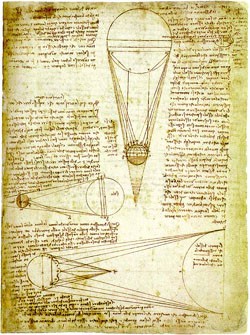
Leonardo de Vinci was one of the first people to link words and pictures, using their combination to help with both learning and creativity. It also left behind a permanent record of what he had been thinking that could be used as a reminder for him and others, a set of notes!

Leonardo died in 1519 and it was not until the late 1960’s when Tony Buzan refined the technique and gave it a name “Mind Mapping. “

What is a mind Map?

According to Tony Buzan, mind maps are an expression of radiant thinking and a natural function of the human mind, a powerful graphical technique which provides a universal key to unlocking the potential of the brain. A nice description but I am not sure I understand what they are just from that.

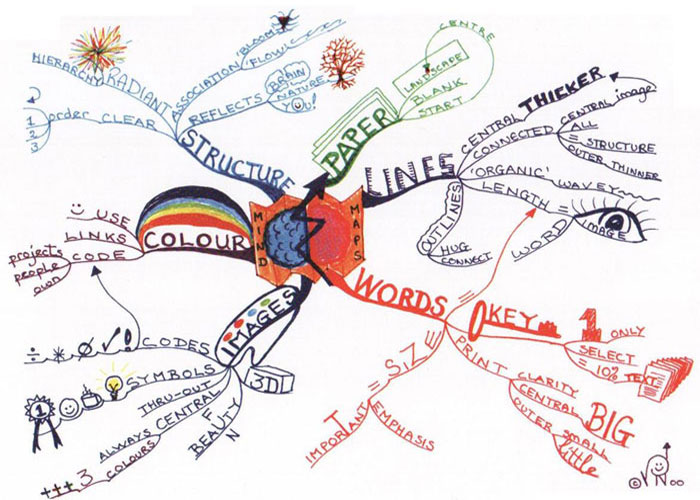
In the context of making notes, I would define a mind map as a way of recording key words that, unlike linear notes, start with a central theme that is often an image, and have content that radiates out from this central theme like branches from a tree. They should be colourful and the note maker should use their imagination in drawing the map, bringing in images and showing connections in any way they wish.

How to draw a mind map

There are and should be few rules to mind mapping as the individual should bring as much of him or herself to the process as possible. But there are some guidelines.

1. In the centre of your paper, draw a square, a circle, or an image that will help you focus on the core issue of the mind map. Inside it, write the name of the subject or topic you are studying. It is probably best to have the paper in landscape rather than portrait.

2. What are the main points or substantial topics that relate to your central theme? Draw branches from the circle, like branches from a tree, to these sub topics. Print the key words on these branches, use block capitals if your writing is not so neat. You can also use geometric shapes for these new areas, or sketch a small picture. Why not do both?

3. The structure will broadly follow the key words that you highlighted from the text. You may, however, find that some of the topics or key words lead you to make connections that at first you did not see. Make the associations and don’t be afraid to re-draw the mind map if it gets a little messy.

4. Begin branching off into smaller but related topics. Think fast! Your mind may work best in 5-7 minute intense periods. Using different coloured pens to show the relationship between separate yet related topics can be very powerful. You can use symbols as well as pictures if that seems to come more naturally.

5. Mind maps work to a great degree because of your choice of keywords and the fact that they are short and to the point. Don’t feel that you have to expand on these; you don’t.

6. Let your thoughts and imagination go wild when it comes to the images. Although a mind map is logical and so requires you to use the left side of your brain, it also requires the use of colours and images, both of which involve large amounts of right side brain activity. Don’t worry about how good at drawing you are. You don’t need to be particularly good at art; it just needs to be legible and only to you.

Check this out  it is a really helpful and practical guide to using mind maps to make and organise notes.

If you want to hear Tony Buzan talk about mind maps, just click on the link to the right of this page in the Blogroll.

I personally find mind maps one of the most effective learning and exam tools I have ever come across. A map is much more than a simple note taking technique used to record content. It presents that content in such a way that aids learning. You will recognise how topics inter-relate and so begin to understand the subject, not just remember it. It is also, as the name suggests, a map: it shows you the whole subject, not just one part of it, so that you can see where you need to go next. And, like a map, you can take many different routes to get to your destination and, in so doing, learn more about the subject. It is also ideal for revision and is much easier to review than traditional notes largely because of the pictures

Try something new today

Some people say that mind mapping does not work for them and that may be true. But I think that if you had never been to school and were trying to learn or solve a problem, as Leonardo discovered all those years ago you would more than likely draw pictures and link those pictures with words than record your thoughts in a black and white linear format, so give it a go.

An accountancy student blogs about her experience using mind maps to help her pass exams.

 A general blog about mind mapping

To pass an exam – do an exam

To ride a bike - Ride a bike

Although the debate around the value of examinations (testing) is set to continue, new research from Kent State University in the US suggests that examinations aid learning by making the brain develop more efficient ways of storing information. Dr. Katherine Rawson, associate professor in Kent State’s Department of Psychology, and former Kent State graduate student Mary Pyc published their research findings in the Oct. 15, 2010, issue of the journal Science. 

“Taking practice tests – particularly ones that involve attempting to recall something from memory – can drastically increase the likelihood that you’ll be able to remember that information again later,” Rawson said. 

In the article titled “Why Testing Improves Memory: Mediator Effectiveness Hypothesis,” Rawson and Pyc reported an experiment indicating that at least one reason why testing is good for memory is that testing supports the use of more effective encoding strategies. In particular the brain comes up with mental keywords – called mediators – which trigger memories which they would not do when studying only.

 I have to say that this comes as no surprise to me nor would it to any student or anyone who has ever read a book on memory techniques.   It does however add some significant evidence to support the use of testing or mock examinations as a means of preparation for the real thing.

 To pass examinations you require much more than just memory techniques, and in many ways all this research* has done is show that you can recall certain words far more easily if you link them via another word, the mediator, and then test to find out if you can in fact remember them. But because you can’t pass an exam without remembering what you have learned it does mean that by spending a little more time in encoding the information and by testing yourself afterwards you must improve your chances of passing.

 To my mind the research still has some way to go in recognising the other benefits of doing practice exams or tests, and I should add looking at the answers. For example do they not give a very clear indication of the standard required, provide focus as to what is important and what is not, give a concise summary of key parts of the syllabus, show how the knowledge should be applied in the context of the question and improve your level of concentration knowing that you will be tested latter, I could go on.

 How does this help – some tips

 When trying to get something into your head, don’t just read it, although reading is a method of learning, it is not very effective when it comes to remembering. Reading is largely an auditory process; you say the words in your head. Ever heard the saying “I hear and I forget, I see and I remember, I do and I understand”. At the same time as reading, underline the key words and make notes with those key words. The very process of extracting them from the text will help. Next you need to remember those key words, well why not link them with a story (A mediator) or with single words as illustrated in the study. There are several memory techniques that use the principle of association to link words, check out the “stack and link and number rhyme” systems. See video below for an example of how to use the number rhyme system.

 And then of course you need to test yourself and your ability to recall those key words afterwards.

 So be in confident and inspired that what you new has now been proven and that  tests are not just about finding out if you will pass or fail the exam, they are an integral and vital part of the learning process, and that’s a fact.

 *In the research they asked students to remember Swahili-English word pairs, such as ‘wingu – cloud and use a mediator (wingu’ sounds like ‘wing’ – the mediator, birds have wings and fly in the ‘clouds) to link the two.

For more thoughts on what this means – click 

What does passing your last exam feel like?

Passing your last exam?

The blogs on this site are mostly about what I think given the events that take place in the world of education and learning.

So I thought for a change you might like to hear what other people think, specifically students who have just found out they have passed what they believe will be their last exam ever.

I sent out a simple questionnaire to a few students who had just passed their accountancy finals. What I was particularly interested in was, were there any strategies these successful students used or words of wisdom they may have that we could all learn from.

The answers below are not from any one individual and I have amended and interpreted their comments to provide some generic learnings. And just as way of background, most of the final level accountancy students in this straw poll were aged between 23 and 33, are in full time employment with jobs that carry responsibilities that have to be balanced with the demands of studying.

1. Do you think all of the hard work you put in was worth it?

Yes, It was worth it because of the understanding I gained of how business works. I have genuinely learned skills and new ways of thinking from studying at this level and I know that it has played a part in my ability to successfully take on a management role at work.

Definitely worth it, when looking for my last job I’d hit that glass ceiling because I was missing the qualification. I found it hard to get interviews for the level of job I was after. Also if it had been simple to pass without putting in the work, would I have really valued it, so I do feel a sense of achievement and euphoria.

2. What was it that motivated you?

I knew that if I wanted to progress further in accountancy and in my career having a professional qualification would be invaluable. When looking for jobs I had seen how my colleagues and others had progressed into better jobs with higher pay and I thought, if I want this then I would need to qualify. There were many times I felt like just throwing in the towel (let’s just say my record for passing exams is not that great!) but I knew that perseverance would pay off, that each exam I would pass would take me nearer to my goal and eventually I would see the light at the end of the tunnel.

I just kept saying to myself this time I can do it, and one day I will have no more exams, I have come this far and to quit now would be mad.

I always knew I wanted to work with numbers and my dad used to be an FD, so I suppose part of me did it to prove something to him, but I also wanted to expand my knowledge and further improve my CV. I witnessed people having the opportunity to learn and not taking it, I felt sorry for those people that were happy not to grow. I just knew I didn’t want to fall into that category.

I continued because I found I was quite good at it actually! And I like a challenge! I couldn’t start and not finish – I need closure!

3. Did you ever think you would not pass?

I didn’t ever think I would not pass as I don’t see myself as a quitter, quite the opposite, I take things as a challenge, it gives me an even greater hunger to want something more when I know it is difficult for me to achieve. I knew eventually I would pass, but it would just take me longer and would be harder for me to achieve than other students.

I was getting to that point where I did wonder if I’d ever get there, but knew that I needed to get it done, otherwise I’d always be thinking ‘what if?’ I know I would have regretted giving up.

No – is that big-headed of me?! I’m confident and have always been quite good at learning.

4. Did you think you had passed?

I really did not know, I did a self assessment and I knew that I would be on the border and boy was I, it could have gone either way.

I’m still shocked that I passed it this time, as I still believe that I had produced much better pieces of work before, just not what the examiner was after obviously.

5. Describe how you feel just now?

Relief, no more studying ever again, proud finished at last

Proud, thankful, relieved, however a little deflated (fireworks didn’t go off in my honour).

Relieved and a little lost!

What does this tell us about passing exams?

Motivation
What I found most interesting about the responses, was how important motivation is when it comes to exam success. Firstly, you have to be motivated, you have to want something. This might be a desire to learn, to give yourself opportunities and further your career or to prove something to yourself or others. Secondly you need to stay motivated. You need to find ways of maintaining that motivation for long periods of time, several years in fact. This motivation was maintained in many different ways.

Having Powerful beliefs

• Beliefs that you will pass….eventually
• Beliefs that you are good at something
• Beliefs that if something is difficult it means it is worthwhile

Talking to yourself. Tell yourself that you can do it and that to quit would be mad

Enjoying the challenge, think of exams as being a challenge that you will overcome

Not wanting to have regrets, when you look back, not wishing that you had taken those opportunities

Motivation by fear
As for how they felt, about passing. Relief was the word used most, and relief is a word that suggests that students are motivated more by the fear of failing than the rewards of success.

You thought it was all over – well not yet
And finally a thank you to all of the students who responded and some good news. In 2005 Bernard Herzberg, who lives in east Finchley, north London, started his second masters degree in African economics and literature at the School of Oriental and African Studies in London. The good news is that at the time he was Britain’s oldest student, he was 96, so never say it’s your last exam….

The E word – the book about how to pass exams

E for Exam


I have to say that I feel a little self conscious writing about a book that I have written, yet it has taken up such a large part of my life for the last four years, I cannot let its publication go without saying something.

The E word is a book about exams and how to pass them, and part of my motivation to write it came from the simple observation that success or failure in the exam room was becoming increasingly important. Increasingly important because unlike in the past, when there were jobs and opportunities available regardless of your academic record, this was not the case anymore.
My daughter was 11 at the time and was just about to sit her first really important set of exams. It seemed then and is becoming a reality that this was the start for her of 10 to 15 years, perhaps even longer, of sitting exams! That is a huge chunk out of someone’s life, and for my daughter and many others it was also the first time that her success and failure would be so ruthlessly measured.

There was also this somewhat elitist attitude to rank people in accordance with their exam record, pass and you are in the club, fail and you are not. And from there it gets worse; people begin to plan out your whole life based on what you did on a piece of paper for 3 hours. In some instance elevating you to the highest position, with comments like “he/she will go far”, “very bright, they have a great future ahead”, which is fantastic, but not so motivational if they say “not cut out for an academic career”, “not really bright enough”. It was as if the exam result was a crystal ball that people stared into to predict your destiny.

And based on what, the performance in an exam, and the result you get…….

This is not an argument to change the system nor am I suggesting that we do not need exams; it just brought home to me the importance of passing and the implications of failing.

But I had another motive; my job is to get accountancy students through their final level professional exams. To do this we use a whole raft of techniques that together with a lot of hard work by the students had proved very successful over many years. I was convinced that the techniques we used at this level could be of benefit to anyone who has to sit an exam. So I thought I would write them down and find out.

Run Forest run
Although not explicit in the book, there is a theme on which it is based and one that is important to me. In the film Forest Gump, Forest, the main character (Tom Hanks) is born with learning difficulties, he has an IQ of only 75 (90-110 is normal) yet despite this he manages to excel and ultimately achieve success, because of hard work, determination, clarity in his objectives, oh and with a little luck.

And that’s what this book is about, anyone can be successful, you have to play with the cards you have been dealt. To pass exams, intelligence (whatever that means) is just one factor. Everyone has it in them to pass, you just need the right mental attitude, knowledge of how the exam system works and techniques that will improve your performance.

And if you don’t have them, then buy the book………please

Available for £10.00 from all good book stores, or by following the link to Kaplan publishing

Just in case you forget the many ways that you can eat shrimp
Bubba: Anyway, like I was sayin’, shrimp is the fruit of the sea. You can barbecue it, boil it, broil it, bake it, saute it. There, uh, shrimp kabobs, shrimp creole… shrimp gumbo, panfried, deep fried, stir fried. There’s pineapple shrimp, lemon shrimp, coconut shrimp, pepper shrimp… shrimp soup, shrimp stew, shrimp salad, shrimp and potatoes, shrimp burger, shrimp sandwich… that’s, that’s about it.

Mr Motivator – Inspiring tales from Inspiring people

Everyone needs to be inspired to keep their motivation as high as possible, especially when the exam is getting closer. It’s almost as if it needs to be topped up from time to time like the oil in a car.

Motivation is a process of moving from what you have to what you want to have, powered by a force that is partly created by the strength of your beliefs. Inspiration is more to do with something that arouses feelings to do well. It is generally created by a person you relate to, who demonstrates attributes that you admire and, to a certain extent, may be envious of. It doesn’t have to be an actual person; it could in fact be a story about a fictional person.

One of the best ways to create feelings to do well, and a technique used by motivational trainers, is to tell stories of people’s achievements, often against great odds. The story then acts as a metaphor for you. The more you relate and associate with the characters the more inspired you become.

Stories can be from many years ago or, in fact, taken from the modern world. Sir Steve Redgrave, five times gold medallist, is an inspiration in many ways, but what I find most impressive is that he remained motivated for twenty years and that, after every Olympics, he had to wait another four years before he could achieve his ambition!

Sir Steve Redgrave
Quintuple Olympic Gold Medalist Rower Sir Steve Redgrave has proved himself the greatest Olympian Britain has ever produced. His Olympic successes began in 1984, when he won the gold medal in the coxed fours and ended in Sydney in 2000. He became the only UK athlete ever to have won Gold Medals at five consecutive Olympic Games. Sir Steve was 38 when he won that final gold and he managed to motivate himself to stay at the top for all that time but what is his secret?

In the many talks that Sir Steve delivers in his capacity as a sports personality, we can get an insight into his thoughts on motivation.

“Sometimes your dreams and goals may seem impossible and so it may prove necessary to break them down into small manageable chunks.”

Sir Steve tells the story of a swimmer, who realised that, if he was to have a chance of winning the 100 metre back-stroke event at the Olympic Games in four years’ time, he would need to cut 4 seconds off his time. A tough task at this level. But the swimmer then broke that into smaller goals: cutting the time back by 1 second per year, or 1/12 second per month, and the goal started to look achievable – and the swimmer won his medal.

However, “You can have your dreams, your goals and your strategy but it’s all for nothing without the hard work. And that discipline isn’t just setting the alarm clock for your early morning training session – but also getting up when it goes off!”

Learnings
From this we can gain some very useful tips. Firstly, when setting goals, make them challenging but achievable. Make them inspirational, but not so big that they appear daunting. This is achieved by setting small goals that can be achieved, each one a stepping stone towards your ultimate objective or dream.

Secondly, there are dreams, probably powerful images and future events that you have created in your imagination. Then there are goals which are the short-term smaller targets that you set yourself.

And finally there is your strategy, which is the plan of how your goals when achieved will contribute to your dreams.

But they all mean nothing without the hard work. The day-to-day practice and repetition may be both painful and boring, but is essential if you are to be ultimately successful.

And if you need more inpsiration check this out……Steve Jobs wow

This is an extract from my book the E word, all you need to know about passing exams, which should I am very pleased to say be available in the next few weeks!

Thanks for the memories – principles of memory

What do you think this is?

This evening I will once again be delivering a live webinar on exam techniques and how to learn more effectively by using exam questions as a guide, Exam focused learning. The event ends with the suggestion that having produced a set of notes from which you can then begin to revise, you should commit this material to memory.

So I thought I would devote this blog to looking at what I call the principles of memory. These aren’t memory techniques in themselves but overriding principles that form the basis of most if not all memory techniques.

Principle one – It’s all about input
The first principle of memory is how you record (input) the information in the first place. Put the information in, in the right way and you will remember it, the wrong way and you won’t.

Firstly, get into the right mood
The way you feel, your emotional state, the mood you are in all create powerful ways of encoding information. Take for example the classic memory question: can you remember where you were when Kennedy was shot? Or more recent events: when the Twin Towers collapsed or when Princess Diana or Michal Jackson died? The reason you tend to remember these events is partly because it was unexpected, something you never imagined possible, it probably changed your mood to one of shock or surprise.

From a practical exam point of view, the best mood to be in when studying is curiosity. The more curious you are about something the more likely you are to remember it afterwards.

Secondly, use your imagination – exaggerate
Something that is imagined is, by definition, not real: it is made up, created by you and can be an image, a sound, a smell a taste or a feeling. For most people, an imagined event will probably be visual, you will see it or auditory you will hear it. We have a much greater ability to recall events if we play a part in their original construction. The event should be large, loud and unusual, do not go for something that is ordinary, ordinary is never easy to remember.

Lastly, use your senses
As all information is fed into the brain through the senses, as a result it should come as no surprise that they play an important part in what we can remember. They are effectively the input system. The combination and use of as many of your senses as possible will help create a unique event and the more unique the event, the easier it will be to remember. Although you have many senses the most powerful forms of input are your ability to visualise and to hear.

Principle two – Association and organisation

The second principle, the information you want to remember needs to be organised and associated. Although you may remember something in the form of a visual image or sound, it will become increasingly difficult to retrieve that image unless it is stored in your memory in an organised and structured way. One of the best ways of storing images is to associate them with something that you already remember. For example, it is far easier to remember the name of certain trees if you imagine a tree with branches and on each of the branches you hang the name of the different types of trees.

Almost all of the memory techniques use some form of association in order to create the memory.

Principle three – Repetition

And lastly we are back to repetition. Unfortunately there is no substitute for going over something again and again and again. All methods of input will benefit from some form of reinforcement by repeating the process.

In Summary

In order to create a memory, you need a sequence of events. Firstly, you need to input the information in the most suitable way. This might be by using images or sounds. Make sure you are in the right mood or state when you do this, and the more you exaggerate the event the more likely you will be to remember it later. But creating a powerful memory using images or sounds is only part of the process. Think of the memory as a piece of paper. Yes, you have recorded the information, but you now need to make sure it is filed away so that you will be able to find it. This is why you need to organize the memory: it needs to be labelled and, where possible, associated with some existing information. And, finally, go over the process several times just to reinforce it.

Oh and just in case you were curious, the picture above is of a neuron and it is when one neuron connects with another that a memory is created. The more you repeat something the more powerful the connection and so is the memory.

This is an extract from my book the E word (E for exam) that should be on the book shelves in the next few months.

Tony Blair’s exam tip-Read the question

What do those words mean

I like to listen to the today programme on radio 4 as I drive into work. Prime time for any news story is the 10 past 8 interview. Today it was a debate between Lord Falconer and Michael Howard about the legitimacy of the Iraq war given the new inquiry by Sir John Chilcot.

The key point appeared to hinge around the words used by the intelligence community to describe the quality of the information about WMD. According to Michael Howard, Blair was told that the intelligence was “limited, sporadic and patchy”. He is said to have interpreted or misrepresented, depending on your point of view, this to mean “Detailed, extensive and authoritative”

This got me thinking as to how important it is to interpret words correctly, especially in the exam room.  Although you could argue that the result of failing to interpret an exam question is not quite as serious as misunderstanding if a country in which you are going to invade has WMD. Some students might in fact disagree.

So to the point

When reading your exam question, take time to read the words in particular the verbs carefully. Is the examiner asking for a Definition which is to give the meaning of or a Description, which means to identify the characteristics. Are they asking you to Assess, To make a judgement about the importance, supported by evidence or to Advise which is to Inform or notify.

In order to help read the words, underline them as you read. Don’t underline all of them, just the ones that you think are important. This not only makes them stand out and so less easy to forget, it also sends a signal to the brain that you should focus your attention a little more closely on this part of the question.

Thanks for that Tony, very helpful.  Let’s hope you have interpreted your words correctly!

Tuition is dead, long live revision – Tip three

RIP TuitionFollowing on from tip two to practice past exam questions.

Tip three – remember, remember the 9th of November

Whether you remember the gun powder plot in 1605, “remember , remember the 5th of November” or the fall of the Berlin wall on the 9th of November from this rhyme, it still provides a simple example of how effective a memory technique can be. Tip three is what you should do now that you have a set of revision notes and have spent a considerable amount of time practicing past exam questions. It would of course be really great if when you went into the exam you could attempt every single question and be confident that you knew the answer. This may have been possible at some point in your exam career but is probably not so now. There will be topics that despite revising and practicing questions you still don’t understand and some that you will simply forget.

Less is still more

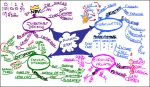
Mind MapYou need to take your revision notes and reduce them even more. Go through the notes again but this time only record what you can’t remember or don’t understand. The notes should also be written in a more short hand style, we only want key words not whole paragraphs. You might also wish to think about making notes in a mind map style rather than a linear one. These notes should be no more than 10 pages. They should be structured in the same way as your original revision notes wherever possible. These final set of notes can be prepared perhaps as late as 1 week before the exam. What you do next is memorise these notes, we are no longer looking for an understanding, but don’t be surprised if during this process something suddenly makes sense. There are lots of memory techniques you can use, ranging from the simple rhyme method above to acronyms, acrostics, peg methods and the famous roman room or loci method. The point is this, time for learning in the traditional way is over, you now need to commit as much to short term memory as possible. The night before and on the morning of the exam you just keep going over these 10 pages of notes. Use colours and images as much as possible and be creative, memory uses both left and right sides of the brain.

There are of course many more tips that will help with your revision but for me these are probably the most important. So to all those sitting exams, I wish you the very best of luck and to those that aren’t, if you are driving into work in the next few weeks, have a thought for the person in front, they might have a very important exam today!

Tuition is dead, long live revision – Tip two

RIP TuitionFollowing on from tip one, to produce a set of shorter and more exam focused revision notes.

Tip two – practice past exam questions

Having identified the key examinable topics and produced a set of notes that are based on them, the next step is to select one or two past questions from each area and practice them. In fact although I describe the process as, complete the notes first and then look at the questions, you may of course look to answer questions on each of the areas as you are preparing each section of the notes.

 If when you are trying to answer one of these questions you find you can’t, look at the answer, then attempt the question. If despite having the answer in front of you, you still can’t answer the question, then work through it until can. Amend your revision notes to include anything that you have learned that will be of use when you come to attempt a similar question. Carry this process on until you have covered all the must learn examinable areas. Then go through the same process with the should learn and the would be nice to learn.

In a perfect world you would study and make notes on every topic, in reality, you probably won’t, you will end up having to miss something out. If you follow the process described above, you will at the very least end up with a set of notes, all be them incomplete, on the most examinable topics. More importantly using the time that you have saved, you will have had the opportunity to practice answering past exam questions which will have taught you so much more than any notes can ever do.

If you find you lack a little self discipline and think that on your own you will not be able to do this, then once again a revision course may be worth considering. Having other people around who are in the same boat and share the “dislike” of the subject or of the “examiner” can for some reason make the whole process a little easier and slightly less stressful. You will also have to work at a pace that will increase the number of questions you get through in a day and so your chances of passing.

Tip three I will post on Sunday.

Tuition is dead, long live revision – Tip one

RIP TuitionFor some people reading this blog, the idea of sitting an exam in the run up to Christmas probably seems a little strange. Yet such is the variety and flexibility in examinations there is probably always someone sitting an exam. I can still remember whilst driving to one of my exams looking at other people and thinking, for you this is probably just an ordinary day, but for me it’s the accumulation of weeks and months of hard work that could all be wasted if I fail.

How I so wanted to be having an ordinary day….

So although examinations are never far from my mind, as some of my students  are preparing for exams this November and December I thought it might be a good idea to look at what you should do as the tuition period comes to an end and the revision period begins. Below are my top three exam  tips as to what you should do during revision.

Tip one – less is more

Let’s assume that you have a set of notes that have been taken during class or that you have made from a text book. In theory these notes contain everything you have learned and studied so far, in reality they are often not as comprehensive as you think and even though you have studied something it does not mean you have understood it. Chances are these notes are also a little on the thick side. Now depending on how you have studied (You might find it useful to read the blog on exam focussed learning ) it is more than likely that these notes will need to be refocused and cut down.

 If you have not already done so you need to identify the most examinable topics for the subject you are studying. This can done by looking at say the last 4 exam papers and identifying topics that  have been examined on several occasions. You then need to make these your focus of attention, each topic in your tuition notes needs to be ranked as must learn (most examinable topic) should learn (2nd most examinable topic) and nice to learn (3rd most examinable topic). Once you have done this you begin the process of going through your tuition notes using,  must learn, should learn, and nice to learn as your guide as to how much time you spend making new notes on each area. These shorter, more exam focused notes will become your revision notes.

 If you attend a revision course, these notes are often provided. In fact the reason revision courses are so popular and have higher than average pass rates is partly to do with these notes and the expert guidance you will get on the course itself.

If you are studying for your GCSE or A levels exams, in the blogroll is a link to a site that provides free revision notes. 

Tip two will be posted soon.

Exam focused learning

Exam paper 1On the 20th and 22nd of October I will be delivering a one and a half hour webinar on exam focused learning.  So what this is and how it can help with passing exams is on my mind. It therefore seemed appropriate that this blog should be devoted to explaining a little bit more about it. For those that did attend the presentation and may well be logging on after the event, welcome back, I hope you will find this a useful reminder that may prompt you to add your thoughts or ask some questions. You can do this by clicking on the leave a comment link at the bottom of this blog.

Exam focused learning is a way of studying that places a much greater emphases on looking at specific topics rather than the whole syllabus and using examination answers as a key way to both learn and focus attention. I should also say that this approach is best suited for what I would call more traditional exam formats rather than multi choice questions and case studies.

Imagine you are about to begin studying a new subject, one that you have little or no knowledge. Let’s also assume that you are studying from home. What do you look at first, maybe the text book, you turn to the contents page and look at the 22 chapters that you are required to read and understand. Perhaps you then get a blank pad of paper, a pen, a coffee and begin by reading chapter one. You probably make notes as you go through so that you have something to re-read and revise from later. You go through the entire book making notes in this way and so in theory at least have begun to learn the subject.

The problem with this approach is that it takes a lot of time and although you feel that you are covering everything, you of course aren’t. You will almost certainly have to miss some things out or move more quickly through certain areas just to keep up with your timetable.  The other problem with this “Traditional approach” is that you will spend so much time learning you will have little time left for practicing exam questions.

Exam focused learning does not start with the text book; it starts with your objective. Let’s assume that this is to pass the exam, not learn the subject.  If you wish to pass, on the day of the exam you will have to answer the questions set by your examiner. Now imagine if you knew what these exam questions would be. If you did would you stand a better chance of passing, yes or no. I think yes. The only problem is that you don’t have the actual exam questions……but you do or can obtain lots of past exam questions, questions that have been set by your examiner before.

So here is the first important point, better to learn the answers to these than to learn pages of content from a text book that may or may not be relevant. Now of course this will not work in the complete absence of some understanding of the subject which will have to come from a tutor, lecturer or text book. But the clarity of direction that a question gives, the specific way it shows what you are meant to learn and the context in which something needs to be understood is invaluable.

The next problem, there are just too many past questions.  We really need to have fewer questions to study, at least to start with. By analysing past questions you should be able to identify which topics have consistently come up in the past, these we must learn. Then we look at topics that are likely to come up in this exam. We should be able to spot these in our analysis as being important topics that have not been examined for some time.  These should be learned. And finally we look at those topics that might come up, these are nice to learn.

And here is the second important point, on the face of it this sounds like question spotting but really it’s about focus it simply gives you a point from which to start.  By all means learn everything, but if you can’t or don’t have time, better to have studied and practiced questions on the most important areas and the ones most likely to be examined.

If you change your way of studying to this exam focused approach you will enter the exam room knowing what the three or four most important topics within your subject are. More importantly you will have practiced answering past exam questions on these areas and so will be very well prepared for what might come up. You should also have practiced some questions on the next three/four most likely topics for this exam. Now compare that with the student who has gone through the text book making notes but who due to time pressure had little or no time to practice past questions. Who do you think stands a better chance of passing……?

Exam focused learning….Done

Ps – next year my book currently entitled “The E (Exam) word” should be published. In it I explain in far more detail exactly how to follow the exam focused approach, what to do in the exam, how to cope with exam stress and  how to improve your chances of passing by using effective memory techniques.

Watch this space for more details 

The apprentice and the marking guide

As we move closer towards the end of the apprentice it perhaps becomes a little clearer as to what Sir Alan is actually looking for. Did he set out with a predetermined idea as to what he wanted or did he simply let events unfold and wait for the talent to impress him. Well maybe there is some degree of spontaneity in the selection process, but this has now become a formulaic programme with set objectives and a consistent team of people making the decisions as to who should get the job. As a result there will be criteria by which all the candidates are evaluated.

In the exam world it is very important that anyone marking scripts is clear as to what the examiner is looking for. This is to ensure that when you have several markers in a team they are equally fair to everyone or at least as fair as possible. For some examinations these marking guides are published and they provide an invaluable and often essential way of finding out exactly what the examiner wanted. Depending on the exam, to make sense of the marking guide you will also need the model answer. But armed with a marking guide and the examiners answer you will be able to pin down the specific likes and dislikes of your examiner. How many marks did they give for the written part of the answer, how detailed did the calculations have to be, where there any unusual terms used that perhaps you had not come across before, all this and more can be revealed.

And so to the point, if you want to increase your chances of passing an exam you should get a copy of your examiners marking guide and model answer. Then work through one or maybe two exam papers making a note of how many marks were given for calculation verses written. Looking for those unusual terms and generally honing your knowledge towards what your examiner wants.

To pass an exam takes many qualities not least hard work, but if you understand what your examiner wants, that must be give you a much better chance of achieving it.

And so it is possible that the current candidates on the apprentice have a much better chance of knowing what their examiner wants having benefited from watching previous programmes. That’s of course if they thought about it before they went on, or perhaps like lots of students they simply left it to their natural talent and ability……