
Whose fault is it that you failed? – Attribution theory 

If you are motivated, learning will be easy and even enjoyable, however motivating people to learn is one of the biggest challenges there is in education. And it’s complicated, what motivates one person does not motivate another.

One area that is worth exploring in order to get a better understanding of motivation is called attribution theory. Could it be that what you believe about the causes of your successes and failures play a part (Weiner 1995), If for example you believe that your success was as a result of hard work would you be motivated to work even harder?

“I’m a greater believer in luck, and I find the harder I work the more I have of it”. Thomas Jefferson

Attribution theory
Attribution theory was developed by Fritz Heider an Austrian psychologist in the late 1950s. It’s a concept about how people explain the causes of an event or behaviour. The individual’s conclusion will have a significant influence on their emotions, attitudes, and future behaviours. It’s important to note that this is how individuals explain causality to themselves, they are perceptions and interpretations rather than concrete objective realities. Working harder may well be the answer, and yes it was unlucky to be ill on the day of the exam, those are the realities, but attribution theory is about perception. It’s how the individual makes sense of such events that sit comfortably with their view of the world.

“I never blame myself when I’m not hitting. I just blame the bat and if it keeps up, I change bats. After all, if I know it isn’t my fault that I’m not hitting, how can I get mad at myself?” Yogi Berra (baseball player)

Internal and external – Heider’s basic theory suggested that causes could be internal, something under your control or external, something outside of your control. For example, if you scored highly in an exam, you might conclude that this was because you are very smart and worked hard, these are internal attributions. Conversely, if you did badly in the exam, an external attribution would be that the exam was unfair, and the questions unclear. There is a certain positivity about this perspective, but what if you thought the reason you failed was because you are not bright enough, and the only reason you have been successful in the past was pure luck?  The first more positive perspective would build self-esteem, the second erode it.

There is one other aspect of the theory that is worth highlighting, it relates to the perception the individual has in terms of the stability of the attribution. If its stable then it’s thought difficult to change, unstable, easier to change. For example, if you believe that you passed the exam because of your innate intelligence, which is stable, you are more likely to stay the course and overcome setbacks and failures. But if you believe that your intelligence is not fixed, and can get worse, maybe with age, then when faced with a challenge, you may well give up.

“In short, Luck’s always to blame”. Jean de La Fontaine (French Poet)

Why does this matter?
Attribution theory explains how “your perception” of events such as exam success and failure can impact your behaviour and levels of motivation. If you are aware of it you will develop a greater sense of self-awareness and an ability to be able to frame these events in a more positive and helpful way. Remember all that your doing is changing your perception of the event, not the event itself.

Below are a few more observations:

Embrace an attribution style that fosters a growth mindset. Attribute your successes to effort and strategies, and your failures to factors you can change. This mindset promotes a belief that you can develop your abilities over time through hard work.

Use attribution theory to fuel your motivation. When you attribute success to your efforts, it encourages you to work harder in your studies. Likewise, attributing failure to controllable factors can motivate you to adjust your strategies and try again. In order to help maintain your self-esteem and resilience, recognising that sometimes, external circumstances play a role, and it’s not always about your abilities or efforts.

When receiving feedback on your academic performance, ask for specific information about what contributed to your success or failure. This can help you make more accurate attributions and guide your future actions.

This blog is not really about attribution theory, its purpose it to provide you with an understanding of yourself so that you are better prepared for the challenges you will face both inside and outside the exam room.

Attribution or truth…..

“I’ve failed over and over and over again in my life and that is why I succeed”. Michael Jordan

Arnold Schwarzenegger new book– Arni has just brought out a new book called “Be Useful: Seven Tools for Life” and two of his seven tools are “Overcome Your Limitations.” and “Learn from Failure.” Both of which would require some aspect of changes in attribution. 

Fairness and mutant algorithms

Back in 2014, I wrote two blogs (part 1 & part 2) about examinations and asked if they were fit for purpose. The conclusion – they provide students with a clear objective to work towards, the process is scalable and the resulting qualification is a transferable measure of competency. They are of course far from perfect, exams do not always test what is most needed or valued and when results are presented in league tables, they give a too simplistic measure of success.

However, I didn’t ask if examinations were fair, that is treating students equally without favouritism or discrimination.

In the last two weeks the question around fairness has been in the headlines following the government’s decision to cancel all A level and GCSE examinations in order to reduce the risk of spreading Covid-19. Whilst many agreed with this it did cause a problem, how could we fairly assess student performance without an examination?

Are examinations fair?

This is not a question about the fairness of an exam as a type of assessment, there are for example other ways of testing ability, course work, observations etc. Its asking if the system of which an examination is part treats all students equally, without bias.

In the world of assessment exams are not considered sufficiently well designed if they aren’t both reliable and valid. It might be interesting to use this as a framework to consider the fairness of the exam system.  

  • Validity – the extent to which it measures what it was designed to measure e.g. add 2+2 to assess mathematical ability.
  • Reliability – the extent to which it consistently and accurately measures learning. The test needs to give the same results when repeated. e.g. adding 2+2 is just as reliable as adding 2+3. The better students will get them both right and the weaker students both wrong.

The examining bodies will be very familiar with these requirements and have controls in place to ensure the questions they set are both valid and reliable. But even with sophisticated statistical controls, writing questions and producing an exam of the same standard over time is incredibly difficult.  Every year the same questions are asked, have students performed better or is it just grade inflation, were A levels in 1951 easier or harder than today? It’s the reliability of the process that is most questionable.

If we step away from the design of the exam to consider the broader process, there are more problems. Because there are several awarding bodies, AQA, OCR, Edexcel to name but three, students are by definition sitting different examinations. And although this is recognised and partly dealt with by adjusting the grade boundaries, it’s not possible to completely eliminate bias. It would be much better to have one single body setting the same exam for all students.

There is also the question of comparability between subjects, is for example A level maths the same as A level General studies? Research conducted by Durham University in 2006 concluded that a pupil would be likely to get a pass two grades higher in “softer” subjects than harder ones. They added that “from a moral perspective, it is clear this is unfair”. The implication being that students could miss out on university because they have chosen a harder subject.

In summary, exams are not fair, there is bias and we haven’t even mentioned the impact of the school you go to or the increased chances of success the private sector can offer. However, many of these issues have been known for some time and a considerable amount effort goes into trying to resolve them. Examinations also have one other big advantage, they are accepted and to a certain extent the trusted norm and as long as you don’t look too closely, they work or at least appear to. Kylie might be right, “it’s better the devil you know”….. than the devil you don’t.

The mutant algorithm

Boris Johnson is well known for his descriptive language, this time suggesting that the A level problem was the result of a mutant algorithm. But it was left to Gavin Williamson the Secretary of State for Education to make the announcement that the government’s planned method of allocating grades would need to change.

We now believe it is better to offer young people and parents’ certainty by moving to teacher assessed grades for both A and AS level and GCSE results”

The government has come in for a lot of criticism and even their most ardent supporters can’t claim that this was handled well.

But was it ever going to be possible to replace an exam with something that everyone would think fair?

Clarification on grading

To help answer this question we should start with an understanding of the different methods of assessing performance.

  1. Predicted Grades (PG) – predicted by the school based on what they believe the individual is likely to achieve in positive circumstances. They are used by universities and colleges as part of the admissions process. There is no detailed official guidance as to how these should be calculated and in general are overestimated. Research from UCL showed that the vast majority, that is 75% of grades were over-predicted.
  2. Centre Assessed Grades (CAG) – These are the grades which schools and colleges believed students were most likely to achieve, if the exams hadn’t gone ahead. They were the original data source for Ofqual’s algorithm. It was based on a range of evidence including mock exams, non-exam assessment, homework assignments and any other record of student performance over the course of study.  In addition, a rank order of all students within each grade for every subject was produced in order to provide a relative measure. These are now also being referred to as Teacher Assessed Grades (TAG)
  3. Calculated grades (CG) – an important difference is that these are referred to as “calculated” rather than predicted! These are the grades awarded based on Ofqual’s algorithm. They use the CAG’s but adjusts them to ensure they are more in line with prior year performance from that school. It is this that creates one of the main problems with the algorithm…

it effectively locks the performance of an individual student this year into the performance of students from the same school over the previous three years.

Ofqual claimed that if this standardisation had not taken place, we would have seen the percentage of A* grades at A-levels go up from 7.7 % in 2019 to 13.9 % this year. The overall impact was that the algorithm downgraded 39 % of the A-level grades predicted by teachers using their CAG’s. Click here to read more about how the grading works.

Following the outcry by students and teachers Gavin Williamson announced on the 17th of August that the Calculated Grades would no longer be used, instead the Centres Assessed Grades would form the basis for assessing student performance.  But was this any fairer, well maybe a little, but it almost certainly resulted in some students getting higher grades than they should whilst others received lower, and that’s not fair.

Better the devil you know

The Government could certainly have improved the way these changes were communicated and having developed a method of allocating grades scenario stress tested their proposal. Changing their mind so quickly at the first sign of criticism suggests they had not done this. It has also left the public and students with a belief that algorithms dont work or at the very least should not to be trusted.

Perhaps the easiest thing to have done would have been to get all the students to sit the exam in September or October. The Universities would then have started in January, effectively everything would move by three months, and no one would have complained about that would they?

The tip of the iceberg – exam tipping is becoming obsolete

tip1

Assessment is changing, there was a time when all examinations were sat in a room, the answers would be hand written on a piece of paper and a retired English teacher would stand at the front reading out instructions as to what you could and couldn’t do in the next three hours.

Not any more…….you request a date that is convenient, turn up at the exam center, no longer is this a sports hall, it might be a driving school test center or the college you studied at. Then you log onto the PC and answer questions on the computer screen in front of you. The results may be immediate; it depends on if it is “human marked” or computer marked.

But in some ways these changes are only the tip of the iceberg!

What no past exam papers.

As examinations move into the digital world we are seeing other changes as well. There is a move towards objective testing, scaled scoring and examining bodies no longer providing past exam papers, what did you say, no past exam papers……!

This is partly down to the nature of the test i.e. you can’t provide an exact replica of a past exam question if it is an objective test. Remember objective test questions are randomly selected from a pool, and are different for each student. But there is also a shift towards some examining bodies only providing an example of the type of questions that could be set rather that a continuous flow of, the last exam papers.

If the test changes – how you study (and teach) has to change

Now for someone who has advocated that students analyse past exam questions in order to identify key areas so as to better direct their studies, this is a bit of a blow. It has also been the method I have used in the past to focus my own delivery in class and on line. Of course using past exam questions has always been much more than just spotting key areas, it is about focus, providing a place to start, showing content in the right context, helping with writing style etc.

There will still be past questions, sample questions will be provided. What we don’t know is how representative they will be of the examination. Or will it be as we have seen in the past with pilot and specimen papers, they change over time, drifting away from the original in terms of style and emphasis. Although I can see the logic in examining bodies not releasing papers, I hope they will continue to keep the sample papers fresh, in keeping with current thinking about the subject and how it will be examined.

What to do?

Students and tutors still need focus, there has to be emphases on key areas in order to chunk the content so that it can be more easily learned, it’s just that we won’t be able to use past questions or at least as much as we have in the past. That emphasis will now have to come from articles written by the examiners, examiner reports and syllabus weightings. If faced with a new subject where there is only one sample paper, it will be necessary to read the guidance from the body closely, noting reference to “this being a key part of the subject” or “one the examiner thought was answered badly in the past.” These together with the syllabus weightings and specific learning outcomes will have to be your guide. It is of course possible that the subject has not changed much from before and so some of the older past question can be used. As far as questions style is concerned then that will have to come from the questions and answers that are published, it may not be ideal but it’s the best we can do.

The overall impact of these changes is that students will have to know more, something that is hard to argue with. Students and tutors alike will have to devote far more time to the subject, which is fine if students have the time and can afford the extra costs involved in longer periods of study.

But it’s not all bad news, new technologies can help students make the most of dead time, studying on the train using their mobile phone for example. Also knowledge is more freely available than ever before as many top institutions provide a huge amount of free easy to access content online.

One final thought, examinations may change and they may not be fair but on the whole they are equal, everyone as before is in the same boat, and someone will always pass, wont they!

The future – Sitting the exam at home?

On line exams

An online student, all be it a mature one shows his ID to the online assessor

And maybe even the exam room will become obsolete. Proctur U is a US based company that also has a presence in the UK offering online invigilation. Watch this video to see how it works and judge for yourself


Why cramming works and making stuff up is okay

Will making stuff up

Will making stuff up

To a certain extent I have spent much of my career making things up. When I was a student that was not the case, I listened and learned and so when I spoke, I spoke with confidence that what I was saying was correct, because someone had just told me it was. Yet knowing is only the start, and in some ways a poor relative of the “figuring it out for yourself” technique.  I am reminded of quote from the film Good Will Hunting, which along with Dead Poets capture some really magical moments in learning.

Will Hunting – “See, the sad thing about a guy like you is in 50 years you’re gonna start doing some thinkin on your own and you’re gonna come up with the fact that there are two certainties in life.” “One, don’t do that.” “And Two, you dropped a hundred and fifty grand on a f***in education you coulda got for a dollah fifty in late charges at the public library.”

 Question practice – the secret to exam success

Having had no real formal educational training I have been exploring ideas as to why some techniques work and others don’t, why it is that student A passes yet student B who did exactly the same, failed. One clear observation from over twenty years in the high stakes exam world is that the most important activity that a student can engage in is, question practice. As a lecturer I would make statements, explain them using real world examples, get students to laugh, and maybe even enjoy the subject. But, the very best learning seemed to happen when the student was required to do a question. So it was with great interest that I read of some research that came out of the US in 2011, it’s called Retrieval Practice.

 Retrieval practice – the power of cramming

Retrieval practice is simply the process of retrieving something from memory.  So for example if I asked you, who was the Prime Minister that took us into the European Economic Community in 1973, you might say, on reflection Edward Heath. You already knew the answer but were forced to recall it. If however you were not sure who it was and were subsequently told (given feedback) it was Edward Heath and that Harold Wilson in 1975 held the first referendum, you are likely to remember both. But the most interesting and perhaps surprising aspect of this research is that not only can you recall the facts, it also leads to a deeper learning in so much that you can answer questions on related information. This in some ways gives credence to the idea that cramming information, maybe not at the last minute could be beneficial, not simply because you will remember it for a few hours’ but that it will lead to deeper learning.

Mark McDaniel is a psychology professor at Washington University in St. Louis

“We think of tests as a kind of dipstick that we insert into a student’s head, an indicator that tells us how high the level of knowledge has risen in there when in fact, every time a student calls up knowledge from memory, that memory changes.” “Its mental representation becomes stronger, more stable and more accessible.”

Jeffrey Karpicke, a professor of cognitive psychology at Purdue University

“Retrieving is the principal way learning happens.” “Recalling information we’ve already stored in memory is a more powerful learning event than storing that information in the first place,” he says. “Retrieval is ultimately the process that makes new memories stick.” “Not only does retrieval practice help students remember the specific information they retrieved, it also improves retention for related information that was not directly tested.”

Final thoughts

And so I am pleased to say that what I have observed in the classroom, that question practice improves exam results might be a little simplistic and that not only does it help students pass exams they might actually have been learning something at the same time 🙂

If you want to read more follow these links

To Really Learn, Quit Studying and Take a Test (New York Times)

Researchers Find That Frequent Tests Can Boost Learning (Scientific American)

Teaching to the test – Interesting research but the fat lady is still in good voice

Fat lady still singingThis week researchers from the University of East Anglia released some very interesting findings that resulted from testing 594 bio-science students in their first week of term at five universities.

The students selected would be considered by many more than competent in their subject, almost all had a grade A*, A or B in biology at A-level. Yet when they were given 50 minutes to answer 38 multiple choice questions on cells, genetics, biochemistry and physiology from their A level core syllabus, they only got 40% correct. The period of time between the students sitting their A levels and the test was three months.

Lead researcher for the study, Dr Harriet Jones, said: “What our research shows is that students are arriving at university with fantastic A-level grades, but having forgotten much of what they actually learned for their exams.”  She went on to say that the trend to teach to the test, to ensure good results for schools’ reputations, was the problem.

The schools are to blame then

The facts of the research are clear, students who had successfully passed a test, were unable to pass a similar test three months later. The conclusion reached is that the students did not understand (see my blog on understanding) their subject well enough and passed their A levels probably using little more than memory. And who is to blame, the schools of course, for teaching to the test. Why the school do this is worthy of further debate, but government pressure and the impact of league tables will certainly be in the mix.

But do employers not accuse Universities of delivering up similar ill prepared students. The test is different but from the employers perspective the result is the same. A University student who professes to know something but when tested “in the real world” doesn’t.

Does this mean that Universities are also teaching to the test!

It’s about the test etc

The problem is not in teaching to the test; the problem is with the test, the pass mark and possibly the marking. If the test was more Testing but for what!aligned to what the student needs to know/do at a fundamental level, the pass mark sufficiently high and the marker having some degree of autonomy to form judgements, then the results would probably be different. It could of course be that the exams are easier – Exam chief: ‘you don’t have to teach a lot’ for our tests.

The big criticism of teaching to the test is, it results in a narrowness of understanding, little in the way of depth and does not push students to think in abstract and creative ways. But if the test, which incidentally does not have to be in the exam hall or on paper/PC was able to “test” for these qualities then teaching towards it would perhaps be more acceptable.

Bottom line

Teaching to the test is unlikely to change, in fact given the popularity of league tables  in education just now it may well increase, but with more effective testing the results might be better students, happy Universities and even happier employers.


50 shades of Grade…..Measuring students worth

I don’t often write specifically about the market that I am most closely involved, that of accountancy training and education. But there does seem to be an anomaly in the way the accountancy world measure success that isn’t the case in many other professions and examinations.

To become a qualified accountant in the UK (ACCA, ICAEW,CIMA etc,  yes there are more) you have to pass a number of demanding examinations and submit evidence of practical experience. The exams are taken over 3 years and everything rests on a number of exams of 100 marks each, of which you need to get 50%. The pass rate for accountancy students varies from paper to paper but is around 60% In training and education terms these exams are often referred to as High stake exams. For some failure is not simply a setback in terms of time, it could result in a lost job.

50% good – 49% bad

The purpose of such exams (including the practical experience) is of course to ensure that those that pass are competent. But how competent….?  It seems that you are either competent or not, if you get 49% you are not competent, if you get 50% then you are. This makes the margin for error very high, many a career has taken a dramatic turn based on 1 mark. Now of course in any exam there has to be a point where someone succeeds and another fails but does competence not have many shades to it, is it not a continuous process rather than a discreet one.

Shades of Grade

You may be one of thousands of students (>300,000 actually) who have just had your A level results. But of course you don’t just pass or fail, in fact this has not been the case since 1963, even before then there was an indication of the mark. You are given a grade from A through to E and all are considered a pass, 98.1% passed their A levels this year.

And the grades refer to the marks e.g. E is 40%, a D is 50%, a C is 60%, a B is 70% and an A is 80%. A similar grading exists for Degrees, 2.1, 2.2 etc and for Law exams, Pass, Commendation, Distinction.

No pressure for excellence

So why is this not the case in accountancy? To be honest I am not sure. But by introducing grades above a pass you not only provide employers with a better indication of competency, you encourage colleges to teach to a higher and deeper level, motivated by the students who want to learn more. And that for me is the most important point; you create an incentive for students to try harder. At the moment if you are scoring 55% then why put in more work, a pass is a pass, but a distinction well that will make you stand out from the crowd.

Of course the market will adjust its perception of what a pass means, for example employers may only want students with a distinction rather than a simple pass, but they have always looked and will continue to look for differentiation, at least this is a meaningful one.

What it does not do is fix the 49% you fail problem, and careers will still hinge on 1 mark, but that unfortunately is the way with exams and the reason exam technique is so important.

So to all the accountancy examining bodies why not introduce grades – grey is good and isn’t it an accountants favourite colour?

Thank you for the music – listening to music when revising

May and June are the traditional months when students around the world lock themselves away to revise for their exams.

In China for example over 9 million students will be sitting the university entrance exams.

Last May (2012) Teenagers at Xiaogang school in Hubei province were pictured hooked up to bags of intravenous fluids hanging from the classroom ceiling to boost energy levels during the revision period. An extreme action by anyone’s standards, but perhaps an example of how much pressure students feel this time of year.

As I mentioned in last month’s blog my daughter is currently caught up in this May/June exam frenzy. So once again I found myself looking to her for inspiration. What was she doing, how did she revise? This is not because she is a perfect example of a revision student, in many ways she is not, but I do think she is typical of many.

What does Beth do?

  • Makes notes from her notes – This is a standard exam skill, reducing content down into measurable and personal chunks. She does use mind maps (possibly my influence) but not exclusively.
  • Prepares as if she has to teach someone else – this I find interesting and has certainly not come from me. She writes on a white board the key points as if she was going to teach that subject. I like this idea, as many teachers and lecturers will tell you nothing focuses the mind nor motivates you more than having to teach it to others.
  • Practices past exam questions…of course!
  • Studies while listening to music – now this is the one that intrigued me and as a result I have devoted the rest of the blog to answering the question …..

Is it a good idea to revise whilst listening to music?

As ever the science needs much interpretation.

It’s a bad idea

Researchers from the University of Wales, tasked 25 students with memorising lists of consonants. Some were shown the letters while sitting in silence, others while listening to music by their favourite bands or by groups they had a strong aversion to. The conclusion was that listening to music, hampered their recall.

So it’s good then

Scientists at Stanford University, in California, believe there is a molecular basis for music known as the “Mozart Effect“. It was discovered that rats, like humans, perform better on learning and memory tests after listening to a specific Mozart Sonata in D.

But then there is the evidence that suggests that switching attention when trying to learn as might be the case with listening to music slows down the cognitive process.

Yet you cannot ignore the research that clearly shows music has the ability to alter your brain and induce relaxation which in turn helps create an ideal state for learning.

Watch what happens to your brain when you listen to music.

Hopefully you get the idea.

Conclusions

  • Listening to music puts you into a more relaxed frame of mind and that is of course good for learning. So listening to music before or after revising can help.
  • If you do want to listen to music, avoid music that requires you to shift your attention. This would suggest you should not listen to  music with lyrics  as it can mean you need to think about what is being said nor should you listen to something new that you may not have heard before. This is one of the reasons classical, in particular baroque music is the preferred choice of many students. Also don’t play the music too loud, keep it as background noise.
  • If there are specific facts that you simply need to know, then avoid listening to music completely, give it your full attention. But you can’t concentrate at this level all day, only for short periods.
  • On the whole be consistent don’t keep changing the type of music, you need familiarity.

Music to help you study

The internet has many websites that offer relaxing and helpful music, here are a few that might help.

Exams in the headlines – but for the wrong reasons again!

Well it has certainly been an interesting time in the exam world! Here are just a few of the headlines.

Behind all of these headlines are personal stories, for example students who can’t get into sixth form colleges because they didn’t get the necessary grades. The argument being, that if the grade boundaries had not changed (by 10%) resulting in them getting a D and not a C then they would have got into their colleges of choice.

Stacey Cole chief executive of Ofqual said “the grades are right “

Although the impact on individuals is considerable, statistically the change was small. The proportion of test papers awarded at least an A fell by 0.8 percentage points to 22.4 per cent (this was 8.6 per cent in 1988!) the first annual drop since GCSE exams were first sat in 1988. A* grades also fell but only by 0.5 percentage points to 7.3 per cent.

However, when something goes up, it must come down so perhaps it was inevitable that the ever increasing improvement in student grades had to reverse or at least plateau.

What has changed/gone wrong? 

  • Teachers are encouraged to prepare students for the exam, because parents, employers and educational institutions measure success at least partly (exclusively?) by the results.
  •  Students are better at exam skills than ever before. After all, this blog is about how to pass exams and the skills needed to help.
  • Universities and employers seem equally unimpressed with the quality of students and candidates they get, complaining they don’t have basic levels of numeracy, literacy and common sense!

Answers to some of the questions

Have students been getting better each year?

I think the answer is yes, the results prove they have. But maybe they have been getting better at passingexams. And not improving on some of the more difficult to measure skills like, attitude, common sense, being thoughtful. Exams don’t give you time to be thoughtful! This might explain why employers are so unhappy.

But they may just be getting better…..
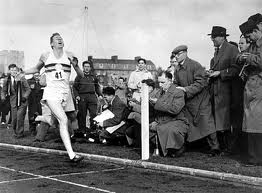
On the 6th of May 1954 Roger Banister ran the 4 minute mile, it is now the standard of all male middle distance runners. Does this mean the mile is now shorter…….or maybe runners have improved?

Why did someone not say something?

The pressure to succeed, measured by exam results has been so great on teachers, examining bodies and students that no one was willing nor was it in their best interest to say, “this just doesn’t make sense.”

Why do we have exams, to test knowledge/competence or to separate the best from the rest?

They should probably be to asses’ knowledge but are mostly used to try and pick the best people.

Have exams been made easier, the dumbing down argument?

This is tricky, and although you can compare exam papers it’s a bit like comparing Wayne Rooney with George Best. You can debate the pros and cons but I am not sure it is conclusive; things were just different in the past.

But it’s not fair

What does seem clear in this whole debacle is that raising the grade required
half way through the year is not an example of exam rigour, it’s an example of being unfair and that is the one thing exams should never be.

Also see my blog what do exams prove

Back to more exam tips next month….

Are you taught in the most efficient & effective way? – The flipped classroom

To pass any exam you need to learn in the most efficient and effective way but only part of that is down to you the student, much is about the way in which you are taught.

Little has changed in the way knowledge has been transferred over the years. Initially teaching was one person talking to a few people; let’s call this the Neanderthal approach, the first classroom? Then we had a major innovation the printing press, around 1450, which made it possible for knowledge to flow around the world, all be it slowly, no email in those days. But with the advent of the computer in 1837 (Charles Babbage) or 1942 (first digital computer) or the first PC, IBM 1953, the ability to store and transfer information to the masses was possible. Yet little changed in the way we were taught, until now.

Now we have both online and classroom learning. But what is best way to learn, what is the most efficient and effective way to transfer knowledge?

The lecture

If you think of a traditional lecture, the lecturer stands at the front and talks, the student makes notes and then goes away to read and perhaps actually learn something about the subject.

The online approach

A mass of content is available online, you can watch the very best lecturers from all around the world, stopping and starting the presentation to suite the speed in which you learn. Or perhaps you have a sophisticated e learning course where activities are carefully constructed to explain what you need to know. But this can be lonely and despite the claim that online is the same as being in a classroom, from my experience it is not, it is different.

The blend and the flip

But is the best method to have a blend of both online and Classroom / Lecture Theater. This is the idea behind the blended course. Attend the lecture and then watch some online instruction later in the day perhaps. However much thought needs to be given to how this works, directing students to random You Tube clips is far from ideal. Yet it feels like a move in the right direction.

And now the Flip – The flipped classroom (2004 ish) takes its name from the idea that content has historically been taught in the day and students expected to apply that content in their own time for homework.  But is making notes in class the best use of that face to face time? Should students not watch the lecture on the evening, benefiting from studying at their own pace and then attend class the next day, where they can ask questions? Can we flip the process?

In class the lecturer or teacher can then bring the subject to life using real world examples, answer student questions and deal with individuals on a one to one basis.

It’s not perfect, but it is better

Okay it is far from perfect and it has yet to be proven over time. But it does seem to make a lot of sense and for the first time we may be seeing the power of the PC complementing rather than competing with the classroom.

Oh and it has some powerful supporters Sal Khan & Bill Gates

Watch this for a great explanation why flipping the class is a good idea

What’s the point of exams – what do they prove?

With many students in the middle of exams right now, working long hours, making huge personal sacrifices and putting themselves under considerable pressure, perhaps we should stop, take a moment to reflect and ask ……….what’s the point of exams?

Why are you doing this, what will it prove when you do pass, what will passing give you that you don’t have now?


It’s not about knowledge

If you pass an exam, you have proved that you knew the answers to questions set by the examiner at a particular point in time. To be precise you have only really proved you knew enough answers to get a pass mark, in some instances this might be less than half! But you have not proved that you understand everything about the subject or that you could work unsupervised in practice, knowing what to do is not quite the same as doing it.

This is not to say that examinations are easy, they are not or to underestimate their importance, it is just to be a little clearer on what exam success means.

Higher level skills

By passing an exam you are demonstrating many other skills, for example;

Motivation – You have proved that when you set your mind to something you can achieve it.

Concentration – For some people, concentration comes easily for others it might involve removing all distractions by locking themselves in a room. Whatever method you used, you have learned how to cut out distractions and focus on the task in hand.

Prioritisation and Time management – Undoubtedly you have had too much to learn and too little time to learn it. But if you pass the exam you have proved that you got the balance between an endless, or at least what appeared endless set of demands and the overall objective just right.

But most of all exams give you….

A great sense of achievement – You set yourself a target and achieved it.  It is a statement to others that you worked hard and have succeeded. It will remain a tangible and permanent reminder of success that can never be taken away.

Self confidence – It will build self esteem and help you develop a type of confidence that only comes from being successful in a chosen field. Others will congratulate you and as a result, treat you differently.

Choices – it will open doors to opportunities that simply would not have been possible without the piece of paper that says “Congratulations, you have passed”. Exam success will give you choices, it will change how others look at you but perhaps more importantly it will change how you feel about yourself…

So if you have been working hard keep at it, you may not be proving you are the greatest mathematician in the world, but if all goes to plan the end result will make up for all the pain you are going through right now, honest!

But just in case…..everything doesn’t work out check out these Famous A-level flunkers

Exam results – what to do if you fail!

August is an interesting month, for some it is the time to take a well earned holiday and so de-stress for others it is the month in which the exam results drop through the letter box or inbox and so a time to get stressed.


I have taken the easier of these two options and so have been on holiday, which for me is always a chance to read a couple of books. One of them was called Talent is overrated by Geof Colvin, senior editor for Fortune magazine. In the book Geof puts forward some interesting arguments as to the role talent plays in the success of people who by many would be considered exceptional, even gifted. He argues not so much that innate talent does not exist, more that successful people, those at the top of their respective tree, Tiger Woods (okay not personally – but he is still a great golfer) Warren Buffet, Bill Gates for example have other qualities, they worked hard, and practised a lot…..

Greatness does not come from DNA but from practice and perseverance honed over decades. The key is how you practice, how you analyse the results of your progress and learn from your mistakes.

What has this got to do with exam failure?

If you looked around your class and picked the best, brightest, most talented students, I bet they passed their exams. And the reason you failed was because you are not good enough, you are not talented!

Well here is the bad news, what Geof Colvin and in fairness many others have found is that it is often not down to talent, it is down to hard work and practice, and we are all capable of that. If you believe that your poor exam results were because of your lack of innate abilitiy then you are wrong. You are in fact creating what is called a fixed mindset, you begin to believe that you can’t affect your performance and so don’t try. What’s more it’s not all that good to believe you are naturally talented. Research has proven that if you believe that you do well because you are talented, when faced with failure you are more likely to give up. If you believe that you did well because of hard work and then you fail, you carry on but just work harder next time.

So what should you do?

Geof goes on to say that it is not just practice that matters but how you practice, you need to practice deliberately. He calls it deliberate practice and it should;

  • Be designed to improve performance
  • Be repeated a lot
  • Enable you to get feedback continuously
  • Be highly demanding mentally
  • Not be much fun

But what satisfies the above criteria…….. yes practicing using past exam questions. So if you were not successful in your exams, find out when you can re-sit then;

1. Take a deep breath, get out your notes from last time and draw a mind map or review the one you did for revision, sometimes it’s best to make a fresh start. This will remind you of what you have to cover and get you thinking about the subject again.

2.  Analyse the past exam questions (including the last exam) and find out what is examined the most then identify the areas you need to improve.

3. Start to practice these past questions using the answers for feedback, and no it may not be much fun but then you now that.

Failure – the only way to learn

Here is a great video by a guy called Derek Sivers, Derek is a professional musician and founder of a company called CD baby in the US. He makes an argument as to why we need failure because it is a major factor in how we learn and grow.

Final thought

I know at the moment that failing an exam can feel like the biggest disappointment in the world and that it may seem that your career is over before it really got started. But it is what you do next that really matters

As Michael Jordon once said “I can accept failure, everyone fails at something. But I can’t accept not trying”

Inspirational true story…Never give up!

Congratulations on failing from one failure to another…

Predictions for 2011 – but first 2010

Although the New Year has started without me I thought I might take the opportunity to look back at 2010 and make some predictions as to what might be happening in the world of education and learning in 2011.


First a retrospective

Degrees not free – 2010 will be remembered by most as the year in which a price tag was firmly hung around the neck of Higher Education in England, degrees were no longer free. True they weren’t free before but somehow £3,290 was acceptable or should I say accepted. With the government under pressure to reduce public expenditure and more and more people wanting to study full time, the costs could no longer be hidden and absorbed by all, they should be paid for by those who benefit most, the student.

Books published – On a personal level 2010 saw the publication of my two books. “The E word”, a book about how to pass exams and “A students guide to writing Business Report s” co-written with Zoe Robinson.  A giving birth experience for me I have to say….. 

The E word - published 2010


The E word – This book is a must read for anyone taking exams, especially financial exams. States the obvious but it’s the obvious that you haven’t thought of. Explains how we should revise and why we should revise in a certain way. Just reading this book puts you in the frame of mind to study and gives you a framework to start a study plan. Amazon.co.uk

 The E word – This is an excellent book for anyone taking any exams, from school to university. This is written by a teacher and parent which is most definitely reflected within the book. theschoolrun.com

Trends and Predictions for 2011

It’s always dangerous making predictions about the future, particularly in print, but here goes.

Innovative ways to study for degrees – Following the rise in tuition fees I believe we will see an increase in universities and the private sector (e.g. Kaplan et al) offering far more intensive and imaginative ways in which you can study. Two year degrees will become more common and eventually the norm, if not in 2011, within the next five years. Equally expect more from employers who may intervene in the market to finance the education of potential employees.

The deal between KPMG and Durham University is a great example of this. Under the scheme KPMG will pay £20,000, all fees and accommodation to budding 18 year olds so that they can study full time.

Live On-line learning – Students will be demanding more flexible and convenient ways to study, and live on-line lectures delivered via the internet will increasingly be used to satisfy this demand. Live on-line (synchronous) training, which should not be confused with pre- recorded (asynchronous). Live on-line is where you log onto your computer and see, hear and interact with your tutor as if you were in the classroom. I believe more content will be delivered using this approach in 2011 than ever before.

Hand held devices – With the explosion of the new generation of mobile phones and slates like the ipad you are never far from a screen or the internet and so able to learn wherever you are. I believe there will be a growth in applications that will help make the most of travel time and offer up material in a way that is suited to the individual as learner.

More Open content – This is a term used to describe material that is freely available on the internet. It is already possible to study many subjects using “free material,” I believe this trend will continue. It will mean that traditional gate keepers of knowledge (Publishers) may have to think carefully as to their role in the next few years. Should they in fact give away their content free, and look for other ways of using their intellectual capital to generate income?

How long before an exam do you start revising – the answer 6 weeks or more

A quick note on the results from the poll I set last October. I asked how long before an exam do you start revising, and with the highest percentage of the vote the answer was 6 weeks or more.  Of course the question was a little unfair because it depends on so many things, how many subjects you are taking, the complexity of the exam, if you are a full time or part time student etc. But to some people starting 6 weeks before an exam may seem mad, but believe me it is not. If you are sitting more than three exams and working during the day just work out how little time you have to revise everything you have learned!

 The next poll is all about how you study when on the move

To pass an exam – do an exam

To ride a bike - Ride a bike

Although the debate around the value of examinations (testing) is set to continue, new research from Kent State University in the US suggests that examinations aid learning by making the brain develop more efficient ways of storing information. Dr. Katherine Rawson, associate professor in Kent State’s Department of Psychology, and former Kent State graduate student Mary Pyc published their research findings in the Oct. 15, 2010, issue of the journal Science. 

“Taking practice tests – particularly ones that involve attempting to recall something from memory – can drastically increase the likelihood that you’ll be able to remember that information again later,” Rawson said. 

In the article titled “Why Testing Improves Memory: Mediator Effectiveness Hypothesis,” Rawson and Pyc reported an experiment indicating that at least one reason why testing is good for memory is that testing supports the use of more effective encoding strategies. In particular the brain comes up with mental keywords – called mediators – which trigger memories which they would not do when studying only.

 I have to say that this comes as no surprise to me nor would it to any student or anyone who has ever read a book on memory techniques.   It does however add some significant evidence to support the use of testing or mock examinations as a means of preparation for the real thing.

 To pass examinations you require much more than just memory techniques, and in many ways all this research* has done is show that you can recall certain words far more easily if you link them via another word, the mediator, and then test to find out if you can in fact remember them. But because you can’t pass an exam without remembering what you have learned it does mean that by spending a little more time in encoding the information and by testing yourself afterwards you must improve your chances of passing.

 To my mind the research still has some way to go in recognising the other benefits of doing practice exams or tests, and I should add looking at the answers. For example do they not give a very clear indication of the standard required, provide focus as to what is important and what is not, give a concise summary of key parts of the syllabus, show how the knowledge should be applied in the context of the question and improve your level of concentration knowing that you will be tested latter, I could go on.

 How does this help – some tips

 When trying to get something into your head, don’t just read it, although reading is a method of learning, it is not very effective when it comes to remembering. Reading is largely an auditory process; you say the words in your head. Ever heard the saying “I hear and I forget, I see and I remember, I do and I understand”. At the same time as reading, underline the key words and make notes with those key words. The very process of extracting them from the text will help. Next you need to remember those key words, well why not link them with a story (A mediator) or with single words as illustrated in the study. There are several memory techniques that use the principle of association to link words, check out the “stack and link and number rhyme” systems. See video below for an example of how to use the number rhyme system.

 And then of course you need to test yourself and your ability to recall those key words afterwards.

 So be in confident and inspired that what you new has now been proven and that  tests are not just about finding out if you will pass or fail the exam, they are an integral and vital part of the learning process, and that’s a fact.

 *In the research they asked students to remember Swahili-English word pairs, such as ‘wingu – cloud and use a mediator (wingu’ sounds like ‘wing’ – the mediator, birds have wings and fly in the ‘clouds) to link the two.

For more thoughts on what this means – click 

Be proud of trying hard

There has been much in the media about schools and education recently and Michael Gove the Education secretary has been making the headlines with comments like “Rich thick kids do better than poor clever children when they arrive at school (and) the situation as they go through gets worse.”   

The Institute of Education tested children aged 22 months and again at the age of six years. It found that on average toddlers with low ability from the richest homes overtook high achieving children from the poorest backgrounds within a few years. The gap widens throughout school, research has found. By the age of 16, children eligible for free school meals are half as likely to get five decent GCSEs as pupils from wealthier backgrounds. 

For the government there are clearly problems here, if you wish to have a society that provides equality and opportunity for all regardless of your background then something is going wrong. However what struck me was the implication that after being tested at 22 months you should be successful at school, because at 22 months you had ability. How exactly do you measure ability at 22 months anyway? 

This is not a story about rich verses poor, and how the rich are using their sharp elbows to force their way to the top. This is a story about how anyone, almost regardless of ability can go onto achieve if they try, work hard, have the right environment, are motivated and inspired. The implication is that this message and these qualities are being provided by the parents of the “Thick rich kids” or they are paying for it outside of the traditional classroom. 

Trying hard

I sometimes think that trying hard or putting in a lot of work is thought of as not as impressive as being naturally talented. Yes it is great to see someone who has a natural talent, performing to the best of their ability, but show me a top sportsperson who, regardless of talent does not have to work hard and put in hours and hours of practice. If you pass an exam you should be proud of how much effort you put in and how hard you worked. The student who has more ability and fails but is happy, knowing they could have put in more work has much to learn.

So please celebrate hard work and be proud of what you have achieved knowing that you got their by working as hard as you could.

Tuition is dead, long live revision – Tip three

RIP TuitionFollowing on from tip two to practice past exam questions.

Tip three – remember, remember the 9th of November

Whether you remember the gun powder plot in 1605, “remember , remember the 5th of November” or the fall of the Berlin wall on the 9th of November from this rhyme, it still provides a simple example of how effective a memory technique can be. Tip three is what you should do now that you have a set of revision notes and have spent a considerable amount of time practicing past exam questions. It would of course be really great if when you went into the exam you could attempt every single question and be confident that you knew the answer. This may have been possible at some point in your exam career but is probably not so now. There will be topics that despite revising and practicing questions you still don’t understand and some that you will simply forget.

Less is still more

Mind MapYou need to take your revision notes and reduce them even more. Go through the notes again but this time only record what you can’t remember or don’t understand. The notes should also be written in a more short hand style, we only want key words not whole paragraphs. You might also wish to think about making notes in a mind map style rather than a linear one. These notes should be no more than 10 pages. They should be structured in the same way as your original revision notes wherever possible. These final set of notes can be prepared perhaps as late as 1 week before the exam. What you do next is memorise these notes, we are no longer looking for an understanding, but don’t be surprised if during this process something suddenly makes sense. There are lots of memory techniques you can use, ranging from the simple rhyme method above to acronyms, acrostics, peg methods and the famous roman room or loci method. The point is this, time for learning in the traditional way is over, you now need to commit as much to short term memory as possible. The night before and on the morning of the exam you just keep going over these 10 pages of notes. Use colours and images as much as possible and be creative, memory uses both left and right sides of the brain.

There are of course many more tips that will help with your revision but for me these are probably the most important. So to all those sitting exams, I wish you the very best of luck and to those that aren’t, if you are driving into work in the next few weeks, have a thought for the person in front, they might have a very important exam today!

Tuition is dead, long live revision – Tip two

RIP TuitionFollowing on from tip one, to produce a set of shorter and more exam focused revision notes.

Tip two – practice past exam questions

Having identified the key examinable topics and produced a set of notes that are based on them, the next step is to select one or two past questions from each area and practice them. In fact although I describe the process as, complete the notes first and then look at the questions, you may of course look to answer questions on each of the areas as you are preparing each section of the notes.

 If when you are trying to answer one of these questions you find you can’t, look at the answer, then attempt the question. If despite having the answer in front of you, you still can’t answer the question, then work through it until can. Amend your revision notes to include anything that you have learned that will be of use when you come to attempt a similar question. Carry this process on until you have covered all the must learn examinable areas. Then go through the same process with the should learn and the would be nice to learn.

In a perfect world you would study and make notes on every topic, in reality, you probably won’t, you will end up having to miss something out. If you follow the process described above, you will at the very least end up with a set of notes, all be them incomplete, on the most examinable topics. More importantly using the time that you have saved, you will have had the opportunity to practice answering past exam questions which will have taught you so much more than any notes can ever do.

If you find you lack a little self discipline and think that on your own you will not be able to do this, then once again a revision course may be worth considering. Having other people around who are in the same boat and share the “dislike” of the subject or of the “examiner” can for some reason make the whole process a little easier and slightly less stressful. You will also have to work at a pace that will increase the number of questions you get through in a day and so your chances of passing.

Tip three I will post on Sunday.

Tuition is dead, long live revision – Tip one

RIP TuitionFor some people reading this blog, the idea of sitting an exam in the run up to Christmas probably seems a little strange. Yet such is the variety and flexibility in examinations there is probably always someone sitting an exam. I can still remember whilst driving to one of my exams looking at other people and thinking, for you this is probably just an ordinary day, but for me it’s the accumulation of weeks and months of hard work that could all be wasted if I fail.

How I so wanted to be having an ordinary day….

So although examinations are never far from my mind, as some of my students  are preparing for exams this November and December I thought it might be a good idea to look at what you should do as the tuition period comes to an end and the revision period begins. Below are my top three exam  tips as to what you should do during revision.

Tip one – less is more

Let’s assume that you have a set of notes that have been taken during class or that you have made from a text book. In theory these notes contain everything you have learned and studied so far, in reality they are often not as comprehensive as you think and even though you have studied something it does not mean you have understood it. Chances are these notes are also a little on the thick side. Now depending on how you have studied (You might find it useful to read the blog on exam focussed learning ) it is more than likely that these notes will need to be refocused and cut down.

 If you have not already done so you need to identify the most examinable topics for the subject you are studying. This can done by looking at say the last 4 exam papers and identifying topics that  have been examined on several occasions. You then need to make these your focus of attention, each topic in your tuition notes needs to be ranked as must learn (most examinable topic) should learn (2nd most examinable topic) and nice to learn (3rd most examinable topic). Once you have done this you begin the process of going through your tuition notes using,  must learn, should learn, and nice to learn as your guide as to how much time you spend making new notes on each area. These shorter, more exam focused notes will become your revision notes.

 If you attend a revision course, these notes are often provided. In fact the reason revision courses are so popular and have higher than average pass rates is partly to do with these notes and the expert guidance you will get on the course itself.

If you are studying for your GCSE or A levels exams, in the blogroll is a link to a site that provides free revision notes. 

Tip two will be posted soon.

Exam focused learning

Exam paper 1On the 20th and 22nd of October I will be delivering a one and a half hour webinar on exam focused learning.  So what this is and how it can help with passing exams is on my mind. It therefore seemed appropriate that this blog should be devoted to explaining a little bit more about it. For those that did attend the presentation and may well be logging on after the event, welcome back, I hope you will find this a useful reminder that may prompt you to add your thoughts or ask some questions. You can do this by clicking on the leave a comment link at the bottom of this blog.

Exam focused learning is a way of studying that places a much greater emphases on looking at specific topics rather than the whole syllabus and using examination answers as a key way to both learn and focus attention. I should also say that this approach is best suited for what I would call more traditional exam formats rather than multi choice questions and case studies.

Imagine you are about to begin studying a new subject, one that you have little or no knowledge. Let’s also assume that you are studying from home. What do you look at first, maybe the text book, you turn to the contents page and look at the 22 chapters that you are required to read and understand. Perhaps you then get a blank pad of paper, a pen, a coffee and begin by reading chapter one. You probably make notes as you go through so that you have something to re-read and revise from later. You go through the entire book making notes in this way and so in theory at least have begun to learn the subject.

The problem with this approach is that it takes a lot of time and although you feel that you are covering everything, you of course aren’t. You will almost certainly have to miss some things out or move more quickly through certain areas just to keep up with your timetable.  The other problem with this “Traditional approach” is that you will spend so much time learning you will have little time left for practicing exam questions.

Exam focused learning does not start with the text book; it starts with your objective. Let’s assume that this is to pass the exam, not learn the subject.  If you wish to pass, on the day of the exam you will have to answer the questions set by your examiner. Now imagine if you knew what these exam questions would be. If you did would you stand a better chance of passing, yes or no. I think yes. The only problem is that you don’t have the actual exam questions……but you do or can obtain lots of past exam questions, questions that have been set by your examiner before.

So here is the first important point, better to learn the answers to these than to learn pages of content from a text book that may or may not be relevant. Now of course this will not work in the complete absence of some understanding of the subject which will have to come from a tutor, lecturer or text book. But the clarity of direction that a question gives, the specific way it shows what you are meant to learn and the context in which something needs to be understood is invaluable.

The next problem, there are just too many past questions.  We really need to have fewer questions to study, at least to start with. By analysing past questions you should be able to identify which topics have consistently come up in the past, these we must learn. Then we look at topics that are likely to come up in this exam. We should be able to spot these in our analysis as being important topics that have not been examined for some time.  These should be learned. And finally we look at those topics that might come up, these are nice to learn.

And here is the second important point, on the face of it this sounds like question spotting but really it’s about focus it simply gives you a point from which to start.  By all means learn everything, but if you can’t or don’t have time, better to have studied and practiced questions on the most important areas and the ones most likely to be examined.

If you change your way of studying to this exam focused approach you will enter the exam room knowing what the three or four most important topics within your subject are. More importantly you will have practiced answering past exam questions on these areas and so will be very well prepared for what might come up. You should also have practiced some questions on the next three/four most likely topics for this exam. Now compare that with the student who has gone through the text book making notes but who due to time pressure had little or no time to practice past questions. Who do you think stands a better chance of passing……?

Exam focused learning….Done

Ps – next year my book currently entitled “The E (Exam) word” should be published. In it I explain in far more detail exactly how to follow the exam focused approach, what to do in the exam, how to cope with exam stress and  how to improve your chances of passing by using effective memory techniques.

Watch this space for more details 

How to be positive about exam failure

One of the problems with exams is that every now and again you fail one or maybe two. So what to do?

Well you could tell yourself that the exam was completely unfair, “He/she/the examiner examined something that was not even in the syllabus” a kind of get angry strategy or a blame someone else approach. This can be very effective as it makes you feel a whole lot better. Particularly if you can find someone else who feels exactly the same way. The best thing here is that you are not blaming yourself and so you won’t feel personally that bad.

Another idea is that you think it was a fair exam but have not put the work in, so you deserved to fail. A kind of well what did you expect strategy or yes a blame yourself approach. This also has much merit as although you are blaming yourself you know what to do to put it right.

In fact the best strategies for dealing with exam failure need one or two things, both if possible, one a reason why you failed and second a plan of action to put it right.

The get angry strategy  has a reason why but not a plan of action to put it right, other than to kill the examiner perhaps….The second idea has both, it was my fault (the reason for failure) and a need to work harder next time, a plan of action.

Now there is one last element in all this, do you want or have to pass?

 If the answer is no, then you can follow the I give up strategy. “The reason I failed is because I am not very clever or not good enough or this exam is just too hard for me and my plan of action is that I should give up”. This on the whole will make you feel inadequate lower your self esteem and gives you only one course of action, to give up. To stop falling into a deep depression you can always tell yourself “who wants to be a stupid accountant/doctor traffic warden anyway”?

However If the answer is yes I have to pass, then you need a reason for failure and a positive intention that will mean that you will do better next time.  Positive here simply means something that you can do as appose to not do. Unfortunately this something very often includes the statement “must work harder” or at least smarter.

More on how you can work smarter in latter blogs.

The apprentice and the marking guide

As we move closer towards the end of the apprentice it perhaps becomes a little clearer as to what Sir Alan is actually looking for. Did he set out with a predetermined idea as to what he wanted or did he simply let events unfold and wait for the talent to impress him. Well maybe there is some degree of spontaneity in the selection process, but this has now become a formulaic programme with set objectives and a consistent team of people making the decisions as to who should get the job. As a result there will be criteria by which all the candidates are evaluated.

In the exam world it is very important that anyone marking scripts is clear as to what the examiner is looking for. This is to ensure that when you have several markers in a team they are equally fair to everyone or at least as fair as possible. For some examinations these marking guides are published and they provide an invaluable and often essential way of finding out exactly what the examiner wanted. Depending on the exam, to make sense of the marking guide you will also need the model answer. But armed with a marking guide and the examiners answer you will be able to pin down the specific likes and dislikes of your examiner. How many marks did they give for the written part of the answer, how detailed did the calculations have to be, where there any unusual terms used that perhaps you had not come across before, all this and more can be revealed.

And so to the point, if you want to increase your chances of passing an exam you should get a copy of your examiners marking guide and model answer. Then work through one or maybe two exam papers making a note of how many marks were given for calculation verses written. Looking for those unusual terms and generally honing your knowledge towards what your examiner wants.

To pass an exam takes many qualities not least hard work, but if you understand what your examiner wants, that must be give you a much better chance of achieving it.

And so it is possible that the current candidates on the apprentice have a much better chance of knowing what their examiner wants having benefited from watching previous programmes. That’s of course if they thought about it before they went on, or perhaps like lots of students they simply left it to their natural talent and ability……