
Teaching to the test – another point of view

point-of-veiw-2A point of view is a programme on radio 4 that allows certain well-read, highly educated individuals, usually with large vocabularies to express an opinion. It lasts 10 minutes and is often thought provoking, concluding with a rhetorical question that has no answer.

This week Will Self the novelist and journalist gave his point of view on teaching to the test, as you might imagine it caught my attention. Self starts by telling a story about the life of a “good student,” and how it would unfold. He describes the way in which their concentration intensifies when the teacher states that what they are going to learn next is important and often examined. The story continues, as a result of their diligence and technique, the “good student” gets the necessary grades to go to University. They don’t however select the University on the basis of the course of study or on what they passionately wish to learn, no its based on the Universities credibility in league tables.

Upon successfully gaining a degree the student, now an employee gets a desk job that rewards a similar style of rubric mentality. As an employee, they are assessed against targets, performing well only on the ones that promise promotion and a pay rise. Eventually they retire and die.

Self concludes that this ordinary, dull, uninspiring life started back in the classroom all those years ago, when the teacher failed to educate and inspire, and simply taught to the test.

Over egging the pudding

There is a logic to this story, and it sounds ever the more inevitable as Self narrates it in his black and grey voice. But that’s all it is, a story. It avoids detail and colour, offering little regard as to the individual’s ability to reflect at some point in their life and ask searching and probing questions. It is as if somehow because the teacher highlighted the importance of one piece of knowledge it somehow stifled the student’s capacity to one day think for themselves.  Self is how they say, overegging the pudding, taking an interesting question as to the impact teaching to the test might have and serving up an omelette.

Teaching to the test is not bad

Brunel university asked a question as to what makes an unmissable lecture. In addition to many arguably more commendable answers, including the passion of the tutor and because they wanted to learn, the likelihood of the subject being taught having a high probability of being in the exam was key. Suggesting that a specific topic might be on the exam paper firstly, ensured a good attendance and secondly guaranteed the student listened intently.

Attention is important but even for the diligent student focus is vital. Learning everything is simply not possible, faced with 20 chapters, the student needs some clue as to where they need to direct their energy and time. Of course, the educationist will say that everything is important, but saying that will not make it so. Knowing that something is examinable at least gives a starting point and helps guide the student through the material quickly and efficiently. It’s also worth adding that It does not exclude the need to be inquisitive, in fact by making the student read a particular topic it may inspire them to find out more.

Exams and exam answers also provide examples of what is expected and the standard the student must reach if they are to be successful, no amount of narrative in the student handbook or curriculum guidance will do this as effectively.

The type of assessment matters

Of course, in Selfs world, teaching to the test removes the need to do anything more than learn about what will be in the exam. He suggests that students need to think outside the box rather than simply tick them. I have to admit I like that sentence.

But he does have a point, if the test is so narrow that it only assesses memory or a very small part of the syllabus then that is all the student will focus on. But that is just a bad test, this is of course where I am in danger of becoming idealistic and painting a picture that is not a true reflection as to what is happening. Not all tests are good, and undoubtedly some students will pass with limited thought and little more than good memory skills. Yet with changes in technology it becomes ever more possible to build tests and simulations that asses the student ability to perform in real world situations, and for that matter think outside the box.

Teaching to the test has become a term used to describe bad teaching and poor assessment and no one would agree that either of these are desirable. But it is not the process that’s problematic, it’s the application. Testing in its many forms is part of learning but it needs done well and thoughtfully.

In conclusion

Having now read the blog I would encourage you to listen to Will Self – click. It is of course not for me to say who presents the right point of view, you need to make up your own mind. For those however who were taught to the test no matter how long ago, you probably won’t understand even what I am asking because to the best of my knowledge this question has never been tested before……………?


 

The Price is right? – Value for Money Education

The Price is RightThe idea behind the price is right was that you had to guess the price of an everyday object. Not a complicated game I admit but by game show standards a successful one, it ran from 1984 to 2007. But how do you know if something is the right price? What does “right price” even mean?


Easier in a market where there are many similar products all providing a similar service or experience, not so easy when assessing the value is subjective, comparability difficult  and getting it wrong  expensive. This is exactly the situation you might find when trying to choose a course provider, a college or university. How do you know if you’re getting value for money, if one provider is more expensive than another is it extra profit, inefficiency or a measure of quality and so value?

What do you want?

The first question to ask is, what do you want from the course provider and how will you measure success? On the face of it the answer may seem obvious – it’s to pass the exam or get as high a grade as possible. But learning is about so much more than the exam result, isn’t it?

What about the skills you develop and the knowledge you acquire, what about the people you will meet and the inspiration, motivation and direction you will receive? These are difficult to measure and are often ignored yet in the long run are probably far more valuable than the passing of an exam.  Also would you be happy with knowing just enough to pass and then afterwards forgetting everything, is that what you pay for, is that value for money?

A high quality provider will teach content and explain concepts so that you not only retain knowledge but develop a deeper understanding of the subject matter.

So it’s all about passing?

You may want to pass but what method of study will give you the best chance of passing? How much contact time do you The price of everythingexpect? Are you sufficiently self motivated that you need little or no help, do you want the convenience of studying online or the discipline of having to go to lectures? You may be aware of the method you prefer but many students aren’t. The better provider will know enough about you as an individual, and if they don’t they will ask before making any recommendations as to what method of study is best.

Risk and cost of failure

How important to you is passing, or passing as soon as possible? It could be a false economy to go with the provider who suggests the course can be covered in 10 weeks at a cost of £1,000 when another suggests 15 weeks at £1,500. The longer course with the higher price could well be good value for money if you pass first time. Equally when the stakes are high you don’t want to make a mistake,  consider something like eye surgery, would you go to the cheapest provider where the risk of getting it wrong could be life changing.  Of course expensive does not always mean value for money. You will need to do some homework first. Below is some advice as to what to look for when choosing a provider before you part with any money.

What to look for in a course provider

Fundamentally it’s about trust and confidence in the provider. Education is not a commodity, it’s not homogenous, it’s personal and too important to get wrong

Here are a few things to look out for and questions to ask.

  • Experience and quality of the Teachers/Lecturers – having a stable and experienced lecture team is an indication of quality. Ask how the college ensures their staff are up to date, do they have a formal training scheme? What research credentials do they have?
  • Long term player – How long has the organisation been in existence, ask them what their long term strategy is for learning or at least what they think the future might hold.
  • Where do they rank in league tables – maybe they have industry awards or accreditation by external bodies.
  • Investment in the future and level of innovation – what do the premises look like, are they well maintained? What technologies have they introduced recently?
  • What are the range of different study options (length of course/F2F contact time etc) and levels of personalisation – for you to have the best course the provider should be able to offer some degree of personalised learning.
  • Ask if you can try before you buy – What have you got to lose they can only say no. Oh and ask them how easy it is to transfer to other courses and get your money back if you’re not happy.
  • And finally one of the most useful ways in making any decision is to ask friends/colleagues what they think or experiences have been, and don’t forget to check them out on the social media sites.

Conclusion

There is a lot more to this debate and the topic is certainly worthy of another blog. Value for money is a big question in education. I have not for example even mentioned the cost of education in the context of employability and student debt. Nor which subjects have the highest employability statistics etc.

The purpose of this blog was to highlight the complexity of choosing a provider and to give some advice as to what to look for.

In summary, clarify exactly what you want from your course provider before you start looking, ask some of the questions above and dependant on the answers you get make your decision. And if all goes to plan you will you end up with the right provider, at the right price and so great value for money.

PS Happy New Year everyone – I think as far as learning and exams are concerned 2015 is going to be as interesting and as uncertain as 2014. I am looking forward to it.


Teaching to the test – Interesting research but the fat lady is still in good voice

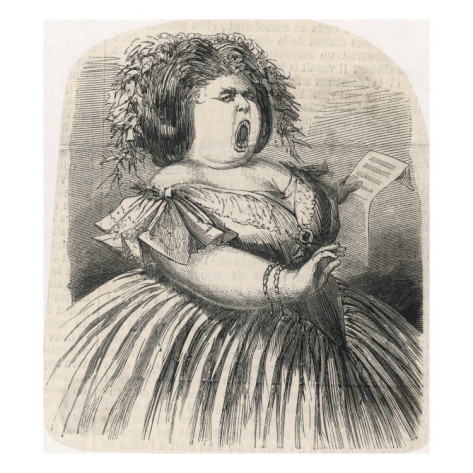
Fat lady still singingThis week researchers from the University of East Anglia released some very interesting findings that resulted from testing 594 bio-science students in their first week of term at five universities.

The students selected would be considered by many more than competent in their subject, almost all had a grade A*, A or B in biology at A-level. Yet when they were given 50 minutes to answer 38 multiple choice questions on cells, genetics, biochemistry and physiology from their A level core syllabus, they only got 40% correct. The period of time between the students sitting their A levels and the test was three months.

Lead researcher for the study, Dr Harriet Jones, said: “What our research shows is that students are arriving at university with fantastic A-level grades, but having forgotten much of what they actually learned for their exams.”  She went on to say that the trend to teach to the test, to ensure good results for schools’ reputations, was the problem.

The schools are to blame then

The facts of the research are clear, students who had successfully passed a test, were unable to pass a similar test three months later. The conclusion reached is that the students did not understand (see my blog on understanding) their subject well enough and passed their A levels probably using little more than memory. And who is to blame, the schools of course, for teaching to the test. Why the school do this is worthy of further debate, but government pressure and the impact of league tables will certainly be in the mix.

But do employers not accuse Universities of delivering up similar ill prepared students. The test is different but from the employers perspective the result is the same. A University student who professes to know something but when tested “in the real world” doesn’t.

Does this mean that Universities are also teaching to the test!

It’s about the test etc

The problem is not in teaching to the test; the problem is with the test, the pass mark and possibly the marking. If the test was more Testing but for what!aligned to what the student needs to know/do at a fundamental level, the pass mark sufficiently high and the marker having some degree of autonomy to form judgements, then the results would probably be different. It could of course be that the exams are easier – Exam chief: ‘you don’t have to teach a lot’ for our tests.

The big criticism of teaching to the test is, it results in a narrowness of understanding, little in the way of depth and does not push students to think in abstract and creative ways. But if the test, which incidentally does not have to be in the exam hall or on paper/PC was able to “test” for these qualities then teaching towards it would perhaps be more acceptable.

Bottom line

Teaching to the test is unlikely to change, in fact given the popularity of league tables  in education just now it may well increase, but with more effective testing the results might be better students, happy Universities and even happier employers.


50 Shades Darker – How much to test

How much to test

In August last year I wrote how Professional accountancy bodies believe that competency can be measured by a candidate scoring 50% and failure if scoring 49%. This all or nothing approach seems neither fair nor useful; hence the idea that grades of competence could be introduced e.g. 50% pass, 65% commendation, 75% distinction etc.

But the mark a student gets in an exam is only part of the story when it comes to measuring competence. Can a student be considered competent if the exam they pass only includes questions from say 75% of the syllabus? Yes the whole syllabus might be covered in an 18 month period but in any one exam 25% is not tested. Equally the 75% is often considered core and so examined every sitting, this means that a student need only focus on the 75%. Admittedly if the pass mark is 50% they need to score 50% out of 75% (67%) but with practice this is possible. One final observation, it is unlikely the student will score 0% on the non-core part of the syllabus. They may get say 5% or even 10% out of 25%. Not a great score but the 67% pass mark now becomes 58%. This logic sits at the heart of the exam driven approach.

Objective testing might be the answer?

Objective tests (OT) – test that are relatively short and can be unambiguously marked, are considered by some to be a weaker form of assessment, they are part of the dumbing down of examinations. The beauty of an OT question is that the marking is completely accurate, no marking bias at all. This is often ignored in traditional exams and not seen as a problem largely because it’s not that visible. But the OT does not solve the “how much to test” problem, in fact it makes it worse. If you are asking for less then you are examining less. So if the only benefit is the avoidance of marker bias why are more examining bodies using OT style exams, is it just about saving money…….?

An example

Imagine that you have 4,500 OT style questions that cover every aspect of the syllabus, let’s also assume that the student only has to answer 50. The 50 questions are randomly picked from the 4,500 in the question bank. Is it fair that a student is considered competent if they are only being tested on 1% of what they need to know?

I think the answer is Yes, because in order to be sufficiently prepared to answer 50 questions from a bank of 4,500 when there are no core topics you have to have be capable of getting all 50 correct (assuming a 100% pass mark) and because you don’t know which 50 are coming up this effectively means you have to be able to get all 4,500 correct. The examining body can of course control  the effectiveness and level of difficulty by changing the pass mark.

All OTs would be OTT

This is not an argument to suggest that all examinations should be assessed using OT type questions, they should not. For example they are not Less-is-Morevery effective at measuring a student’s ability to communicate or evaluate complex and ambiguous situations, but they should be considered part of the tool kit that examining bodies have in assessing competence.

So on the face of it OT’s may look like a soft option, anyone can tick a box but they are certainly not easy to get right. Maybe less is actually more…..

50 shades of Grade…..Measuring students worth

I don’t often write specifically about the market that I am most closely involved, that of accountancy training and education. But there does seem to be an anomaly in the way the accountancy world measure success that isn’t the case in many other professions and examinations.

To become a qualified accountant in the UK (ACCA, ICAEW,CIMA etc,  yes there are more) you have to pass a number of demanding examinations and submit evidence of practical experience. The exams are taken over 3 years and everything rests on a number of exams of 100 marks each, of which you need to get 50%. The pass rate for accountancy students varies from paper to paper but is around 60% In training and education terms these exams are often referred to as High stake exams. For some failure is not simply a setback in terms of time, it could result in a lost job.

50% good – 49% bad

The purpose of such exams (including the practical experience) is of course to ensure that those that pass are competent. But how competent….?  It seems that you are either competent or not, if you get 49% you are not competent, if you get 50% then you are. This makes the margin for error very high, many a career has taken a dramatic turn based on 1 mark. Now of course in any exam there has to be a point where someone succeeds and another fails but does competence not have many shades to it, is it not a continuous process rather than a discreet one.

Shades of Grade

You may be one of thousands of students (>300,000 actually) who have just had your A level results. But of course you don’t just pass or fail, in fact this has not been the case since 1963, even before then there was an indication of the mark. You are given a grade from A through to E and all are considered a pass, 98.1% passed their A levels this year.

And the grades refer to the marks e.g. E is 40%, a D is 50%, a C is 60%, a B is 70% and an A is 80%. A similar grading exists for Degrees, 2.1, 2.2 etc and for Law exams, Pass, Commendation, Distinction.

No pressure for excellence

So why is this not the case in accountancy? To be honest I am not sure. But by introducing grades above a pass you not only provide employers with a better indication of competency, you encourage colleges to teach to a higher and deeper level, motivated by the students who want to learn more. And that for me is the most important point; you create an incentive for students to try harder. At the moment if you are scoring 55% then why put in more work, a pass is a pass, but a distinction well that will make you stand out from the crowd.

Of course the market will adjust its perception of what a pass means, for example employers may only want students with a distinction rather than a simple pass, but they have always looked and will continue to look for differentiation, at least this is a meaningful one.

What it does not do is fix the 49% you fail problem, and careers will still hinge on 1 mark, but that unfortunately is the way with exams and the reason exam technique is so important.

So to all the accountancy examining bodies why not introduce grades – grey is good and isn’t it an accountants favourite colour?

Exams in the headlines – but for the wrong reasons again!

Well it has certainly been an interesting time in the exam world! Here are just a few of the headlines.

Behind all of these headlines are personal stories, for example students who can’t get into sixth form colleges because they didn’t get the necessary grades. The argument being, that if the grade boundaries had not changed (by 10%) resulting in them getting a D and not a C then they would have got into their colleges of choice.

Stacey Cole chief executive of Ofqual said “the grades are right “

Although the impact on individuals is considerable, statistically the change was small. The proportion of test papers awarded at least an A fell by 0.8 percentage points to 22.4 per cent (this was 8.6 per cent in 1988!) the first annual drop since GCSE exams were first sat in 1988. A* grades also fell but only by 0.5 percentage points to 7.3 per cent.

However, when something goes up, it must come down so perhaps it was inevitable that the ever increasing improvement in student grades had to reverse or at least plateau.

What has changed/gone wrong? 

  • Teachers are encouraged to prepare students for the exam, because parents, employers and educational institutions measure success at least partly (exclusively?) by the results.
  •  Students are better at exam skills than ever before. After all, this blog is about how to pass exams and the skills needed to help.
  • Universities and employers seem equally unimpressed with the quality of students and candidates they get, complaining they don’t have basic levels of numeracy, literacy and common sense!

Answers to some of the questions

Have students been getting better each year?

I think the answer is yes, the results prove they have. But maybe they have been getting better at passingexams. And not improving on some of the more difficult to measure skills like, attitude, common sense, being thoughtful. Exams don’t give you time to be thoughtful! This might explain why employers are so unhappy.

But they may just be getting better…..
On the 6th of May 1954 Roger Banister ran the 4 minute mile, it is now the standard of all male middle distance runners. Does this mean the mile is now shorter…….or maybe runners have improved?

Why did someone not say something?

The pressure to succeed, measured by exam results has been so great on teachers, examining bodies and students that no one was willing nor was it in their best interest to say, “this just doesn’t make sense.”

Why do we have exams, to test knowledge/competence or to separate the best from the rest?

They should probably be to asses’ knowledge but are mostly used to try and pick the best people.

Have exams been made easier, the dumbing down argument?

This is tricky, and although you can compare exam papers it’s a bit like comparing Wayne Rooney with George Best. You can debate the pros and cons but I am not sure it is conclusive; things were just different in the past.

But it’s not fair

What does seem clear in this whole debacle is that raising the grade required
half way through the year is not an example of exam rigour, it’s an example of being unfair and that is the one thing exams should never be.

Also see my blog what do exams prove

Back to more exam tips next month….

What’s the point of exams – what do they prove?

With many students in the middle of exams right now, working long hours, making huge personal sacrifices and putting themselves under considerable pressure, perhaps we should stop, take a moment to reflect and ask ……….what’s the point of exams?

Why are you doing this, what will it prove when you do pass, what will passing give you that you don’t have now?


It’s not about knowledge

If you pass an exam, you have proved that you knew the answers to questions set by the examiner at a particular point in time. To be precise you have only really proved you knew enough answers to get a pass mark, in some instances this might be less than half! But you have not proved that you understand everything about the subject or that you could work unsupervised in practice, knowing what to do is not quite the same as doing it.

This is not to say that examinations are easy, they are not or to underestimate their importance, it is just to be a little clearer on what exam success means.

Higher level skills

By passing an exam you are demonstrating many other skills, for example;

Motivation – You have proved that when you set your mind to something you can achieve it.

Concentration – For some people, concentration comes easily for others it might involve removing all distractions by locking themselves in a room. Whatever method you used, you have learned how to cut out distractions and focus on the task in hand.

Prioritisation and Time management – Undoubtedly you have had too much to learn and too little time to learn it. But if you pass the exam you have proved that you got the balance between an endless, or at least what appeared endless set of demands and the overall objective just right.

But most of all exams give you….

A great sense of achievement – You set yourself a target and achieved it.  It is a statement to others that you worked hard and have succeeded. It will remain a tangible and permanent reminder of success that can never be taken away.

Self confidence – It will build self esteem and help you develop a type of confidence that only comes from being successful in a chosen field. Others will congratulate you and as a result, treat you differently.

Choices – it will open doors to opportunities that simply would not have been possible without the piece of paper that says “Congratulations, you have passed”. Exam success will give you choices, it will change how others look at you but perhaps more importantly it will change how you feel about yourself…

So if you have been working hard keep at it, you may not be proving you are the greatest mathematician in the world, but if all goes to plan the end result will make up for all the pain you are going through right now, honest!

But just in case…..everything doesn’t work out check out these Famous A-level flunkers

Okay kids – Just remember always sit a mock exam

Always sit a mock exam

Rolf Harris has had a very varied career, musician, singer-songwriter, composer, painter, television personality and passionate advocate of sitting a mock exam. Okay I made that last one up but Rolf did make a very good point in an interview that I think illustrates one of the main benefits of sitting a mock exam.

In his early days Rolf used to paint on a huge canvass using wallpaper brushes and rollers, and it was in front of a live TV audience with only a 5 minute slot. Many years later in an interview he was asked why he practised painting the same thing over and over again, “after all Rolf you are a very good artist” said the interviewer, Rolf replied, “yes I can paint, but I am not practising to improve my painting, I am practising to make sure I finish on time, this is live television I have to finish at exactly the right time, that’s what I am trying to learn.”

And the same applies to mock exams, you’re not sitting a mock to find out what mark you’re going to get, that’s just the by product, you’re doing it to make sure you will finish on time. Knowing all the answers is no good if you run out of time….

Reasons to sit a mock exam:

1. Practice at leaving questions and moving on. Leaving a question you can do but have spent too much time on is easier said than done, remember there are often easier marks in the first 5 minutes of the next question than in the previous one. If you sit a mock exam you can practice leaving questions, sticking exactly to the time indicated by the marks in the question.

2. It’s an opportunity – I like to think of exams as opportunities to improve, they help identify what you need to improve to be better next time. This means the more mocks you sit the better you get!

3. Helps manage ignorance – There will certainly be questions in the exam that you won’t be able to do, where you don’t know the answer. Managing ignorance is a higher level skill, it is the ability to have a go, give it your best shot, even if you don’t know, just use your common sense. You may be very surprised at your mark. Only when you sit a mock will you really force yourself to have a go.

4. Gives you an indication of the topics that you are good at and the ones you aren’t. Sometimes you think you know something but when it comes to it, like in a mock you don’t.  Don’t worry there will still be time after the mock to brush up on those “think you know areas” areas.

5. Can help you deal better with stress. If you sit a mock exam it can feel like the real thing, but it isn’t. So if you panic and lose time as a result it doesn’t matter. It gives you a chance to think how you would deal with that situation should it arise again.

The best reason

But the best part of sitting a mock exam is if the mock you sit turns out to be very similar to the real thing. What would your chances of passing be then! Mocks should always be written with an eye on what might come up.

What it is not

On the whole a mock exam is not meant to predict success or failure although many people think of it like this, only the real exam matters. So why not give it a go and sit a mock exam this time, what have you got to lose.

And finally no mention would be complete of Rolf without a chance to watch Rolf sing Two little boys. Nothing to do with exams but a classic….

Exam techniques worth £100,000

I am not sure what to make of the latest news that a law student Maria Abramova is suing the Oxford Institute of Legal Practice (OXILP), part of Oxford Brookes University for £100,000 claiming they did not prepare her well enough to sit her legal examination, specifically they did not teach her exam techniques. 

She claims that failing the exams left her with a ‘blind spot’ when it came to taking future exams and eventually contributed to her failing the New York bar examination in 2008. She has since decided not re-sit the American examinations, as the process of taking legal tests causes her to become psychologically distressed.

Maria Abramova was clearly academically bright; she graduated in July 2004 with a 2:1 degree in law from Oriel College, Oxford. In all her studies with OXILP she had consistently been graded “very good”, the top grade.  Of the 357 other students that studied that year more than 99% went on to pass the paper at the heart of the litigation.

Who is to blame?

So what went wrong, does she have a case, is a college or university responsible for getting the student through the exam or is their job simply to deliver knowledge in an inspiring and understandable manner. And do exam techniques make that much difference anyway?

It is perhaps not surprising that a case of this nature has finally come to court. With exam results determining the opportunities for many and the price of education on the increase, why should educators not be accountable………….What is interesting is that this case has focussed not on the content of the course – “I was not taught X and X came up in the exam and that is the reason I failed,” but on exam techniques.

Now as someone who delivers courses on exam techniques and believes they are a vital part of passing examinations, it would be hard for me to argue they are unimportant or make no difference. But I come from a world (Professional accountancy and tax qualifications) where passing an exam is considered a vital part of the success of the course. I am not sure that this is the case with OXILP.

Its about responsibility

To answer some of these points you need to clarify how much responsibility should rest with the student and how much with the tuition provider. Education has to be a partnership; students are not empty vessels simply waiting to be filled with knowledge, they do have to try hard and study independent of the class, they should talk to other students and find out what they do and perhaps most importantly, they should challenge and if they are not happy seek a remedy.

I am of course no lawyer and await the outcome of this case with interest, but I can’t deny that I am pleased that someone has managed to put a £100,000 price tag on the value of exam techniques. And should Maria ever want to reconsider her decision to give up exams and need help with exam techniques I could certainly recommend a good book…..

To pass an exam – do an exam

To ride a bike - Ride a bike

Although the debate around the value of examinations (testing) is set to continue, new research from Kent State University in the US suggests that examinations aid learning by making the brain develop more efficient ways of storing information. Dr. Katherine Rawson, associate professor in Kent State’s Department of Psychology, and former Kent State graduate student Mary Pyc published their research findings in the Oct. 15, 2010, issue of the journal Science. 

“Taking practice tests – particularly ones that involve attempting to recall something from memory – can drastically increase the likelihood that you’ll be able to remember that information again later,” Rawson said. 

In the article titled “Why Testing Improves Memory: Mediator Effectiveness Hypothesis,” Rawson and Pyc reported an experiment indicating that at least one reason why testing is good for memory is that testing supports the use of more effective encoding strategies. In particular the brain comes up with mental keywords – called mediators – which trigger memories which they would not do when studying only.

 I have to say that this comes as no surprise to me nor would it to any student or anyone who has ever read a book on memory techniques.   It does however add some significant evidence to support the use of testing or mock examinations as a means of preparation for the real thing.

 To pass examinations you require much more than just memory techniques, and in many ways all this research* has done is show that you can recall certain words far more easily if you link them via another word, the mediator, and then test to find out if you can in fact remember them. But because you can’t pass an exam without remembering what you have learned it does mean that by spending a little more time in encoding the information and by testing yourself afterwards you must improve your chances of passing.

 To my mind the research still has some way to go in recognising the other benefits of doing practice exams or tests, and I should add looking at the answers. For example do they not give a very clear indication of the standard required, provide focus as to what is important and what is not, give a concise summary of key parts of the syllabus, show how the knowledge should be applied in the context of the question and improve your level of concentration knowing that you will be tested latter, I could go on.

 How does this help – some tips

 When trying to get something into your head, don’t just read it, although reading is a method of learning, it is not very effective when it comes to remembering. Reading is largely an auditory process; you say the words in your head. Ever heard the saying “I hear and I forget, I see and I remember, I do and I understand”. At the same time as reading, underline the key words and make notes with those key words. The very process of extracting them from the text will help. Next you need to remember those key words, well why not link them with a story (A mediator) or with single words as illustrated in the study. There are several memory techniques that use the principle of association to link words, check out the “stack and link and number rhyme” systems. See video below for an example of how to use the number rhyme system.

 And then of course you need to test yourself and your ability to recall those key words afterwards.

 So be in confident and inspired that what you new has now been proven and that  tests are not just about finding out if you will pass or fail the exam, they are an integral and vital part of the learning process, and that’s a fact.

 *In the research they asked students to remember Swahili-English word pairs, such as ‘wingu – cloud and use a mediator (wingu’ sounds like ‘wing’ – the mediator, birds have wings and fly in the ‘clouds) to link the two.

For more thoughts on what this means – click 

Degree or no degree, that is the question

Looking different

I am writing this sat around the pool on holiday in the South of France. My book selection for the holiday, which included the “Third man” by Peter Mandelson and, “Through the language glass” by Guy Deutscher, had left me relatively uninspired.

The Sunday papers however had much to say, they were all fired up by the recently announced A level and GCSE results. An impressive 97.6 % passed their A levels this year (97.5% 2009) 27% achieved A or A star – 8% were awarded the new A star.

The Sunday Times contained several articles on the value of a university education. The one that caught my eye was written by AA Gill, who I have always felt had a style that was pompous, unnecessarily critical (yes I know he’s a critic) and over important. Yet he was writing from the humble perspective, of someone who did not go to university (He also failed his 11 plus and every other exam after that – see last month’s blog) and so does not have a degree. Nor apparently does Jeremy Clarkson. He (AA) argues that it is experience (practical not general) that matters, and that neither university nor a gap year provides this.

Yet more and more people are attending University, 6% in the 1950’s, and 43% this year, encouraged to do so by the higher salaries graduates command, parental aspiration and the previous Labour government. Oh and perhaps the poor job prospects……

This increase in graduate’s means it becomes inevitable that having a degree will no longer be the exclusive club it once was. It does not of course follow that the degree itself is any less worthy in terms of its academic rigour; although many will imply that this is the case. Differentiating yourself by way of a degree to potential employers does however become much harder.

And although it seems an enviable position for a country to be in, to have an ever increasing educated workforce, the current model is not only financially unsustainable, (Average debt for a student leaving university is now £25,000) worse it may be failing to deliver to both student and employer.

But what could be done?
One idea is to reduce degrees from three to two years. Although it could be argued that some degrees genuinely benefit from having three years, for most two is probably sufficient. Not of course my idea, the two year degree has recently been promoted by Vince Cable, and Buckingham University already offers them. This might be an area that the private sector Universities will look to invade.

It may also be time to accept that full time education is a luxury that neither the individual, the individual’s parents nor the state can afford. I am not suggesting that people should not study and obtain a degree; it’s just that studying for it full time may no longer be the best route. Ideally students should continue their education whilst in full time employment. I fully appreciate that this is easier said than done, particularly in the current environment where getting a job is at best difficult, but higher education should not be seen as a substitute for being unemployed!

Obtaining a degree in two rather than three years will make the whole process more affordable and by studying whilst in employment the individual will gain the practical on the job experience thought so important by Mr AA Gill.

Of course employers will still have a large choice of graduates to choose from, and the degree on its own may not differentiate one individual from another, but as is the case in the post degree job market, the employer will have to choose the best candidate based not only on their academic record but also on their level of practical experience and what they can actually do.

But what of the gap year? Of course you should still have a gap year, but perhaps not until you are 30 plus, when you might have a better idea what to do and perhaps more importantly would really appreciate and value it…..

The E word – the book about how to pass exams

E for Exam


I have to say that I feel a little self conscious writing about a book that I have written, yet it has taken up such a large part of my life for the last four years, I cannot let its publication go without saying something.

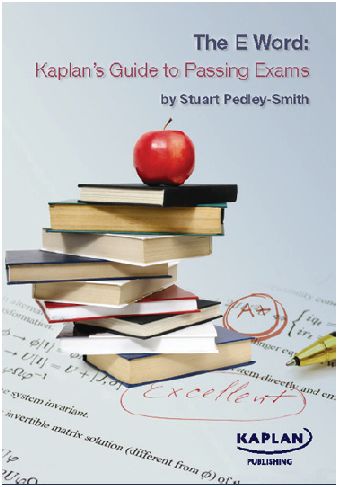
The E word is a book about exams and how to pass them, and part of my motivation to write it came from the simple observation that success or failure in the exam room was becoming increasingly important. Increasingly important because unlike in the past, when there were jobs and opportunities available regardless of your academic record, this was not the case anymore.
My daughter was 11 at the time and was just about to sit her first really important set of exams. It seemed then and is becoming a reality that this was the start for her of 10 to 15 years, perhaps even longer, of sitting exams! That is a huge chunk out of someone’s life, and for my daughter and many others it was also the first time that her success and failure would be so ruthlessly measured.

There was also this somewhat elitist attitude to rank people in accordance with their exam record, pass and you are in the club, fail and you are not. And from there it gets worse; people begin to plan out your whole life based on what you did on a piece of paper for 3 hours. In some instance elevating you to the highest position, with comments like “he/she will go far”, “very bright, they have a great future ahead”, which is fantastic, but not so motivational if they say “not cut out for an academic career”, “not really bright enough”. It was as if the exam result was a crystal ball that people stared into to predict your destiny.

And based on what, the performance in an exam, and the result you get…….

This is not an argument to change the system nor am I suggesting that we do not need exams; it just brought home to me the importance of passing and the implications of failing.

But I had another motive; my job is to get accountancy students through their final level professional exams. To do this we use a whole raft of techniques that together with a lot of hard work by the students had proved very successful over many years. I was convinced that the techniques we used at this level could be of benefit to anyone who has to sit an exam. So I thought I would write them down and find out.

Run Forest run
Although not explicit in the book, there is a theme on which it is based and one that is important to me. In the film Forest Gump, Forest, the main character (Tom Hanks) is born with learning difficulties, he has an IQ of only 75 (90-110 is normal) yet despite this he manages to excel and ultimately achieve success, because of hard work, determination, clarity in his objectives, oh and with a little luck.

And that’s what this book is about, anyone can be successful, you have to play with the cards you have been dealt. To pass exams, intelligence (whatever that means) is just one factor. Everyone has it in them to pass, you just need the right mental attitude, knowledge of how the exam system works and techniques that will improve your performance.

And if you don’t have them, then buy the book………please

Available for £10.00 from all good book stores, or by following the link to Kaplan publishing

Just in case you forget the many ways that you can eat shrimp
Bubba: Anyway, like I was sayin’, shrimp is the fruit of the sea. You can barbecue it, boil it, broil it, bake it, saute it. There, uh, shrimp kabobs, shrimp creole… shrimp gumbo, panfried, deep fried, stir fried. There’s pineapple shrimp, lemon shrimp, coconut shrimp, pepper shrimp… shrimp soup, shrimp stew, shrimp salad, shrimp and potatoes, shrimp burger, shrimp sandwich… that’s, that’s about it.

Cheating is not the only option

January somehow slipped by and February is upon us and I have yet to post a blog in 2010. I have been awakened from my blogless slumber by the news that 4,415 students cheated in their GCSE and A level exams last year compared to 4,156 in 2008, an increase of some 6%. There is of course much condemnation and moral indignation that students would stoop so low. “You are only cheating yourself” is the often used expression.

In China the college entrance exams are thought so important that parents don’t simply drop their children off on their way to work, they wait anxiously outside the exam hall whilst they take the exam. More than 10 million students sit these college entrance exams. For many it is life changing, pass and you will go to university, fail and you are destined for a life of manual work. And with families in China only allowed to have one child, that one child carries the hopes and aspirations of the entire family.

Last year in Sanman County in Zhejiang Province some parents persuaded the teacher to fax through the exam questions, after the students had entered the exam hall. These were then answered by some university students and fed through via wireless ear piece to the students sitting the exam. The Chinese authorities took a hard stance and jailed 8 of those involved for between 6 months and 3 years.

So is this increase in cheating a breakdown in the moral fibre of this generation, is it on the increase because new technologies make it so easy or is it simply that the pressure to succeed is so great that students, and parents will do anything, including cheat.

It may have something to do with all three, but I suspect it is mostly the result of exams creating a Gattaca (The movie that portrays a world organised according to genetic talent) type environment where those that have the exam passing gene are accepted and those that don’t feel they have little choice other than to break the rules.

In this country at least we are fortunate in that although failing exams is not the best career move, it is not the end of the world. True you may not get into the school that you wanted, but you will be able to get into another one. And yes you may have to put your life on hold for another year in order to retake an exam, but you can retake it. So cheating is not the only option, with a little self belief and determination, the future can still be what you want it to be, as they say in Gattaca “There is no gene for the human spirit”

Exam focused learning

Exam paper 1On the 20th and 22nd of October I will be delivering a one and a half hour webinar on exam focused learning.  So what this is and how it can help with passing exams is on my mind. It therefore seemed appropriate that this blog should be devoted to explaining a little bit more about it. For those that did attend the presentation and may well be logging on after the event, welcome back, I hope you will find this a useful reminder that may prompt you to add your thoughts or ask some questions. You can do this by clicking on the leave a comment link at the bottom of this blog.

Exam focused learning is a way of studying that places a much greater emphases on looking at specific topics rather than the whole syllabus and using examination answers as a key way to both learn and focus attention. I should also say that this approach is best suited for what I would call more traditional exam formats rather than multi choice questions and case studies.

Imagine you are about to begin studying a new subject, one that you have little or no knowledge. Let’s also assume that you are studying from home. What do you look at first, maybe the text book, you turn to the contents page and look at the 22 chapters that you are required to read and understand. Perhaps you then get a blank pad of paper, a pen, a coffee and begin by reading chapter one. You probably make notes as you go through so that you have something to re-read and revise from later. You go through the entire book making notes in this way and so in theory at least have begun to learn the subject.

The problem with this approach is that it takes a lot of time and although you feel that you are covering everything, you of course aren’t. You will almost certainly have to miss some things out or move more quickly through certain areas just to keep up with your timetable.  The other problem with this “Traditional approach” is that you will spend so much time learning you will have little time left for practicing exam questions.

Exam focused learning does not start with the text book; it starts with your objective. Let’s assume that this is to pass the exam, not learn the subject.  If you wish to pass, on the day of the exam you will have to answer the questions set by your examiner. Now imagine if you knew what these exam questions would be. If you did would you stand a better chance of passing, yes or no. I think yes. The only problem is that you don’t have the actual exam questions……but you do or can obtain lots of past exam questions, questions that have been set by your examiner before.

So here is the first important point, better to learn the answers to these than to learn pages of content from a text book that may or may not be relevant. Now of course this will not work in the complete absence of some understanding of the subject which will have to come from a tutor, lecturer or text book. But the clarity of direction that a question gives, the specific way it shows what you are meant to learn and the context in which something needs to be understood is invaluable.

The next problem, there are just too many past questions.  We really need to have fewer questions to study, at least to start with. By analysing past questions you should be able to identify which topics have consistently come up in the past, these we must learn. Then we look at topics that are likely to come up in this exam. We should be able to spot these in our analysis as being important topics that have not been examined for some time.  These should be learned. And finally we look at those topics that might come up, these are nice to learn.

And here is the second important point, on the face of it this sounds like question spotting but really it’s about focus it simply gives you a point from which to start.  By all means learn everything, but if you can’t or don’t have time, better to have studied and practiced questions on the most important areas and the ones most likely to be examined.

If you change your way of studying to this exam focused approach you will enter the exam room knowing what the three or four most important topics within your subject are. More importantly you will have practiced answering past exam questions on these areas and so will be very well prepared for what might come up. You should also have practiced some questions on the next three/four most likely topics for this exam. Now compare that with the student who has gone through the text book making notes but who due to time pressure had little or no time to practice past questions. Who do you think stands a better chance of passing……?

Exam focused learning….Done

Ps – next year my book currently entitled “The E (Exam) word” should be published. In it I explain in far more detail exactly how to follow the exam focused approach, what to do in the exam, how to cope with exam stress and  how to improve your chances of passing by using effective memory techniques.

Watch this space for more details 

Exam season is here to stay

Exam season is here to stay
Here goes my first blog ……It is that time of year again, the exam season when students (we are all students of something) sit in a room with a wobbly desk and hope that what they write in the next 2/3 hours bears some resemblance to what the examiner wants.
Believe it or not some people actually like exams; they enjoy the challenge and how they feel when doing them. That sensation of control and an “ask me another one” mentality that is only really enjoyable when you know the answer. They are in a way showing off, if not to others at least to themselves. Then there are other people who don’t like exams, but enjoy the study ,the learning but not the actual exam. They get a buzz from the discipline of knowing what they have to do and learning something new. For them it is a measurable form of achievement, they are not learning for a reason other than a “today I learned something that I did not know yesterday” feeling, they have a mindset that finds almost anything “interesting”. They are curious about everything.

And then there are the rest of us who don’t like examinations, don’t know everything and don’t wake up every morning wanting to learn something new, yet need to learn new things in order to stay a float in the modern world. Maybe exam success will bring a promotion or get you through the door for that all important interview. Or is it the status the qualification brings which will not only earn the respect of others but build self confidence. Whatever the reason exams are here to stay.

And so to the point, no one is born knowing everything and neither are they born with a sense of wonder and a desire to learn. They have just found that if they are curious then they are more likely to learn and if they feel good after getting a question right it, is more likely that they will want to get another one right so will work harder as a consequence. Don’t forget the person who knows the answer had to be sufficiently motivated to learn the answers in the first place, yes perhaps they find it easier to learn, perhaps they are able to pick things up quickly but they still had to learn it.
So if you have to take exams or have a need to continually learn perhaps it would be a good idea to be a little more curious and to take pleasure from knowing the answer because if you do it makes the whole process of learning and passing exams so much easier, which in turn might help with that next promotion, now that cant be a bad thing….

Things that made me think
I like Lucy Kellaway who writes a column in the FT. She often pokes fun at the business world which as I am sure she would freely admit is a very easy thing to do. However she recently wrote an article “underdog tale sheds light on pushy parenting” click

In it Lucy argues that although inspiring stories exist of the underdog winning, they are few and far between, or as Lucy put it “its claptrap”. She states that there is even more dominance by Oxbridge and private schools of the professions than ever. This she argues is the reason that pushy parents are perfectly rational to obsess over the qualifications of their children.

Now you will not find me arguing that exams don’t matter but the implications of what Lucy is saying is that unless your child is reading by the age of two, then there is little chance for them in this world. This is not only depressing and uninspiring but also suggests that the world in which we live is logical and that a path once started upon cannot be varied and it becomes inevitable what will happen.

Yes of course Lucy has a point, if you are born into a family who are supportive, push you hard and have both the money and time to do this, then on the whole you are more likely to do better than say someone with less advantages. But this apparent inevitability denies the role the individual plays in all this. It is what you do, given where you are and the skills/attitude you have that makes the difference not where you come from or what your parents did to help. And although Derek’s (Read the article) success may in fact be unusual, it is inspiring and does prove that you can achieve the unusual and so by definition making it, if not the norm, a possibility and one that might inspire others to follow.

So in a world of the first Black American president, where your money is no longer as safe as houses and Susan Boyle did not win Britain’s got talent, maybe there is a chance for us all.