

Willpower – A muscle not a trait

Many people talk about willpower as if it’s all or nothing, something you either have or don’t. But that’s not how it works. Willpower isn’t genetic, its better thought of as a skill that you improve and develop over time. While we all have a basic foundation, the strength of your willpower depends heavily on learned habits. The implication being that anyone can improve their willpower through practice, just as they would strengthen a *muscle.

What is willpower?
While psychologists define willpower as the ability to resist short-term temptations for a longer-term gain, it might more easily be thought of as “doing what you know you should, even when you don’t want to do it.” There are also many terms used in a similar context as willpower that can be confusing. To add some clarity, here are a couple of sentences that puts them all together.

To achieve a long-term goal, Motivation provides the reason to start. Determination is the short-term commitment required to stay on track, Willpower is the moment to moment self-control needed to avoid temptation, and Grit is the perseverance necessary in the long term.

The science
Interestingly we know a reasonable amount about willpower and what is happening in the brain. Neuroscience research shows us that there is something called the Anterior Cingulate Cortex (ACC) which is heavily involved in conflict monitoring, spotting when short term impulses clash with long-term goals and in regulating attention and effort. The implication is that when you resist temptation or push through discomfort, the ACC becomes more active, helping the prefrontal cortex enforce discipline over the brain’s reward systems. In this way, the ACC functions as a kind of “emotional referee,” guiding persistence and aligning behaviour with intention.

Imagine you’re on a diet and someone offers you a slice of chocolate cake. In that moment, your brain experiences a clash between the short‑term impulse to enjoy the cake and the long‑term goal of losing weight. The ACC will spot the conflict and tell your prefrontal cortex, which steps in to enforce discipline over the brain’s reward systems. By saying “no thanks” and resisting the temptation, that’s willpower in action.

What this tells us about willpower is that it is not a fixed trait but a dynamic process rooted in brain activity. The ACC demonstrates that willpower is about managing competing signals balancing the pull of short-term gratification against the push of long-term purpose. Studies suggest that repeated acts of self-control strengthen ACC pathways, making persistence easier over time. In short, the science shows that willpower is a trainable skill, shaped by the brain’s ability to detect conflict and sustain effort, rather than an innate quality we are born with.

Willpower is closely linked to self-control, providing the mental energy it needs to be effective.  And as identified by University of Pennsylvania psychologists Angela Duckworth, and Martin Seligman this makes a real difference. Their research explored self-control in eighth-graders over the course of the school year. They found students who ranked high on self-discipline had better grades, better school attendance, and higher test scores, and were more likely to be admitted to a competitive high school program. Self-discipline, the researchers found, was more important than IQ in predicting academic success.

How to strengthen your Willpower
The good news is that willpower can be strengthened over time. By practicing small, deliberate strategies, it’s possible to build the mental resilience needed to make better choices, sustain effort, and push through discomfort. The following steps outline practical ways to improve your willpower and make it easier to stay on track when challenges arise.

  • Start small and build gradually – Begin with minor challenges, such as not checking your phone every 10 minutes. Each small success builds confidence and stamina for bigger goals.
  • Practice delayed gratification – Train yourself to pause before giving in to impulses. Even short waits strengthen your ability to resist temptation.
  • Manage stress and energy – Stress drains willpower, so restore your mental reserves with mindfulness, deep breathing, or just plain old regular sleep.
  • Set clear, achievable goals – Define specific actions like “I’ll study for 45 minutes this evening” instead of vague ones like “I will study a lot this week.” Concrete goals reduce decision fatigue.
  • Build routines and habits – Automating good choices such as scheduled study time reduces the need for constant self‑control and frees willpower for bigger challenges.
  • Reward progress. Celebrate achievements along the way to reinforce motivation and keep momentum strong.

For learning, this has important implications. Success is not simply about intelligence or talent, but about the discipline to persist, to resist distraction, and to sustain focus when challenges arise. Each act of willpower, choosing to study instead of scrolling, pausing before giving in to temptation, setting clear goals etc, reinforces the neural pathways that make staying with your task easier next time.

In this way, learning itself becomes an exercise in willpower – a process of training the mind to align effort with purpose.

Worth a listen – How to Build Extreme Willpower, David Goggins & Dr. Andrew Huberman

*Muscle – Its worth saying that the muscle reference is an analogy, it works to a certain extent but is not perfect. Some think a better example might be a battery, it has finite energy, reduces over time and with use, but can be recharged. Also it doesn’t get bigger the circuits become more efficient.
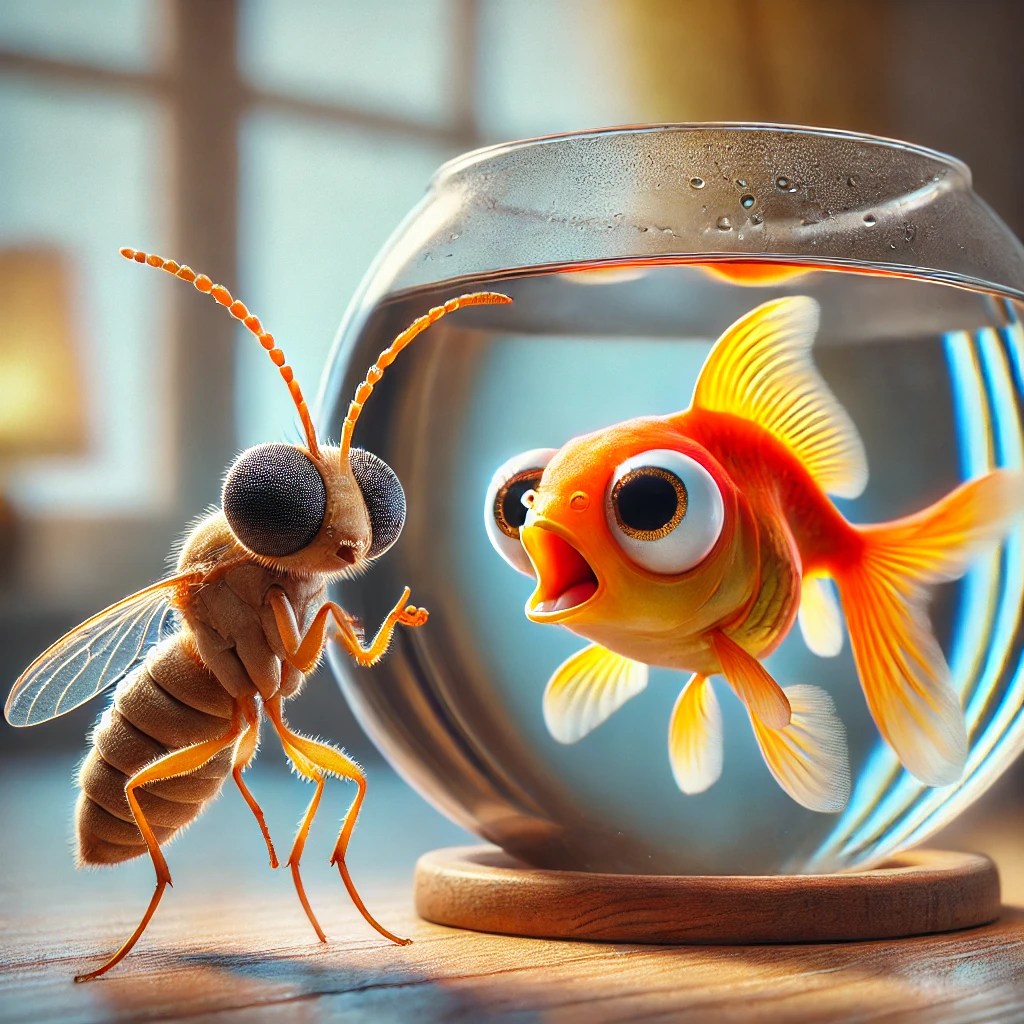

Are attention spans getting shorter – Spoiler, No?

Now what was I saying
A goldfish can remember certain tasks and environments for weeks and even months – a Gnat however doesn’t have an attention span at all. *

There has been a significant amount of space in the press devoted to telling us that attention spans are getting shorter, largely the result of an increased use of digital technologies.

One headline read – “You Now Have a Shorter Attention Span Than a Goldfish

This story can be traced back to a 2015 Microsoft report which included the claim that the average human attention span had decreased from 12 seconds in 2000 to 8 seconds in 2013, shorter than the alleged 9 second attention span of a goldfish.

It has however since been debunked and is simply not true. It was based on vague, unsupported opinion and lacked the necessary evidence. Microsoft has since taken the report down from its website.

And yet the myth remains popular possibly because most days you will see people using their smart phones endlessly scrolling, looking for something to grab their attention in order to satisfy their “dopamine bump” addiction. They pause only momentarily to read or look at the image on the screen before continuing the search. Ask them what they are doing, and without looking up to acknowledge the question, they will answer “nothing”!

Many social media platforms are designed around the idea of short attention spans, furthering the belief that we have a new generation of learners who are different in some way to those that went before.

Attention spans
An attention span is typically defined as “the amount of time a person can maintain attention on a specific task or activity, without becoming distracted.” The key point here is that attention has a lot to do with the brains ability to resist interruption.

For this reason, its useful to think about it in two ways:

  • Sustained Attention (maintaining focus over time) is the ability to concentrate on a single task over a long period, such as when you are reading or studying. The average person can focus their attention for around 20 to 30 minutes, which is a lot more that 8 seconds! The Pomodoro technique that was developed by Francesco Cirillo in the late 1980’s works on this principle. With the aid of a timer, you are required to take a short break every 25 minutes.  As a result, you can then maintain focus for hours.
  • Selective Attention (choosing what to focus on) is the ability to focus on one thing while filtering out distractions, such as focusing on a single conversation in a noisy room.

These are of course interrelated with sustained attention relying on selective attention to be effective. It’s also important to note that attention is not fixed and is dependent on age, level of interest, fatigue, stress etc.

This study by Rosen, Lim, Carrier, and Cheever (2011) found that students averaged less than 6 minutes on a task before switching to another, most often because of a need to reply to a text or check social media. It concluded that allowing students short “technology breaks” could help reduce these distractions, and that teaching students’ metacognitive strategies would also be beneficial. They stated that the students were prone to distraction due to device notifications, not because they had reduced attention spans.

Attention Deficit Hyperactivity Disorder (ADHD)
ADHD is a neurodevelopmental condition that affects attention, impulse control, and activity levels. Symptoms include difficulty in maintaining focus, being impulsive and having high levels of energy. It is a recognised medical condition that results in a lower attention span. It is thought to be highly heritable, with levels in the region of 70 – 80%, but it’s not as common as you might think given its prominence in the press. In the UK, there are only believed to be around 3 – 4% of children and 2% of adults who suffer from it. One caveat, it is possible that there are a lot of people who remain undiagnosed.

The impact on learning
The main point here is that in terms of our cognitive ability attention spans have not really changed. What has, are the levels of distraction and cultural and environmentally accepted norms. Think about the rise of digital devices, instant messaging, and social media, people now have a vast number of ways in which they can distract themselves. In addition, the sheer amount of information available can be overwhelming, making it harder to focus on one task for long. Many of us also lead busy lives, forcing us to juggle multiple tasks and often failing to any of well.

For the learners – Don’t fall into the trap of thinking “it’s not your fault” your genetics have given you a short attention span. Your attention span is fine it’s the environment you find yourself in that is the problem – see last month’s blog on learning environments.

A few tips

  • Take regular breaks – as highlighted above taking short 5 to 15 minute breaks every 20 to 30 minuets, maybe even 45 minutes can improve your ability to focus.
  • Reduce distractions – eliminate or minimise distractions, this means not having your mobile phone in the room or at least turning off your notifications. You need to create a dedicated, distraction free workspace.

And for the educators – While adapting content for individuals to accommodate short attention spans can be useful, especially when trying to engage them. It’s important not to think about it as a new way of learning, it’s more of an environmental challenge. As a consequence it would be wrong to design all lessons with it at the forefront of your mind. Evidence from cognitive science suggests that learning should be challenging (desirably difficult), requiring sustained focus, active engagement, and mental effort. But perhaps worse of all, if we continue to produce content that caters only to short attention spans, there is a danger of inadvertently reinforcing the behaviour.

Fake NBC Goldfish news
Here is a video typical of what you can find on the internet that continues to support the 8 second myth – Is Your Attention Span Shorter Than a Goldfish’s?

And finally, In defence of Gnats
Gnats, like many insects, are primarily focused on tasks like finding food, mating, and avoiding predators. While their attention may shift quickly between these tasks, it’s not really fair to say they have a short attention span in the same way humans or goldfishes do.

Concentration – the war in the brain

Concentrating

One of the most important skills in learning is the ability to concentrate. If you could focus your attention on a specific task for long periods of time you would be able to absorb more content, more quickly.

But concentrating is not easy. The reason is partly because we lack the ability to manage distraction. I have written before about focus, information overload and the problems with multi-tasking, but this is a large and fascinating subject.

The war in the brain

Improving concentration has a lot to do with attention, which in some ways is an invisible force, but as we have found before neuroscience can help us gain insight into the previously unknown. For example, most of us will have what is called a priority map, a map of the most visited places in our brain. Its value is that it can be used to identify how we prioritise incoming information and as such where we place our attention. It’s worth stating that attention a is a limited resource so how we use it is important.

Take this attention test and find out your level of attention.

The problem is that these maps change based on how “relevant” the information is, and relevancy itself is dependent on three systems that continually compete with each other. I know this is getting complicated but stick with it, concentrate!

The executive system – Sitting in the frontal lobe, this is the main system and orients attention according to our current goals. For example, I need to learn about double entry bookkeeping, so I will place my attention on page 4 and start reading.

The reward system – As you might imagine this is the system that offers us rewards. A reward can be as simple as the dopamine rush you get when checking your mobile phone, the problem is, you should be reading page 4! And its made worse by the fact that the brain’s attention naturally moves to flashing lights, which you often get when a text comes in.

The habit system – This system operates using fixed rules often built up over time by repetition, perhaps it’s the reason you keep looking at your phone just to check that you haven’t had a text even though you know you haven’t because you would have seen the flashing light….But most importantly the habit of checking, created by you has once again distracted your attention, when you should still be reading page 4!

Hence the term, war in the brain, these systems are in competition for your attention. The result is exhausting, you don’t finish reading page 4, and feel tired even though you have achieved very little.

How to improve concentration  

Some of the methods below will seem obvious and there is of course no magic bullet, however because there is a scientific reason as to why these might work I hope you will be more likely to give them a go.

  1. Reduce distraction –  if you have to make a huge amount of effort to check your mobile phone, the reward you get from checking it will diminish. The simple advice is don’t have your phone with you when studying or anything else that might occupy your thoughts. Also have a space to study that is quiet, with simple surroundings and nothing interesting that might be a distraction. Finally, although there is mixed evidence on playing music or listening to white noise in the background, it may be worth a try.
  2. Set goals – this is to support your executive system, write down your goal and don’t make them too ambitious.
  3. Relax and stay calm – it’s hard to concentrate when you are feeling high levels of anxiety. Methods to help with relaxation include, deep breathing, click this video its very helpful, and of course exercise which I have written about in the past, because of it being a natural antidote for stress.
  4. Avoid too much stimulation – novelty seeking behaviours for example playing video games can become imbedded in your reward system. They can make studying appear very dull and unrewarding especially if you have played a game immediately before getting down to study. Keep it for afterwards, by way of a reward perhaps.

And if you would like to find out more watch these: