Exams in the headlines – but for the wrong reasons again!

Well it has certainly been an interesting time in the exam world! Here are just a few of the headlines.

Behind all of these headlines are personal stories, for example students who can’t get into sixth form colleges because they didn’t get the necessary grades. The argument being, that if the grade boundaries had not changed (by 10%) resulting in them getting a D and not a C then they would have got into their colleges of choice.

Stacey Cole chief executive of Ofqual said “the grades are right “

Although the impact on individuals is considerable, statistically the change was small. The proportion of test papers awarded at least an A fell by 0.8 percentage points to 22.4 per cent (this was 8.6 per cent in 1988!) the first annual drop since GCSE exams were first sat in 1988. A* grades also fell but only by 0.5 percentage points to 7.3 per cent.

However, when something goes up, it must come down so perhaps it was inevitable that the ever increasing improvement in student grades had to reverse or at least plateau.

What has changed/gone wrong? 

  • Teachers are encouraged to prepare students for the exam, because parents, employers and educational institutions measure success at least partly (exclusively?) by the results.
  •  Students are better at exam skills than ever before. After all, this blog is about how to pass exams and the skills needed to help.
  • Universities and employers seem equally unimpressed with the quality of students and candidates they get, complaining they don’t have basic levels of numeracy, literacy and common sense!

Answers to some of the questions

Have students been getting better each year?

I think the answer is yes, the results prove they have. But maybe they have been getting better at passingexams. And not improving on some of the more difficult to measure skills like, attitude, common sense, being thoughtful. Exams don’t give you time to be thoughtful! This might explain why employers are so unhappy.

But they may just be getting better…..
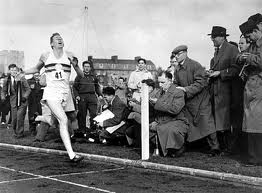
On the 6th of May 1954 Roger Banister ran the 4 minute mile, it is now the standard of all male middle distance runners. Does this mean the mile is now shorter…….or maybe runners have improved?

Why did someone not say something?

The pressure to succeed, measured by exam results has been so great on teachers, examining bodies and students that no one was willing nor was it in their best interest to say, “this just doesn’t make sense.”

Why do we have exams, to test knowledge/competence or to separate the best from the rest?

They should probably be to asses’ knowledge but are mostly used to try and pick the best people.

Have exams been made easier, the dumbing down argument?

This is tricky, and although you can compare exam papers it’s a bit like comparing Wayne Rooney with George Best. You can debate the pros and cons but I am not sure it is conclusive; things were just different in the past.

But it’s not fair

What does seem clear in this whole debacle is that raising the grade required
half way through the year is not an example of exam rigour, it’s an example of being unfair and that is the one thing exams should never be.

Also see my blog what do exams prove

Back to more exam tips next month….

Enjoy the break

As July comes to an end and attempts to reprieve itself with a little sun it also means that the exam season is over for many, at least for a short time. But what should you do with this time off, what is the best use of time after exams?

I have always been interested by the idea that I am sure was in an updated version of Tom Peters and Bob Waterman’s book, In Search of Excellence, first published in 1988. This was a book about what made American companies great. But rather than building ideas from first principle, it looked at successful US companies and worked backwards in order to find common themes, a simple modeling exercise.

What I found of particular interest was the updated chapter that I believe was called, the price of excellence. In this chapter they argued that to be excellent you have to make sacrifices, having a balanced life was all well and good but it did not lead to excellence, excellence required to some extent obsession. As I watched the opening of the Olympic Games last night I wonder how many of those athletes had a holiday or were at home every night to kiss their children good night, how many sacrifices had they made.

No man ever reached to excellence in any one art or profession without having passed through the slow and painful process of study and preparation”

Quintus Horatius Flaccus – Roman Poet

But this is not an argument for obsession, well maybe short spurts of obsession, with rest and variety in the middle. The brain needs sleep and ideas need fertilising, sometimes connections and understanding come when you are least expecting them.

So go on holiday, engage in different activates, and challenge your understanding of what is around you but most of all have a great holiday…

Final thoughts

Excellence in the opening of the London 2012 Olympic games.

And just for sheer entertainment a fabulous presentation by Marco Tempest telling the story of Nicola Telsa, “The greatest Geek who ever lived.”

What’s the point of exams – what do they prove?

With many students in the middle of exams right now, working long hours, making huge personal sacrifices and putting themselves under considerable pressure, perhaps we should stop, take a moment to reflect and ask ……….what’s the point of exams?

Why are you doing this, what will it prove when you do pass, what will passing give you that you don’t have now?


It’s not about knowledge

If you pass an exam, you have proved that you knew the answers to questions set by the examiner at a particular point in time. To be precise you have only really proved you knew enough answers to get a pass mark, in some instances this might be less than half! But you have not proved that you understand everything about the subject or that you could work unsupervised in practice, knowing what to do is not quite the same as doing it.

This is not to say that examinations are easy, they are not or to underestimate their importance, it is just to be a little clearer on what exam success means.

Higher level skills

By passing an exam you are demonstrating many other skills, for example;

Motivation – You have proved that when you set your mind to something you can achieve it.

Concentration – For some people, concentration comes easily for others it might involve removing all distractions by locking themselves in a room. Whatever method you used, you have learned how to cut out distractions and focus on the task in hand.

Prioritisation and Time management – Undoubtedly you have had too much to learn and too little time to learn it. But if you pass the exam you have proved that you got the balance between an endless, or at least what appeared endless set of demands and the overall objective just right.

But most of all exams give you….

A great sense of achievement – You set yourself a target and achieved it.  It is a statement to others that you worked hard and have succeeded. It will remain a tangible and permanent reminder of success that can never be taken away.

Self confidence – It will build self esteem and help you develop a type of confidence that only comes from being successful in a chosen field. Others will congratulate you and as a result, treat you differently.

Choices – it will open doors to opportunities that simply would not have been possible without the piece of paper that says “Congratulations, you have passed”. Exam success will give you choices, it will change how others look at you but perhaps more importantly it will change how you feel about yourself…

So if you have been working hard keep at it, you may not be proving you are the greatest mathematician in the world, but if all goes to plan the end result will make up for all the pain you are going through right now, honest!

But just in case…..everything doesn’t work out check out these Famous A-level flunkers

Sorry is not good enough – Exam paper mistakes

9 exam paper errorsExams seem to be in the news a lot these days, unfortunately often for the wrong reasons. This month we were told of at least six errors on exam papers sat by students studying A-level, AS-level and GCSEs taken in England, Wales and Northern Ireland. The errors were on questions with marks ranging from 1 to 11 and effect 90,000 students. In fact it is hard to keep up; only yesterday there was news of another possible three mistakes, bringing the new total to nine!

The examining bodies have said they were sorry and that they would take into account the errors when they come to mark the paper, ensuring that no students would be disadvantaged as a result. Firstly an apology is not good enough, it should not happen in the first place and secondly they can’t “take into account” the full impact of the mistakes. And it looks like David Cameron agrees……

Now of course everyone makes mistakes, but when the consequences are as important as this there should be a system in place to ensure they are spotted. That system should include having an examiner, an assessor and a sitter. This is in addition to the normal proofing and arithmetic checks. The examiner writes the paper, and presumably checks it, the assessor also checks the paper, ensuring the wording is clear and that what is being asked is within the syllabus and technically correct. The sitter should then attempt the paper under exam conditions, to make sure that it can be completed in the time available. If these processes are followed it would seem almost impossible for a mistake to be made, I wonder what went wrong?

Equally it is not possible for the examining body to ensure that no student is disadvantaged. What can they do, be generous with the marks for any attempts made?  What if the student looked at the question tried to do it, panicked and as a result wasted valuable time, making little or no attempt at the rest of that question, there is in effect nothing to mark. What can you do in these circumstances; just add on say 5 marks!

How can you take into account the student who raced through the second question because they spent so much time on the first and made mistakes due to the time pressure, add on another 5 marks!

And what about the student who looked at this question, lost their confidence and so failed to complete the paper, add another 5 marks!

Listen to this confident student describe the impact of a mistake in the exam.

And he got no reply…..

What to do if there is a mistake

There is however some good news, you can still give yourself the best chance of passing if you apply some simple exam techniques.

1. Stick to the mark allocation – if it is a 10 mark question then only spend 18 minutes on it, 1.8 marks per minute for a three hour exam. So even if you cannot answer the question because of a mistake on the paper you will not be wasting time that could be better used on the next question.

2. Don’t think you have to get everything exactly right. Your objective is to pass the exam with the highest mark, so you may have to accept that you will not get 100%. And of course getting 100% correct is impossible when the examining body has put down the wrong information! Do your best and move on.

3. Make assumptions – read the exam question slowly, underline the key points and if it doesn’t make sense clarify what you think it is saying by stating your assumptions. Then answer the question in accordance with your assumptions.

4. Don’t bother asking if you think there is a mistake. There is little point asking in the exam if there is a mistake on the paper. The invigilators on the day are unlikely to be subject experts and so will do nothing. Let others put their hand up and ask, you should keep your head down and get on with answering the question.

Remember exams are more than tests of knowledge and they are not always fair, but they are equal, everyone in the exam room is faced with the same examiners mistake. How you deal with those mistakes however can make all the difference….

Another TED lecture worth watching

And finally I have another TED lecture for you to watch. It is presented by Sir Ken Robinson who gives a very interesting talk on what he describes as a crisis in our education system – personalised learning not standardised/production driven learning.

Exam techniques worth £100,000

I am not sure what to make of the latest news that a law student Maria Abramova is suing the Oxford Institute of Legal Practice (OXILP), part of Oxford Brookes University for £100,000 claiming they did not prepare her well enough to sit her legal examination, specifically they did not teach her exam techniques. 

She claims that failing the exams left her with a ‘blind spot’ when it came to taking future exams and eventually contributed to her failing the New York bar examination in 2008. She has since decided not re-sit the American examinations, as the process of taking legal tests causes her to become psychologically distressed.

Maria Abramova was clearly academically bright; she graduated in July 2004 with a 2:1 degree in law from Oriel College, Oxford. In all her studies with OXILP she had consistently been graded “very good”, the top grade.  Of the 357 other students that studied that year more than 99% went on to pass the paper at the heart of the litigation.

Who is to blame?

So what went wrong, does she have a case, is a college or university responsible for getting the student through the exam or is their job simply to deliver knowledge in an inspiring and understandable manner. And do exam techniques make that much difference anyway?

It is perhaps not surprising that a case of this nature has finally come to court. With exam results determining the opportunities for many and the price of education on the increase, why should educators not be accountable………….What is interesting is that this case has focussed not on the content of the course – “I was not taught X and X came up in the exam and that is the reason I failed,” but on exam techniques.

Now as someone who delivers courses on exam techniques and believes they are a vital part of passing examinations, it would be hard for me to argue they are unimportant or make no difference. But I come from a world (Professional accountancy and tax qualifications) where passing an exam is considered a vital part of the success of the course. I am not sure that this is the case with OXILP.

Its about responsibility

To answer some of these points you need to clarify how much responsibility should rest with the student and how much with the tuition provider. Education has to be a partnership; students are not empty vessels simply waiting to be filled with knowledge, they do have to try hard and study independent of the class, they should talk to other students and find out what they do and perhaps most importantly, they should challenge and if they are not happy seek a remedy.

I am of course no lawyer and await the outcome of this case with interest, but I can’t deny that I am pleased that someone has managed to put a £100,000 price tag on the value of exam techniques. And should Maria ever want to reconsider her decision to give up exams and need help with exam techniques I could certainly recommend a good book…..

Predictions for 2011 – but first 2010

Although the New Year has started without me I thought I might take the opportunity to look back at 2010 and make some predictions as to what might be happening in the world of education and learning in 2011.


First a retrospective

Degrees not free – 2010 will be remembered by most as the year in which a price tag was firmly hung around the neck of Higher Education in England, degrees were no longer free. True they weren’t free before but somehow £3,290 was acceptable or should I say accepted. With the government under pressure to reduce public expenditure and more and more people wanting to study full time, the costs could no longer be hidden and absorbed by all, they should be paid for by those who benefit most, the student.

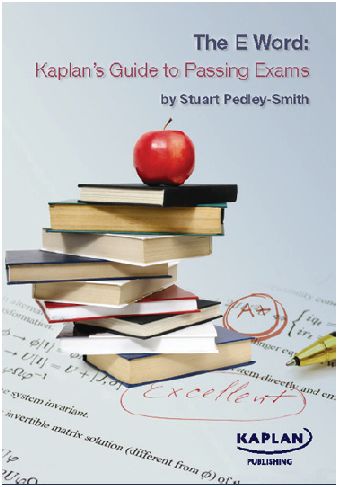
Books published – On a personal level 2010 saw the publication of my two books. “The E word”, a book about how to pass exams and “A students guide to writing Business Report s” co-written with Zoe Robinson.  A giving birth experience for me I have to say….. 

The E word - published 2010


The E word – This book is a must read for anyone taking exams, especially financial exams. States the obvious but it’s the obvious that you haven’t thought of. Explains how we should revise and why we should revise in a certain way. Just reading this book puts you in the frame of mind to study and gives you a framework to start a study plan. Amazon.co.uk

 The E word – This is an excellent book for anyone taking any exams, from school to university. This is written by a teacher and parent which is most definitely reflected within the book. theschoolrun.com

Trends and Predictions for 2011

It’s always dangerous making predictions about the future, particularly in print, but here goes.

Innovative ways to study for degrees – Following the rise in tuition fees I believe we will see an increase in universities and the private sector (e.g. Kaplan et al) offering far more intensive and imaginative ways in which you can study. Two year degrees will become more common and eventually the norm, if not in 2011, within the next five years. Equally expect more from employers who may intervene in the market to finance the education of potential employees.

The deal between KPMG and Durham University is a great example of this. Under the scheme KPMG will pay £20,000, all fees and accommodation to budding 18 year olds so that they can study full time.

Live On-line learning – Students will be demanding more flexible and convenient ways to study, and live on-line lectures delivered via the internet will increasingly be used to satisfy this demand. Live on-line (synchronous) training, which should not be confused with pre- recorded (asynchronous). Live on-line is where you log onto your computer and see, hear and interact with your tutor as if you were in the classroom. I believe more content will be delivered using this approach in 2011 than ever before.

Hand held devices – With the explosion of the new generation of mobile phones and slates like the ipad you are never far from a screen or the internet and so able to learn wherever you are. I believe there will be a growth in applications that will help make the most of travel time and offer up material in a way that is suited to the individual as learner.

More Open content – This is a term used to describe material that is freely available on the internet. It is already possible to study many subjects using “free material,” I believe this trend will continue. It will mean that traditional gate keepers of knowledge (Publishers) may have to think carefully as to their role in the next few years. Should they in fact give away their content free, and look for other ways of using their intellectual capital to generate income?

How long before an exam do you start revising – the answer 6 weeks or more

A quick note on the results from the poll I set last October. I asked how long before an exam do you start revising, and with the highest percentage of the vote the answer was 6 weeks or more.  Of course the question was a little unfair because it depends on so many things, how many subjects you are taking, the complexity of the exam, if you are a full time or part time student etc. But to some people starting 6 weeks before an exam may seem mad, but believe me it is not. If you are sitting more than three exams and working during the day just work out how little time you have to revise everything you have learned!

 The next poll is all about how you study when on the move

To pass an exam – do an exam

To ride a bike - Ride a bike

Although the debate around the value of examinations (testing) is set to continue, new research from Kent State University in the US suggests that examinations aid learning by making the brain develop more efficient ways of storing information. Dr. Katherine Rawson, associate professor in Kent State’s Department of Psychology, and former Kent State graduate student Mary Pyc published their research findings in the Oct. 15, 2010, issue of the journal Science. 

“Taking practice tests – particularly ones that involve attempting to recall something from memory – can drastically increase the likelihood that you’ll be able to remember that information again later,” Rawson said. 

In the article titled “Why Testing Improves Memory: Mediator Effectiveness Hypothesis,” Rawson and Pyc reported an experiment indicating that at least one reason why testing is good for memory is that testing supports the use of more effective encoding strategies. In particular the brain comes up with mental keywords – called mediators – which trigger memories which they would not do when studying only.

 I have to say that this comes as no surprise to me nor would it to any student or anyone who has ever read a book on memory techniques.   It does however add some significant evidence to support the use of testing or mock examinations as a means of preparation for the real thing.

 To pass examinations you require much more than just memory techniques, and in many ways all this research* has done is show that you can recall certain words far more easily if you link them via another word, the mediator, and then test to find out if you can in fact remember them. But because you can’t pass an exam without remembering what you have learned it does mean that by spending a little more time in encoding the information and by testing yourself afterwards you must improve your chances of passing.

 To my mind the research still has some way to go in recognising the other benefits of doing practice exams or tests, and I should add looking at the answers. For example do they not give a very clear indication of the standard required, provide focus as to what is important and what is not, give a concise summary of key parts of the syllabus, show how the knowledge should be applied in the context of the question and improve your level of concentration knowing that you will be tested latter, I could go on.

 How does this help – some tips

 When trying to get something into your head, don’t just read it, although reading is a method of learning, it is not very effective when it comes to remembering. Reading is largely an auditory process; you say the words in your head. Ever heard the saying “I hear and I forget, I see and I remember, I do and I understand”. At the same time as reading, underline the key words and make notes with those key words. The very process of extracting them from the text will help. Next you need to remember those key words, well why not link them with a story (A mediator) or with single words as illustrated in the study. There are several memory techniques that use the principle of association to link words, check out the “stack and link and number rhyme” systems. See video below for an example of how to use the number rhyme system.

 And then of course you need to test yourself and your ability to recall those key words afterwards.

 So be in confident and inspired that what you new has now been proven and that  tests are not just about finding out if you will pass or fail the exam, they are an integral and vital part of the learning process, and that’s a fact.

 *In the research they asked students to remember Swahili-English word pairs, such as ‘wingu – cloud and use a mediator (wingu’ sounds like ‘wing’ – the mediator, birds have wings and fly in the ‘clouds) to link the two.

For more thoughts on what this means – click 

The E word – the book about how to pass exams

E for Exam


I have to say that I feel a little self conscious writing about a book that I have written, yet it has taken up such a large part of my life for the last four years, I cannot let its publication go without saying something.

The E word is a book about exams and how to pass them, and part of my motivation to write it came from the simple observation that success or failure in the exam room was becoming increasingly important. Increasingly important because unlike in the past, when there were jobs and opportunities available regardless of your academic record, this was not the case anymore.
My daughter was 11 at the time and was just about to sit her first really important set of exams. It seemed then and is becoming a reality that this was the start for her of 10 to 15 years, perhaps even longer, of sitting exams! That is a huge chunk out of someone’s life, and for my daughter and many others it was also the first time that her success and failure would be so ruthlessly measured.

There was also this somewhat elitist attitude to rank people in accordance with their exam record, pass and you are in the club, fail and you are not. And from there it gets worse; people begin to plan out your whole life based on what you did on a piece of paper for 3 hours. In some instance elevating you to the highest position, with comments like “he/she will go far”, “very bright, they have a great future ahead”, which is fantastic, but not so motivational if they say “not cut out for an academic career”, “not really bright enough”. It was as if the exam result was a crystal ball that people stared into to predict your destiny.

And based on what, the performance in an exam, and the result you get…….

This is not an argument to change the system nor am I suggesting that we do not need exams; it just brought home to me the importance of passing and the implications of failing.

But I had another motive; my job is to get accountancy students through their final level professional exams. To do this we use a whole raft of techniques that together with a lot of hard work by the students had proved very successful over many years. I was convinced that the techniques we used at this level could be of benefit to anyone who has to sit an exam. So I thought I would write them down and find out.

Run Forest run
Although not explicit in the book, there is a theme on which it is based and one that is important to me. In the film Forest Gump, Forest, the main character (Tom Hanks) is born with learning difficulties, he has an IQ of only 75 (90-110 is normal) yet despite this he manages to excel and ultimately achieve success, because of hard work, determination, clarity in his objectives, oh and with a little luck.

And that’s what this book is about, anyone can be successful, you have to play with the cards you have been dealt. To pass exams, intelligence (whatever that means) is just one factor. Everyone has it in them to pass, you just need the right mental attitude, knowledge of how the exam system works and techniques that will improve your performance.

And if you don’t have them, then buy the book………please

Available for £10.00 from all good book stores, or by following the link to Kaplan publishing

Just in case you forget the many ways that you can eat shrimp
Bubba: Anyway, like I was sayin’, shrimp is the fruit of the sea. You can barbecue it, boil it, broil it, bake it, saute it. There, uh, shrimp kabobs, shrimp creole… shrimp gumbo, panfried, deep fried, stir fried. There’s pineapple shrimp, lemon shrimp, coconut shrimp, pepper shrimp… shrimp soup, shrimp stew, shrimp salad, shrimp and potatoes, shrimp burger, shrimp sandwich… that’s, that’s about it.