

Is travel the best teacher? – Informal Learning

I have just come back from a trip to Vietnam and Cambodia, two counties with long and complicated histories. Vietnam has become the destination of choice for many Gen Z’s partly because its cheap but more importantly it offers a real-life experience, different attitudes, cultures, smells, and flavours, with a kindness in its people that is infectious.

There is also a wisdom that has developed over time as a result of relations with other countries (China, Japan France, and the USA), its different religions (Hinduism and Buddhism), competing political ideologies (Capitalism and Communism) and a reflective mindset that tries to take the best from the wars they have fought and the atrocities experienced.

Wisdom often manifests itself in saying or proverbs, and one Vietnamese proverb that stood out for me was, “a day of traveling will bring a basketful of learning.” But do you really learn from travelling, and even if you do, how effective is it when compered with other methods of delivery and teaching?

Real-world and Experiential learning
To help answer this question let’s start by looking at two types of learning that on the face of should provide some insight, real world, and experiential learning.

Real-World Learning involves engaging with real-life situations and practical experiences outside the traditional classroom setting. It focuses on applying theoretical knowledge to solve actual problems often in the workplace, it also requires the individual to communicate and engage with others.

Experiential Learning, as defined by Kolb et al is a broader concept that encompasses learning through experience. It involves a cyclical process of experiencing, reflecting, thinking and acting. Its sometimes more narrowly defined as “learning through reflection on doing.”  Experiential learning can occur in various settings, not just real-world contexts, and includes structured activities designed to simulate real-life situations, for example case studies and role plays . Real-world learning is a form of experiential learning.

One other theory related to experiential learning worthy of mention is, Constructivist Learning. This is where learners construct knowledge through their experiences and interactions with the world. This fits perfectly with travel which offers diverse and rich contexts for individuals to build and refine their understanding of already learned facts and opinions.

As you can see the methods are similar but not the same, by way of an example you would engage in experiential learning if involved in a role play, perhaps negotiating the price for a new product with a colleague. Whereas real-world learning might result in you actually working in a company, actively engaged in a real world negotiation, possibly as part of a team.

The role of knowledge – Just to be clear, the precursor to both experiential and real-world learning is knowledge, they are application models e.g a means of testing out how well you have understood what you have already learned, can you apply your knowledge in the real or simulated world?  And in that application, reflecting and challenging what you have learned as you attempt to reconcile the theory with practice.

Benefits – There have been several studies looking at the effectiveness of these application-based methods, and they have been shown to result in higher levels of engagement and motivation, improvement in critical thinking and problem-solving skills, higher levels of retention, and the cementing of previously learned knowledge.

But these methods are often part of a structured, formal training programme, overseen by a teacher or coach with predetermined learning outcomes and some type of assessment. When you go traveling, this framework does not exist.

Travelling is learning – it’s just informal
But if you look closely the clues are there as to why travel is a good teacher, its just you must take more responsibility yourself. Firstly, you choose to travel, you are motivated (internally), curious, and inspired, you are looking for something, an experience perhaps. Interestingly you probably don’t know what it is, it’s possibly more of an itch that needs scratching, a desire to explore, to break away from the norm. You are “motivated away” from what you have towards something different that is unknown. This is informal learning, there is no desired outcome, you are simply moving away from the status quo and not towards a specific learning outcome.

Secondly you may have certain expectations as to what you will experience, but when you are there, those preconceptions may well be challenged, the stereotypes dispelled. This is Kolb in action, experiencing, reflecting, thinking, and acting. To make sense of the world around you at that point, you might need to challenge your existing beliefs, black and white suddenly becomes grey, and blurred lines emerge where previously non existed. Thirdly it opens up a whole new world of possibility, expanding your horizons, turning the trip into a learning adventure. At the same time, you are in the real world having to navigate the changeable environment, communicate with others who look think and behave differently, you may have to adapt or change the way you do somethings completely. But most of all you begin to learn about yourself, and that humility gives you a wonderful perspective.

And it is this that makes travel a potential life changing experience, its as if you had removed the walls from the classrooms, making everything possible, forcing you to develop your own thoughts and ideas, not mimic others. Your senses will be in overdrive and your ability to recall significantly increased, making this a memorable event that you will reflect on throughout your life.

But this will not of course be the case for everyone, the learning is not guaranteed, some will come back with broken friendships and mosquito bites. And that’s life, travel is not the most efficient learning experience, it’s just possibly the best one.

But don’t take my word for it, watch this – 10 Reasons Why Travel is the BEST Education
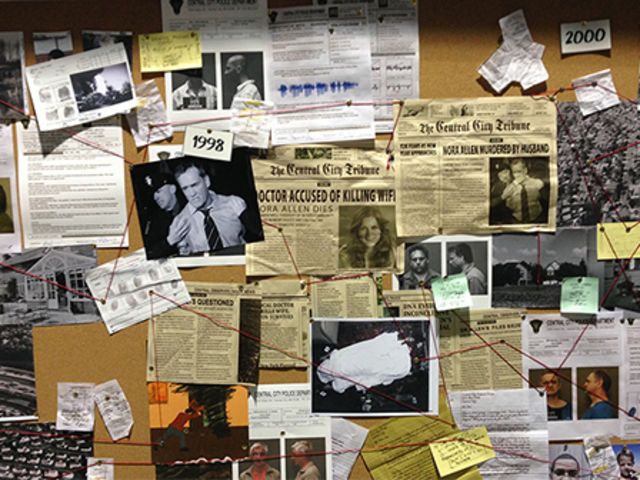
Solving crimes using Concept Mapping

Have you ever wondered why in pretty much every crime drama the “hero” stares at a wall, with names, locations and pictures pinned to it. He’s trying to solve a crime but there’s no logic, nothing makes sense, he has more questions than answers. The phone rings, it’s his daughter asking when he will be home, the dog is barking in the background, then suddenly he puts down the phone and says “that’s it, why didn’t I see that connection before” “why did the dog not bark that night?” The connection is made and the crime solved.

What was on the wall was effectively a concept map, a visual tool used to organise and represent knowledge or ideas in a hierarchical manner, showing the relationships between them to help develop a better understanding, clarify relationship and in some instances solve problems.

Concept mapping
Although a concept map and a mind map are both visualisation tools, they are not the same. A concept map differs in that as the name suggests its focus is on the relationship between concepts rather than on a single theme placed at the centre of a blank page as is the case with a mind map. Another way of thinking about them is that concept maps are more suited to planning and organising, they have a structured hierarchy and highlight relationships. On the other hand, mind maps are “free spirits”, used more spontaneously, encouraging creativity.

A concept map typically consists of nodes, representing concepts or ideas, connected by labelled lines or arrows to indicate the relationships between them.

Why concept maps work
Concept maps are effective because they mirror the way our brains naturally categorise and store information. When we create one it activates various regions of the brain involved in memory, comprehension, and critical thinking. This process helps to reinforce learning and deepen understanding by facilitating the formation of neural connections. Additionally, the visual nature of concept maps appeals to the brain’s preference for processing information in a spatial and interconnected manner, making it easier to grasp complex relationships and retain information over time.

Concept mapping as a technique was developed by Dr. Joseph D. Novak at Cornell University in the 1960s and is based on the theories of Dr. David Ausubel, who emphasised the importance of prior knowledge in learning new information. It stems from the ‘constructivism‘ approach to learning which suggests that individuals construct their own understanding and knowledge of the world, based on their own unique experiences.

“The most important single factor influencing learning is what the learner already knows. Ascertain this and teach accordingly.” David Ausubel. (1968).

Research also supports their use with studies showing that they improve learning outcomes, promote critical thinking, and increase retention of information. For example, a meta study published in 2024 concluded that “concept maps are highly effective in enhancing the academic achievement of students and must be used in the education process”.

How to design a concept map
Designing a concept map involves visually organising information to illustrate the relationships between concepts. Here’s a brief introduction to the process:

  1. Identify Key Concepts: Start by identifying the main concepts relevant to your topic. Think of them as the building blocks of your map.
  2. Determine Sub-Concepts: Branch out to list related sub-concepts, organising them from general to specific. Then start thinking about the relationship between the concepts, is there for example a cause-and-effect.
  3. Connect the Dots: Draw lines to connect related concepts, and label the lines to explain the relationships and organise in a hierarchy if not already done so.
  4. Refine and Expand: As you study, add more concepts and links, perhaps using colour to clarify different groupings, continually refining the map as your understanding develops.

Although you can use pen and paper there are lots of digital tools available, you can find some here – 10 Top Free Concept Map Makers & Software in 2024.

And finally – the best way to learn how to produce a concept map is to watch someone building one – here is a short 8-minute video that explains all.  How to Make a Concept Map.

Inquiry based learning is harmful – ouch!

Can I ask you a question, would you prefer to discover something for yourself or be told what you should know?

Choices as to how you want to learn are to a certain extent personal, perhaps even a learning style, but shouldn’t we be asking which is the most effective, and when it comes to that, we have evidence.

The problem is you might not like the results, I’m not sure I do.

The headline for this month’s blog is not mine but an edited one from John Sweller, of cognitive load fame, in a paper published this August by the Centre for Independent Studies in Australia. Although I have written about some aspects of Inquiry based learning before (IBL), it’s worth taking a closer look, especially given the impact Sweller believes IBL type methods have had in Australia. He suggests that the countries rankings on international tests such as PISA have reduced because of a greater emphasis on IBL in classrooms across the country.

But first…..

What is inquiry-based learning?
Inquiry based learning can be traced back to Constructivism and the work of Piaget, Dewey, Vygotsky et al. Constructivism is an approach to learning that suggests people construct their own understanding and knowledge of the world, through experiencing it and reflecting on those experiences. This sits alongside Behaviourism (see last month’s blog) and Cognitivism to form three important theories of learning.

As a process IBL often starts with a question to encourage students to share their thoughts, these are then carefully challenged in order to test conviction and depth of understanding. The result, a more refined and robust appreciation of what was being discussed, learning has taken place. It is an approach in which the teacher and student share responsibility for learning. There are some slight variations to IBL that include Problem-based learning (PBL), and Project-based learning (PjBL), in these rather than a question being the catalyst, it’s a problem.

This method is intuitively attractive and promoted widely in schools and higher education institutions around the world. Which is what makes Swellers argument so challenging, how can someone “learn better” when they are being told as opposed to discovering the answer for themselves?

What’s wrong with it?
To answer this question, I will quote both Sweller and Richard E Clark who challenged enquiry-based learning fifteen years ago in a paper called, Why Minimal Guidance During Instruction Does Not Work.

Unguided and minimally guided methods… ignore both the structures that constitute human cognitive architecture and evidence from empirical studies over the past half-century that consistently indicate that minimally guided instruction is less effective and less efficient than instructional approaches that place a strong emphasis on guidance of the student learning process.

The cognitive architecture they are refereeing to is the limitation of working memory and the need to keep cognitive load to a minimum e.g. 7+-2. In the more recent paper Sweller goes onto explain how the “worked example effect” demonstrates the problems of IBL and the benefits of a more direct instructional approach. If one group of students were presented with a series of problems to solve and another group given the same problems but with detailed solutions, those that had the worked example perform better on future common problem-solving tests.

“Obtaining information from others is vastly more efficient than obtaining it during problem solving“. John Sweller

In simple terms if a student (novice) has to formulate the problem, position it in a way that they can think about it, bring to bear their existing knowledge, challenge that knowledge, the cognitive load becomes far too high resulting in at best weak learning, and at worst confusion.

“As far as can be seen, inquiry learning neither teaches us how to inquire nor helps us acquire other knowledge deemed important in the curriculum.” John Sweller

What’s better – Direct instruction?
Sweller is not simply arguing against IBL, he is comparing it and promoting the use of direct instruction. This method you might remember requires the teacher to presents information in a prescriptive, structured and sequenced manner. Direct Instruction keeps cognitive load to a minimum and as a result makes it easier to transfer information from working to long term memory.

Best of both worlds
It may be that so far this blog has been a bit academic and does little more than promote direct instruction over IBL, my apologies. The intention was to showcase IBL, clarify what it is and point out some of the limitations. In addition to highlight how easy it is to believe that something must be good because it feels intuitively right. And in that IBL is compelling, we are human and learn from asking questions and solving problems, it’s what we have been doing for thousands of years. But that alone does not make it the best way to learn.

The good news is these methods are not mutually exclusive, and for me John Hattie, coincidentally another Australian has the answer. He says that although IBL may engage students, which can give an illusion of learning, if you are new to a subject (a novice) and have to learn content as opposed to the slightly deeper relationship between content, then IBL doesn’t work. Also, if you don’t teach the content, you have nothing to reason about.

But, there is a place for IBL…..its after the student has acquired sufficient knowledge that they can begin to explore by experimenting with their own thoughts. The more difficult question is, when do you should do this, and that is likely to be different for everyone.

One for another day perhaps.

Synergy – Direct Instruction part 2

Last month’s blog introduced the idea that Direct Instruction (DI) which is a highly structured form of teaching was a very efficient way of delivering information. The challenge was that in a world where knowledge is largely free “drilling” information using rigid methods does little to develop the skills most valued by employers.

Earlier this year in an attempt to identify some of these higher-level skills, I am not a fan of the term soft skills, LinkedIn analysed hundreds of thousands of job advertisements. They produced a top 5, which are as follows: Creativity, Persuasion, Collaboration, Adaptability and Time management. We might add to this, the ability to think for yourself which in some ways underpins them all.

The modern world doesn’t reward you for what you know, but for what you can do with what you know. Andreas Schleicher

This month I want to expand on what DI is but also add to the argument that DI (teacher led) and discovery based (Student led) are not mutually exclusive, in fact when used together they work better than on their own.

Direct Instruction is learning led
The main reason that despite its many critics DI fails to go away is because of the significant amount of evidence that proves it works. And the reason it works is because it presents information in a brain friendly way.

Cognitive load, this is a very common instructional terms and refers to the limitation of short term or working memory to hold sufficient information at any one time. As a result, it’s better not to bombard the brain with too much information, meaning its more effective for students to reduce distraction and be presented with content broken down into smaller chunks, sequenced and taught individually before being linked together at a later date. This is one of the most important aspects of DI. Avoiding distraction refers not only to external distractions e.g. your mobile phone but information that is not required or is unnecessary in arriving at the desired learning outcome

Retrieval and spaced practice are both used in direct instruction and have been mentioned in previous blogs. They are well researched and the evidence is compelling as to their effectiveness.

Using examples to teach is also something strongly promoted. It is argued that the brain has the ability to use examples to build connections, ironically without DI e.g. if we are talking about pets and we said that a cat is an example of a pet but we already knew a cat was also an animal we could link the two. Next time when the term cat is mentioned we would know it was both a pet and an animal.

Discovery based (Student led – Autonomous – Constructivism)
Many of the discovery-based learning techniques have their roots in the work of psychologists Jean Piaget, Jerome Bruner, and Seymour Papert. The core argument is that self-discovery and the process of acquiring information for yourself makes that information more readily available when it comes to problem solving. In addition, it encourages creativity, motivation, promotes autonomy, independent learning and is self-paced.

It is not however without instruction. Teachers should guide and motivate learners to look for solutions by combining existing and new information, help students avoid distraction and simplify what to a student may appear complex. To expect the student to figure everything out for themselves would be incredibly inefficient and although might lead to a truly original idea is most likely to result in a feeling of wasted time and solutions we already know or are wrong.

Critical thinking processes such as reasoning and problem solving are intimately intertwined with factual knowledge that is stored in long-term memory Daniel Willinghams – Why Students Don’t Like School.

2 + 2 = 5 = Synergy
DI and the many discovery-based learning methods can be used together because together they are far more powerful and effective. Think more of them in terms of a venn diagram with highly effective learning in the middle where the circles overlap and DI in one circle and discovery based in the other. The mix is up to the teacher which in turn is dependent on the time available, the nature of the subject, their judgment of the students and the desired outcome.

You cannot tell students how to think but you can provide them with the building blocks, helping them learn along the way before giving them real world challenges with problems they will have to solve for themselves. Then its into the workplace where the real learning experience will begin.