
Twas the night before ………..the exam – but what to do?

keep-calm-and-study-all-night-5 Well not exactly all night

For students May and June are the main exam months. Studying and learning can be enjoyable…. honestly, but the fun has to come to an end and it does, with the exam. It cannot be avoided and so is best embraced, treat the exam as a game and you the player. What you need to do is give yourself the very best chance of winning.

Become a professional exam taker, someone who follows a process of preparation, very much like a top sportsperson. This means you personally need to be in the best physical and mental shape and have a series of exercises that will get you match fit.

Below is your training regime from the night before the exam – good luck

The night before

You should by now have:

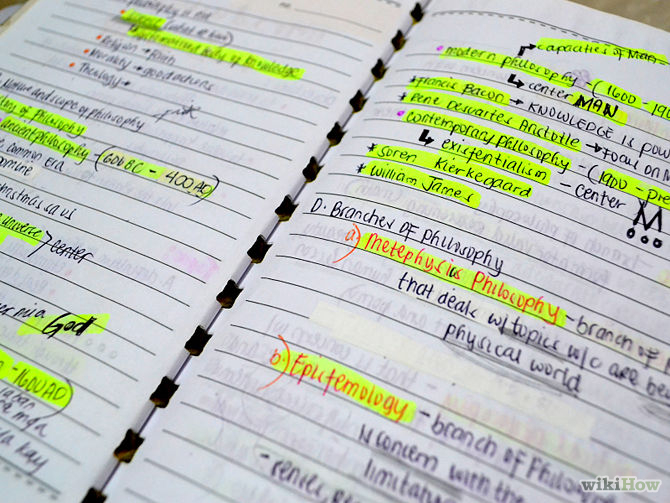
  • Read through and reduce your class/tuition notes down to approximately 10 pages (20 max) of revision notes, see March Blog on how to prepare notes. You may have some professionally produced revision notes, but it is still best to make your own.
  • Practiced past questions on the key examinable areas both under exam and non exam conditions.
  • Started the process of memorising the revision notes.

Be realistic – The key to the night before the exam is to be realistic. You don’t have much time, so don’t think you can cover everything. Let’s assume you have 3/4 hours, 6.00pm – 10.00pm maybe.

Put to one side the large folder that contains all your notes taken throughout the term/year, and concentrate only on the 10-20 page revision notes.

Focus and memorise – In the 3/4 hours that you have you want to get an overview of the subject and focus on the areas that need memorising. These should be the key examinable areas and are most likely to be standard formats, definitions, lists, formulas s not given in the exam etc.  Memorising should include some rewriting of notes, but very little, focus on talking out loud, drawing pictures, writing out mnemonics etc. See my blogs on memory, in particular: Thanks for the memories  and To pass an exam do and exam.

Admin – make sure you have set to one side everything you will need the next day. This includes your exam entry documents, calculator, gum, mints etc. You don’t want to be thinking of these in the morning. And of course make sure you know exactly what time you need to leave to get to the exam with about 1 hour to spare.

Physical and mental preparation – Drink lots of water, avoid tea, coffee etc as you will need to get a good night’s sleep. Exercise is an incredibly effective method of reducing tension and stress. So you may want to build into your 4 hours, 30 minutes for a run or brisk walk. This could be at the half way point of your evening, combining a well earned break with the exercise maximises your time.

Getting sleep is important, so avoid reading your notes and then going straight to sleep. Pack you notes away, put them ready for the morning, then physically go into another room if possible or even outside, watch TV for 10 minutes, something trivial or read a book. You need to break the state of mind from that of studying, relaxation leads to sleep not stress.

And finally keep a positive attitude, think about what you know and are good at and not what you don’t know and are bad at. Keep telling yourself that you have done everything possible, and if you follow these steps you will have. Thinking you know nothing and should have done more will not help at this stage, it’s a pointless thought strategy and not what the professional exam taker does.

The morning before

Set your alarm sufficiently early to give you at least another hour of revision. You don’t need to get out of bed, just continue memorising your notes. This is now about little and often, short 10 minute intervals. Don’t worry about falling to sleep in the exam; the adrenalin won’t let you.

1 hour before

What you do after arriving at the exam centre/School etc  is personal. Some will prefer to sit on their own going over the revision notes; don’t bother taking your folder of course notes. This is still very much about short term memory. Others will prefer to talk, chatting about nothing, just to stop them worrying. Both are fine.

After the examExam post it!

Afterwards is also a little personal, most will go home, but some will want to talk through what was in the exam, looking perhaps for some conformation they have not made a complete mess of it. Most importantly, if you have another exam, go home, put your old revision notes to one side, forget everything and start on your next subject.

The American basket ball player Art Williams had a good saying that I will leave you with. I’m not telling you it is going to be easy — I’m telling you it’s going to be worth it”

And although personally I found exams difficult I have never regretted the hard work, it was for me worth it.

And something to watch

How to: Cram the night before a test and PASS

Or you could try this

This blog is for Beth – good luck xx

Eureka – I Understand Understanding!

I Understand!If you understand the subject you are studying your chances of passing the exam must be good.

A simple and perhaps obvious statement but what does understand mean and what do you have to do to truly understand something? Of course understanding is a key part of passing but it is not enough on its own, you can understand something yet fail because you run out of time, misinterpret the question, thought you understood but didn’t! etc.

To understand

The dictionary defines to understand as, to know what someone or something means, to grasp the meaning, to be familiar with, make sense of etc. Understanding is clearly different to knowing, for example, you may know that gravity is a force that pulls objects to earth but that does not mean you understand what gravity is or how it works. Of course you need both knowledge and understanding, the one is no good without the other. Examiners try to test for understanding by asking questions that require you to compare, contrast, explain, interpret etc.

Understanding is not a Eureka moment, it has different levels. It might seem that there is a point where you didn’t understand and then suddenly you did, a Eureka moment. In reality what you have done is move closer to gaining a better and fuller understanding. Ask any lecturer or teacher, often they will tell you they never fully understood something until they had to teach it, they just thought they did.

Proving you understand – The 6 facets of understanding

Understanding by design, Wiggins and McTighe (1998) is one part of an instructional design process that provides a very helpful framework we can use to explore the depth of understanding and perhaps more importantly what you can do to develop a deeper understanding. Think of it as a hierarchy with the easiest one first, the greater you’re understanding the higher the number.

1. Explain, the classic exam question – Explain to someone what the concept/idea means and say why. Explaining out loud to yourself or making a recording can be just as effective.

2. Interpretation – Relate the concept/idea to your own experiences, tell a meaningful story. Try to add something personal into your explanation. To do this you will need to reflect on past events, whilst attempting to find parallels with the concept/idea.

3. Application – Use the concept/idea in a different context. The ability to apply knowledge in different contexts (transfer) is a key milestone in learning as well as understanding. It should result in you never being caught out by a difficult exam question. Understand to this level and it doesn’t matter what the examiner asks.

4. Perspective – Read around the concept/idea, get other people’s views, and see the big picture. If your struggling with understanding, read another text book or my favourite is to go onto you tube and watch a video. The internet is great for discovering alternative views.

5. Empathy – Try to get inside another person’s feelings about the concept/idea. This is difficult as it requires you to put aside your feelings about the concept/idea and accept that it is not the only way of thinking about it.

6. Self Knowledge – Ask questions about your understanding, ask what are the limits of your understanding, what are your prejudices, become aware of what you don’t understand. Often called metacognition, the ability to think about thinking.

The Eureka moment

Understanding, like Eureka moments are not of course the result of sitting in a bath and suddenly finding you understand something you had previously found confusing. It is the gift of hard work and long hours of study, hopefully by trying some of the techniques above your depth of understanding will only improve.

Ps apparently the jeweller was trying to cheat the king….

Understanding by Design

Want to know more about understanding by design, watch this. 


An illogical great idea – Tips for making study notes

Illogical my dear WatsonLogic is a process driven by reasoning. Here is a logical argument: Everything I need to know is in this book, if I read this book I will know everything.

And yet this is what most students do. Read the book, then begin the laborious and time consuming process of re writing some of it, which bits are chosen can at times be a little random.

On the face of it this, dare I say is illogical. If the book contains everything you need to know then why re write it, and why only parts?

The answer – because as every student knows, if they are to stand any chance of learning what’s in the book rewriting is essential. This is one of the arguments for taking notes. But notes are not just made from a book they are also used to capture what is said by the lecturer or teacher.

But first……

Here is a simple example borrowed from a colleague (thanks Gareth). Below are four opposites, can you find the missing letters?

  • Pa-s & Fail
  • Amate-r & -rofessional
  • -ccid-ntal & Intenti-na-
  • Co-p-ls-r- & V-lun-a- –

I will come back to this at the end.

Student own notes?

Making notesThere are two reasons for making notes, one because it helps with learning (Encoding) and secondly so that you have a copy for reference later (External storage). I will focus on the encoding in this blog.

Encoding – Three factors have an impact on the effectiveness of students making their own notes.

  • The amount of effort If you take notes but make very little effort to understand what is being said, simply recording the lecturer’s words, the value of taking your own notes is limited.  It is far better to identify and highlight the key points being made and add your views and inferences.
  • The nature of the input – If the lecturer is speaking quickly or giving little time to consolidate what is being said then the quality of the notes will be affected. The most effective rate for speaking is thought to be around 84 words per minute. A second factor is the density of facts to words, if the density is low, 106 facts to 2,000 words then student notes are far better than if the density is higher at say 206 facts to 2,000 words.
  • The learner’s purposes and goals – Of course each student will have an objective for being in the lecture in the first place; often this is to pass the exam.  Research shows that students will take down what the lecturer  says  and therefore learn more if, the topic is believed to be examinable, is written out by the lecturer, dictated or repeated.

Pre-prepared (lecturer) notes

What the above shows is that making your own notes is probably the most effective way of learning as long as you are not simply recording what is said without thought. The more you add and personalise the notes with your own views the better. However as can be seen taking notes in class has its problems, the quality is affected by the speed and density of delivery and the learner’s goals. So maybe the best notes are those prepared by the lecturer?

Although I was not able to find any definitive research on this very point, Fisher and Harris (1973) did conclude that students “who reviewed (used for revision) their own notes outperformed those who reviewed the lecturer’s notes.”

What we can say is that pre-prepared (lecturer notes) can help overcome some of the problems with students own notes. But they should not be complete; they should not contain everything the student needs to know. If they do not only will the notes become too large but they will leave the student with few opportunities to add their own thoughts and as a result learn.

And last…….

At the start of this blog I asked you to find the missing letters. I hope the task itself was not too onerous, it was meant to show that when you have to think and make an effort you are far more likely to remember at a later date. So tomorrow when you reflect back on this blog, ask yourself which ones do you remember – it should be the ones lower down the list.


I have written before on making notes and mind maps – click the links below

Mind Mapping unplugged – How to Mind Map from beginning to end

The De Vinci code – Mind Mapping to pass exams

Also to read more about the research used to write this blog click here

The answers just in case

Pass & Fail – Amateur & Professional – Accidental & Intentional – Compulsory & Voluntary

50 Shades Darker – How much to test

How much to test

In August last year I wrote how Professional accountancy bodies believe that competency can be measured by a candidate scoring 50% and failure if scoring 49%. This all or nothing approach seems neither fair nor useful; hence the idea that grades of competence could be introduced e.g. 50% pass, 65% commendation, 75% distinction etc.

But the mark a student gets in an exam is only part of the story when it comes to measuring competence. Can a student be considered competent if the exam they pass only includes questions from say 75% of the syllabus? Yes the whole syllabus might be covered in an 18 month period but in any one exam 25% is not tested. Equally the 75% is often considered core and so examined every sitting, this means that a student need only focus on the 75%. Admittedly if the pass mark is 50% they need to score 50% out of 75% (67%) but with practice this is possible. One final observation, it is unlikely the student will score 0% on the non-core part of the syllabus. They may get say 5% or even 10% out of 25%. Not a great score but the 67% pass mark now becomes 58%. This logic sits at the heart of the exam driven approach.

Objective testing might be the answer?

Objective tests (OT) – test that are relatively short and can be unambiguously marked, are considered by some to be a weaker form of assessment, they are part of the dumbing down of examinations. The beauty of an OT question is that the marking is completely accurate, no marking bias at all. This is often ignored in traditional exams and not seen as a problem largely because it’s not that visible. But the OT does not solve the “how much to test” problem, in fact it makes it worse. If you are asking for less then you are examining less. So if the only benefit is the avoidance of marker bias why are more examining bodies using OT style exams, is it just about saving money…….?

An example

Imagine that you have 4,500 OT style questions that cover every aspect of the syllabus, let’s also assume that the student only has to answer 50. The 50 questions are randomly picked from the 4,500 in the question bank. Is it fair that a student is considered competent if they are only being tested on 1% of what they need to know?

I think the answer is Yes, because in order to be sufficiently prepared to answer 50 questions from a bank of 4,500 when there are no core topics you have to have be capable of getting all 50 correct (assuming a 100% pass mark) and because you don’t know which 50 are coming up this effectively means you have to be able to get all 4,500 correct. The examining body can of course control  the effectiveness and level of difficulty by changing the pass mark.

All OTs would be OTT

This is not an argument to suggest that all examinations should be assessed using OT type questions, they should not. For example they are not Less-is-Morevery effective at measuring a student’s ability to communicate or evaluate complex and ambiguous situations, but they should be considered part of the tool kit that examining bodies have in assessing competence.

So on the face of it OT’s may look like a soft option, anyone can tick a box but they are certainly not easy to get right. Maybe less is actually more…..

Carrots and sticks – Motivation and the thinking Donkey

Donkey carrot and stickMotivation is one of those topics that is so important to learning and passing exams that we will constantly keep coming back to it.

If you are motivated when studying then you will study for longer, more frequently and be more focused.

As a result I have written about motivation in the past Motivation – How to want to study, Rocky boxing No – it’s about motivation to name but two.

I have always liked the simple idea that if you want to motivate someone to do something then you give them a reward (carrot) or a punishment (stick). You will probably have used carrot and stick techniques on yourself. If I answer these exam questions by the weekend I will have Sunday off or if I don’t answer these exam questions by the weekend then I won’t have Sunday off.

But are we more complicated?

In his book Drive – the surprising truth about what motivates us, Daniel H Pink (a former Al Gore speech writer) argues that there are in fact three motivational systems. One survival , motivated to eat, drink and reproduce. Two, seek reward and avoid punishment, the so called carrot and stick and three, intrinsic  motivation, the idea that motivation comes from within not from external stimuli.

These are not mutually exclusive, you are still motivated to eat, drink and reproduce, equally carrots and sticks do work, but what are these intrinsic motivators.

Type X and Type I

Type X behaviour is fuelled more by extrinsic desire, how much money will I get, I don’t want to have to work Sunday, this fits with carrot and stick. Type I behaviour requires intrinsic motivation and is concerned with the satisfaction gained from an activity. Pink argues that extrinsic motivation works better for algorithmic/routine tasks that require little cognitive processing. But if you have to think, understand, create then intrinsic motivation is more effective. Got it……

And the point is……

Studying and learning require a huge amount of cognitive processing (It is a type I behaviour) and so rather than using carrot and stick motivators you would be better using intrinsic ones. Pink explains that intrinsic motivators can be broken into Autonomy, Mastery and Purpose.

  • Autonomy – This can be achieved by making your own decisions as to how you study when you study, rather than listening to others or being rewarded for doing it. It’s about taking ownership.
  • Mastery -This is a mind set and involves you believing that what you are learning is not something in isolation but contributing to a greater and longer term skill set.
  • Purpose – This links nicely back to goals, which has been the topic of previous blogs. You must feel that what you are learning has some value and purpose possibly beyond simply passing the exam. Will it help you do your job better etc

Motivation can be difficult to understand, personally I feel that it does come from within (intrinsic), it’s my desire to do something not someone else’s and so the argument that you should not use carrot and stick (extrinsic ) type rewards makes a whole lot of sense.

Let me know what you think….?

Listen to Daniel H Pink at TED And an RSA animated lecture 

Reflection/Goals/Planning……Inspiration and bravery

2013_time100_yousafzaiIt’s nearly the start of a New Year 2014, traditionally a time for both reflection, taking stock of what went well/not so well and looking forward to what the future might hold. On the whole this is a healthy process, looking back gives you chance to put things into perspective and hopefully learn a few lessons, whilst looking forward gets you thinking about what you might like to happen and set goals to make those events more likely.

Looking back on 2013, one event that stood out for me was the nomination of Malala Yousufzai for the Nobel peace prize in November 2013*. It is not the nomination that is important but the fact it provided a reason to revisit the incredible story of one little girls determination to have an education, something that many of us are fortunate enough to be given for free or at least freeish!

Reflection – The story in brief

By 1997, the year in which Malala was born her father Ziauddin Yousufzai had been running a private girls school for several years in the Swat

A classroom in Swat valley

A classroom in Swat valley

district of Pakistan. This was before the Taliban took over. At the end of 2008 the local Taliban leader, Mullah Fazlullah, issued a warning, all female education had to cease within a month, or schools would suffer consequences. Malala was 11 and supported by her father started an anonymous blog for the BBC Diary of a Pakistan school girl.”  The blog stopped after only 10 weeks as Malala had to leave Swat. Although clearly influenced and inspired by her father Malala had a voice of her own and one that was now being heard outside Pakistan, she was passionate about education, especially for women. A documentary by the New York Times bought the story to a wider audience.

 All I want is an education, and I am afraid of no one. 

But on the 9th of October 2012 when Malala was just 15 two men boarded her school bus and asked “Which one of you is Malala? Speak up, otherwise I will shoot you all” The other girls looked at Malala, innocently identifying her; she was shot in the head and neck and left for dead. She was initially flown to a military hospital in Peshawar and then onto the Birmingham Queen Elizabeth hospital in the UK where she had further operations and continued her recovery.

They cannot stop me. I will get my education, if it is in (the) home, school or any place. 

On 12 July, nine months after the shooting, came a major milestone. Malala stood up at the UN headquarters in New York and addressed a specially convened youth assembly. It was her 16th birthday and her speech was broadcast around the world.

Goals and Planning

Malala wanted to be a Doctor, but wanting to be a Doctor is not an effective goal, it’s a wish or desire, it was outside her control. What was within her control was to work hard, motivate herself and fight for the education she deserved.

Malala wanted to be a Doctor but events changed all that, a bullet intended to kill her sent her down a different path. Now she wants to be a politician, not a goal but a wish, driven perhaps by a deep routed desire to help people less fortunate than herself. Yet those same goals of hard work, motivation and learning will equally help turn this wish into a reality.

Let us make our future now, and let us make our dreams tomorrow’s reality.

And so to 2014

When thinking back on 2013, learn from your mistakes, maybe the exams (life in general) didn’t go as well as you might have hoped. But don’t Happy New Yearask why, ask what have I learned and so need to do differently in 2014. Remember when setting those goals make sure they are within your control and take inspiration from the story of a brave little girl who worked hard, motivated herself and most of all believed in the importance of education.

  Let us remember: One book, one pen, one child, and one teacher can change the world. 

Ps

Malala is now working hard for her GCSE’s incidentally at the same school as my daughter.

Well worth watching – BBC – Shot for going to school.

And the *Nobel Peace Prize 2013 was awarded to Organisation for the Prohibition of Chemical Weapons “for its extensive efforts to eliminate chemical weapons.

Intelligence and IQ – does it matter?

Yesterday Boris Johnson delivered the annual Margaret Thatcher lecture at the Centre for Policy Studies in London, in it he said:

Whatever you may think of the value of IQ tests, it is surely relevant to a conversation about equality that as many as 16 per cent of our species have an IQ below 85, while about 2 per cent have an IQ above 130.”

Mr Johnson (Boris) uses the measure of IQ to make the point that if we don’t have equality in intelligence then economic equality is not possible. Effectively he is saying we should accept that some animals are more equal than others, apologies for the Animal Farm digression…..

What is Intelligence?

Yet a large part of Boris’s argument hinges on the term intelligence and that it has some meaning or value, but what is intelligence? The word itself is derived from the Latin verb intelligere, to comprehend or perceive. A good start, but that’s all it is a start, here are a few more definitions:

  • Judgment, otherwise called “good sense,” “practical sense,” “initiative,” the faculty of adapting one’s self to circumstances  (Alfred Binet the creator of the IQ)
  • The ability to learn or understand or to deal with new or trying situations (Merriam-Webster dictionary)
  • To my mind, a human intellectual competence must entail a set of skills of problem solving, enabling the individual to resolve genuine problems or difficulties that he or she encounters. (Howard Gardner, Multiple Intelligence Theory)

The last of these is my personal favourite as it gives purpose to having intelligence, to solve problems. The bottom line, there is no one single definition and experts disagree on how it should be tested/measured. Interestingly the IQ (intelligent quotient) developed by Alfred Binet was only ever intended to be used to identify intellectual disability not to form the basis of an elitist club or for Boris to hijack for his Margaret Thatcher lecture.

Does it matter?

People often have a personal view of their own intelligence, this can sometimes be empowering when you find out “You’re a god Dammed Genius” or limiting if “you discover your IQ is only 75.” Just for the record, 91-110 is average, 80-90 is dull normal, 66-79 borderline and 65 and below, defective.

The very fact that you believe you are intelligent can be motivational, resulting in you putting in more effort. The self belief that you can solve any problem will often result in you solving most of them, and of course proving you are not only intelligent but a genius!

I know that I am intelligent, because I know that I know nothing.

Socrates

Contrast that with the behaviour of someone who believes they are not intelligent or maybe not as intelligent as others. Faced with a problem they will give up, believing the solution is beyond them, and of course proving that they were also right and not a genius.

But Does Boris have a point?

Boris uses IQ (The measure of intelligence) to illustrate the point that we are all different, something that most people would readily accept. What I find uncomfortable is the deterministic nature of his proposition, it implies having a high IQ predicts success and by the exclusion of the many other factors that contribute to success, suggests is the only thing that matters. The Telegraph headline made this point very strongly.

Boris Johnson: some people are too stupid to get on in life

Natural differences between human beings will always mean that some will succeed and others will fail, the Mayor of London says in a speech

Yet on the basis that there is little agreement as to what Intelligence is, the testing and what should be tested is subjective, it would appear a poor basis on which to hang his argument.

Lessons for learning

What I do agree with is that we are all different and that some of this is the function of genetics. (Research indicates that 60% of intelligence is genetic) yet on the basis that you can do very little about this, does it matter?

It is always better to work on what you can change rather than what you can’t. I am sure many of us know people who seem to grasp principles, concepts’ etc and solve problems pretty quick. If you compare yourself to them it’s easy to conclude that they are better and you will always be second rate, so stop trying. The simple answer is don’t compare yourself with them, compare only with yourself, are you getting better and if you are then your improving, and that’s a result.

So forget about measuring intelligence and whether your better than someone else and get on with trying hard and being the best you can.

More on intelligence

Human intelligence, BBC Horizon. An interesting programme that evaluates the intelligence of different high performers.

And the smartest man in the world is…...click here

Just answer the question!!! – but how?

Last month I looked at the best way to tackle a case study, but case study is only one type of exam, what about the more traditional style of exam question?

The world is full of great advice, lose weight, exercise more, stop smoking, just answer the question ….all these statements are very clear with regard to WHAT you should do but terribly unhelpful as HOW to do it.

The reason that students fail exams is simple, every examiner since the beginning of time will have made some of these comments.

Students fail exams because?

  • They don’t know the subject – inexcusable and the only reason you should fail
  • They don’t read the questions properly – and as a result  misunderstand what was being asked
  • They don’t  manage their time – so only complete 50% of the paper
  • They don’t write good answers – true this might be due to lack of knowledge but could also be the result of not knowing how much to write

The last three of these can be overcome with the use of good exam techniques. In this blog I want to share with you two simple techniques that I think will help.

How to read questions properly – Tip one, the rule of AND

Below is an exam question worth 12 marks. You don’t need to know anything about the subject so don’t worry.

Using the information given for DT Co, calculate the adjusted present value of the investment and the adjusted discount rate, and explain the circumstances in which this adjusted discount rate may be used to evaluate future investments. (12 marks)

The rule of AND is simple, where there is an AND in the question simply put a line through the AND then make the next statement the start of a new question.

Now read the question

1. Using the information given for DT Co, calculate the adjusted present value of the investment. and

2. (calculate) The adjusted discount rate, and

3. Explain the circumstances in which this adjusted discount rate may be used to evaluate future investments.                                                                                  

There are now three questions and because we have broken it up, it is so much clearer what you have to do.  If we were really clever we might be able to guess how many marks out of 12 relate to those three questions, a tip for another day perhaps.

How to write a good answer – Tip two, Define. Explain and Illustrate

Define Explain and Illustrate is a technique to help you write more using a simple structure.

Read this question

Discuss the proposal to repurchase some of the company’s shares in the coming year using the forecast surplus cash. Other implications of share repurchase for the company’s financial strategy should also be considered. (10 marks)

Firstly Define the technical words. In this example the technical word is repurchase, so firstly we need to say what a share repurchase is.

E.g.  a share repurchase is where a company buys back its own shares and as a result reduces the number of shares available on the market.

Secondly Explain in more detail.

E.g. the share buy back has to be financed in some way so one implication is that it will result in a reduction in the company’s cash balance. It also means that because there are fewer shares, earnings per share (eps) will increase.

And lastly and in many questions most importantly, Illustrate. This could be by way of a diagram an example or by referencing to the question in more detail. The reason this is so important is that this is how you will demonstrate to the examiner that you can apply the knowledge. If you don’t understand something you will not be able to apply it. The application section of the answer will often carry the most marks.

E.g. in the example above it is clear that the company is forecasting surplus cash, i.e. they have more money in the future than they need. Leaving this money in the bank is not considered sensible partly because the level of return that can be earned from the bank will be less than the shareholders require, it can also be interpreted as a lack of ambition on the part of the Directors. Blah blah blah

Depending on the detail provided in the question this final illustration section can go on and on. How much you write will depend on the marks available.

I hope you have found these two tips helpful, if you want more in the coming months just add a comment to this blog and I will oblige.

Epic exam failure – what not to put on your exam paper

And finally a short video showing students real exam answers – funny

Click here


Thinking in box’s – Cracking case study

Put it in a boxExaminations come in many shapes and sizes, short form, multiple choice, essay, case study etc. I know there are other methods of assessment but I am thinking here of the most common. Of these one stands out as being very different, the case study. Developed by Harvard in the 1920s the  case study involves giving the student a  real life, normally business situation and asking relatively broad Socratic type questions e.g. what do you think, why etc.

It not only puts the student in a realistic situation but also requires them to think far more deeply.  The cognitive process involved in answering a question such as what is the capital of France or can you add 2+2, on the whole is very simple and may need little more than memory. However giving student a real life business to analyse and asking them to give an opinion as to what the company should do next requires higher level thinking as well as effective communication skills.

Too much to read

One other aspect of a case study is that it often involves large amounts of narrative, all will need reading digesting and putting into context. On the face of it this can seem daunting, but it can be done and as with so many aspects of learning there is a process that can help. I have written about, having too much to read and the benefits of chunking before but I want to bring these together with another powerful technique “thinking in box’s”.

Thinking in box’s 

Volume and lack of direction is the main problem here, so we need to find our own direction and reduce the volume. Thinking in box’s refers to the natural process we have in compartmentalising thoughts. In order to make sense of the world we often put “stuff” into box’s, work, study, relationships etc. We can then open the box’s when we are best able to deal with them. The  point being that  we can’t deal with everything all at once. If this whole idea sounds a bit odd, then just consider the saying “Thinking outside the box”. This refers to the imaginary frame we put around something that restricts our ability to solve a problem and think more creatively. Strange isn’t it…..

Case study

Imagine that you have 10 pages of narrative to read based on a particular industry, a case study. There are a few sub headings and some paragraphing. You are required to provide guidance to the board of Directors as to what the companies strategy should be in the next five years.

The process 

In order to give the advice required by this question, you need to fully grasp the current situation, which means you have to  read, understand and comprehend what is written on the 10 pages. To add structure to the case firstly take chunks of content and put a frame around it, this will help focus just on this chunk of information, it also reduces the volume. A chunk will often be information under a heading or specific paragraphs. Once you have the content in a box, sift through it looking for the “key words” and underline them.  Focusing only on the key words but taking into account the context, ask yourself, what do I think about this? What does it mean, what is it telling me etc. Then write down your thoughts. Do this for every chunk of information, then number each chunk.

At the end of this process you should have read and thought about each chunk, captured those thoughts and have a numerical reference by which to structure them. The final part of the process is to read each of those chunks again and produce a SWOT. This brings all 10 pages down to just one. And by using the SWOT supported by your detailed analysis you should be able to give the advice required by the question.

watch_this_videoIn this short video I demonstrate the thinking in box’s approach.

      Thinking in box’s

And finally – A few words from Terry Pratchet

I will be more enthusiastic about thinking outside the box when there is some evidence of thinking inside it!

50 shades of Grade…..Measuring students worth

I don’t often write specifically about the market that I am most closely involved, that of accountancy training and education. But there does seem to be an anomaly in the way the accountancy world measure success that isn’t the case in many other professions and examinations.

To become a qualified accountant in the UK (ACCA, ICAEW,CIMA etc,  yes there are more) you have to pass a number of demanding examinations and submit evidence of practical experience. The exams are taken over 3 years and everything rests on a number of exams of 100 marks each, of which you need to get 50%. The pass rate for accountancy students varies from paper to paper but is around 60% In training and education terms these exams are often referred to as High stake exams. For some failure is not simply a setback in terms of time, it could result in a lost job.

50% good – 49% bad

The purpose of such exams (including the practical experience) is of course to ensure that those that pass are competent. But how competent….?  It seems that you are either competent or not, if you get 49% you are not competent, if you get 50% then you are. This makes the margin for error very high, many a career has taken a dramatic turn based on 1 mark. Now of course in any exam there has to be a point where someone succeeds and another fails but does competence not have many shades to it, is it not a continuous process rather than a discreet one.

Shades of Grade

You may be one of thousands of students (>300,000 actually) who have just had your A level results. But of course you don’t just pass or fail, in fact this has not been the case since 1963, even before then there was an indication of the mark. You are given a grade from A through to E and all are considered a pass, 98.1% passed their A levels this year.

And the grades refer to the marks e.g. E is 40%, a D is 50%, a C is 60%, a B is 70% and an A is 80%. A similar grading exists for Degrees, 2.1, 2.2 etc and for Law exams, Pass, Commendation, Distinction.

No pressure for excellence

So why is this not the case in accountancy? To be honest I am not sure. But by introducing grades above a pass you not only provide employers with a better indication of competency, you encourage colleges to teach to a higher and deeper level, motivated by the students who want to learn more. And that for me is the most important point; you create an incentive for students to try harder. At the moment if you are scoring 55% then why put in more work, a pass is a pass, but a distinction well that will make you stand out from the crowd.

Of course the market will adjust its perception of what a pass means, for example employers may only want students with a distinction rather than a simple pass, but they have always looked and will continue to look for differentiation, at least this is a meaningful one.

What it does not do is fix the 49% you fail problem, and careers will still hinge on 1 mark, but that unfortunately is the way with exams and the reason exam technique is so important.

So to all the accountancy examining bodies why not introduce grades – grey is good and isn’t it an accountants favourite colour?

Tipping the exam is bad….right?

No TippingFor me holidays are not a treat, they are an essential way of  recharging your batteries and provide an opportunity to re think ideas and put things into perspective. I am writing this particular blog whilst visiting Washington DC for a few days before moving onto the real America, Disneyland!


Exam tipping
Now whether its because I was having to get my head around the whole US tipping culture I don’t know, but I found my mind wondered to a conversation I had just before I came away as to the merits of predicting topics that will be on the next exam, so called tipping. This is a fascinating question, and one that is at the heart of the exam focused approach. The logic of the exam focused approach is simple (see  earlier blog for more detail) if the main objective is to pass the exam then the best preparation is to practice The questions that will be on that exam. But on the basis we don’t have The actual exam, then the next best preparation is to practice questions that “you think” will be in that exam, hence the tip.
In many other training environments this approach is common and well accepted. My daughter was taken on the routes most used by the driving test examiner. Although on the day she didn’t know exactly which route it was going to be. As a result of the training and familiarity she felt well prepared, more relaxed which in turn built her confidence, and I am sure this improved her performance on the day.
So what’s the problem?
The problem is that if taken to an extreme, teachers might only teach what they think will be on that particular exam, the so called “teaching to the test”. This results in students not receiving a sufficiently broad or in-depth coverage of the subject and exposing them and their chances of passing to risk, heads you pass, tails you fail.
Application – Focus – Prioritisation 
However exam questions are great tools for application, focus and prioritisation. If a student is taught something and then set a question on that topic, they very quickly appreciate its relevance and value. It certainly helps with concentration, focus and  putting topics in order of importance. The, you can’t learn everything so stop worrying and get on with this question approach…..
Its all about time
If students have sufficient time they should of course learn everything. Although if you think about it you can’t learn “everything”, so there is always some degree of prioritisation.  But in the professional education sector, they don’t. Many hold down demanding jobs by day and study is part time. They look to the educator to give them some degree of priority in what to learn. This comes into sharp focus in the last few days before the exam, and that’s why they will ask for what is most likely to be on the exam, the tip.
So should the teacher tip
It’s all about degrees, at one end of the spectrum, it is very risky and narrows a students learning, at the other it gives focus and application in the last few days before the exam. Personally I would like to see  research on this area some solid evidence to focus the debate. There may be something out there but I have not read anything on this specific question.
But in the absence of such research my view is not to be too dismissive of tipping, it is very easy to completely write it off, leaving the choice of what to focus on just before the exam to the student, when the teacher is probably in a better position to give advice.
and if your interested – How to predict exam questions


And finally my  Holiday books 
I have just started Sal Khans The one world school house – very easy to read summary of how Salman Khan got to become “Bill Gates favourite teacher” and the logic behind what the Khan Academy does.
Thinking fast and slow and The chimp paradox are still as yet to be read.


Now where’s that bill or is it cheque….20% tip!

The lecture -When does learning happen?

“Lectures were once useful; but now the internet and online content are freely available, lectures are unnecessary. If your attention fails, and you miss a part of a lecture, it is lost; you cannot go back as you can with online content. “

The above quote makes the point very forcefully that lectures may not be that effective, and certainly not as good as online. But let me ask a broader question, what is the purpose of a lecture in the first place, does it help you learn and if so when does the learning begin?

The lecture – step by step

In its most simple form the lecture involves little more than a lecturer standing at the front of the class reading from a set or prepared notes or reciting from memory, the student then listens and copies down what the lecturer is saying, presumably to read and absorb later.

So let us break down this process and consider how a lecture helps with learning. Firstly the student has made the effort to attend, this in itself means there is some motivation involved. Secondly they are in an environment designed for learning and with other like minded individuals. All of this helps to put the student in the right frame of mind.

The lecturer will however play a very important part. How well they explain the subject, their level of knowledge, passion and genuine interest can all make a dull topic seem fascinating. And if it is fascinating the student will find it easier to learn. But how much of this can you get from a book, and can this all be achieved online?

And when is the real learning taking place? True the lecturer may ignite a flame and create a sense of curiosity in the student, but the real learning takes place in private, by the student as they revisit the book, video or notes, rewrite, talk out loud and practice questions.  As I have heard student’s say many times, “I need to go over this latter and get it into MY head.”

I am reminded of an Ali quote.

The fight is won or lost far away from witnesses – behind the lines, in the gym, and out there on the road, long before I dance under those lights.

Conclusion

A lecture is a poor method of transferring information, a book or video can explain a topic as easily as a lecturer if well written/filmed. The book and video are both good at providing technically accurate information, but can they transfer the passion, maybe…… but I would argue not as well as the lecture.

You will get a far better view of a sporting event with expert commentary and the ability to watch again on TV, but you are more likely to get a life changing experience if your there watching it unfold live.

So if the only reason you are going to the lecture is to capture information then don’t bother. Stay in bed and get a good book, copy your friends notes or watch the lecture online. But if you want to be inspired/motivated, possibly get a unique view, then go to the lecture.

There is of course a message here for lecturers, your job is to be unique, to inspire and ignite the flame. If not you should also stay in bed, after recording all of you lecture of course.

And for the avoidance of doubt, I do not think this can all be achieved online, a live lecture is different, but the lecturer has to play their role, they have to entertain.

The debate is of course not new – the twist in the tale

Some of you may have recognised the above quote, it’s taken from (with a few amendments from me) James Boswell’s, life of Johnson, the quote is from Samuel Johnson, and the year…..1791!

Lectures were once useful; but now, when all can read, and books are so numerous, lectures are unnecessary. If your attention fails, and you miss a part of a lecture, it is lost; you cannot go back as you do upon a book. . . . People have nowadays got a strange opinion that everything should be taught by lectures. Now, I cannot see that lectures can do as much good as reading the books from which the lectures are take.

Examples of lectures

If only more lecturers could be like this – watch this

And not like this

And although not entirely my thing, everyone should watch the last lecture by Randy Pausche. Although you need to put aside over an hour you will not be disappointed and when you have you will join the 16 million others who have done the same.

Thank you for the music – listening to music when revising

May and June are the traditional months when students around the world lock themselves away to revise for their exams.

In China for example over 9 million students will be sitting the university entrance exams.

Last May (2012) Teenagers at Xiaogang school in Hubei province were pictured hooked up to bags of intravenous fluids hanging from the classroom ceiling to boost energy levels during the revision period. An extreme action by anyone’s standards, but perhaps an example of how much pressure students feel this time of year.

As I mentioned in last month’s blog my daughter is currently caught up in this May/June exam frenzy. So once again I found myself looking to her for inspiration. What was she doing, how did she revise? This is not because she is a perfect example of a revision student, in many ways she is not, but I do think she is typical of many.

What does Beth do?

  • Makes notes from her notes – This is a standard exam skill, reducing content down into measurable and personal chunks. She does use mind maps (possibly my influence) but not exclusively.
  • Prepares as if she has to teach someone else – this I find interesting and has certainly not come from me. She writes on a white board the key points as if she was going to teach that subject. I like this idea, as many teachers and lecturers will tell you nothing focuses the mind nor motivates you more than having to teach it to others.
  • Practices past exam questions…of course!
  • Studies while listening to music – now this is the one that intrigued me and as a result I have devoted the rest of the blog to answering the question …..

Is it a good idea to revise whilst listening to music?

As ever the science needs much interpretation.

It’s a bad idea

Researchers from the University of Wales, tasked 25 students with memorising lists of consonants. Some were shown the letters while sitting in silence, others while listening to music by their favourite bands or by groups they had a strong aversion to. The conclusion was that listening to music, hampered their recall.

So it’s good then

Scientists at Stanford University, in California, believe there is a molecular basis for music known as the “Mozart Effect“. It was discovered that rats, like humans, perform better on learning and memory tests after listening to a specific Mozart Sonata in D.

But then there is the evidence that suggests that switching attention when trying to learn as might be the case with listening to music slows down the cognitive process.

Yet you cannot ignore the research that clearly shows music has the ability to alter your brain and induce relaxation which in turn helps create an ideal state for learning.

Watch what happens to your brain when you listen to music.

Hopefully you get the idea.

Conclusions

  • Listening to music puts you into a more relaxed frame of mind and that is of course good for learning. So listening to music before or after revising can help.
  • If you do want to listen to music, avoid music that requires you to shift your attention. This would suggest you should not listen to  music with lyrics  as it can mean you need to think about what is being said nor should you listen to something new that you may not have heard before. This is one of the reasons classical, in particular baroque music is the preferred choice of many students. Also don’t play the music too loud, keep it as background noise.
  • If there are specific facts that you simply need to know, then avoid listening to music completely, give it your full attention. But you can’t concentrate at this level all day, only for short periods.
  • On the whole be consistent don’t keep changing the type of music, you need familiarity.

Music to help you study

The internet has many websites that offer relaxing and helpful music, here are a few that might help.

You have to be joking – learning fun!

A famous scientist was on his way to a lecture in yet another university when his chauffeur offered an idea. “Hey, boss, I’ve heard your speech so many times I bet I could deliver it and give you the night off.” “Sounds great,” the scientist said. When they got to the auditorium, the scientist put on the chauffeur’s hat and settled into the back row. The chauffeur walked to the lectern and delivered the speech. Afterward he asked if there were any questions. “Yes,” said one professor. Then he launched into a highly technical question. The chauffeur was panic stricken for a moment but quickly recovered. “That’s an easy one,” he replied. “In fact, it’s so easy, I’m going to let my chauffeur answer it!”

Okay it might have made you smile rather than laugh out loud and it may not be the best joke you have ever heard, but it will have changed your mood and as a result made you more receptive to learning.

The facts

But how does this work? Dopamine is the chemical neurotransmitter most associated with attention, memory storage, comprehension, and executive function. Research indicates that the brain releases more dopamine when you play, laugh, exercise and listen to stories. (Depue and Collins 1999).

Interestingly making learning fun also reduces stress which can impede the learning process.

During periods of high stress or anxiety, functional MRI studies show increased blood flow to the “emotional” portion of the limbic system. When the amygdala (part of the limbic system) is in this state, neural activity in the rest of the brain is profoundly reduced (Xiao and Barbas 2002; Pawlak et al. 2003).

But learning is not fun!

Of course something that is fun to one person may not be fun to someone else. And what do people do to have fun? One answer to this is they play games, in fact there is a whole industry built around playing games to learn, unsurprisingly and somewhat disappointingly its called game based learning (GBL)

A game is said to have several key elements.

1. Competition – The score keeping element and/or winning conditions motivate the players and provide an assessment of their performance. Note that players are not necessarily competing against each other. In fact, a lot of games have players working as a team to overcome some obstacle or opponent.

2. Engagement – Once the learner starts, he or she does not want to stop before the game is over. This engagement is thought to come from four sources: challenge, curiosity, control, and fantasy.

3. Immediate Rewards – Players receive victory or points, sometimes even descriptive feedback, as soon as goals are accomplished

Can learning be fun, yes of course and making it into a game is a great way of doing it. It might be as simple as writing the questions for a quiz based on a subject to be examined and testing a group of friends. Setting the quiz from a learning perspective is probably better than answering the question. Keep to the rules above though, so make sure you offer a reward.

Also it might be American football, which I have to admit I don’t understand, but if you do you will love Financial Football click here to play, its a free online game with cool graphics that aims to teach money management skills.

Have a revision party

Okay the idea might sound a little of the wall but watch this short video, it looks like fun to me…

Ps the loud one is my daughter.

And the outtakes 

Want to find out more then read this article by Dr. Judy Willis who is an authority in brain research and learning.

And just for fun Dawn French and the accounting joke.

Exam stress – Mindfulness and the “7/11”

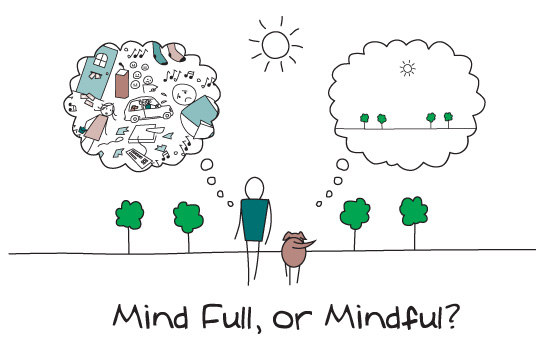
I have been aware of the term mindfulness for a few years now, but had struggled to think how it could help with exams.  That was before reading an article in the Guardian, Could beditation be the answer to exam nerves? ‘Mindfulness’ is the latest big thing in schools. What is it and why is it so popular?

In the article they describe two ways in which mindfulness may be used to help with exams. One is called the “7/11” the other bedetation.

  • The “7/11” is a relaxation breathing exercise. Matching the counting to the breath, you breathe in through your nose for a count of seven, and out through your nose for a count of 11. As with many mindfulness techniques this helps focus your attention, in this instance you use the breath as an object of concentration. By focusing on the breath you become aware of the mind’s tendency to jump from one thing to another. The simple discipline of concentration brings us back to the present moment and all the richness of experience that it contains. Watch this video, it shows exactly how to do “7/11” breathing.
  • Beditation is simply the process of meditation whilst lying down. Meditation might sound slightly new world, but it is of course thousands of years old. On one level meditation is a simple yet powerful technique that effortlessly allows your mind to become calm and peaceful. Which is not a bad state to be in when you’re studying or in the exam room.

What exactly is Mindfulness?

Although mindfulness has its roots in eastern philosophy, many acknowledge the work of Jon Kabat-Zinn from the Medical Centre at the University of Massachusetts as being the founder of the modern mindfulness movement. Jon Kabat-Zinn defines mindfulness as “paying attention, on purpose in the present moment non judgementally.”

If you imagine that there are two modes of attention, thinking and sensing. Attention often gets drawn to what’s wrong, what’s threatening, our attention scans for problems and this is for good reason, it is a primeval survival technique. This triggers the thinking part as you attempt to solve the problem. Now there is nothing wrong with this but the mind needs a balance and there is a time to think and a time to relax and sense.

By moving your attention to the present moment and into the sensing mode you will instantly become more relaxed. The “7/11” breathing and meditation techniques are just ways of helping you do this. Research is showing that there are huge benefits of spending some time in the sensing mode and not in the thinking mode.

Listen to this TED lecture given by Richard Burnett who is the co-founder of the Mindfulness in Schools Project (also known as .b, pronounced “dot b”), whose aim is to introduce mindfulness as a discipline in the school curriculum.

How it helps with exam stress

Stress is often created by thinking what might happen if I fail, what happens if I am not good enough, or can’t answer this question? These are all examples of the thinking state of attention. Now as I have mentioned before in a previous blog, exam stress or is it your stress to feel stressed is a perfectly natural reaction; it is the result of being faced with a challenge that initially at least, looks impossible to overcome. But in an exam it is far from helpful, often cutting off your ability to think straight and sometimes paralysing your actions.

By using the “7/11” breathing techniques before the exam, to help you feel more relaxed, during the exam to stop a panic attack taking over, and even after the exam when you begin to wonder what you should have done but didn’t, can be incredibly helpful.

And meditation can help both in the short and long run, our mental health and intellectual skills are shaped by what we do with our attention, where we place our awareness. And of course intellectual skills are vital not just in the exam but whilst studying as well.

Is it just in the mind?

Brain-imaging studies show that mindfulness meditation can reliably and profoundly alter the structure and function of the brain and produce, for example, greater blood-flow to and a thickening of the cerebral cortex in areas associated with attention and emotions. As well its impact on specific problems, mindfulness has been shown to have a very positive effect on intellectual skills, improving sustained attention, visual special memory, working memory and concentration

The National Institute for health and care excellence (Nice) are recommending mindfulness.

Watch this short video on more ways that mindfulness may help in exams.

Can ‘Mindful’ meditation increase profits?

And for the more commercial minded of you, it might even help your business increase profits. Watch this to find out more.


There’s no such thing as a stupid question – Learning by questions

Ask questionsThe Greek philosopher Socrates was born 469 B.C in Athens, and died in 399 B.C. He is considered by many to be one of the world’s greatest thinkers. He is known for the Socratic Method and the pursuit of knowledge. The Socratic Method involves asking a series of questions until a contradiction emerges invalidating the initial assumption.

Socratic questioning does not seek to find THE answer, there are often many answers. The primary goal is to explore the contours of often difficult issues and to teach critical thinking skills. This method encourages you to go beyond the simple memorising of facts, enabling you to develop a higher level of understanding.

Socratic questions

1. Questions for clarification – Why do you say that?
2. Questions that probe assumptions – What could we assume instead?
3. Questions that probe reasons and evidence – What would be an example?
4. Questions about Viewpoints and Perspectives – What is another way to look at it?
5. Questions that probe implications and consequences – What are you implying?
6. Questions about the question – What was the point of this question?

If you can formulate a question – you have 60% of the answer
When you pass one exam the bad news is you are often faced with another. Exams at times can seem endless. But as you progress, what you are asked to do will change. When you first start studying a subject you will be asked relatively simple questions such as, what is the capital of FranceChildren are good at asking questions. To answer questions like this you need little more than a good memory. However when you get to the final level, examiners are more interested in understanding and application, not simply knowledge. What they really want you to do is think….

And so you may need to form an opinion, a view of your own. I am sure that you have many opinions now, but how informed are they, what facts support your view and how much have you thought around this view sufficient that you can deal with challenge.

This is where asking good questions can really help. When studying on your own, if you can formulate the right question you are more than half way to answering it yourself. Because to even get to this question, you will have had to think deeply about what you are trying to do, how it might work, what resources you might need, why has no one done this before etc. And only when you have thought this deeply will you be able to ask your question.

The next step is to post your question on the internet, someone will have the answer, the interesting thing is, by the time you come to do this, you may have the answer yourself!

Questions really are a great way of learning.

Judge a man by his questions rather than his answers.
Voltaire

The last word will go to Scott Adams
If there are no stupid questions, then what kind of questions do stupid people ask? Do they get smart just in time to ask questions?

Or should it!

Blogging to learn – Learn to Blog

12-bloggers-for-2012[1]Writing a blog can sometimes be a challenge, and sometimes a joy. Yet I have to admit I am not always sure as to my motives for writing one. Why would you want to share your thoughts on a particular subject with the world?

In years gone by it seemed everyone wrote letters or kept diaries. Now people keep in touch using social networks and only politicians keep diaries, needing them for the inevitable autobiography.
 

Never talk to strangers

Maybe blogging fills a void left by the letter writers and diarists of the past, being both a record of your thoughts and a means of communicating with others, even if you don’t know them.

Motives for blogging

There are said to be more than 180 million blog pages in existence, that sure is a lot of motivated people, but why do they bother?

Here are a few reasons and many of them are related to learning.

• Firstly It’s a great way to learn – one reason that making notes is so helpful when trying to learn is that you have to externalise your thoughts and physically write something down, blogging is no different.

• It helps clarify your thoughts – the process of writing also helps clarify exactly what you think, it gets you to question what you know, and as a result you begin to develop a deeper understanding of the subject or topic. Micro blogging (Twitter) is especially effective, not only do you need to be clear in what you want to say, you have to be incredibly concise, less than 200 characters in fact. And yes that includes spaces, full stops etc.

• It becomes a permanent record – others will of course be able to see what you have written but so can you. This means you can look back and reflect on what you thought at a point in time. A modern day diary! Published in weekly or monthly installments

• You become an expert – the more you think and write, the more you engage in something, the better you get. In order to support your views you will probably need to undertake a certain amount of research to check your facts. This again is something that will expand and deepen your knowledge. Remember you can add videos and pictures to the blog; it makes it far more interesting when you do.

• Do you have something to say – ever had a thought in your head and just needed to write it down? Ever had an opinion or a view and wanted to share it with others to get their reaction? A blog is a great medium to express your views and provides you with a much wider audience.

• You get feedback from others and intern learn from them – so having shared your view, the blog becomes a focal point for debate, allowing others to comment on what you have said. Perhaps challenging your views, teaching you new things and forcing you once more to think more deeply.

Learning blogs

You can blog about pretty much anything, but if your studying why not blog about the subjects or even the techniques you find work best when it comes to learning.

Every day you go to University, college or school you come across something new, let the events of your day inspire you. Happy Blogging!

Want to Learn morewikis and blogs

Appy Christmas – Apps for learning

appsIt’s always interesting writing a Blog in the holidays, maybe it’s because you have more time than normal so think you should come up with something different, dare I say original. The reality is that when you have such a large canvas on which to think, you can’t think of anything!
The answer is to narrow it down, give yourself something specific to think about. So whilst staring at my ipad for inspiration, I stopped thinking about “everything”, focused on what was on my ipad and then it happened, an idea… ..Why not write about the apps I use most and how you might use them to improve your studying, so here goes.

It’s not about the technology stupid
First a disclaimer, although technology can be all absorbing, learning is a human quality, technology in many circumstances only makes learning more convenient, you still have to work at it. What it does do is provide you with the ability to study when you want and where you want. Time that would be wasted waiting for or actually on a train/bus etc can be much more effectively used learning. How good would it be if you had finished studying before you got home?

Google CalendarGoogle calendar – Helps plan your studies
I have written before about the importance of timetables and calendars. Sitting down and planning what you will study and when not only helps you become more organised it is essential for setting targets and challenges. And remember target setting is key to motivation.

Evernote Evernote – Organise and store notes
I am finding that I am using Evernote more and more. It is in effect a cloud based folder system. Consider setting up a folder for each subject you are studying. Then within each subject folder you can type notes, attach PDF’s, photos, maybe of places/objects/people relevant to that subject. You can even attach video. And if you want to collaborate with others just share the link. Maybe have a folder for revision with the questions you want to attempt linked via PDF, comment on what you found difficult and share with your friends. Evernote has so many uses.

PenultimatePenultimate – for making hand written notes and drawing mind maps
If you prefer to write rather than type, penultimate is for you, although I don’t think there is an android version at the moment. It is part of the Evernote family and links with Evernote so is easy to use. It is just like a paper based note book with a front cover showing the subject, page numbers and has a nice page turning feel. Unlike a paper based note book however, you can change the paper, plain/lined etc, save your work, add photos, and share with others. It also has a very clever way of making sure your hand when resting on the screen does not interfere with what you are writing.

Put simply it’s the best handwriting software I have come across, and comes close to replacing paper, close but not just yet….

DropboxDropbox – for file storage, back up and file sharing
Many of you will already be familiar with dropbox, it is free simple to use cloud based storage. Dropbox is great for saving/backing up all your files. This means that as long as you can get electronic versions of your text books and question banks you will be able to have them with you anywhere…

And you can share folders with friends.

Adobe ReaderAdobe reader – keep all PDF notes in one place and you can write on them!
This is just for Adobe PDF’s but as most documents can be turned into a PDF format that should not be a problem. Imagine having your notes in a PDF file, opening them up wherever you are and then updating them either by typing or writing on top of the PDF. You can also make margin notes that open up in a speech bubble, little reminders of what you were thinking, or additional work you need to look at.

Explain-EverythingExplain everything – become a teacher and teach yourself
Explain everything is a white board that you can add in pictures, shapes etc, and then the really clever part, record what you are doing in a high quality video. What makes this so good is how easy it is to use.

This would be ideal for working through a question, talking out loud explaining your thoughts (Explain everything will record your voice and your white board actions) and then when you get to the part that is difficult or simply don’t understand, ask your question out loud….? Then send the Mp4 file to your tutor/teacher or study colleagues for an answer. Unfortunately as with Penultimate I don t think there is an android version just yet.

twitterTwitter – limitless knowledge and support
Twitter can get a bad press when it comes to studying, it can be very distracting! But if used properly it can be great. The key is to follow people that have answers to your problems or are like you. If you are studying accountancy for example you will find lots of tweets from experts providing you with up to date news and information often linking to more in depth guidance, websites/PDF’s etc. Twitter is the most up to date text book you can get.

Okay a word of warning; just make sure you are not too far ahead of you teachers and the exam. Also that the people you are following are credible.
The other use is to follow fellow students who are studying the same subjects as you, it can be very reassuring that you are not the only ones who doesn’t understand something.

The big secret to twitter is is very selective who you follow, delete people that are not helping and keep the list down to about 200.

Mobile
Most of these are accessible on all mobile devises and for me that is the real benefit of the technology.

Happy 2013 and more apps
Hope you are all having a good Xmas and here’s to 2013, what will be new this time next year I wonder?

Related articles

Rocky boxing No – it’s about motivation

In 1976 a relatively unknown actor, Sylvester Stallone, wrote and starred in Rocky, a film that grossed $225m and won three Oscars. What a success story, “unknown actor becomes a star overnight”. But there is another story, the story as to how Sylvester Stallone came to write the script and got to star in the film.

This is even more interesting and it’s not about boxing or Hollywood it’s about motivation.

I wrote about motivation back in January 2012, but it is so important because it impacts on your ability to study and as a result exam success I think we should explore it in more detail.

If you’re motivated you will work harder, study longer and if you study longer guess what, you significantly improve your chances of passing.

In my earlier blog I described motivation as the wants, needs and beliefs that drive an individual towards a particular goal or perceived outcome. I went on to talk specifically about goals and how to set them, but there is much more to being motivated than simply setting goals.

A structure to help with motivation

I recently came across a framework* that provides a great way to think about motivation.

Engage – with yourself

Firstly ask yourself a few simply questions. How come you have got this far, what has been your motivation, what is it you want and why do you think that passing this exam will help you? Okay the idea of talking to yourself might seem odd, but trust me its normal.

If you can identify what it is that has motivated so far and there will be something, you can use it to motivate yourself even more.

Stallone recognised in himself a hunger to be an actor; he fed that hunger because he knew that it would help him succeed.

Structure

This is where the goal setting fits in. Set yourself a goal, exactly how to do this is described in detail in my January blog. Click here motivation – how to want to study.

Most thoughts and ideas have structure, motivation is no different.

Stallone clearly had a goal, it was vivid, very much within his control and positive, something he wanted as appose to something he didn’t want.

Relevance

Ask why is this goal important to me? What will it give me that I don’t have now? Repeat the questions several times, what pictures do you see?

The goals that you set have to be relevant to you, they have to have meaning for you, they are personal.

There was something that made wanting to be an actor highly relevant for Stallone. From this story we are not exactly sure what it is, just that it was powerful.

Beliefs

What do you believe about yourself, do you believe you’re clever or not? Do you believe you should pass? What do you believe will make the difference to your exam success?

Beliefs are probably the most important element of motivation. As Henry Ford once said “Whether you believe you can do a thing or not, you are right.” Challenge what you believe and ask yourself one very simple question – Does this belief help me achieve my goal or not – if not change it!

Stallone had a huge amount of self belief; he first turned down $250k, said no to $325k and finally accepted $35! Ask yourself would you have done that, honestly I don’t think I would.

Listen to Tony Robbins tell the Stallone story

Click this link to hear Tony Robbins, I would recommend you listen, it’s well worth it.


*A framework for motivation – Motivational Drivers, Alan McLean

Seped rdeiang – speed verses comprehension

Woody Allen on speed reading

I was asked recently by a student if there was anything they could do to speed up the way that they read. As a student there are many situations where it would be great if you could read more quickly.