Tuition is dead, long live revision – Tip three

RIP TuitionFollowing on from tip two to practice past exam questions.

Tip three – remember, remember the 9th of November

Whether you remember the gun powder plot in 1605, “remember , remember the 5th of November” or the fall of the Berlin wall on the 9th of November from this rhyme, it still provides a simple example of how effective a memory technique can be. Tip three is what you should do now that you have a set of revision notes and have spent a considerable amount of time practicing past exam questions. It would of course be really great if when you went into the exam you could attempt every single question and be confident that you knew the answer. This may have been possible at some point in your exam career but is probably not so now. There will be topics that despite revising and practicing questions you still don’t understand and some that you will simply forget.

Less is still more

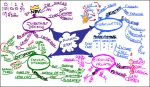
Mind MapYou need to take your revision notes and reduce them even more. Go through the notes again but this time only record what you can’t remember or don’t understand. The notes should also be written in a more short hand style, we only want key words not whole paragraphs. You might also wish to think about making notes in a mind map style rather than a linear one. These notes should be no more than 10 pages. They should be structured in the same way as your original revision notes wherever possible. These final set of notes can be prepared perhaps as late as 1 week before the exam. What you do next is memorise these notes, we are no longer looking for an understanding, but don’t be surprised if during this process something suddenly makes sense. There are lots of memory techniques you can use, ranging from the simple rhyme method above to acronyms, acrostics, peg methods and the famous roman room or loci method. The point is this, time for learning in the traditional way is over, you now need to commit as much to short term memory as possible. The night before and on the morning of the exam you just keep going over these 10 pages of notes. Use colours and images as much as possible and be creative, memory uses both left and right sides of the brain.

There are of course many more tips that will help with your revision but for me these are probably the most important. So to all those sitting exams, I wish you the very best of luck and to those that aren’t, if you are driving into work in the next few weeks, have a thought for the person in front, they might have a very important exam today!

Tuition is dead, long live revision – Tip two

RIP TuitionFollowing on from tip one, to produce a set of shorter and more exam focused revision notes.

Tip two – practice past exam questions

Having identified the key examinable topics and produced a set of notes that are based on them, the next step is to select one or two past questions from each area and practice them. In fact although I describe the process as, complete the notes first and then look at the questions, you may of course look to answer questions on each of the areas as you are preparing each section of the notes.

 If when you are trying to answer one of these questions you find you can’t, look at the answer, then attempt the question. If despite having the answer in front of you, you still can’t answer the question, then work through it until can. Amend your revision notes to include anything that you have learned that will be of use when you come to attempt a similar question. Carry this process on until you have covered all the must learn examinable areas. Then go through the same process with the should learn and the would be nice to learn.

In a perfect world you would study and make notes on every topic, in reality, you probably won’t, you will end up having to miss something out. If you follow the process described above, you will at the very least end up with a set of notes, all be them incomplete, on the most examinable topics. More importantly using the time that you have saved, you will have had the opportunity to practice answering past exam questions which will have taught you so much more than any notes can ever do.

If you find you lack a little self discipline and think that on your own you will not be able to do this, then once again a revision course may be worth considering. Having other people around who are in the same boat and share the “dislike” of the subject or of the “examiner” can for some reason make the whole process a little easier and slightly less stressful. You will also have to work at a pace that will increase the number of questions you get through in a day and so your chances of passing.

Tip three I will post on Sunday.

Tuition is dead, long live revision – Tip one

RIP TuitionFor some people reading this blog, the idea of sitting an exam in the run up to Christmas probably seems a little strange. Yet such is the variety and flexibility in examinations there is probably always someone sitting an exam. I can still remember whilst driving to one of my exams looking at other people and thinking, for you this is probably just an ordinary day, but for me it’s the accumulation of weeks and months of hard work that could all be wasted if I fail.

How I so wanted to be having an ordinary day….

So although examinations are never far from my mind, as some of my students  are preparing for exams this November and December I thought it might be a good idea to look at what you should do as the tuition period comes to an end and the revision period begins. Below are my top three exam  tips as to what you should do during revision.

Tip one – less is more

Let’s assume that you have a set of notes that have been taken during class or that you have made from a text book. In theory these notes contain everything you have learned and studied so far, in reality they are often not as comprehensive as you think and even though you have studied something it does not mean you have understood it. Chances are these notes are also a little on the thick side. Now depending on how you have studied (You might find it useful to read the blog on exam focussed learning ) it is more than likely that these notes will need to be refocused and cut down.

 If you have not already done so you need to identify the most examinable topics for the subject you are studying. This can done by looking at say the last 4 exam papers and identifying topics that  have been examined on several occasions. You then need to make these your focus of attention, each topic in your tuition notes needs to be ranked as must learn (most examinable topic) should learn (2nd most examinable topic) and nice to learn (3rd most examinable topic). Once you have done this you begin the process of going through your tuition notes using,  must learn, should learn, and nice to learn as your guide as to how much time you spend making new notes on each area. These shorter, more exam focused notes will become your revision notes.

 If you attend a revision course, these notes are often provided. In fact the reason revision courses are so popular and have higher than average pass rates is partly to do with these notes and the expert guidance you will get on the course itself.

If you are studying for your GCSE or A levels exams, in the blogroll is a link to a site that provides free revision notes. 

Tip two will be posted soon.

Exam focused learning

Exam paper 1On the 20th and 22nd of October I will be delivering a one and a half hour webinar on exam focused learning.  So what this is and how it can help with passing exams is on my mind. It therefore seemed appropriate that this blog should be devoted to explaining a little bit more about it. For those that did attend the presentation and may well be logging on after the event, welcome back, I hope you will find this a useful reminder that may prompt you to add your thoughts or ask some questions. You can do this by clicking on the leave a comment link at the bottom of this blog.

Exam focused learning is a way of studying that places a much greater emphases on looking at specific topics rather than the whole syllabus and using examination answers as a key way to both learn and focus attention. I should also say that this approach is best suited for what I would call more traditional exam formats rather than multi choice questions and case studies.

Imagine you are about to begin studying a new subject, one that you have little or no knowledge. Let’s also assume that you are studying from home. What do you look at first, maybe the text book, you turn to the contents page and look at the 22 chapters that you are required to read and understand. Perhaps you then get a blank pad of paper, a pen, a coffee and begin by reading chapter one. You probably make notes as you go through so that you have something to re-read and revise from later. You go through the entire book making notes in this way and so in theory at least have begun to learn the subject.

The problem with this approach is that it takes a lot of time and although you feel that you are covering everything, you of course aren’t. You will almost certainly have to miss some things out or move more quickly through certain areas just to keep up with your timetable.  The other problem with this “Traditional approach” is that you will spend so much time learning you will have little time left for practicing exam questions.

Exam focused learning does not start with the text book; it starts with your objective. Let’s assume that this is to pass the exam, not learn the subject.  If you wish to pass, on the day of the exam you will have to answer the questions set by your examiner. Now imagine if you knew what these exam questions would be. If you did would you stand a better chance of passing, yes or no. I think yes. The only problem is that you don’t have the actual exam questions……but you do or can obtain lots of past exam questions, questions that have been set by your examiner before.

So here is the first important point, better to learn the answers to these than to learn pages of content from a text book that may or may not be relevant. Now of course this will not work in the complete absence of some understanding of the subject which will have to come from a tutor, lecturer or text book. But the clarity of direction that a question gives, the specific way it shows what you are meant to learn and the context in which something needs to be understood is invaluable.

The next problem, there are just too many past questions.  We really need to have fewer questions to study, at least to start with. By analysing past questions you should be able to identify which topics have consistently come up in the past, these we must learn. Then we look at topics that are likely to come up in this exam. We should be able to spot these in our analysis as being important topics that have not been examined for some time.  These should be learned. And finally we look at those topics that might come up, these are nice to learn.

And here is the second important point, on the face of it this sounds like question spotting but really it’s about focus it simply gives you a point from which to start.  By all means learn everything, but if you can’t or don’t have time, better to have studied and practiced questions on the most important areas and the ones most likely to be examined.

If you change your way of studying to this exam focused approach you will enter the exam room knowing what the three or four most important topics within your subject are. More importantly you will have practiced answering past exam questions on these areas and so will be very well prepared for what might come up. You should also have practiced some questions on the next three/four most likely topics for this exam. Now compare that with the student who has gone through the text book making notes but who due to time pressure had little or no time to practice past questions. Who do you think stands a better chance of passing……?

Exam focused learning….Done

Ps – next year my book currently entitled “The E (Exam) word” should be published. In it I explain in far more detail exactly how to follow the exam focused approach, what to do in the exam, how to cope with exam stress and  how to improve your chances of passing by using effective memory techniques.

Watch this space for more details 

Unfortunately success is about hard work and practice

gladwell_malcolm_fThe great thing about being on holiday is that you have a chance to read and so learn more about what other people think. My first book of the holiday has been Outliers (Something classed differently from the main body) by Malcolm Gladwell.   I have read all of MG’s books and find his arguments persuasive and challenging. Although the level of detail can sometimes appear to be a distraction and full of information that on the face of it not relevant, if you stick with it and follow with a sense of adventure, you will be rewarded with a very well thought through, original and thought provoking idea (s).

Although the book is about success and so may help you become more successful, MG has avoided the “I can make you successful” title. It is sub titled the story of success but is more a journey of why different people have been successful and to some extent why others have not. He argues that success is less about your IQ and more about where you are from. It is more to do with your culture, attitude, willingness to work hard and practice, practice, practice.

This in many ways is the classic nature nurture argument. I do have to express a bias here, I love stories that are more about nurture, partly because as you may have picked up from earlier blogs, instinctively I like to think we have some control over our destiny rather than the idea that from the minute you are born your life is pre- determined.

And although it could be argued that MG makes the case that success is very much influenced by your culture and background, therefore making it less to do with the individual and so more predetermined. By explaining how people have become successful it removes many of the myths that people create, “He was so clever, you knew he would succeed”. “The reason he was successful is because he was a genius, if only I was a genius”.

Chapter by chapter and at times with no apparent relationship between them MG builds his argument.

  • The Roseto mystery – a culture is so strong that it resulted in a community becoming far healthier than others.
  • The Mathew effect – if you are successful you are more likely to be given opportunities that intern can lead to further success. That initial success may however be the result of the year you were born in! Check this out BBC news
  • The 10,000 hour rule – from Bill Gates to the Beatles they all have one thing in common, not genius but 10,000 hours of practice.
  • The trouble with genius – two chapters, a higher IQ does not make you more likely to be successful; you only have to be clever enough.  Oh and yes your background matters, having a high IQ does not equip you with all the skills you need for success.
  • The three lessons from Joe Flom – your culture can leave you with a legacy. For some that were successful it was an appreciation of ‘worthwhile work’. Work that was demanding and had a relationship between effort and reward.
  • Harlan Kentucky – a story of how a ‘culture of honour’ can mould the way people behave generations latter.
  • The ethnic theory of plane crashes – how a strong national culture can result in communication problems so bad that the plane crashes!
  • Rice paddies and math(s) tests – Asians are better at maths largely because what they have learned from planting rice! Although their language helps. These lessons have in turn created a successful culture. A culture of attention to detail (planting rice is precise) the harder you work and the harder you work the land, the more reward you get (Rice fields benefit from planting, there is very little fallow – ‘rest’) and there is a clear relationship between effort and reward (Growing rice is so hard that it is difficult to get others to do it. So if you can grow it, you benefit)
  • Marita’s bargain – wheat need a period of fallow to let the soil recover, rice fields improve the more they are worked. Is this the reason Asians work harder and take less holidays? Also it’s what you do in the holiday that makes your grades improve. And it’s not the brightest who succeed it’s those given the opportunity and have the presence of mind to seize it….
  • A Jamaican story – a personal account by MG as to where he came from and why his family were successful and yes it is to do with his background and culture.

I have taken time to summarise each chapter because there were some simple yet powerful messages in each one.  It is also helpful for me in coming to these final conclusions.

And so to the point….When studying you will almost certainly come across brighter and more intelligent people than yourself. People who seem to pick up information with little effort and score higher than you in every test they do, these people are destined for success! You may in turn make yourself feel that in some way you are less likely to succeed because they are so much better. This might result in you working less, feeling that there is little point as you will always be second third or maybe even last.

Working less will almost certainly mean you will achieve less and in turn this will become a self fulfilling prophecy. “See I told you I was not as good”.

The first thing to do is to recognise that you are doing this and the second is to take heart from the main themes within this book, which are:

Hard work and practice (10,000 hours) are key ingredients to success. MG argues that both Bill Gates and the Beatles benefited from practicing their respective skills for hours, days, weeks and years.

You don’t have to be a genius; you only have to be bright enough. MG makes a very convincing argument that higher IQ’s don’t result in greater success. You only have to be good enough…  an average IQ is fine and by definition most of us are average!

And finally it’s not the brightest who succeed, it’s those given the opportunities and having the presence of mind to seize them….So you should seek out opportunities, get yourself into positions where you will be given them and when given……take them.

Studying for an exam is one of those opportunities and with hard work, some self confidence and practice you are more likely to succeed and from that success more will follow, so says Mathew.

The sun is now out and so I must go – hope you enjoyed the blog

Attention! – Breach of duty as a student

Beam of light

Once again the FT has provided me with some food for thought. An article entitled why e-mail must disappear from the boardroom, Monday 27th July 2009, suggested that main board Directors should give all their attention to the meeting and less to the email that has just arrived on their Blackberry or similar electronic device.

In fact it suggested that by not giving all their attention to the meeting they could be in breach of their fiduciary duty to shareholders.  How would you feel if the surgeon who was about to cut you open was concentrating on an email rather than on you?

It went on to quote some research from Rene Marois a neuroscientist and Director of the Human Information Processing Laboratory at Vanderbilt university that the brain has an inability to concentrate on two things at once. The researchers even have a name for it “inattention blindness”.

Now think about this in the context of learning, if you are in a classroom or any other learning environment for that matter and you move your attention from the classroom to another event, a text or email perhaps, then although you are in the room you have put your attention elsewhere.

Yes you can hear what is going on and yes if someone called your name you could respond all be it slowly, but would your ability to learn and recall the facts from the lecture be as good, somehow I think not.  This is not to say that periodically you should not let your concentration drift as you begin to think about coffee or what you want to do at the weekend, this is a perfectly natural and in some instances a necessary form of relaxation that can help with learning. This is about being engaged, giving The Event your full attention.

Think of your attention as a single beam of light, able to shine on only on one thing at a time, it illuminates and makes clear that one thing but when you move the light what you were looking at becomes dark or at best not as clear, something in your periphery.

And so to the point, when you have an opportunity to learn, attend a lecture or meeting, give it your full attention. You are not being efficient by doing two things at once you are in fact only ever doing one. So if you do have two things to do but only time to do one, look carefully at what they are and prioritise. And if the email is more important give it all your attention and only after you have dealt with it come to class or attend the meeting.

One other point, you do not become invisible when on your mobile, everyone can see that you have your shoulders slumped in the so called “Blackberry prayer”. Now you might think that this sends a very clear message as to how busy and important you are, in fact it does the complete opposite. People think that you are not in control, probably fire fighting, a poor delegator and a poor manager. And yes it’s bloody rude……

How to be positive about exam failure

One of the problems with exams is that every now and again you fail one or maybe two. So what to do?

Well you could tell yourself that the exam was completely unfair, “He/she/the examiner examined something that was not even in the syllabus” a kind of get angry strategy or a blame someone else approach. This can be very effective as it makes you feel a whole lot better. Particularly if you can find someone else who feels exactly the same way. The best thing here is that you are not blaming yourself and so you won’t feel personally that bad.

Another idea is that you think it was a fair exam but have not put the work in, so you deserved to fail. A kind of well what did you expect strategy or yes a blame yourself approach. This also has much merit as although you are blaming yourself you know what to do to put it right.

In fact the best strategies for dealing with exam failure need one or two things, both if possible, one a reason why you failed and second a plan of action to put it right.

The get angry strategy  has a reason why but not a plan of action to put it right, other than to kill the examiner perhaps….The second idea has both, it was my fault (the reason for failure) and a need to work harder next time, a plan of action.

Now there is one last element in all this, do you want or have to pass?

 If the answer is no, then you can follow the I give up strategy. “The reason I failed is because I am not very clever or not good enough or this exam is just too hard for me and my plan of action is that I should give up”. This on the whole will make you feel inadequate lower your self esteem and gives you only one course of action, to give up. To stop falling into a deep depression you can always tell yourself “who wants to be a stupid accountant/doctor traffic warden anyway”?

However If the answer is yes I have to pass, then you need a reason for failure and a positive intention that will mean that you will do better next time.  Positive here simply means something that you can do as appose to not do. Unfortunately this something very often includes the statement “must work harder” or at least smarter.

More on how you can work smarter in latter blogs.

Return of the accountant

There was a time when people thought being an accountant was a particularly dull and boring profession. However the face of finance has changed, finance professionals are no longer required to simply crunch numbers or come up with reasons why projects won’t work. They are a key ingredient in the success of the company, required to develop ideas and look for new opportunities.  For this reason it is vital that both students and members look at the events around them in a more positive way, that is positive in the sense of what direction does this now take us and what opportunities do we know have rather than “I am sure this will work out fine”

Take an article written in the Sunday Times 7 June 2009 The video – Game Empire strikes back. In it Dominic Rushe reports on E3, the video games industry annual shin dig, where numbers have been falling and an industry that once thought to be immune from recession seems like an example of an industry living in its own virtual world and not the real one. 

In the article there are many lessons if only you look closely, for example, there is an implication that even though times are hard and yes the industry has had to make redundancies to cope with falling sales, if you continue to innovate and remain focused on your customers there is still much money to make. For students it is a great example of how the product life cycle operates – the gaming industry does seem to be moving into a mature market. It raises the issue that despite the confidence and great creativity in the industry, one of the main limitations is the industry’s ability to raise finance; games development can cost $30m. How many students whilst offering advice in their final level examinations put forward brilliant arguments as to why the company should do something yet forget to answer the very practical question of where will the money come from, we can’t have qualified accountants doing that.

And so to the point, we are living in changing times, with many challenges, companies need there finance team to be at their very best.  To be good, you still have to pay attention to the fundamentals, do we have the finance, will this add value, do our financial statements reflect our true position. But take inspiration from what you read and hear and think about it in the context of your objectives, be that to pass an exam or solve a particularly difficult business issue. Read with focus and direction and maybe one day you will be as good as Luke in return of the Jedi.

No more training do you require. Already know you, that which you need.

Yoda

The apprentice and the marking guide

As we move closer towards the end of the apprentice it perhaps becomes a little clearer as to what Sir Alan is actually looking for. Did he set out with a predetermined idea as to what he wanted or did he simply let events unfold and wait for the talent to impress him. Well maybe there is some degree of spontaneity in the selection process, but this has now become a formulaic programme with set objectives and a consistent team of people making the decisions as to who should get the job. As a result there will be criteria by which all the candidates are evaluated.

In the exam world it is very important that anyone marking scripts is clear as to what the examiner is looking for. This is to ensure that when you have several markers in a team they are equally fair to everyone or at least as fair as possible. For some examinations these marking guides are published and they provide an invaluable and often essential way of finding out exactly what the examiner wanted. Depending on the exam, to make sense of the marking guide you will also need the model answer. But armed with a marking guide and the examiners answer you will be able to pin down the specific likes and dislikes of your examiner. How many marks did they give for the written part of the answer, how detailed did the calculations have to be, where there any unusual terms used that perhaps you had not come across before, all this and more can be revealed.

And so to the point, if you want to increase your chances of passing an exam you should get a copy of your examiners marking guide and model answer. Then work through one or maybe two exam papers making a note of how many marks were given for calculation verses written. Looking for those unusual terms and generally honing your knowledge towards what your examiner wants.

To pass an exam takes many qualities not least hard work, but if you understand what your examiner wants, that must be give you a much better chance of achieving it.

And so it is possible that the current candidates on the apprentice have a much better chance of knowing what their examiner wants having benefited from watching previous programmes. That’s of course if they thought about it before they went on, or perhaps like lots of students they simply left it to their natural talent and ability……

Exam season is here to stay

Exam season is here to stay
Here goes my first blog ……It is that time of year again, the exam season when students (we are all students of something) sit in a room with a wobbly desk and hope that what they write in the next 2/3 hours bears some resemblance to what the examiner wants.
Believe it or not some people actually like exams; they enjoy the challenge and how they feel when doing them. That sensation of control and an “ask me another one” mentality that is only really enjoyable when you know the answer. They are in a way showing off, if not to others at least to themselves. Then there are other people who don’t like exams, but enjoy the study ,the learning but not the actual exam. They get a buzz from the discipline of knowing what they have to do and learning something new. For them it is a measurable form of achievement, they are not learning for a reason other than a “today I learned something that I did not know yesterday” feeling, they have a mindset that finds almost anything “interesting”. They are curious about everything.

And then there are the rest of us who don’t like examinations, don’t know everything and don’t wake up every morning wanting to learn something new, yet need to learn new things in order to stay a float in the modern world. Maybe exam success will bring a promotion or get you through the door for that all important interview. Or is it the status the qualification brings which will not only earn the respect of others but build self confidence. Whatever the reason exams are here to stay.

And so to the point, no one is born knowing everything and neither are they born with a sense of wonder and a desire to learn. They have just found that if they are curious then they are more likely to learn and if they feel good after getting a question right it, is more likely that they will want to get another one right so will work harder as a consequence. Don’t forget the person who knows the answer had to be sufficiently motivated to learn the answers in the first place, yes perhaps they find it easier to learn, perhaps they are able to pick things up quickly but they still had to learn it.
So if you have to take exams or have a need to continually learn perhaps it would be a good idea to be a little more curious and to take pleasure from knowing the answer because if you do it makes the whole process of learning and passing exams so much easier, which in turn might help with that next promotion, now that cant be a bad thing….

Things that made me think
I like Lucy Kellaway who writes a column in the FT. She often pokes fun at the business world which as I am sure she would freely admit is a very easy thing to do. However she recently wrote an article “underdog tale sheds light on pushy parenting” click

In it Lucy argues that although inspiring stories exist of the underdog winning, they are few and far between, or as Lucy put it “its claptrap”. She states that there is even more dominance by Oxbridge and private schools of the professions than ever. This she argues is the reason that pushy parents are perfectly rational to obsess over the qualifications of their children.

Now you will not find me arguing that exams don’t matter but the implications of what Lucy is saying is that unless your child is reading by the age of two, then there is little chance for them in this world. This is not only depressing and uninspiring but also suggests that the world in which we live is logical and that a path once started upon cannot be varied and it becomes inevitable what will happen.

Yes of course Lucy has a point, if you are born into a family who are supportive, push you hard and have both the money and time to do this, then on the whole you are more likely to do better than say someone with less advantages. But this apparent inevitability denies the role the individual plays in all this. It is what you do, given where you are and the skills/attitude you have that makes the difference not where you come from or what your parents did to help. And although Derek’s (Read the article) success may in fact be unusual, it is inspiring and does prove that you can achieve the unusual and so by definition making it, if not the norm, a possibility and one that might inspire others to follow.

So in a world of the first Black American president, where your money is no longer as safe as houses and Susan Boyle did not win Britain’s got talent, maybe there is a chance for us all.

Hello world!

Hi – My name is Stuart Pedley-Smith and this blog is about learning, exams and how you can improve your chances of passing.