
The Silent Teacher – learning environments

Have you ever walked into a bar or restaurant looking for atmosphere and when its not there, walked out? Isn’t that just a little bit odd! – and yet we have probably all done it. This gives some indication as to how sensitive we are to the environment in which we live, work, and play. The way you pull of this insightful magic trick is by detecting nonverbal cues such as body language, facial expression, tone of voice etc, soaking up the lighting, colour, sound and temperature, whilst sensing the emotions in the room using your primeval antennae.

We also learn in an environment – which is why it’s important we are mindful of the spaces we choose for study. The term learning environment is broad, encompassing all aspects that surround you, including the physical setting and learning materials, psychological factors, such as motivation and emotions, as wells as cultural influences. These elements all play a crucial role in your ability to absorb, process, and retain information, directly impacting learning outcomes.

Impact on learning
There is considerable evidence to support the importance of a “good” learning environment.

One study by Barrett et al. (2015) found that the physical characteristics of a classroom (light, noise, temperature, air quality, and seating arrangements) explained 16% of the variation in pupils’ academic progress. Ambady and Rosenthal (1993) discovered that people could accurately gauge a teachers’ mood and effectiveness from just six seconds of silent video clips. And as we know attitudes and moods are contagious, contributing to the overall feeling of a classroom. As discussed in a previous blog, in 2006 Carol Dweck’s brought to us the importance of a growth mindset that showed that learners who “feel psychologically” supported and encouraged are more likely to embrace challenges and persist in learning.

My blog Reading underwater – Context dependant memory, concludes that where you learn has a bearing on what you are able to remember at a later date. And Top Gun: Maverick or a Study With Me Video? Identifies the interesting trend of students choosing to play a video of other students studying in the background to create the “right mood” to help them study.

Having an effective study environment can improve….

Which is a very powerful list of learning ingredients.

The online learning environment
It’s essential to recognise the digital space as a learning environment and not merely a platform for content delivery. Whether through asynchronous (self-managed) or synchronous (real time streaming) methods, the design of online environments plays a crucial role in enhancing engagement, motivation, and knowledge retention.

To be effective the asynchronous environment must provide structured pathways, clear objectives, and opportunities for self-assessment. Incorporating interactive elements such as discussion boards, quizzes, and multimedia resources to promote active engagement. Whilst synchronous learning needs to develop a sense of community and provide immediate interaction. Designing sessions to encourage collaboration and participation is vital. Facilitators should use breakout rooms for small group discussions and incorporate polls or Q&A sessions to keep learners engaged and motivated.

Creating your own learning environment
But what does this all mean if you are studying on your own? Here is some guidance on creating your very own learning environment.

  • Physical environment – Have your own learning space – Choose a well-lit, quiet area with a comfortable chair and desk. A dedicated workspace signals to your brain that it’s time to focus, which can improve concentration and productivity. Organise your materials – Keep books within reach to minimise distractions. Use visual aids – Incorporate posters or mind maps, but make sure the space is uncluttered.
  • Maximising motivation – Set clear goals – Break study sessions into specific, achievable objectives. This provides direction and a sense of purpose, helping you maintain motivation throughout your studies. Self-assessment – Use quizzes and flashcards to evaluate your understanding. Celebrate small achievements – Keep a note of your progress and consider social media posts when achieving milestones.
  • Psychological environment Cultivate a positive mindset – Focus on progress and remind yourself of your goals. A positive mindset enhances resilience, making it easier to overcome challenges and stay committed to your learning journey. Manage distractions – Use techniques like the Pomodoro Technique for focused study sessions.
  • Emotional environment Create an enjoyable atmosphere – Listen to background music (preferably instrumental) or find a calming spot. A pleasant environment can reduce stress and make learning more enjoyable, which can improve retention. Practice mindfulness – Use deep-breathing exercises to reduce anxiety and maintain focus.
  • Social learning opportunities – Join online communities – Participate in forums or study groups for support and discussion. Engaging with others can provide motivation, diverse perspectives, and valuable insights into the material. Teach others – Explain concepts to a virtual peer or record yourself teaching. Teaching reinforces your understanding and helps clarify your own knowledge.

So, whether you step into a bar, restaurant, or classroom, remember that the right atmosphere can make all the difference. Just as a great venue enhances your night out, a well-designed learning environment can be the key to unlocking your best study experience.
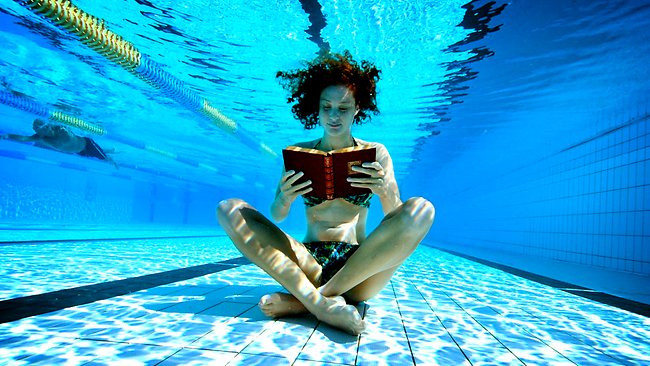

Reading underwater – Context dependant memory

This month…..perhaps something you could practice on holiday when your in the pool – Context dependant memory.

Context-dependent memory refers to the phenomenon where the retrieval of information is influenced by the context or environment in which it was encoded or learned. In other words, people tend to recall information more effectively when they are in the same or similar context as the one in which the information was initially learned.

Let me give you an example, have you ever lost your keys and no matter how hard you try to remember where you put them, you can’t. Then someone says the magic words, “when did you last remember seeing them?”. This forces you to revisit the context, effectively the circumstances, background information or setting in which you last saw your keys. You may even find it helpful to physically go to the last location when you saw them, from which you are able to recreate the chain of events that followed sufficiently well that your keys will simply appear. This proves we are storing information often unconsciously as to what is around us when a particular memory is created. It’s a very similar process used in the Roman Room (Loci method) memory technique that involves associating information with specific locations or rooms within a familiar building, such as a house. The idea is to mentally visualise the information you want to remember being stored in each room, making it easier to recall later.

There are three primary processes involved in memory, encoding, storage, and retrieval. The context or environment provides powerful cues that help encode the information, making it far easier to store and ultimately retrieve at a later date. The secret for a better memory is to improve the process of encoding and to use techniques that are effective in terms of retrieval. Retrieval failure on the other hand occurs when the memory is available to us, but the necessary cues to access and recall are not.

The underwater memory

One of the most famous studies that identified the power of context dependent memory was conducted by Godden and Baddeley in 1975. In their research, they explored how the external context in which information is learned affects the ability to recall that information accurately. The study involved divers who were taught lists of words either on land or underwater. The participants were then asked to recall the words in either the same or a different environment from where they learned them. The four conditions tested were land-land, land-water, water-land, and water-water. The results of the study showed that participants had better recall when the environment of recall matched the environment of learning. In other words, those who learned the words underwater had better memory recall when they were tested underwater, while those who learned on land had better memory recall when they were tested on land.

The experiment proved that the context in which information is initially encoded becomes an important cue for memory retrieval.

Studying and testing in the same environment

Perhaps a more relevant example was conducted by Grant et al in 1998 which showed that there was a significant improvement in learners performance when the studying and testing environments were consistent or the same. It highlighted the importance of considering the environmental context when learning, for example most exams are taken in silence, sat at a desk using a computer. The rationale behind context dependent memory would suggest that the best way to study would be similar. The silence acting as an auditory cue to focus and concentrate and the sound of the keyboard helping the brain recreate thoughts and ideas in a similar way as to when they were first created.

Mood and emotions are also context

But context-dependent memory is not limited to environmental cues but can also extend to other contextual factors, such as emotional state or mood. Mood-dependent memory proposes that memory retrieval is generally more effective when the emotional state experienced during encoding aligns with the emotional state present during retrieval. This is one reason why sitting a mock exam is so effective, not only does it help prepare you mentally in terms of coping with uncertainty, but anything learned where anxiety and concentration levels are high, as is the case for a mock exam will be retained, only to be rediscovered when you enter that same state in the real exam. You may have already experienced this when taking an exam and a similar question is asked, the result, you are able to recall the answer with great clarity.

Criticism

As with most theories there are of course critics, some suggesting that the controlled laboratory experiments may not adequately replicate the complex and dynamic contexts people encounter in the real world. In addition memory effects may vary depending on individual differences, such as cognitive processes and personality traits.

However…….There is little doubt that the way information is encoded is a significant factor in determining how well you are able to remember something later. So why not give it a go when your next underwater.

Listen to DR Robert Byork discuss this in more detail, well worth 8.5 minutes of your time.

Lessons from lies – Fake news

There is little doubt that we live in an age with access to more information than any other. All you have to do is log onto your PC and type into Google whatever you want to know and within 0.28 seconds you will get 3.44 million results, it really is science fiction. But having lots of information isn’t the same as having reliable information, how do you know that what your reading is true?

Fake news and false information

Fake news is certainly not new, in 1835 it was reported in a New York newspaper that a telescope “of vast dimensions” could see what was happening on the moon. It caused a sensation and the paper’s circulation increased from 8,000 to more than 19,000. The only problem, it was a complete fiction or fake news concocted by the editor, Richard Adams Locke. It may not be new but fake news is certainly faster moving and far more prolific fuelled by the internet, the growth in social media, globalisation and a lack of regulation.

But before we go any further let’s take a step back and clarify what we mean by fake news. Firstly, there are completely false stories created to deliberately misinform, think here about the moon story although even that contained some facts. There was an astronomer called Sir John Herschel who did indeed have a telescope “of vast dimensions” in his South African observatory, but he did not witness men with bat wings, unicorns, and bipedal beavers on the moon’s surface. Secondly, stories that may have some truth to them, but are not completely accurate, a much more sophisticated and convincing version of the above and probably harder to detect.

We will leave aside the motives for creating fake news but they range from politics, to pranks and as was the case of Richard Adams Locke, commercial gain.

Here are a few headlines:

5G weakens the immune system, making us more vulnerable to catching the virus
If you can hold your breath for 10 seconds, then you don’t have the virus
Fuel pump handles pose a particularly high risk of spreading the Corona-19 infection
And more controversy, Health secretary Matt Hancock stating that testing figures had hit 122,347 on April 30

The first three are fake, the third is based on facts. Click here to make up your own mind as to its truth.

But why do we believe these stories?

Quick to judge A study from the University of Toulouse Capitole, found that when participants were asked to make a quick judgment about whether a news story was real or fake, they were more likely to get it wrong. This is somewhat worrying given the short attention span and patterns of behaviour displayed by those surfing the net.

We think more like lawyers than scientists – Commonly called confirmation bias, our ability to favour information that confirms our existing beliefs. Lawyers examine evidence with a preconceived objective, to prove their client’s innocence whereas scientists remain open minded, in theory at least. An interesting aspect of this is that well educated people may be more susceptible because they have the ability to harness far more information to support their opinion. This is a bias of belief not of knowledge.  

Illusory truth effect – This is the tendency to believe false information after repeated exposure. First identified in a 1977 study at Villanova University and Temple University. It would be wrong to ignore the man who many believe (wrongly) invented the term fake news, including himself, Donald Trump. He is a master of repetition, for example Trump used the expression “Chinese virus” more than 20 times between March 16 and March 30, according to the website Factbase.

Gullibility, the failure to ask questions We are prone to believe stories that “look right”, Psychologists refer to this as “processing fluency”. Experiments have found that “fluent information” tends to be regarded as more trustworthy and as such more likely to be true. Images are especially powerful, for example researchers have found that people believed that macadamia nuts were from the same family as peaches if there was a picture of a nut next to the text.

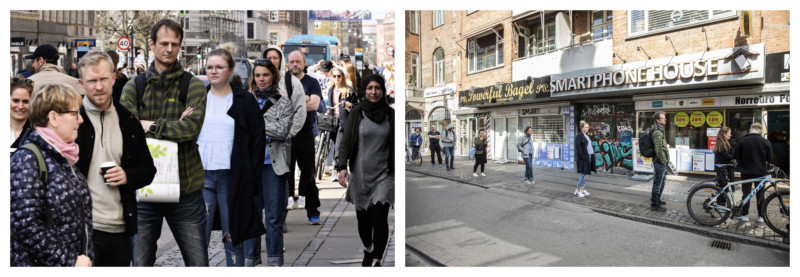
The same photo but from a different angle

Google it! but do so with care

Most educators will encourage students to become independent learners, be curious and ask questions, solve their own problems, it is one of the most powerful educational lessons, and as Nelson Mandela said, education can be used to change the world. But we need to be careful that what is learned is not just a bunch of facts loosely gathered to prove one person’s point of view. Mandela’s vision of changing the world through education was based on the education being broad and complex not narrow.

We are of course very fortunate to have such a vast amount of information from which to learn, but that curiosity needs to be tempered with a critical mind set. The questions asked should be thoughtfully constructed with knowledge of one’s own personal bias and the information analysed against the backdrop of the source of that information and possible motives of the authors

Guidelines for students using Google

1. Develop a Critical Mindset – this is the ability to think logically, figuring out the connections, being active rather than passive, challenging what you read against what you already know and perhaps most importantly challenging your own ideas in the context of the new information. Are you simply finding information to support your own views, an example of confirmation bias.

2. Check the Source and get confirmation – for websites always look at the URL for the identity of the organisation and the date of the story. Lots of fake news is news rehashed from the past to support the argument currently being made. What is the authority quoted, why not cut that from the story and paste into google to find out who else is using that information and in what context. Look for spelling mistakes and generalisations e.g. most people agree. These terms are vague and give the impression that this is a majority view.

3. Evaluate the evidence and don’t take images at face value – use your critical thinking skills to validate the evidence. Who is the authority quoted, do they have any reasons or motives for making these claims? Images as already mentioned are very powerful, but fake images are easy to create on the internet and a clever camera angle can easily mislead.

4. Does it make sense? – an extension of logical thinking but perhaps more emotional, how do you feel about this, what’s you gut instinct. The unconscious part of your brain can help make complex decisions sometimes more accurately than logical thought.

With large amounts of free knowledge, there are calls for schools to be doing more to better equip children to navigate the internet. In fact, back in 2017 the House of Lords published a report ‘Growing up with the internet’ which recommended that “Digital literacy should be the fourth pillar of a child’s education alongside reading, writing and mathematics”.

It’s not just school children that need this fourth pillar, we probably all do.

And of course the picture at the start of this blog is Fake!

Putting the context into case study

Context

I am still reading Sensemaking by Christian Madsbjerg and as I always tend to do I have been trying to reduce the 216 pages down to something that is both meaningful and memorable. The rational for this is that if I can summarise the essence of what is being said into a single statement, then my level of understanding is reasonably good, and it makes it easier for me to use what I have learned in other situations.

So here goes, if I was to summarise what Sensemaking is all about, in one word it would be..….Context. In essence, in a world of complexity and abundance of information we are in danger of thinking that the “fact” we see on our computer screen, offered up by a search engine, driven by an algorithm is the truth, when in reality it’s only one version of it. Without the context from which this information came we are fooling ourselves as to its true meaning.

As a result of this discovery, I wondered into an area I  have wanted to write about before, the importance context plays in changing what something means, especially in examinations. Getting the meaning wrong could be the reason you fail the exam rather than pass it.  Even objective tests will have some form of context setting just before the actual question. But the type of exam where you are most likely to have a problem with context, is a case study.

Jokes play with context

A hamburger and a french fry walk into a bar.

The bartender says, “I’m sorry we don’t serve food here

The importance of context in case study

I have written about case studies before, “passing case study by thinking in words,” but focussed more on the process of how you think and write rather than how you interpret the information presented.  Case studies are becoming an increasingly popular way of assessing a student’s ability to apply knowledge from several different subjects (synoptic) in the context of a real-life situation.  This shift towards case studies is understandable given the need for improved employability skills. Here is a great story to illustrate how context changes the decision you would make or as often in a case study, the advise you would give.

A battleship had been at sea on its routine manoeuvres under heavy weathers for days. The captain, who was worried about the deteriorating weather conditions, stayed on the bridge to keep an eye on all activities.

One night, the lookout on the bridge suddenly shouted, “Captain! A light, bearing on the starboard bow.”

“Is it stationary or moving astern?” the captain asked.

The lookout replied that it was stationary. This meant a collision would result unless something changed. The captain immediately ordered a signal to be sent to the other ship: “We are on a collision course. I advise you to change course 20 degrees east.”

Back came a response from the other ship: “advise you change your course 20 degrees west.”

Agitated by the arrogance of the response, the captain asked his signalman to shoot out another message: “I am the captain of one of the most powerful battleships in the British navy, you change course 20 degrees east now.”

Back came the second response: “I am a second-class seaman, you had still better change course 20 degrees west.”

The captain was furious this time! He shouted to the signalman to send back a final message: Change course 20 degrees east right now or you will leave me no choice!

Back came the flashing response: “I am a lighthouse – your move.”

How to deal with context

It is easy even in the example above to think you know what is going to happen or what you would do. But when the context is revealed, your advice fundamentally changes. Case studies are created to see how well you respond in certain situations, so it’s important not to jump to conclusions.

And this is where sensemaking plays its part, use your senses, don’t just look at what is there, think in opposites, what is not there, what’s missing? Use visualisation, see yourself in that situation, look around, free up your thoughts, what do you see now? But most of all, be curious, ask questions of the scenario, how big is the ship, how long has the captain been in charge, what is the weather like, are there others close by?

Another excellent tool to use in these situations is called perceptual positions. Think of the event from different positions, firstly yours, what does the event look like through your eyes, secondly, the other person(s), what would you do if you were them, and thirdly what would the event look like if someone was looking in, observing both parties.

Case studies in the future will become even more sophisticated. Virtual reality offers up so many opportunities to create real world environments in which to tests students. And when that happens, you will definitely need to use all of your senses to get you through – take a look at this 360 VR surgical training, amazing.

And one last joke

Thomas Edison walks into a bar and orders a beer.

The bartender says, “Okay, I’ll serve you a beer, just don’t get any ideas.”