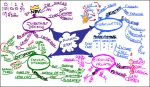

Predictions for 2011 – but first 2010

Although the New Year has started without me I thought I might take the opportunity to look back at 2010 and make some predictions as to what might be happening in the world of education and learning in 2011.


First a retrospective

Degrees not free – 2010 will be remembered by most as the year in which a price tag was firmly hung around the neck of Higher Education in England, degrees were no longer free. True they weren’t free before but somehow £3,290 was acceptable or should I say accepted. With the government under pressure to reduce public expenditure and more and more people wanting to study full time, the costs could no longer be hidden and absorbed by all, they should be paid for by those who benefit most, the student.

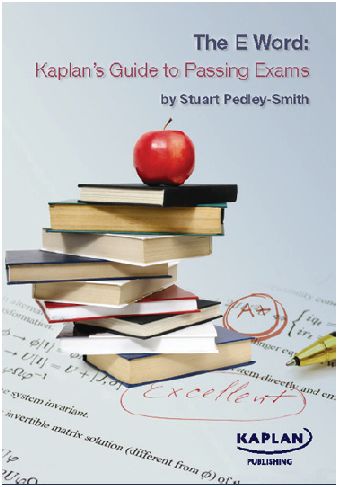
Books published – On a personal level 2010 saw the publication of my two books. “The E word”, a book about how to pass exams and “A students guide to writing Business Report s” co-written with Zoe Robinson.  A giving birth experience for me I have to say….. 

The E word - published 2010


The E word – This book is a must read for anyone taking exams, especially financial exams. States the obvious but it’s the obvious that you haven’t thought of. Explains how we should revise and why we should revise in a certain way. Just reading this book puts you in the frame of mind to study and gives you a framework to start a study plan. Amazon.co.uk

 The E word – This is an excellent book for anyone taking any exams, from school to university. This is written by a teacher and parent which is most definitely reflected within the book. theschoolrun.com

Trends and Predictions for 2011

It’s always dangerous making predictions about the future, particularly in print, but here goes.

Innovative ways to study for degrees – Following the rise in tuition fees I believe we will see an increase in universities and the private sector (e.g. Kaplan et al) offering far more intensive and imaginative ways in which you can study. Two year degrees will become more common and eventually the norm, if not in 2011, within the next five years. Equally expect more from employers who may intervene in the market to finance the education of potential employees.

The deal between KPMG and Durham University is a great example of this. Under the scheme KPMG will pay £20,000, all fees and accommodation to budding 18 year olds so that they can study full time.

Live On-line learning – Students will be demanding more flexible and convenient ways to study, and live on-line lectures delivered via the internet will increasingly be used to satisfy this demand. Live on-line (synchronous) training, which should not be confused with pre- recorded (asynchronous). Live on-line is where you log onto your computer and see, hear and interact with your tutor as if you were in the classroom. I believe more content will be delivered using this approach in 2011 than ever before.

Hand held devices – With the explosion of the new generation of mobile phones and slates like the ipad you are never far from a screen or the internet and so able to learn wherever you are. I believe there will be a growth in applications that will help make the most of travel time and offer up material in a way that is suited to the individual as learner.

More Open content – This is a term used to describe material that is freely available on the internet. It is already possible to study many subjects using “free material,” I believe this trend will continue. It will mean that traditional gate keepers of knowledge (Publishers) may have to think carefully as to their role in the next few years. Should they in fact give away their content free, and look for other ways of using their intellectual capital to generate income?

How long before an exam do you start revising – the answer 6 weeks or more

A quick note on the results from the poll I set last October. I asked how long before an exam do you start revising, and with the highest percentage of the vote the answer was 6 weeks or more.  Of course the question was a little unfair because it depends on so many things, how many subjects you are taking, the complexity of the exam, if you are a full time or part time student etc. But to some people starting 6 weeks before an exam may seem mad, but believe me it is not. If you are sitting more than three exams and working during the day just work out how little time you have to revise everything you have learned!

 The next poll is all about how you study when on the move

Be more like Scrooge – a tale for Xmas

A Christmas Carol was first published by Chapman & Hall (a company that was subsequently owned by Wolter Kluwer who I worked for many years later – small world!) on the 19 of December 1843. It tells the story of a miserly old man Ebineezer Scrooge who following a visit from his dead business partner Jacob Marley and the Ghosts of Christmases Past, Present, and Yet to Come, changes his whole attitude towards Christmas, money, people and ultimately life.

What is interesting is that Scrooge was not born a miser, there was a time when he was young and in love, he was to be married to his fiancée Belle. Yet because of his desire for wealth, a thirst for money that could never be satisfied and his workaholic lifestyle she married another. This together with the way he was treated by his father and the death of his sister Fran are provided as events that turned Scrooge into a tight fisted, cold hearted and greedy man.

He met Jacob Marley whilst in apprentership probably as an accountant (I started my career in an accountancy practice!) They formed Scrooge and Marley a nineteenth century financial institution; they were bankers who made money from lending to others at very high rates of interest. They cared little for the people they lent money too, only that they turned a profit. One can only assume that modern day bankers never read A Christmas Carol. If Fred (the shred) Goodwin had been gifted this book as a small child, perhaps RBS would never have posted their £24.1bn record breaking loss, and if some people are to be believed the financial meltdown in the UK would have been far less sever, but I digress.

Change

It could be argued that Scrooge was a victim of his upbringing, he could not change, it was who he was and that is how he would always be. Yet when shown key events from his past and present and what would happen should he continue to behave the same, he decided to change. Change his behavior, change his attitude, change who he was, and he did it overnight!

Okay being visited by three terrifying ghosts that vividly portray how your entire life has been selfish and pointless might be considered a drastic measure. But it shows that if you want to do something, you can. If the motivation is strong enough, wherever that motivation comes from, you can do whatever you want.

So as 2010 comes to an end think back over the past twelve months, have you achieved what you wanted, are you happy with where you are now and where you might be going if you continue to do the same things, If not, then change.

You don’t need to make massive life changing decisions as Scrooge did. Small behavioral changes can be just as effective, studying before you go to work rather than after work might help you absorb more and improve your concentration. Start using mind maps and colours when preparing your notes, this will help make them more memorable. Even before you begin to study a new subject take a look at the exam question and have a go at it, you might be surprised how well you do. And if you can’t do it nothing is lost, at least when you come to look at the text you will have an idea as to what to pay more attention to.

See Scrooge after his decision to change http://www.youtube.com/watch?v=q7NfDuDh0Uc&feature=related

On many levels Scrooge was very successful, he was driven, motivated, single minded, ruthless and rich. I am sure if he went on the apprentice he would win!

But perhaps his greatest s skill was that he was able to change.

Merry Xmas all

Exam stress – or is it your stress

There have been a few interesting stories in the news recently that I thought might warrant a blog, not least the results of research undertaken by Roi Cohen Kadosh, a cognitive neuroscientist from Oxford University. He has discovered that if you administer a small electrical charge to the brain it may enhance your ability to process numbers for up to 6 months. But don’t go sticking your fingers into electric sockets just yet. The research is at its early stages and may be more helpful for people with dyscalculia (problems with numbers as dyslexia is for words) rather than not being able to understand calculus.  http://www.bbc.co.uk/news/health-11692799

Something closer to home was an on-line presentation I gave last week entitled Exam Confidence. Part of the presentation specifically deals with exam stress, something that many students may be experiencing just at the moment as they begin to realise the November and December exams are just around the corner. The first thing to say is that to feel stressed is a perfectly natural reaction; it is the result of being faced with a challenge that initially at least, looks impossible to overcome. The body’s natural reaction to this is to increase your heart beat and get you ready to hit something or run, the fight/flight principle.  Now a few million years ago this was helpful, but in an exam room….

 Who’s voice is it?

The feeling of stress can be instant or creep up on you over time, but something you may want to think about is, that it is not the object or the event that is creating the stress, it can’t be. It is the way that you look at it and what you think it means. Imagine that you are in the exam hall and you turn over the exam paper, the room is quiet, and you can sense the tension. You look at the question and your first thoughts are that you can’t do it. The little voice inside your head begins to shout YOU CANT DO THIS, YOU WILL FAIL , and IF YOU FAIL YOU WILL NEVER EVER EVER PASS…..YOU ARE A FAILURE

 It‘s not the question that is shouting, it‘s you, and what you say to yourself makes a huge difference to how you feel and the level of stress you will experience.

 Now of course the truth might be that you can’t do it, but the problem with stress is that it will paralyse the logical part of your mind. In these circumstances you are programmed to fight or run, not think. So you need some strategies to cope, to reduce the stress, so that you can at least begin to think about what you can do rather than what you can’t.

 Some coping strategies

1 Recognise that it is your voice and that by changing what you say will change the way you feel. Think more positively, say okay I can’t do this but what can I do?

2 Take a deep breath, look around the room, say to yourself, if I can’t do this then I bet no one else can.

3 Reframe what you see, this is just one question, not the entire exam.

4 Think about the bigger picture, this is just an exam, you can always sit it again, it is not life or death.

5 Focus your attention elsewhere by doing something you can do, no matter how small, a question that only has 5 marks perhaps.

 I may do more on how to cope with stress in future blogs but for now I will leave you with the wise words of psychologist and philosopher William James.

The greatest weapon again stress is our ability to choose one thought over another

To pass an exam – do an exam

To ride a bike - Ride a bike

Although the debate around the value of examinations (testing) is set to continue, new research from Kent State University in the US suggests that examinations aid learning by making the brain develop more efficient ways of storing information. Dr. Katherine Rawson, associate professor in Kent State’s Department of Psychology, and former Kent State graduate student Mary Pyc published their research findings in the Oct. 15, 2010, issue of the journal Science. 

“Taking practice tests – particularly ones that involve attempting to recall something from memory – can drastically increase the likelihood that you’ll be able to remember that information again later,” Rawson said. 

In the article titled “Why Testing Improves Memory: Mediator Effectiveness Hypothesis,” Rawson and Pyc reported an experiment indicating that at least one reason why testing is good for memory is that testing supports the use of more effective encoding strategies. In particular the brain comes up with mental keywords – called mediators – which trigger memories which they would not do when studying only.

 I have to say that this comes as no surprise to me nor would it to any student or anyone who has ever read a book on memory techniques.   It does however add some significant evidence to support the use of testing or mock examinations as a means of preparation for the real thing.

 To pass examinations you require much more than just memory techniques, and in many ways all this research* has done is show that you can recall certain words far more easily if you link them via another word, the mediator, and then test to find out if you can in fact remember them. But because you can’t pass an exam without remembering what you have learned it does mean that by spending a little more time in encoding the information and by testing yourself afterwards you must improve your chances of passing.

 To my mind the research still has some way to go in recognising the other benefits of doing practice exams or tests, and I should add looking at the answers. For example do they not give a very clear indication of the standard required, provide focus as to what is important and what is not, give a concise summary of key parts of the syllabus, show how the knowledge should be applied in the context of the question and improve your level of concentration knowing that you will be tested latter, I could go on.

 How does this help – some tips

 When trying to get something into your head, don’t just read it, although reading is a method of learning, it is not very effective when it comes to remembering. Reading is largely an auditory process; you say the words in your head. Ever heard the saying “I hear and I forget, I see and I remember, I do and I understand”. At the same time as reading, underline the key words and make notes with those key words. The very process of extracting them from the text will help. Next you need to remember those key words, well why not link them with a story (A mediator) or with single words as illustrated in the study. There are several memory techniques that use the principle of association to link words, check out the “stack and link and number rhyme” systems. See video below for an example of how to use the number rhyme system.

 And then of course you need to test yourself and your ability to recall those key words afterwards.

 So be in confident and inspired that what you new has now been proven and that  tests are not just about finding out if you will pass or fail the exam, they are an integral and vital part of the learning process, and that’s a fact.

 *In the research they asked students to remember Swahili-English word pairs, such as ‘wingu – cloud and use a mediator (wingu’ sounds like ‘wing’ – the mediator, birds have wings and fly in the ‘clouds) to link the two.

For more thoughts on what this means – click 

Be proud of trying hard

There has been much in the media about schools and education recently and Michael Gove the Education secretary has been making the headlines with comments like “Rich thick kids do better than poor clever children when they arrive at school (and) the situation as they go through gets worse.”   

The Institute of Education tested children aged 22 months and again at the age of six years. It found that on average toddlers with low ability from the richest homes overtook high achieving children from the poorest backgrounds within a few years. The gap widens throughout school, research has found. By the age of 16, children eligible for free school meals are half as likely to get five decent GCSEs as pupils from wealthier backgrounds. 

For the government there are clearly problems here, if you wish to have a society that provides equality and opportunity for all regardless of your background then something is going wrong. However what struck me was the implication that after being tested at 22 months you should be successful at school, because at 22 months you had ability. How exactly do you measure ability at 22 months anyway? 

This is not a story about rich verses poor, and how the rich are using their sharp elbows to force their way to the top. This is a story about how anyone, almost regardless of ability can go onto achieve if they try, work hard, have the right environment, are motivated and inspired. The implication is that this message and these qualities are being provided by the parents of the “Thick rich kids” or they are paying for it outside of the traditional classroom. 

Trying hard

I sometimes think that trying hard or putting in a lot of work is thought of as not as impressive as being naturally talented. Yes it is great to see someone who has a natural talent, performing to the best of their ability, but show me a top sportsperson who, regardless of talent does not have to work hard and put in hours and hours of practice. If you pass an exam you should be proud of how much effort you put in and how hard you worked. The student who has more ability and fails but is happy, knowing they could have put in more work has much to learn.

So please celebrate hard work and be proud of what you have achieved knowing that you got their by working as hard as you could.

Degree or no degree, that is the question

Looking different

I am writing this sat around the pool on holiday in the South of France. My book selection for the holiday, which included the “Third man” by Peter Mandelson and, “Through the language glass” by Guy Deutscher, had left me relatively uninspired.

The Sunday papers however had much to say, they were all fired up by the recently announced A level and GCSE results. An impressive 97.6 % passed their A levels this year (97.5% 2009) 27% achieved A or A star – 8% were awarded the new A star.

The Sunday Times contained several articles on the value of a university education. The one that caught my eye was written by AA Gill, who I have always felt had a style that was pompous, unnecessarily critical (yes I know he’s a critic) and over important. Yet he was writing from the humble perspective, of someone who did not go to university (He also failed his 11 plus and every other exam after that – see last month’s blog) and so does not have a degree. Nor apparently does Jeremy Clarkson. He (AA) argues that it is experience (practical not general) that matters, and that neither university nor a gap year provides this.

Yet more and more people are attending University, 6% in the 1950’s, and 43% this year, encouraged to do so by the higher salaries graduates command, parental aspiration and the previous Labour government. Oh and perhaps the poor job prospects……

This increase in graduate’s means it becomes inevitable that having a degree will no longer be the exclusive club it once was. It does not of course follow that the degree itself is any less worthy in terms of its academic rigour; although many will imply that this is the case. Differentiating yourself by way of a degree to potential employers does however become much harder.

And although it seems an enviable position for a country to be in, to have an ever increasing educated workforce, the current model is not only financially unsustainable, (Average debt for a student leaving university is now £25,000) worse it may be failing to deliver to both student and employer.

But what could be done?
One idea is to reduce degrees from three to two years. Although it could be argued that some degrees genuinely benefit from having three years, for most two is probably sufficient. Not of course my idea, the two year degree has recently been promoted by Vince Cable, and Buckingham University already offers them. This might be an area that the private sector Universities will look to invade.

It may also be time to accept that full time education is a luxury that neither the individual, the individual’s parents nor the state can afford. I am not suggesting that people should not study and obtain a degree; it’s just that studying for it full time may no longer be the best route. Ideally students should continue their education whilst in full time employment. I fully appreciate that this is easier said than done, particularly in the current environment where getting a job is at best difficult, but higher education should not be seen as a substitute for being unemployed!

Obtaining a degree in two rather than three years will make the whole process more affordable and by studying whilst in employment the individual will gain the practical on the job experience thought so important by Mr AA Gill.

Of course employers will still have a large choice of graduates to choose from, and the degree on its own may not differentiate one individual from another, but as is the case in the post degree job market, the employer will have to choose the best candidate based not only on their academic record but also on their level of practical experience and what they can actually do.

But what of the gap year? Of course you should still have a gap year, but perhaps not until you are 30 plus, when you might have a better idea what to do and perhaps more importantly would really appreciate and value it…..

No failure……..only feedback

In last month’s blog I wrote about what it feels like to pass exams so in the interests of balance I thought we should look at what happens if you don’t pass.

One good thing about failing is that you are in good company.

Sir Tim Rice, the Academy, Golden Globe, Tony, Grammy award winning lyricist has along with Andrew Lloyd Webber written some of the world’s most popular musicals. They include, Joseph and his amazing Technicolor Dreamcoat, Jesus Christ superstar, Evita to name but a few. Tim was doing pretty well academically having gained A-Levels in History and French. Perhaps surprisingly he chose not to go to university but instead started work as an articled clerk for a law firm in London, Pettit and Westlake with a view that he would become a solicitor. However after 3 attempts to pass his law exams Tim gave up.

Realising he was a complete failure Tim decided that he would settle for what he had. He spent the rest of his life working for others who were far clever than him. And although many thought he had a particular gift with words Tim never had the confidence to take that gift any further.

Of course I have made the last paragraph up. But how different Sir Tim Rice’s life might have been had he sat back and let his exam failure dictate his future.

In 1895 aged 17, Albert Einstein failed his first college entrance exam at Zurich Polytechnic.

Sir Winston Churchill, author, artist, statesman, and prime minister of England failed the entrance exams for the Royal Military College not once, but twice.

Sir Tim Rice, Einstein and Winston Churchill all failed exams yet they did not let the failure define them as individuals. They all went on either to try again and succeed (Einstein and Churchill) or as in Sir Tim’s case do something very different. He joined EMI as a management trainee, and through this ultimately met Andrew Lloyd Webber. And that’s the point, we all have to deal with failure, sometime you need to work twice as hard and give it another go, other times recognise that a change in direction is needed. Either way keep going, failing an exam is not the end of the world and in the grand scheme of things means very little. I am sure that when Sir Tim looks back he is probably very glad he never became a lawyer, and so are thousands of music lovers all over the world.

What does passing your last exam feel like?

Passing your last exam?

The blogs on this site are mostly about what I think given the events that take place in the world of education and learning.

So I thought for a change you might like to hear what other people think, specifically students who have just found out they have passed what they believe will be their last exam ever.

I sent out a simple questionnaire to a few students who had just passed their accountancy finals. What I was particularly interested in was, were there any strategies these successful students used or words of wisdom they may have that we could all learn from.

The answers below are not from any one individual and I have amended and interpreted their comments to provide some generic learnings. And just as way of background, most of the final level accountancy students in this straw poll were aged between 23 and 33, are in full time employment with jobs that carry responsibilities that have to be balanced with the demands of studying.

1. Do you think all of the hard work you put in was worth it?

Yes, It was worth it because of the understanding I gained of how business works. I have genuinely learned skills and new ways of thinking from studying at this level and I know that it has played a part in my ability to successfully take on a management role at work.

Definitely worth it, when looking for my last job I’d hit that glass ceiling because I was missing the qualification. I found it hard to get interviews for the level of job I was after. Also if it had been simple to pass without putting in the work, would I have really valued it, so I do feel a sense of achievement and euphoria.

2. What was it that motivated you?

I knew that if I wanted to progress further in accountancy and in my career having a professional qualification would be invaluable. When looking for jobs I had seen how my colleagues and others had progressed into better jobs with higher pay and I thought, if I want this then I would need to qualify. There were many times I felt like just throwing in the towel (let’s just say my record for passing exams is not that great!) but I knew that perseverance would pay off, that each exam I would pass would take me nearer to my goal and eventually I would see the light at the end of the tunnel.

I just kept saying to myself this time I can do it, and one day I will have no more exams, I have come this far and to quit now would be mad.

I always knew I wanted to work with numbers and my dad used to be an FD, so I suppose part of me did it to prove something to him, but I also wanted to expand my knowledge and further improve my CV. I witnessed people having the opportunity to learn and not taking it, I felt sorry for those people that were happy not to grow. I just knew I didn’t want to fall into that category.

I continued because I found I was quite good at it actually! And I like a challenge! I couldn’t start and not finish – I need closure!

3. Did you ever think you would not pass?

I didn’t ever think I would not pass as I don’t see myself as a quitter, quite the opposite, I take things as a challenge, it gives me an even greater hunger to want something more when I know it is difficult for me to achieve. I knew eventually I would pass, but it would just take me longer and would be harder for me to achieve than other students.

I was getting to that point where I did wonder if I’d ever get there, but knew that I needed to get it done, otherwise I’d always be thinking ‘what if?’ I know I would have regretted giving up.

No – is that big-headed of me?! I’m confident and have always been quite good at learning.

4. Did you think you had passed?

I really did not know, I did a self assessment and I knew that I would be on the border and boy was I, it could have gone either way.

I’m still shocked that I passed it this time, as I still believe that I had produced much better pieces of work before, just not what the examiner was after obviously.

5. Describe how you feel just now?

Relief, no more studying ever again, proud finished at last

Proud, thankful, relieved, however a little deflated (fireworks didn’t go off in my honour).

Relieved and a little lost!

What does this tell us about passing exams?

Motivation
What I found most interesting about the responses, was how important motivation is when it comes to exam success. Firstly, you have to be motivated, you have to want something. This might be a desire to learn, to give yourself opportunities and further your career or to prove something to yourself or others. Secondly you need to stay motivated. You need to find ways of maintaining that motivation for long periods of time, several years in fact. This motivation was maintained in many different ways.

Having Powerful beliefs

• Beliefs that you will pass….eventually
• Beliefs that you are good at something
• Beliefs that if something is difficult it means it is worthwhile

Talking to yourself. Tell yourself that you can do it and that to quit would be mad

Enjoying the challenge, think of exams as being a challenge that you will overcome

Not wanting to have regrets, when you look back, not wishing that you had taken those opportunities

Motivation by fear
As for how they felt, about passing. Relief was the word used most, and relief is a word that suggests that students are motivated more by the fear of failing than the rewards of success.

You thought it was all over – well not yet
And finally a thank you to all of the students who responded and some good news. In 2005 Bernard Herzberg, who lives in east Finchley, north London, started his second masters degree in African economics and literature at the School of Oriental and African Studies in London. The good news is that at the time he was Britain’s oldest student, he was 96, so never say it’s your last exam….

The E word – the book about how to pass exams

E for Exam


I have to say that I feel a little self conscious writing about a book that I have written, yet it has taken up such a large part of my life for the last four years, I cannot let its publication go without saying something.

The E word is a book about exams and how to pass them, and part of my motivation to write it came from the simple observation that success or failure in the exam room was becoming increasingly important. Increasingly important because unlike in the past, when there were jobs and opportunities available regardless of your academic record, this was not the case anymore.
My daughter was 11 at the time and was just about to sit her first really important set of exams. It seemed then and is becoming a reality that this was the start for her of 10 to 15 years, perhaps even longer, of sitting exams! That is a huge chunk out of someone’s life, and for my daughter and many others it was also the first time that her success and failure would be so ruthlessly measured.

There was also this somewhat elitist attitude to rank people in accordance with their exam record, pass and you are in the club, fail and you are not. And from there it gets worse; people begin to plan out your whole life based on what you did on a piece of paper for 3 hours. In some instance elevating you to the highest position, with comments like “he/she will go far”, “very bright, they have a great future ahead”, which is fantastic, but not so motivational if they say “not cut out for an academic career”, “not really bright enough”. It was as if the exam result was a crystal ball that people stared into to predict your destiny.

And based on what, the performance in an exam, and the result you get…….

This is not an argument to change the system nor am I suggesting that we do not need exams; it just brought home to me the importance of passing and the implications of failing.

But I had another motive; my job is to get accountancy students through their final level professional exams. To do this we use a whole raft of techniques that together with a lot of hard work by the students had proved very successful over many years. I was convinced that the techniques we used at this level could be of benefit to anyone who has to sit an exam. So I thought I would write them down and find out.

Run Forest run
Although not explicit in the book, there is a theme on which it is based and one that is important to me. In the film Forest Gump, Forest, the main character (Tom Hanks) is born with learning difficulties, he has an IQ of only 75 (90-110 is normal) yet despite this he manages to excel and ultimately achieve success, because of hard work, determination, clarity in his objectives, oh and with a little luck.

And that’s what this book is about, anyone can be successful, you have to play with the cards you have been dealt. To pass exams, intelligence (whatever that means) is just one factor. Everyone has it in them to pass, you just need the right mental attitude, knowledge of how the exam system works and techniques that will improve your performance.

And if you don’t have them, then buy the book………please

Available for £10.00 from all good book stores, or by following the link to Kaplan publishing

Just in case you forget the many ways that you can eat shrimp
Bubba: Anyway, like I was sayin’, shrimp is the fruit of the sea. You can barbecue it, boil it, broil it, bake it, saute it. There, uh, shrimp kabobs, shrimp creole… shrimp gumbo, panfried, deep fried, stir fried. There’s pineapple shrimp, lemon shrimp, coconut shrimp, pepper shrimp… shrimp soup, shrimp stew, shrimp salad, shrimp and potatoes, shrimp burger, shrimp sandwich… that’s, that’s about it.

Mr Motivator – Inspiring tales from Inspiring people

Everyone needs to be inspired to keep their motivation as high as possible, especially when the exam is getting closer. It’s almost as if it needs to be topped up from time to time like the oil in a car.

Motivation is a process of moving from what you have to what you want to have, powered by a force that is partly created by the strength of your beliefs. Inspiration is more to do with something that arouses feelings to do well. It is generally created by a person you relate to, who demonstrates attributes that you admire and, to a certain extent, may be envious of. It doesn’t have to be an actual person; it could in fact be a story about a fictional person.

One of the best ways to create feelings to do well, and a technique used by motivational trainers, is to tell stories of people’s achievements, often against great odds. The story then acts as a metaphor for you. The more you relate and associate with the characters the more inspired you become.

Stories can be from many years ago or, in fact, taken from the modern world. Sir Steve Redgrave, five times gold medallist, is an inspiration in many ways, but what I find most impressive is that he remained motivated for twenty years and that, after every Olympics, he had to wait another four years before he could achieve his ambition!

Sir Steve Redgrave
Quintuple Olympic Gold Medalist Rower Sir Steve Redgrave has proved himself the greatest Olympian Britain has ever produced. His Olympic successes began in 1984, when he won the gold medal in the coxed fours and ended in Sydney in 2000. He became the only UK athlete ever to have won Gold Medals at five consecutive Olympic Games. Sir Steve was 38 when he won that final gold and he managed to motivate himself to stay at the top for all that time but what is his secret?

In the many talks that Sir Steve delivers in his capacity as a sports personality, we can get an insight into his thoughts on motivation.

“Sometimes your dreams and goals may seem impossible and so it may prove necessary to break them down into small manageable chunks.”

Sir Steve tells the story of a swimmer, who realised that, if he was to have a chance of winning the 100 metre back-stroke event at the Olympic Games in four years’ time, he would need to cut 4 seconds off his time. A tough task at this level. But the swimmer then broke that into smaller goals: cutting the time back by 1 second per year, or 1/12 second per month, and the goal started to look achievable – and the swimmer won his medal.

However, “You can have your dreams, your goals and your strategy but it’s all for nothing without the hard work. And that discipline isn’t just setting the alarm clock for your early morning training session – but also getting up when it goes off!”

Learnings
From this we can gain some very useful tips. Firstly, when setting goals, make them challenging but achievable. Make them inspirational, but not so big that they appear daunting. This is achieved by setting small goals that can be achieved, each one a stepping stone towards your ultimate objective or dream.

Secondly, there are dreams, probably powerful images and future events that you have created in your imagination. Then there are goals which are the short-term smaller targets that you set yourself.

And finally there is your strategy, which is the plan of how your goals when achieved will contribute to your dreams.

But they all mean nothing without the hard work. The day-to-day practice and repetition may be both painful and boring, but is essential if you are to be ultimately successful.

And if you need more inpsiration check this out……Steve Jobs wow

This is an extract from my book the E word, all you need to know about passing exams, which should I am very pleased to say be available in the next few weeks!

Thanks for the memories – principles of memory

What do you think this is?

This evening I will once again be delivering a live webinar on exam techniques and how to learn more effectively by using exam questions as a guide, Exam focused learning. The event ends with the suggestion that having produced a set of notes from which you can then begin to revise, you should commit this material to memory.

So I thought I would devote this blog to looking at what I call the principles of memory. These aren’t memory techniques in themselves but overriding principles that form the basis of most if not all memory techniques.

Principle one – It’s all about input
The first principle of memory is how you record (input) the information in the first place. Put the information in, in the right way and you will remember it, the wrong way and you won’t.

Firstly, get into the right mood
The way you feel, your emotional state, the mood you are in all create powerful ways of encoding information. Take for example the classic memory question: can you remember where you were when Kennedy was shot? Or more recent events: when the Twin Towers collapsed or when Princess Diana or Michal Jackson died? The reason you tend to remember these events is partly because it was unexpected, something you never imagined possible, it probably changed your mood to one of shock or surprise.

From a practical exam point of view, the best mood to be in when studying is curiosity. The more curious you are about something the more likely you are to remember it afterwards.

Secondly, use your imagination – exaggerate
Something that is imagined is, by definition, not real: it is made up, created by you and can be an image, a sound, a smell a taste or a feeling. For most people, an imagined event will probably be visual, you will see it or auditory you will hear it. We have a much greater ability to recall events if we play a part in their original construction. The event should be large, loud and unusual, do not go for something that is ordinary, ordinary is never easy to remember.

Lastly, use your senses
As all information is fed into the brain through the senses, as a result it should come as no surprise that they play an important part in what we can remember. They are effectively the input system. The combination and use of as many of your senses as possible will help create a unique event and the more unique the event, the easier it will be to remember. Although you have many senses the most powerful forms of input are your ability to visualise and to hear.

Principle two – Association and organisation

The second principle, the information you want to remember needs to be organised and associated. Although you may remember something in the form of a visual image or sound, it will become increasingly difficult to retrieve that image unless it is stored in your memory in an organised and structured way. One of the best ways of storing images is to associate them with something that you already remember. For example, it is far easier to remember the name of certain trees if you imagine a tree with branches and on each of the branches you hang the name of the different types of trees.

Almost all of the memory techniques use some form of association in order to create the memory.

Principle three – Repetition

And lastly we are back to repetition. Unfortunately there is no substitute for going over something again and again and again. All methods of input will benefit from some form of reinforcement by repeating the process.

In Summary

In order to create a memory, you need a sequence of events. Firstly, you need to input the information in the most suitable way. This might be by using images or sounds. Make sure you are in the right mood or state when you do this, and the more you exaggerate the event the more likely you will be to remember it later. But creating a powerful memory using images or sounds is only part of the process. Think of the memory as a piece of paper. Yes, you have recorded the information, but you now need to make sure it is filed away so that you will be able to find it. This is why you need to organize the memory: it needs to be labelled and, where possible, associated with some existing information. And, finally, go over the process several times just to reinforce it.

Oh and just in case you were curious, the picture above is of a neuron and it is when one neuron connects with another that a memory is created. The more you repeat something the more powerful the connection and so is the memory.

This is an extract from my book the E word (E for exam) that should be on the book shelves in the next few months.

Cheating is not the only option

January somehow slipped by and February is upon us and I have yet to post a blog in 2010. I have been awakened from my blogless slumber by the news that 4,415 students cheated in their GCSE and A level exams last year compared to 4,156 in 2008, an increase of some 6%. There is of course much condemnation and moral indignation that students would stoop so low. “You are only cheating yourself” is the often used expression.

In China the college entrance exams are thought so important that parents don’t simply drop their children off on their way to work, they wait anxiously outside the exam hall whilst they take the exam. More than 10 million students sit these college entrance exams. For many it is life changing, pass and you will go to university, fail and you are destined for a life of manual work. And with families in China only allowed to have one child, that one child carries the hopes and aspirations of the entire family.

Last year in Sanman County in Zhejiang Province some parents persuaded the teacher to fax through the exam questions, after the students had entered the exam hall. These were then answered by some university students and fed through via wireless ear piece to the students sitting the exam. The Chinese authorities took a hard stance and jailed 8 of those involved for between 6 months and 3 years.

So is this increase in cheating a breakdown in the moral fibre of this generation, is it on the increase because new technologies make it so easy or is it simply that the pressure to succeed is so great that students, and parents will do anything, including cheat.

It may have something to do with all three, but I suspect it is mostly the result of exams creating a Gattaca (The movie that portrays a world organised according to genetic talent) type environment where those that have the exam passing gene are accepted and those that don’t feel they have little choice other than to break the rules.

In this country at least we are fortunate in that although failing exams is not the best career move, it is not the end of the world. True you may not get into the school that you wanted, but you will be able to get into another one. And yes you may have to put your life on hold for another year in order to retake an exam, but you can retake it. So cheating is not the only option, with a little self belief and determination, the future can still be what you want it to be, as they say in Gattaca “There is no gene for the human spirit”

Tony Blair’s exam tip-Read the question

What do those words mean

I like to listen to the today programme on radio 4 as I drive into work. Prime time for any news story is the 10 past 8 interview. Today it was a debate between Lord Falconer and Michael Howard about the legitimacy of the Iraq war given the new inquiry by Sir John Chilcot.

The key point appeared to hinge around the words used by the intelligence community to describe the quality of the information about WMD. According to Michael Howard, Blair was told that the intelligence was “limited, sporadic and patchy”. He is said to have interpreted or misrepresented, depending on your point of view, this to mean “Detailed, extensive and authoritative”

This got me thinking as to how important it is to interpret words correctly, especially in the exam room.  Although you could argue that the result of failing to interpret an exam question is not quite as serious as misunderstanding if a country in which you are going to invade has WMD. Some students might in fact disagree.

So to the point

When reading your exam question, take time to read the words in particular the verbs carefully. Is the examiner asking for a Definition which is to give the meaning of or a Description, which means to identify the characteristics. Are they asking you to Assess, To make a judgement about the importance, supported by evidence or to Advise which is to Inform or notify.

In order to help read the words, underline them as you read. Don’t underline all of them, just the ones that you think are important. This not only makes them stand out and so less easy to forget, it also sends a signal to the brain that you should focus your attention a little more closely on this part of the question.

Thanks for that Tony, very helpful.  Let’s hope you have interpreted your words correctly!

Tuition is dead, long live revision – Tip three

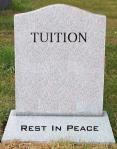
RIP TuitionFollowing on from tip two to practice past exam questions.

Tip three – remember, remember the 9th of November

Whether you remember the gun powder plot in 1605, “remember , remember the 5th of November” or the fall of the Berlin wall on the 9th of November from this rhyme, it still provides a simple example of how effective a memory technique can be. Tip three is what you should do now that you have a set of revision notes and have spent a considerable amount of time practicing past exam questions. It would of course be really great if when you went into the exam you could attempt every single question and be confident that you knew the answer. This may have been possible at some point in your exam career but is probably not so now. There will be topics that despite revising and practicing questions you still don’t understand and some that you will simply forget.

Less is still more

Mind MapYou need to take your revision notes and reduce them even more. Go through the notes again but this time only record what you can’t remember or don’t understand. The notes should also be written in a more short hand style, we only want key words not whole paragraphs. You might also wish to think about making notes in a mind map style rather than a linear one. These notes should be no more than 10 pages. They should be structured in the same way as your original revision notes wherever possible. These final set of notes can be prepared perhaps as late as 1 week before the exam. What you do next is memorise these notes, we are no longer looking for an understanding, but don’t be surprised if during this process something suddenly makes sense. There are lots of memory techniques you can use, ranging from the simple rhyme method above to acronyms, acrostics, peg methods and the famous roman room or loci method. The point is this, time for learning in the traditional way is over, you now need to commit as much to short term memory as possible. The night before and on the morning of the exam you just keep going over these 10 pages of notes. Use colours and images as much as possible and be creative, memory uses both left and right sides of the brain.

There are of course many more tips that will help with your revision but for me these are probably the most important. So to all those sitting exams, I wish you the very best of luck and to those that aren’t, if you are driving into work in the next few weeks, have a thought for the person in front, they might have a very important exam today!

Tuition is dead, long live revision – Tip two

RIP TuitionFollowing on from tip one, to produce a set of shorter and more exam focused revision notes.

Tip two – practice past exam questions

Having identified the key examinable topics and produced a set of notes that are based on them, the next step is to select one or two past questions from each area and practice them. In fact although I describe the process as, complete the notes first and then look at the questions, you may of course look to answer questions on each of the areas as you are preparing each section of the notes.

 If when you are trying to answer one of these questions you find you can’t, look at the answer, then attempt the question. If despite having the answer in front of you, you still can’t answer the question, then work through it until can. Amend your revision notes to include anything that you have learned that will be of use when you come to attempt a similar question. Carry this process on until you have covered all the must learn examinable areas. Then go through the same process with the should learn and the would be nice to learn.

In a perfect world you would study and make notes on every topic, in reality, you probably won’t, you will end up having to miss something out. If you follow the process described above, you will at the very least end up with a set of notes, all be them incomplete, on the most examinable topics. More importantly using the time that you have saved, you will have had the opportunity to practice answering past exam questions which will have taught you so much more than any notes can ever do.

If you find you lack a little self discipline and think that on your own you will not be able to do this, then once again a revision course may be worth considering. Having other people around who are in the same boat and share the “dislike” of the subject or of the “examiner” can for some reason make the whole process a little easier and slightly less stressful. You will also have to work at a pace that will increase the number of questions you get through in a day and so your chances of passing.

Tip three I will post on Sunday.

Tuition is dead, long live revision – Tip one

RIP TuitionFor some people reading this blog, the idea of sitting an exam in the run up to Christmas probably seems a little strange. Yet such is the variety and flexibility in examinations there is probably always someone sitting an exam. I can still remember whilst driving to one of my exams looking at other people and thinking, for you this is probably just an ordinary day, but for me it’s the accumulation of weeks and months of hard work that could all be wasted if I fail.

How I so wanted to be having an ordinary day….

So although examinations are never far from my mind, as some of my students  are preparing for exams this November and December I thought it might be a good idea to look at what you should do as the tuition period comes to an end and the revision period begins. Below are my top three exam  tips as to what you should do during revision.

Tip one – less is more

Let’s assume that you have a set of notes that have been taken during class or that you have made from a text book. In theory these notes contain everything you have learned and studied so far, in reality they are often not as comprehensive as you think and even though you have studied something it does not mean you have understood it. Chances are these notes are also a little on the thick side. Now depending on how you have studied (You might find it useful to read the blog on exam focussed learning ) it is more than likely that these notes will need to be refocused and cut down.

 If you have not already done so you need to identify the most examinable topics for the subject you are studying. This can done by looking at say the last 4 exam papers and identifying topics that  have been examined on several occasions. You then need to make these your focus of attention, each topic in your tuition notes needs to be ranked as must learn (most examinable topic) should learn (2nd most examinable topic) and nice to learn (3rd most examinable topic). Once you have done this you begin the process of going through your tuition notes using,  must learn, should learn, and nice to learn as your guide as to how much time you spend making new notes on each area. These shorter, more exam focused notes will become your revision notes.

 If you attend a revision course, these notes are often provided. In fact the reason revision courses are so popular and have higher than average pass rates is partly to do with these notes and the expert guidance you will get on the course itself.

If you are studying for your GCSE or A levels exams, in the blogroll is a link to a site that provides free revision notes. 

Tip two will be posted soon.

Exam focused learning

Exam paper 1On the 20th and 22nd of October I will be delivering a one and a half hour webinar on exam focused learning.  So what this is and how it can help with passing exams is on my mind. It therefore seemed appropriate that this blog should be devoted to explaining a little bit more about it. For those that did attend the presentation and may well be logging on after the event, welcome back, I hope you will find this a useful reminder that may prompt you to add your thoughts or ask some questions. You can do this by clicking on the leave a comment link at the bottom of this blog.

Exam focused learning is a way of studying that places a much greater emphases on looking at specific topics rather than the whole syllabus and using examination answers as a key way to both learn and focus attention. I should also say that this approach is best suited for what I would call more traditional exam formats rather than multi choice questions and case studies.

Imagine you are about to begin studying a new subject, one that you have little or no knowledge. Let’s also assume that you are studying from home. What do you look at first, maybe the text book, you turn to the contents page and look at the 22 chapters that you are required to read and understand. Perhaps you then get a blank pad of paper, a pen, a coffee and begin by reading chapter one. You probably make notes as you go through so that you have something to re-read and revise from later. You go through the entire book making notes in this way and so in theory at least have begun to learn the subject.

The problem with this approach is that it takes a lot of time and although you feel that you are covering everything, you of course aren’t. You will almost certainly have to miss some things out or move more quickly through certain areas just to keep up with your timetable.  The other problem with this “Traditional approach” is that you will spend so much time learning you will have little time left for practicing exam questions.

Exam focused learning does not start with the text book; it starts with your objective. Let’s assume that this is to pass the exam, not learn the subject.  If you wish to pass, on the day of the exam you will have to answer the questions set by your examiner. Now imagine if you knew what these exam questions would be. If you did would you stand a better chance of passing, yes or no. I think yes. The only problem is that you don’t have the actual exam questions……but you do or can obtain lots of past exam questions, questions that have been set by your examiner before.

So here is the first important point, better to learn the answers to these than to learn pages of content from a text book that may or may not be relevant. Now of course this will not work in the complete absence of some understanding of the subject which will have to come from a tutor, lecturer or text book. But the clarity of direction that a question gives, the specific way it shows what you are meant to learn and the context in which something needs to be understood is invaluable.

The next problem, there are just too many past questions.  We really need to have fewer questions to study, at least to start with. By analysing past questions you should be able to identify which topics have consistently come up in the past, these we must learn. Then we look at topics that are likely to come up in this exam. We should be able to spot these in our analysis as being important topics that have not been examined for some time.  These should be learned. And finally we look at those topics that might come up, these are nice to learn.

And here is the second important point, on the face of it this sounds like question spotting but really it’s about focus it simply gives you a point from which to start.  By all means learn everything, but if you can’t or don’t have time, better to have studied and practiced questions on the most important areas and the ones most likely to be examined.

If you change your way of studying to this exam focused approach you will enter the exam room knowing what the three or four most important topics within your subject are. More importantly you will have practiced answering past exam questions on these areas and so will be very well prepared for what might come up. You should also have practiced some questions on the next three/four most likely topics for this exam. Now compare that with the student who has gone through the text book making notes but who due to time pressure had little or no time to practice past questions. Who do you think stands a better chance of passing……?

Exam focused learning….Done

Ps – next year my book currently entitled “The E (Exam) word” should be published. In it I explain in far more detail exactly how to follow the exam focused approach, what to do in the exam, how to cope with exam stress and  how to improve your chances of passing by using effective memory techniques.

Watch this space for more details 

Unfortunately success is about hard work and practice

gladwell_malcolm_fThe great thing about being on holiday is that you have a chance to read and so learn more about what other people think. My first book of the holiday has been Outliers (Something classed differently from the main body) by Malcolm Gladwell.   I have read all of MG’s books and find his arguments persuasive and challenging. Although the level of detail can sometimes appear to be a distraction and full of information that on the face of it not relevant, if you stick with it and follow with a sense of adventure, you will be rewarded with a very well thought through, original and thought provoking idea (s).

Although the book is about success and so may help you become more successful, MG has avoided the “I can make you successful” title. It is sub titled the story of success but is more a journey of why different people have been successful and to some extent why others have not. He argues that success is less about your IQ and more about where you are from. It is more to do with your culture, attitude, willingness to work hard and practice, practice, practice.

This in many ways is the classic nature nurture argument. I do have to express a bias here, I love stories that are more about nurture, partly because as you may have picked up from earlier blogs, instinctively I like to think we have some control over our destiny rather than the idea that from the minute you are born your life is pre- determined.

And although it could be argued that MG makes the case that success is very much influenced by your culture and background, therefore making it less to do with the individual and so more predetermined. By explaining how people have become successful it removes many of the myths that people create, “He was so clever, you knew he would succeed”. “The reason he was successful is because he was a genius, if only I was a genius”.

Chapter by chapter and at times with no apparent relationship between them MG builds his argument.

  • The Roseto mystery – a culture is so strong that it resulted in a community becoming far healthier than others.
  • The Mathew effect – if you are successful you are more likely to be given opportunities that intern can lead to further success. That initial success may however be the result of the year you were born in! Check this out BBC news
  • The 10,000 hour rule – from Bill Gates to the Beatles they all have one thing in common, not genius but 10,000 hours of practice.
  • The trouble with genius – two chapters, a higher IQ does not make you more likely to be successful; you only have to be clever enough.  Oh and yes your background matters, having a high IQ does not equip you with all the skills you need for success.
  • The three lessons from Joe Flom – your culture can leave you with a legacy. For some that were successful it was an appreciation of ‘worthwhile work’. Work that was demanding and had a relationship between effort and reward.
  • Harlan Kentucky – a story of how a ‘culture of honour’ can mould the way people behave generations latter.
  • The ethnic theory of plane crashes – how a strong national culture can result in communication problems so bad that the plane crashes!
  • Rice paddies and math(s) tests – Asians are better at maths largely because what they have learned from planting rice! Although their language helps. These lessons have in turn created a successful culture. A culture of attention to detail (planting rice is precise) the harder you work and the harder you work the land, the more reward you get (Rice fields benefit from planting, there is very little fallow – ‘rest’) and there is a clear relationship between effort and reward (Growing rice is so hard that it is difficult to get others to do it. So if you can grow it, you benefit)
  • Marita’s bargain – wheat need a period of fallow to let the soil recover, rice fields improve the more they are worked. Is this the reason Asians work harder and take less holidays? Also it’s what you do in the holiday that makes your grades improve. And it’s not the brightest who succeed it’s those given the opportunity and have the presence of mind to seize it….
  • A Jamaican story – a personal account by MG as to where he came from and why his family were successful and yes it is to do with his background and culture.

I have taken time to summarise each chapter because there were some simple yet powerful messages in each one.  It is also helpful for me in coming to these final conclusions.

And so to the point….When studying you will almost certainly come across brighter and more intelligent people than yourself. People who seem to pick up information with little effort and score higher than you in every test they do, these people are destined for success! You may in turn make yourself feel that in some way you are less likely to succeed because they are so much better. This might result in you working less, feeling that there is little point as you will always be second third or maybe even last.

Working less will almost certainly mean you will achieve less and in turn this will become a self fulfilling prophecy. “See I told you I was not as good”.

The first thing to do is to recognise that you are doing this and the second is to take heart from the main themes within this book, which are:

Hard work and practice (10,000 hours) are key ingredients to success. MG argues that both Bill Gates and the Beatles benefited from practicing their respective skills for hours, days, weeks and years.

You don’t have to be a genius; you only have to be bright enough. MG makes a very convincing argument that higher IQ’s don’t result in greater success. You only have to be good enough…  an average IQ is fine and by definition most of us are average!

And finally it’s not the brightest who succeed, it’s those given the opportunities and having the presence of mind to seize them….So you should seek out opportunities, get yourself into positions where you will be given them and when given……take them.

Studying for an exam is one of those opportunities and with hard work, some self confidence and practice you are more likely to succeed and from that success more will follow, so says Mathew.

The sun is now out and so I must go – hope you enjoyed the blog

Attention! – Breach of duty as a student

Beam of light

Once again the FT has provided me with some food for thought. An article entitled why e-mail must disappear from the boardroom, Monday 27th July 2009, suggested that main board Directors should give all their attention to the meeting and less to the email that has just arrived on their Blackberry or similar electronic device.

In fact it suggested that by not giving all their attention to the meeting they could be in breach of their fiduciary duty to shareholders.  How would you feel if the surgeon who was about to cut you open was concentrating on an email rather than on you?

It went on to quote some research from Rene Marois a neuroscientist and Director of the Human Information Processing Laboratory at Vanderbilt university that the brain has an inability to concentrate on two things at once. The researchers even have a name for it “inattention blindness”.

Now think about this in the context of learning, if you are in a classroom or any other learning environment for that matter and you move your attention from the classroom to another event, a text or email perhaps, then although you are in the room you have put your attention elsewhere.

Yes you can hear what is going on and yes if someone called your name you could respond all be it slowly, but would your ability to learn and recall the facts from the lecture be as good, somehow I think not.  This is not to say that periodically you should not let your concentration drift as you begin to think about coffee or what you want to do at the weekend, this is a perfectly natural and in some instances a necessary form of relaxation that can help with learning. This is about being engaged, giving The Event your full attention.

Think of your attention as a single beam of light, able to shine on only on one thing at a time, it illuminates and makes clear that one thing but when you move the light what you were looking at becomes dark or at best not as clear, something in your periphery.

And so to the point, when you have an opportunity to learn, attend a lecture or meeting, give it your full attention. You are not being efficient by doing two things at once you are in fact only ever doing one. So if you do have two things to do but only time to do one, look carefully at what they are and prioritise. And if the email is more important give it all your attention and only after you have dealt with it come to class or attend the meeting.

One other point, you do not become invisible when on your mobile, everyone can see that you have your shoulders slumped in the so called “Blackberry prayer”. Now you might think that this sends a very clear message as to how busy and important you are, in fact it does the complete opposite. People think that you are not in control, probably fire fighting, a poor delegator and a poor manager. And yes it’s bloody rude……

How to be positive about exam failure

One of the problems with exams is that every now and again you fail one or maybe two. So what to do?

Well you could tell yourself that the exam was completely unfair, “He/she/the examiner examined something that was not even in the syllabus” a kind of get angry strategy or a blame someone else approach. This can be very effective as it makes you feel a whole lot better. Particularly if you can find someone else who feels exactly the same way. The best thing here is that you are not blaming yourself and so you won’t feel personally that bad.

Another idea is that you think it was a fair exam but have not put the work in, so you deserved to fail. A kind of well what did you expect strategy or yes a blame yourself approach. This also has much merit as although you are blaming yourself you know what to do to put it right.

In fact the best strategies for dealing with exam failure need one or two things, both if possible, one a reason why you failed and second a plan of action to put it right.

The get angry strategy  has a reason why but not a plan of action to put it right, other than to kill the examiner perhaps….The second idea has both, it was my fault (the reason for failure) and a need to work harder next time, a plan of action.

Now there is one last element in all this, do you want or have to pass?

 If the answer is no, then you can follow the I give up strategy. “The reason I failed is because I am not very clever or not good enough or this exam is just too hard for me and my plan of action is that I should give up”. This on the whole will make you feel inadequate lower your self esteem and gives you only one course of action, to give up. To stop falling into a deep depression you can always tell yourself “who wants to be a stupid accountant/doctor traffic warden anyway”?

However If the answer is yes I have to pass, then you need a reason for failure and a positive intention that will mean that you will do better next time.  Positive here simply means something that you can do as appose to not do. Unfortunately this something very often includes the statement “must work harder” or at least smarter.

More on how you can work smarter in latter blogs.