Human superpowers – Creative, Analytical and Critical thinking

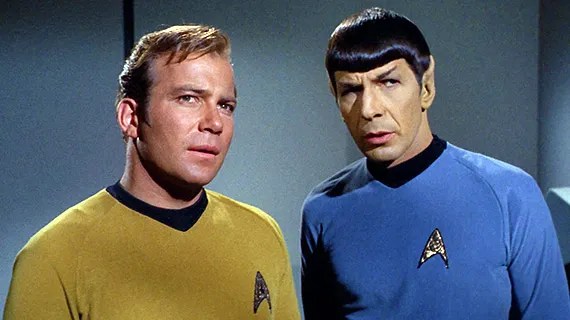
Are you sure Gen AI doesn’t make mistakes Mr Spock? Because this just “feels” wrong to me.

Back in July 2022, I wrote about the importance of critical thinking, a skill long considered essential in education, leadership, and the workplace.

But that was before Gen AI arrived in the November, bringing with it the ability to answer almost any question within seconds. Its presence prompted reflection on the nature of learning, how education might change and what role humans should now play, if any.

If you don’t have time to read this month’s blog – listen to my AI alter ego summarise the key points.

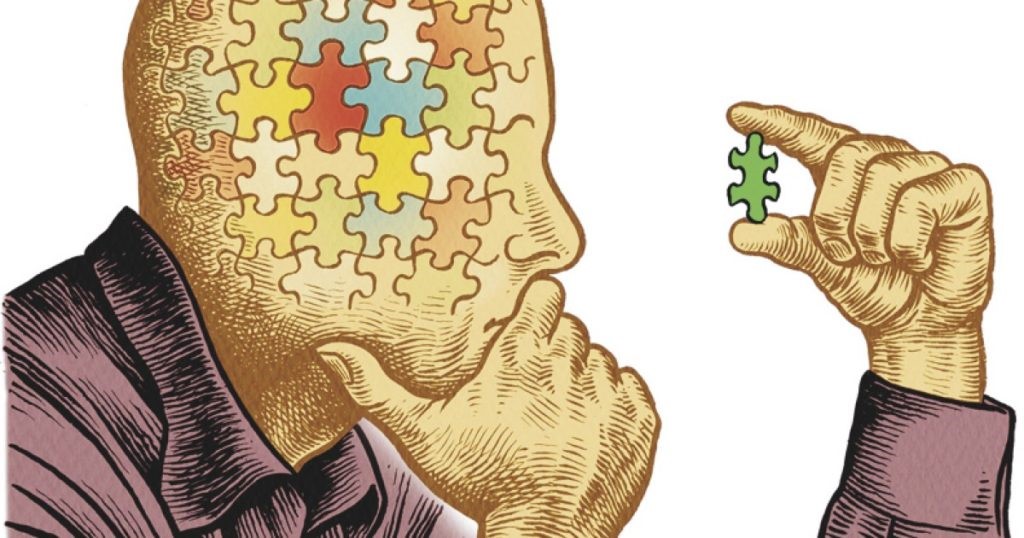
But all is not lost we still have one last card to play, our ability to think and feel, okay maybe that’s two cards. Thinking is hopefully what you are doing whilst reading this blog, neurons will be firing as you reflect, analyse and question what is being said. It’s something we do in between day dreaming, sleeping and unconscious behaviours such as cleaning our teeth.

Thinking is however a little more nuanced, and there are many different types, for example you can think creatively, analytically, or critically. Whichever mode you engage in, there’s another essential human attribute that quietly shapes the process…. our emotions. These are the subjective experiences rooted in our limbic system that help us interpret information and as such see the world. Together these are our superpowers offering something AI can’t replicate, not yet at least!

An Artist, Pathologist and Judge walk into a bar
Critical thinking, creative thinking, and analytical thinking are often grouped under the umbrella of “higher-order cognitive skills,” but each one is different, playing a role in how we process, evaluate, and generate ideas.

  • Critical thinking is fundamentally about evaluation, it involves questioning assumptions, weighing evidence, and forming reasoned judgments. It’s the internal referee that asks, “Does this make sense? Is it credible? What are the implications?”
  • Meanwhile, analytical thinking breaks down complexity into more manageable components, identifying patterns, and applying logic so that we can better understand relationships.
  • And creative thinking is generative. It thrives on ambiguity, imagination, and novelty. Where critical thinking narrows and refines, creative thinking expands and explores. It’s the spark that asks, “What if? Why not? Could we do this differently?”

Humans are emotional – Far from being a distraction, emotions actively shape how we think, judge, and create. In creative thinking, emotion is the spark that fuels imagination and unlocks divergent ideas. In analytical thinking, emotion plays a subtler role influencing how we interpret data, what patterns we notice, and our levels of motivation.  Critical thinking, meanwhile, relies on emotion to provide an ethical compass and improve our self-awareness.

Learning to be a better thinker
Critical, creative, and analytical thinking aren’t fixed traits, they’re learnable skills. It’s tempting to believe they can only be acquired through the slow drip of wisdom from those who have had a lifetime of experience. The truth is, with good instruction, these skills can be learned well enough for any novice to get started. At first the beginner may simply replicate what they have been taught but with practice and reflection, they begin to refine, adapt, and eventually think for themselves.

By way of an example, this is how you might start to learn to think more critically.

  1. Start with knowledge – Critical thinking is the analysis of available facts, evidence, observations, and arguments to form a judgement.
  2. Use a framework
    • Formulate the question – what problem(s) are you trying to solve?
    • Gather information – what do you need to know more about?
    • Analyse and evaluate – ask challenging questions, consider implications, and prioritise.
    • Reach a conclusion – form an opinion, and reflect.
  3. Bring in Tools – These can provide ideas or change perspective, for example Edward de Bono’s six thinking hats.
  4. Apply by practicing with real world problems. This is largely experiential, and requires continual reflection and looping back to check you have asked the right question, gathered enough information, and correctly prioritised.

The real challenge and deeper learning take place in the application phase.  By working in groups, your arguments may well be questioned and potentially exposed by the use of Socratic type questions and differing views.  Your only defence is to start thinking about what others might say in advance. Over time like any other skill, it can begin to feel more like an instinct, requiring less conscious effort, simply popping into your mind when most needed.

To boldly go
Generative AI may offer logic, precision, and even flashes of creativity but it does not feel the weight of a decision, nor wrestle with the moral ambiguity that defines human experience. It is Spock without Kirk, brilliant, efficient, and deeply insightful, yet missing the emotional compass that gives judgment its humanity. True thinking is not just analysis, its empathy, intuition, and the courage to act without certainty. AI can advise, assist, and illuminate, but it cannot replace the uniquely human interplay of reason and emotion. Like Kirk and Spock, the future belongs not to one or the other, but to the partnership. Or at least I hope so…..

I will leave the last word to Dr McCoy.

The most important skill – Critical Thinking

There seems little doubt that there is a gap between the skills needed to do a particular job and those that are available, the so called “skills gap”, and it’s one of the biggest challenges facing the economy.

The skills Gap
According to the Office for National Statistics, “the number of job vacancies increased sharply to a record 1.2 million in the three months to November 2021, having reached a record low of 340,000 in the three months to June 2020”. As with most real-world problems the reasons as to why this has happened is complex, requiring a good understanding of individual sectors of the employment market. However, we can make a few generalisations, firstly there is a shortage of qualified candidates. This is the results of a number of factors including a lack of specific skills, the right work experience and or educational qualifications. And secondly there are less people in employment. The Institute for Employment Studies estimates there are 600,000 fewer people in work than before the pandemic. This is because there are less migrants, (Brexit), older people (Boomers) are retiring, more younger people are going into further education and the pandemic has resulted in changing lifestyles e.g. the great resignation.

What skills are lacking?
This is another tricky one to navigate but a good way of approaching it is to break it down, splitting the skills between technical (hard) and people (soft). Technical skills in say the Digital sector would include the ability to write code or use a particular type of software, whereas people skills include thinking (critical), communicating, problem solving etc. With regards to people skills the one employers often consider the most important is critical thinking.

As an aside, personally, I think the terms hard and soft skills is misleading, from a learning perspective it’s much easier to teach hard skills than soft ones, and in terms of which is the most valuable or important, they both are.

Critical thinking
Wikipedia tells us that Critical thinking is the analysis of available facts, evidence, observations, and arguments to form a judgement. There are however many definitions but they all have the same basic concept – the ability to reason by asking questions in order to from an opinion.

“People can be extremely intelligent, have taken a critical thinking course, and know logic inside and out. Yet they may just become clever debaters, not critical thinkers, because they are unwilling to look at their own biases.” Carol Wade Phycologist.

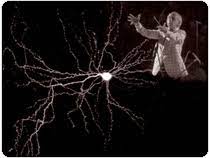
Everyone thinks, you’re probably doing it right now but the process of thinking is both complex and simple and, in some ways beautiful. Individual neurons sit next to each other in the brain similar to members of an orchestra, when instructed to do so they each perform individually but what emerges is something new, the orchestra create music, the brain a thought. My thanks to Henning Beck from the University of Tübingen for this great analogy, here is the link to his Ted lecture, How we think. Watch out for his example as to how the brain can transfer the outline image of a tree and turn it into a child.

The problem with our orchestra of neurons is that together they are biased, emotional and suffer from prejudice, and left to their own devices will form opinions that although appearing to be true are distortions made to fit prior beliefs and personal values.

“The opinions that are held with passion are always those for which no good ground exists; indeed, the passion is the measure of the holder’s lack of rational conviction.” Bertrand Russell, Philosopher.

An Orchestra of Neurons

They need a conductor – And this is where critical thinking comes in.
Here is an example, imagine a situation where an individual tells a story that resonates with many people, they create sounds bites such as Make America Great Again (MAGA) or Take Back Control. There is something in the simplicity of this, a clarity that resonates, and as a consequence the brain latches on to the storyteller, making them the conductor. However, remember the brain, our collection of neurons is not rational, its often selfish, lazy and emotional, there is no interview process for our conductor, the brain will simply pick one, often without much thought.

But what if we don’t leave the brain to its own devises, what if we insist it follows a few simple protocols before making a decision.

The critical thinking process
Below is how critical thinking might work using the MAGA example.

  1. Formulate the question – what problem(s) are you trying to solve?
    e.g. What do we know about the storyteller, what does MAGA actually mean?
  2. Gather information
    e.g. find out more about the storyteller, what bias might they have, are they qualified to make such comments?
  3. Analyse and Evaluate – ask challenging questions, consider implications and prioritise.
    e.g. what does great mean, was America great in the past, a logical question given that the idea is to do it again, what makes a country great, what are the pros and cons of being great?
  4. Reach a conclusion, form an opinion and reflect.
    e.g. This is what I think and this is the reason why. – let me think about that, does it make sense?

When you put this process in place you will be able to form your OWN opinion as to the credibility of the conductor and their story, this is independent thinking, its what employers value most and its what we need to close the skills gap.

If you accept the argument I have put forward as to the value of critical thinking, and of course you should think critically about it, the next question is probably:
Can you teach critical thinking? – this will have to be the subject of another blog, but by way of a spoiler the answer is maybe not or if you can it’s not easy.

A few more blogs to make you a better thinker – Sensemaking, humility and the humanities – Becoming a better thinker – Edward de Bono learning leader – Lessons from lies – Fake news.