You can’t outsource learning – Cognitive offloading 

As we begin to better understand the capabilities of Generative AI (Gen AI) and tools such as ChatGPT, there is also a need to consider the wider implications of this new technology. Much has been made of the more immediate impact, students using Gen AI to produce answers that are not their own, but less is known as to what might be happening in the longer term, the effect on learning and how our brains might change over time.

There is little doubt that Gen AI tools offer substantial benefits, (see previous blogs, Let’s chat about ChatGPT and Chatting with a Chat Bot – Prompting) including access to vast amounts of knowledge, explained in an easy to understand manner, as well as its ability to generate original content  instantly. However, there might be a significant problem of using these tools that has not yet been realised that could have implications for learning and learning efficacy. What if we become too reliant on these technologies, asking them to solve problems before we even think about them ourselves. This fear has found expression in debates well before Gen AI, in particular an article written by Nicholas Carr in 2008 asking “is Google making us stupid’’ – spoiler alert, the debate continues. And an interesting term coined by the neuroscientist and psychiatrist Manfred Spitzer in 2012, “Digital dementia”, describing the changes in cognition as a result of overusing technology.

But the focus of this blog is on cognitive offloading (Circ 1995), which as you might guess is about allowing some of your thinking/processing/learning to be outsourced to a technology.  

Cognitive offloading
Cognitive offloading in itself is neither good nor bad, it refers to the delegation of cognitive processes to external tools or devices such as calculators, the internet and more recently of course Gen AI. In simple terms there is a danger that by instinctively and habitually going to Google or Chat GPT for answers, your brain misses out on an essential part of the learning process. That is reflecting on what you already know, pulling the information forward, and as a result reinforcing that knowledge, (retrieval practice), then combining it with the new information to better understand what is being said or required.

As highlighted by the examples in the paragraph above cognitive offloading is not a new concern, and not specifically related to Gen AI. However, the level of cognitive offloading, the sophistication in the answers and opportunities to use these technologies is increasing, and as a result the scale and impact is greater.

Habitual dependency – one of the main concerns is that even before the question is processed, the student instinctively plugs it into the likes of ChatGPT without any attention or thought. The prompt being regurgitated from memory, “please answer this question in 100 words”. This will lead to possibly the worst situation, where all thought is delegated and worryingly the answer unquestionable believed to be true.

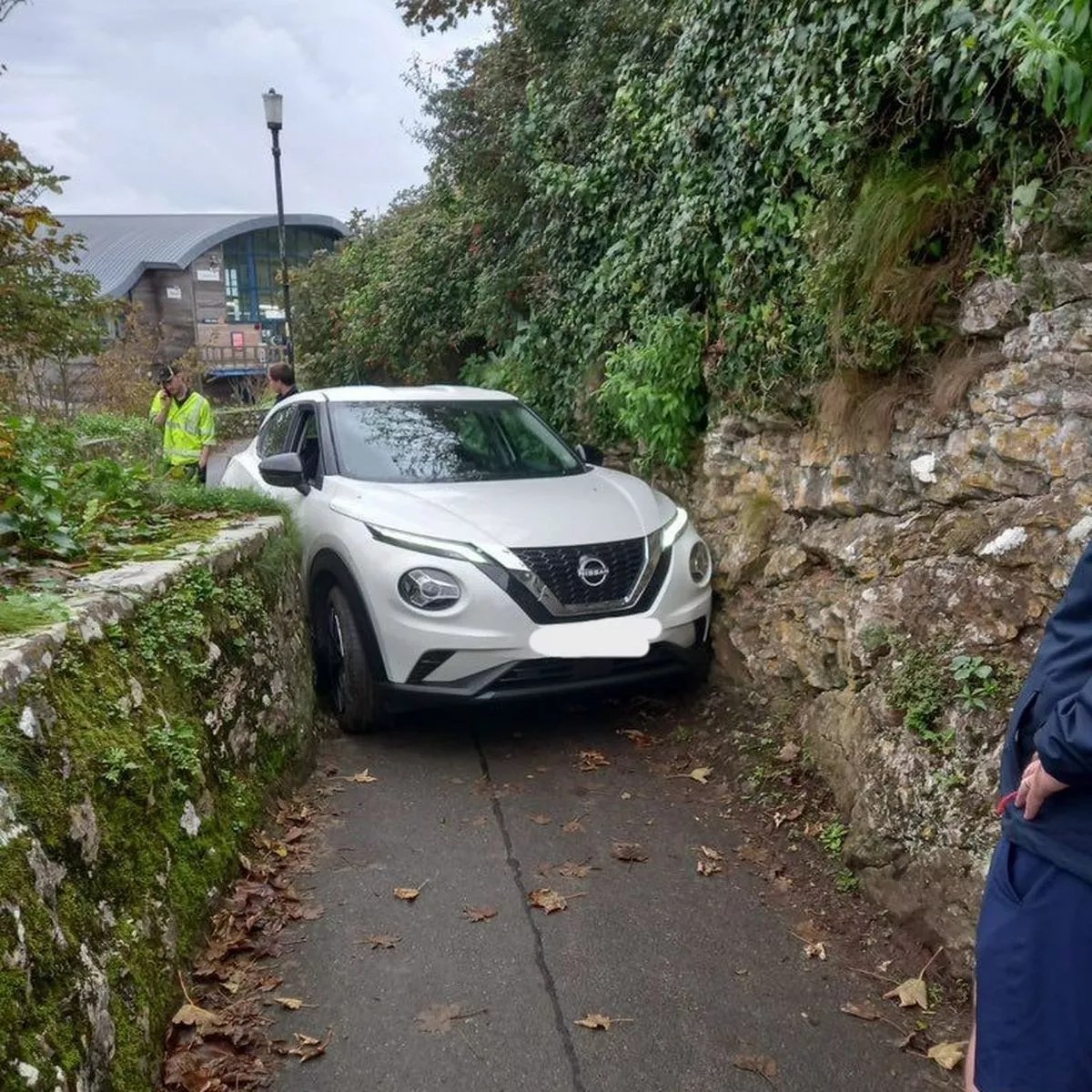
Cognitive offloading in action – Blindly following the Sat Nav! Research has shown that offloading navigation to GPS devices impairs spatial memory.

Benefits of Cognitive offloading – it’s important to add that there are benefits of using cognitive offloading, for example it reduces cognitive load, which is a significant problem in learning. The technology helps reduce the demand on our short-term memory, freeing the brain to focus on what is more important.

Also, some disagree as to the long-term impact, arguing that short term evidence (see below) is not necessarily the best way to form long term conclusions. For example, there were concerns that calculators would affect our ability to do math’s in our heads, but research found little difference whether students used calculators or not. And the debate has moved on to consider how calculators could be used to complement and reinforce mental and written methods of math’s. These benefits have led some to believe that cognitive offloading increases immediate task performance but diminishes subsequent memory performance for the offloaded information.

Evidence
There is little research on the impact of Gen AI due to it being so new, but as mentioned above we have a large amount of evidence on what has happened since the introduction of the internet and search.

  • In the paper Information Without Knowledge. The Effects of Internet Search on Learning, Matthew Fisher, et al found that participants who were allowed to search for information online were overconfident about their ability to comprehend the information and those who used the internet were less likely to remember what they had read. 
  • Dr Benjamin Storm the lead author of Cognitive offloading: How the Internet is increasingly taking over human memory, commented, “Memory is changing. Our research shows that as we use the Internet to support and extend our memory we become more reliant on it. Whereas before we might have tried to recall something on our own, now we don’t bother.”

What should you do?
To mitigate the risks of cognitive offloading, the simple answer is to limit or reduce your dependency and use Gen AI to supplement your learning rather than as a primary source. For example, ask it to come with ideas and lists but not the final text, spend your time linking the information together and shaping the arguments.

Becoming a better thinker – Edward de Bono learning leader

There are a number of people who have changed the way I think but no more than Edward de Bono who died this month aged 88, a great example of a learning leader.

Born in 1933, he graduated as a doctor from the University of Malta before studying physiology and psychology at Oxford as a Rhodes Scholar. He represented Oxford in polo, set two canoeing records and later gained a PhD in medicine from Trinity College, Cambridge.

But he is probably best known for two things, firstly as the creator of the term lateral thinking and secondly for his six thinking hats strategy that went on to influence business leaders around the world.

Lateral thinking

To understand lateral thinking, we first need to figure out what thinking is. There are many definitions but my own take is that it’s a reflective process involving the manipulation of knowledge, feelings and experiences as we seek to connect what we know with new information, normally focused on a problem.

There are two or maybe three modes of thinking!

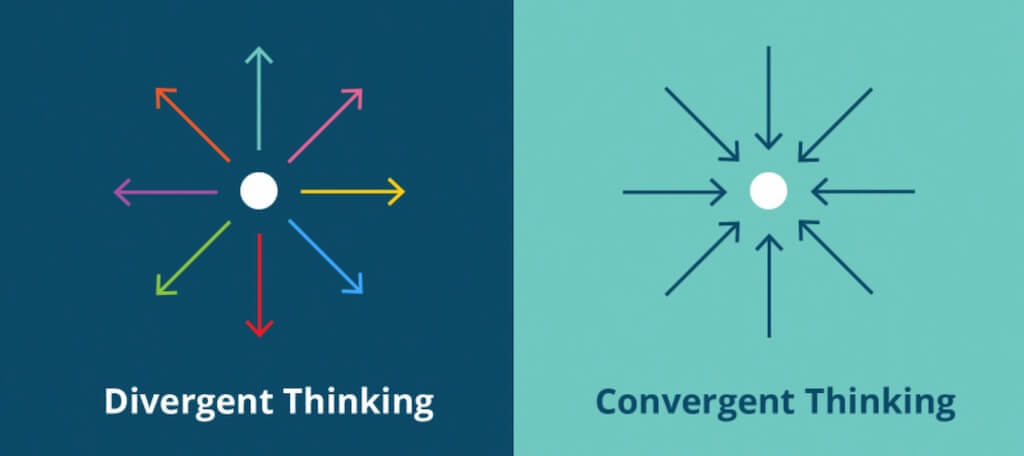
1. Convergent – focuses on coming up with a single, “correct” answer to a question or problem. Examples of convergent thinking would include critical thinking, a logical process that involves challenging underpinning assumptions, questioning accuracy, motivation and purpose in order to make sense of a situation or solve a problem. Its origins can be traced back to Socrates, Plato and Aristotle, or as De Bono disparagingly referred to them, the gang of three.  Also, analytical thinking, where you break down complex information into its component parts, this can and is often used in conjunction with critical thinking. Convergent thinking is logical thinking, meaning its rule based, systematic and linear. If for example we concluded that 2 + 2 = 4 and we decided to add another 2, logically the answer would be 6. 

But logic can still be challenging, there is a logical answer to this question yet 80% of people get it wrong.

Jack is looking at Anne, but Anne is looking at George. Jack is married, but George is not. Is a married person looking at an unmarried person?
A: Yes
B: No
C: Cannot be determined

The correct answer is A. (click here for the explanation)

The need to be right all the time is the biggest bar to new ideas.

2. Divergent – is the opposite of convergent and involves coming up with many possible solutions, acknowledging that there may be no single correct answer. This type of thinking is often emergent, free flowing, illogical and requires creativity. Convergent and divergent thinking can be used together, divergent to generate ideas and convergent to make sense of those ideas and find a practical application. Click here for a video that explains how these two types of thinking work together.

3. Lateral thinking – is a way of solving problems by taking an indirect and creative approach by looking at the problem from different perspectives. Although there are similarities with divergent thinking it is not the same. Divergent thinking starts with a problem at the centre and random ideas are generated branching outwards in all directions, lateral thinking requires the individual to come up with a solution by generating different ideas that result from changing perspective. De Bono writes that lateral thinking forces the brain to break set patterns, it’s a pattern switching technique.

Let’s consider one of his examples, Granny is sitting knitting and three-year-old Susan is upsetting Granny by playing with the wool. One parent suggests putting Susan into the playpen, a relatively creative (divergent) solution. A logical (convergent) answer might be to tell Susan not to do it, but anyone with a three-year-old will know how effective this will be, but that won’t stop them trying!

The other parent suggests it might be a better idea to put Granny in the playpen to protect her from Susan, this is lateral thinking, looking at the problem from a different perspective. Its illogical because granny is bigger and surely you don’t need to protect granny from a three-year-old, but it is still a solution and would work.

I am reminded of a question I was once asked whilst visiting Berlin. “Why did the East Germans build the Berlin wall?” ………“To keep people in of course”, it was a prison not a defence. It’s all about perspective.

Lateral thinking is not a substitute for logical thinking and can be used as a way of generating new divergent solutions, they complement each other and are interchangeable. Lateral thinking is generative, logical thinking selective.

In summary lateral thinking is about changing perspective……

Most of the mistakes in thinking are inadequacies of perception rather than mistakes of logic.

My own personal favourite perspective story

This is the transcript of a radio conversation of a US naval ship with Canadian authorities off the coast of Newfoundland in October, 1995. Radio conversation released by the Chief of Naval Operations 10-10-95.

Americans: Please divert your course 15 degrees to the North to avoid a collision.

Canadians: Recommend you divert YOUR course 15 degrees to the South to avoid a collision.

Americans: This is the Captain of a US Navy ship. I say again, divert YOUR course.

Canadians: No. I say again, you divert YOUR course.

Americans: This is the aircraft carrier USS Lincoln, the second largest ship in the United States’ Atlantic fleet. We are accompanied by three destroyers, three cruisers and numerous support vessels. I demand that YOU change your course 15 degrees north, that’s one five degrees north, or countermeasures will be undertaken to ensure the safety of this ship.

Canadians: This is a lighthouse. Your call.

Lateral thinking for learning

But what has this got to do with learning? Well learning is not just about facts and knowing stuff, the reason we go to school is to gain an understanding of a wide range of issues, concepts and ideas that when faced with a problem we can manipulate and cross check in order to form opinion and come up with a solution. Learning is a consequence of thinking.

Learning without thinking is useless. Thinking without learning is dangerous.
Confucius

De Bono believed that thinking was a skill that could be learned and because lateral thinking helps people develop creative ideas, creativity could also be learned. It is not an innate trait, a type of intelligence that you are borne with, it’s something we all possess, we just need the techniques to do it. He did however distinguish between artistic creativity and idea creativity, Michael Angelo and Shakespeare are artistically creative, lateral thinking will only ever make you idea creative.

As to the techniques, maybe they will feature in another blog but if you can’t wait, here is a short video, but beware De Bono was the master of acronym.

We tend to take thinking for granted, believing we are good at it or maybe never even questioning our ability. But what De Bono made popular was the idea that it was a skill and that we can improve. We live in a time when information is more accessible and freely available than ever, so the real value has to be in what we do with it.

Thank you, Edward De Bono 1933 – 2021.

And lastly….the blog would not be complete without one of De Bono’s lateral thinking puzzles.

A man lives on the tenth floor of a building. Every day he takes the elevator to go down to the ground floor to go to work or to go shopping. When he returns, he takes the elevator to the seventh floor and walks up the stairs to reach his apartment on the tenth floor. He hates walking so why does he do it?

The man is a dwarf and cant reach the higher buttons.