
Having a robust education system and well-educated citizens is a key objective for most governments. (World best education systems ) One reason for this is that an educated population is linked to economic growth, partly the result of higher levels of productivity and innovation. And this makes for a very compelling argument as to why governments believe education is important and worthy of investment. The UK spends between 4% – 5% of GDP on education.
But what about the individual, is it worth them investing both time and money in their own education and what of the benefits, do they outweigh the costs? To put this more bluntly, is it worth getting a so-called good education?
In terms of costs, in the UK between the ages of 5 to 18 attending school is compulsory but perhaps more importantly its free. Although not everyone wants something for nothing, the national absence rate for 2022 was 7.6%, well above the 4%-5% pre Covid figure. I am going to side step the question around the value of higher education, partly because its complicated and most people seem to agree that is worth the money, just about! But what are the benefits of a good education, this feels a little bit like asking what did the Romans do for us? How about it improves your social mobility, opens the door to new job opportunities and advancements in your career, improves levels of confidence and helps with the development of new skills. And I nearly forgot, highly educated people earn more money and actually live longer.
A good education
Of course, education is good for you, but I want to pick out one benefit that might not be so obvious – a good education helps you make better decisions. This is a skill that is not only valuable in the workplace but also in life. Everyday people make lots of “micro decisions”, in themselves none are especially important but when combined they can dictate your future. We all need to be better at making decisions.
In 2018 Hyuncheol Bryant Kim, an associate professor at Columbia University set out to answer the question, does education improve economic rationality? Kim’s research proved that it did, he said “While we know that schooling has been shown in previous work to have positive effects on a wide range of outcomes, such as income and health, our work provides evidence of potentially additional benefits of education coming from improvements in people’s decision-making abilities.”
Just to be clear this doesn’t mean that all the decisions you make will be good ones, often this can only be judged with hindsight. It’s that a well-informed person is more likely to make a better decision than an ill-informed one.
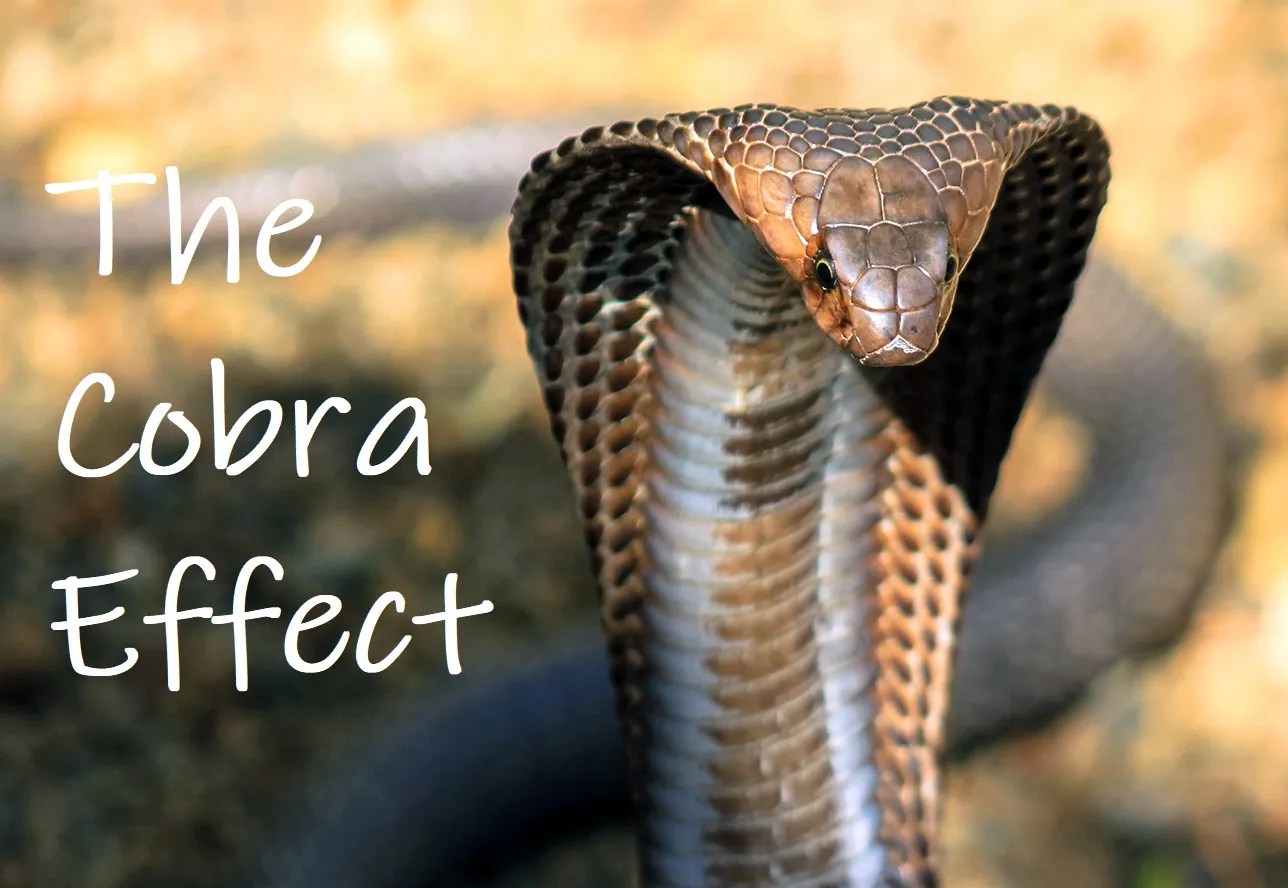
Bad decisions (The Cobra effect) – During British rule in India, a bounty was placed on cobras to reduce their population. However, as a result people started breeding them for the reward, leading to an increase in the cobra population. Eventually the bounty was withdrawn which meant cobras had no value and were released into the wild.
Decision making
Decision-making is the process of selecting a course of action from different alternatives to achieve a specific goal or solve a problem. We are talking here about a cognitive process, meaning it requires conscious thought and involves, gathering relevant information, evaluating available options, and choosing the most appropriate action. It worth saying that people are not inherently born as good or bad decision-makers. Instead, decision-making skills are developed and refined over time through a combination of educational, environmental, and experiential factors.
Bad decisions (ignorance) – The operators and decision-makers at the Chernobyl Nuclear Power Plant in Ukraine were unaware of the potential risks and lacked a comprehensive understanding of the reactor’s design. During a safety test, a series of poor decisions, coupled with a lack of knowledge about the reactor’s vulnerabilities, led to a catastrophic explosion that resulted in one of the most significant nuclear disasters in history.
There are a number of reasons that someone with a good education is more likely to make better decisions:
- High levels of knowledge and skills – Having facts, data, knowledge, and skills that you can draw upon is going to help you make better decisions. Ignorance on the other hand can only lead to the exact opposite.
- Developed critical thinking – Education, especially at higher levels, is associated with the development of critical thinking. The ability to analyse information, consider different perspectives, and make informed decisions is often enhanced through educational experiences.
- Improved process skills – It provides individuals with the tools to process and analyse information effectively. This includes skills such as information literacy, research abilities, and the capacity to evaluate the reliability and relevance of data.
- Understanding of risk – People with higher levels of education tend to be more adept at evaluating potential risks and benefits associated with different options.
- Able to consider implications – Individuals with a solid educational foundation often have a better understanding of the consequences of their decisions and are more likely to consider future implications.
The side effects
Please don’t think that this means well educated people are in some way better than less educated ones, they are not. Many of the world’s most dangerous and powerful people have had a world class education and yet make bad decisions. For example, President Richard Nixon’s cover up in the Watergate scandal or Dominic Cummings decision to take a drive with his family to “test his eyesight”, when he knew it was against the covid rules!
The point is that many people believe they succeed because of what they know, when in fact it is also because of the decisions they make, and that skill was learned, a side effect of a good education.
In simple terms – want to make good decisions “Go to school”.
Bad decisions (killing sparrows). As part of the Great Leap Forward in the late 1950s Chinas Mao Zedong launched a campaign to eliminate pests (including sparrows) that were believed to threaten crops. The decline in sparrows led to an ecological imbalance as they were natural predators of insects, including crop-eating pests and a significant decrease in agricultural output.
Want to make better decisions…here are a few interesting videos about how to do that.
- Before You Decide: 3 Steps To Better Decision Making
- How to make good decisions
- How do smart people make smart decisions?
 Pedleysmiths Blog